

Kirjahaku
Etsi kirjoja tekijän nimen, kirjan nimen tai ISBN:n perusteella.
1000 tulosta hakusanalla Guillermo Matta

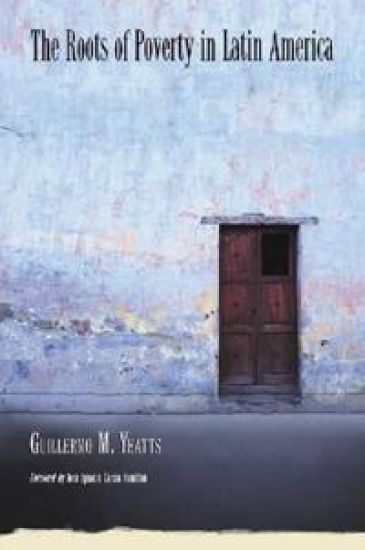
In the Americas, the Rio Grande has become not just a physical border, but an economic and social one as well. How can we explain the existence of two Americas--one prosperous, one poor--physically so close together, yet economically so far apart? The Roots of Poverty is an in-depth analysis of how cultural, religious and social institutions have shaped the economic destinies of North America and Latin America over the last five hundred years. The British, who instituted constitutional limitations for the monarchy and protection of individual rights, wooed their colonists with promises of the same. The Iberian Peninsula, on the other hand, transplanted to its American colonies the traditions of insecure property rights, unpredictable taxation and governmental economic dominance. Even as independent nations, the countries of Latin America have found it difficult to move beyond the mindset established in their colonial days. Given this obstacle, what is the region's potential for a better future? That topic is covered in this book's final chapters, which look at recent developments in individual Latin American countries and considers the possibilities for an economic turnaround.
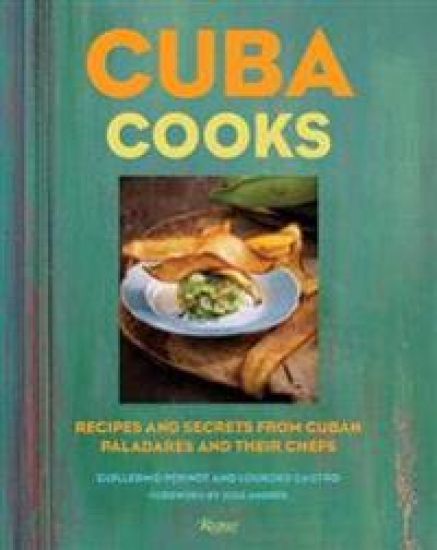
Pernot and Castro tour the island, collecting dishes and stories that reveal a vibrant contemporary cuisine. Each dish has been adapted from the best private restaurants from Old Habana to Santiago de Cuba and the author s own celebrated restaurant, Cuba Libre, marrying traditional foundations with modern influences. Divided into chapters for fresh seafood (Mar), meat (Tierra), vegetables (Granja), delectable desserts (Postres), and handy Basics (Esenciales), Cuba Cooks includes recipes for Arroz con Bacalao, Charred Snapper in Coconut Sauce, Oyster Ceviche, and elegant Stone Crab Mojito; Ajiaco (Cuban stew), Cuban Fried Chicken, Duck Ropa Vieja, Honey-Glazed Lamb Ribs with Cachucha Vinaigrette, Pork Belly Fried Rice, a traditional whole pig-roast, and a legendary smoked chicken from the side of the road; Black Bean Gnocchi with Culantro Butter, Green Plantain Soup garnished with Popcorn, and Malanga Tacos Stuffed with Eggplant; Old Habana street vendors roasted coconut and almond Cucuruchos, Guava Ice Cream, Cuba Libre s Chocolate Tart with Caramelized Bananas, and Bonatillos, traditional sweet potato pudding balls.

This book describes highly applicable mathematics without using calculus or limits in general. The study agrees with the opinion that the traditional calculus/analysis is not necessarily the only proper grounding for academics who wish to apply mathematics. The choice of topics is based on a desire to present those facets of mathematics which will be useful to economists and social/behavioral scientists. The volume is divided into seven chapters. Chapter I presents a brief review of the solution of systems of linear equations by the use of matrices. Chapter III introduces the theory of probability. The rest of the book deals with new developments in mathematics such as linear and dynamic programming, the theory of networks and the theory of games. These developments are generally recognized as the most important field in the `new mathematics' and they also have specific applications in the management sciences.

We're living in the end times; biblical signs of Christ's second coming are being fulfilled before our very eyes. But this is no reason to fear! Because even as signs are fulfilled, the Holy Spirit is drawing believers around the world to dwell in the only safe place on earth: God's presence.But what is God's presence? How do we access it? How will we know we're in it? Answering these questions and more, global apostolic leader Guillermo Maldonado dives deep into Psalm 91, delivering powerful teaching and practical activations to help you· create a hunger for supernatural encounters with the presence of God · discover the keys to access His presence· understand the dangers of losing God's presence· be delivered from spiritual and mental strongholds· receive transformation and revelationIn a world full of fear, it's time to pursue God, encounter His presence, and carry His supernatural rest, peace, and fullness of joy wherever you go.Also available in Spanish.

Restaurando la presencia de Dios
Guillermo Maldonado; Joshua Giles
BAKER PUBLISHING GROUP
2025
nidottu
Estamos viviendo los últimos tiempos; las señales bíblicas que anuncian la segunda venida de Cristo se están cumpliendo ante nuestros ojos. Sin embargo, ¡no hay razón para temer! Porque incluso mientras se cumplen las señales, el Espíritu Santo está atrayendo a creyentes de todo el mundo a morar en el único lugar seguro de la tierra: la presencia de Dios.Pero, ¿qué es la presencia de Dios? ¿Cómo accedemos a ella? ¿Cómo sabremos que estamos en ella? Para responder a estas preguntas y más, el líder apostólico mundial Guillermo Maldonado nos sumerge en las profundidades del Salmo 91, a fin de darnos poderosas enseñanzas y activaciones prácticas para ayudarle a· sentir hambre por tener encuentros sobrenaturales con la presencia de Dios · descubrir las claves para acceder a Su presencia· entender los peligros de perder la presencia de Dios· ser libre de fortalezas espirituales y mentales· recibir transformación y revelaciónEn un mundo dominado por el miedo, es hora de ir en pos de Dios, de encontrarnos con Su presencia y ser portadores de Su descanso sobrenatural, Su paz y la plenitud de Su gozo dondequiera que vayamos.También disponible en inglés.
Transitions from Authoritarian Rule
Guillermo O’Donnell; Philippe C. Schmitter; Laurence Whitehead
Johns Hopkins University Press
1986
pokkari
An array of internationally noted scholars examines the process of democratization in southern Europe and Latin America. They provide new interpretations of both current and historical efforts of nations to end periods of authoritarian rule and to initiate transition to democracy, efforts that have met with widely varying degrees of success and failure. Extensive case studies of individual countries, a comparative overview, and a synthesis conclusions offer important insights for political scientists, students, and all concerned with the prospects for democracy. Southern Europe The historical example of Italy after Mussolini as well as the more recent cases of Greece, Portugal, Spain, and Turkey suggest factors that may make a transition relatively secure. Latin America Democratization is perhaps the central issue in Latin American politics today. Case studies focus on Argentina, Bolivia, Brazil, Chile, Mexico, Peru, Uruguay and Venezuela. Comparative Perspectives Despite the unique contexts of transitions in individual countries, significant points of comparison emerge -- such as the influence of foreign nations and the role of agents outside the government. These analyses explore both intra- and interregional similarities and differences. Tentative Conclusions about Uncertain Democracies Political democracy is not the only possible outcome of transitions from authoritarianism. Guillermo O'Donnell and Philippe C. Schmitter draw out the implications of democracy as a goal and of the uncertainty inherent in transitional situations.
Transitions from Authoritarian Rule
Guillermo O’Donnell; Philippe C. Schmitter; Laurence Whitehead
Johns Hopkins University Press
1986
pokkari
An array of internationally noted scholars examines the process of democratization in southern Europe and Latin America. They provide new interpretations of both current and historical efforts of nations to end periods of authoritarian rule and to initiate transition to democracy, efforts that have met with widely varying degrees of success and failure. Extensive case studies of individual countries, a comparative overview, and a synthesis conclusions offer important insights for political scientists, students, and all concerned with the prospects for democracy. The historical example of Italy after Mussolini as well as the more recent cases of Greece, Portugal, Spain, and Turkey suggest factors that may make a transition relatively secure.
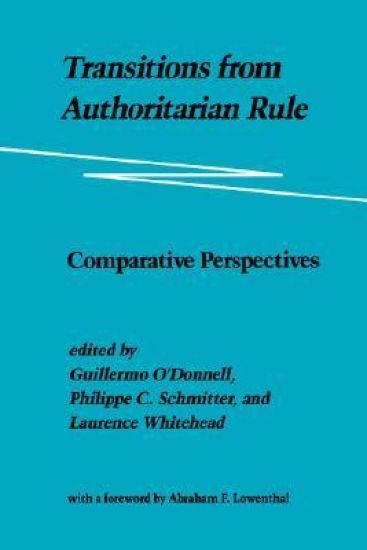
Transitions from Authoritarian Rule
Guillermo O’Donnell; Philippe C. Schmitter; Laurence Whitehead
Johns Hopkins University Press
1986
pokkari
An array of internationally noted scholars examines the process of democratization in Southern Europe and Latin America. The authors provide new interpretations of both current and historical efforts of nations to end periods of authoritarian rule and to initiate transition to democracy, efforts that have met with widely varying degrees of success and failure. Extensive case studies of individual countries, a comparative overview, and a synthesis conclusions offer important insights for political scientists, students, and all concerned with the prospects for democracy. In Volume 3, despite the unique contexts of transitions in individual countries, significant points of comparison emerge — such as the influence of foreign nations and the role of agents outside the government. These analyses explore both intra- and interregional similarities and differences.

Historical Dictionary of the Philippines
Guillermo Artemio; Win May Kyi
Scarecrow Press
1996
sidottu
Selection of background information was culled for historical value to contemporary political, economic, and cultural life of the Filipino people. Cross references within the entries will prove particularly useful for finding other relevant information on certain topics. Includes map and chronology.

Leapfrog depicts one summer in the life of a very poor young boy in Havana ofthe late ’50s. He has superhero fantasies, hangs around with the neighborhood kids, smokes cigarettes, tells very lame jokes: “By the way, do you know who died? No. Someone who was alive. Laughter.” The kids fight, discuss the mysteries of religion and sex, and play games — such as leapfrog. So vivid and so very credible, Leapfrog reads as if Rosales had simply transcribed everything that he’d heard or said for this one moving and touching book about a lost childhood. Leapfrog was a finalist for Cuba’s prestigious Casa de las Americas award in 1968. Years later, Rosales’s sister told The Miami Herald that Rosales felt he hadn’t won the prize because his book lacked sufficient leftist fervor, and that subtle critiques of cruel children and hypocritical adults throughout the playful recollections had clearly “rankled” state officials. In the end the novel never appeared in Cuba. It was first published in Spain in 1994, a year after Rosales’s death.

A photograph of two men, cowboy-hatted and -booted and discreetly holding hands, is the departure point in a groundbreaking study on masculinity and homosexuality in Mexico. Just Between Us, an ethnography of intimacy and affection between men, explores the concept of masculine identity and homoeroticism, expressing the difficulties men face in maintaining their masculinity while expressing intimacy and affection.Using fieldwork from rural Sonora, Mexico, Guillermo Nuñez Noriega posits that men accept this intimacy outside gender categories and stereotypes, despite the traditional patriarchal society. This work contests homophobia and the heterosexual ideal of men and attempts to break down the barriers between genders.The photograph Nuñez Noriega uses to explore the shifting attitudes and perceptions of sexuality and gender provokes more questions than answers. Recognizing the societal regulations at play, the author demonstrates the existence in contemporary Mexico of an invisible regime of power that constructs and regulates the field of possibilities for men's social actions, especially acts of friendship, affection, and eroticism with other men. The work investigates ""modes of speaking"" about being a man, on being gay, on the implicit meanings of the words homosexual, masculine, trade, fairy, and others—words that construct possibilities for intimacy, particularly affective and erotic intimacy among men.Multiple variants of homoeroticism fall outside the dominant model, Nuñez Noriega argues, a finding that offers many lessons on men and masculine identities. This book challenges patriarchal definitions of sex, gender, and identity; it promotes the unlearning of dominant conventions of masculinity to allow new ways of being.

PID Controllers for Time-Delay Systems
Guillermo J. Silva; Aniruddha Datta; Shankar P. Bhattacharyya
Birkhauser Boston Inc
2004
sidottu
This monograph presents our recent results on the proportional-integr- derivative (PID) controller and its design, analysis, and synthesis. The fo cus is on linear time-invariant plants that may contain a time delay in the feedback loop. This setting captures many real-world practical and in dustrial situations. The results given here include and complement those published in Structure and Synthesis of PID Controllers by Datta, Ho, and Bhattacharyya [10]. In [10] we mainly dealt with the delay-free case. The main contribution described here is the efficient computation of the entire set of PID controllers achieving stability and various performance specifications. The performance specifications that can be handled within our machinery are classical ones such as gain and phase margin as well as modern ones such as Hoo norms of closed-loop transfer functions. Finding the entire set is the key enabling step to realistic design with several design criteria. The computation is efficient because it reduces most often to lin ear programming with a sweeping parameter, which is typically the propor tional gain. This is achieved by developing some preliminary results on root counting, which generalize the classical Hermite-Biehler Theorem, and also by exploiting some fundamental results of Pontryagin on quasi-polynomials to extract useful information for controller synthesis. The efficiency is im portant for developing software design packages, which we are sure will be forthcoming in the near future, as well as the development of further capabilities such as adaptive PID design and online implementation.

Malignant Tales by Clemente Palma
Guillermo I. Castillo-Feliu
University Press of America
1988
sidottu
Malignant Tales is the first and only translation of Clemente Palma's Historietas malignas (1925), a book now out of print in its Spanish original. This translation, then, fills a double void; it makes the narrative accessible to the English-reading public and to those unable to obtain the original text.

El Teatro Mexicano en Cierne 1922 - 1938
Guillermo Schmidhuber
Peter Lang Publishing Inc
1993
sidottu
Este estudio cubre los anos formadores del teatro en Mexico desde 1922, con La Comedia Mexicana, el primer grupo estable, hasta la creacion de El gesticulador, de Rodolfo Usigli, en 1938, pieza considerada fundadora del teatro mexicano. Este periodo teatral es reconstruido con acuciosa precision y grato interes, con documentos e informacion hasta ahora no incorporados a la historia teatral. Junto a los grupos experimentalistas, como el Teatro de Ulises y el Teatro de Orientacion, se incluyen otros logros vanguardistas hasta ahora no reconocidos. Ademas se destaca la aportacion de varios esfuerzos poco estudiados, como El Teatro de Ahora, de Bustillo Oro y Mauricio Magdaleno, asi como la dramaturgia feminista pionera. La primera etapa de Usigli es analizada conjuntamente con sus ensayos de teoria dramatica.
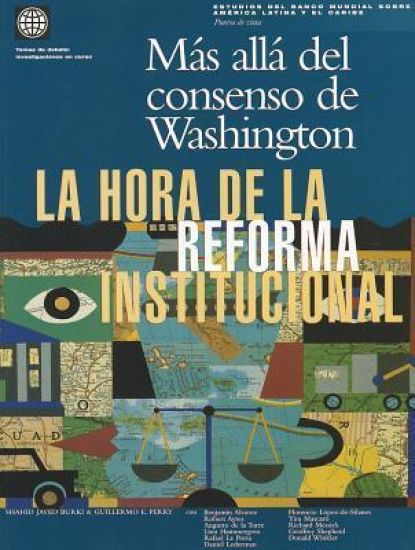
This report examines the precise nature of the required institutional reforms needed to achieve higher sustained rates of growth and to make a dent in poverty reduction and provides a framework for their design and implementation. The more modest objective is to examine how the concepts of the new institutional economics are useful for analyzing and designing institutions and to evaluate how political economy concepts can be used to develop strategies for implementing institutional reforms. Employing some of these concepts, the report demonstrates that sound institutional reform can be technically and politically viable in the following key sectors: banking; capital markets and legal institutions; educational institutions; judicial reforms; and public administration.
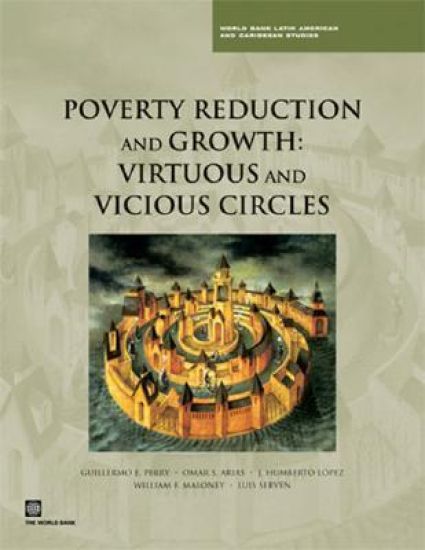
Poverty Reduction and Growth
Guillermo E. Perry; Luis Serven; William F. Maloney
World Bank Publications
2006
nidottu
That raising income levels alleviates poverty, and that growth can be more or less effective in doing so, is well known and has received renewed attention in the search for pro-poor growth. What is less well explored is the reverse channel - that poverty may, in fact, be part of the reason for a country's poor growth performance. This report is about the existence of these vicious circles in Latin America and about the alternatives to convert them into virtuous circles in which poverty reduction and high growth reinforce each other.
Informality
Guillermo Perry; Omar S. Arias; Pablo Fajnzylber; William F. Maloney; Andrew Mason; Jaime Saavedra-Chanduvi
World Bank Publications
2007
nidottu
Informality: Exit and Exclusion analyzes informality in Latin America, exploring root causes and reasons for and implications of its growth. The authors use two distinct but complementary lenses: informality driven by ""exclusion"" from state benefits or the circuits of the modern economy, and driven by voluntary ""exit"" decisions resulting from private cost-benefit calculations that lead workers and firms to opt out of formal institutions. They find both lenses have considerable explanatory power to understand the causes and consequences of informality in the region.""Informality: Exit and Exclusion"" concludes that reducing informality levels and overcoming the ""culture of informality"" will require actions to increase aggregate productivity in the economy, reform poorly designed regulations and social policies, and increase the legitimacy of the state by improving the quality and fairness of state institutions and policies. Although the study focuses on Latin America, its analysis, approach, and conclusions are relevant for all developing countries."" Informality: Exit and Exclusion"" will be of value to professionals and academics studying labor market, social protection, tax, microenterprise development, and urban public policies, and to those working in government, international organizations, research institutions, and universities.