This high-quality H.E. Harris Folder holds Kennedy Half Dollars starting in 2017. It makes the perfect tool for organizing any collection. 36 openings dated through 2021. 25 openings with no date.
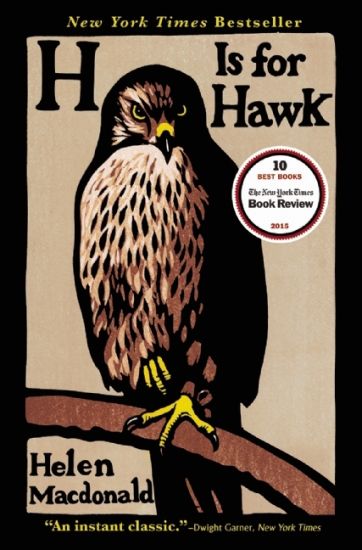
One of the New York Times Book Review's 10 Best Books of the Year One of Slate's 50 Best Nonfiction Books of the Last 25 YearsON MORE THAN 25 BEST BOOKS OF THE YEAR LISTS: including TIME (#1 Nonfiction Book), NPR, O, The Oprah Magazine (10 Favorite Books), Vogue (Top 10), Vanity Fair, Washington Post, Boston Globe, Chicago Tribune, Seattle Times, San Francisco Chronicle (Top 10), Miami Herald, St. Louis Post Dispatch, Minneapolis Star Tribune (Top 10), Library Journal (Top 10), Publishers Weekly, Kirkus Reviews, Slate, Shelf Awareness, Book Riot, Amazon (Top 20)The instant New York Times bestseller and award-winning sensation, Helen Macdonald's story of adopting and raising one of nature's most vicious predators has soared into the hearts of millions of readers worldwide. Fierce and feral, her goshawk Mabel's temperament mirrors Helen's own state of grief after her father's death, and together raptor and human "discover the pain and beauty of being alive" (People). H Is for Hawk is a genre-defying debut from one of our most unique and transcendent voices.
The mesmerizing story of Hillary Clinton's political rebirth, based on eyewitness accounts from deep inside her inner circle and featuring a new introduction from the authorsHillary Clinton's surprising defeat in the 2008 Democratic primary brought her to the nadir of her political career, vanquished by a much younger opponent whose message of change and cutting-edge tech team ran circles around her stodgy campaign. And yet, six years later, she has reemerged as an even more powerful and influential figure, a formidable stateswoman and the presumed front-runner for the 2016 Democratic presidential nomination, marking one of the great political comebacks in history. The story of Hillary's phoenixlike rise is at the heart of HRC, a riveting political biography that journeys into the heart of "Hillaryland" to discover a brilliant strategist at work. Masterfully unfolded by Politico's Jonathan Allen and The Hill's Amie Parnes from more than two hundred top-access interviews with Hillary's intimates, colleagues, supporters, and enemies, HRC portrays a seasoned operator who negotiates political and diplomatic worlds with equal savvy. Loathed by the Obama team in the wake of the primary, Hillary worked to become the president's greatest ally, their fates intertwined in the work of reestablishing America on the world stage. HRC puts readers in the room with Hillary during the most intense and pivotal moments of this era, as she mulls the president-elect's offer to join the administration, pulls the strings to build a coalition for his war against Libya, and scrambles to deal with the fallout from the terrible events in Benghazi--all while keeping one eye focused on 2016. HRC offers a rare look inside the merciless Clinton political machine, as Bill Clinton handled the messy business of avenging Hillary's primary loss while she tried to remain above the partisan fray. Exploring her friendships and alliances with Robert Gates, David Petraeus, Leon Panetta, Joe Biden, and the president himself, Allen and Parnes show how Hillary fundamentally transformed the State Department through the force of her celebrity and her unparalleled knowledge of how power works in Washington. Filled with deep reporting and immersive storytelling, this remarkable portrait of the most important female politician in American history is an essential inside look at the woman who may be our next president.
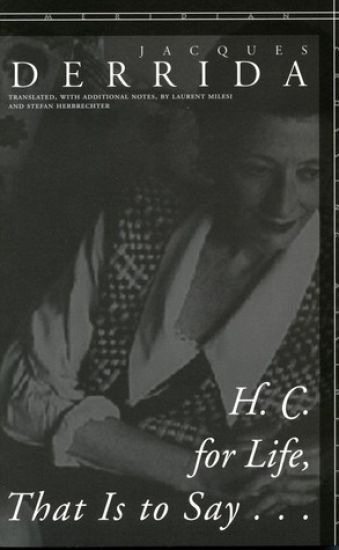
H. C. for Life, That Is to Say . . . is Derrida's literary critical recollection of his lifelong friendship with Hélène Cixous. The main figure that informs Derrida's reading here is that of "taking sides." While Hélène Cixous in her life and work takes the side of life, "for life," Derrida admits always feeling drawn to the side of death. Rather than being an obvious choice, taking the side of life is an act of faith, by wagering one's life on life. H. C. for Life sets up and explores this interminable "argument" between Derrida and Cixous as to what death has in store deep within life itself, before the end. In addition to being a memoir, it is also a theoretical confrontation—for example about the meaning of "might" and "omnipotence," and a philosophical and philological analysis of the crypts within the vast oeuvre of Hélène Cixous. Finally, the book is Derrida's tribute to the thought of the woman whom he regards as one of the great French poets, writers, and thinkers of our time.
H. C. for Life, That Is to Say . . . is Derrida's literary critical recollection of his lifelong friendship with Hélène Cixous. The main figure that informs Derrida's reading here is that of "taking sides." While Hélène Cixous in her life and work takes the side of life, "for life," Derrida admits always feeling drawn to the side of death. Rather than being an obvious choice, taking the side of life is an act of faith, by wagering one's life on life. H. C. for Life sets up and explores this interminable "argument" between Derrida and Cixous as to what death has in store deep within life itself, before the end. In addition to being a memoir, it is also a theoretical confrontation—for example about the meaning of "might" and "omnipotence," and a philosophical and philological analysis of the crypts within the vast oeuvre of Hélène Cixous. Finally, the book is Derrida's tribute to the thought of the woman whom he regards as one of the great French poets, writers, and thinkers of our time.
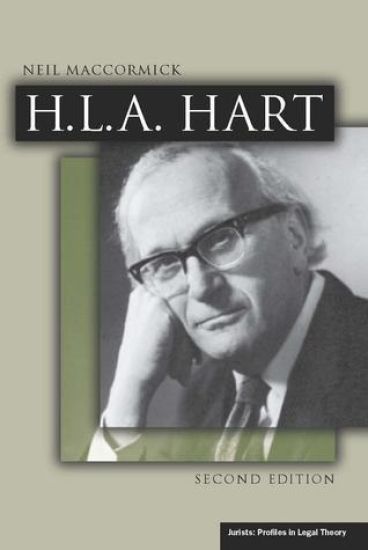
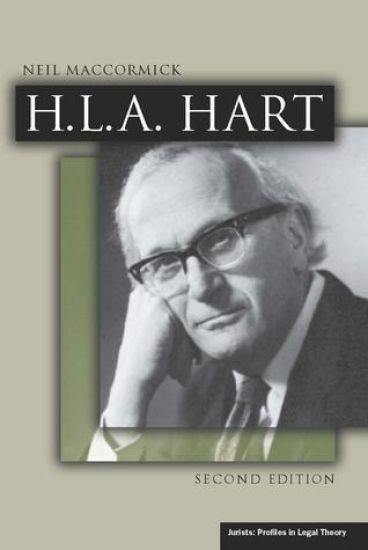
In this substantially revised second edition, Neil MacCormick delivers a clear and current introduction to the life and works of H.L.A. Hart, noted Professor of Jurisprudence at Oxford University from 1952 to 1968. Hart established a worldwide reputation through his powerful philosophical arguments and writings in favor of liberalizing criminal law and applying humane principles to punishment. This book demonstrates that Hart also made important contributions to analytical jurisprudence, notably by clarifying many terms and concepts used in legal discourse, including the concept of law itself. Taking into account developments since the first edition was published, this book provides a constructively critical account of Hart's legal thought. The work includes Hart's ideas on legal reasoning, judicial discretion, the social sources of law, the theory of legal rules, the sovereignty of individual conscience, the notion of obligation, the concept of a right, and the relationship between morality and the law. MacCormick actively engages with current scholarly interpretations, bringing this accessible account of England's greatest legal philosopher of the twentieth century up-to-date.
In this substantially revised second edition, Neil MacCormick delivers a clear and current introduction to the life and works of H.L.A. Hart, noted Professor of Jurisprudence at Oxford University from 1952 to 1968. Hart established a worldwide reputation through his powerful philosophical arguments and writings in favor of liberalizing criminal law and applying humane principles to punishment. This book demonstrates that Hart also made important contributions to analytical jurisprudence, notably by clarifying many terms and concepts used in legal discourse, including the concept of law itself. Taking into account developments since the first edition was published, this book provides a constructively critical account of Hart's legal thought. The work includes Hart's ideas on legal reasoning, judicial discretion, the social sources of law, the theory of legal rules, the sovereignty of individual conscience, the notion of obligation, the concept of a right, and the relationship between morality and the law. MacCormick actively engages with current scholarly interpretations, bringing this accessible account of England's greatest legal philosopher of the twentieth century up-to-date.
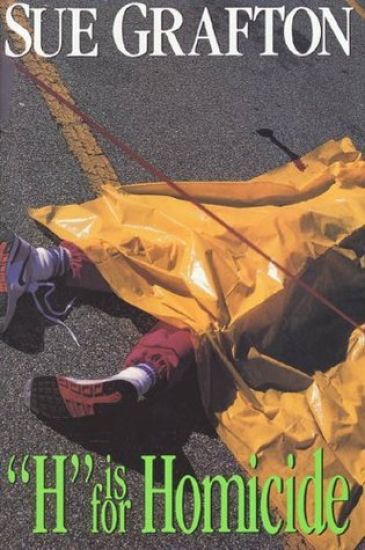
His name was Parnell Perkins, and until shortly after midnight, he'd been a claims adjustor for California Fidelity. Then someone came along and put paid to that line of work. And to any other. Parnell Perkins had been shot at close range and left for dead in the parking lot outside California Fidelity's offices. To the cops, it looked like a robbery gone sour. To Kinsey Millhone, it looked like the cops were walking away from the case. She didn't like the idea that a colleague and sometime drinking companion had been murdered. Or the idea that his murderer was loose and on the prowl. It made her feel exposed. Vulnerable. Bibianna Diaz was afraid for her life. If there was one thing she knew for sure, it was that you didn't cross Raymond Maldonado and live to tell the tale. And Bibianna had well and truly crossed him, running out on his crazy wedding plans and going into hiding in Santa Teresa--light years away from the Los Angeles barrio that was home turf to Raymond and his gang. Now she needed money to buy time, to make sure she'd put enough space between them. And the quickest way she knew to get money was to work an insurance scam--just like the ones Raymond was running down in L.A. The trouble was, Bibianna picked California Fidelity as her mark. And it wasn't long before her name surfaced in one of Parnell Perkins's open files and Kinsey was on her case. But so, too, was her spurned suitor, Raymond Maldonado. He had a rap sheet as long as his arm, a hair-trigger temper that was best left untested, and an inability to take no for an answer. He also had Tourette's syndrome, which did nothing to smooth out the kinks in his erratic and often violent behavior. All in all, Raymond Maldonado was not someone to spend a lot of time hanging out with. Unfortunately for Kinsey, she didn't have a lot of choice in the mater. Not after the love-sick Raymond kidnapped Bibianna. Like it or not, Kinsey was stuck babysitting Bibianna along with Raymond and his macho crew. You might say she was a prisoner of love. It may be Kinsey Millhone's most complicated and risk-filled case. It certainly is Sue Grafton's wittiest venture into low-life crime. It's "H" is for Homicide, and it confirms yet again that Kinsey Millhone is "a wonderful character, tough but not brutish, resourceful and sensitive, a fit knight to walk those mean streets with her male predecessors" (the Los Angeles Times) and that Sue Grafton is "a heads-up delight" (Detroit News). "A" Is for Alibi"B" Is for Burglar"C" Is for Corpse"D" Is for Deadbeat"E" Is for Evidence"F" Is for Fugitive"G" Is for Gumshoe"H" Is for Homicide"I" Is for Innocent"J" Is for Judgment"K" Is for Killer"L" is for Lawless"M" Is for Malice"N" Is for Noose"O" Is for Outlaw"P" Is for Peril "Q" Is for Quarry"R" Is for Ricochet "S" Is for Silence "T" Is for Trespass"U" Is for Undertow "V" Is for Vengeance "W" Is for Wasted "X"
On the evening of February 17, 1864, the Confederacy's H. L. Hunley sank the Union's formidable sloop of war the USS Housatonic and became the first submarine in world history to sink an enemy ship. But after accomplishing such a feat, the Hunley and her crew of eight also vanished beneath the cold Atlantic waters off Charleston, South Carolina. For generations, the legend of the Hunley grew as searchers prowled the harbor, looking for remains. Even after the submarine was definitively located in 1995 and recovered five years later, those legends have continued to flourish. In a tour de force of document-sleuthing and insights gleaned from the excavation of this remarkable vessel, the distinguished Civil War - era historian Tom Chaffin presents the most thorough telling of the Hunley's story possible. Of panoramic breadth, this saga begins long before the submarine was even assembled and follows the tale into the boat's final hours and through its recovery in 2000. Engaging and groundbreaking, "The H. L. Hunley" provides the definitive account of a fabled craft.
In spite of the fact that Wells produced more than fifty widely read and varied novels, he has long been relegated to the back shelf of literature. This first critical study to investigate thoroughly Wells s role as a creative artist provides a reassessment of Wells as a major novelist in the perspective of twentieth-century literature, comparing him with Joyce and James."
H.G. Adler: Life, Literature, Legacy is the first collection of essays in English dedicated to the life and work of German-language author H. G. Adler. Among the international scholars of German, Jewish, and Holocaust literature and history who reveal the range of Adler’s legacy across genres are Adler’s son, Jeremy Adler, and Peter Filkins, translator of Adler’s trilogy, Panorama (The Journey).Together, the essays examine Adler’s writing in relation to his life, especially his memory as a survivor of the Nazi death camps and his posthumous recognition for having produced a Gesamkunstwerk, an aesthetic synthesis of the Shoah. The book carries the moral charge of Adler’s work, moving beyond testimony to a complex dialectic between fact and fiction, exploring Adler’s experiments with voice and the ethical work of literary engagement with the Shoah.
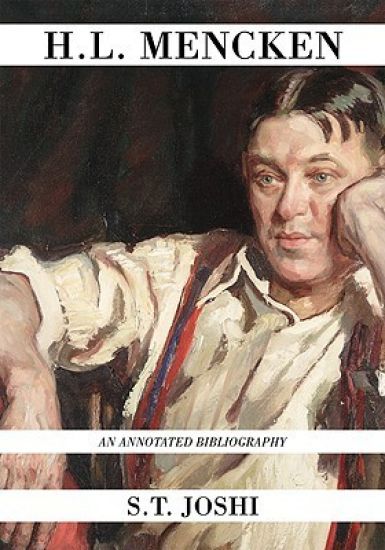
Baltimore native Henry Louis Mencken (1880-1956) was an essayist, literary critic, magazine editor, novelist, and journalist. Starting as a reporter for the Baltimore Morning Herald at the turn of the century, Mencken eventually became associated with the Baltimore Sun and his work for the newspaper spanned five decades. In H.L. Mencken: An Annotated Bibliography, S.T. Joshi provides the most exhaustive and comprehensive bibliography of the writings of H. L. Mencken ever assembled. It presents detailed information on his book publications from 1903 to the present, with a full list of editions and reprints. Most significantly, it presents for the first time a comprehensive annotated listing of his magazine and newspaper work (including more than 1,500 anonymous editorials for the Baltimore Sun, Baltimore Evening Sun, and other papers, which have never been listed in any previous bibliographies), a thorough index to his book reviews, and a full list of interviews Mencken gave during his lifetime. Word counts of nearly every item in the bibliography have been supplied, and the book has been thoroughly indexed by name, title, and periodical. Because every item has been annotated, scholars and students can, for the first time, gain an idea of the subject-matter of all Mencken's writings, especially his magazine and newspaper work. The indexes will allow users to locate any given item with ease. The chronological arrangement of each section allows users to understand the growth and development of Mencken's work, making this volume an invaluable resource.
H of H Playbook is an explosion of thought, in drawings and language, about a Greek tragedy called Herakles by the 5th-century BC poet Euripides. In myth Herakles is an embodiment of manly violence who returns home after years of making war on enemies and monsters (his famous "Labors of Herakles") to find he cannot adapt himself to a life of peacetime domesticity. He goes berserk and murders his whole family. Suicide is his next idea. Amazingly, this does not happen. Due to the intervention of his friend Theseus, Herakles comes to believe he is not, after all, indelibly stained by his own crimes, nor is his life without value. It remains for the reader to judge this redemptive outcome. "I think there is no such thing as an innocent landscape," said Anselm Kiefer, painter of forests grown tall on bones.
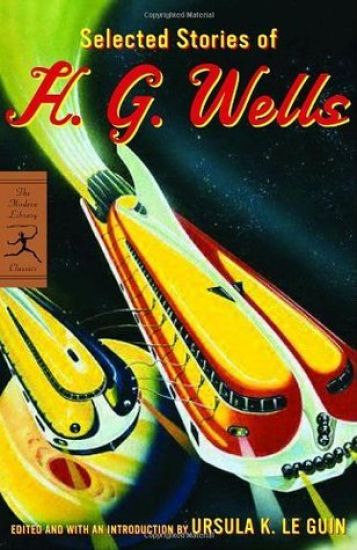
Ursula K. Le Guin's selection of twenty-six stories showcases H. G. Wells's genius and reintroduces readers to his singular talent for making the unbelievable seem utterly plausible. He envisioned a sky filled with airplanes before Orville Wright ever left the ground. He described the spectacle of space travel decades before men set foot on the moon. H. G. Wells was a visionary, a man of science with an enduring literary touch, and his originality and inventiveness are fully on display in this essential collection. "Wells imagined both dark and bright futures because his creed allowed both while promising neither, and because the eighty years of his life were years of immense intellectual and technological accomplishment and appalling violence and destruction."--Ursula K. Le Guin, from the introduction "Everything one imagines in the way of genius and fun."--Rebecca West Including these stories: "A Slip Under the Microscope" "The Remarkable Case of Davidson's Eyes" "The Plattner Story" "Under the Knife" "The Crystal Egg" "The New Accelerator" "The Stolen Body" "The Argonauts of the Air" "In the Abyss" "The Star" "The Land Ironclads" "A Dream of Armageddon" "The Lord of the Dynamos" "The Valley of Spiders" "The Story of the Late Mr. Elvesham" "The Man Who Could Work Miracles" "The Magic Shop" "Mr. Skelmersdale in Fairyland" "The Door in the Wall" "The Presence by the Fire" "A Vision of Judgment" "The Story of the Last Trump" "The Wild Asses of the Devil" "Answer to Prayer" "The Queer Story of Brownlow's Newspaper" "The Country of the Blind"
H.L. Mencken - American Writers 62 was first published in 1966. Minnesota Archive Editions uses digital technology to make long-unavailable books once again accessible, and are published unaltered from the original University of Minnesota Press editions.
The aim of this book is to extend the major finite-dimensional state-space results to a large class of distributed parameter systems. These distributed parameter systems contain models for delay systems, as well as partial differential equations, and allow for unbounded inputs and outputs.
H-infinity engineering continues to establish itself as a discipline of applied mathematics. As such, this extensively illustrated monograph makes a significant application of H-infinity theory to electronic amplifier design, demonstrating how recent developments in H-infinity engineering equip amplifier designers with new tools and avenues for research. The amplification of a weak, noisy, wideband signal is a canonical problem in electrical engineering. Given an amplifier, matching circuits must be designed to maximize gain, minimize noise, and guarantee stability. These competing design objectives constitute a multiobjective optimization problem. Because the matching circuits are H-infinity functions, amplifier design is really a problem in H-infinity multiobjective optimization.
Acclaimed as a work of genius when first published in 1895, The Time Machine represents a revolution in storytelling. H. G. Wells's first--and greatest--novel has been recognized worldwide as a founding text of the science fiction genre and one of the most seminal narratives of the last hundred years.This collection of essays offers a series of original, penetrating, and wide-ranging perspectives on Wells's masterpiece by an international group of major Wells and science fiction scholars. The authors explore such textual topics as the narrative techniques and mythological undertones of the novel as well as its contribution to modern ideas of time and evolution and its focusing of the intellectual cross-currents of the late nineteenth century. This insightful volume captures the innovative imagination, richness, and fascinating ambiguity that resulted in a classic literary work and demonstrates that Wells's novel is both a visionary story and an unstoppable idea.
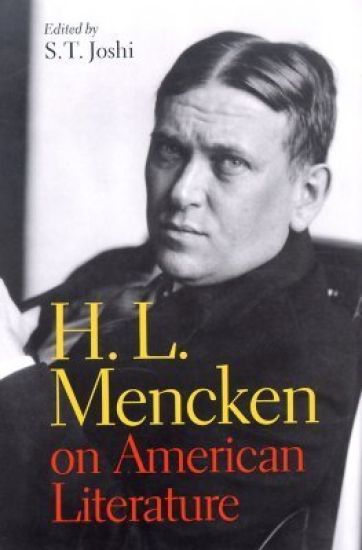
H. L. Mencken was one of the leading literary, social, and cultural critics of the 1910s, '20s, and '30s. However, very few of his literary reviews have been reprinted in any form prior to their appearance in this volume. H. L. Mencken on American Literature presents a comprehensive selection of Mencken's reviews of the leading American writers of his time. Manifestly interested in establishing a canon of American literature, he took great pains to vaunt writers such as Theodore Dreiser, Sherwood Anderson, Willa Cather, F. Scott Fitzgerald, Sinclair Lewis, and James Branch Cabell as the most accomplished authors of the day. At the same time, he found deficiencies in the work of such highly regarded figures as Edith Wharton, W. D. Howells, and Ambrose Bierce, placing them only in the second rank of American writers. Mencken also considered it his function to demolish the popular work of now-forgotten best-selling writers, demonstrating in his inimitably scathing manner the degree to which their catering to a mass audience rendered their work hollow and subliterary. Mencken's reviews are a vast and untapped source for his provocative analyses of the best and the worst in American literature. They are presented here in a scrupulously edited and annotated edition.