Kirjojen hintavertailu. Mukana 11 342 296 kirjaa ja 12 kauppaa.

Kirjahaku

Etsi kirjoja tekijän nimen, kirjan nimen tai ISBN:n perusteella.

1000 tulosta hakusanalla HENRY CONSTABLE

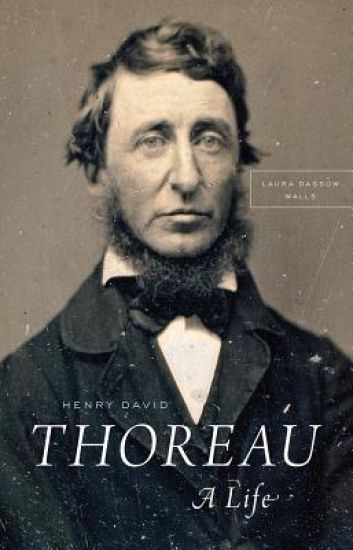
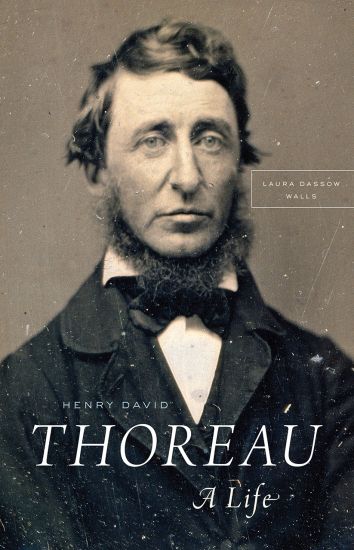
Henry David Thoreau

Henry David Thoreau

Laura Dassow Walls

University of Chicago Press
2017
sidottu
Walden. Yesterday I came here to live. That entry from the journal of Henry David Thoreau, and the intellectual journey it began, would by themselves be enough to place Thoreau in the American pantheon. His attempt to "live deliberately" in a small woods at the edge of his hometown of Concord has been a touchstone for individualists and seekers since the publication of Walden in 1854. But there was much more to Thoreau than his brief experiment in living at Walden Pond. A member of the vibrant intellectual circle centered on his neighbor Ralph Waldo Emerson, he was also an ardent naturalist, a manual laborer and inventor, a radical political activist, and more. Many books have taken up various aspects of Thoreau's character and achievements, but, as Laura Dassow Walls writes, "Thoreau has never been captured between covers; he was too quixotic, mischievous, many-sided." Two hundred years after his birth, and two generations after the last full-scale biography, Walls restores Henry David Thoreau to us in all his profound, inspiring complexity. Walls traces the full arc of Thoreau's life, from his early days in the intellectual hothouse of Concord, when the American experiment still felt fresh and precarious, and "America was a family affair, earned by one generation and about to pass to the next." By the time he died in 1862, at only forty-four years of age, Thoreau had witnessed the transformation of his world from a community of farmers and artisans into a bustling, interconnected commercial nation. What did that portend for the contemplative individual and abundant, wild nature that Thoreau celebrated? Drawing on Thoreau's copious writings, published and unpublished, Walls presents a Thoreau vigorously alive in all his quirks and contradictions: the young man shattered by the sudden death of his brother; the ambitious Harvard College student; the ecstatic visionary who closed Walden with an account of the regenerative power of the Cosmos. We meet the man whose belief in human freedom and the value of labor made him an uncompromising abolitionist; the solitary walker who found society in nature, but also found his own nature in the society of which he was a deeply interwoven part. And, running through it all, Thoreau the passionate naturalist, who, long before the age of environmentalism, saw tragedy for future generations in the human heedlessness around him. "The Thoreau I sought was not in any book, so I wrote this one," says Walls. The result is a Thoreau unlike any seen since he walked the streets of Concord, a Thoreau for our time and all time.
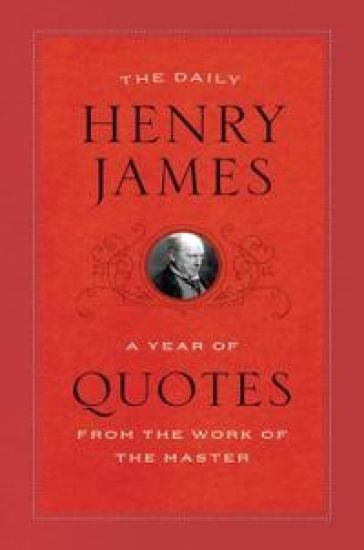
The Daily Henry James

The Daily Henry James

Henry James; Michael Gorra

University of Chicago Press
2016
nidottu
A strange and delightful memento of one of the most lasting literary voices of all time, The Daily Henry James is a little book from a great mind. First published with James's approval in 1911 as the ultimate token of fandom a limited edition quote-of-the-day collection titled The Henry James Year Book this new edition is a gift across time, arriving as we mark the centenary of his death. Drawing on the Master's novels, essays, reviews, plays, criticism, and travelogues, The Daily Henry James offers a series of impressions (for if not of impressions, of what was James fond?) to carry us through the year. From the deepest longings of Isabel Archer to James's insights in The Art of Fiction, longer seasonal quotes introduce each month, while concise bits of wisdom and whimsy mark each day. To take but one example: Isabel, in a quote from The Portrait of a Lady for September 30, muses, "She gave an envious thought to the happier lot of men, who are always free to plunge into the healing waters of action." Featuring a new foreword by James biographer Michael Gorra as well as the original introductions by James and his good friend William Dean Howells, this long-forgotten perennial calendar will be an essential bibelot for James's most ardent devotees and newest converts alike, a treasure to be cherished daily, across all seasons, for years, for ages to come.
Henry Ossawa Tanner

Henry Ossawa Tanner

Marcia M. Mathews

University of Chicago Press
1995
nidottu
Mathews's standard biography of Henry Ossawa Tanner (1859-1937), based on extensive research in archives in this country and family records in France, where Tanner emigrated before the turn of the century to find freedom and acceptance, provides a full account of Tanner's life and art.
Henry David Thoreau

Henry David Thoreau

Laura Dassow Walls

University of Chicago Press
2018
pokkari
“Walden. Yesterday I came here to live.” That entry from the journal of Henry David Thoreau, and the intellectual journey it began, would by themselves be enough to place Thoreau in the American pantheon. His attempt to “live deliberately” in a small woods at the edge of his hometown of Concord has been a touchstone for individualists and seekers since the publication of Walden in 1854. But there was much more to Thoreau than his brief experiment in living at Walden Pond. A member of the vibrant intellectual circle centered on his neighbor Ralph Waldo Emerson, he was also an ardent naturalist, a manual laborer and inventor, a radical political activist, and more. Many books have taken up various aspects of Thoreau’s character and achievements, but, as Laura Dassow Walls writes, “Thoreau has never been captured between covers; he was too quixotic, mischievous, many-sided.” Two hundred years after his birth, and two generations after the last full-scale biography, Walls restores Henry David Thoreau to us in all his profound, inspiring complexity. Walls traces the full arc of Thoreau’s life, from his early days in the intellectual hothouse of Concord, when the American experiment still felt fresh and precarious, and “America was a family affair, earned by one generation and about to pass to the next.” By the time he died in 1862, at only forty-four years of age, Thoreau had witnessed the transformation of his world from a community of farmers and artisans into a bustling, interconnected commercial nation. What did that portend for the contemplative individual and abundant, wild nature that Thoreau celebrated? Drawing on Thoreau’s copious writings, published and unpublished, Walls presents a Thoreau vigorously alive in all his quirks and contradictions: the young man shattered by the sudden death of his brother; the ambitious Harvard College student; the ecstatic visionary who closed Walden with an account of the regenerative power of the Cosmos. We meet the man whose belief in human freedom and the value of labor made him an uncompromising abolitionist; the solitary walker who found society in nature, but also found his own nature in the society of which he was a deeply interwoven part. And, running through it all, Thoreau the passionate naturalist, who, long before the age of environmentalism, saw tragedy for future generations in the human heedlessness around him. “The Thoreau I sought was not in any book, so I wrote this one,” says Walls. The result is a Thoreau unlike any seen since he walked the streets of Concord, a Thoreau for our time and all time.

The Daily Henry David Thoreau

The Daily Henry David Thoreau

Henry David Thoreau; Laura Dassow Walls

University of Chicago Press
2020
pokkari
"Live in each season as it passes; breathe the air, drink the drink, taste the fruit, and resign yourself to the influence of each." Modernity rules our lives by clock and calendar, dividing the stream of time into units and coordinating every passing moment with the universal globe. Henry David Thoreau subverted both clock and calendar, using them not to regulate time's passing but to open up and explore its presence. This little volume thus embodies, in small compass, Thoreau's own ambition to "live in season"--to turn with the living sundial of the world, and, by attuning ourselves to nature, to heal our modern sense of discontinuity with our surroundings. Ralph Waldo Emerson noted with awe that from flowers alone, Thoreau could tell the calendar date within two days; children remembered long into adulthood how Thoreau showed them white waterlilies awakening not by the face of a clock but at the first touch of the sun. As Thoreau wrote in Walden, "Time is but the stream I go a-fishing in. I drink at it; but while I drink I see the sandy bottom and detect how shallow it is." Drawn from the full range of Thoreau's journals and published writings, and arranged according to season, The Daily Henry David Thoreau allows us to discover the endless variation and surprise to be found in the repetitions of mundane cycles. Thoreau saw in the kernel of each day an earth enchanted, one he honed into sentences tuned with an artist's eye and a musician's ear. Thoreau's world lives on in his writing so that we too may discover, even in a fallen world, a beauty worth defending.
Henry Ives Cobb's Chicago

Henry Ives Cobb's Chicago

Edward W. Wolner

University of Chicago Press
2011
sidottu
When championing the commercial buildings and homes that made the Windy City famous, one can't help but mention the brilliant names of their architects - Daniel Burnham, Louis Sullivan, and Frank Lloyd Wright, among others. But few people are aware of Henry Ives Cobb (1859-1931), the man responsible for an extraordinarily rich chapter in the city's turn-of-the-century building boom, and fewer still realize Cobb's lasting importance as a designer of the private and public institutions that continue to enrich Chicago's exceptional architectural heritage. "Henry Ives Cobb's Chicago" is the first book about this distinguished architect and the magnificent buildings he created, including the Newberry Library, the Chicago Historical Society, the Chicago Athletic Association, the Fisheries Building for the 1893 World's Fair, and the Chicago Federal Building. Cobb filled a huge institutional void with his inventive Romanesque and gothic buildings - something that the other giants of architecture, occupied largely with residential and commercial work, did not do. Edward W. Wolner argues that these constructions and the enterprises they housed - including the first buildings and master plan for the University of Chicago - signaled that the city had come of age, that its leaders were finally pursuing the highest ambitions in the realms of culture and intellect. Assembling a cast of colorful characters from a freewheeling age gone by, and including over 140 images of Cobb's most creative buildings, "Henry Ives Cobb's Chicago" is a rare achievement: a dynamic portrait of an architect whose institutional designs decisively changed the city's identity during its most critical phase of development.
Henry IV

Henry IV

James N. Loehlin

Red Globe Press
2008
nidottu
This engaging double-volume Handbook explores the Henry IV plays as texts for performance as they unfold, moment by moment, on the stage. With scene-by-scene commentary, and including an account of their life on stage, film and in criticism, this guide illuminates two plays that together rank as one of Shakespeare's greatest achievements.
Henry James' Narrative Technique

Henry James' Narrative Technique

K. Boudreau

Palgrave Macmillan
2010
sidottu
Henry James Narrative Technique situates Henry James famous method within an emerging modernist tradition with roots in philosophical debates between rationalism and empiricism. This cogent study considers James works in the context of nineteenth-century thought on consciousness, perception, and cognition. Kristin Boudreau makes the compelling argument that these philosophical discussions influenced James depictions of consciousness and are integral to his narrative technique.
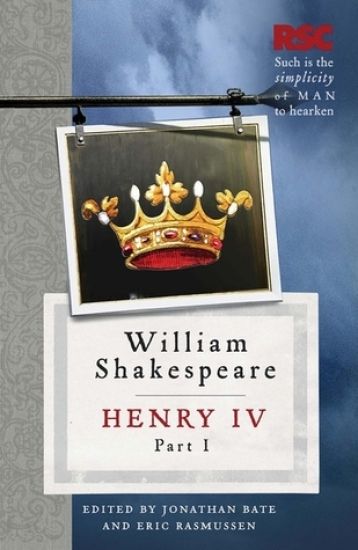
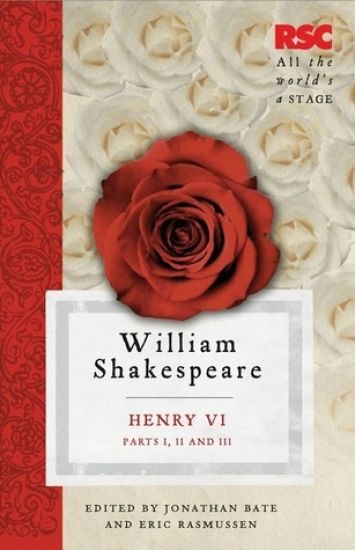
Henry IV, Part I

Henry IV, Part I

Eric Rasmussen; Jonathan Bate

Red Globe Press
2009
nidottu
From the Royal Shakespeare Company – a modern, definitive edition of Shakespeare's tragi-comedy of youth and age, introducing the immortal Sir John Falstaff. With an expert introduction by Sir Jonathan Bate, this unique edition presents a historical overview of Henry IV Part I in performance, takes a detailed look at specific productions, and recommends film versions. Included in this edition are interviews with two leading directors and an actor– Michael Boyd, Adrian Noble and Michael Pennington – providing an illuminating insight into the extraordinary variety of interpretations that are possible. This edition also includes an essay on Shakespeare’s career and Elizabethan theatre, and enables the reader to understand the play as it was originally intended – as living theatre to be enjoyed and performed. Ideal for students, theatre-goers, actors and general readers, the RSC Shakespeare editions offer a fresh, accessible and contemporary approach to reading and rediscovering Shakespeare’s works for the twenty-first century.
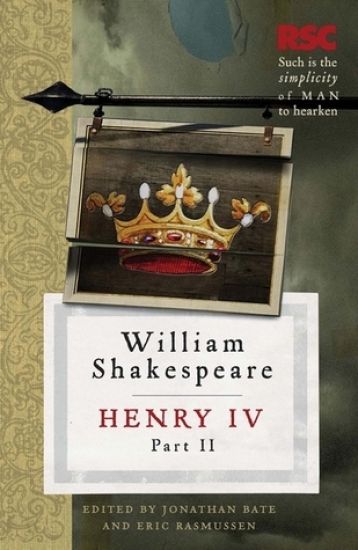
Henry IV, Part II

Henry IV, Part II

Eric Rasmussen; Jonathan Bate

Red Globe Press
2009
nidottu
From the Royal Shakespeare Company – a modern, definitive edition of Shakespeare's profound exploration of a prince's coming of age and the rejection of old Jack Falstaff. With an expert introduction by Sir Jonathan Bate, this unique edition presents a historical overview of Henry IV Part II in performance, takes a detailed look at specific productions, and recommends film versions. Included in this edition are interviews with two leading directors and an actor– Michael Boyd, Adrian Noble and Michael Pennington – providing an illuminating insight into the extraordinary variety of interpretations that are possible. This edition also includes an essay on Shakespeare’s career and Elizabethan theatre, and enables the reader to understand the play as it was originally intended – as living theatre to be enjoyed and performed. Ideal for students, theatre-goers, actors and general readers, the RSC Shakespeare editions offer a fresh, accessible and contemporary approach to reading and rediscovering Shakespeare’s works for the twenty-first century.
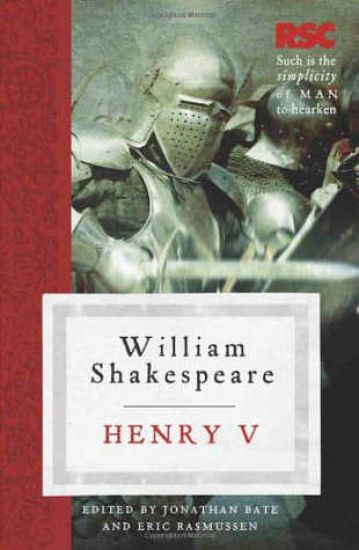
Henry V

Henry V

Eric Rasmussen; Bate Jonathan

Red Globe Press
2010
nidottu
From the Royal Shakespeare Company – a modern, definitive edition of Shakespeare's great exploration of patriotism and war. With an expert introduction by Sir Jonathan Bate, this unique edition presents a historical overview of Henry V in performance, takes a detailed look at specific productions, and recommends film versions. Included in this edition are interviews with four leading directors - Kenneth Branagh, Nicholas Hytner, Michael Boyd and Ed Hall – providing an illuminating insight into the extraordinary variety of interpretations that are possible. This edition also includes an essay on Shakespeare’s career and Elizabethan theatre, and enables the reader to understand the play as it was originally intended – as living theatre to be enjoyed and performed. Ideal for students, theatre-goers, actors and general readers, the RSC Shakespeare editions offer a fresh, accessible and contemporary approach to reading and rediscovering Shakespeare’s works for the twenty-first century.
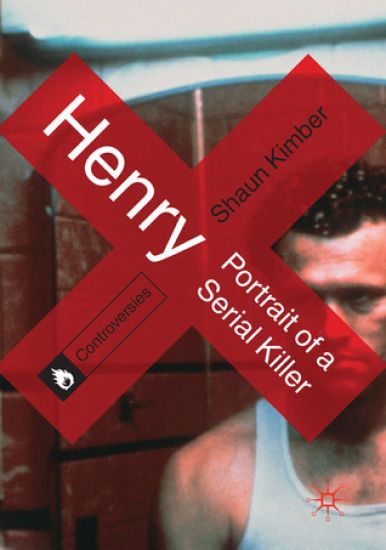
Henry: Portrait of a Serial Killer

Henry: Portrait of a Serial Killer

Shaun Kimber

Red Globe Press
2011
nidottu
Henry: Portrait of a Serial Killer (1985) is a cold-eyed character study based on convicted murderer Henry Lee Lucas. Shaun Kimber's examination of the controversies surrounding the film considers the history and implications of censors' decisions on both sides of the Atlantic, revealing a wide range of social fears relating to film violence.
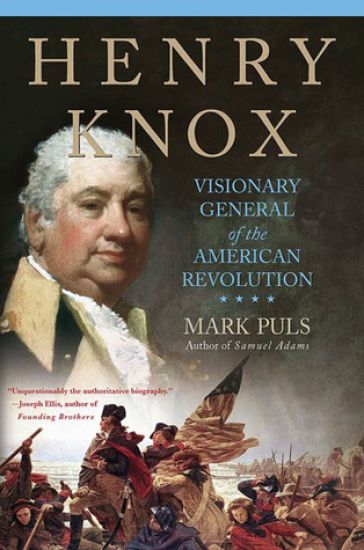
Henry Knox

Henry Knox

Mark Puls

Palgrave Macmillan
2010
nidottu
Here is a compelling portrait of the Revolutionary War general whose skills as an engineer and artilleryman played a key role in all of George Washington's battles including the Siege of Boston (where his use of cannons at Dorchester Heights won back the city) and the Battle of Trenton (where he was in charge of Washington's crossing of the Delaware River). Knox became an major advocate of the U.S. Constitution and served as the nation's first Secretary of War. He was co-founder of the U.S. Navy, laid the foundations for the U.S. Military Academy at West Point and negotiated treaties and set policy with Native Americans.With nail-biting battle scenes, patriotism and deep understanding of his subject, Mark Puls breathes new life into the American Revolution and firmly assigns Knox to his deserved place in history.
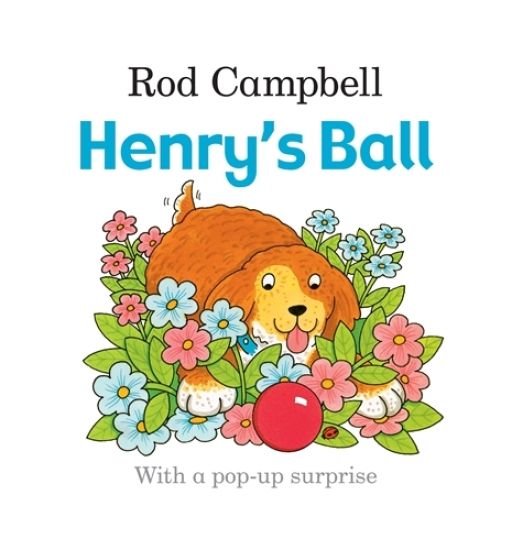
Henry's Ball

Henry's Ball

Campbell Rod

Macmillan Children's Books
2015
pahvisivuinen
Rod Campbell has been a trusted name in early learning for over thirty years.In Henry's Ball toddlers can follow Henry the dog as he goes into the garden to find his ball, and spot lots of friendly animals along the way. With bright, bold artwork, a satisfying pop-up ending and lots of familiar animals, Henry's Ball is a hide-and-seek story that is sure to keep young children entertained for hours - and the thick card pages and chunky cased cover make it great for small hands.
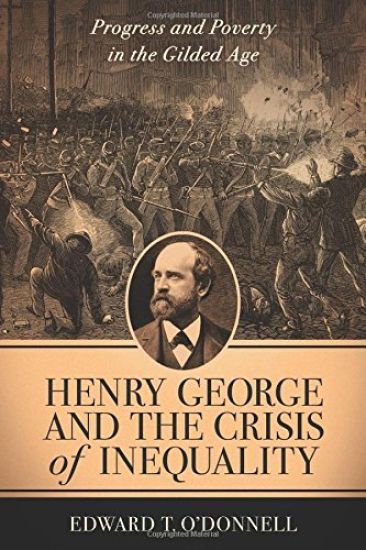
Henry George and the Crisis of Inequality

Henry George and the Crisis of Inequality

Edward O'Donnell

Columbia University Press
2015
sidottu
America's remarkable explosion of industrial output and national wealth at the end of the nineteenth century was matched by a troubling rise in poverty and worker unrest. As politicians and intellectuals fought over the causes of this crisis, Henry George (1839-1897) published a radical critique of laissez-faire capitalism and its threat to the nation's republican traditions. Progress and Poverty (1879), which became a surprise best-seller, offered a provocative solution for preserving these traditions while preventing the amassing of wealth in the hands of the few: a single tax on land values. George's writings and years of social activism almost won him the mayor's seat in New York City in 1886. Though he lost the election, his ideas proved instrumental to shaping a popular progressivism that remains essential to tackling inequality today. Edward T. O'Donnell's exploration of George's life and times merges labor, ethnic, intellectual, and political history to illuminate the early militant labor movement in New York during the Gilded Age. He locates in George's rise to prominence the beginning of a larger effort by American workers to regain control of the workplace and obtain economic security and opportunity. The Gilded Age was the first but by no means the last era in which Americans confronted the mixed outcomes of modern capitalism. George's accessible, forward-thinking ideas on democracy, equality, and freedom have tremendous value for contemporary debates over the future of unions, corporate power, Wall Street recklessness, government regulation, and political polarization.
Henry George and the Crisis of Inequality

Henry George and the Crisis of Inequality

Edward O'Donnell

Columbia University Press
2017
pokkari
America's remarkable explosion of industrial output and national wealth at the end of the nineteenth century was matched by a troubling rise in poverty and worker unrest. As politicians and intellectuals fought over the causes of this crisis, Henry George (1839-1897) published a radical critique of laissez-faire capitalism and its threat to the nation's republican traditions. Progress and Poverty (1879), which became a surprise best-seller, offered a provocative solution for preserving these traditions while preventing the amassing of wealth in the hands of the few: a single tax on land values. George's writings and years of social activism almost won him the mayor's seat in New York City in 1886. Though he lost the election, his ideas proved instrumental to shaping a popular progressivism that remains essential to tackling inequality today. Edward T. O'Donnell's exploration of George's life and times merges labor, ethnic, intellectual, and political history to illuminate the early militant labor movement in New York during the Gilded Age. He locates in George's rise to prominence the beginning of a larger effort by American workers to regain control of the workplace and obtain economic security and opportunity. The Gilded Age was the first but by no means the last era in which Americans confronted the mixed outcomes of modern capitalism. George's accessible, forward-thinking ideas on democracy, equality, and freedom have tremendous value for contemporary debates over the future of unions, corporate power, Wall Street recklessness, government regulation, and political polarization.
Henry Stubbe and the Beginnings of Islam
Henry Stubbe (1632-1676) was an extraordinary English scholar who challenged his contemporaries by writing about Islam as a monotheistic revelation in continuity with Judaism and Christianity. His major work, The Originall & Progress of Mahometanism, was the first English text to document the Prophet Muhammad's life positively, celebrate the Qur'an as a divine revelation, and praise the Muslim toleration of Christians, undermining a long legacy of European prejudice and hostility. Nabil Matar, a leading scholar of Islamic-British relations, standardizes Stubbe's text and situates it within England's theological and intellectual climate in the seventeenth century. He shows how, to draw a historical portrait of Muhammad, Stubbe embraced travelogues, Latin commentaries, studies on Jewish customs and Scripture, and, most important, Arabic chronicles, many written by medieval Christian Arabs who had lived in the midst of the Islamic polity. No European writer before or for a long time after Stubbe produced anything similar to what he wrote about Muhammad the "great Prophet," Ali the "gallant" advocate, and the "standing miracle" of the Qur'an. Stubbe's book therefore makes a unique contribution to the study of the representation of Islam in Western thought.