Kirjojen hintavertailu. Mukana 11 342 296 kirjaa ja 12 kauppaa.

Kirjahaku

Etsi kirjoja tekijän nimen, kirjan nimen tai ISBN:n perusteella.

447 tulosta hakusanalla Hadrian F. Cook

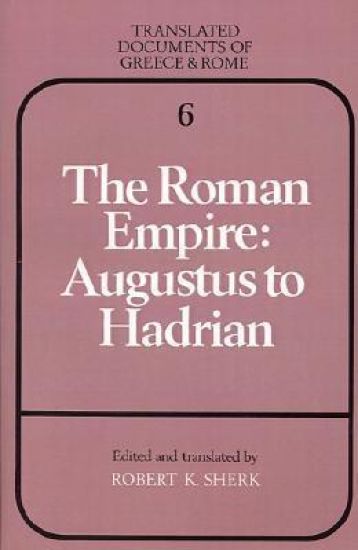
The Roman Empire: Augustus to Hadrian

The Roman Empire: Augustus to Hadrian

Cambridge University Press
1988
pokkari
This is a collection of Greek and Latin inscriptions and papyri in English translation. They are all primary sources for our knowledge of the history of Rome from the first emperor, Augustus, to Hadrian. The theme of the present collection is the political and military activity of the Roman emperors to the period of Hadrian, the men who carried out their policies, the institutions of their administrations, the wars they conducted, the reaction of their subjects, the imperial ruler cult, their letters and orders. A second part is concerned with the society of the ordinary citizen or provincial subject in his daily life. Brief commentary and notes accompany the translations, making this book a collection of historical material to supplement the major literary sources like Tacitus, Suetonius, Dio and others in the study of Roman imperial history. This book will be useful to students and teachers of Roman history and classical civilisation.
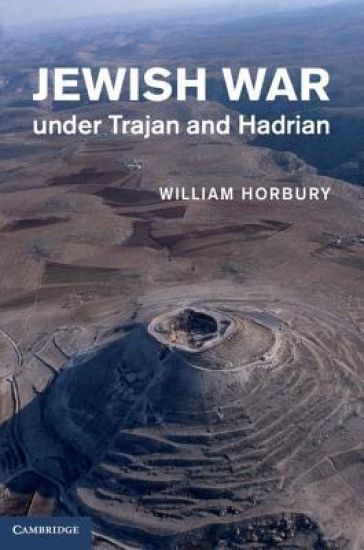
Jewish War under Trajan and Hadrian

Jewish War under Trajan and Hadrian

William Horbury

Cambridge University Press
2014
sidottu
Two major Jewish risings against Rome took place in the years following the destruction of Jerusalem - the first during Trajan's Parthian war, and the second, led by Bar Kokhba, under Hadrian's principate. The impact of these risings not only on Judaea, but also on Cyrene, Egypt, Cyprus and Mesopotamia, is shown by accounts in both ancient Jewish and non-Jewish literature. More recently discovered sources include letters and documents from fighters and refugees, and inscriptions attesting war and restoration. Historical evaluation has veered between regret for a pointless bloodbath and admiration for sustained resistance. William Horbury offers a new history of these risings, presenting a fresh review of sources and interpretations. He explores the period of Jewish war under Trajan and Hadrian not just as the end of an era, but also as a time of continuity in Jewish life and development in Jewish and Christian origins.
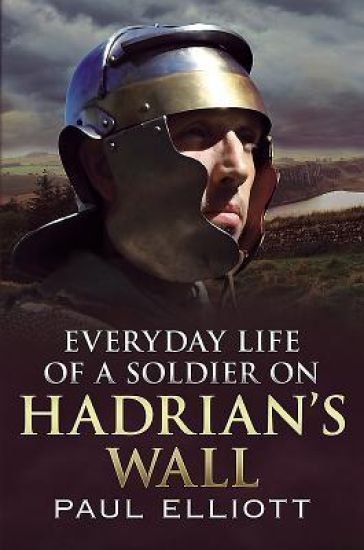
Everyday Life of a Soldier on Hadrian's Wall
Walk the Wall, gaze northwards across hostile territory, man the turrets and milecastles...What was life like for the Roman troops stationed on Hadrian's Wall? Follow the life of one man, a Tungrian soldier, through recruitment, training, garrison duty and war. Focussing on a single point in time and one fort on the Wall, we explore every aspect of military life on this bleak and remote frontier. Where was he born? What did he spend his money on? How did he fight? What did he eat? Did he have lice or fleas? Archaeology and the accounts of ancient writers come together to paint a vivid picture of a soldier on the Wall soon after its completion in AD 130. Historical reconstruction and experimentation fill in the gaps that are left. Step back into the past, step into the marching boots of Tungrian soldiers as they patrol Rome's greatest frontier.
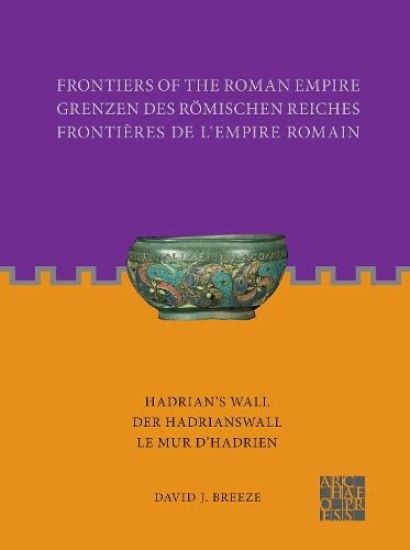
Frontiers of the Roman Empire: Hadrian's Wall
The frontiers of the Roman Empire together form the largest monument of one of the world’s greatest ancient states. They stretch for some 7,500 km through 20 countries which encircle the Mediterranean Sea. The remains of these frontiers have been studied by visitors and later by archaeologists for several centuries. Many of the inscriptions and sculptures, weapons, pottery and artefacts created and used by the soldiers and civilians who lived on the frontier can be seen in museums. Equally evocative of the lost might of Rome are the physical remains of the frontiers themselves. The aim of this series of books is not only to inform the interested visitor about the history of the frontiers but to act as a guidebook as well. Emperor Hadrian ordered the construction of the great Wall which still bears his name ‘to separate the barbarians from the Romans’ (Historia Augusta, Life of Hadrian, 11). The complex of military installations, 117 km long, but with an extension without the linear barrier for about 40 km down the west coast, contained 74 km of stone wall, 43 km of turf rampart, 200 towers, 100 fortlets, 20 forts, took years to construct and was probably still being modified when Hadrian died in July 138. This highly illustrated book offers an accessible summary of Hadrian’s Wall, and an overview of the wider context of the Roman frontiers.
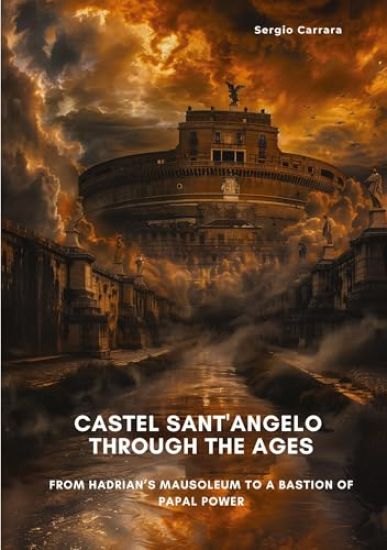
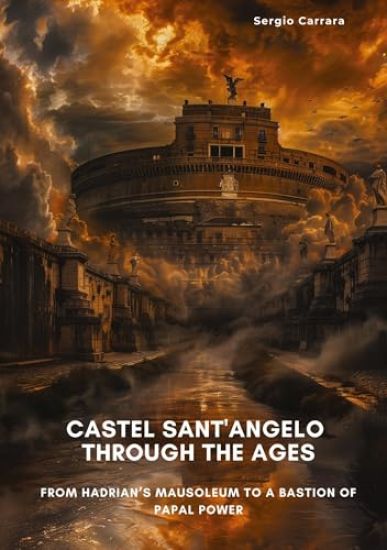
Castel Sant'Angelo Through the Ages: From Hadrian's Mausoleum to a Bastion of Papal Power
Perched along the banks of the Tiber River, Castel Sant'Angelo stands as a silent witness to nearly two millennia of Roman history. Originally conceived as Emperor Hadrian's monumental mausoleum, this iconic structure evolved into a medieval fortress, a papal residence, and a powerful symbol of resilience and authority. In "Castel Sant'Angelo Through the Ages," historian Sergio Carrara takes readers on an extraordinary journey through the layers of architectural innovation, political intrigue, and cultural transformation that shaped this enduring landmark. From its beginnings as a testament to imperial grandeur to its strategic role during the turbulent Middle Ages and Renaissance, the book explores how Castel Sant'Angelo mirrored the shifting tides of power in Rome. Richly illustrated and meticulously researched, this work unveils the stories behind the fortress's fortifications, the legends of the Archangel Michael, and its critical role during the Sack of Rome. A testament to the ingenuity and adaptability of human ambition, Castel Sant'Angelo continues to captivate as a bridge between the ancient and the modern. Whether you're a history enthusiast, an architecture aficionado, or simply curious about Rome's storied past, this book offers an unparalleled glimpse into the life of one of the Eternal City's most iconic monuments.
Castel Sant'Angelo Through the Ages: From Hadrian's Mausoleum to a Bastion of Papal Power
Perched along the banks of the Tiber River, Castel Sant'Angelo stands as a silent witness to nearly two millennia of Roman history. Originally conceived as Emperor Hadrian's monumental mausoleum, this iconic structure evolved into a medieval fortress, a papal residence, and a powerful symbol of resilience and authority. In "Castel Sant'Angelo Through the Ages," historian Sergio Carrara takes readers on an extraordinary journey through the layers of architectural innovation, political intrigue, and cultural transformation that shaped this enduring landmark. From its beginnings as a testament to imperial grandeur to its strategic role during the turbulent Middle Ages and Renaissance, the book explores how Castel Sant'Angelo mirrored the shifting tides of power in Rome. Richly illustrated and meticulously researched, this work unveils the stories behind the fortress's fortifications, the legends of the Archangel Michael, and its critical role during the Sack of Rome. A testament to the ingenuity and adaptability of human ambition, Castel Sant'Angelo continues to captivate as a bridge between the ancient and the modern. Whether you're a history enthusiast, an architecture aficionado, or simply curious about Rome's storied past, this book offers an unparalleled glimpse into the life of one of the Eternal City's most iconic monuments.
Karl der Große und Papst Hadrian I.

Karl der Große und Papst Hadrian I.

Katharina Ströhl

Grin Publishing
2009
pokkari
Diese Hausarbeit handelt -nach den drei Romz gen gegliedert- die Beziehung zwischen Karl dem Gro en und Papst Hadrian I. ab. Karl der Gro e, welcher seit 786 K nig der Franken und seit 774 K nig der Langobarden war, regierte das karolingische Frankenreich in seiner Bl tezeit. Sein Vater, Pippin der J ngere, war der erste K nig der Franken und ebnete seinem Sohn durch die K nigserhebung dahingehend den Weg. Aufgrund des allm hlichen und keineswegs geradlinigen Aufstiegs der Karolinger verfolgt die karolingische Historiographie erkennbar den Zweck der Herrschaftslegitimierung. So antwortete Papst Zacharias auf die Frage, ob es gut sei, dass die K nige im Frankenreich keine k nigliche Macht mehr bes en, dass es besser sei, denjenigen als K nig zu bezeichnen, der die Macht habe und dass daher kraft apostolischer Autorit t Pippin K nig werden solle. Daraufhin wurde Pippin von den fr nkischen Gro en in der alten merowingischen K nigsstadt Soissons zum K nig erhoben. Damit begann ein entscheidendes B ndnis zwischen den Karolingern und den P psten, wobei die P pste einen Schutzherren gegen ber den Langobarden suchten. So wie Papst Zacharias, Papst Stephan II., Papst Paul I. und Papst Stephan III. das B ndnis dahingehend f r sich nutzten, diente es Papst Hadrian I. ebenso. Hadrian I. war seit dem 9. Februar 772 bis zu seinem Tode am 25. Dezember 795 Papst, er entstammte der r mischen Aristokratie und war ein Neffe des Dux und Primicerius Theodotus. Anfangs versuchte Hadrian eine freundliche Politik sowohl gegen ber den Karolingern als auch den Langobarden, doch durch Desiderius' Forderungen nach einer pers nlichen Begegnung mit ihm, der Salbung der S hne Karlmanns zu Frankenk nigen, um eine un berbr ckbare Kluft zwischen Karl und dem Papst zu schaffen, und der Besetzung von Faenza, den Dukat von Ferrara sowie Comacchios und der Einschlie ung Ravennas, war Hadrian zu entschiedener Parteinahme gezwungen. In den ersten Monaten der Regierung Hadrians wird noch keine Verbindung
Biblical Commentaries from the Canterbury School of Theodore and Hadrian
This volume includes the first edition of a previously unknown text which throws light on the intellectual history of early medieval Europe. The biblical commentaries represent the teaching of two gifted Greek scholars who came to England from the Byzantine East. Theodore, Archbishop of Canterbury (668–90) and his colleague Hadrian (d. 710) taught the Bible to a group of Anglo-Saxon scholars, who recorded their teaching. The resulting commentaries illustrate the high point of biblical scholarship between late antiquity and the Renaissance. The commentaries, found by Professor Bischoff in Milan in 1936, constitute one of the most important medieval texts discovered this century. The edition is introduced by substantial chapters on the intellectual background of the texts and their manuscript sources. The Latin texts themselves are accompanied by facing English translations and extensive notes.
Biblical Commentaries from the Canterbury School of Theodore and Hadrian
This volume includes the first edition of a previously unknown text which throws wholly new light on the intellectual history of early medieval Europe. The biblical commentaries represent the teaching of two gifted Greek scholars who came to England from the Byzantine East. Theodore, Archbishop of Canterbury (668–90) and his colleague Hadrian (d. 710) taught the Bible to a group of Anglo-Saxon scholars, who recorded their teaching. The resulting commentaries illustrate the high point of biblical scholarship between late antiquity and the Renaissance. The commentaries, found by Professor Bischoff in Milan in 1936, constitute one of the most important medieval texts discovered this century. The edition is introduced by substantial chapters on the intellectual background of the texts and their manuscript sources. The Latin texts themselves are accompanied by facing English translations and extensive notes.
An Accidental Pope: Essays on Frederick Rolfe's Hadrian the Seventh
The novel Hadrian the Seventh has received critical attention in the past, there remain significant gaps in the scholarship regarding Frederick Rolfe's novel which this collection of essays aims to fill, particularly in terms of its political, religious, philosophical, and literary aspects. The topics discussed include the novel's place in literary history, both in terms of bridging Decadence with modernism as well as drawing on the Victorian literary tradition inspiring later authors, as well as its genre, offering new perspectives, casting Frederick Rolfe's novel as a humorous book in the Decadent tradition, and engaging in camp aesthetics. Political issues, frequently connected with religious matters owing to the book's subject matter, are represented by contributions discussing the role of the Catholic Church in the 20th century, engaging in discussion with Leo XIII's conciliatory, modernist approach. The issues addressed include the tension between temporal and spiritual power, and the Vatican's role in international policymaking. Some chapters focus on specific scenes, such as the conclave and the Pope's visit to St. Andrew's College provide insight into the protagonist's dislike of established Vatican politics.
Frontiers of the Roman Empire: The Hinterland of Hadrian?s Wall
The frontiers of the Roman Empire together form the largest monument of one of the world’s greatest ancient states. They stretch for some 7,500 km through 20 countries which encircle the Mediterranean Sea. The remains of these frontiers have been studied by visitors and later by archaeologists for several centuries. Many of the inscriptions and sculptures, weapons, pottery and artefacts created and used by the soldiers and civilians who lived on the frontier can be seen in museums. Equally evocative of the lost might of Rome are the physical remains of the frontiers themselves. The aim of this series of books is not only to inform the interested visitor about the history of the frontiers but to act as a guidebook as well. In this important and beautifully illustrated book, David Breeze elucidates the context of the most famous frontier, Hadrian’s Wall. The zone to north and south of the Wall was a heavily militarised landscape of roads, bridges, forts, fortlets and towers, but also the towns, settlements and supply infrastructure on which the army depended. As the invaluable gazetteer shows, the area is now rich in superb sites and museums, allowing modern people countless rich insights into the world of the soldiers and civilians of the period.
Canterbury Glosses from the School of Theodore and Hadrian: Vol. 1, the Leiden Glossary
The 'Leiden Glossary' provides a record of the understanding and interpretation of the patristic and grammatical texts studied at the Canterbury School of Theodore and Hadrian, regarded by Bede as the high point of Christian culture in early Anglo-Saxon England. Each entry in the 'Leiden Glossary' is provided with detailed commentary on the sources consulted by the two Canterbury masters (earlier glossaries; Isidore; Eucherius) and the later uses of the glossary by compilers of the Epinal-Erfurt and Corpus glossaries. The 'Leiden Glossary' is thus a key witness to one of the greatest schools of learning in the early Middle Ages.
Konsolidierung statt Expansion? Kaiser Hadrian und die Idee einer "grand strategy"
Studienarbeit aus dem Jahr 2019 im Fachbereich Geschichte - Weltgeschichte - Fr hgeschichte, Antike, Note: 1,0, Friedrich-Schiller-Universit t Jena (Institut f r Altertumswissenschaften), Sprache: Deutsch, Abstract: Die Hausarbeit besch ftigt sich mit dem Forschungsfeld der "grand strategy" im R mischen Reich und der zentralen Fragestellung, ob Hadrian nach einer solchen Strategie handelte. Da sein politisches Wirken immer wieder mit einer Z sur in der r mischen Geschichte gleichgesetzt und er sogar teilweise zum Friedenskaiser stilisiert wurde, blickt die Arbeit mit besonderem Augenmerk auf dessen Regierungszeit. Auch der These des Friedenskaisers nimmt sich die Hausarbeit an und versucht die Hintergr nde der Schlussfolgerung offenzulegen. Das R mische Reich nimmt bis heute eine einzigartige Stellung ein. Es umfasste nicht nur fl chenm ig eines der gr ten Territorien der Weltgeschichte, sondern hatte au erdem ber eine gewaltige Zeitspanne Bestand. Gr nde daf r waren vor allem die milit rische berlegenheit sowie die fortw hrende Integration der unterworfenen V lker in das Reich. Dabei standen den R mern gewaltige Ressourcen an Mensch und Material zur Verf gung, welche die Basis f r stetige Weiterentwicklung sowie Expansion darstellten und dem Weltreich zu Wohlstand verhalfen. Die Kombination und Balance aus Unterwerfung und Integration war das r mische Erfolgsrezept. Doch die aggressive Au enpolitik zur Eroberung eines gewaltigen Imperiums erfuhr in der Kaiserzeit eine scheinbare Z sur: Auf dem Zenit seiner Macht begann Rom seine Vorgehensweise in gro em Stil zu ndern. Die stetige Expansion des Reiches stie immer mehr an ihre Grenzen und veranlasste die Kaiser zum strategischen Umdenken. Die Sicherheit des Imperiums und seine innere Stabilit t r ckten in den Fokus der Politik. Gerade die Regierungszeit des Kaisers Hadrian wird dahingehend bis heute als beispielhaft angesehen, aber gleichzeitig kontrovers diskutiert. Doch kann tats chlich eine solche Trendwen