

Kirjahaku
Etsi kirjoja tekijän nimen, kirjan nimen tai ISBN:n perusteella.
368 tulosta hakusanalla Hadrien Seret; Lucile Lhoste
Bernd Schubert Braunstra e 37 87700 Memmingen Polizei Memmingen Frau Michaela Hartmann Am Schanzmeister 2 87700 Memmingen Sehr geehrte Damen und Herren, sehr geehrte Frau Michaela Hartmann, heute Mittag als ich zu Hause bei meinen Eltern war, meine Eltern waren nicht zu Hause, hielt sich ein gro er wei er wolf hnlicher Hund ohne Leine vor dem Garten meines Vater Rainer Schubert Polizeihauptkommissar in Rente auf. Der Hundehalter rief laut nach dem gef hrlichen Hund, die Bestie h tte in den Garten hereinspringen k nnen und auf mich losgehen k nnen. Der Hundehalter lie es darauf ankommen ob es eine Konfrontation in meinem Elternhaus kommt.

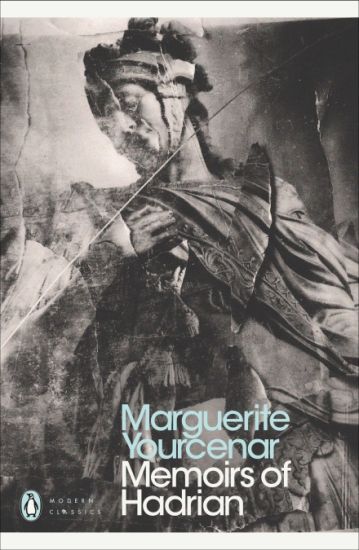
Framed as a letter from the Roman Emperor Hadrian to his successor, Marcus Aurelius, Marguerite Yourcenar's Memoirs of Hadrian is translated from the French by Grace Frick with an introduction by Paul Bailey in Penguin Modern Classics.In her magnificent novel, Marguerite Yourcenor recreates the life and death of one of the great rulers of the ancient world. The Emperor Hadrian, aware his demise is imminent, writes a long valedictory letter to Marcus Aurelius, his future successor. The Emperor meditates on his past, describing his accession, military triumphs, love of poetry and music, and the philosophy that informed his powerful and far-flung rule. A work of superbly detailed research and sustained empathy, Memoirs of Hadrian captures the living spirit of the Emperor and of Ancient Rome.Marguerite de Crayencour (1903-88), who went by the inexact anagrammatic pen name 'Marguarite Yourcenar', was a Belgian-born French novelist and essayist, the first woman to be elected to the Académie française. Her first novel Alexis was published in 1929; in 1939 she was invited to America by her lover Grace Frick, where she lectured in comparative literature at Sarah Lawrence College in New York. When Mémoires d'Hadrien was first published in 1951, it was an immediate success and met with great critical acclaim.If you enjoyed Memoirs of Hadrian, you might like Robert Graves's I, Claudius, also available in Penguin Modern Classics.'A timeless masterpiece ... every page is informed by her profound scholarship'Paul Bailey, author of Gabriel's Lament'Yourcenar conjures worlds. She can make us share passion - for beauty, bodies, ideas, even power - and consider it closely at the same time. She is that most extraordinary thing: a sensual thinker'Independent on Sunday
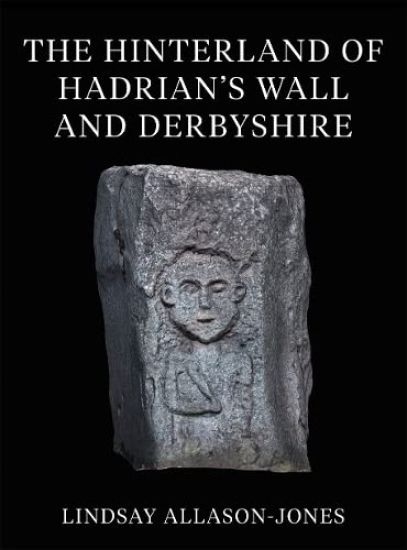
The Hinterland of Hadrian's Wall and Derbyshire
Lindsay Allason-Jones
Oxford University Press
2023
sidottu
Corpus Signorum Imperii Romani for Great Britain is an international project to catalogue all the decorated stonework from the Roman Empire. Any stone that has been carved with motifs of any sort, whether an altar, statue, relief, architectural embellishment, tombstone or graffiti. During this project several new pieces of Romano-British sculpture have been discovered and some long-lost have been re-found. Many of the stones have curious histories, and even folk legends about them. Others fill gaps in our knowledge about the Romans in the north of England and offer evidence about religious practice in the Military Zone at this time.
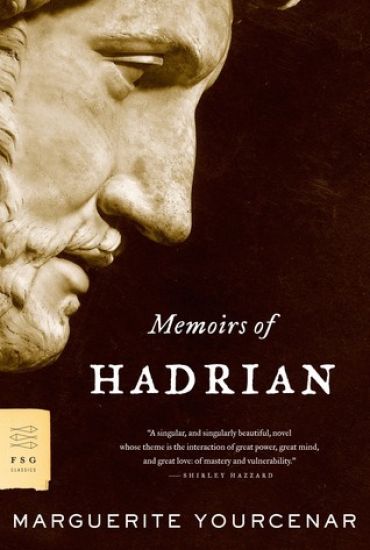
Both an exploration of character and a reflection on the meaning of history, "Memoirs of Hadrian" has received international acclaim since its first publication in France in 1951. In it, Marguerite Yourcenar reimagines the Emperor Hadrian's arduous boyhood, his triumphs and reversals, and finally, as emperor, his gradual reordering of a war-torn world, writing with the imaginative insight of a great writer of the twentieth century while crafting a prose style as elegant and precise as those of the Latin stylists of Hadrian's own era.

Roman Empire: Augustus to Hadrian
Cambridge University Press
1988
sidottu
This is a collection of Greek and Latin inscriptions and papyri in English translation.
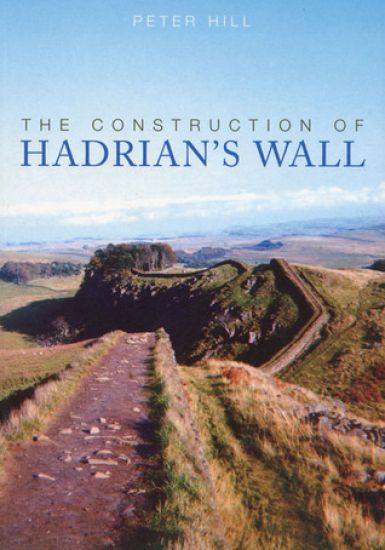
Hadrian's Wall was a small part of the thousands of miles of Roman frontiers, but presents the most magnificent spectacle. Its 90-mile length was conceived on a grand scale, with a stone wall 10 Roman feet thick and 15 high, and has been the subject of research for four centuries. There is, however, one aspect which has never been studied in detail: the practicalities of how it was actually built.This book examines every aspect of the work needed to construct the Wall, and analyses all the building operations including quarrying, stone dressing, transport and scaffolding. It is presented in a form accessible to the interested layman as well as to the student, and among other new conclusions throws light on the attitude of the Roman army to the work.
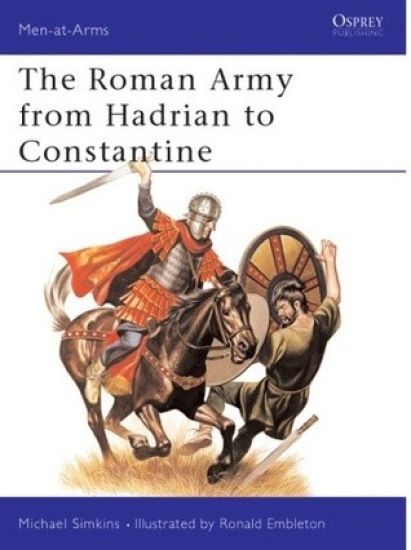
The year AD 122 was the first time a Roman Emperor had set foot in the Province of Britannia since the invasion in AD 43.No doubt he had read many reports concerning the damage caused by marauding tribesmen crossing from what is now Scotland into the Province. Hadrian, therefore, decided - in the words of his biographer - 'to build a wall to separate the Romans from the Barbarians'.This engaging work from author Michael Simkins explores in depth the organisation, equipment, weapons and armour of the Roman Army from Hadrian to Constantine, one of the most exciting periods in Roman history.
Wall Of Hadrian, With Especial Reference To Recent Discoveries
John Collingwood Bruce
KESSINGER PUBLISHING CO
2009
pokkari
The Wall Of Hadrian, With Especial Reference To Recent Discoveries
John Collingwood Bruce
KESSINGER PUBLISHING, LLC
2010
sidottu
The Emperor Hadrian: A Picture of the Graeco-Roman World in His Time
Ferdinand Gregorovius
Literary Licensing, LLC
2014
nidottu
The Emperor Hadrian
Ferdinand Gregorovius; Mary E Robinson
British Library, Historical Print Editions
2011
pokkari
Title: The Emperor Hadrian: a picture of the Graeco-Roman world in his time. ... Translated by Mary E. Robinson. With a bibliography.]Publisher: British Library, Historical Print EditionsThe British Library is the national library of the United Kingdom. It is one of the world's largest research libraries holding over 150 million items in all known languages and formats: books, journals, newspapers, sound recordings, patents, maps, stamps, prints and much more. Its collections include around 14 million books, along with substantial additional collections of manuscripts and historical items dating back as far as 300 BC.The GENERAL HISTORICAL collection includes books from the British Library digitised by Microsoft. This varied collection includes material that gives readers a 19th century view of the world. Topics include health, education, economics, agriculture, environment, technology, culture, politics, labour and industry, mining, penal policy, and social order. ++++The below data was compiled from various identification fields in the bibliographic record of this title. This data is provided as an additional tool in helping to insure edition identification: ++++ British Library Gregorovius, Ferdinand; Robinson, Mary E.; 1898. xviii, 414 p.; 8 . 9041.m.12.
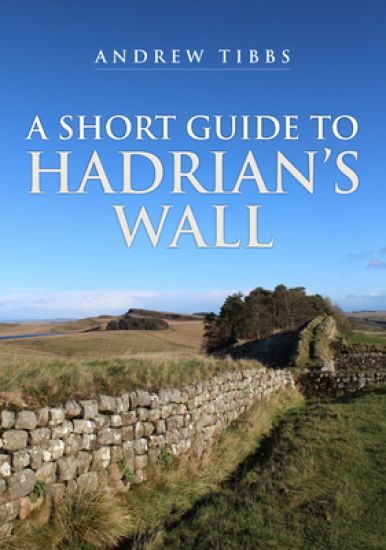
Andrew Tibbs, the man behind the popular @RomanScotland account, brings together an overview of the history and archaeology of this famous monument, along with a guide to the key Roman sites to visit in and around Hadrian’s Wall. The history of the wall starts with the earliest Roman invasion of northern Britain. This led to the construction of the Stanegate, a chain of forts across northern England superseded by the construction of Hadrian’s Wall. Thirty key sites are examined, all of which can be visited, and Tibbs provides maps, illustrations and details of each of these. This is the perfect book for anybody interested in the history of the wall and the rich variety of interesting sites that can be found along it.
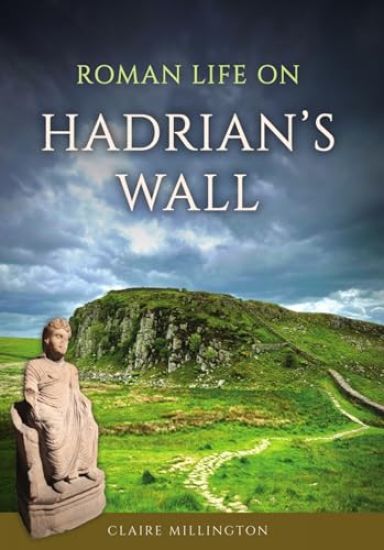
Pioneering merchants and traders, soldiers’ wives and children, and slaves are among the many civilians who settled alongside the Roman army at Hadrian’s Wall. These people’s lives can be traced through the things they left behind. Children lost socks and wooden swords when they played, and wives and daughters wore fancy hairpins that fell out when they went to the bathhouses. Hunting dogs were fed and bred for soldiers’ sport, and slaves kept fort hypocausts burning. Roman Life on Hadrian’s Wall pieces together this wide-ranging archaeological evidence to reveal these people’s stories. It will inform and change how you think about everyday Roman life at this remote frontier, the most-visited Roman remains in Britain.

Built almost 2,000 years ago by the Roman occupiers of Britain, Hadrian's Wall is one of the most famous and identifiable World Heritage Sites. When two old friends, one American and one British, reunited to trek the length of the Wall, they reminisced about the past while sharing apprehension about the future. This memoir of their coast-to-coast voyage examines Roman history, drawing parallels between the fall of the Roman Empire and the recent political developments and uncertainties in the United Kingdom and the United States. The authors also share their often humorous encounters with locals they met along the way while hiking in incessant rain.