Kirjahaku
Etsi kirjoja tekijän nimen, kirjan nimen tai ISBN:n perusteella.
1000 tulosta hakusanalla Harald Taglinger
Harald Hoiback's study focuses upon two events - the 1918 Allied meeting at Doullens when the Allies ceded control to an officer, and the Norwegian decision in 1940 to leave control in the hands of a colonel which led to the Nazi invasion.
Most famously designer of the great Lancaster bomber, Roy Chadwick was one of the most significant personalities in the aviation world in the first half of the twentieth century. His career encompassed both wood-and-fabric biplanes before the Great War and the futuristic delta-winged Vulcan jet bomber. This classic biography by Harald Penrose – himself a significant figure in the development of aviation – tells his fascinating story. Both Roy Chadwick and the author lived through the same contemporary events, so this biography of the great Avro designer not only deals with aircraft evolution but reflects the atmosphere of those days. No sooner was one design under way than Roy Chadwick was imagining the next and the next, totalling some two hundred. They range from initial experience with pre-Great War precursors and the world-famous Avro 504 trainer through a sequence of prototypes including ultra-light aeroplanes, powerful fighters and bombers. In particular the Avro 504 with its 20 variants, the twin-engined Anson and the mighty Lancaster were built in huge numbers. In a swift-moving story Penrose depicts Chadwick’s career through the changing years from the early revelation of flight to his 54th year when he initiated design of the futuristic delta-winged Vulcan, ending with his tragic death in the crash of the Avro Tudor II airliner in 1947.
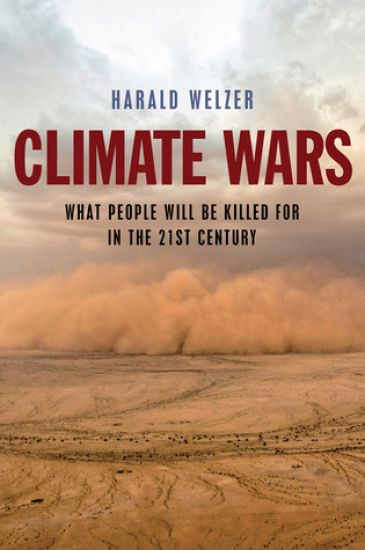
Struggles over drinking water, new outbreaks of mass violence, ethnic cleansing, civil wars in the earth's poorest countries, endless flows of refugees: these are the new conflicts and forces shaping the world of the 21st century. They no longer hinge on ideological rivalries between great powers but rather on issues of class, religion and resources. The genocides of the last century have taught us how quickly social problems can spill over into radical and deadly solutions. Rich countries are already developing strategies to garner resources and keep 'climate refugees' at bay. In this major book Harald Welzer shows how climate change and violence go hand in hand. Climate change has far-reaching consequences for the living conditions of peoples around the world: inhabitable spaces shrink, scarce resources become scarcer, injustices grow deeper, not only between North and South but also between generations, storing up material for new social tensions and giving rise to violent conflicts, civil wars and massive refugee flows. Climate change poses major new challenges in terms of security, responsibility and justice, but as Welzer makes disturbingly clear, very little is being done to confront them. The paperback edition includes a new Preface that brings the book up to date and addresses the most recent developments and trends.
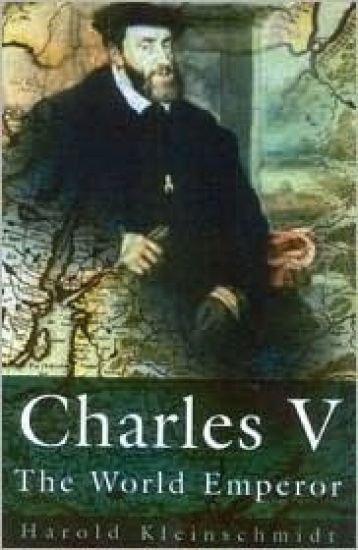
In his biography of Charles V Harald Kleidschmidt paints a vivid portrait of one of the most intriguing of the great European monarchs.
THE TIMES TOP 10 BESTSELLER***SHORTLISTED FOR THE BAILLIE GIFFORD PRIZE FOR NON-FICTION******SHORTLISTED FOR THE BRITISH ACADEMY BOOK PRIZE******SHORTLISTED FOR THE CUNDILL HISTORY PRIZE***A Book of the YearThe Times * Sunday Times * Telegraph * New Statesman * Financial Times * Irish Independent * Daily Mail'A masterpiece' SPECTATOR'Exemplary [and] important... This is the kind of book few writers possess the clarity of vision to write' MAX HASTINGS, SUNDAY TIMES'Magnificent... There are great lessons in the nature of humanity to be learnt here' TELEGRAPHGermany, 1945: a country in ruins. Cities have been reduced to rubble and more than half of the population are where they do not belong or do not want to be. How can a functioning society ever emerge from this chaos?In bombed-out Berlin, Ruth Andreas-Friedrich, journalist and member of the Nazi resistance, warms herself by a makeshift stove and records in her diary how a frenzy of expectation and industriousness grips the city. The Americans send Hans Habe, an Austro-Hungarian Jewish journalist and US army soldier, to the frontline of psychological warfare - tasked with establishing a newspaper empire capable of remoulding the minds of the Germans. The philosopher Hannah Arendt returns to the country she fled to find a population gripped by a manic loquaciousness, but faces a deafening wall of silence at the mention of the Holocaust.Aftermath is a nuanced panorama of a nation undergoing monumental change. 1945 to 1955 was a raw, wild decade poised between two eras that proved decisive for Germany's future - and one starkly different to how most of us imagine it today. Featuring black and white photographs and posters from post-war Germany - some beautiful, some revelatory, some shocking - Aftermath evokes an immersive portrait of a society corrupted, demoralised and freed - all at the same time.
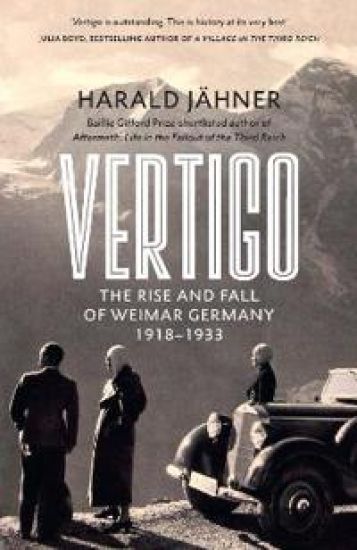
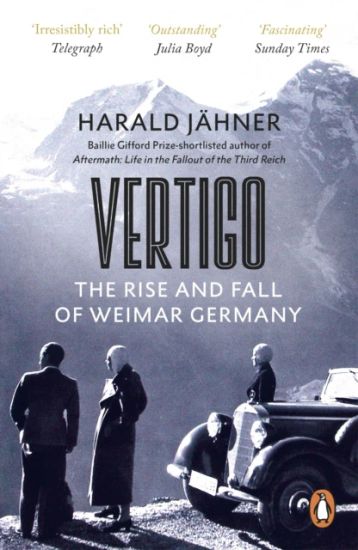
*An Observer Book of the Year, 2024*'This is one of the most gripping accounts of an era spanning war defeat, humiliation and failed revolution in 1918 to the violence, intimidation and propaganda of the Nazis' rise to power in 1933. It contains many lessons for the world now.' - John Kampfner, bestselling author of Why The Germans Do It Better'Vertigo is outstanding. Harald Jähner’s gift for illuminating the big picture with telling detail gives the reader an uncanny sense of what it was actually like to be present in Germany during the Weimar Republic. This is history at its very best.' - Julia Boyd, bestselling author of Travellers in the Third ReichGermany, 1918: a country in flux. The First World War is over, the nation defeated. Revolution is afoot, the monarchy has fallen and the victory of democracy beckons. Everything must change with the times.Out of the ashes of the First World War, Germany launches an unprecedented political project: its first democratic government. The Weimar Republic is established. The years that follow see political extremism, economic upheaval, revolutionary violence and the transformation of Germany. Tradition is shaken to its core as a triumphant procession of liberated lifestyles emerges. Women conquer the racetracks and tennis courts, go out alone in the evenings, cut their hair short and cast the idea of marriage aside. Unisex style comes into fashion, androgynous and experimental. People revel in the discovery of leisure, filling up boxing halls, dance palaces and the hotspots of the New Age, embracing the department stores’ promise of happiness and accepting the streets as a place of fierce political battles.In this short burst of life between the wars, amidst a frenzy of change, comes a backlash from those who do not see themselves reflected in the new Republic. Little by little, deep divisions begin to emerge. Divisions that would bring devastating consequences, altering the course of the twentieth century and the lives of millions around the world. Vertigo is a vital, kaleidoscopic portrait of a pivotal moment in German history.Praise for Aftermath by Harald Jähner:'Exemplary [and] important... This is the kind of book few writers possess the clarity of vision to write' - Max Hastings, Sunday Times'A masterpiece' - Spectator'Magnificent... There are great lessons in the nature of humanity to be learnt here' - Rupert Christiansen, The Telegraph'Jähner is masterly in telling the tragic, despicable, comedic and uplifting stories of those who were there' - Katja Hoyer, The Times'Thought-provoking... Jähner's unflinching account is a reminder that historical truths are rarely simple and always nuanced' - Daily Mail'A reminder that the German experience will always stand apart' - Economist
Germany, 1918: a country in flux. The First World War is lost, traditional values are shaken to their core, revolution is afoot and the victory of democracy beckons. Everything must change with the times. The country is abuzz with talk of the 'new woman', the 'new man', 'new living' and 'new thinking'. What follows is the establishment of the Weimar Republic, an economic crisis and the transformation of Germany. A triumphant procession of liberated lifestyles emerges. Women conquer the racetracks and tennis courts, go out alone in the evenings, cut their hair short and cast the idea of marriage aside. Unisex style comes into fashion, androgynous and experimental. People revel in the discovery of leisure, filling up boxing halls, dance palaces and the hotspots of the New Age, embracing the department stores' promise of happiness and accepting the streets as a place of fierce battles. So much of this short burst of life between the wars seems amazingly modern today, including, amidst a frenzy of change, the backlash from those who did not see themselves reflected in this new culture. Little by little, deep divisions in society began to emerge. Divisions that would have devastating consequences, altering the course of the twentieth century and the lives of millions around the world.Praise for Aftermath by Harald Jahner:'Exemplary [and] important... This is the kind of book few writers possess the clarity of vision to write' - Max Hastings, Sunday Times'A masterpiece' - Spectator'Magnificent... There are great lessons in the nature of humanity to be learnt here' - Rupert Christiansen, The Telegraph'Jahner is masterly in telling the tragic, despicable, comedic and uplifting stories of those who were there' - Katja Hoyer, The Times'Thought-provoking... Jahner's unflinching account is a reminder that historical truths are rarely simple and always nuanced' - Daily Mail'A reminder that the German experience will always stand apart' - Economist

Juan de Mariana and Early Modern Spanish Political Thought
Harald E. Braun
Ashgate Publishing Limited
2007
sidottu
The Jesuit Juan de Mariana (1535-1624) is one of the most misunderstood authors in the history of political thought. His treatise De rege et regis institutione libri tres (1599) is dedicated to Philip III of Spain. It was to present the principles of statecraft by which the young king was to abide. Yet soon after its publication, Catholic and Calvinist politiques in France started branding Mariana a regicide. De rege was said to empower the private individual to kill a legitimate king. Its 'pernicious doctrines' were blamed for the murder of Henry IV in 1610, and it was burned at the order of the parlement of Paris. Modern historians have tended to build on this interpretation and consider De rege a stepping stone towards modern pluralist and democratic thought. Nothing could be further from the truth. The notion of Mariana as an uncompromising theorist of resistance is in fact based on the distorted reading of a few select sentences from the first book of the treatise. This study offers a radical departure from the old view of Mariana as an early modern constitutionalist thinker and advocate of regicide. Thorough analysis of the text as a whole reveals him to be a shrewd and creative operator of political language as well as a champion of the church and bishops of Castile. The argument as a whole is informed by a Catholic-Augustinian view of human nature. Mariana's bleak, at times downright cynical view of man imparts focus and coherence to a text that challenges well established terminological boundaries and political discourses. In the first instance, his deeply pessimistic appraisal of human virtue justifies his disregard of positive law. He is thus able to mould diverse elements extracted from Roman and canon law, scholastic theology and humanist literature into a deliberately equivocal discourse of reason of state. Finally, this secular interpretation of the world of politics is cleverly yoked to a thoroughly clerical agenda of reform. In fact, reason of state is made to propagate an episcopal monarchy. De rege is exceptional in that it strings together a curious scholastic theory of the origins of society, a conservative ideology of absolute monarchy and a breathtakingly radical vision of theocratic renewal of Spanish government and society. Juan de Mariana and Early Modern Political Thought elucidates the differentiated nature of political debate in Habsburg Spain. It confirms the complexity of Spanish political life in the later sixteenth and early seventeenth century. Complementing recent work on Catholic political thought, the European reception of Machiavelli, and Spanish Habsburg government, this study offers a more complete and holistic picture of early modern Spanish political culture.
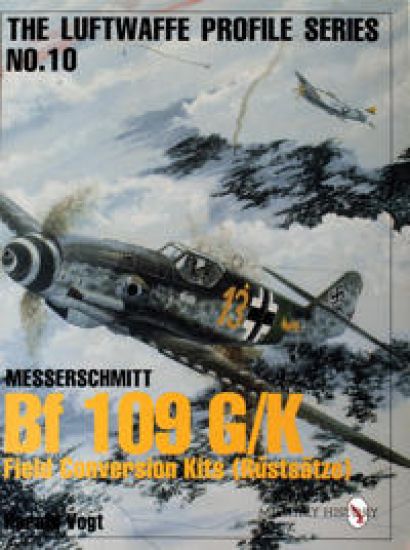
This book covers in photos and text all of the conversion kits that were available for the Luftwaffe's Bf 109.
Swedish-English English/Swedish Practical Dictionary
Harald Hille
Hippocrene Books Inc.,U.S.
2011
pokkari
Sweden is one of the world's most politically and economically successful democracies. Swedish is an important medium for communication across Europe and the world. Swedish is an official language of the European Union, the Nordic Council, and Finland. This title features entries that include useful grammar notes and possible variants.
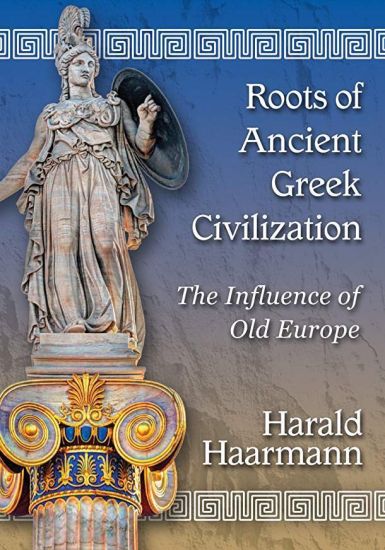
Contrary to a prevalent belief of the Western world, that democracy, agriculture, theater and the arts were the attainments of Classical Greek civilization, these were actually a Bronze Age fusion of earlier European concepts and Hellenic ingenuity. This work considers both the multicultural wellspring from which these ideas flowed and their ready assimilation by the Greeks, who embraced these hallmarks of civilization, and refined them to the level of sophistication that defines classical antiquity.
Index to McMinn County, Tennessee, Tax Lists, 1829-1832 and 1836, and Detail from 1836 Tax List
Harald Reksten; Reba Boyer
Heritage Books
2013
pokkari
Financial Integration in Europe
Harald A. Benink; Ingo Walter
Kluwer Academic Publishers
1992
sidottu
Covers the liberalization of capital movements in Europe and co-ordination efforts on credit institutions, investment firms, the securities market, undertakings for collective investment in transferable securities, insurance companies and pension funds.
Promoting Self-Change from Problem Substance Use
Harald Klingemann; Linda C. Sobell; J. Barker; J. Blomqvist; W. Cloud; T. Ellinstad; D. Finfgeld; R. Granfield; D. Hodgings; G. Hunt; C. Junker; F. Moggi; S. Peele; R. Smart; M. Sobell; J. Tucker
Springer
2001
sidottu
For many years, what has been known about recovery from addictive behaviors has come solely from treatment studies. Only recently has the study of recoveries in the absence of formal treatment or self-help groups provided an alternative source of information. This book on the process of self-change from addictive behaviors is the first of its kind, as it presents more than research findings. Rather, it presents the process of self-change from several different perspectives - environmental, cross-cultural, prevention and interventions at both societal and individual level. It provides strategies for how health care practitioners and government policy makers alike can aid and foster self-change. Directions for future research priorities are also presented.
Promoting Self-Change from Problem Substance Use
Harald Klingemann; Linda C. Sobell; J. Barker; J. Blomqvist; W. Cloud; T. Ellinstad; D. Finfgeld; R. Granfield; D. Hodgings; G. Hunt; C. Junker; F. Moggi; S. Peele; R. Smart; M. Sobell; J. Tucker
Springer
2001
nidottu
For many years, what has been known about recovery from addictive behaviors has come solely from treatment studies. Only recently has the study of recoveries in the absence of formal treatment or self-help groups provided an alternative source of information. This book on the process of self-change from addictive behaviors is the first of its kind, as it presents more than research findings. Rather, it presents the process of self-change from several different perspectives - environmental, cross-cultural, prevention and interventions at both societal and individual level. It provides strategies for how health care practitioners and government policy makers alike can aid and foster self-change. Directions for future research priorities are also presented.