Kirjojen hintavertailu. Mukana 12 371 748 kirjaa ja 12 kauppaa.

Kirjahaku

Etsi kirjoja tekijän nimen, kirjan nimen tai ISBN:n perusteella.

1000 tulosta hakusanalla Harold Schechter

Harold Tiene Hambre (Harold's Hungry Eyes) (Spanish Edition)
Acompaña a harold en su aventura explorando la gran ciudadComo a todos los perros a Harold le encanta la comida pero Harold es diferente porque no para de imaginarse comida en los lugares más extraños: edificios, coches, buzones de correo, incluso en las bocas de incendios.Cuando Harold se pierde en la gran ciudad le entra un hambre tan terrible que comienza a ver cosas: una madalena gigante, un pavo en un buzón de correos, tostadas sobresaliendo los edificios,à menos mal que al final el hambre de Harold le conduce a lugares conocidos y encuentra el camino a casa y a su. ¡desayuno!
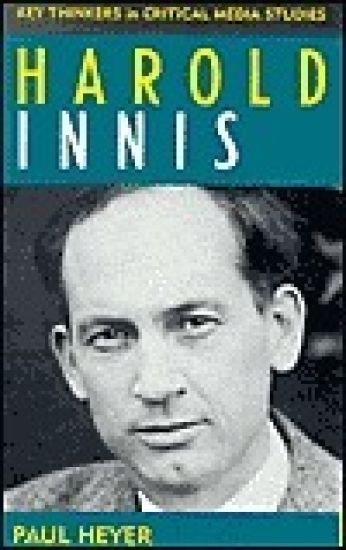
Harold Innis

Harold Innis

Paul Heyer

Rowman Littlefield Publishers
2003
nidottu
His name may not be as well known as that of his colleague and spiritual descendent, Marshall McLuhan, but Harold Innis's (1894-1952) influence on contemporary critical media and communication studies has been no less profound. This concise look at Innis's life and contributions to the communication field charts his beginnings in political economy to his later work in critical media studies and communications history, synthesizing his key publications and clearly showing their ongoing resonance for the field today. The book also includes an appendix by William J. Buxton on the 'History of Communications' manuscript and one by J. David Black on the contributions of Mary Quayle Innis.
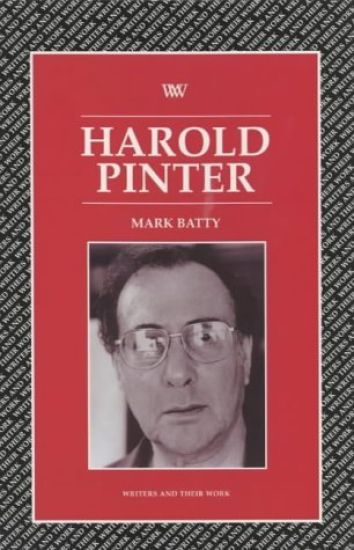
Harold Pinter

Harold Pinter

Mark Batty

Northcote House Publishers Ltd
2001
nidottu
Harold Pinter is one of the most significant and widely influential living British playwrights. From his early fame as the controversial author of disconcerting, unconventional dramas in the 1960s to the sparse, provocative plays he has offered steadily through the 1980s and 1990s, he has fascinated audiences and critics alike. His work forms a cornerstone of the dramatic literature of the contemporary British stage and has been integrated into the repertories of theatres world-wide. This book offers a critical examination of his dramatic writing over four decades, from The Room (1957) to Celebration (2000), emphasising the worth of the plays as pieces written for performance, investigating their status as dramatic (as opposed to literary) texts.
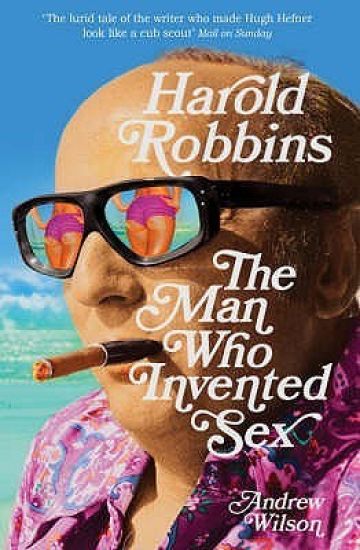
Harold Robbins: The Man Who Invented Sex

Harold Robbins: The Man Who Invented Sex

Andrew Wilson

Bloomsbury Publishing PLC
2008
nidottu
Harold Robbins, the godfather of the airport novel, changed the face of publishing with classics such as "The Carpetbaggers", "The Dream Merchants" and "The Lonely Lady". His readers loved his steamy tales of money, soft porn, drugs, corruption, greed and, just sometimes, redemption. The world's first playboy writer, Robbins reportedly frittered away $50 million on fast cars, loose women and high living. But obsessed with fame and fortune, Robbins was a deeply complex and often controversial man, and even his closest friends and lovers could only guess at the past of the man behind the perma-tanned mask and gigantic mirrored sunglasses. This is the fascinating story of his extraordinary life.
Harold Shows Off

Harold Shows Off

Based On W. Awdry

Egmont UK Ltd
2003
sidottu
Contains a sixteen page story, some picture puzzles and a 'spot the difference' spread designed to engage the child's interest and confidence in reading. The vocabulary used is taken from the National Curriculum word list plus key words from the TTE Learning programme.
Harold Jarman

Harold Jarman

Mike Jay; Ian Haddrell

The History Press Ltd
2014
nidottu
Harold Jarman is a Bristol-born sporting legend. A highly talented winger for Bristol Rovers, he made almost 500 League appearances for the club, scoring over a century of goals. Although he has taken on many different roles for clubs in the UK and the United States, his heart has always belonged to Bristol – he returned initially as youth team manager, then caretaker manager (saving the Rovers from relegation) before coaching and managing the youth and reserve teams During the summer months between 1961 and 1972, Harold also enjoyed playing professionally for Gloucestershire County Cricket club, delighting crowds with his skill and particularly his astute fielding. In this book, Mike Jay and Ian Haddrell explore a remarkable life, accompanied by fascinating pictures, many unpublished from Harold’s own collection.
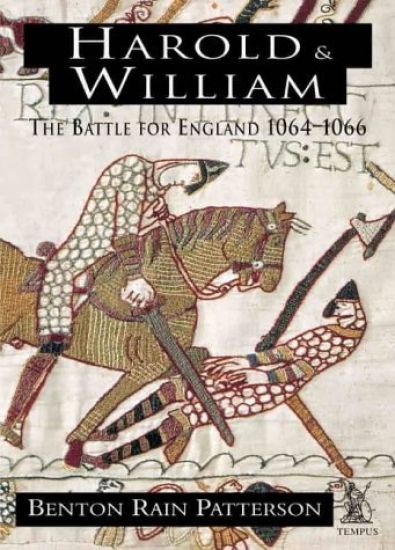
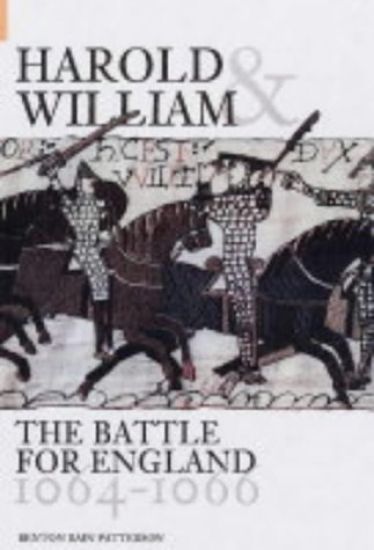
Harold and William

Harold and William

Benton Rain Patterson

NPI Media Group
2002
nidottu
Adramatic reconstruction of the story of two rivalsHarold Godwinson (c.10221066), Earl of Wessex, and William the Conqueror, Duke of Normandy (10271087)in their bitter and bloody battle for the crown and the destiny of England."
Harold & William

Harold & William

Benton Rain Patterson

NPI Media Group
2004
sidottu
Harold and William is a dramatic reconstruction of the story of two rivals-Harold, Earl of Wessex and William, Duke of Normandy- in their bitter and bloody battle for control and destiny of the English crown.
Harold II

Harold II

Peter Rex

NPI Media Group
2005
sidottu
The first scholarly biography of the 'lost' Anglo-Saxon king of England. Harold Godwinson was king of England for less than a year and failed to defend England from William the Conqueror's invading Norman army in 1066, an army that wreaked havoc across the country and changed the political history of England forever. Indeed, 1066 was so critical a turning point that it marked the end of the Anglo-Saxon epoch. Harold II: The Last Saxon King is the first full-scale biography of England's 'lost king', an astute political operator who as Earl of Wessex won the affection of the English people and the death-bed nomination from Edward the Confessor (king of England 1041-1066) to succeed him. Peter Rex tells the story of the formidable warrior-king killed in battle in defence of his kingdom. The Battle of Hasting was a close-run battle that could have gone either way, England would be a very different place today had the fatal arrow missed Harold's eye.
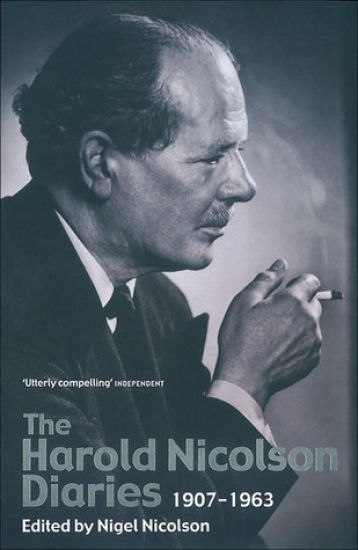
The Harold Nicolson Diaries

The Harold Nicolson Diaries

Harold Nicolson

Weidenfeld Nicolson
2005
pokkari
One of the great 20th century political diaries'A tremendous read' SPECTATOR'One stops to marvel at the achievement. Honesty, decency, modesty, magnanimity, are stamped on every page, as evident as the wit' EVENING STANDARDHarold Nicolson was one of the three great political diarists of the 20th century (along with Chips Channon and Alan Clark). Nicolson was an MP (Conservative, 1935-45, who also flirted with Labour after WWII). He had previously been in the Foreign Office and attended the Paris Peace Conference in 1919, and material from his period is included in this new edition for the first time. Nicolson never achieved high office, but rarely a day went by when he didn't record what was going on at Westminster. He socialised widely, was married to the poet and author Vita Sackville-West, and together they created the famous garden at Sissinghurst. Both were bi-sexuals and had affairs outside their marriage. This new edition also draws on diary entries and letters previously considered too sensitive for inclusion. The diversity of Harold Nicolson's interests and the irony in his writing make his diary a highly entertaining record of his life and times, as well as a document of great historical value.
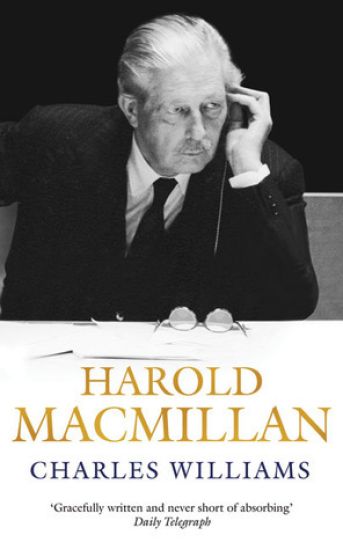
Harold Macmillan

Harold Macmillan

Charles Williams

Weidenfeld Nicolson
2010
nidottu
A masterly biography of a great Conservative Prime Minister (and publisher) - Harold Macmillan (1894-1986).Harold Macmillan was a figure of paradox. Outwardly, it was Edwardian elegance and civilised urbanity. Inwardly, it was emotional damage from his wife's open adultery and his progressive perplexity at the onward march of time.The First World War showed the courageous soldier. From then on, it was politics, rather than the family business of publishing, which was to be his future. Nevertheless, although he supported Churchill in the 1930s he was deemed boring - and certainly not ministerial material.All changed with the Second World War. Appointed Minister in Residence in North Africa, Macmillan's career flowered. After the War he became indispensable to Conservative Cabinets and as Churchill's Minister of Housing in the early 1950s he achieved the target, against all expectations, of 300,000 houses annually. Thereafter, he was Eden's Foreign Secretary and Chancellor but by then Macmillan had become openly ambitious. Over the Suez affair in 1956 he played a difficult - and somewhat devious - hand. Eden's resignation left him as the clear choice of his Cabinet colleagues to become Prime Minister.From 1957 to 1962, Macmillan was a good - some would say a great - Prime Minister. By 1962, however, his government was looking tired. The Profumo affair in 1963 was particularly damaging, and in the autumn of 1963 his health forced him to retire.
Harold Garfinkel

Harold Garfinkel

SAGE Publications Inc
2003
muu
Born in 1917, Harold Garfinkel is one of a handful of sociologists to have founded a major sociological research programme, and he is perhaps the only one to have done so in the 20th century. Unlike many major theorists, whose individual contributions have become part of the sociological canon, Garfinkel's contribution is identified with a distinctive empirical approach that continues to be taken up in sociology and a number of other social science fields. He coined the term ethnomethodology - to describe a unique orientation to the production of social order. This term became established to describe the approach he founded. His book Studies in Ethnomethodology (1967) was a landmark publication that articulated the ethnomethodological programme and illustrated it with a number of studies. Much of Garfinkel's contribution is embodied in a research programme, consisting of studies written by his students who took up his research agenda. The four volumes include an introduction by Lynch and Sharrock that discusses Garfinkel's intellectual biography and reviews his contribution. The 80 selections included in the set of volumes consist of basic position statements, critical discussions, methodological writings, discussions of the problem of social reality, comparisons between ethnomethodology and other perspectives, and studies exemplifying Garfinkel's influence at different phases of his long and distinguished career. The result is an unparalleled resource in understanding Garfinkel's achievement and the extraordinary wealth of his sociological ideas and methods. The four volumes are organized in seven sections: 1. Position Statements This section provides: a guide to the meaning of ethnomethodology; the ethnomethodological programme; the relationship between Garfinkel and classical sociology; an assessment of the significance of the ethnomethodological movement; and evaluations of the contribution of ethnomethodology. 2. Criticisms and Reactions Garfinkel's work provides a number of challenges and opportunities for sociologists. Some have found it very liberating, others have questioned its durable contribution. Included here are criticisms and reactions from some of the leading figures in the discipline, notably Anthony Giddens, Ernest Gellner, Alvin Gouldner, John Goldthorpe, Louis Coser and J rgen Habermas. 3. Ethnomethodology and Other Perspectives Ethnomethdology both drew on other established perspectives and revitalized them. The editors single out four perspectives here for special consideration: phenomenology; symbolic interactionism; conversation analysis; and constructionism. 4. Methods as Topics and Resources This section explores: ordinary and scientific measurement as ethnomethodological phenomena; evidence and inference in ethnomethodology; and quantitative practice and ethnomethodology. 5. From the Problem of Reality to the Production of Reality This section addresses: questions of objectivity and realism; the anatomy of factual accounts; the anatomy of reality; and reflexivity of actors and accounts. 6. Studies of Organizations and Institutions One of the distinctive features of ethnomethodology is the productiveness of the approach as an instrument of research. This section conveys the wealth of ethnomethodological studies by focusing on investigations of practices in legal, medical, educational, and other organizations. 7. Studies of Work in the Professions and Sciences The final group of studies exemplifies the influence of Garfinkel's programme in 'studies of work in the sciences and professions'. These studies focus on practices of scientific research, mathematical proving, and technological design. The studies develop upon Garfinkel's insights about the relationship between formal accounts and the 'lived-work' of producing accountable actions.
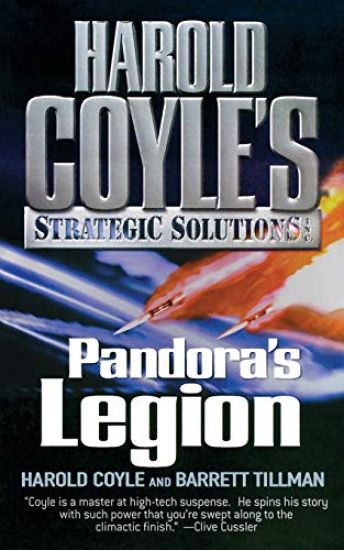
Pandora's Legion: Harold Coyle's Strategic Solutions, Inc.
In this explosive new series from "New York Times" bestseller Harold Coyle and noted military author Barrett Tillman, a new type of war is being fought by private paramilitary companies at the beck and call of the highest bidder. With the military and intelligence agencies spread thin, the US is constantly calling upon the services of these organizations--and Strategic Solutions Inc. is among the best. Members of Al-Qaida have set in place a vicious biological attack. Men and women infected with the highly communicable and deadly Marburg virus have been sent to major cities and sensitive locations throughout the world in hopes of creating a deadly, global epidemic.The dedicated men and women of SSI, led by former Rear Admiral Michael Derringer, are consummate professionals, nearly all ex-police or military, and are the among the best in the world at what they do. But the mastermind behind the living bio-weapons, Dr. Saeed Sharif, is more deadly than anyone could have possibly imagined. Spread throughout the globe and thwarting attacks on their home facilities the staff at SSI soon find themselves engaged in a frontline game of ground warfare. And to make matters worse, two infected Marburg carriers are heading straight for the United States. Using every resource it has, SSI launches an all-out search for the walking plague carriers before thousands more become infected and die.Posing a frightening scenario that could become all too real in the near future, and filled with the details of the military world that have made Coyle's books bestsellers, "Pandora's Legion" hits the front lines of the new war against terrorism in this engrossing, high-stakes novel.
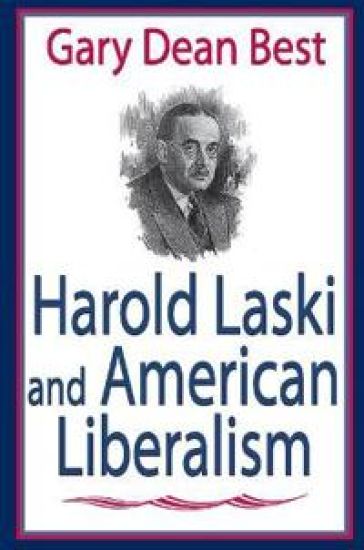
Harold Laski and American Liberalism

Harold Laski and American Liberalism

Gary Best

Transaction Publishers
2004
sidottu
For nearly three decades, the English political scientist Harold Laski was the gray eminence of American liberalism and its most influential Marxist public intellectual. As a fervent proponent of the New Deal in the 1930s, much of Laski's success stemmed from the fact that he offered answers when so many Americans had only questions. By the postwar years, however, his reputation was in decline and his influence left the Democratic Party vulnerable in the1948 elections. In Harold Laski and American Liberalism Gary Dean Best traces the trajectory of Laski's American career and accounts for its ultimate failure.American politics and society were central to Laski's intellectual enterprise. As Best shows, probably no one residing in America has published as many words critical of the United States as did this Englishman. Virtually no aspect of American life went unscathed, and yet at the root of every attack was American capitalism, the businessman, those with property, who, in Laski's view were the source of all the perversion of American life.The 1930s was a period of ferment among America's intellectuals. By the 1940s it was only Laski who was bewildered--at the failure of his diagnoses and the rejection of his prescriptions even by those who had been captivated by him in the previous decade. By the time he died, in 1950, his earlier pronouncements seemed wide of the mark, and the increased stridency and shrillness produced by his disappointment had begun to bore even many who had been devoted to him in earlier years.As this volume shows, the real tragedy for Laski was that he allowed his intellect to be captured and held captive by the Marxian dialectic, denying himself the use of his own reason despite that dialectic's repeated failures. Harold Laski and American Liberalism will be of interest to intellectual historians, political scientists, and American studies specialists.
Harold Innis in the New Century

Harold Innis in the New Century

Charles R. Acland; William J. Buxton

McGill-Queen's University Press
1999
sidottu
The book is divided into three sections: "Reflections on Innis" provides a historical reassessment of Innis, "Gaps and Silences" considers the limitations of both Innis's thought and his interpreters, and "Innis and Cultural Theory" offers speculations on his influence on cultural analysis. The interpretations offered reflect the changing landscape of intellectual life as boundaries between traditional disciplines blur and new interdisciplinary fields emerge. Harold Innis in the New Century is a valuable resource for scholars and students of Canadian studies, communication studies, cultural studies, economic history, and political science. Contributors include Charles R. Acland (Calgary), Alison Beale (Simon Fraser), Jody Berland (York), James Bickerton (St Francis Xavier), William J. Buxton (Concordia), James Carey (Columbia), Ray Charron (Concordia), Cheryl Dahl (University College of the Fraser Valley), Michael Dorland (Carleton), Kevin Dowler (York), Donald Fisher (UBC), Sarah Fortin (McGill), Alain-G. Gagnon (McGill), Jane Jenson (Montreal), Heather Menzies (Carleton), Richard Noble (Winnipeg), Daniel Salee (Concordia), Liora Salter (Osgoode Hall), Kim Sawchuk (Concordia), Irene Spry (professor emerita, Ottawa), Judith Stamps (Victoria), and Andrew Werwick (Trent).
Harold Innis in the New Century

Harold Innis in the New Century

Charles R. Acland; William J. Buxton

McGill-Queen's University Press
2000
nidottu
The book is divided into three sections: "Reflections on Innis" provides a historical reassessment of Innis, "Gaps and Silences" considers the limitations of both Innis's thought and his interpreters, and "Innis and Cultural Theory" offers speculations on his influence on cultural analysis. The interpretations offered reflect the changing landscape of intellectual life as boundaries between traditional disciplines blur and new interdisciplinary fields emerge. Harold Innis in the New Century is a valuable resource for scholars and students of Canadian studies, communication studies, cultural studies, economic history, and political science. Contributors include Charles R. Acland (Calgary), Alison Beale (Simon Fraser), Jody Berland (York), James Bickerton (St Francis Xavier), William J. Buxton (Concordia), James Carey (Columbia), Ray Charron (Concordia), Cheryl Dahl (University College of the Fraser Valley), Michael Dorland (Carleton), Kevin Dowler (York), Donald Fisher (UBC), Sarah Fortin (McGill), Alain-G. Gagnon (McGill), Jane Jenson (Montreal), Heather Menzies (Carleton), Richard Noble (Winnipeg), Daniel Salee (Concordia), Liora Salter (Osgoode Hall), Kim Sawchuk (Concordia), Irene Spry (professor emerita, Ottawa), Judith Stamps (Victoria), and Andrew Werwick (Trent).
Harold Innis and the North

Harold Innis and the North

William J. Buxton

McGill-Queen's University Press
2013
sidottu
Harold Innis is widely understood as the proponent of the "Laurentian school" of historiography, which mapped Canadian development along an East-West axis. Harold Innis and the North turns the axis North-South by examining Innis's intense and abiding interest in the North, and providing new perspectives on this seminal figure in Canadian political economy and communication studies. This collection reveals that Innis's advocacy of the North was closely bound up with his vision of northern Canada as the site of a second industrial revolution based on mining, hydro-electric power, pulp and paper, and enabled by new forms of transportation. Long preoccupied with Canada's coming of age as a balanced and integrated industrial nation-state, Innis grappled with the same issues about the North in the Canadian nation that we are dealing with today. Chapters explore the breadth of Innis's northern activities, including his early studies of the fur trade, his biography of eighteenth-century explorer and cartographer Peter Pond, his review essays on the North for the Canadian Historical Review, his leadership of the Rockefeller-sponsored Arctic Survey, and his trip to the Soviet Union. Harold Innis and the North crafts a new narrative about the nature and scope of Innis's intellectual project and provides a unique appreciation of his multi-faceted professional identity. Contributors include Sergei Arkhipov (North-Ossetian State University and NGO Vladikavkaz Institute of Economics) Jeffrey Brison (Queens), George Colpitts (Calgary), Matthew Evenden (UBC), Barry Gough (Churchill College, Cambridge and Kings College, London), Paul Heyer (Wilfrid Laurier), Jim Mochoruk (North Dakota), Liza Piper (Alberta), Shirley Roburn (Concordia), Peter van Wyck (Concordia), Jeff Webb (Memorial).
Harold Innis and the North

Harold Innis and the North

William J. Buxton

McGill-Queen's University Press
2013
nidottu
Harold Innis is widely understood as the proponent of the "Laurentian school" of historiography, which mapped Canadian development along an East-West axis. Harold Innis and the North turns the axis North-South by examining Innis's intense and abiding interest in the North, and providing new perspectives on this seminal figure in Canadian political economy and communication studies. This collection reveals that Innis's advocacy of the North was closely bound up with his vision of northern Canada as the site of a second industrial revolution based on mining, hydro-electric power, pulp and paper, and enabled by new forms of transportation. Long preoccupied with Canada's coming of age as a balanced and integrated industrial nation-state, Innis grappled with the same issues about the North in the Canadian nation that we are dealing with today. Chapters explore the breadth of Innis's northern activities, including his early studies of the fur trade, his biography of eighteenth-century explorer and cartographer Peter Pond, his review essays on the North for the Canadian Historical Review, his leadership of the Rockefeller-sponsored Arctic Survey, and his trip to the Soviet Union. Harold Innis and the North crafts a new narrative about the nature and scope of Innis's intellectual project and provides a unique appreciation of his multi-faceted professional identity. Contributors include Sergei Arkhipov (North-Ossetian State University and NGO Vladikavkaz Institute of Economics) Jeffrey Brison (Queens), George Colpitts (Calgary), Matthew Evenden (UBC), Barry Gough (Churchill College, Cambridge and Kings College, London), Paul Heyer (Wilfrid Laurier), Jim Mochoruk (North Dakota), Liza Piper (Alberta), Shirley Roburn (Concordia), Peter van Wyck (Concordia), Jeff Webb (Memorial).
Harold Innis on Peter Pond

Harold Innis on Peter Pond

William J. Buxton

McGill-Queen's University Press
2020
sidottu
Best known for his writings on economic history and communications, Harold Innis also produced a body of biographical work that paid particular attention to cultural memory and how it is enriched by the study of neglected historical figures. In this compelling volume, William Buxton addresses Innis's engagement with the legacy of the fur trader and adventurer Peter Pond. Harold Innis on Peter Pond comprises eight texts by Innis, including his 1930 biography of Pond as well as his writings on the explorer's myriad activities. The book also features a collection of eight letters exchanged between Innis and Florence Cannon, a descendent of Pond with a strong interest in her ancestor's life and times, and an unpublished 1932 article on Pond's 1773-75 activities as a fur trader on the upper Mississippi, written by Innis's former student R. Harvey Fleming. Situating Innis's writings on Pond in relation to his broader body of biographical work, Buxton interprets what these texts tell us about Innis's intellectual practice, historiography, and the writing of biography. The book explores how Innis's perspectives shifted with changing intellectual and political circumstances and shows that his advocacy of Pond as an unrecognized "father of confederation" challenged conventional views of Canadian nation-building. A critical edition of previously overlooked biographical texts, Harold Innis on Peter Pond traces what these writings disclose about the biographer's character and values even as they discuss their subject.