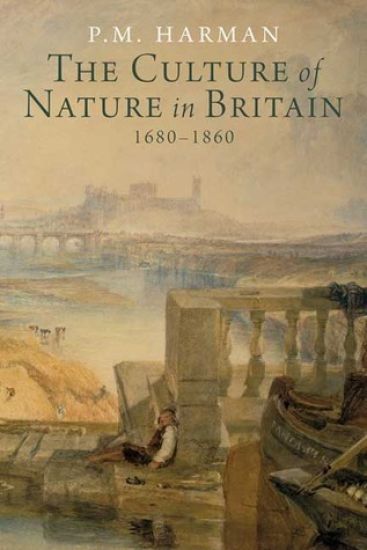
This wide-ranging book investigates the emergence of modern ideas about the natural world in Britain from 1680–1860 through an examination of the cultural values common to the sciences, art, literature, and natural theology. During this critical period, spanned by Newtonian science, natural theology, Darwin’s Origin of Species, and Ruskin’s Modern Painters, the fundamental conception of nature and humanity’s place within it changed. P. M. Harman calls for a new understanding of the varied ways in which the British comprehended natural beauty, from the perception of nature as a “design” flowing from God’s creative power to the Darwinian naturalistic aesthetic. Harman connects a variety of differing views of nature deriving from religion, science, visual art, philosophy, and literature to developments in agriculture, manufacturing, and the daily lives of individuals. This ambitious and accessible book represents intellectual history at its best.
By focusing on the conceptual issues faced by nineteenth century physicists, this book clarifies the status of field theory, the ether, and thermodynamics in the work of the period. A remarkably synthetic account of a difficult and fragmentary period in scientific development.
At the Clinton Global Initiative annual meeting in 2008, a theme emerged that was shared by government representatives, NGO leaders, and philanthropists. It was the recognition that health services management capacity in developing countries must be expanded if sustainable advances are to be made in healthcare over the next decade. It was also acknowledged that inadequate attention and resources have been directed at this problem to date. Four Essential Disciplines offers leaders the knowledge keys for driving positive change for healthcare organizations around the globe. It presents basic principles in ways that allow readers to adapt to their own culture and context. It is an essential training guide for every healthcare leader and manager.
Physicians and other medical professionals today must acquire far more business knowledge than they did even a generation ago. Whether you are directly involved in a medical practice acquisition, sale or merger, or you are a consultant or hospital executive needing to know more about the acquisition process, you must understand how to arrive at a fair valuation, negotiate a sales price and complete a successful deal. To gain this knowledge, you need a comprehensive reference book that explains situations, provides helpful case studies and answers your questions. In Buying, Selling & Merging a Medical Practice, successful medical management consultant Kenneth Hekman has compiled an all encompassing sourcebook that contains the explanation, techniques and proficiencies necessary to send you to the negotiating table well-equipped to complete a successful deal. Hekman covers the entire subject of buying, selling and merging medical practices by presenting its component parts in clear, concise language.
In a book sure to inspire controversy, Gene Heyman argues that conventional wisdom about addiction—that it is a disease, a compulsion beyond conscious control—is wrong. Drawing on psychiatric epidemiology, addicts’ autobiographies, treatment studies, and advances in behavioral economics, Heyman makes a powerful case that addiction is voluntary. He shows that drug use, like all choices, is influenced by preferences and goals. But just as there are successful dieters, there are successful ex-addicts. In fact, addiction is the psychiatric disorder with the highest rate of recovery. But what ends an addiction?At the heart of Heyman’s analysis is a startling view of choice and motivation that applies to all choices, not just the choice to use drugs. The conditions that promote quitting a drug addiction include new information, cultural values, and, of course, the costs and benefits of further drug use. Most of us avoid becoming drug dependent, not because we are especially rational, but because we loathe the idea of being an addict.Heyman’s analysis of well-established but frequently ignored research leads to unexpected insights into how we make choices—from obesity to McMansionization—all rooted in our deep-seated tendency to consume too much of whatever we like best. As wealth increases and technology advances, the dilemma posed by addictive drugs spreads to new products. However, this remarkable and radical book points to a solution. If drug addicts typically beat addiction, then non-addicts can learn to control their natural tendency to take too much.
For thousands of Mexican laborers, life among the United States border represents an opportunity both to earn wages and to gain access to consumer goods; for anthropologist Josiah Heyman this labor force presents an opportunity to gain a better understanding of working people, "to uncover the order underlying the history of waged lives." Life and Labor on the Border traces the development over the past hundred years of urban working class in northern Sonora. Drawing on an extensive collection of life histories, Heyman describes what has happened to families over several generations as people have left the countryside to work for American-owned companies in northern Sonora or to cross the border to find other employment. Heyman searches for the origins of "working classness" in these family histories, revealing aspects of life that strengthen people' s involvement with a consumer economy, including the role of everyday objects like sewing machines, cars, and stoves. He considers the consequences of changing political and economic tides, and also the effects on family life of the new role of women in the labor force. Within the broad sweep of family chronicles, key junctures in individual lives—both personal and historical crises—offer additional insights into social class dynamics. Heyman's work dispels the notion that border inhabitants are uniformly impoverished or corrupted by proximity to the United States. These life stories instead convey the positive sense of people's goals in life and reveal the origins of a distinctive way of life in the Borderlands.
Screen Saviors studies how the self of whites is imagined in Hollywood movies—by white directors featuring white protagonists interacting with people of another color. This collaboration by a sociologist and a film critic, using the new perspective of critical "white studies," offers a bold and sweeping critique of almost a century's worth of American film, from Birth of Nation (1915) through Black Hawk Down (2001). Screen Saviors studies the way in which the social relations that we call "race" are fictionalized and pictured in the movies. It argues that films are part of broader projects that lead us to ignore or deny the nature of the racial divide in which Americans live. Even as the images of racial and ethnic minorities change across the twentieth century, Hollywood keeps portraying the ideal white American self as good-looking, powerful, brave, cordial, kind, firm, and generous: a natural-born leader worthy of the loyalty of those of another color. The book invites readers to conduct their own analyses of films by showing how this can be done in over 50 Hollywood movies. Among these are some films about the Civil War—Birth of a Nation , Gone with the Wind, and Glory; some about white messiahs who rescue people of another color—Stargate, To Kill a Mockingbird, Mississippi Burning, Three Kings, and The Matrix; the three versions of Mutiny on the Bounty (1935, 1962, and 1984) and interracial romance—Guess Who's Coming to Dinner. Forty years of Hollywood fantasies of interracial harmony, from The Defiant Ones and In the Heat of the Night through the Lethal Weapon series and Men in Black are examined. This work in the sociology of knowledge and cultural studies relates the movies of Hollywood to the large political agendas on race relation in the United States. Screen Saviors appeals to the general reader interested in the movies or in race and ethnicity as well as to students of com
In the period 1700-1850 there took place a major transition in natural philosophy: from Newton’s concept of passive matter activated by ethereal and active principles, to the conception of nature as a self-contained system, its activity being seen in terms of energy and field principles which were internal to the natural order. Without neglecting the scientific context, Dr Harman’s approach is from the standpoint of the history of ideas. The first part of the volume deals with the British tradition of speculation about the nature of matter, ether and force; the second with the Continent, with the Leibnizian and Kantian critiques of Newtonian natural philosophy, and the development of Helmholtz’s principle of the conservation of energy. The metaphysical and theological dimensions to matter theory are seen as fundamental to this profound shift in sensibilities: they did not determine scientific practice, but they constrained its form and shaped the structure of scientific thought. Une transition importante dans le domaine de la philosophie naturelle a pris place entre 1700 et 1850: passant du concept de Newton, selon lequel la matière inerte etait activée par des principes actifs et sublimes, à celui de la nature en tant que système se suffisant à lui-même, son activité étant considérée en termes d’énergie et de principes pratiques qui appartenaient à l’ordre naturel. Sans pour autant négliger le contexte scientifique, l’approche du Dr Harman prend l’histoire des idées pour point de départ. La première partie du volume traite de la tradition spéculative britannique quant à la nature de la matière, éther et force; la seconde traite du Continent avec la critique leibnitzienne et kantienne de la philosophie newtonienne et le développement du principe de conservation d’énergie de Helmholtz. Les dimensions théologiques et métaphysiques de la théorie de la matière sont considérées comme étant fondamentales à ce changeme
Discover the fascinating history of the Drum family, from their roots in Ireland and Scotland to their settlement in colonial America and beyond. Drawing on archival sources, family records, and oral histories, Helman traces the family's journey through war, migration, and cultural change, offering a vivid portrait of one family's enduring legacy.This work has been selected by scholars as being culturally important, and is part of the knowledge base of civilization as we know it.This work is in the "public domain in the United States of America, and possibly other nations. Within the United States, you may freely copy and distribute this work, as no entity (individual or corporate) has a copyright on the body of the work.Scholars believe, and we concur, that this work is important enough to be preserved, reproduced, and made generally available to the public. We appreciate your support of the preservation process, and thank you for being an important part of keeping this knowledge alive and relevant.
A practical how-to guide for more effective planningthrough multi-actor modelling Careful planning is the cornerstone of a successful initiative, and any plan, policy, or business strategy can only be successful if it has the support of different actors. These actors may beactively pursuing their own agendas, so the plan must not only offer an optimal solution to theproblem, but must also fit the needs and abilities of the actors involved. Actor and Strategy Models: Practical Applications and Step-wise Approaches provides a primer on multi-actormodelling, based on the fundamental premise that actor strategies are explained by investigatingwhat actors can do, think, and want to achieve. Covering a variety of models with detailed background and case examples, this book focuses on practical application. Step-by-step instructions for each approach provide immediately actionable insight, while a general framework for actor and strategy modelling allows the reader to tailor any approach as needed to optimize results in terms of situation-specific planning. Oriented toward real-world strategy, this helpful resource: Provides models that shed light on the multi-actor dimensions of planning, using a variety of analytical approachesIncludes literature, theoretical underpinnings, and applications for each method coveredClarifies the similarities, differences, and suitable applications between various actor modelling approachesProvides a step-wise framework for actor and strategy modellingOffers guidance for the identification, structuring, and measuring of values and perceptionsExamines the challenges involved in analyzing actors and strategies Even before planning begins, an endeavor's success depends upon a clear understanding of the various actors involved in the planning and implementation stages. From game theory and argumentative analysis, through social network analysis, cognitive mapping, and beyond,Actor and Strategy Models provides valuable insight for more effective planning.