Kirjojen hintavertailu. Mukana 11 342 296 kirjaa ja 12 kauppaa.

Kirjahaku

Etsi kirjoja tekijän nimen, kirjan nimen tai ISBN:n perusteella.

1000 tulosta hakusanalla Howell Ap David Price

Gulag Ameryka

Gulag Ameryka

Howell W. Woltz

Createspace Independent Publishing Platform
2018
nidottu
In 1973, Soviet writer and historian, Alexander Solzhenitsyn, shocked the western world with his book, "Gulag Archipelago," exposing the vast prison system where he and other dissidents were held across the Soviet Union Now, almost half a century later, American author and journalist, Howell Woltz, has done the same in his latest book, "Gulag Ameryka," exposing a far larger system of gulags (and injustice) in the United States of America where he and 73 million other Americans --nearly one of every four adults--have suffered. With only 5% of the world's population, the United States now holds 25% of its prisoners. The U.S. has over 5,000 jails, prisons, and forced-labor camps scattered across the nation. It has the highest number of prisoners in world history, as well as the highest rate of conviction (98.6%). The rate of reversible error, even in cases where government is executing the citizen, was recently admitted by U.S. Courts to be 82% over a 23 year period. Using the United States government's own statistics (and seven years of personal experience being held in gulags all across America) Woltz has proven that his nation-- once vaunted as the "land of the free"-- is now the world's least just. When he began speaking out on this subject in America, he was threatened by U.S. Government agents and officials that he would be sent back to the gulag unless he was silent. Woltz escaped to Poland to tell his story. He now lives with his wife in Warsaw, writing and studying Polish language and culture at the University of Warsaw.
Nantgarw and Swansea Porcelains

Nantgarw and Swansea Porcelains

Howell G.M. Edwards

Springer Nature Switzerland AG
2019
nidottu
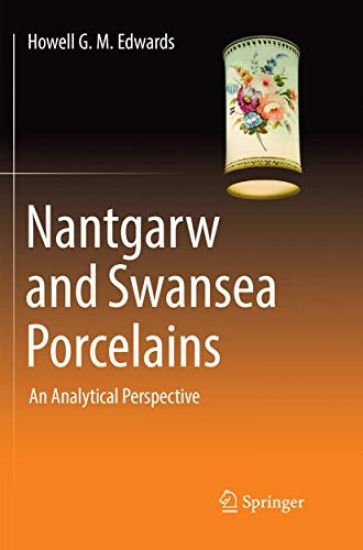
This book gives a detailed account of the holistic research carried out on the analytical data obtained historically on the products of the Nantgarw and Swansea porcelain manufactories which existed for a few years only during the second decade of the 19th Century. A background to the establishment of the two factories, which are linked through the persons of the enigmatic William Billingsley and his kiln manager, Samuel Walker, involves the sourcing of their raw materials and problems associated with the manufacture and distribution of the finished products. A description of the minerals and additives used in porcelain production is recounted to set the scene for the critical evaluation of the comprehensive analytical data which have been published on Nantgarw and Swansea porcelains. For the first time, the author has adopted a nondestructive technique, Raman spectroscopy, to interrogate perfect samples of Nantgarw and Swansea porcelain, as well as a selection of shardsfrom an archaeological excavation carried out at a waste dump at the Nantgarw China Works site. Following these experiments, several questions relating to the porcelain bodies of Swansea and Nantgarw china can be answered and a protocol established for the preliminary evaluation of items of suspect attribution to confirm or not the correctness of their assignment to these Welsh porcelain factories.
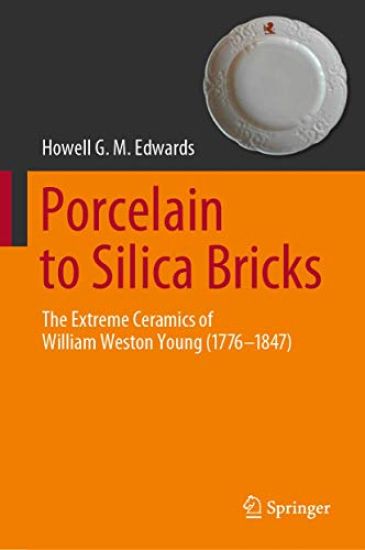
Porcelain to Silica Bricks

Porcelain to Silica Bricks

Howell G.M. Edwards

Springer Nature Switzerland AG
2019
sidottu
The title of this book describes the two extremes of ceramic invention from aesthetically beautiful and decorative works of art that graced the tables of the aristocracy to the functional silica brick that lined the smelting furnaces of industrialised nations in the 19th century designed to produce iron, copper and glass. Both of these ceramics are linked to one man, William Weston Young (1776-1847) and with his contemporaries both of these ceramic extremes became world leaders in their own right. The book traces the history of Young and his ambitions, his interactions with numerous associates and the influence these ceramics attained in 19th century society. The book provides a sequel to the two preceding texts on Nantgarw and Swansea porcelains (also published by Springer), which cover one extreme and extends the discourse onto the other extreme, which until now has been relatively ignored despite its scientific and engineering importance. The trilogyhas now therefore been completed. This book examines the historical documentation along with scientific analytical data from the last 100 years up to the present in a novel holistic forensic approach.It will be of interest to porcelain collectors, ceramics analysts, museum ceramic curators, ceramic historians, analytical scientists, cultural heritage preservation, industrial archaeologists and industrial museums.
18th and 19th Century Porcelain Analysis

18th and 19th Century Porcelain Analysis

Howell G. M. Edwards

Springer Nature Switzerland AG
2020
sidottu
This book addresses the contributions made by analytical chemistry to the characterisation of 18th and early 19th Century English and Welsh porcelains commencing with the earliest reports of Sir Arthur Church and of Herbert Eccles and Bernard Rackham using chemical digestion techniques and concluding with the most recent instrumental experiments, which together span more than a hundred years of study. From the earliest experiments which required necessarily the sacrifice of significant portions of each specimen, which may already have been damaged , to the latest experiments which needed only microsampling or the non-destructive interrogation of valuable perfect specimens a comprehensive survey is undertaken of more than twenty manufactories of quality porcelains. The correlation is made between the quantitative elemental oxide determinations of the scanning electron microscopic diffraction and Xray fluorescence data and the qualitative molecular spectroscopic Raman data to demonstrate their complementarity and use in the holistic forensic assessment of the origin of the fired procelains ; this will form the groundwork for the adoption of analytical techniques for the attribution of unknown or questionable procelains to their potential source factories . The book will also examine the perception of what constitutes a porcelain and its definitions and examines the assignment of porcelains to types which currently employs the definitions of hard paste , soft paste , hybrid , magnesian and bone china from the conclusions derived from the analytical data and a consideration of the raw materials employed in their manufacturing processes. During the discussion of this analytical evidence several themes and protocols have been established for its utilisation in the potential identification of porcelains and several case studies undertaken for this purpose are cited. The book will be of interest toanalytical scientists , to museum ceramics curators and to ceramics historians.
18th and 19th Century Porcelain Analysis

18th and 19th Century Porcelain Analysis

Howell G. M. Edwards

Springer Nature Switzerland AG
2021
nidottu
This book addresses the contributions made by analytical chemistry to the characterisation of 18th and early 19th Century English and Welsh porcelains commencing with the earliest reports of Sir Arthur Church and of Herbert Eccles and Bernard Rackham using chemical digestion techniques and concluding with the most recent instrumental experiments, which together span more than a hundred years of study. From the earliest experiments which required necessarily the sacrifice of significant portions of each specimen, which may already have been damaged , to the latest experiments which needed only microsampling or the non-destructive interrogation of valuable perfect specimens a comprehensive survey is undertaken of more than twenty manufactories of quality porcelains. The correlation is made between the quantitative elemental oxide determinations of the scanning electron microscopic diffraction and Xray fluorescence data and the qualitative molecular spectroscopic Raman data to demonstrate their complementarity and use in the holistic forensic assessment of the origin of the fired procelains ; this will form the groundwork for the adoption of analytical techniques for the attribution of unknown or questionable procelains to their potential source factories . The book will also examine the perception of what constitutes a porcelain and its definitions and examines the assignment of porcelains to types which currently employs the definitions of hard paste , soft paste , hybrid , magnesian and bone china from the conclusions derived from the analytical data and a consideration of the raw materials employed in their manufacturing processes. During the discussion of this analytical evidence several themes and protocols have been established for its utilisation in the potential identification of porcelains and several case studies undertaken for this purpose are cited. The book will be of interest toanalytical scientists , to museum ceramics curators and to ceramics historians.
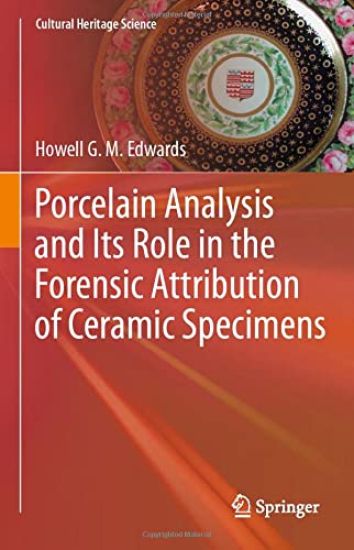
Porcelain Analysis and Its Role in the Forensic Attribution of Ceramic Specimens
The material for this book arose from the author’s research into porcelains over many years, as a collector in appreciation of their artistic beauty , as an analytical chemist in the scientific interrogation of their body paste, enamel pigments and glaze compositions, and as a ceramic historian in the assessment of their manufactory foundations and their correlation with available documentation relating to their recipes and formulations. A discussion of the role of analysis in the framework of a holistic assessment of artworks and specifically the composition of porcelain, namely hard paste, soft paste, phosphatic, bone china and magnesian, is followed by its growth from its beginnings in China to its importation into Europe in the 16th Century. A survey of European porcelain manufactories in the 17th and 18th Centuries is followed by a description of the raw materials, minerals and recipes for porcelain manufacture and details of thechemistry of the high temperature firing processes involved therein. The historical backgrounds to several important European factories are considered, highlighting the imperfections in the written record that have been perpetuated through the ages. The analytical chemical information derived from the interrogation of specimens, from fragments, shards or perfect finished items, is reviewed and operational protocols established for the identification of a factory output from the data presented. Several case studies are examined in detail across several porcelain manufactories to indicate the role adopted by modern analytical science, with information provided at the quantitative elemental oxide and qualitative molecular spectroscopic levels, where applicable. The attribution of a specimen to a particular factory is either supported thereby or in some cases a potential reassessment of an earlier attribution is indicated. Overall, the information provided by analytical chemical data is seen to be extremely useful for porcelain identification and for its potential attribution in the context of a holistic forensic evaluation of hitherto unknown porcelain exemplars of questionable factory origins.
Porcelain Analysis and Its Role in the Forensic Attribution of Ceramic Specimens
The material for this book arose from the author’s research into porcelains over many years, as a collector in appreciation of their artistic beauty , as an analytical chemist in the scientific interrogation of their body paste, enamel pigments and glaze compositions, and as a ceramic historian in the assessment of their manufactory foundations and their correlation with available documentation relating to their recipes and formulations. A discussion of the role of analysis in the framework of a holistic assessment of artworks and specifically the composition of porcelain, namely hard paste, soft paste, phosphatic, bone china and magnesian, is followed by its growth from its beginnings in China to its importation into Europe in the 16th Century. A survey of European porcelain manufactories in the 17th and 18th Centuries is followed by a description of the raw materials, minerals and recipes for porcelain manufacture and details of thechemistry of the high temperature firing processes involved therein. The historical backgrounds to several important European factories are considered, highlighting the imperfections in the written record that have been perpetuated through the ages. The analytical chemical information derived from the interrogation of specimens, from fragments, shards or perfect finished items, is reviewed and operational protocols established for the identification of a factory output from the data presented. Several case studies are examined in detail across several porcelain manufactories to indicate the role adopted by modern analytical science, with information provided at the quantitative elemental oxide and qualitative molecular spectroscopic levels, where applicable. The attribution of a specimen to a particular factory is either supported thereby or in some cases a potential reassessment of an earlier attribution is indicated. Overall, the information provided by analytical chemical data is seen to be extremely useful for porcelain identification and for its potential attribution in the context of a holistic forensic evaluation of hitherto unknown porcelain exemplars of questionable factory origins.
Welsh Armorial Porcelain

Welsh Armorial Porcelain

Howell G. M. Edwards

Springer Nature Switzerland AG
2022
sidottu
Armorial porcelains comprised the output of most European ceramics factories in the 18th and 19th Centuries in response to the large quantity of armorial porcelain services that were being imported from China bearing the coats of arms and crests of aristocratic families. Whereas these armorial services have been identified and covered for most porcelain manufactories the information relevant to their production by the two relatively short-lived Nantgarw and Swansea China Works has not been addressed as a theme until now. As an integral component of the holistic forensic appraisal of porcelain, a functional and decorative artwork manifestly part of our cultural heritage and its ongoing preservation , the recording and identification of such artefacts is material for the future establishment of a database of factory production . The Nantgarw and Swansea factories only operated for a limited period in the second decade of the 19th Century and their porcelains were much appreciated for their high quality and desirability by Georgian households. Today, examples are to be found in many museums and ceramics collections and continue to excite the interest of specialists and the general public . This text provides the first comprehensive assessment of armorial porcelains from these two factories and the methodology and procedure for the identification of unknown armorial bearings and crests is illustrated; individual bearings are discussed in detail and existing incorrect assignments in the literature are re-appraised. The difficulties in attribution of armorial heraldic achievements that are only minimally depicted are considered and directions for further studies using historical documentation are invoked. This book therefore fills a currently existing gap in the ceramics literature of the 19th Century.
Welsh Armorial Porcelain

Welsh Armorial Porcelain

Howell G. M. Edwards

Springer Nature Switzerland AG
2023
nidottu
Armorial porcelains comprised the output of most European ceramics factories in the 18th and 19th Centuries in response to the large quantity of armorial porcelain services that were being imported from China bearing the coats of arms and crests of aristocratic families. Whereas these armorial services have been identified and covered for most porcelain manufactories the information relevant to their production by the two relatively short-lived Nantgarw and Swansea China Works has not been addressed as a theme until now. As an integral component of the holistic forensic appraisal of porcelain, a functional and decorative artwork manifestly part of our cultural heritage and its ongoing preservation , the recording and identification of such artefacts is material for the future establishment of a database of factory production . The Nantgarw and Swansea factories only operated for a limited period in the second decade of the 19th Century and their porcelains were much appreciated for their high quality and desirability by Georgian households. Today, examples are to be found in many museums and ceramics collections and continue to excite the interest of specialists and the general public . This text provides the first comprehensive assessment of armorial porcelains from these two factories and the methodology and procedure for the identification of unknown armorial bearings and crests is illustrated; individual bearings are discussed in detail and existing incorrect assignments in the literature are re-appraised. The difficulties in attribution of armorial heraldic achievements that are only minimally depicted are considered and directions for further studies using historical documentation are invoked. This book therefore fills a currently existing gap in the ceramics literature of the 19th Century.
Raman Spectroscopy in Cultural Heritage Preservation

Raman Spectroscopy in Cultural Heritage Preservation

Howell G. M. Edwards; Peter Vandenabeele; Philippe Colomban

Springer International Publishing AG
2022
sidottu
This book addresses the application of Raman spectroscopic techniques to a range of diverse problems which arise in the study, conservation and restoration of artefacts and sites closely related to our cultural heritage as well as in authentication. These themes are naturally wider than what at first might be considered as artworks and archaeological artefacts and the topics include pigments, paintings, ceramics, glass, sculpture and patination / corrosion, textiles, industrial archaeology, the degradation and preservation of biomaterials, mummies and human skeletal remains. An interesting feature is the inclusion of modern case studies which describe specific problems and approaches to the Raman spectral analysis of items important to our cultural heritage. The text is prefaced with an introduction to the important parameters used in nondestructive Raman measurements and also highlights some future applications based upon novel miniaturised instrumentation for in-field studies andpotential screening work which will identify specimens which would repay further studies in the laboratory. An attempt is made to give a snapshot of the state-of-the-art evolution since the beginning of the technique (1970s) and to point out potential further development. The book is co-edited by three international experts with many years' experience in the application of Raman spectroscopy to artworks, archaeological artefacts and in the investigation of materials and sites for cultural heritage preservation and each editor has undertaken to write individual chapters and different topics personally. The adopted approach is designed to convey the sort of information which has become available from the adoption of analytical Raman spectroscopy to different problems in the field of cultural heritage preservation through the spectral interrogation of artefacts and how the interpretation of the spectral data can assist museum curators, archaeologists and cultural heritage historians in the preservation and conservation of ancient materials and sites : a particular advantage in this respect is the ability of Raman spectroscopy to determine –generally in a strictly noninvasive procedure - at the laboratory or on-site with mobile instruments, the presence of both organic and inorganic components in a particular specimen together nondestructively without any chemical and mechanical pretreatment being undertaken, which is an essential requirement for rare and valuable samples . An important aside from this work is the means of spectral identification of ongoing biodeterioration and biological colonisation in specimens in storage and the effects of environmental deterioration such as humidity and temperature upon their integrity.
Raman Spectroscopy in Cultural Heritage Preservation

Raman Spectroscopy in Cultural Heritage Preservation

Howell G. M. Edwards; Peter Vandenabeele; Philippe Colomban

Springer International Publishing AG
2023
nidottu
This book addresses the application of Raman spectroscopic techniques to a range of diverse problems which arise in the study, conservation and restoration of artefacts and sites closely related to our cultural heritage as well as in authentication. These themes are naturally wider than what at first might be considered as artworks and archaeological artefacts and the topics include pigments, paintings, ceramics, glass, sculpture and patination / corrosion, textiles, industrial archaeology, the degradation and preservation of biomaterials, mummies and human skeletal remains. An interesting feature is the inclusion of modern case studies which describe specific problems and approaches to the Raman spectral analysis of items important to our cultural heritage. The text is prefaced with an introduction to the important parameters used in nondestructive Raman measurements and also highlights some future applications based upon novel miniaturised instrumentation for in-field studies andpotential screening work which will identify specimens which would repay further studies in the laboratory. An attempt is made to give a snapshot of the state-of-the-art evolution since the beginning of the technique (1970s) and to point out potential further development. The book is co-edited by three international experts with many years' experience in the application of Raman spectroscopy to artworks, archaeological artefacts and in the investigation of materials and sites for cultural heritage preservation and each editor has undertaken to write individual chapters and different topics personally. The adopted approach is designed to convey the sort of information which has become available from the adoption of analytical Raman spectroscopy to different problems in the field of cultural heritage preservation through the spectral interrogation of artefacts and how the interpretation of the spectral data can assist museum curators, archaeologists and cultural heritage historians in the preservation and conservation of ancient materials and sites : a particular advantage in this respect is the ability of Raman spectroscopy to determine –generally in a strictly noninvasive procedure - at the laboratory or on-site with mobile instruments, the presence of both organic and inorganic components in a particular specimen together nondestructively without any chemical and mechanical pretreatment being undertaken, which is an essential requirement for rare and valuable samples . An important aside from this work is the means of spectral identification of ongoing biodeterioration and biological colonisation in specimens in storage and the effects of environmental deterioration such as humidity and temperature upon their integrity.
The Farnley Hall Service: A Unique Survivor in Nantgarw Porcelain

The Farnley Hall Service: A Unique Survivor in Nantgarw Porcelain

Howell G. M. Edwards

Springer International Publishing AG
2023
sidottu
This book covers the discovery and the results of the analytical study of the composition of the Farnley Hall service, involving both the embossed moulding and the decorative compositions. The discovery of this missing porcelain service, which was manufactured 200 years ago, is a modern detective story in the preservation of cultural heritage, whilst its physical analysis has identified some new data that need to be incorporated into correcting and expanding the literature that is used for the differentiation of porcelains by ceramic historians and museum conservators. The importance of the Farnley Hall service discovery is that it provides the only example of such a Nantgarw Porcelain service that still resides in its original place of usage from 200 years ago: it is therefore a unique example and is a very important part of our national cultural heritage. It provides an illustration of the data that can be accessed from the application of inductive reasoning to elicit novel information about a manufactory whose work books no longer exist and its comparison with contemporary manufactories in the late eighteenth and early nineteenth centuries. The concepts can be appreciated by experts and also by non-technical readers. This is the first time that such a detailed research approach has been adopted for any comparative ceramic project. The book is therefore relevant for a specialist and non-specialist readership, including museum ceramics curators and collectors of the genre.
The Farnley Hall Service: A Unique Survivor in Nantgarw Porcelain

The Farnley Hall Service: A Unique Survivor in Nantgarw Porcelain

Howell G. M. Edwards

Springer International Publishing AG
2024
nidottu
This book covers the discovery and the results of the analytical study of the composition of the Farnley Hall service, involving both the embossed moulding and the decorative compositions. The discovery of this missing porcelain service, which was manufactured 200 years ago, is a modern detective story in the preservation of cultural heritage, whilst its physical analysis has identified some new data that need to be incorporated into correcting and expanding the literature that is used for the differentiation of porcelains by ceramic historians and museum conservators. The importance of the Farnley Hall service discovery is that it provides the only example of such a Nantgarw Porcelain service that still resides in its original place of usage from 200 years ago: it is therefore a unique example and is a very important part of our national cultural heritage. It provides an illustration of the data that can be accessed from the application of inductive reasoning to elicit novel information about a manufactory whose work books no longer exist and its comparison with contemporary manufactories in the late eighteenth and early nineteenth centuries. The concepts can be appreciated by experts and also by non-technical readers. This is the first time that such a detailed research approach has been adopted for any comparative ceramic project. The book is therefore relevant for a specialist and non-specialist readership, including museum ceramics curators and collectors of the genre.
Coade Stone

Coade Stone

Howell G. M. Edwards; Christopher J. Brooke

Springer International Publishing AG
2024
sidottu
The history and nature of artificial stone for use in architecture is a subject still shrouded in myth and misconception. This book aims to lay bare those misconceptions and present a scientific and architectural account of these materials, and especially Coade Stone, the most successful of all, which found great favour during the Georgian period. Many examples of Coade Stone cast sculpture still exist and several key examples are presented in context and as case studies . Eleanor Coade’s artificial stone was so good that many observers could not distinguish it from the natural stone it replaced: the growth in replication of the neo-classical statuary and building adornment required in the late Georgian and Regency period was well satisfied by the use of Coade stone. A holistic evaluation of Coade stone artefacts is undertaken whereby the use of analytical data, historical documentation, invoices, company records, impressed marks and expert connoisseurship will establishthe attribution of Coade stone artefacts, some of which are currently in the unknown category. Several new scientific analyses are presented that demonstrate the true nature of high temperature fired ceramic Coade Stone and allow comparison with other forms of artificial stone, such as the cold cured cementitious variations, which eventually replaced it in the Victorian period.
A Raphael Madonna and Child Oil Painting:  A Forensic Analytical Evaluation

A Raphael Madonna and Child Oil Painting: A Forensic Analytical Evaluation

Howell G. M. Edwards

Springer International Publishing AG
2024
sidottu
This book presents a comprehensive forensic analysis of an oil painting depicting a Madonna and Child in a tondo format, previously thought to be a Victorian copy. Detailed historical and scientific studies confirm that this painting was, in fact, created by Raphael around 1512 as a study for his renowned Sistine Madonna, commissioned by Pope Julius II as an altarpiece for the monastic church of San Sisto in Piacenza. The painting underwent rigorous forensic examination, combining historical research with both invasive and non-invasive scientific imaging techniques. The analysis utilized advanced physical and chemical instrumentation to determine the painting's authenticity and accurate chronological placement. A comparative review of published chemical analyses of pigments, dyes, and substrates used in Raphael’s works from collections worldwide is included. Additionally, this study explores the innovative use of artificial intelligence (AI) for facial comparison between the figures in the tondo painting, the Sistine Madonna, and other Raphael artworks. These AI-generated insights provide novel information about the identities of Raphael’s models and shed light on his working techniques, as well as those of his associates.
Blue by Fire: A Marker of the Technical History of Glass and Ceramics

Blue by Fire: A Marker of the Technical History of Glass and Ceramics

Howell G. M. Edwards; Philippe Colomban

Springer International Publishing AG
2025
sidottu
The use of natural mineral and synthetic blue pigments in antiquity for wall paintings and illuminated manuscript historiation evolved into the most suitable blue pigments for the decoration of glazed and enamelled wares (ceramics, glass and metal) which required a stability at the high temperatures of the kilns used for glazing and firing. Historic literature is often vague regarding the blue pigments used for this purpose. The generic term “cobalt blue” covers a wide range of pigments that were actually used for the decoration of faience, majolica, stonewares, earthenwares and porcelains. This book addresses the application of elemental and molecular spectroscopic analytical techniques to a range of diverse problems which arise for decorated ceramics, glass and enamels and related artefacts: a history of techniques, provenance and authentication. The text contains an introduction to the important analytical techniques that are used in destructive and nondestructive analytical measurements and highlights potential future applications based upon novel miniaturised instrumentation for in-situ studies. The book is co-authored by two international experts with many years’ experience in the application of analysis to artworks and archaeological artefacts and in the investigation of materials and sites for cultural heritage preservation. Among 19 chapters one is devoted to an evaluation of the analytical techniques that are used and the pitfalls which can arise in the interpretation of the data. The approach conveys the detailed information which has become available from the adoption of analytical techniques to diverse problems through the scientific interrogation of ceramic and related artefacts. Examples are given of how the pigment analysis and sourcing can provide unique information about ancient trade routes and pigment sourcing historically. A classic instance is provided by the transfer of European enamelling technologies carried out at the beginning of the 17th century in Japan (Arita) and at the turn of the 17th-18th centuries in China by the Jesuits established at the Court of, respectively, the Kyushu island of Daymios and the Chinese Qing Empero Kangxi. It has hence been demonstrated that some of the most beautiful porcelains emanating from Japan and China in this period incorporate blue decoration with pigments supplied from Europe. The interpretation of the analytical data can assist museum curators, archaeologists, art dealers/experts and cultural heritage historians in the preservation and conservation of ancient materials which have applied blue pigment decoration.
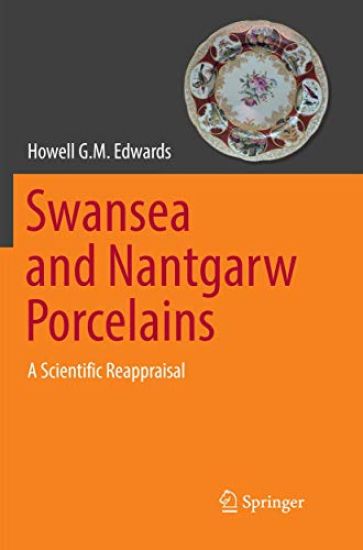
Swansea and Nantgarw Porcelains

Swansea and Nantgarw Porcelains

Howell G.M. Edwards

Springer International Publishing AG
2017
sidottu
This book describes a holistic study of the porcelain manufactured at Nantgarw and Swansea in the first quarter of the 19th Century, using both scientific analytical data and historical provenancing. This porcelain is acclaimed as some of the finest and most translucent porcelain ever produced. These two porcelain factories are linked through the artistic and creative activities of the enigmatic William Billingsley and had a strictly limited production over only three or four years during the period 1812-1820. The earliest chemical analysis of these porcelains were undertaken almost 100 years ago and are compared with the results of more recent analyses The chemical composition of these porcelains, their artistic decoration and the struggle to maintain quality production is reviewed. Scientific explanations are proposed for the characteristic Swansea duck-egg porcelain translucency and for the Nantgarw iridescence. The book is well illustrated throughout and affords a good basis for the further in-depth study of Swansea and Nantgarw porcelains.
Nantgarw and Swansea Porcelains

Nantgarw and Swansea Porcelains

Howell G.M. Edwards

Springer International Publishing AG
2018
sidottu
This book gives a detailed account of the holistic research carried out on the analytical data obtained historically on the products of the Nantgarw and Swansea porcelain manufactories which existed for a few years only during the second decade of the 19th Century. A background to the establishment of the two factories, which are linked through the persons of the enigmatic William Billingsley and his kiln manager, Samuel Walker, involves the sourcing of their raw materials and problems associated with the manufacture and distribution of the finished products. A description of the minerals and additives used in porcelain production is recounted to set the scene for the critical evaluation of the comprehensive analytical data which have been published on Nantgarw and Swansea porcelains. For the first time, the author has adopted a nondestructive technique, Raman spectroscopy, to interrogate perfect samples of Nantgarw and Swansea porcelain, as well as a selection of shardsfrom an archaeological excavation carried out at a waste dump at the Nantgarw China Works site. Following these experiments, several questions relating to the porcelain bodies of Swansea and Nantgarw china can be answered and a protocol established for the preliminary evaluation of items of suspect attribution to confirm or not the correctness of their assignment to these Welsh porcelain factories.
Swansea and Nantgarw Porcelains

Swansea and Nantgarw Porcelains

Howell G.M. Edwards

Springer International Publishing AG
2018
nidottu
This book describes a holistic study of the porcelain manufactured at Nantgarw and Swansea in the first quarter of the 19th Century, using both scientific analytical data and historical provenancing. This porcelain is acclaimed as some of the finest and most translucent porcelain ever produced. These two porcelain factories are linked through the artistic and creative activities of the enigmatic William Billingsley and had a strictly limited production over only three or four years during the period 1812-1820. The earliest chemical analysis of these porcelains were undertaken almost 100 years ago and are compared with the results of more recent analyses The chemical composition of these porcelains, their artistic decoration and the struggle to maintain quality production is reviewed. Scientific explanations are proposed for the characteristic Swansea duck-egg porcelain translucency and for the Nantgarw iridescence. The book is well illustrated throughout and affords a good basis for the further in-depth study of Swansea and Nantgarw porcelains.
Sweet Singers of Wales

Sweet Singers of Wales

Howell Elvet Lewis

Hansebooks
2017
pokkari
Sweet Singers of Wales is an unchanged, high-quality reprint of the original edition of 1890. Hansebooks is editor of the literature on different topic areas such as research and science, travel and expeditions, cooking and nutrition, medicine, and other genres. As a publisher we focus on the preservation of historical literature. Many works of historical writers and scientists are available today as antiques only. Hansebooks newly publishes these books and contributes to the preservation of literature which has become rare and historical knowledge for the future.