

Kirjahaku
Etsi kirjoja tekijän nimen, kirjan nimen tai ISBN:n perusteella.
1000 tulosta hakusanalla J.M. Coetzee

An enchanting biography of J. M. Barrie, the man who created Peter Pan and his Lost Boys “For an insightful exploration of Barrie and the boys who inspired him, nothing rivals [this book].”—Norman Allen, Smithsonian Magazine J. M. Barrie, Victorian novelist, playwright, and author of Peter Pan, or The Boy Who Wouldn’t Grow Up, led a life almost as magical and interesting as as his famous creation. Childless in his marriage, Barrie grew close to the five young boys of the Llewelyn Davies family, ultimately becoming their guardian and devoted surrogate father when they were orphaned. Andrew Birkin draws extensively on a vast range of material by and about Barrie, including notebooks, memoirs, and hours of recorded interviews with the family and their circle, to describe Barrie’s life and the wonderful world he created for the boys. Originally published in 1979, this enchanting and richly illustrated account is reissued with a new preface to mark the release of Neverland, the film of Barrie’s life, and the upcoming centenary of Peter Pan. “A psychological thriller . . . one of the year’s most complex and absorbing biographies.”—Gerald Clarke, Time “A terrible and fascinating story.”—Eve Auchincloss, Washington Post

This monograph represents the first comprehensive study of the multifaceted representations of the complex phenomenon of globalization in the diverse repertoire of the 2008 Nobel Laureate in Literature. This interdisciplinary investigation explores the initial euphoria related to the ambivalent concept of the ‘global village’ and how this evaporated dream can perhaps be reappropriated to create a better global society for both the human and Cosmic Other through the lens of Le Clézio’s fiction. Chapter one offers a conceptual framework for understanding the Franco-Mauritian author’s nuanced ideas concerning globalization. It also probes the original ambivalence of McLuhan’s celebrated notion of a global village in addition to its euphoric reception. Chapter two explores the current state of the interconnected, interdependent modern world in which many disenfranchised and marginalized individuals are living a recurring nightmare. Chapter three examines Le Clézio’s deconstruction of the simplistic ideology of consumerism that is indicative of contemporary consumer republics. This section also underscores the intricate systems of hegemonic domination, such as the media, created by the transnational corporations that dominate the global economic landscape to sustain their supremacy. Chapter four delves into Le Clézio’s ecocentric humanism that extends to all other living creatures by debunking Manichean dualities that separate human beings from elemental matter and the rest of the universe. The final chapter examines recent texts, such as Raga, Ourania, and Histoire du pied et autres fantaisies, which encourage the reader to envision what a more just and egalitarian global village might encompass. These works dismiss neoliberal fantasies and consumerist ideology that have justified the systematic exploitation of everyone and everything in the name of progress, but they also urge the modern subject to be resilient in the face of tremendous adversity. Instead of accepting the imposition of a monolithic, socioeconomic model that is riddled with inequality and injustice and which serves the interests of the Happy Few, Le Clézio suggests that the first step is to resist integration into the global village by stoically confronting reality and having the necessary courage to propose another vision which counterpoints McLuhan’s misguided one.
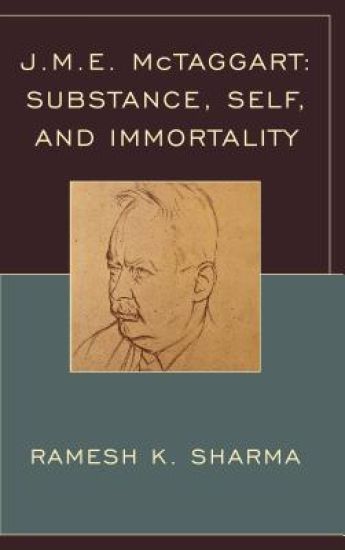
J.M.E. McTaggart seeks to critically expound and appraise the British philosopher’s thought with respect to three principal themes of his philosophy: substance, self, and immortality. Ramesh Kumar Sharma guides the reader through the labyrinths of McTaggart’s intricate arguments and defends many of McTaggart’s highly unorthodox doctrines and conclusions. While doing this, Sharma draws on the works of, among others, Berkeley, Hegel, and Leibniz, and at the same time attacks numerous modern-day physicalist theories that propound mind-brain identity as against the presumed reality of the self and consciousness. This work is thus recommended both for philosophers and researchers interested in: (1) such perennial metaphysical subjects as reality, existence, possibility, the basic ontological categories of substance, qualities, and relations (universals); (2) the question of the reality of the self; (3) McTaggart’s overall vision of the universe or Absolute, and his rejection of the more or less predominant view that the Absolute is God; (4) McTaggart’s unique doctrine, after Plato, of the immortality of the self combined with (the self ’s) pre-existence, post-existence, and plurality of lives; and (5) his extraordinary, but important, views on perception.

This monograph represents the first comprehensive study of the multifaceted representations of the complex phenomenon of globalization in the diverse repertoire of the 2008 Nobel Laureate in Literature. This interdisciplinary investigation explores the initial euphoria related to the ambivalent concept of the ‘global village’ and how this evaporated dream can perhaps be reappropriated to create a better global society for both the human and Cosmic Other through the lens of Le Clézio’s fiction. Chapter one offers a conceptual framework for understanding the Franco-Mauritian author’s nuanced ideas concerning globalization. It also probes the original ambivalence of McLuhan’s celebrated notion of a global village in addition to its euphoric reception. Chapter two explores the current state of the interconnected, interdependent modern world in which many disenfranchised and marginalized individuals are living a recurring nightmare. Chapter three examines Le Clézio’s deconstruction of the simplistic ideology of consumerism that is indicative of contemporary consumer republics. This section also underscores the intricate systems of hegemonic domination, such as the media, created by the transnational corporations that dominate the global economic landscape to sustain their supremacy. Chapter four delves into Le Clézio’s ecocentric humanism that extends to all other living creatures by debunking Manichean dualities that separate human beings from elemental matter and the rest of the universe. The final chapter examines recent texts, such as Raga, Ourania, and Histoire du pied et autres fantaisies, which encourage the reader to envision what a more just and egalitarian global village might encompass. These works dismiss neoliberal fantasies and consumerist ideology that have justified the systematic exploitation of everyone and everything in the name of progress, but they also urge the modern subject to be resilient in the face of tremendous adversity. Instead of accepting the imposition of a monolithic, socioeconomic model that is riddled with inequality and injustice and which serves the interests of the Happy Few, Le Clézio suggests that the first step is to resist integration into the global village by stoically confronting reality and having the necessary courage to propose another vision which counterpoints McLuhan’s misguided one.
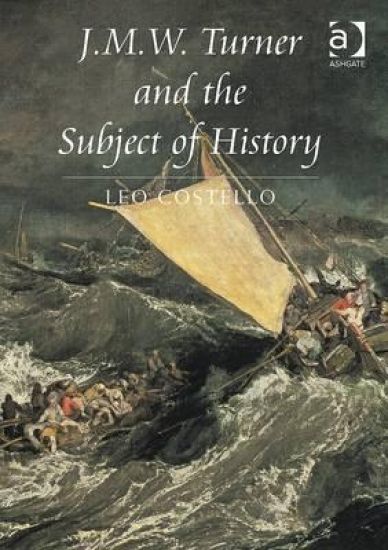
J.M.W. Turner and the Subject of History is an in-depth consideration of the artist's complex response to the challenge of creating history paintings in the early nineteenth century. Structured around the linked themes of making and unmaking, of creation and destruction, this book examines how Turner's history paintings reveal changing notions of individual and collective identity at a time when the British Empire was simultaneously developing and fragmenting. Turner similarly emerges as a conflicted subject, one whose artistic modernism emerged out of a desire to both continue and exceed his eighteenth-century aesthetic background by responding to the altered political and historical circumstances of the nineteenth century.

This work has been selected by scholars as being culturally important and is part of the knowledge base of civilization as we know it.This work is in the public domain in the United States of America, and possibly other nations. Within the United States, you may freely copy and distribute this work, as no entity (individual or corporate) has a copyright on the body of the work.Scholars believe, and we concur, that this work is important enough to be preserved, reproduced, and made generally available to the public. To ensure a quality reading experience, this work has been proofread and republished using a format that seamlessly blends the original graphical elements with text in an easy-to-read typeface.We appreciate your support of the preservation process, and thank you for being an important part of keeping this knowledge alive and relevant.

This work has been selected by scholars as being culturally important and is part of the knowledge base of civilization as we know it.This work is in the public domain in the United States of America, and possibly other nations. Within the United States, you may freely copy and distribute this work, as no entity (individual or corporate) has a copyright on the body of the work.Scholars believe, and we concur, that this work is important enough to be preserved, reproduced, and made generally available to the public. To ensure a quality reading experience, this work has been proofread and republished using a format that seamlessly blends the original graphical elements with text in an easy-to-read typeface.We appreciate your support of the preservation process, and thank you for being an important part of keeping this knowledge alive and relevant.

The Water-Colours of J. M. W. Turner
J M W (Joseph Mallord Will Turner; A J (Alexander Joseph) Finberg; W G (William George) Rawlinson
Anson Street Press
2025
pokkari
![Historia elemental del Continente Americano desde su descubrimiento hasta su independencia; para uso de las escuelas. Por J. M. G[utierrez].](/covers/9781024292954.jpg)
J.m. Bellew's Readings From American Authors
Hutson Street Press
2025
sidottu
J.m. Bellew's Readings From American Authors
Hutson Street Press
2025
pokkari
![Quelques Mots Sur La Traduction Nouvelle De La Bible [avec L'hÃ(c)breu En Regard, Et Les Principales Variantes De La Version Des Septante Et Du Texte Samaritain] Par S. Cahen, Par L'abbÃ(c) J.-m.-b.......](/covers/9781024842579.jpg)
Quelques Mots Sur La Traduction Nouvelle De La Bible [avec L'hÃ(c)breu En Regard, Et Les Principales Variantes De La Version Des Septante Et Du Texte Samaritain] Par S. Cahen, Par L'abbÃ(c) J.-m.-b.......
J M Bercy; Testament (Old)
Hutson Street Press
2025
sidottu
![Quelques Mots Sur La Traduction Nouvelle De La Bible [avec L'hÃ(c)breu En Regard, Et Les Principales Variantes De La Version Des Septante Et Du Texte Samaritain] Par S. Cahen, Par L'abbÃ(c) J.-m.-b.......](/covers/9781024845747.jpg)
Quelques Mots Sur La Traduction Nouvelle De La Bible [avec L'hÃ(c)breu En Regard, Et Les Principales Variantes De La Version Des Septante Et Du Texte Samaritain] Par S. Cahen, Par L'abbÃ(c) J.-m.-b.......
J M Bercy; Testament (Old)
Hutson Street Press
2025
pokkari
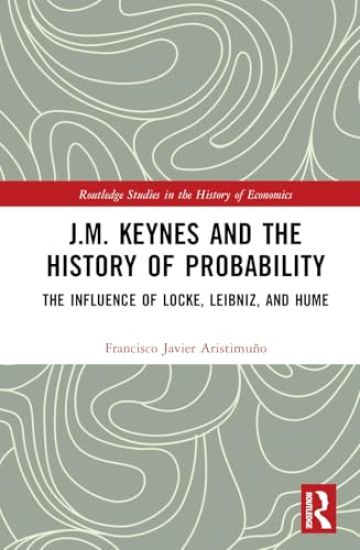
J.M. Keynes and the History of Probability
Francisco Javier Aristimuño
TAYLOR FRANCIS LTD
2025
sidottu
John Maynard Keynes is best known for his contributions to economics, yet he spent nearly two decades exploring the concept of probability. His extensive work culminated in A Treatise on Probability (1921), in which he developed a unique notion of probability that continues to divide scholars regarding its relevance to economic theory.This book delves into the connections between Keynes’s ideas on probability and those of early Enlightenment philosophers, such as Locke, Leibniz, and Hume, who worked on probability before mathematicians claimed ownership over the subject. These authors framed probability as a substitute for knowledge when it is not available. Keynes extended these ideas and engaged directly with Hume on inductive reasoning, placing his concept of probability within a broader philosophical tradition. By tracing these Enlightenment roots, this book provides deeper insight into Keynes’s understanding of probability, clarifying some of the key differences with the subjective approach due to Ramsey and De Finetti. It also summarises the aspects on which probability theory and its corresponding notion of uncertainty are crucial for Keynes’s economic thought, particularly in his General Theory of Employment, Interest and Money.This book is addressed to readers interested in the philosophy of probability and offers economists a fuller understanding of Keynes’s intellectual framework.

Published to coincide with the 250th anniversary of Turner’s birth, J.M.W. Turner’s ‘The Battle of Trafalgar’: Commemoration and Controversy explores the compelling history of Turner’s largest painting and his only royal commission. The Battle of Trafalgar is one of the most famous pictures in the collection of Royal Museums Greenwich, yet its story is surprisingly complex. This book charts the painting’s tumultuous journey, from the challenges that Turner faced during its creation and the storm of criticism that greeted its unveiling to its eventual place at the centre of a national art collection. J.M.W. Turner’s ‘The Battle of Trafalgar’: Commemoration and Controversy is part of the Royal Museums Greenwich Spotlight series, accessible introductions to some of the most intriguing objects in the collection.

J.M.W. Turner and the Subject of History is an in-depth consideration of the artist's complex response to the challenge of creating history paintings in the early nineteenth century. Structured around the linked themes of making and unmaking, of creation and destruction, this book examines how Turner's history paintings reveal changing notions of individual and collective identity at a time when the British Empire was simultaneously developing and fragmenting. Turner similarly emerges as a conflicted subject, one whose artistic modernism emerged out of a desire to both continue and exceed his eighteenth-century aesthetic background by responding to the altered political and historical circumstances of the nineteenth century.

Published in 1998, J. M. Robertson: Rationalist and Literary Critic is a study of the life of one of the most erudite and prolific critics of the late nineteenth and early twentieth centuries. The Scotsman John MacKinnon Robertson (1856-1933), rationalist and enemy of religion to the core, published over one hundred books and thousands of articles in fields as diverse as sociology, economics, history, anthropology, biblical criticism and literary criticism. This once widely known (and feared!) author was all too quickly forgotten after his death and his work is now seldom read. The aim of this book is to demonstrate that Robertson’s writings and in particular his acute and powerful literary criticism – much respected by T. S. Eliot – have not lost their relevance for late twentieth century readers.Moreover, through the examinations of Robertson’s work in its contextual framework, this study provides a wide-ranging perspective on the late-Victorian literary scene, which perhaps present-day literary historians have not given the detailed attention it deserves.

Published in 1998, J. M. Robertson: Rationalist and Literary Critic is a study of the life of one of the most erudite and prolific critics of the late nineteenth and early twentieth centuries. The Scotsman John MacKinnon Robertson (1856-1933), rationalist and enemy of religion to the core, published over one hundred books and thousands of articles in fields as diverse as sociology, economics, history, anthropology, biblical criticism and literary criticism. This once widely known (and feared!) author was all too quickly forgotten after his death and his work is now seldom read. The aim of this book is to demonstrate that Robertson’s writings and in particular his acute and powerful literary criticism – much respected by T. S. Eliot – have not lost their relevance for late twentieth century readers.Moreover, through the examinations of Robertson’s work in its contextual framework, this study provides a wide-ranging perspective on the late-Victorian literary scene, which perhaps present-day literary historians have not given the detailed attention it deserves.
![Two Plaies. the City Match. a Comoedy. and the Amorous Warre, a Tragy-Comoedy. [In Verse.] Both Long Since Written, by J. M. of Ch. Ch. in Oxon. [I.E. Jasper Mayne.]](/covers/9781241242466.jpg)
Two Plaies. the City Match. a Comoedy. and the Amorous Warre, a Tragy-Comoedy. [In Verse.] Both Long Since Written, by J. M. of Ch. Ch. in Oxon. [I.E. Jasper Mayne.]
J M; Jasper Mayne
British Library, Historical Print Editions
2011
pokkari
Title: Two Plaies. The City Match. A comoedy. And The Amorous Warre, a Tragy-Comoedy. In verse.] Both long since written, by J. M. of Ch. Ch. in Oxon. i.e. Jasper Mayne.]Publisher: British Library, Historical Print EditionsThe British Library is the national library of the United Kingdom. It is one of the world's largest research libraries holding over 150 million items in all known languages and formats: books, journals, newspapers, sound recordings, patents, maps, stamps, prints and much more. Its collections include around 14 million books, along with substantial additional collections of manuscripts and historical items dating back as far as 300 BC.The POETRY & DRAMA collection includes books from the British Library digitised by Microsoft. The books reflect the complex and changing role of literature in society, ranging from Bardic poetry to Victorian verse. Containing many classic works from important dramatists and poets, this collection has something for every lover of the stage and verse. ++++The below data was compiled from various identification fields in the bibliographic record of this title. This data is provided as an additional tool in helping to insure edition identification: ++++ British Library M., J; Mayne, Jasper; 1658. 2 pt.; 4 . 644.b.75.