Kirjojen hintavertailu. Mukana 11 342 296 kirjaa ja 12 kauppaa.

Kirjahaku

Etsi kirjoja tekijän nimen, kirjan nimen tai ISBN:n perusteella.

1000 tulosta hakusanalla JAMES JOYCE

James Joyce's Negations

James Joyce's Negations

Brian Cosgrove

University College Dublin Press
2007
sidottu
The main purpose of this book is to validate a reading of Joyce in negative terms. Central to the enquiry is an examination of the roles of irony and of indeterminacy. Irony, interpreted in metaphysical rather than merely rhetorical terms, is envisaged as deriving from two separate if related orientations, one associated with Friedrich Schlegel, the other with Gustave Flaubert. Insofar as Joyce's work (including "Ulysses") owes more to the latter than the former, it forgoes the genial humour central to Schlegel's theories, and embraces instead the ironic detachment and formal control of a Flaubertian perspective. Such irony (which entails a suspicion of sentiment and a related dehumanisation of character, as in some of the stories in Dubliners) becomes normative in Joyce, and along with a similarly deflationary parody pervades "Ulysses". In addition, a persistent indeterminacy is established as early as 'The Dead', so that it becomes impossible in that story to adjudicate between not just contradictory but mutually exclusive interpretations. Such indeterminacy is pushed to further extremes in "Ulysses", with its notorious proliferation of narrative perspectives. As a corollary to the work's encyclopaedic inclusiveness and quotidian particularism, every detail tends to assume the same significance as every other; the consequence being that (in Gyorgy Lukacs' famous formulation) we lose all sense of any 'hierarchy of meaning'. From that it is but a step to Franco Moretti's assessment that in "Ulysses" everyday existence remains 'inert, opaque - meaningless', and that in fact the whole point is to represent the meaningless precisely 'as meaningless'. Indeterminacy, in effect, ushers in the possibility of nihilism. The analysis of "Ulysses" culminates with the attempt (unavailing in both cases) to discover in either Bloom or Molly a genuine source of countervailing affirmation. The study concludes with a brief consideration of the polysemic vocabulary of "Finnegans Wake" as a logical extrapolation of the poetics of indeterminacy.
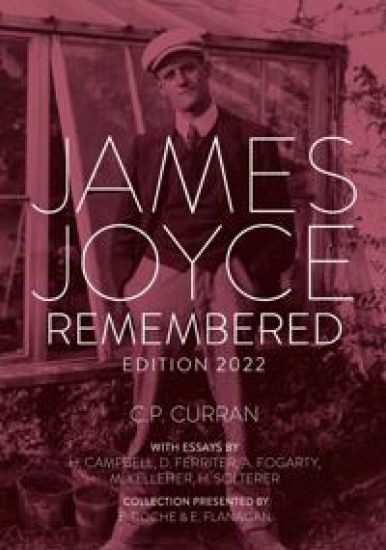
James Joyce Remembered Edition 2022

James Joyce Remembered Edition 2022

UNIVERSITY COLLEGE DUBLIN PRESS
2022
sidottu
In 1968, Conn Curran summed up his life-long companionship with Joyce, including the 1904 photograph he took of his friend in his family's back garden. With this re-issue of Curran's book, another group of University College Dubliners takes a new look at his work, delving into the Curran-Laird collection at the James Joyce Library. Side by side with Joyce, Curran, arts critic, and Helen Laird Curran, his activist partner, come into clearer view; writer-critic adventurers Padraic and Mary Maguire Colum return again; savant Paul Leon, in Paris, takes his place too. The literary, cultural, and political context widens: the Irish wars, erupting again in 1922 as Ulysses begins circulating; the Paris-Dublin rescue operation of this group's papers at Joyce's death, suspended - and accomplished - in this time of violence. The 2022 collective edition offers an uncommon picture of this inventive and committed cohort, their work, and their worlds. With essays by Hugh Campbell, Diarmaid Ferriter, Anne Fogarty, Margaret Kelleher and Helen Solterer. The UCD Curran-Laird collection presented by Eugene Roche and Evelyn Flanagan. This is a full colour, highly illustrated book with special edition design features throughout.
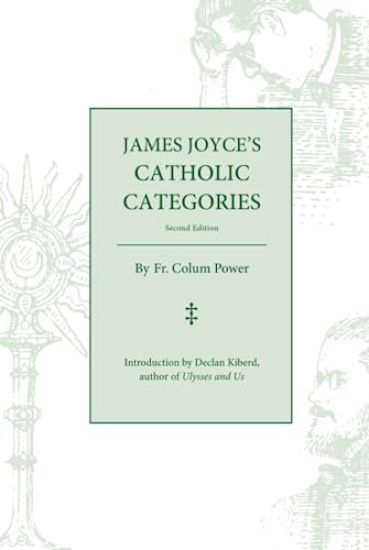
James Joyce's Catholic Categories

James Joyce's Catholic Categories

Colum Power

Wiseblood Books
2023
sidottu
"Francini Bruni, friend to Joyce in Trieste, wrote that 'he only completely admires the unchangeable: the mystery of Christ and the mute drama that surrounds it.' Colum Power, in a study of remarkable patience and rigour, traces Joyce's deep engagement with the more articulate forms which that necessarily mute, often mystical drama has sometimes taken when reduced to the humiliations of language . . . "-From the Introduction by Declan Kiberd, author of Ulysses and Us: The Art of Everyday Life in Joyce's MasterpieceReviews of James Joyce's Catholic Categories: "I am delighted to learn of this work about Joyce, being one of a relatively small number of Joyce critics who see him as having a very substantial religious sensibility; a topic that I continue to find of great interest and importance."-Weldon Thornton, author of The Antimodernism of Joyce's A Portrait of the Artist as a Young Man"A very important book. I now understand Joyce better. Critiquing Joyce and Joycean critics is always perilous, affording many opportunities to tumble ignominiously from the tightrope of true balanced perspective. This book crosses that abyss with awe-inspiring aplomb Leaves one almost breathless, the masterful handling of the material."-Joseph Pearce, author of The Quest for Shakespeare"A wonderful book, I have read it with great pleasure. The author has surely done his homework. The arguments are compelling and expressed with grace and style; an excellent contribution to Joyce studies."-Mary Lowe-Evans, author of Catholic Nostalgia in Joyce and Company"A book of enormous significance not only for students of Joyce but for our coming to grips as a nation with Irish Catholicism, but it has enormous potential way beyond the special local Irish interest, considering the widespread influence of Joyce on world literature."-Father Vincent Twomey"A work of impressive quality, not only a matter of knowledge and extensive readings of Joyce's critics. The substance and course of the reflection is really interesting . . . So many of the observations made are absolutely remarkable."-Father Antoine Levy, O.P.A Note About the Author: Fr. Colum Power, born in Cork, Ireland, in 1965, is a religious missionary priest. He obtained a Master's degree in Anglo-Irish Studies (1st hons.) at University College Dublin in 1991, a Licentiate in the History of Theology (9) at the San Vicente de Ferrer Faculty of Theology in Valencia, Spain, in 2011, and a doctorate in the History of the Church (9.2) at the Pontifical University of the Holy Cross in Rome in 2013.
James Joyce, the Finnegans Wake Notebooks at Buffalo - VI.B.16
The Finnegans Wake Notebook Edition is a fully integrated and cross-referenced edition of all the extant work-books compiled by Joyce after the completion of Ulysses. It will be published as a series of fascicles, one per authorial notebook, three per scribal notebook, fifty-five in all. This will make individual notebooks available to scholars as they appear and allow critical feedback, laying the foundations for an electronic edition that will be prepared simultaneously. The editorial aim is to bring together all of the information relevant to each note in as concise and simple a way as possible. The Finnegans Wake Notebook Edition will provide a reference library of comprehensively quoted source material-in effect an annotated digest of Joyce's working library-which will serve as a new star-ting point not just for exegesis of Finnegans Wake, but also for biographical, textual, and literary criticism of Joyce. Furthermore, the Edition will allow for a reconstruction of Joyce's intellectual concerns and compositional habits during the drafting of Work in Progress / Finnegans Wake.
James Joyce, the Finnegans Wake Notebooks at Buffalo - VI.B.33
The Finnegans Wake Notebook Edition is a fully integrated and cross-referenced edition of all the extant work-books compiled by Joyce after the completion of Ulysses. It will be published as a series of fascicles, one per authorial notebook, three per scribal notebook, fifty-five in all. This will make individual notebooks available to scholars as they appear and allow critical feedback, laying the foundations for an electronic edition that will be prepared simultaneously. The editorial aim is to bring together all of the information relevant to each note in as concise and simple a way as possible. The Finnegans Wake Notebook Edition will provide a reference library of comprehensively quoted source material-in effect an annotated digest of Joyce's working library-which will serve as a new star-ting point not just for exegesis of Finnegans Wake, but also for biographical, textual, and literary criticism of Joyce. Furthermore, the Edition will allow for a reconstruction of Joyce's intellectual concerns and compositional habits during the drafting of Work in Progress / Finnegans Wake.
James Joyce in Zurich

James Joyce in Zurich

Andreas Fischer

Springer Nature Switzerland AG
2021
sidottu
This book offers a comprehensive account of James Joyce and Zurich, one of the four cities (including Dublin, Trieste and Paris) in which he spent significant parts of his life. As a refugee during World War I, Joyce wrote a substantial part of Ulysses in Zurich and subsequently visited the city regularly during the 1930s. Finally, a refugee for the second time, he died there on 13 January 1941 and is buried in Fluntern Cemetery. This guide is conceived both as a book that may be read in its entirety or consulted selectively for specific information. An introduction and three chapters, Joyce in Zurich, Zurich in Joyce and Zurich after Joyce, are followed by sixty alphabetically ordered articles on people, places, institutions and events relevant to Joyce during his time in Zurich. Linked by cross-references and an index, they provide a rich, kaleidoscopic view of Joyce’s Zurich.
James Joyce in Zurich

James Joyce in Zurich

Andreas Fischer

Springer Nature Switzerland AG
2022
nidottu
This book offers a comprehensive account of James Joyce and Zurich, one of the four cities (including Dublin, Trieste and Paris) in which he spent significant parts of his life. As a refugee during World War I, Joyce wrote a substantial part of Ulysses in Zurich and subsequently visited the city regularly during the 1930s. Finally, a refugee for the second time, he died there on 13 January 1941 and is buried in Fluntern Cemetery. This guide is conceived both as a book that may be read in its entirety or consulted selectively for specific information. An introduction and three chapters, Joyce in Zurich, Zurich in Joyce and Zurich after Joyce, are followed by sixty alphabetically ordered articles on people, places, institutions and events relevant to Joyce during his time in Zurich. Linked by cross-references and an index, they provide a rich, kaleidoscopic view of Joyce’s Zurich.
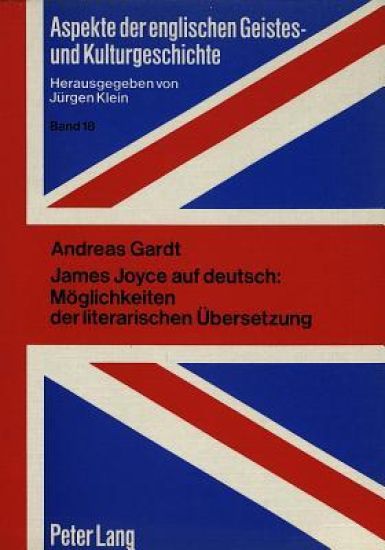
James Joyce Auf Deutsch: Moeglichkeiten Der Literarischen Uebersetzung
Gerade am sprachlich und thematisch uberaus komplexen Werk des James Joyce wird deutlich, dass die Polyvalenz literarischer Texte unterschiedliche Ubersetzungen mit sich bringt. Diese zielsprachlichen Fassungen als Spiegel des Textverstandnisses bzw. der Intentionen des jeweiligen Ubersetzers auszuweisen, ist das Ziel der vorliegenden Untersuchung. Voraussetzung dafur ist die Analyse der Originale, deren Auswahl dem breiten Spektrum von Joyces Werk ebenso gerecht zu werden versucht wie der je nach Gattung unterschiedlichen Problematik des literarischen Ubersetzens: von der eher schlichten Prosa der Erzahlung -Eveline- aus "Dubliners" uber die Sprachartistik der Sirenen-Episode des "Ulysses" zu zwei Gedichten aus den von der Kritik kaum beachteten "Pomes Penyeach" und schliesslich zu dem Drama "Exiles.""
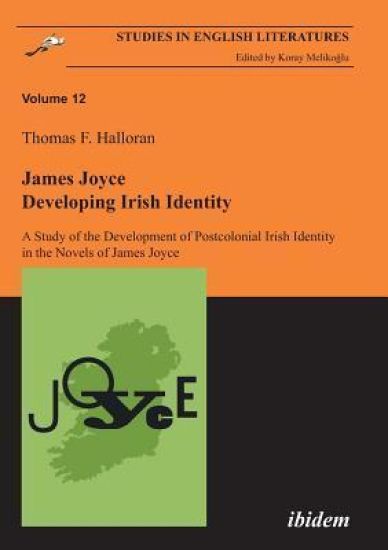
James Joyce - Developing Irish Identity

James Joyce - Developing Irish Identity

Thomas Halloran

ibidem-Verlag, Jessica Haunschild u Christian Schon
2009
nidottu
This book follows the increasing focus on Irish identity in Joyces major works of prose. This study traces the development of the idea of Ireland, the concept of Irishness, the formation of a national identity and the need to deconstruct a nationalistic self-conception of nation in Joyces work. Through close reading of Dubliners, A Portrait of the Artist as a Young Man, Stephen Hero and Ulysses, Joyce articulates the problems that colonialism poses to a nation-state that cannot create its identity autonomously. Furthermore, this reading uncovers Joyces conception of national identity as increasingly sophisticated and complicated after Irish independence was won. From here, Halloran argues that Joyce presents his readers with ideas and suggestions for the future of Ireland. As Irish studies become increasingly imbricated with postcolonial discourse, the need for re-examination of classic texts becomes necessary. This book provides a new approach for understanding the dramatic development of Joyces oeurve by providing a textual analysis guided by postcolonial theory.
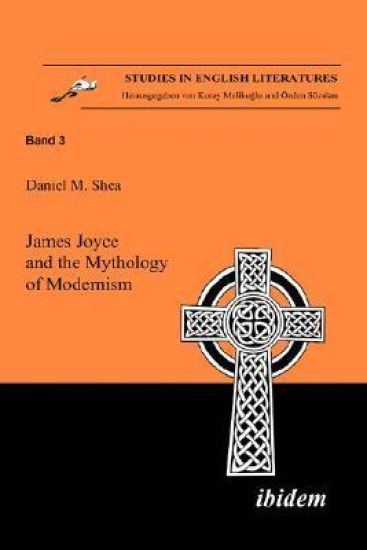
James Joyce and the Mythology of Modernism

James Joyce and the Mythology of Modernism

Daniel M Shea

ibidem-Verlag, Jessica Haunschild u Christian Schon
2006
nidottu
"James Joyce and the Mythology of Modernism" examines anew how myth exists in Joyce's fiction. Using Joyce's idiosyncratic appropriation of the myths of Catholicism, this study explores how the rejected religion still acts as a foundational aesthetic for a new mythology of the Modern age starting with "A Portrait of the Artist as a Young Man" and maturing within "Ulysses". Like the mythopoets before him-Homer, Dante, Milton, Blake-Joyce consciously sets out to encapsulate his vision of a splintered and rapidly changing reality into a new aesthetic which alone is capable of successfully rendering the fullness of life in a meaningful way. Already reeling from the humanistic implications of an impersonal Newtonian universe, the Modern world now faced an Einsteinian one, a re-evaluation which includes Stephen's awakening from the "nightmare" of history, a re-definition of deity, and Bloom's urban identity.Written with both the experienced Joycean and the beginner in mind, this book tells how the Joycean myth is our own conception of the human being, and our place in the universe becomes (re)defined as definitively Modernist, yet still, through Molly Bloom's final affirmation, profoundly human.
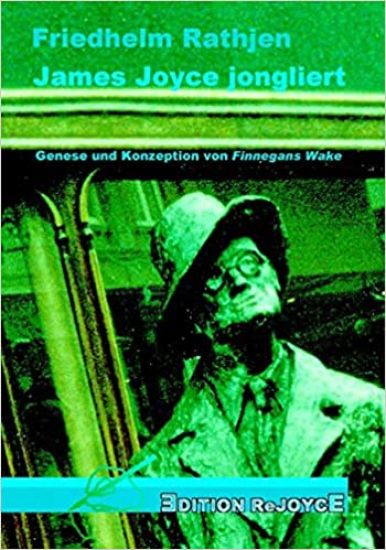
James Joyce jongliert

James Joyce jongliert

Friedhelm Rathjen

Edition Rejoyce
2020
pokkari
Dem Joyceschen Sp twerk "Finnegans Wake" geht ein Ruf voraus, der abschreckend wirken kann. Der Band "James Joyce jongliert" m chte zeigen, da "Finnegans Wake" keineswegs unzug nglich ist, auch wenn zugegeben sei, da die Orientierung im Text schwerfallen kann, dies insbesondere beim Versuch, sie ohne Hilfsmittel zu bewerkstelligen. Der Band bietet zwei solche Hilfsmittel an, erstens eine Schilderung der Textentstehung insbesondere in jener fr hen Phase, in der Joyce selbst hinsichtlich seines neues Schreibprojekts noch ebenso desorientiert war wie sp ter seine Leserschaft, und zweitens einen teils erkl renden, teils veranschaulichenden Gang durch das fertige Werk. Die Einf hrung ist speziell gedacht f r eine deutschsprachige Leserschaft, f r die sich zus tzlich zu allen brigen Schwierigkeiten auch noch diejenige stellt, die sich aus einer mangelnden Vertrautheit mit der englischen Sprache in ihren feinsten Ver stelungen ergibt. Um zumindest diese Schwierigkeit aus der Welt zu schaffen, werden alle Texte von Joyce stets in deutscher bersetzung pr sentiert, "Finnegans Wake" und seine Vorstufen zus tzlich im Originalwortlaut. Beigegeben ist ein Kaleidoskop Joycescher Selbstaussagen ber "Finnegans Wake", au erdem enth lt der Band eine Themenbibliographie speziell f r die deutsche Leserschaft.
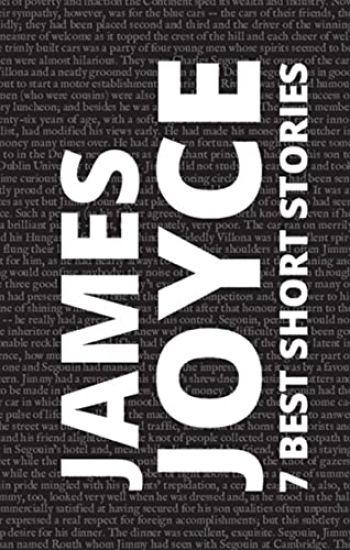
7 best short stories by James Joyce

7 best short stories by James Joyce

James Joyce; August Nemo

Tacet Books
2021
pokkari
Welcome to the 7 Best Short Stories book series, were we present to you the best works of remarkable authors. This edition is dedicated to James Joyce. James Joyce was an Irish, modernist writer who wrote in a ground-breaking style that was known both for its complexity and explicit content. He also participated in the early days of poetic modernism in the English language, being considered by Ezra Pound one of the most eminent poets of imagism. Although Joyce has lived outside his native Irish island for most of adult life, his Irish identity was essential to his work and provide him with all the ambiance and much of the theme of his work. His fictional universe is rooted heavily in Dublin and reflects his family life and events, friendships and enmities from school and college times. In this way, he is at the same time one of the most cosmopolitan and one of the most particularists of the modernist authors of English language. In this anthology the critic August Nemo presents seven short stories that bring the most emblematic elements of the style of this important author: The Sisters, Eveline, Araby, A Painful Case, The Dead, Two Gallants and After the Race. Bonus: James Joyce's Amazing Chronicle by Joseph Collins and James Joyce by John Macy. If you appreciate good literature, be sure to check out the other Tacet Books titles
James Joyce: The Study of Languages

James Joyce: The Study of Languages

European Interuniversity Press
2002
nidottu
"The Study of Languages "is one of James Joyce's first essays and an early indication of his lifelong interest in philology, the focus of this volume of essays. The collection investigates three aspects of Joycean linguistics. The first set of essays studies the language of Joyce's later writings. In the second part, Joyce's own linguistic investigations are retraced. The third part examines the historical context of 'popular philology'. This volume sheds light on the relationship between Joyce's later writings and his reading of studies by linguists such as Richard Paget, Charles Kay Ogden, Ivor Armstrong Richards, Fritz Mauthner, Otto Jespersen, Richard Chenevix Trench and Max Muller. Based on notebook research and textual genetics, these essays show how important the study of languages was to Joyce and how it played a crucial role in the development of his writings as it contributed and gave shape to the languages of "Ulysses" and "Finnegans Wake.""
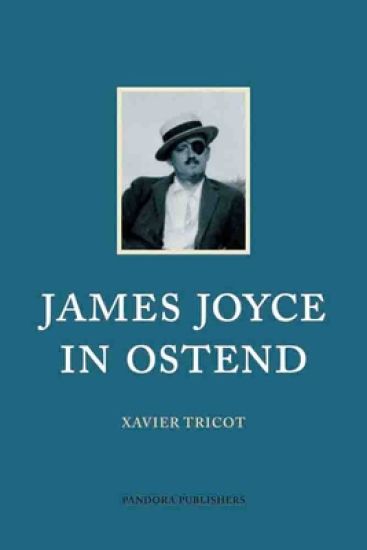
James Joyce in Ostend

James Joyce in Ostend

Xavier Tricot

BAI NV
2021
nidottu
James Joyce, one of the greatest writers of the 20th century, spent several weeks in Ostend during the summer of 1926. In order to escape the oppressive heat of Paris he, his wife Nora and his daughter Lucia chose fashionable Ostend to cool down. From Paris he wrote several letters, mainly to the American Sylvia Beach who had her famous bookshop - Shakespeare and Co. - in Paris, as well as to Briton Harriet Shaw Weaver who supported him financially. During his stay, Joyce takes long walks along the beach, his daughter Lucia takes photographs that are published for the first time, and in a pharmacy, Joyce meets an Irish friend whom he hasn't seen for more than 20 years. During his stay the family undergoes a terrible summer storm which will affect Finnegans Wake, his latest publication. In one of his letters (dated 11 August 1926) he writes about Ostend: "This is by far the best place we have been in for a summer holiday."