Kirjojen hintavertailu. Mukana 12 390 323 kirjaa ja 12 kauppaa.

Kirjahaku

Etsi kirjoja tekijän nimen, kirjan nimen tai ISBN:n perusteella.

1000 tulosta hakusanalla JOSEPH C. LINCOLN

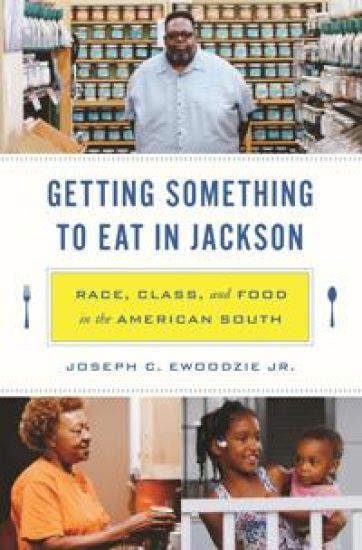
Getting Something to Eat in Jackson

Getting Something to Eat in Jackson

Joseph C. Ewoodzie

PRINCETON UNIVERSITY PRESS
2021
sidottu
James Beard Foundation Book Award Nominee • Winner of the Ida B. Wells-Barnett Book Award, Association of Black Sociologists • Winner of the C. Wright Mills Award, the Society for the Study of Social ProblemsA vivid portrait of African American life in today’s urban South that uses food to explore the complex interactions of race and classGetting Something to Eat in Jackson uses food—what people eat and how—to explore the interaction of race and class in the lives of African Americans in the contemporary urban South. Joseph Ewoodzie Jr. examines how “foodways”—food availability, choice, and consumption—vary greatly between classes of African Americans in Jackson, Mississippi, and how this reflects and shapes their very different experiences of a shared racial identity.Ewoodzie spent more than a year following a group of socioeconomically diverse African Americans—from upper-middle-class patrons of the city’s fine-dining restaurants to men experiencing homelessness who must organize their days around the schedules of soup kitchens. Ewoodzie goes food shopping, cooks, and eats with a young mother living in poverty and a grandmother working two jobs. He works in a Black-owned BBQ restaurant, and he meets a man who decides to become a vegan for health reasons but who must drive across town to get tofu and quinoa. Ewoodzie also learns about how soul food is changing and why it is no longer a staple survival food. Throughout, he shows how food choices influence, and are influenced by, the racial and class identities of Black Jacksonians.By tracing these contemporary African American foodways, Getting Something to Eat in Jackson offers new insights into the lives of Black Southerners and helps challenge the persistent homogenization of blackness in American life.
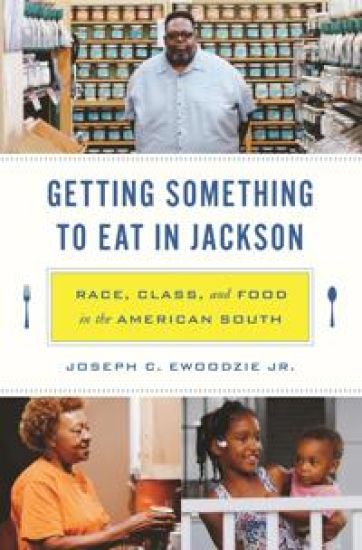
Getting Something to Eat in Jackson

Getting Something to Eat in Jackson

Joseph C. Ewoodzie

PRINCETON UNIVERSITY PRESS
2023
pokkari
James Beard Foundation Book Award Nominee • Winner of the Ida B. Wells-Barnett Book Award, Association of Black Sociologists • Winner of the C. Wright Mills Award, the Society for the Study of Social ProblemsA vivid portrait of African American life in today’s urban South that uses food to explore the complex interactions of race and classGetting Something to Eat in Jackson uses food—what people eat and how—to explore the interaction of race and class in the lives of African Americans in the contemporary urban South. Joseph Ewoodzie Jr. examines how “foodways”—food availability, choice, and consumption—vary greatly between classes of African Americans in Jackson, Mississippi, and how this reflects and shapes their very different experiences of a shared racial identity.Ewoodzie spent more than a year following a group of socioeconomically diverse African Americans—from upper-middle-class patrons of the city’s fine-dining restaurants to men experiencing homelessness who must organize their days around the schedules of soup kitchens. Ewoodzie goes food shopping, cooks, and eats with a young mother living in poverty and a grandmother working two jobs. He works in a Black-owned BBQ restaurant, and he meets a man who decides to become a vegan for health reasons but who must drive across town to get tofu and quinoa. Ewoodzie also learns about how soul food is changing and why it is no longer a staple survival food. Throughout, he shows how food choices influence, and are influenced by, the racial and class identities of Black Jacksonians.By tracing these contemporary African American foodways, Getting Something to Eat in Jackson offers new insights into the lives of Black Southerners and helps challenge the persistent homogenization of blackness in American life.
The Serpent Within

The Serpent Within

Joseph C. Bertolini

University Press of America
1997
nidottu
This book examines four key works of American literature to validate a critical analysis of American politics. Using a Lockean/Hobbesian individualist framework, the chosen works offer a window into a uniquely American concept of individuality that has shaped current sociopolitical culture. The lack of shared, empathetic appreciation of our needs and problems makes it extremely difficult to successfully address current debates in social issues such as crime, drugs, and homelessness, to name a few. The book argues that the root of American political and social problems lies in the extreme individuality inherent in American culture. By examining representative elements of American literature, we can gain greater, unique insight into American political dilemmas. Contents: Introduction: The Serpent Within; Hobbes and Locke in America; The Scarlet Letter; Moby-Dick; Huckleberry Finn; The Great Gatsby; Literature, Individualism and Public Policy; Index.
Demons

Demons

Joseph C. Stewart

Schiffer Publishing Ltd
2021
sidottu
Relevant and new research presenting how prevalent demons are in our society outside religion persuasion, true stories of possession, and a new exorcism technique of binding demons. Demons are real; they roam our world looking for opportunities to heap destruction upon us. They are ruled by blind hatred toward humanity, and they don't discriminate. Man, woman, or child—all are fair game. Journey into the realm of these horrific creatures with a real demon hunter to see the intense carnage unleashed on an unsuspecting public. Find out how prevalent demons are in our society outside religious persuasion, consider relevant and new research, and read true stories of possession. Discover what these parasites are and what they do, understand their makeup and behaviors, and learn how to get rid of them should you become afflicted. Through trial and error, with significant physical and mental risk to the author, a new exorcism technique of binding demons is unveiled here. Against all odds, the author survives to tell his story. Consider this book a warning . . .
Corporate Governance in Central Eastern Europe

Corporate Governance in Central Eastern Europe

Joseph C. Brada; Inderjit Singh

Routledge
1998
sidottu
This volume focuses on the performance of firms as a measure of the effectiveness of corporate governance, and then attempts to draw conclusions about the relative advantages of different ownership structures. The analysis is based on studies of firms in the Czech Republic, Hungary and Poland.
Paper Medicine Man

Paper Medicine Man

Joseph C Porter

University of Oklahoma Press
1989
nidottu
John Gregory Bourke was a U.S. Army officer who became an ethnologist, military historian, and prolific writer on the American West. Bourke spent most of his military service in the post-Civil War West. After graduating from West Point, he fought in last-stand battles with the Sioux, Northern Cheyennes, and Apaches. He was in General George Crook's command, pursuing the fugitive Chiricahua Apaches into the rugged Sierra Madre. Bourke's contacts with Indians brought a growing interest in their lifeways and ceremonies. Ranging from Texas and Mexico north through Hopi and Zuni lands to Montana, Idaho, and the Rockies, Bourke observed and made extensive field notes. The Apaches began calling him ""Paper Medicine Man."" To the Sioux he was ""Ink Man."" Bourke began publishing his observations and quickly developed a reputation as an accurate reporter of American Indian customs and rituals, earning praise from John Wesley Powell, Theodore Roosevelt, Francis Parkman, and Sigmund Freud. Bourke also wrote firsthand military history, chronicling Crook's exploits in the classic On the Border with Crook, which established him as one of the first historians of the Indian Wars. Based on prodigious research and drawing on Bourke's voluminous diary, Paper Medicine Man is an adventure in itself.
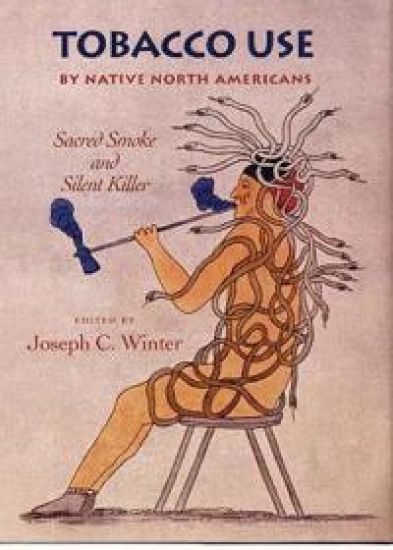
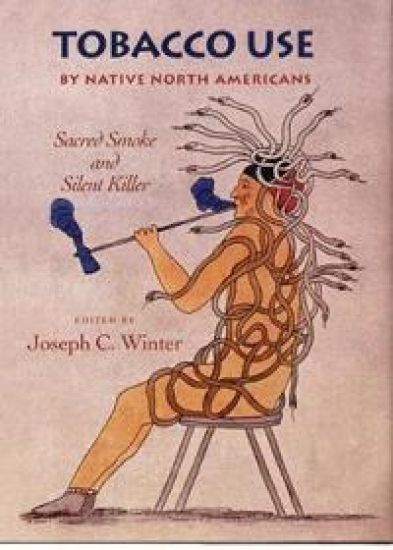
Tobacco Use by Native North Americans

Tobacco Use by Native North Americans

Joseph C. Winter

University of Oklahoma Press
2001
sidottu
Recently identified as a killer, tobacco has been the focus of health warnings, lawsuits, and political controversy. Yet many Native Americans continue to view tobacco-when used properly-as a life-affirming and sacramental substance that plays a significant role in Native creation myths and religious ceremonies. This definitive work presents the origins, history, and contemporary use (and misuse) of tobacco by Native Americans. It describes wild and domesticated tobacco species and how their cultivation and use may have led to the domestication of corn, potatoes, beans, and other food plants. It also analyzes many North American Indian practices and beliefs, including the concept that Tobacco is so powerful and sacred that the spirits themselves are addicted to it. The book presents medical data revealing the increasing rates of commercial tobacco use by Native youth and the rising rates of death among Native American elders from lung cancer, heart disease, and other tobacco-related illnesses. Finally, this volume argues for the preservation of traditional tobacco use in a limited, sacramental manner while criticizing the use of commercial tobacco.Contributors are: Mary J. Adair, Karen R. Adams, Carol B. Brandt, Linda Scott Cummings, Glenna Dean, Patricia Diaz-Romo, Jannifer W. Gish, Julia E. Hammett, Robert F. Hill, Richard G. Holloway, Christina M. Pego, Samuel Salinas Alvarez, Lawrence A Shorty, Glenn W. Solomon, Mollie Toll, Suzanne E. Victoria, Alexander von Garnet, Jonathan M. Samet, and Gail E. Wagner.
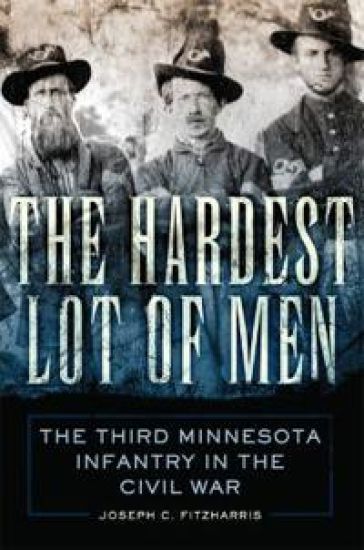
The Hardest Lot of Men

The Hardest Lot of Men

Joseph C. Fitzharris

University of Oklahoma Press
2019
sidottu
Outstanding in appearance, discipline, and precision at drill, the Third Minnesota Volunteer Infantry was often mistaken for a regular army unit. Rebel Colonel Ponder described the regiment as ""the hardest lot of men he'd ever run against."" Betrayed by its higher commanders, the Third Minnesota was surrendered to Nathan Bedford Forrest on July 13, 1862, in Murfreesboro, Tennessee. Through letters, personal accounts of the men, and other sources, author Joseph C. Fitzharris recounts how the Minnesotans, prisoners of war, broken in spirit and morale, went home and found redemption and renewed purpose fighting the Dakota Indians. They were then sent south to fight guerrillas along the Tennessee River. In the process, the regiment was forged anew as a superbly drilled and disciplined unit that participated in the siege of Vicksburg and in the Arkansas Expedition that took Little Rock. At Pine Bluff, Arkansas, sickness so reduced its numbers that the Third was twice unable to muster enough men to bury its own dead, but the men never wavered in battle. In both Tennessee and Arkansas, the Minnesotans actively supported the U.S. Colored Troops (USCT) and provided many officers for USCT units.The Hardest Lot of Men follows the Third through occupation to war's end, when the returning men, deeming the citizens of St. Paul insufficiently appreciative, spurned a celebration in their honor. In this first full account of the regiment, Fitzharris brings to light the true story long obscured by the official histories illustrating aspects of a nineteenth-century soldier's life - enlisted and commissioned alike - from recruitment and training to the rigors of active duty. The Hardest Lot of Men gives us an authentic picture of the Third Minnesota, at once both singular and representative of its historical moment.
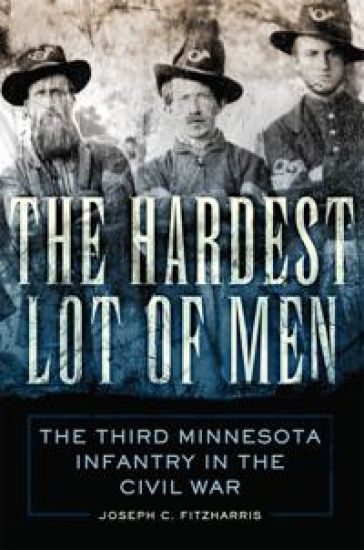
The Hardest Lot of Men

The Hardest Lot of Men

Joseph C. Fitzharris

UNIVERSITY OF OKLAHOMA PRESS
2022
nidottu
Outstanding in appearance, discipline, and precision at drill, the Third Minnesota Volunteer Infantry was often mistaken for a regular army unit. Rebel Colonel Ponder described the regiment as “the hardest lot of men he’d ever run against.” Betrayed by its higher commanders, the Third Minnesota was surrendered to Nathan Bedford Forrest on July 13, 1862, in Murfreesboro, Tennessee. Through letters, personal accounts of the men, and other sources, author Joseph C. Fitzharris recounts how the Minnesotans, prisoners of war, broken in spirit and morale, went home and found redemption and renewed purpose fighting the Dakota Indians. They were then sent south to fight guerrillas along the Tennessee River. In the process, the regiment was forged anew as a superbly drilled and disciplined unit that participated in the siege of Vicksburg and in the Arkansas Expedition that took Little Rock. At Pine Bluff, Arkansas, sickness so reduced its numbers that the Third was twice unable to muster enough men to bury its own dead, but the men never wavered in battle. In both Tennessee and Arkansas, the Minnesotans actively supported the U.S. Colored Troops (USCT) and provided many officers for USCT units.The Hardest Lot of Men follows the Third through occupation to war’s end, when the returning men, deeming the citizens of St. Paul insufficiently appreciative, spurned a celebration in their honor. In this first full account of the regiment, Fitzharris brings to light the true story long obscured by the official histories illustrating aspects of a nineteenth-century soldier’s life—enlisted and commissioned alike—from recruitment and training to the rigors of active duty. The Hardest Lot of Men gives us an authentic picture of the Third Minnesota, at once both singular and representative of its historical moment.
Tobacco Use by Native North Americans

Tobacco Use by Native North Americans

Joseph C. Winter

UNIVERSITY OF OKLAHOMA PRESS
2022
nidottu
Recently identified as a killer, tobacco has been the focus of health warnings, lawsuits, and political controversy. Yet many Native Americans continue to view tobacco-when used properly-as a life-affirming and sacramental substance that plays a significant role in Native creation myths and religious ceremonies.This definitive work presents the origins, history, and contemporary use (and misuse) of tobacco by Native Americans. It describes wild and domesticated tobacco species and how their cultivation and use may have led to the domestication of corn, potatoes, beans, and other food plants. It also analyzes many North American Indian practices and beliefs, including the concept that Tobacco is so powerful and sacred that the spirits themselves are addicted to it. The book presents medical data revealing the increasing rates of commercial tobacco use by Native youth and the rising rates of death among Native American elders from lung cancer, heart disease, and other tobacco-related illnesses. Finally, this volume argues for the preservation of traditional tobacco use in a limited, sacramental manner while criticizing the use of commercial tobacco.Contributors are: Mary J. Adair, Karen R. Adams, Carol B. Brandt, Linda Scott Cummings, Glenna Dean, Patricia Diaz-Romo, Jannifer W. Gish, Julia E. Hammett, Robert F. Hill, Richard G. Holloway, Christina M. Pego, Samuel Salinas Alvarez, Lawrence A Shorty, Glenn W. Solomon, Mollie Toll, Suzanne E. Victoria, Alexander von Garnet, Jonathan M. Samet, and Gail E. Wagner.
Slave Traffic in the Age of Abolition

Slave Traffic in the Age of Abolition

Joseph C. Dorsey

University Press of Florida
2021
pokkari
Drawing on archival sources from six countries, Joseph Dorsey examines the role of Puerto Rico in slave acquisitions after the traffic in slaves was outlawed. He delineates the differences between Puerto Rican and non-Puerto Rican traffic, from procurement in West Africa to influx into the Caribbean, and he scrutinizes the tactics--including inter-Caribbean traffic and conflation of African and Creole identities--by which Puerto Rican interest groups avoided abolitionist scrutiny. He also identifies the extent to which Spain supported these operations. Dorsey reconstructs the slave trade in Puerto Rico, devoting special attention to the maritime logistics of slave acquisitions--in particular the West African corridors and the nuances of inter-Caribbean assistance. He examines the evidence for the true origins of these slave populations and considers forces beyond European and American politics that influenced the flow of slaves. He explains the complex conditions of the Upper Guinea coast and illustrates the impact of social, political, and economic forces endemic to West African affairs on the Puerto Rican slave market.Dorsey's meticulous pursuit of evidence unearths the routes and institutions that brought thousands of slaves from West Africa into the eastern Caribbean, turning them into "creoles" in official records. In a radical departure from present Puerto Rican historiography, he demonstrates that Puerto Rico was an active participant in the illegal slave traffic and exerted a great deal of control over numerous components of the acquisition process, without exclusive dependence on the larger slave-trading polities such as Cuba and Brazil.
Biblical and Theological Foundations of the Family

Biblical and Theological Foundations of the Family

Joseph C. Atkinson

The Catholic University of America Press
2014
nidottu
Biblical and Theological Foundations of the Family argues that the family has a constitutive nature and a specific theological purpose, which God reveals in the church. Joseph Atkinson investigates the principles of the doctrine of Creation which inform the family ""from the beginning""; the vital way the family functions as ""carrier of the covenant"" in the Old Testament; and the critical aspects of Hebraic anthropology, especially corporate personality, upon which the family is based.This book provides a counter argument to the view of the human person developed in modern thought and which prevails today – the autonomous, self-determining individual, with no essential nature or social or ecclesial aspects. Atkinson discusses the constitutive corporate nature of the human person and how the covenantal family of the Old Testament finds its fulfilment in Jesus Christ. The author does so by investigating how baptism transforms the family and gives it an ecclesial identity, making it a ""domestic church"". He then examines the development of the family’s ecclesial nature in the church fathers, and the providential re-appropriation of the family’s inner ecclesial identity in the teachings of the Second Vatican Council and in subsequent magisterial teachings.This ground-breaking work establishes a solid biblical and theological foundation on which a theology of the family can be constructed. It thus fills a critical lack in the current literature on the family. The wide range of sources, including Jewish, Catholic, Orthodox, and Protestant, give this work a genuine ecumenical dimension. Biblical and Theological Foundations of the Family will become indispensable for anyone wanting to engage in serious study of the structure and meaning of the family and its place in the salvific will of God.
Eucharist as Meaning

Eucharist as Meaning

Joseph C. Mudd

Liturgical Press
2014
pokkari
This study moves beyond postmodern trends in Catholic eucharistic theology by exploring the works of Bernard Lonergan and Louis-Marie Chauvet: “Having learned from both Chauvet’s critique of metaphysics and Lonergan’s development of a critical metaphysics, we hope to offer a fruitful understanding of traditional eucharistic doctrines that is able to respond to some contemporary problems and shed some light on the great mystery that stands at the center of Christian worship” (from the introduction).Postmodern theologians have been critical of using metaphysics to interpret the presence of Christ in the Eucharist, liturgical sacrifice, and sacramental causality, preferring instead a symbolic approach. Lonergan’s critical metaphysics, however, offers an account of knowing and being that resists attempts to pit metaphysics against the symbolic and moves sacramental theology into the real world of meaning. The result is a theology of the Eucharist grounded in tradition that speaks to today’s believers.