Kirjojen hintavertailu. Mukana 11 577 312 kirjaa ja 12 kauppaa.

Kirjahaku

Etsi kirjoja tekijän nimen, kirjan nimen tai ISBN:n perusteella.

1000 tulosta hakusanalla James M. Hutchisson

The Limits of Party

The Limits of Party

James M. Curry; Frances E. Lee

University of Chicago Press
2020
sidottu
To many observers, Congress has become a deeply partisan institution where ideologically-distinct political parties do little more than engage in legislative trench warfare. A zero-sum, winner-take-all approach to congressional politics has replaced the bipartisan comity of past eras. If the parties cannot get everything they want in national policymaking, then they prefer gridlock and stalemate to compromise. Or, at least, that is the conventional wisdom. In The Limits of Party, James M. Curry and Frances E. Lee challenge this conventional wisdom. By constructing legislative histories of congressional majority parties’ attempts to enact their policy agendas in every congress since the 1980s and by drawing on interviews with Washington insiders, the authors analyze the successes and failures of congressional parties to enact their legislative agendas. ? Their conclusions will surprise many congressional observers: Even in our time of intense party polarization, bipartisanship remains the key to legislative success on Capitol Hill. Congressional majority parties today are neither more nor less successful at enacting their partisan agendas. They are not more likely to ram though partisan laws or become mired in stalemate. Rather, the parties continue to build bipartisan coalitions for their legislative priorities and typically compromise on their original visions for legislation in order to achieve legislative success.
The Limits of Party

The Limits of Party

James M. Curry; Frances E. Lee

University of Chicago Press
2020
nidottu
To many observers, Congress has become a deeply partisan institution where ideologically-distinct political parties do little more than engage in legislative trench warfare. A zero-sum, winner-take-all approach to congressional politics has replaced the bipartisan comity of past eras. If the parties cannot get everything they want in national policymaking, then they prefer gridlock and stalemate to compromise. Or, at least, that is the conventional wisdom. In The Limits of Party, James M. Curry and Frances E. Lee challenge this conventional wisdom. By constructing legislative histories of congressional majority parties’ attempts to enact their policy agendas in every congress since the 1980s and by drawing on interviews with Washington insiders, the authors analyze the successes and failures of congressional parties to enact their legislative agendas. ? Their conclusions will surprise many congressional observers: Even in our time of intense party polarization, bipartisanship remains the key to legislative success on Capitol Hill. Congressional majority parties today are neither more nor less successful at enacting their partisan agendas. They are not more likely to ram though partisan laws or become mired in stalemate. Rather, the parties continue to build bipartisan coalitions for their legislative priorities and typically compromise on their original visions for legislation in order to achieve legislative success.

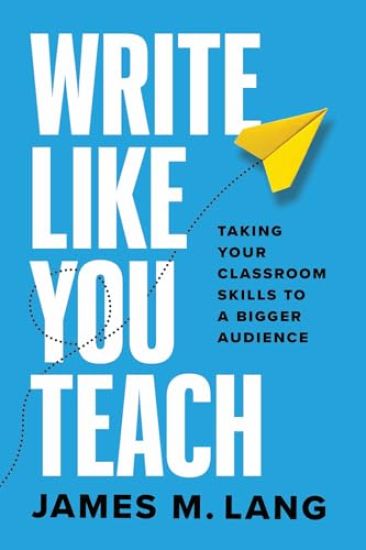
Write Like You Teach

Write Like You Teach

James M. Lang

THE UNIVERSITY OF CHICAGO PRESS
2025
sidottu
This engaging guide offers practical advice to teachers on how to utilize their existing classroom skills to become more effective public writers. After years spent cultivating their expertise and passion for a subject, scholars are uniquely positioned to write great books. Yet, accustomed to writing for an audience of their peers, many scholars find it challenging to adapt their writing to a style that is accessible and engaging to the general public. James M. Lang argues that academics are regularly called on to pitch their research to a general audience: their undergraduates. If only there were a way to translate the skills they use in the classroom into their writing. . . . In Write Like You Teach, Lang—a veteran writer and teacher—distills the elements of good classroom teaching into guidelines for writing for a general audience. He encourages authors to pay attention to how their readers learn and to embrace exploration, experimentation, and creativity in their writing. Lang asks his readers to consider the questions that all great teachers ask themselves: How will I get the attention of my students? How do I make them curious about the subject? What stories or examples will illustrate the more difficult concepts or theories in the course? When will I pause in the class and give students a break from hard thinking? What will I do at the end of the class to remind students about my key messages and leave them wanting to know more?Write Like You Teach includes examples from successful writers and useful anecdotes from Lang’s own classroom and writing career. Indeed, Lang takes his own advice to heart: like a good teacher, he varies the form of each chapter, making sure to introduce some surprises to keep the reader engaged. Each chapter ends with writing prompts to help readers practice their newly acquired skills, and an appendix provides additional advice on publishing and promoting one’s work. Teachers who follow Lang’s suggestions will find new ways to connect with their readers—and like any good student, they will never approach writing the same way again.
Write Like You Teach

Write Like You Teach

James M. Lang

THE UNIVERSITY OF CHICAGO PRESS
2025
nidottu
This engaging guide offers practical advice to teachers on how to utilize their existing classroom skills to become more effective public writers. After years spent cultivating their expertise and passion for a subject, scholars are uniquely positioned to write great books. Yet, accustomed to writing for an audience of their peers, many scholars find it challenging to adapt their writing to a style that is accessible and engaging to the general public. James M. Lang argues that academics are regularly called on to pitch their research to a general audience: their undergraduates. If only there were a way to translate the skills they use in the classroom into their writing. . . . In Write Like You Teach, Lang—a veteran writer and teacher—distills the elements of good classroom teaching into guidelines for writing for a general audience. He encourages authors to pay attention to how their readers learn and to embrace exploration, experimentation, and creativity in their writing. Lang asks his readers to consider the questions that all great teachers ask themselves: How will I get the attention of my students? How do I make them curious about the subject? What stories or examples will illustrate the more difficult concepts or theories in the course? When will I pause in the class and give students a break from hard thinking? What will I do at the end of the class to remind students about my key messages and leave them wanting to know more?Write Like You Teach includes examples from successful writers and useful anecdotes from Lang’s own classroom and writing career. Indeed, Lang takes his own advice to heart: like a good teacher, he varies the form of each chapter, making sure to introduce some surprises to keep the reader engaged. Each chapter ends with writing prompts to help readers practice their newly acquired skills, and an appendix provides additional advice on publishing and promoting one’s work. Teachers who follow Lang’s suggestions will find new ways to connect with their readers—and like any good student, they will never approach writing the same way again.
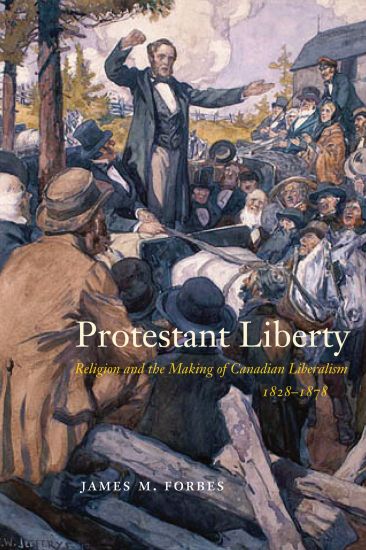
Protestant Liberty

Protestant Liberty

James M. Forbes

MCGILL-QUEEN'S UNIVERSITY PRESS
2022
sidottu
Tensions between Protestantism and Catholicism dominated politics in nineteenth-century Canada, occasionally erupting into violence. While some liberal politicians and community leaders believed that equal treatment of Protestants and Catholics would defuse these ancient quarrels, other Protestant liberals perceived a battle for the soul of the nation.Protestant Liberty offers a new interpretation of nineteenth-century liberalism by re-examining the role of religion in Canadian politics. While this era’s liberal thought is often characterized as being neutral toward religion, James Forbes argues that the origins of Canadian liberalism were firmly rooted in the British tradition of Protestantism and were based on the premise of guarding against the advance of supposedly illiberal faiths, especially Catholicism. After the union of Upper Canada with predominantly French-Catholic Lower Canada in 1840, this Protestant ideal of liberty came into conflict with a more neutral alternative that sought to strip liberalism of its religious associations in order to appeal to Catholic voters and allies. In a decisive break from their Protestant heritage, these liberals redefined their ideology in secular-materialist terms by emphasizing free trade and private property over faith and culture.In tracing how the Confederation generation competed to establish a unifying vision for the nation, Protestant Liberty reveals religion and religious differences at the centre of this story.
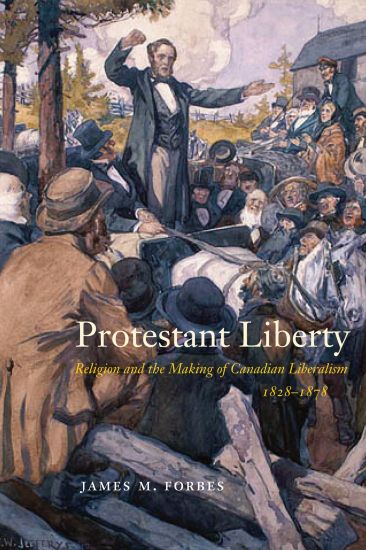
Protestant Liberty

Protestant Liberty

James M. Forbes

MCGILL-QUEEN'S UNIVERSITY PRESS
2022
nidottu
Tensions between Protestantism and Catholicism dominated politics in nineteenth-century Canada, occasionally erupting into violence. While some liberal politicians and community leaders believed that equal treatment of Protestants and Catholics would defuse these ancient quarrels, other Protestant liberals perceived a battle for the soul of the nation.Protestant Liberty offers a new interpretation of nineteenth-century liberalism by re-examining the role of religion in Canadian politics. While this era’s liberal thought is often characterized as being neutral toward religion, James Forbes argues that the origins of Canadian liberalism were firmly rooted in the British tradition of Protestantism and were based on the premise of guarding against the advance of supposedly illiberal faiths, especially Catholicism. After the union of Upper Canada with predominantly French-Catholic Lower Canada in 1840, this Protestant ideal of liberty came into conflict with a more neutral alternative that sought to strip liberalism of its religious associations in order to appeal to Catholic voters and allies. In a decisive break from their Protestant heritage, these liberals redefined their ideology in secular-materialist terms by emphasizing free trade and private property over faith and culture.In tracing how the Confederation generation competed to establish a unifying vision for the nation, Protestant Liberty reveals religion and religious differences at the centre of this story.
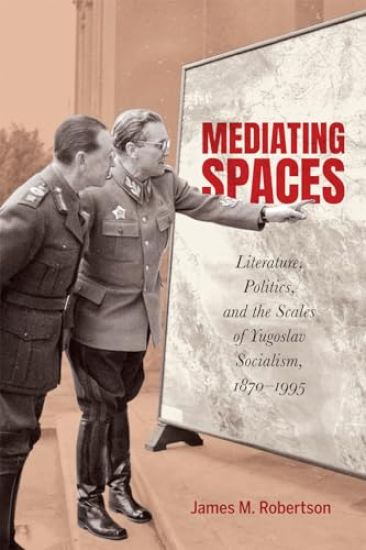
Mediating Spaces

Mediating Spaces

James M. Robertson

MCGILL-QUEEN'S UNIVERSITY PRESS
2024
sidottu
Throughout the twentieth century in the lands of Yugoslavia, socialists embarked on multiple projects of supranational unification. Sensitive to the vulnerability of small nations in a world of great powers, they pursued political sovereignty, economic development, and cultural modernization at a scale between the national and the global – from regional strategies of Balkan federalism to continental visions of European integration to the internationalist ambitions of the Non-Aligned Movement.In Mediating Spaces James Robertson offers an intellectual history of the diverse supranational politics of Yugoslav socialism, beginning with its birth in the 1870s and concluding with its violent collapse in the 1990s. Showcasing the ways in which socialists in Southeast Europe confronted the political, economic, and cultural dimensions of globalization, the book frames the evolution of supranational politics as a response to the shifting dynamics of global economic and geopolitical competition. Arguing that literature was a crucial vehicle for imagining new communities beyond the nation, Robertson analyzes the manuscripts, journals, and personal correspondence of the literary left to excavate the cultural geographies that animated Yugoslav socialism and its supranational horizons. The book ultimately illuminates the innovative strategies of cultural development used by socialist writers to challenge global asymmetries of power and prestige.Mediating Spaces reveals the full significance of supranationalism in the history of socialist thought, recovering a key concern for an era of renewed geopolitical contestation in Eastern Europe.
The Illegitimate Tudor

The Illegitimate Tudor

James M. Stuart

Lulu.com
2019
sidottu
1524. King Henry VIII of the House of Tudors rules the Kingdom of England.Edward, a young man living a secluded life in York is led into exile after tragedy befalls his family. In his efforts to survive in a foreign land, he succumbs into a lawless life, but fate has different plans for him... Edward's past is haunting him, and guilt weighs on his conscience. Thus, when the opportunity arises he returns to his homeland to pursue vengeance no matter the cost... As the political schemes of dangerously ambitious individuals upset the Tudor Court, conspiracies will be uncovered, and the capricious King Henry VIII is ready to bring the whole realm in turmoil.'A gripping historical novel that depicts the divided loyalties and treacheries of Tudor England.'
The Great Orchestrator

The Great Orchestrator

James M. Doering

University of Illinois Press
2013
sidottu
This biography charts the career and legacy of the pioneering American music manager Arthur Judson (1881–1975), who rose to prominence in Philadelphia and New York at the beginning of the twentieth century. A violinist by training, Judson became manager of the Philadelphia Orchestra in 1915 under the iconic conductor Leopold Stokowski. Within a few years, Judson also took on management of the New York Philharmonic, navigating a period of change and the tenures of several important conductors who included William Mengelberg, Arturo Toscanini, and John Barbirolli. Judson also began managing individual artists, including pianists Alfred Cortot and Vladimir Horowitz, violinist Jasha Heifetz, and cellist Gregor Piatigorsky. He also organized the U.S. tours of several prominent composers, including Igor Stravinsky and Vincent d'Indy. At the same time, Judson began managing conductors. His first clients were Stokowski and Fritz Reiner. By the 1930s, Judson's conductor list included most of the important conductors working in America. Drawing on rich correspondence between Judson and the conductors and artists he served, James M. Doering demonstrates Judson's multifaceted roles, including involvement with programming choices, building audiences, negotiating with orchestra members and their unions, and exploring new technologies for extending the orchestras' reach. In addition to his colorful career behind the scenes at two preeminent American orchestras, Judson was important for a number of innovations in arts management. In 1922, he founded a nationwide network of local managers and later became involved in the relatively unexplored medium of radio, working first with WEAF in New York City and then later forming his own national radio network in 1927. Providing valuable insight into the workings of these orchestras and the formative years of arts management, The Great Orchestrator is a valuable portrait of one of the most powerful managers in American musical history.
The Late Great Johnny Ace and the Transition from R&B to Rock 'n' Roll
Johnny Ace's crooning style and stirring ballads made him the first postwar African American artist to cross over to a white audience. After a string of R&B hits, Ace released the million-selling "Pledging My Love," a song headed to the top of the charts when the singer accidentally shot himself in his dressing room between sets at a show. James M. Salem captures the enigmatic, captivating, and influential R&B legend. Venturing from raucous Beale Street to Houston's vibrant Fourth Ward, Salem places Johnny Ace within a multifaceted world of postwar rhythm and blues that included B. B. King, Johnny Otis, Big Mama Thornton, and Gatemouth Brown. Salem also examines how entrepreneur Don D. Robey and his wife Evelyn Johnson promoted Ace to the top of the charts. Yet fame, as always, had a price. Ace's tours on the Chitlin' Circuit meant endless one-night stands and a grueling schedule that kept him on the road 340 days per year. Comprehensive and filled with anecdotes, The Late Great Johnny Ace and the Transition from R&B to Rock 'n' Roll tells the story of the star who fused black and white styles and changed American popular music forever.
Edmund Husserl's Phenomenology

Edmund Husserl's Phenomenology

James M. Edie

Indiana University Press
1987
pokkari
All of the major themes of Edmund Husserl's phenomenology, from the Logical Investigations to The Crisis of the European Sciences, are investigated from a critical point of view by James M. Edie. The philosophy of logic is considered insofar as it relates to the phenomenological and transcendental foundation of logic itself. Transcendental logic is studied with reference to both the formal logic of Aristotle and Leibniz and the dialectical logic of Hegel. Edie considers Husserl's theories of meaning and reference, intentionality, the distinction between perceptual and eidetic intuition, the notion of the ideality of meaning, the laws of objectivity in general, and formal and material ontology, as well as Husserl's reinterpretation of the apriori.
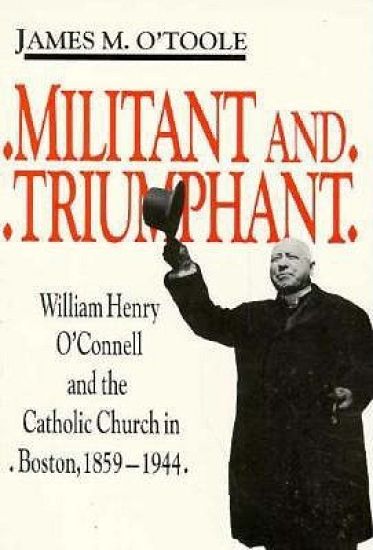
Militant and Triumphant: William Henry O'Connell and the Catholic Church in Boston, 1859-1944
Militant and Triumphant fills a major gap in the historical record of American Catholicism by presenting a vivid, objective portrait of Cardinal William Henry O'Connell and his significance in the church and his times. Focusing on both the triumphs and controversies of O'Connell's career, James M. O'Toole chronicles the history of the Catholic Church in Boston in the first half of the twentieth century.The biography begins with a lively discussion of O'Connell's Irish immigrant youth and education and his early positions as rector of the American College in Rome and bishop of Portland, Maine. O'Toole convincingly demonstrates that as bishop, O'Connell actively built his own public image while ambitiously campaigning for the position of archbishop of Boston. The most enduring success, O'Toole argues, of O'Connell's 37-year tenure as archbishop of Boston--despite a sexual and financial scandal surrounding his nephew, the archdiocesan chancellor--was his elaboration of "a personal style of leadership that was different from that of earlier bishops, changing the expectations for Catholic bishops in America by thrusting on them the role of public figures they have generally south to play since."Throughout, the book examines O'Connell's cultural and symbolic leadership of New England's Catholic population, and describes O'Connell's role in defining American Catholicism as both "militant and triumphant" asserting its cultural vision beyond narrow denominational boundaries into broad areas of public morality, and confident of its eventual triumph over secular standards.
Militant and Triumphant

Militant and Triumphant

James M. O'Toole

University of Notre Dame Press
1993
nidottu
Militant and Triumphant fills a major gap in the historical record of American Catholicism by presenting a vivid, objective portrait of Cardinal William Henry O'Connell and his significance in the church and his times. Focusing on both the triumphs and controversies of O'Connell's career, James M. O'Toole chronicles the history of the Catholic Church in Boston in the first half of the twentieth century. The biography begins with a lively discussion of O'Connell's Irish immigrant youth and education and his early positions as rector of the American College in Rome and bishop of Portland, Maine. O'Toole convincingly demonstrates that as bishop, O'Connell actively built his own public image while ambitiously campaigning for the position of archbishop of Boston. The most enduring success, O'Toole argues, of O'Connell's 37-year tenure as archbishop of Boston—despite a sexual and financial scandal surrounding his nephew, the archdiocesan chancellor—was his elaboration of "a personal style of leadership that was different from that of earlier bishops, changing the expectations for Catholic bishops in America by thrusting on them the role of public figures they have generally south to play since." Throughout, the book examines O'Connell's cultural and symbolic leadership of New England's Catholic population, and describes O'Connell's role in defining American Catholicism as both "militant and triumphant": asserting its cultural vision beyond narrow denominational boundaries into broad areas of public morality, and confident of its eventual triumph over secular standards.
Ireland's Magdalen Laundries and the Nation's Architecture of Containment
The Magdalen laundries were workhouses in which many Irish women and girls were effectively imprisoned because they were perceived to be a threat to the moral fiber of society. Mandated by the Irish state beginning in the eighteenth century, they were operated by various orders of the Catholic Church until the last laundry closed in 1996. A few years earlier, in 1993, an order of nuns in Dublin sold part of their Magdalen convent to a real estate developer. The remains of 155 inmates, buried in unmarked graves on the property, were exhumed, cremated, and buried elsewhere in a mass grave. This triggered a public scandal in Ireland and since then the Magdalen laundries have become an important issue in Irish culture, especially with the 2002 release of the film The Magdalene Sisters. Focusing on the ten Catholic Magdalen laundries operating between 1922 and 1996, Ireland's Magdalen Laundries and the Nation's Architecture of Containment offers the first history of women entering these institutions in the twentieth century. Because the religious orders have not opened their archival records, Smith argues that Ireland's Magdalen institutions continue to exist in the public mind primarily at the level of story (cultural representation and survivor testimony) rather than history (archival history and documentation). Addressed to academic and general readers alike, James M. Smith's book accomplishes three primary objectives. First, it connects what history we have of the Magdalen laundries to Ireland's "architecture of containment" that made undesirable segments of the female population such as illegitimate children, single mothers, and sexually promiscuous women literally invisible. Second, it critically evaluates cultural representations in drama and visual art of the laundries that have, over the past fifteen years, brought them significant attention in Irish culture. Finally, Smith challenges the nation—church, state, and society—to acknowledge its complicity in Ireland's Magdalen scandal and to offer redress for victims and survivors alike.
Ireland's Magdalen Laundries and the Nation's Architecture of Containment
The Magdalen laundries were workhouses in which many Irish women and girls were effectively imprisoned because they were perceived to be a threat to the moral fiber of society. Mandated by the Irish state beginning in the eighteenth century, they were operated by various orders of the Catholic Church until the last laundry closed in 1996. A few years earlier, in 1993, an order of nuns in Dublin sold part of their Magdalen convent to a real estate developer. The remains of 155 inmates, buried in unmarked graves on the property, were exhumed, cremated, and buried elsewhere in a mass grave. This triggered a public scandal in Ireland and since then the Magdalen laundries have become an important issue in Irish culture, especially with the 2002 release of the film The Magdalene Sisters. Focusing on the ten Catholic Magdalen laundries operating between 1922 and 1996, Ireland's Magdalen Laundries and the Nation's Architecture of Containment offers the first history of women entering these institutions in the twentieth century. Because the religious orders have not opened their archival records, Smith argues that Ireland's Magdalen institutions continue to exist in the public mind primarily at the level of story (cultural representation and survivor testimony) rather than history (archival history and documentation). Addressed to academic and general readers alike, James M. Smith's book accomplishes three primary objectives. First, it connects what history we have of the Magdalen laundries to Ireland's "architecture of containment" that made undesirable segments of the female population such as illegitimate children, single mothers, and sexually promiscuous women literally invisible. Second, it critically evaluates cultural representations in drama and visual art of the laundries that have, over the past fifteen years, brought them significant attention in Irish culture. Finally, Smith challenges the nation—church, state, and society—to acknowledge its complicity in Ireland's Magdalen scandal and to offer redress for victims and survivors alike.
War Memorials as Political Landscape

War Memorials as Political Landscape

James M. Mayo

Praeger Publishers Inc
1988
sidottu
War Memorials as Political Landscape critiques the social meaning of war memorials and their role in political and historical landscapes. Mayo argues that war memorials not only reflect the political history of a nation, but also that these memorials are mechanisms to symbolize and justify history. He posits that the presence or absence of commemoration for America's wars is largely explained by the war's importance in establishing the nation's symbolic identity as a political state and by the number of those who died in that war.
The Cross and the Cinema

The Cross and the Cinema

James M. Skinner

Praeger Publishers Inc
1993
sidottu
Skinner reveals how the Roman Catholic Church, through its agency, the National Legion of Decency, dominated the American film censorship scene in tandem with the Production Code Administration. In its heyday in the 1930s and 40s, the Legion claimed a membership of over eleven million Americans--about one moviegoer in twelve--and brought movie moguls such as David O. Selznick and Howard Hughes to their knees in determined campaigns to bar what it deemed unsuitable entertainment. Some of the most controversial titles in the annals of movie censorship, including The Outlaw, Duel in the Sun, Who's Afraid of Virginia Woolf?, and The Pawnbroker, are featured as targets of clerical wrath in this study which covers four decades of film history.
The Decline of the American Empire

The Decline of the American Empire

James M. Hanson

Praeger Publishers Inc
1993
sidottu
With the cold war over and the Soviet empire dead, a new examination of American national policies and priorities is beginning. Most of the economic, political and military costs of the American empire, which exceed $1 trillion each year, are being questioned for the first time since World War II. Touted by George Washington as the infant empire, the United States expanded across the North American continent and at the turn of the twentiety century into the Pacific and Caribbean. At the end of World War II, it became the leader of the free world, a world empire of unprecedented power. However, by the 1980s, the strain of world leadership became apparent and signs of economic decline appeared, which is the inevitable fate of all empires. Jim Hanson undertakes this examination of imperial overstretch and decline and calls for a rechanneling of national energies into solving world-wide problems of war, environmental deterioration, and over-population. This historic-based and analytic critique of imperial America will interest scholars and students of American and world history, political and social science, economics, and foreign affairs.
The Next Cold War?

The Next Cold War?

James M. Hanson

Praeger Publishers Inc
1996
sidottu
The Next Cold War? sounds a warning: the United States may be contributing to another cold war through its competitive unilateral and regional economic policies. Whereas wars of the past usually resulted from political conflict, Hanson warns that a new cold war may result from economic conflict. This raises important questions for American policymakers. Will the United States be a world leader that promotes cooperation and unity, or will it seek to create competition and division? Will the United States address the basic problems of population, environmental deterioration, and economic stagnation in concert with other nations, or will it pursue narrow geopolitical and geoeconomic power strategies? This fascinating work explores both sides of these questions and poses alternatives that will promote world cooperation and unity.
Hitchcock and France

Hitchcock and France

James M. Vest

Praeger Publishers Inc
2003
sidottu
In his bold new study of the career of one of filmmaking's premier directors, author James M. Vest traces two intertwining strands of history: Alfred Hitchcock's interest in French culture, and French critics' sometimes complementary, sometimes confrontational interest in him. In the 1950s, Hitchcock was increasingly committed to including French-related elements in his films to enhance suspense and humor. At that same time, young critics in France-including François Truffaut, Claude Chabrol, Eric Rohmer, and Jean-Luc Godard-discovered in Hitchcock's films the mark of an auteur. They saw in him the creator of a cohesive body of work that bore his unique imprint, and in so doing, they countered the dominant opinion of Hitchcock as a proficient craftsman but ultimately just a maker of implausible melodramas. These interactions, explored fully and in-depth here, led not only to a revolution in film criticism, but also to a reenergizing of French cinema as well as the creation of a reputation that has lasted decades. Here is examined for the first time the cultural and intellectual background of those convergences in the mid-1950s-when the auteur theory was first being developed-as well as Hitchcock's transformation of French source materials in such films as I Confess and Vertigo, his use of French allusions in several films, and his New Wave tendencies in others. Providing access to books, essays, reviews, screenplays, and advertisements not generally available, Hitchcock and France chronicles a crucial period in the history of both filmmaking and film-viewing.