Kirjojen hintavertailu. Mukana 12 595 353 kirjaa ja 12 kauppaa.

Kirjahaku

Etsi kirjoja tekijän nimen, kirjan nimen tai ISBN:n perusteella.

1000 tulosta hakusanalla James Procter

James Stoorie's 'Book Of Joy'

James Stoorie's 'Book Of Joy'

James Stoorie

Lulu.com
2019
nidottu
All Hail 'The Stag Nation'!In the beginning, there was our 'Book Of Joy'. A diary of our earliest deeds, our first impressions of the dark. But somewhere in the distant past this precious gift was stolen from us, substituted by cruel sleight of hand. Quick! Throw away that thing you have been reading! It is nothing but a 'Book Of Sorrow' and, believe me, you don't want to read any more of those! Come my friend, follow me, and we will recover your 'Book Of Joy'. Yes, that first chapter missing from all of our stories, a journal of the vague years. Let me be your corpse candle, your marsh light, your hand of glory through the darkness...James Stoorie takes you on a pagan's process through a folk horror heritage that we all share yet, until now, have forgotten.
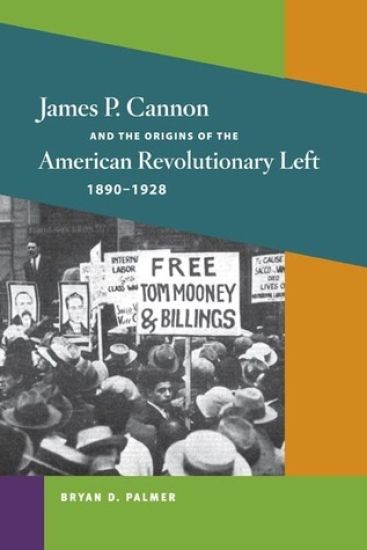
James P. Cannon and the Origins of the American Revolutionary Left, 1890-1928
Bryan D. Palmer's award-winning study of James P. Cannon's early years (1890-1928) details how the life of a Wobbly hobo agitator gave way to leadership in the emerging communist underground of the 1919 era. This historical drama unfolds alongside the life experiences of a native son of United States radicalism, the narrative moving from Rosedale, Kansas to Chicago, New York, and Moscow. Written with panache, Palmer's richly detailed book situates American communism's formative decade of the 1920s in the dynamics of a specific political and economic context. Our understanding of the indigenous currents of the American revolutionary left is widened, just as appreciation of the complex nature of its interaction with international forces is deepened.
James Baldwin and the 1980s

James Baldwin and the 1980s

Joseph Vogel

University of Illinois Press
2018
sidottu
By the 1980s, critics and the public alike considered James Baldwin irrelevant. Yet Baldwin remained an important, prolific writer until his death in 1987. Indeed, his work throughout the decade pushed him into new areas, in particular an expanded interest in the social and psychological consequences of popular culture and mass media. Joseph Vogel offers the first in-depth look at Baldwin's dynamic final decade of work. Delving into the writer's creative endeavors, crucial essays and articles, and the impassioned polemic The Evidence of Things Not Seen, Vogel finds Baldwin as prescient and fearless as ever. Baldwin's sustained grappling with "the great transforming energy" of mass culture revealed his gifts for media and cultural criticism. It also brought him into the fray on issues ranging from the Reagan-era culture wars to the New South, from the deterioration of inner cities to the disproportionate incarceration of black youth, and from pop culture gender-bending to the evolving women's and gay rights movements.Astute and compelling, James Baldwin and the 1980s revives and redeems the final act of a great American writer.
James P. Cannon and the Origins of the American Revolutionary Left, 1890-1928
Bryan D. Palmer's award-winning study of James P. Cannon's early years (1890-1928) details how the life of a Wobbly hobo agitator gave way to leadership in the emerging communist underground of the 1919 era. This historical drama unfolds alongside the life experiences of a native son of United States radicalism, the narrative moving from Rosedale, Kansas to Chicago, New York, and Moscow. Written with panache, Palmer's richly detailed book situates American communism's formative decade of the 1920s in the dynamics of a specific political and economic context. Our understanding of the indigenous currents of the American revolutionary left is widened, just as appreciation of the complex nature of its interaction with international forces is deepened.
James Baldwin and the 1980s

James Baldwin and the 1980s

Joseph Vogel

University of Illinois Press
2018
nidottu
By the 1980s, critics and the public alike considered James Baldwin irrelevant. Yet Baldwin remained an important, prolific writer until his death in 1987. Indeed, his work throughout the decade pushed him into new areas, in particular an expanded interest in the social and psychological consequences of popular culture and mass media. Joseph Vogel offers the first in-depth look at Baldwin's dynamic final decade of work. Delving into the writer's creative endeavors, crucial essays and articles, and the impassioned polemic The Evidence of Things Not Seen, Vogel finds Baldwin as prescient and fearless as ever. Baldwin's sustained grappling with "the great transforming energy" of mass culture revealed his gifts for media and cultural criticism. It also brought him into the fray on issues ranging from the Reagan-era culture wars to the New South, from the deterioration of inner cities to the disproportionate incarceration of black youth, and from pop culture gender-bending to the evolving women's and gay rights movements.Astute and compelling, James Baldwin and the 1980s revives and redeems the final act of a great American writer.
James J. Hill's Legacy to Railway Operations

James J. Hill's Legacy to Railway Operations

Earl J. Currie

Indiana University Press
2015
pokkari
Earl J. Currie examines the standards, methods, and practices for railway operations that James J. Hill developed and applied so successfully for the Great Northern and other railways companies that he controlled. Currie compares the performance and quality of infrastructure of "Hill roads" to competitive railways and their successors to show how Hill's principles continue to form the core practices needed to run an efficient, well-disciplined railway operation even today.
The Complete Poetical Works of James Whitcomb Riley

The Complete Poetical Works of James Whitcomb Riley

James Whitcomb Riley

Indiana University Press
1993
pokkari
Few lives have left so vivid an impression upon a native environment as that of James Whitcomb Riley, the Hoosier Poet. His folksy, down-home rhymes are still enormously popular in his native state and beyond. This publication brings back into print the complete Riley repertoire of more than 1,000 poems, including such all-time favorites as "Little Orphant Annie" (far and away the best-loved of all Riley characters), "The Raggedy Man," "Our Hired Girl," "A Barefoot Boy," "The Bumblebee," "Granny," and "When the Frost Is on the Punkin." It is said that Indiana's best-known poet did not portray but invented the typical Hoosier. Applying imaginative skill, Riley altered and adapted the people around him to suit his purpose. As Jeannette Covert Nolan once put it, the figure who emerged was "a mellow, humorous rustic, a quaint, bucolic philosopher, unlettered but gifted with an earthy shrewdness, a peasant wisdom, a heart of gold, speaking a drawling, hybrid tongue, a dubious dialect as yet unidentified by any philologist." In his heyday Riley was famous all over the world. Though often called a children's poet, he actually wrote about children for adults, delighting in emotional reminders of an irretrievable past—perhaps one that never quite existed. Throughout his life Riley looked back wistfully and sentimentally upon his childhood days, turning the longings and unfulfilled dreams of youth into verse. So celebrated was he in Indiana that in many public elementary schools, students were required to memorize and recite one of his poems every week for admiring audiences of visiting parents. If I Knew What Poets Know If I knew what poets know, Did I know what poets do, If I knew what poets know, Would I write a rhyme Would I sing a song, I would find a theme Of the buds that never blow Sadder than the pigeon's coo Sweeter than the placid flow In the summer-time? When the days are long? Of the fairest dream: Would I sing of golden seeds Where I found a heart in pain, I would sing of love that lives Springing up in ironweeds? I would make it glad again; On the errors it forgives: And of rain-drop turned to snow, And the false should be the true, And the world would better grow If I knew what poets know? Did I know what poets do. If I knew what poets know. —James Whitcomb Riley
James Coleman

James Coleman

MIT Press
2003
pokkari
Illustrated critical essays on the work of artist James Coleman.James Coleman has emerged in recent years as one of the most important artists of visual postmodernism. His work has transformed critical debates about the status of the image in contemporary culture and influenced an entire generation of younger artists in ways that have not yet been fully acknowledged. Until recently, Coleman has enjoyed relatively little critical attention-in part because of his refusal to comment on his projects or to allow his work to be reconstructed outside of the context of its exhibition.The illustrated essays in this book span the entirety of Coleman's career to date, from his early postminimal and conceptual experiments with memory and perception, through his work in film, video, and narrative in the 1980s, to his current ongoing series of slide projections with voice-over that he calls simply "projected images." Reflecting the interdisciplinary nature of the debates induced by Coleman's work, the essays discuss issues of subjectivity and identity, nationalism, postcolonialism, memory, spectacle culture, digitalization, and new media. The contributors are Raymond Bellour, Benjamin Buchloh, Lynne Cooke, Jean Fisher, Luke Gibbons, Rosalind Krauss, Anne Rorimer, and Kaja Silverman. Written by curators, critics, and scholars and spanning the fields of art history, literary criticism, philosophy, and film theory, the essays attest to the interdisciplinary challenge of Coleman's work.
James Surls: the Splendora Years, 1977-1997

James Surls: the Splendora Years, 1977-1997

Terrie Sultan

University of Texas Press
2005
sidottu
Shortlisted, Fred Whitehead Award for Best Design of a Trade Book, 2006 A prolific artist with a prodigious gift for stimulating the creativity of others, James Surls is one of the most important sculptors working in America today. His art blends natural forms created of wood, steel, and bronze with sophisticated, sometimes edgy imagery and content to explore fundamental dualities and paradoxes-male and female, joyous optimism and anxious foreboding, conscious rationality and unconscious intuition. Fusing personalized folk idioms with the aesthetics of high modernism, Surls's sculptures are clearly self-expressive, yet freighted with universal meaning. This beautifully illustrated book, which accompanies an exhibition of the same name at the Blaffer Gallery, the Art Museum of the University of Houston, captures an extraordinarily creative period in Surls's career-the two decades he lived and worked in Splendora, Texas. During this time, Surls established a home and artists' colony in the East Texas pineywoods, where he produced an astonishing body of work while encouraging the creativity of other visual and performing artists. Magnificent color and black-and-white images illustrate the key sculptures and works on paper that Surls created in Splendora. Accompanying the images are essays and interviews that offer fascinating insights into Surls's artistic breakthrough in Splendora. Terrie Sultan introduces Surls's work and provides a concise biography of the artist. Eleanor Heartney places Surls's Splendora works within the larger contexts of American and international art. Artists and gallery owners John Alexander, Joseph Havel, The Art Guys, Hiram Butler, and Sharon and Gus Kopriva, as well as curator Jim Harithas and architect Peter Zweig, share lively memories of Splendora as an artist colony and of Surls's pivotal role as artistic mentor and arts impresario for the whole Houston-area arts community. James Surls and his wife Charmaine Locke add a personal signature to the book by describing how their love and their work blossomed in an atmosphere of total freedom to experiment and create. This publication of James Surls's Splendora works clearly establishes that no other artist of Surls's generation has had a greater impact upon the development of Texas as a center of vibrant creativity. At the same time, it confirms Surls's standing within the contemporary international art world as a revolutionary who has expanded the boundaries of traditional sculpture while maintaining a high degree of aesthetic and intellectual quality.
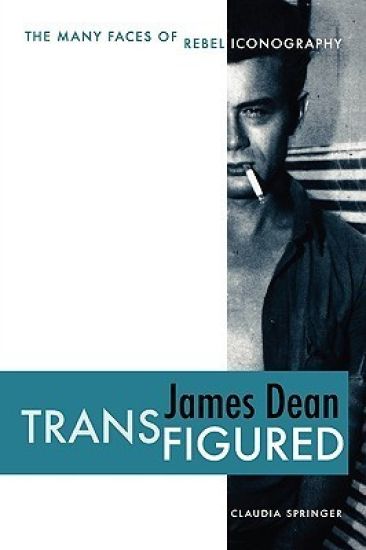
James Dean Transfigured

James Dean Transfigured

Claudia Springer

University of Texas Press
2007
pokkari
After the death of James Dean in 1955, the figure of the teen rebel permeated the globe, and its presence is still felt in the twenty-first century. Rebel iconography-which does not have to resemble James Dean himself, but merely incorporates his disaffected attitude-has become an advertising mainstay used to sell an array of merchandise and messages. Despite being overused in advertisements, it still has the power to surprise when used by authors and filmmakers in innovative and provocative ways. The rebel figure has mass appeal precisely because of its ambiguities; it can mean anything to anyone. The global appropriation of rebel iconography has invested it with fresh meanings. Author Claudia Springer succeeds here in analyzing both ends of the spectrum-the rebel icon as a tool in upholding capitalism's cycle of consumption, and as a challenge to that cycle and its accompanying beliefs. In this groundbreaking study of rebel iconography in international popular culture, Springer studies a variety of texts from the United States and abroad that use this imagery in contrasting and thought-provoking ways. Using a cultural studies approach, she analyzes films, fiction, poems, Web sites, and advertisements to determine the extent to which the icon's adaptations have been effective as a response to the actual social problems affecting contemporary adolescents around the world.
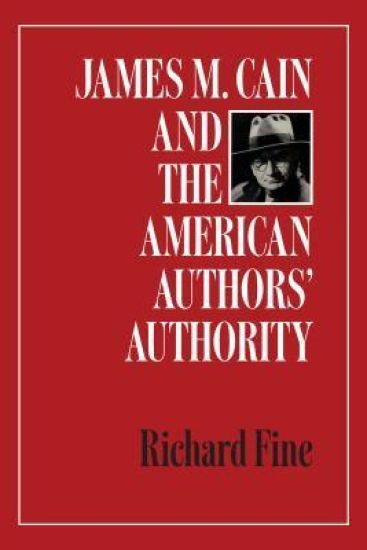
James M. Cain and the American Authors' Authority

James M. Cain and the American Authors' Authority

Richard Fine

University of Texas Press
2013
nidottu
The 1940s offered ever-increasing outlets for writers in book publishing, magazines, radio, film, and the nascent television industry, but the standard rights arrangements often prevented writers from collecting a fair share of the profits made from their work. To remedy this situation, novelist and screenwriter James M. Cain (The Postman Always Rings Twice,Double Indemnity, Mildred Pierce) proposed that all professional writers, including novelists, playwrights, poets, and screenwriters, should organize into a single cartel that would secure a fairer return on their work from publishers and producers. This organization, conceived and rejected within one turbulent year (1946), was the American Authors' Authority (AAA).In this groundbreaking work, Richard Fine traces the history of the AAA within the cultural context of the 1940s. After discussing the profession of authorship as it had developed in England and the United States, Fine describes how the AAA, which was to be a central copyright repository, was designed to improve the bargaining position of writers in the literary marketplace, keep track of all rights and royalty arrangements, protect writers' interests in the courts, and lobby for more favorable copyright and tax legislation.Although simple enough in its design, the AAA proposal ignited a firestorm of controversy, and a major part of Fine's study explores its impact in literary and political circles. Among writers, the AAA exacerbated a split between East and West Coast writers, who disagreed over whether writing should be treated as a money-making business or as an artistic (and poorly paid) calling. Among politicians, a move to unite all writers into a single organization smacked of communism and sowed seeds of distrust that later flowered in the Hollywood blacklists of the McCarthy era.Drawing insights from the fields of American studies, literature, and Cold War history, Fine's book offers a comprehensive picture of the development of the modern American literary marketplace from the professional writer's perspective. It uncovers the effect of national politics on the affairs of writers, thus illuminating the cultural context in which literature is produced and the institutional forces that affect its production.
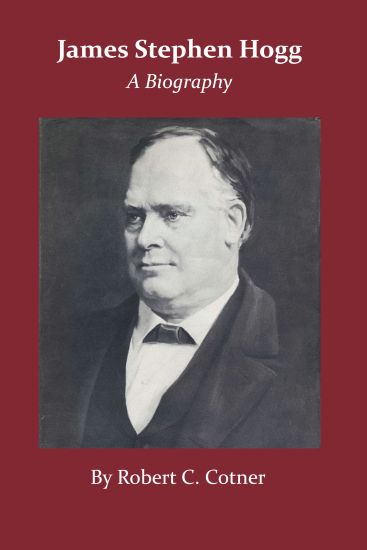
James Stephen Hogg

James Stephen Hogg

Robert C. Cotner

University of Texas Press
1959
nidottu
No other governor has become so completely identified with Texas and its citizens as Jim Hogg, the first native Texan to hold the state's highest office. His fame was not, however, easily earned. Orphaned at twelve, he worked as farmhand, typesetter, and country editor to finance his study of law, an endeavor that eventually led him into public life. Even before his admission to the bar in 1875 he served as justice of the peace in Wood County. Later, in two terms as district attorney (1881–1885), he proved himself a fearless prosecutor. His growing reputation, with his magnetic personality, brought him the attorney generalship in 1887, and in that office he fulfilled his campaign promises to enforce all laws. During Hogg's tenure, suits brought by his department resulted in the restoration of more than a million acres of state lands held by the railroads. In 1890 Hogg was elected governor. Early the next year he began urging his reform program, the keystone of which was establishment of the Railroad Commission. He also brought about the passage of laws preventing the watering of railroad securities, the indiscriminate issuance of municipal securities, and the establishment of landholding companies. Land ownership by aliens was likewise restricted. Throughout Hogg's public life, from iustice of the peace to governor, he was motivated by his concern for the welfare of the people. Invariably his criterion for evaluation of an issue was the effect of a decision upon the common welfare. In this democratic progressivism he was the Texas version of Thomas Jefferson or Theodore Roosevelt. Molded by his varied experiences, Jim Hogg was a man of many professions-printer, lawyer, politician, statesman, oil magnate. In these relationships he was still a warmly human person, a loving son, brother, husband, father, friend. His ambition to provide abundantly for his family was expansive enough to include all Texans; so his love for "the people" was reiterated in his public benefactions, through which Texans are even today still sharing his wealth. Jim Hogg's varied public life and his heart-warming personal life are dramatically presented in this absorbing biography. In it, the far-sweeping panorama of Texas development in the late nineteenth and early twentieth centuries is shown in relation to his dreams and achievements.