Kirjojen hintavertailu. Mukana 11 424 844 kirjaa ja 12 kauppaa.

Kirjahaku

Etsi kirjoja tekijän nimen, kirjan nimen tai ISBN:n perusteella.

1000 tulosta hakusanalla James R Cook

Technological Change In Japan's Beef Industry

Technological Change In Japan's Beef Industry

James R Simpson; Tadashi Yoshida; Akira Miyazaki; Ryohei Kada

Routledge
2021
nidottu
The Japanese Cattle industry has been undergoing major changes for the past three decades. During the 1950's and 1960's mechanized power rapidly. The process of beef industry structure change accelerated in the 1970's as medium scale feedlots came into being, regional packing plants were established, and the beef marketing system matured. Economic forces, both within and external to the industry. A major objective of this book is to test the authors’ hypothesis that beef production by Japan's cattle industry could become competitive with imported beef.

The Economics Of Livestock Systems In Developing Countries
Improvement of the world's livestock industry necessitates input from many directions. Planning by a host of national and international agencies is required in order to provide optimal stimulus in very diverse areas ranging from formulation of laws and incentives that stimulate competition yet prevent undue competition, to the optimal provision of credit. Planning is needed to carry out a complex array of interrelated research. The purpose of this book is specifically tasked with setting forth frameworks and methods for evaluation of investments and associated economic decision-making in the livestock industries of developing countries. Economists will find this book useful because it synthesizes .much material into a cohesive whole--material that is often presented in a cursory manner or overlooked as emphasis has shifted to sophisticated quantitative techniques.
Who Was William Hickey?

Who Was William Hickey?

James R. Farr

Routledge
2019
sidottu
This book analyzes an example of life-writing, an autobiography that was written in the early nineteenth century and will appeal to readers of many disciplines who are interested in understanding the interconnectedness of memory, textual narrative, and ideas of selfhood. Moreover, this book reasserts the importance of the individual in history. It explains how personal narratives reveal the individual as a purposeful social actor pursuing particular objectives, but framed by cultural and social contexts, in this case by eighteenth-century London and Imperial India. The author of this autobiography, William Hickey, projects a sense of self formed by a combination of an interiorized self-consciousness (an awareness of himself as an autonomous individual, although not one prone to deep self-reflection) and a socially-turned self-fashioning. Like so many autobiographers of his time, Hickey’s self is realized through the production of a narrative, his self fixed and defined through the act of writing. As he wrote his memoirs, Hickey was engaged in purposeful textual representation to satisfy his perceived sense of place in that culture (above all, as a gentleman) while tacitly reflecting the constraints of that culture imposed upon the form and content of the text.
The Economics of Scientific Misconduct

The Economics of Scientific Misconduct

James R. Wible

TAYLOR FRANCIS LTD
2022
sidottu
The Economics of Scientific Misconduct explores episodes of misconduct in the natural and biomedical sciences and replication failure in economics and psychology over the past half-century. Here scientific misconduct is considered from the perspective of a single discipline such as economics likely for the first time in intellectual history.Research misconduct has become an important concern across many natural, medical, and social sciences, including economics, over the past half-century. Initially, a mainstream economic approach to science and scientific misconduct draws from conventional microeconomics and the theories of Becker, Ehrlich, and C. S. Peirce’s "economy of research." Then the works of Peirce and Thorstein Veblen from the 19th century point toward contemporary debates over statistical inference in econometrics and the failure of recent macroeconomic models. In more contemporary economics, clashes regarding discrimination and harassment have led to a Code of Professional Conduct from the American Economic Association and a Code of Ethics from one of its members. The last chapter considers research ethics matters related to the COVID-19 pandemic. There has been an explosion of research and some retractions. More generally, a concern with research ethics contributes to scientific progress by making some of its most difficult problems more transparent and understandable and thus possibly more surmountable.This book offers valuable insights for students and scholars of research ethics across the sciences, philosophy of science and social science, and economic theory.
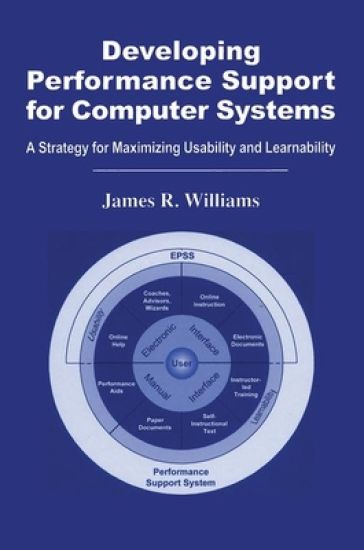
Developing Performance Support for Computer Systems
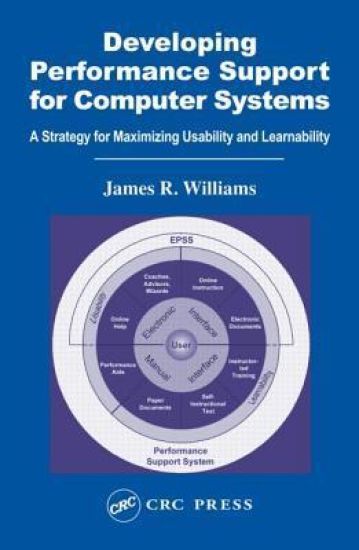
Developing Performance Support for Computer Systems: A Strategy for Maximizing Usability and Learnability provides detailed planning, design, and development guidance for generating performance support for new or upgraded computer systems. Performance support includes documentation, online help, coaches and wizards, training, and other materials necessary to enable users to perform their jobs more efficiently and effectively. This volume offers a strategy for maximizing ease-of-use and ease-of-learning through an integrated performance support systems approach. The text provides how-to guidance throughout that developers can apply directly to the design of their performance support tools and products. Rather than cover a few specific topic areas, it examines the entire spectrum of performance support. The book explains how to match performance support methods to task requirements, gives an overview of important user characteristics, and provides general guidance for presentation, layout, formatting, media selection, the use of color and icons, and accessibility. Evaluation checklists are included in the appendices and are also available online. Although this book primarily addresses the development of performance support for large software systems, the principles and approaches are valuable for any systems development environment.
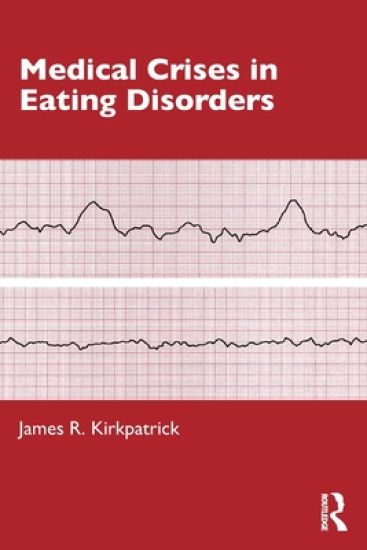
Medical Crises in Eating Disorders

Medical Crises in Eating Disorders

James R. Kirkpatrick

TAYLOR FRANCIS LTD
2022
nidottu
Medical Crises in Eating Disorders provides medical clinicians as well as others with an acute awareness of the critical and potentially lethal medical outcomes they may have to face when managing those with eating disorders. This book shares multiple blended patient stories that cover a wide range of medical crises and present a realistic clinical-like experience. The reader will gain insight into the most threatening medical risks described in medical terms and many of the behaviors utilized by those with eating disorders that lead to most of the critical, including lethal, medical risks. Non-eating disorder causes of risk are also discussed throughout the book. Examples of electrocardiogram images, echocardiogram reports, and blood and urine results in addition to hospital chart vital records and excerpts from official coroner’s documents help augment the learning experience.This innovative book is a necessary reference for those who manage the medical concerns of those with eating disorders, including critical care physicians, internists, pediatricians, psychiatrists, and family physicians. As well, psychologists, counselors, dietitians, nurse practitioners, and social workers will benefit from an increased awareness of critical medical risks.
Medical Crises in Eating Disorders

Medical Crises in Eating Disorders

James R. Kirkpatrick

TAYLOR FRANCIS LTD
2022
sidottu
Medical Crises in Eating Disorders provides medical clinicians as well as others with an acute awareness of the critical and potentially lethal medical outcomes they may have to face when managing those with eating disorders. This book shares multiple blended patient stories that cover a wide range of medical crises and present a realistic clinical-like experience. The reader will gain insight into the most threatening medical risks described in medical terms and many of the behaviors utilized by those with eating disorders that lead to most of the critical, including lethal, medical risks. Non-eating disorder causes of risk are also discussed throughout the book. Examples of electrocardiogram images, echocardiogram reports, and blood and urine results in addition to hospital chart vital records and excerpts from official coroner’s documents help augment the learning experience.This innovative book is a necessary reference for those who manage the medical concerns of those with eating disorders, including critical care physicians, internists, pediatricians, psychiatrists, and family physicians. As well, psychologists, counselors, dietitians, nurse practitioners, and social workers will benefit from an increased awareness of critical medical risks.
Linear Algebra

Linear Algebra

James R. Kirkwood; Bessie H. Kirkwood

TAYLOR FRANCIS LTD
2024
nidottu
Linear Algebra, James R. Kirkwood and Bessie H. Kirkwood, 978-1-4987-7685-1, K29751Shelving Guide: MathematicsThis text has a major focus on demonstrating facts and techniques of linear systems that will be invaluable in higher mathematics and related fields. A linear algebra course has two major audiences that it must satisfy. It provides an important theoretical and computational tool for nearly every discipline that uses mathematics. It also provides an introduction to abstract mathematics. This book has two parts. Chapters 1–7 are written as an introduction. Two primary goals of these chapters are to enable students to become adept at computations and to develop an understanding of the theory of basic topics including linear transformations. Important applications are presented. Part two, which consists of Chapters 8–14, is at a higher level. It includes topics not usually taught in a first course, such as a detailed justification of the Jordan canonical form, properties of the determinant derived from axioms, the Perron–Frobenius theorem and bilinear and quadratic forms. Though users will want to make use of technology for many of the computations, topics are explained in the text in a way that will enable students to do these computations by hand if that is desired.Key features include: Chapters 1–7 may be used for a first course relying on applications Chapters 8–14 offer a more advanced, theoretical course Definitions are highlighted throughout MATLAB® and R Project tutorials in the appendices Exercises span a range from simple computations to fairly direct abstract exercises Historical notes motivate the presentation
The Legacy of Isocrates and a Platonic Alternative
Bringing together the history of educational philosophy, political philosophy, and rhetoric, this book examines the influence of the philosopher Isocrates on educational thought and the history of education. Unifying philosophical and historical arguments, Muir discusses the role of Isocrates in raising two central questions: What is the value of education? By what methods ought the value of education to be determined? Tracing the historical influence of Isocrates’ ideas of the nature and value of education from Antiquity to the modern era, Muir questions normative assumptions about the foundations of education and considers the future status of education as an academic discipline.
An Introduction to Analysis

An Introduction to Analysis

James R. Kirkwood

CRC Press
2021
sidottu
The third edition of this widely popular textbook is authored by a master teacher. This book provides a mathematically rigorous introduction to analysis of real­valued functions of one variable. This intuitive, student-friendly text is written in a manner that will help to ease the transition from primarily computational to primarily theoretical mathematics. The material is presented clearly and as intuitive as possible while maintaining mathematical integrity. The author supplies the ideas of the proof and leaves the write-up as an exercise. The text also states why a step in a proof is the reasonable thing to do and which techniques are recurrent.Examples, while no substitute for a proof, are a valuable tool in helping to develop intuition and are an important feature of this text. Examples can also provide a vivid reminder that what one hopes might be true is not always true. Features of the Third Edition: Begins with a discussion of the axioms of the real number system. The limit is introduced via sequences. Examples motivate what is to come, highlight the need for hypothesis in a theorem, and make abstract ideas more concrete. A new section on the Cantor set and the Cantor function. Additional material on connectedness. Exercises range in difficulty from the routine "getting your feet wet" types of problems to the moderately challenging problems. Topology of the real number system is developed to obtain the familiar properties of continuous functions. Some exercises are devoted to the construction of counterexamples. The author presents the material to make the subject understandable and perhaps exciting to those who are beginning their study of abstract mathematics.Table of ContentsPrefaceIntroduction The Real Number System Sequences of Real Numbers Topology of the Real Numbers Continuous Functions Differentiation Integration Series of Real Numbers Sequences and Series of Functions Fourier SeriesBibliographyHints and Answers to Selected ExercisesIndexBiographyJames R. Kirkwood holds a Ph.D. from University of Virginia. He has authored fifteen, published mathematics textbooks on various topics including calculus, real analysis, mathematical biology and mathematical physics. His original research was in mathematical physics, and he co-authored the seminal paper in a topic now called Kirkwood-Thomas Theory in mathematical physics. During the summer, he teaches real analysis to entering graduate students at the University of Virginia. He has been awarded several National Science Foundation grants. His texts, Elementary Linear Algebra, Linear Algebra, and Markov Processes, are also published by CRC Press.
A Comprehensive Look at Fraud Identification and Prevention
Fraudulent activity can approach you or your organization through a variety of avenues, ranging from the cyber world, social media, unsolicited e-mails, poor hiring practices, dishonest associates, and weak operating procedures. With a focus on prevention measures, A Comprehensive Look at Fraud Identification and Prevention presents proven tips, advice, and recommendations for fraud awareness, protection, and prevention.The book supplies a detailed examination of the wide range of threats that exist to provide you with a plan to protect the assets of your organization, and even your own assets, against the many faces of fraud in today's technologically advanced environment. The many types of fraud covered include:Employee theft and fraudOrganizational fraudIdentity theft and fraudFraud against the elderlyInternet, computer, and e-mail fraudPonzi and pyramid schemesThe methods of prevention presented in the book are based on what is referred to as the path of least resistance. With fraud and other types of criminal activity, criminals take the path with the fewest barriers in their way. By implementing the methods presented in this book, you will be able to deter would-be criminals and send them on their way to search for easier targets with fewer barriers.Discussion categories include identification and prevention aspects for organizational and individual frauds along with the many avenues used to facilitate the attacks. Explaining how some fraud typologies can overlap and co-mingle, the book provides the methods you need to protect your organization, and yourself, from becoming a target and victim of fraud.
Rules of Hope

Rules of Hope

James R. Averill; George Catlin; Kyum K. Chon

Springer-Verlag New York Inc.
1990
nidottu
Hope has been called the "life blood of the soul", an indispensable condition for human existence. Yet evidence in this book suggests that hope is neither a necessary nor a universal part of life. Rather, hope is constituted in accordance with cultural norms, and hence it may vary fundamentally from one society to another. In the first of four studies, Averill, Catlin, and Chon delineate four classes of rules that help constitute hope in Western societies. A second study examines the similarities and differences between hope and other, more prototypic emotions, such as anger and love. The third study uses content analyses of maxims and metaphors to clarify further the Western model of hope. In the fourth study, hope is compared with himang, its closest counterpart in Korea. The results of these studies provide the basis for an analysis of the functions of hope, on both the individual and social levels. But this book is not simply about hope. It is also about emotions in general. Current psychological theories focus on emotions that have distinct physiological components (e.g., fear and anger) and that can be investigated using animal models. As a consequence, our theories have a strong biological orientation. How would our theories change if they were to encompass more cognitively oriented emotions, such as hope? Rules of Hope provides some answers to this question.
For Liberty and Glory

For Liberty and Glory

James R. Gaines

WW Norton Co
2009
nidottu
This book tells the story of the French and American Revolutions in a single, thrilling narrative that shows just how deeply intertwined they actually were. Their leaders were often seen as father and son, but the relationship of George Washington and the Marquis de Lafayette, while close, was every bit as complex as the long, fraught history of the French-American alliance, of which they were also the founding fathers.
Into the Magic Shop: A Neurosurgeon's Quest to Discover the Mysteries of the Brain and the Secrets Ofthe Heart
The award-winning New York Times bestseller about the extraordinary things that can happen when we harness the power of both the brain and the heart Growing up in the high desert of California, Jim Doty was poor, with an alcoholic father and a mother chronically depressed and paralyzed by a stroke. Today he is the director of the Center for Compassion and Altruism Research and Education (CCARE) at Stanford University, of which the Dalai Lama is a founding benefactor. But back then his life was at a dead end until at twelve he wandered into a magic shop looking for a plastic thumb. Instead he met Ruth, a woman who taught him a series of exercises to ease his own suffering and manifest his greatest desires. Her final mandate was that he keep his heart open and teach these techniques to others. She gave him his first glimpse of the unique relationship between the brain and the heart. Doty would go on to put Ruth's practices to work with extraordinary results--power and wealth that he could only imagine as a twelve-year-old, riding his orange Sting-Ray bike. But he neglects Ruth's most important lesson, to keep his heart open, with disastrous results--until he has the opportunity to make a spectacular charitable contribution that will virtually ruin him. Part memoir, part science, part inspiration, and part practical instruction, Into the Magic Shop shows us how we can fundamentally change our lives by first changing our brains and our hearts.
World Fisheries Resources

World Fisheries Resources

James R. Coull

Routledge
1993
sidottu
World Fisheries Resources provides a comprehensive and up-to-date review of how this commodity is used. The author examines the various aspects of fishing resources from their biological basis through to marketing and consumption. The subject is set in context by tracing the historical development, from its archaeological origins to the industrial expansion of the 19th and 20th centuries. The work comes up-to-date to discuss the modern situation and current trends in both the developed and developing worlds and highlights how exploitation of the resource has increased in recent years.
The Economics of Science

The Economics of Science

James R Wible

Routledge
1997
sidottu
Science is difficult and costly to do well. This study systematically creates an economics of science. Many aspects of science are explored from an economic point of view. The scientist is treated as an economically rational individual. This book begins with economic models of misconduct in science and the legitimate, normal practices of science, moving on to market failure, the market place of ideas, self-correctiveness, and the organizational and institutional structures of science. An exploration of broader methodological themes raised by an economics of science ends the work.
Humanism & Ideology Vol 4

Humanism & Ideology Vol 4

James R. Flynn

Routledge
2003
sidottu
This is Volume IV of a series of seven of Studies in Ethics and the Philosophy of Religion. Originally published in 1973. To deal with the problem of ethical scepticism, to show why it is of particular interest to political activists and students of politics, these are the principal aims of this book.
Developing Performance Support for Computer Systems
Developing Performance Support for Computer Systems: A Strategy for Maximizing Usability and Learnability provides detailed planning, design, and development guidance for generating performance support for new or upgraded computer systems. Performance support includes documentation, online help, coaches and wizards, training, and other materials necessary to enable users to perform their jobs more efficiently and effectively. This volume offers a strategy for maximizing ease-of-use and ease-of-learning through an integrated performance support systems approach. The text provides how-to guidance throughout that developers can apply directly to the design of their performance support tools and products. Rather than cover a few specific topic areas, it examines the entire spectrum of performance support. The book explains how to match performance support methods to task requirements, gives an overview of important user characteristics, and provides general guidance for presentation, layout, formatting, media selection, the use of color and icons, and accessibility. Evaluation checklists are included in the appendices and are also available online. Although this book primarily addresses the development of performance support for large software systems, the principles and approaches are valuable for any systems development environment.
Indian Naval Strategy in the Twenty-first Century

Indian Naval Strategy in the Twenty-first Century

James R. Holmes; Andrew C. Winner; Toshi Yoshihara

Routledge
2009
sidottu
This is the first academic study of India's emerging maritime strategy, and offers a systematic analysis of the interplay between Western military thought and Indian maritime traditions.By a quirk of historical fate, Europe embarked on its Age of Discovery just as the main Asian powers were renouncing the sea, ushering in centuries of Western dominance. In the 21st century, however, Asian states are once again resuming a naval focus, with both China and India dedicating some of their new-found wealth to building powerful navies and coast guards, and drawing up maritime strategies to govern the use of these forces. The United States, like the British Empire before it, is attempting to manage these rising sea powers while preserving its maritime primacy.This book probes how India looks at the sea, what kind of strategy and seagoing forces New Delhi may craft in the coming years, and how Indian leaders may use these forces. It examines the material dimension, but its major premise is that navies represent a physical expression of a society's history, philosophical traditions, and culture. This book, then, ventures a comprehensive appraisal of Indian maritime strategy.This book will be of interest to students of sea power, strategic studies, Indian politics and Asian Studies in general.James R. Holmes is an Associate Professor of Strategy at the U.S. Naval War College and a former U.S. Navy surface warfare officer. Toshi Yoshihara is an Associate Professor in the Strategy and Policy Department at the Naval War College. Andrew C. Winner is Professor in the Strategic Research Department at the U.S. Naval War College.