
Kirjahaku
Etsi kirjoja tekijän nimen, kirjan nimen tai ISBN:n perusteella.
1000 tulosta hakusanalla James Stratton

Etat de la Corse, suivi d'un journal d'un voyage dans l'isle et des mémoires de Pascal Paoli, par Mr. James Boswel, ecuyer. Orné d'une carte nouvelle & exacte de la Corse, ... traduit de l'anglais et de l'italien, par Mr. S.D.C. ... Seconde edition. ...
James Boswell
Wentworth Press
2018
sidottu

Shortlisted, Fred Whitehead Award for Best Design of a Trade Book, 2006 A prolific artist with a prodigious gift for stimulating the creativity of others, James Surls is one of the most important sculptors working in America today. His art blends natural forms created of wood, steel, and bronze with sophisticated, sometimes edgy imagery and content to explore fundamental dualities and paradoxes-male and female, joyous optimism and anxious foreboding, conscious rationality and unconscious intuition. Fusing personalized folk idioms with the aesthetics of high modernism, Surls's sculptures are clearly self-expressive, yet freighted with universal meaning. This beautifully illustrated book, which accompanies an exhibition of the same name at the Blaffer Gallery, the Art Museum of the University of Houston, captures an extraordinarily creative period in Surls's career-the two decades he lived and worked in Splendora, Texas. During this time, Surls established a home and artists' colony in the East Texas pineywoods, where he produced an astonishing body of work while encouraging the creativity of other visual and performing artists. Magnificent color and black-and-white images illustrate the key sculptures and works on paper that Surls created in Splendora. Accompanying the images are essays and interviews that offer fascinating insights into Surls's artistic breakthrough in Splendora. Terrie Sultan introduces Surls's work and provides a concise biography of the artist. Eleanor Heartney places Surls's Splendora works within the larger contexts of American and international art. Artists and gallery owners John Alexander, Joseph Havel, The Art Guys, Hiram Butler, and Sharon and Gus Kopriva, as well as curator Jim Harithas and architect Peter Zweig, share lively memories of Splendora as an artist colony and of Surls's pivotal role as artistic mentor and arts impresario for the whole Houston-area arts community. James Surls and his wife Charmaine Locke add a personal signature to the book by describing how their love and their work blossomed in an atmosphere of total freedom to experiment and create. This publication of James Surls's Splendora works clearly establishes that no other artist of Surls's generation has had a greater impact upon the development of Texas as a center of vibrant creativity. At the same time, it confirms Surls's standing within the contemporary international art world as a revolutionary who has expanded the boundaries of traditional sculpture while maintaining a high degree of aesthetic and intellectual quality.
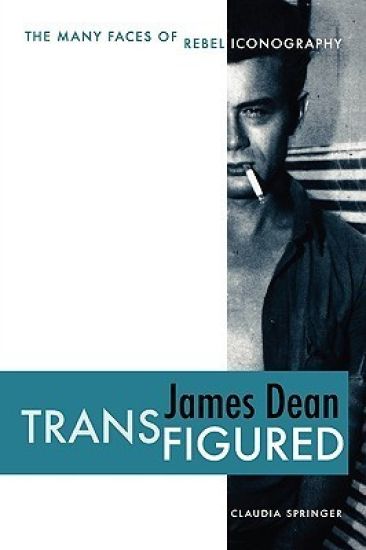
After the death of James Dean in 1955, the figure of the teen rebel permeated the globe, and its presence is still felt in the twenty-first century. Rebel iconography-which does not have to resemble James Dean himself, but merely incorporates his disaffected attitude-has become an advertising mainstay used to sell an array of merchandise and messages. Despite being overused in advertisements, it still has the power to surprise when used by authors and filmmakers in innovative and provocative ways. The rebel figure has mass appeal precisely because of its ambiguities; it can mean anything to anyone. The global appropriation of rebel iconography has invested it with fresh meanings. Author Claudia Springer succeeds here in analyzing both ends of the spectrum-the rebel icon as a tool in upholding capitalism's cycle of consumption, and as a challenge to that cycle and its accompanying beliefs. In this groundbreaking study of rebel iconography in international popular culture, Springer studies a variety of texts from the United States and abroad that use this imagery in contrasting and thought-provoking ways. Using a cultural studies approach, she analyzes films, fiction, poems, Web sites, and advertisements to determine the extent to which the icon's adaptations have been effective as a response to the actual social problems affecting contemporary adolescents around the world.
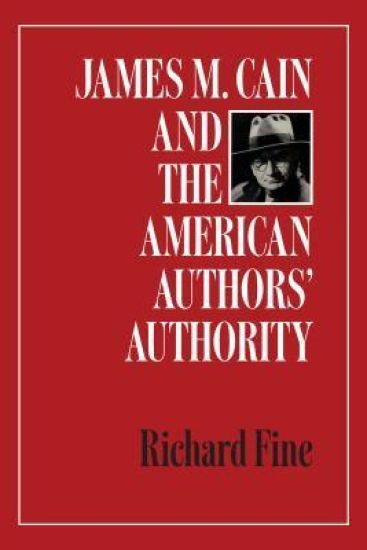
James M. Cain and the American Authors' Authority
Richard Fine
University of Texas Press
2013
nidottu
The 1940s offered ever-increasing outlets for writers in book publishing, magazines, radio, film, and the nascent television industry, but the standard rights arrangements often prevented writers from collecting a fair share of the profits made from their work. To remedy this situation, novelist and screenwriter James M. Cain (The Postman Always Rings Twice,Double Indemnity, Mildred Pierce) proposed that all professional writers, including novelists, playwrights, poets, and screenwriters, should organize into a single cartel that would secure a fairer return on their work from publishers and producers. This organization, conceived and rejected within one turbulent year (1946), was the American Authors' Authority (AAA).In this groundbreaking work, Richard Fine traces the history of the AAA within the cultural context of the 1940s. After discussing the profession of authorship as it had developed in England and the United States, Fine describes how the AAA, which was to be a central copyright repository, was designed to improve the bargaining position of writers in the literary marketplace, keep track of all rights and royalty arrangements, protect writers' interests in the courts, and lobby for more favorable copyright and tax legislation.Although simple enough in its design, the AAA proposal ignited a firestorm of controversy, and a major part of Fine's study explores its impact in literary and political circles. Among writers, the AAA exacerbated a split between East and West Coast writers, who disagreed over whether writing should be treated as a money-making business or as an artistic (and poorly paid) calling. Among politicians, a move to unite all writers into a single organization smacked of communism and sowed seeds of distrust that later flowered in the Hollywood blacklists of the McCarthy era.Drawing insights from the fields of American studies, literature, and Cold War history, Fine's book offers a comprehensive picture of the development of the modern American literary marketplace from the professional writer's perspective. It uncovers the effect of national politics on the affairs of writers, thus illuminating the cultural context in which literature is produced and the institutional forces that affect its production.
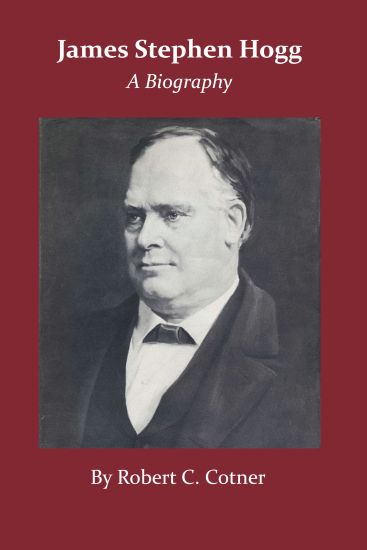
No other governor has become so completely identified with Texas and its citizens as Jim Hogg, the first native Texan to hold the state's highest office. His fame was not, however, easily earned. Orphaned at twelve, he worked as farmhand, typesetter, and country editor to finance his study of law, an endeavor that eventually led him into public life. Even before his admission to the bar in 1875 he served as justice of the peace in Wood County. Later, in two terms as district attorney (1881–1885), he proved himself a fearless prosecutor. His growing reputation, with his magnetic personality, brought him the attorney generalship in 1887, and in that office he fulfilled his campaign promises to enforce all laws. During Hogg's tenure, suits brought by his department resulted in the restoration of more than a million acres of state lands held by the railroads. In 1890 Hogg was elected governor. Early the next year he began urging his reform program, the keystone of which was establishment of the Railroad Commission. He also brought about the passage of laws preventing the watering of railroad securities, the indiscriminate issuance of municipal securities, and the establishment of landholding companies. Land ownership by aliens was likewise restricted. Throughout Hogg's public life, from iustice of the peace to governor, he was motivated by his concern for the welfare of the people. Invariably his criterion for evaluation of an issue was the effect of a decision upon the common welfare. In this democratic progressivism he was the Texas version of Thomas Jefferson or Theodore Roosevelt. Molded by his varied experiences, Jim Hogg was a man of many professions-printer, lawyer, politician, statesman, oil magnate. In these relationships he was still a warmly human person, a loving son, brother, husband, father, friend. His ambition to provide abundantly for his family was expansive enough to include all Texans; so his love for "the people" was reiterated in his public benefactions, through which Texans are even today still sharing his wealth. Jim Hogg's varied public life and his heart-warming personal life are dramatically presented in this absorbing biography. In it, the far-sweeping panorama of Texas development in the late nineteenth and early twentieth centuries is shown in relation to his dreams and achievements.

James Martin started his career the same way a lot of aspiring painters do—by imitating other artists. During the 1950s and 60s, he nabbed imagery and mannerisms from Mark Tobey, Morris Graves, van Gogh, Picasso, Chagall, and Calder. But the real source of Martin's mature style isn't buried in the mysticism of the Northwest School or the avant garde trends of European Modernism: it traces back to his days at Ballard High School during the 1940s. He and a buddy used to cut class and head downtown to the Rivoli Theater on Seattle's First Avenue to watch the burlesque.The surrealism of those shows percolated into Martin's psyche and his paintings—once he started to trust his own view of things—began to sprout the ambiguities of burlesque and the black humor of slapstick. Now when Martin paints a Northwest scene, it's likely to be peopled with freaks and floozies. He stays up nights listening to the radical opinions on Art Bell's radio talk show and he considers the Jerry Springer show a new form of vaudeville. Martin transforms the daily input of the media into the wild stream-of-consciousness of his paintings—for him both a compulsive kind of storytelling and a way of escape. Like his heroes in the Northwest School, Martin still considers art-making a sacred endeavor—but he figures there's no reason you can't get a good laugh out of it, too.In unearthing the story of this under-recognized painter, art critic Sheila Farr presents a fast-paced account of the strange turns of Martin's career, as well as a fresh look at our standards for evaluating art. Martin's swashbuckling approach to imagery, she discovers, was way ahead of its time. Using costumed self-portraiture and outrageous marriages of art-historical images with pop culture icons, Martin was Post Modern before the term was invented.

A revolution in the garden - a completely new range of fruit and vegetables to grow and eat.Whether it's a window box of homegrown saffron, your very own kiwi vine or a mini green tea plantation on your patio, TV botanist and best-selling author James Wong proves that 'growing your own' can be so much more exciting than spuds, sprouts and swede.Breaking free from the 'dig for victory' time warp of allotment staples, James reveals the vast array of 21st century crops that will flourish outdoors, even in our blustery North Atlantic climate - no greenhouse necessary. From goji berries to food-mile free sweet potatoes, James' revolutionary approach to edible gardening will show you how to grow, cook and eat all manner of superfood crops that are just as easy (if not easier) and far more exciting to grow than the 'ration book' favourites.Inspiring, fun and full of plant know-how, this book is set to revolutionise the whole concept of 'growing your own' for newbie growers to seasoned allotment veterans alike. You'll never look at your garden the same way again!

A revolution in the garden - a completely new range of fruit and vegetables to grow and eat.Whether it's a window box of homegrown saffron, your very own kiwi vine or a mini green tea plantation on your patio, TV botanist and best-selling author James Wong proves that 'growing your own' can be so much more exciting than spuds, sprouts and swede.Breaking free from the 'dig for victory' time warp of allotment staples, James reveals the vast array of 21st century crops that will flourish outdoors, even in our blustery North Atlantic climate - no greenhouse necessary. From goji berries to food-mile free sweet potatoes, James' revolutionary approach to edible gardening will show you how to grow, cook and eat all manner of superfood crops that are just as easy (if not easier) and far more exciting to grow than the 'ration book' favourites.Inspiring, fun and full of plant know-how, this book is set to revolutionise the whole concept of 'growing your own' for newbie growers to seasoned allotment veterans alike. You'll never look at your garden the same way again!

James II (1633–1701) lacked the charisma of his father, Charles I, but shared his tendency to dismiss the views of others when they differed from his own. Failing to understand his subjects, James was also misunderstood by them. In this highly-regarded biography, John Miller reassesses James II and his reign, drawing on a wide array of primary sources from France, Italy, and Ireland as well as England. Miller argues that the king had many laudable attributes--he was brave, loyal, honorable, and hard-working, and he was at least as benevolent toward his people as his father had been. Yet James’s conversion to Catholicism fueled the distrust of his Protestant subjects who placed the worst possible construction on his actions and statements. Although James came to see the securing of religious freedom for Catholics in the wider context of freedom for all religious minorities, his people naturally doubted the sincerity of his commitment to toleration.The book explores James’s relations with the state and society, focusing on the political, diplomatic, and religious issues that shaped his reign. Miller discusses the human failings, the gulf of understanding between the king and his subjects, and the sheer bad luck that led to James’s downfall. He also considers the reasons for James’s lack of interest in recovering his kingdom after his flight to France in 1688. This revised edition of the book includes a substantial new foreword assessing recent work on the reign.“This is a first-class essay in historical biography. . . . It must displace all previous lives of James II.”—J. P. Kenyon, Observer
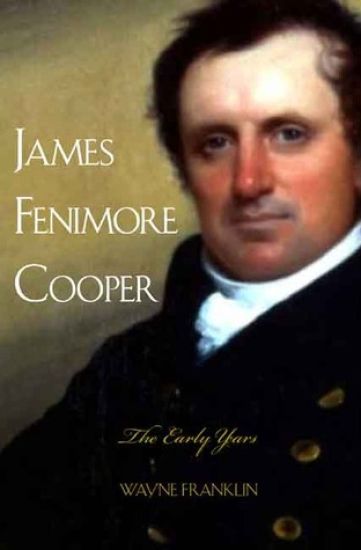
The authoritative biography of James Fenimore Cooper, author of the Leather-Stocking Tales and representative figure of the early American republic"For Franklin, Cooper wasn't just a major American writer; he was one of the supreme inventors of the American imagination."—Christopher Benfey, New Republic James Fenimore Cooper (1789–1851) invented the key forms of American fiction—the Western, the sea tale, the Revolutionary War romance. Furthermore, Cooper turned novel writing from a polite diversion into a paying career. He influenced Herman Melville, Richard Henry Dana, Jr., Francis Parkman, and even Mark Twain—who felt the need to flagellate Cooper for his “literary offenses.” His novels mark the starting point for any history of our environmental conscience. Far from complicit in the cleansings of Native Americans that characterized the era, Cooper’s fictions traced native losses to their economic sources. Perhaps no other American writer stands in greater need of a major reevaluation than Cooper. This is the first treatment of Cooper’s life to be based on full access to his family papers. Cooper’s life, as Franklin relates it, is the story of how, in literature and countless other endeavors, Americans in his period sought to solidify their political and cultural economic independence from Britain and, as the Revolutionary generation died, stipulate what the maturing republic was to become. The first of two volumes, James Fenimore Cooper: The Early Years covers Cooper’s life from his boyhood up to 1826, when, at the age of thirty-six, he left with his wife and five children for Europe.

James Boswell: The Journal of His German and Swiss Travels, 1764
Marlies K. Danziger; James Boswell
YALE UNIVERSITY PRESS
2008
sidottu
This volume, first in the Yale Research Series of Boswell's journals, covers his emotionally eventful travels as a young man through the German and Swiss territories. It begins in mid-June 1764 and ends on New Year's Day 1765, when he crossed the Alps for the next stages of his European tour in Italy, Corsica, and France. The volume includes the complete text of Boswell's diaries and memoranda, as well as a daily record of expenses and his frequently revealing "Ten Lines a Day" poems. This volume is the Research Series parallel to the 1953 trade series edition, Boswell on the Grand Tour: Germany and Switzerland, 1764, whose annotation the editor, Marlies K. Danziger, expands, supplements, and, in many instances, corrects.

A definitive new biography of James Fenimore Cooper, early nineteenth-century master of American popular fiction"It will be the definitive biography and foremost study of Cooper’s fiction and nonfiction for the foreseeable future.”— Allan Axelrad, California State University, Fullerton American author James Fenimore Cooper (1789–1851) has been credited with inventing and popularizing a wide variety of genre fiction, including the Western, the spy novel, the high seas adventure tale, and the Revolutionary War romance. America’s first crusading novelist, Cooper reminds us that literature is not a cloistered art; rather, it ought to be intimately engaged with the world. In this second volume of his definitive biography, Wayne Franklin concentrates on the latter half of Cooper’s life, detailing a period of personal and political controversy, far-ranging international travel, and prolific literary creation. We hear of Cooper’s progressive views on race and slavery, his doubts about American expansionism, and his concern about the future prospects of the American Republic, while observing how his groundbreaking career management paved the way for later novelists to make a living through their writing. Franklin offers readers the most comprehensive portrait to date of this underappreciated American literary icon.

An in-depth exploration of the design process and teaching methods of the remarkable British architect as revealed by the archives of the Canadian Centre for Architecture, Montreal The British architect James Frazer Stirling (1924–1992) stimulated impassioned responses among both supporters and detractors, and he continues to be the subject of fierce debate. He earned international renown through such innovative—and frequently controversial—projects as the Leicester University Engineering Building (1959–63); the History Faculty building at Cambridge University (1964–67); the Neue Staatsgalerie, Stuttgart (1977–84); the Clore Gallery at Tate Britain (1984); and the Arthur M. Sackler Museum at Harvard University (1979–84). Stirling was also a visiting professor at the Yale School of Architecture, where he trained and influenced many of the current leaders in the field.Fully illustrated with previously unpublished documents and new photography from the James Stirling/Michael Wilford Archive at the Canadian Centre for Architecture, Montreal, this book allows for a close examination of design drawings, photographs, and models spanning Stirling’s entire career. These materials deepen our understanding of the influences, early formation, approach, and process of an architect whose work resists labeling. Filled with in-depth analytical and critical presentations of exemplary projects and their reception, the volume reveals Stirling to be a remarkably informed and consistent thinker and writer on architecture.Published in association with the Yale Center for British Art and the Canadian Centre for ArchitectureExhibition Schedule:Yale Center for British Art 10/14/2010 – 01/02/2011Canadian Centre for Architecture, Montreal Spring 2012

James Stirling (1926–1992) was one of the most influential architects of the late 20th century. His formally inventive yet historically informed designs inspired a generation of architects in his native England and throughout the world. James Stirling: Revisionary Modernist is the first in-depth, book-length analysis of the architect's work. Amanda Reeser Lawrence focuses on six of Stirling's projects from the early 1950s through the late 1970s, offering detailed formal analysis of the buildings and drawings while also mapping his relationship to a broader architectural and cultural context. Though it is widely held that Stirling took a mid-career turn toward postmodernism, Lawrence shows that he was undeniably modern throughout his career. She clarifies the ways in which Stirling understood modernism as inextricably linked to the past and placed his own work in what he termed a "dialogue with architectural tradition."

James Ensor
Susan M. Canning; Patrick Florizöone; Nancy Ireson; Kimberly Nichols
Yale University Press
2014
sidottu
This engaging volume describes the creation and restoration of the extraordinary large-scale drawing The Temptation of Saint Anthony—a work by late 19th-century Belgian artist James Ensor (1860–1949)—on the occasion of its first public showing in more than 60 years. The piece is composed of 51 separate sheets of paper collaged into a hallucinatory social critique and artist’s manifesto. Each sheet of the nearly six-foot-high work is reproduced at actual size, revealing Ensor’s remarkable technique and fertile imagination. Here, Saint Anthony is surrounded not with nature, as customary, but with the moral decay of society. Replete with tiny scenes depicting both sexual temptation and spiritual piety, Ensor splices potent imagery from travelogues, popular science, and technology magazines into a Symbolist masterpiece. Susan M. Canning, Patrick Florizöone, and Nancy Ireson analyze the drawing’s meaning; Herwig Todts details its origins and early history; and Kimberly J. Nichols recounts the work’s restoration. Distributed for the Art Institute of ChicagoExhibition Schedule: The J. Paul Getty Museum (06/10/14–08/31/14)The Art Institute of Chicago (11/23/14–01/25/15)

The artistic accomplishments of James Northcote (1746–1831) have tended to be overshadowed by his role as a biographer of Joshua Reynolds, first president of the Royal Academy of Arts, with whom Northcote apprenticed for five years. Here, Mark Ledbury constructs a very different image of Northcote: that of a prolific member of the Royal Academy and an active participant in the cultural and political circles of the Romantic era, as well as a portrait and history painter in his own right. This book pays particular attention to Northcote’s One Hundred Fables (1828), a masterpiece of wood engraving, and the unconventional, collaged manuscripts for the volume, now at the Yale Center for British Art. Along with another series of collages now at The Morgan Library & Museum and a second volume of fables published posthumously in 1833, these collages and printed works constitute the most ambitious project of the artist’s later years. An underappreciated and courageously eccentric masterpiece, the Fables were an early experiment in what is now a familiar multimedia practice and are extensively published here for the first time. Idiosyncratic, personal, and visionary, the Fables serve as a lens through which to examine Northcote’s long, complex, and fruitful artistic career.Distributed for the Yale Center for British ArtExhibition Schedule:Yale Center for British Art(10/02/14–12/14/14)

The Correspondence of James Boswell and Sir William Forbes of Pitsligo: Volume 10
James Boswell; William Forbes
EDINBURGH UNIVERSITY PRESS
2022
sidottu

Works by Prosek and others are juxtaposed with natural objects in an illuminating interrogation of the artificial boundaries we create between art and nature Award-winning artist, writer, and naturalist James Prosek (b. 1975) has gained a worldwide following for his deep connection with the natural world, which serves as the basis for his art and numerous popular books. In this cross-disciplinary catalogue, Prosek poses the question, What is art and what is artifact—and to what extent do these distinctions matter? Drawing on the collections of the Yale University Art Gallery and the Yale Peabody Museum of Natural History, Prosek places man- and nature-made objects on equal footing aesthetically, suggesting that the distinction between them is not as vast as we may believe. In more than 150 full-color plates, objects such as a bird’s nest, dinosaur head, and cuneiform tablet are juxtaposed with Asian handscrolls, an African headdress, modern masterpieces, and more. Artists featured include Albrecht Dürer, Helen Frankenthaler, Vincent van Gogh, Barbara Hepworth, Pablo Picasso, and Jackson Pollack, as well as Prosek himself, whose works depict fish, birds, and endangered wildlife. Also included are an incisive essay by Edith Devaney and texts by Prosek that explore the magnificent productions of our wondrous interconnected world.Distributed for the Yale University Art GalleryExhibition Schedule:Yale University Art Gallery (February 14–June 7, 2020)