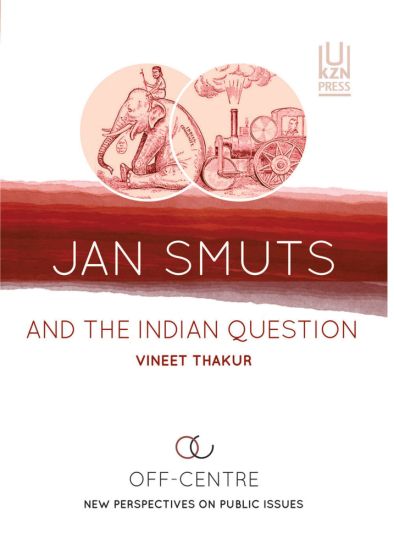
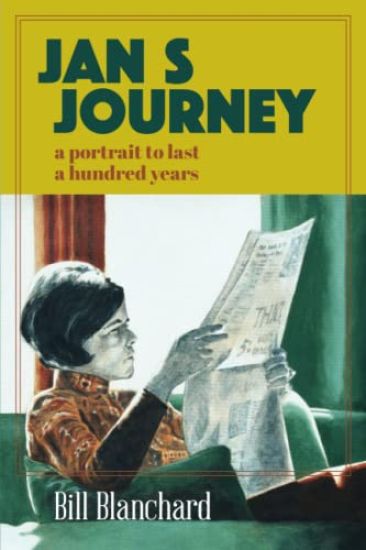
As the only surviving statesman of the Paris Peace Conference of 1919, Jan Smuts arrived for the first session of the United Nations in New York in 1946 to celebratory chants. His departure, a month and a half later, was terrifyingly dissimilar. The ‘counsellor of nations’ left a dejected man, with his honour, power and glory severely dented. The tragedy that befell Smuts’ international swansong was an Indian delegation, which, as Smuts bemoaned, used his own words against himself and showed him to be a hypocrite. This was eerily similar to a diplomatic onslaught Smuts had faced between 1917 and 1923 at the hands of another set of little-known Indian diplomats. Through these episodic histories, this book chronicles the ambivalent cosmopolitanism of Jan Smuts.
During the Second World War, thousands of Dutch, British, Australian and American POWs were forced by the Japanese to work on the railways in Burma and Sumatra. 50-80 per cent died under such terrible conditions. Photographer Jan Banning photographed 24 Dutch and Indonesian survivors, bravely revisiting this horrendous ordeal.Victory for the allied forces in the Pacific theatre of the Second World War will be celebrated in August 2005, 60 years after the Japanese Emperor Hirohito conceded defeat. Among the celebrants was a small, largely forgotten group who will once again have to relive their nightmares of the war in the Pacific.Dutch, English, Australian and American POWs were among more than a quarter of a million Asians - so called romushas - forced by the Japanese to work on railways in Burma and Sumatra. They worked in desperate conditions. Between 50 and 80 per cent of the romushas did not survive the regime, not least as a result of being torpedoed in transit. The sinking of the Junyo Maru, for instance, resulted in the deaths of 4000 romushas and 1500 prisoners of war.In Traces of War the Dutch photographer Jan Banning has interviewed and photographed just 24 of the Dutch and Indonesian survivors. The haunting images show them as they worked, naked from the waist up. The words elicit, with a matter-of-fact disinterest, the misery of their constant understanding of death. Unsurprisingly, after their experiences, they have hitherto been loath to discuss their ordeals.Jan Banning's Dutch publication of Traces of War has all but sold out. Trolley presents the English language version for the many thousands of relatives and children, and the few survivors, who want to know the truths of what happened in Burma and Sumatra.
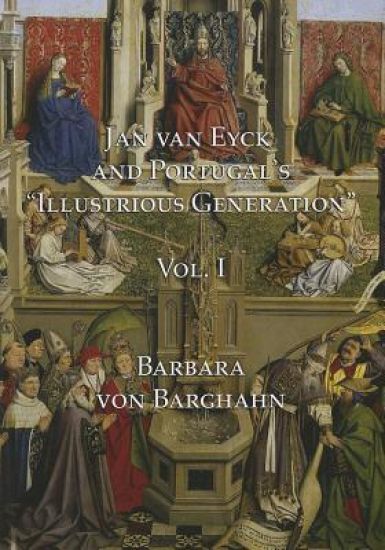
Barbara von Barghahn is Professor of Art History at George Washington University and a specialist in the art history of Portugal, Spain, and their colonial dominions, as well as Flanders (1400-1800). In 1993, she was conferred O Grão Comendador in the Portuguese Order of Prince Henry the Navigator. She has spent nearly a decade completing research about Jan van Eyck's diplomatic visits to the Iberian Peninsula. This manuscript investigates Van Eyck's patronage by the Crown of Portugal and his role as diplomat-painter of the Duchy of Burgundy following his first voyage to Lisbon in 1428-1429 when he painted two portraits of Infanta Isabella, who became the third wife of Philip the Good in 1430. New portrait identifications are provided in the Ghent Altarpiece (1432) and its iconographical prototype, the lost Fountain of Life. These altarpieces are analyzed with regard to King João I's conquest of Ceuta, achieved by his sons who were hailed as an"illustrious generation." Strong family ties between the dynastic houses of Avis and Lancaster explain Lusitania 's sustained fascination with Arthurian lore and the Grail quest. Several chapters of this book are overlaid with a chivalric veneer. A second "secret mission" to Portugal in 1437 by Jan van Eyck is postulated and this diplomatic visit is related to Prince Henrique the Navigator's expedition to Tangier and King Duarte's attempts to forge an alliance with Alfonso V of Aragon. Late Eyckian commissions are reviewed in light of this ill-fated crusade and additional new portraits are identified. The most significant artist of Renaissance Flanders appears to have been patronized as much by the House of Avis as by the Duchy of Burgundy.
Barbara von Barghahn is Professor of Art History at George Washington University and a specialist in the art history of Portugal, Spain, and their colonial dominions, as well as Flanders (1400-1800). In 1993, she was conferred O Grão Comendador in the Portuguese Order of Prince Henry the Navigator. She has spent nearly a decade completing research about Jan van Eyck's diplomatic visits to the Iberian Peninsula. This manuscript investigates Van Eyck's patronage by the Crown of Portugal and his role as diplomat-painter of the Duchy of Burgundy following his first voyage to Lisbon in 1428-1429 when he painted two portraits of Infanta Isabella, who became the third wife of Philip the Good in 1430. New portrait identifications are provided in the Ghent Altarpiece (1432) and its iconographical prototype, the lost Fountain of Life. These altarpieces are analyzed with regard to King João I's conquest of Ceuta, achieved by his sons who were hailed as an"illustrious generation." Strong family ties between the dynastic houses of Avis and Lancaster explain Lusitania 's sustained fascination with Arthurian lore and the Grail quest. Several chapters of this book are overlaid with a chivalric veneer. A second "secret mission" to Portugal in 1437 by Jan van Eyck is postulated and this diplomatic visit is related to Prince Henrique the Navigator's expedition to Tangier and King Duarte's attempts to forge an alliance with Alfonso V of Aragon. Late Eyckian commissions are reviewed in light of this ill-fated crusade and additional new portraits are identified. The most significant artist of Renaissance Flanders appears to have been patronized as much by the House of Avis as by the Duchy of Burgundy.
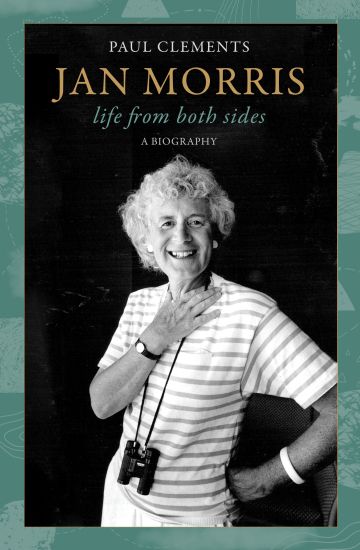
‘A marvel of clarity, fluency, and (Morris’s favourite word in her final days) kindness.’ The Sunday Times ‘A measured and elegant biography that Morris aficionados will find fascinating.’ The Times The first full account of a truly remarkable life. When Jan Morris passed away in 2020, she was considered one of Britain’s best-loved writers. The author of Venice, Pax Britannica, Conundrum, and more than fifty other books, her work was known for its observational genius, lyricism, and humour, and had earned her a passionate readership around the world. Morris’s life was no less fascinating than her oeuvre. Born in 1926, she spent her childhood amidst Oxford’s Gothic beauty and later participated in military service in Italy and the Middle East, before embarking on a career as an internationally fêted foreign correspondent. From being the only journalist to join the first ascent of Mount Everest in 1953 to covering the trial of Adolf Eichmann, Morris’s reportage spanned many of the twentieth century’s defining moments. However, public success masked a private dilemma that was only resolved when she transitioned genders in the 1960s, becoming renowned as a transgender pioneer. She went on to live happily with her wife, Elizabeth, in Wales for another five decades, and never stopped writing and publishing. Here, for the first time, the many strands of Morris’s rich and at times paradoxical life are brought together. Based on a wealth of interviews, archival material, and hitherto unpublished documents, Jan Morris: life from both sides portrays a person of extraordinary talent, curiosity, and joie de vivre.
‘A marvel of clarity, fluency, and (Morris’s favourite word in her final days) kindness.’ The Sunday Times The first full account of the remarkable life of Jan Morris: writer, soldier, traveller, and trans pioneer. Jan Morris is widely considered one of Britain’s best-loved writers, known for her observational genius, lyricism, and humour. Born in 1926, she spent her childhood amidst Oxford’s Gothic beauty and later participated in military service in Italy and the Middle East, before becoming an internationally fêted foreign correspondent. However, public success masked a private dilemma that was only resolved when she transitioned gender in the late sixties. She went on to live happily with her wife Elizabeth in Wales for another five decades, and never stopped writing and publishing. Here, for the first time, the many strands of Morris’s rich and at times paradoxical life are brought together.
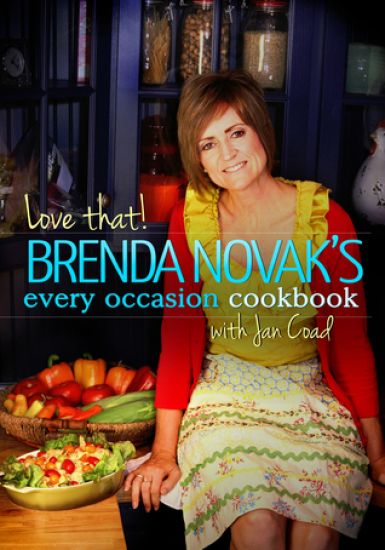
New York Times & USA Today Bestselling Author Brenda Novak has written more than fifty novels. She is also a mother of five, and there is nothing that turns a woman into a fighter more quickly than a threat to one of her children. When her youngest son was in kindergarten, he was diagnosed with Type 1 diabetes. She's spent the years since trying to juggle her career with the demands of providing healthy meals for her large and boisterous family, managing her son's diabetes care and raising money for research. To date, she's raised $2.5 million and is continuing her efforts with the sale of this cookbook, which includes her own personal recipes (all her healthy favorites) along with recipes collected from friend and co-author Jan Coad. For more about Brenda's fundraising efforts, please visit www.brendanovakforthecure.org, where you will learn her latest fundraising endeavor--a limited-edition digital boxed set titled ALL I WANT FOR CHRISTMAS that includes fourteen Christmas novellas from some of today's most popular authors (she's put her own Rita-nominated "A Dundee Christmas" in it). All proceeds for 2016 will go to Boston University to help Dr. Ed Damiano (who also has a son with Type 1) finish engineering the artificial pancreas, which is an important step toward keeping diabetics healthy until that elusive biological cure can be found. Download ALL I WANT FOR CHRISTMAS today for only $9.99 (less then $1/story), and help Brenda make a difference
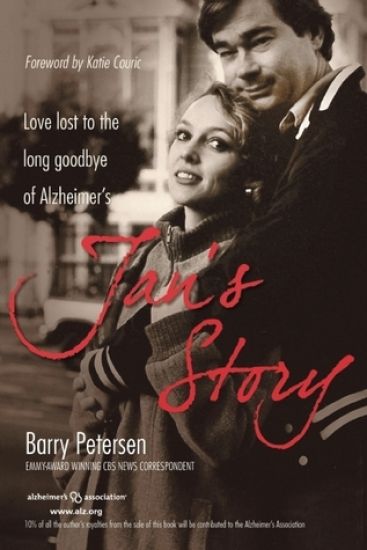
When CBS News Correspondent Barry Petersen married the love of his life twenty-five years ago, he never thought his vow, "until death do us part," would have an expiration date. But Early Onset Alzheimer's claimed Jan Petersen, Barry's beautiful wife, at 55, leaving her unable to remember Barry or their life together.
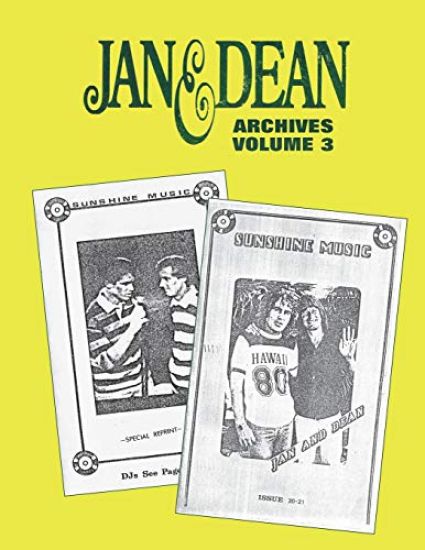
Sunshine Music was THE source for Jan & Dean information in the United States in the very late 1970s into the mid-1980s. The fanzine, edited by Mike "Doc Rock" Kelly was the successor to the Ripped Baggies Club and had occassional oversight by Dean Torrence himself. Fanzines at the time took major effort to produce. Without access to the inexpensive computers and resulting typography we have today, franzines like this were created with typewriters, article reprints, glue sticks and love for the topics they covered. Sunshine Music is a product of the times and captures a snapshot of the band during their Phase II comeback. First and foremost, it's a fan publication made by fans for other fans. Sourced from original copy machine reproduction, this book holds the same charm they offered at the time. Relive the fun by reading the articles, the fan letters and the ads for everything Jan & Dean
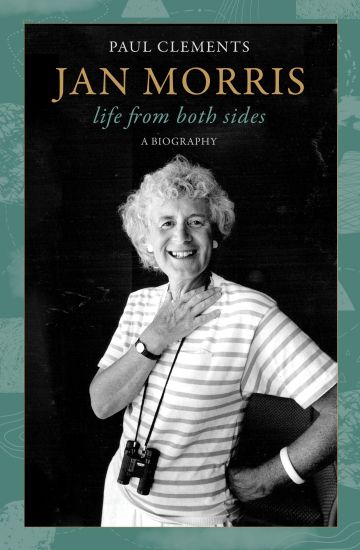
"No matter what topic Morris covered over the course of her nearly eight-decade career--from travel to history to her own transition--she did so with insight, elegance and unflinching honesty." --Stuart Emmrich, Vogue The first ever biography of a world famous author and transgender pioneer. When Jan Morris passed away in 2020, she was considered one of Britain's best-loved writers. The author of Venice, Pax Britannica, Conundrum, and more than fifty other books, her work was known for its observational genius, lyricism, and humor, and had earned her a passionate readership around the world. Morris's life was no less fascinating than her oeuvre. Born James Humphry Morris in 1926, a childhood spent amidst Oxford's Gothic beauty and military service in Italy and the Middle East were followed by a career as an internationally feted foreign correspondent. From being the only journalist to join the first ascent of Mount Everest in 1953 to covering the trial of Adolf Eichmann, Morris's reportage spanned many of the twentieth century's defining moments. However, public success masked a private dilemma that was only resolved when she transitioned genders in the late 1960s, becoming renowned as a transgender pioneer. She went on to live happily with her wife Elizabeth in Wales for another five decades, and never stopped writing and publishing. Here, for the first time, the many strands of Morris's rich life are brought together, portraying a person of extraordinary talent, curiosity, and joie de vivre. Paul Clements is the author of five travel books on Ireland. He knew Jan Morris personally for thirty years. "Perhaps the greatest travel writer of her time." --Matt Schudel, Washington Post "To open a book by Jan Morris is like popping the cork on a bottle of champagne: pop, fizz, then bubbles of delight." --Scott Simon, NPR "Distinctive, elegant, formidable ... Morris made travel seem like the best way to truly be alive in one's skin." --Dwight Garner, New York Times
Eighteen-year-old Hilary Bonn was just starting out in life, preparing for college and adventures beyond her small-town beginnings, when leukemia interrupted all of her plans. To help her body fight the ugly disease, Hilary required a stem cell transplant. While she endured PICC lines, pills, and endless precautions against germs, her family encouraged her and one another with Christmas lights, thoughtful words, warm hugs, soft music, action movies, entertaining books, and their abundant love.During this time, Jan Bonn kept family and friends updated of her daughter's treatment and progress through frequent e-mail messages. Love, Jan is a compilation of these messages. Jan's accounts of medical consultations and procedures, the uncertainties of life-changing decisions, and times of expectant waiting are infused with humor, insight, and hope told from the heart of a loving mother and faithful child of God.Love, Jan, Hilary's story of faith, hope, and joy, will inspire and encourage stem cell transplant patients and those who love them.
Eighteen-year-old Hilary Bonn was just starting out in life, preparing for college and adventures beyond her small-town beginnings, when leukemia interrupted all of her plans. To help her body fight the ugly disease, Hilary required a stem cell transplant. While she endured PICC lines, pills, and endless precautions against germs, her family encouraged her and one another with Christmas lights, thoughtful words, warm hugs, soft music, action movies, entertaining books, and their abundant love.During this time, Jan Bonn kept family and friends updated of her daughter's treatment and progress through frequent e-mail messages. Love, Jan is a compilation of these messages. Jan's accounts of medical consultations and procedures, the uncertainties of life-changing decisions, and times of expectant waiting are infused with humor, insight, and hope told from the heart of a loving mother and faithful child of God.Love, Jan, Hilary's story of faith, hope, and joy, will inspire and encourage stem cell transplant patients and those who love them.
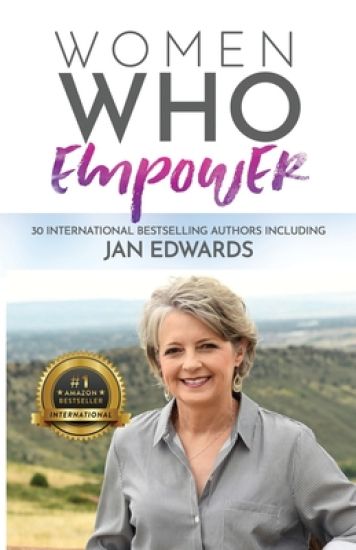
Women Who Empower is a collection of stories by women dedicated to helping others. Each chapter follows the journey that led each author to empower and inspire others through their own transformational experiences. In this special edition cover, we dive deep into Co-Author Jan Edwards's message of how God's voice led her in a different direction. ABOUT JAN EDWARDS: Stepping into her true calling, Jan left the corporate world behind as an organizational change management and project management professional to pursue her passion in one-on-one and group facilitated success coaching. During her more than twenty five years of guiding organizations through large scale change, Jan oftentimes found herself battling internally with self-limiting beliefs that left her with a deep gap inside until one day God's voice clearly, plainly, and with resounding tone moved her to take her own inventory and make a massive change in her life.
Jan was an outstanding teacher who inspired students and teachers alike until multiple sclerosis forced her to retire. In this poignant memoir, Jan's filmmaker husband relates the story of her journey through life and how it was shaped by things both large and small. He recounts how they chose each other to share their future, taking the reader beyond the wedding and "happily ever after" moment to portray their love story to its end. Though Jan's illness is present, this is not a book about her disease, but rather about a well-lived life, with a sad but uplifting ending.
Jan was an outstanding teacher who inspired students and teachers alike until multiple sclerosis forced her to retire. In this poignant memoir, Jan's filmmaker husband relates the story of her journey through life and how it was shaped by things both large and small. He recounts how they chose each other to share their future, taking the reader beyond the wedding and "happily ever after" moment to portray their love story to its end. Though Jan's illness is present, this is not a book about her disease, but rather about a well-lived life, with a sad but uplifting ending.
Jan Morrow is a little quirky and a little ditzy. We all have those "DUH" moments when we do something stupid that makes us shake our heads in bewilderment, but Jan has super-quirk. She also has a very special gift. It allows her to be places she shouldn't be and to see things she shouldn't see. People don't think to look UP when looking for someone. She sees a rapist committing a brutal murder. This maniac has raped and killed too many women and young girls. If she can save even one life, she will do all she can. Her gift will guide her. Her married lover will help her.
Amelia Edith Huddleston Barr (March 29, 1831 - March 10, 1919) was a British novelist and teacher. Her career is an illustration of the capacity of woman under stress of sorrow to conquer the world and be successful. Many of the plots of her stories are laid in Scotland and England. The scenes are from her girlhood recollection of surroundings. Her works include, Jan Vedder's Wife, The Border Shepherdess, Feet of Clay, Friend Olivia, The Bow of Orange Ribbon, Remember the Alamo, She Loved a Sailor, A Daughter of Fife, The Squire of Sanddal Side, Paul and Christina, Master of His Fate, The, Household of McNeil, The Last of the Macallisters, Between Two Loves, A Sister to Esau, A Rose of a Hundred Leaves, A Singer from the Sea, The Beads of Tasmer, The Hallam Succession, The Lone House, Christopher and Other Stories, The Lost Silver of Briffault. Early years and education: She was born on March 29, 1831 (1832 is also reported), in Ulverston, Lancashire, England as Amelia Edith Huddleston. Her father was Reverend William Huddleston, a Wesleyan minister.She was brought up in an atmosphere of culture and refinement, and early turned to books for recreation and instruction. When only nine years of age she became her father's companion and reader. Thus it was she read books far beyond her comprehension, but they tended to develop her mental qualities. A brief return to her father's financial stability allowed Barr to return to the Normal School in Glasgow where she learned the Stowe teaching method. Its principles are based on morality and lifelong learning, rather than learning by rote...............
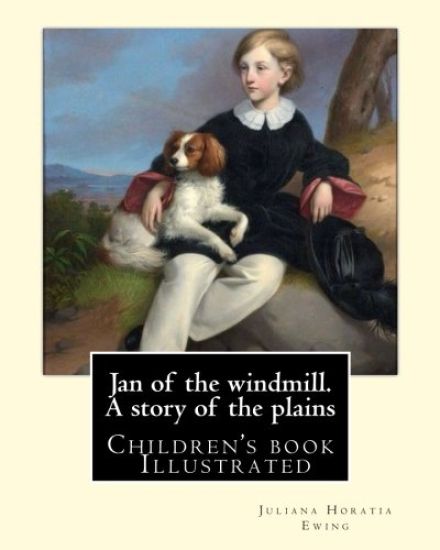
Juliana Horatia Ewing (n e Gatty) (3 August 1841 - 13 May 1885) was an English writer of children's stories. She displayed sympathetic insight into children's lives, admiration for things military, and strong religious faith. Youth and marriage: Known as Julie, she was the second of ten children of the Reverend Alfred Gatty, vicar of Ecclesfield in Yorkshire, and Margaret Gatty, who was herself a children's author. The children were educated mainly by her mother, but Julie was often the driving force behind their various activities: drama, botany etc. Later she was responsible for setting up a village library in Ecclesfield and helped out in the parish with her three sisters. Early stories of hers appeared in Charlotte Yonge's magazine Monthly Packet. On 1 June 1867, she married Major Alexander Ewing (1830-1895) of the army pay department. He was also a keen churchgoer, who shared his wife's interest in literature. Within a week of their marriage, the Ewings left England for Fredericton, New Brunswick, Canada, where he had received a new posting. They remained there for two years, before returning to England in 1869 and spending eight years in the army town of Aldershot. Although her husband was sent overseas again, to Malta in 1879 and Sri Lanka in 1881, Ewing's poor health would not allow her to accompany him. The Ewings moved to Trull, Somerset, on his return in 1883, and in 1885, to Bath, in the hopes that the change of air would do her good. However, her health continued to deteriorate, and after two operations, she died there on 13 May 1885.She was given a military funeral at Trull three days later. Her sister Horatia Katharine Frances Gatty (1846-1945) published a memorial of Julie's life and works which includes a publication history of her stories. A later selection includes some of Julie's letters and drawings about Canada. A biography by Gillian Avery appeared in 1961. "Child-novels" Roger Lancelyn Green calls her works the "first outstanding child-novels" in English literature. Her works are notable for their sympathetic insight into child life, their admiration for things military, and their reflection of her strong Anglican faith. They include Mrs. Overtheway's Remembrances (1869), A Flat Iron for a Farthing (1872), Six to Sixteen (1875), Jackanapes (1884), Daddy Darwin's Dovecot (1884), and The Story of a Short Life (1885). The latter story inspired Grace Kimmins to start the Guild of the Poor Brave Things to help children with disabilities in London. Grace (and later Ada Vachell took their motto Laetus sorte mea (Happy in my lot) from Ewing's book. Rudyard Kipling claimed to know her novel Jan of the Windmill (1872-3, 1876) almost by heart. He wrote in his autobiography, Something of Myself, "One book] I have still, a bound copy of Aunt Judy's Magazine of the early 'seventies, in which appeared Mrs. Ewing's Six to Sixteen. I owe more in circuitous ways to that tale than I can tell. I knew it, as I know it still, almost by heart. Here was a history of real people and real things."Her story The Brownies (1865) gave the Baden-Powells the idea and the name for the junior level of the Girl Guides. Another admirer of her work was E. Nesbit. A talented artist herself, her works were frequently illustrated by such notables as George Cruikshank and Randolph Caldecott. She was also the editor of a number of magazines which published short stories for children, such as the Nursery Magazines from 1856 onwards, the Monthly Packet and the monthly Aunt Judy's Magazine from 1866..................