Kirjojen hintavertailu. Mukana 11 627 220 kirjaa ja 12 kauppaa.

Kirjahaku

Etsi kirjoja tekijän nimen, kirjan nimen tai ISBN:n perusteella.

1000 tulosta hakusanalla Jane Sinclair

Jane Austen

Jane Austen

Cris Yelland

Routledge
2020
nidottu
From 1809 until just before her death, Jane Austen lived in a small, all-female household at Chawton, where reading aloud was the evening's entertainment and a crucial factor in the way Austen formed and modified her writing. This book looks in detail at Jane Austen's style. It discusses her characteristic abstract vocabulary, her adaptations of Johnsonian syntax and how she came to make her most important contribution to the technique of fiction, free indirect discourse. The book draws extensively on historical sources, especially the work of writers like Johnson, Hugh Blair and Thomas Sheridan, and analyses how Austen negotiated her path between the fundamentally masculine concerns of eighteenth-century prescriptivists and her own situation of a female writer reading her work aloud to a female audience.
Jane Austen and Sciences of the Mind
The essays in this volume interpret Jane Austen’s fiction through the lens of various sciences of the mind and brain, especially the cluster of disciplines implicated in the term cognitive science, including neuroscience, evolutionary biology, evolutionary and developmental psychology, and others. The field of cognitive literary studies has rapidly developed in the last few decades and achieved the status of an established (if still evolving) critical approach. One of the most popular authors to analyze from this perspective is Jane Austen. As numerous critics have noted, Austen was a keen observer of how the mind operates in its interactions with other minds, both when it functions successfully and when, as often happens, it goes awry, and her perceptions are often in synch with current neuroscientific and psychological research. Despite the widespread recognition of the special congruity between Austen’s novels and cognitive science, however, no book has been devoted to this subject. Jane Austen and Sciences of the Mind is the first monograph wholly comprised of readings of Austen’s oeuvre (juvenilia as well as all six completed novels) from cognitive and related psychological approaches. In addition, the volume operates under the assumption that cognitive and historicist approaches are compatible, and many essays situate Austen within the climate of ideas during her era as well as in relation to current research in the sciences and social sciences. Jane Austen and Sciences of the Mind offers a new lens for understanding and illuminating the concerns, techniques, and enduring appeal of Austen’s novels.
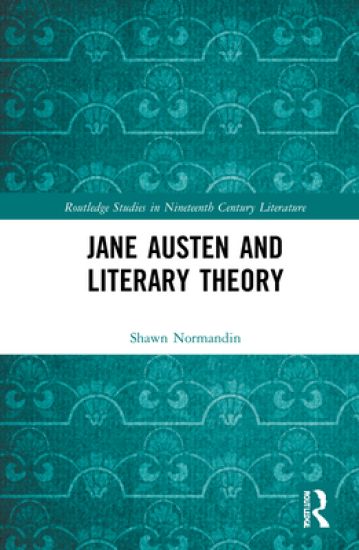
Jane Austen and Literary Theory

Jane Austen and Literary Theory

Shawn Normandin

Routledge
2021
sidottu
Jane Austen was one of the most adventurous thinkers of the late eighteenth and early nineteenth centuries, but one would probably never guess that by reading her critics. Perhaps no canonical author in English literature has proven, until now, more resistant to theory. Tracing the political motives for this resistance, Jane Austen and Literary Theory proceeds to counteract it. The book’s detailed interpretations guide readers through some of the important intellectual achievements of Austen’s career—from the stunning teenage parodies "Evelyn" and "The History of England" to her most accomplished novels, Pride and Prejudice, Mansfield Park, and Emma. While criticism has largely been content to describe the various ways Austen was a product of her time, Jane Austen and Literary Theory reveals how she anticipated the ideas of formidable literary thinkers of the twentieth century, especially Jacques Derrida and Paul de Man. Gift and exchange, speech and writing, symbol and allegory, stable irony and Romantic irony—these are just a few of the binary oppositions her dazzling texts deconstruct. Although her novels are major achievements of nineteenth-century realism, critics have hitherto underestimated their rhetorical cunning and their fascination with the materiality of language. Doing justice to Austen’s language requires critical methods as ruthless as her irony, and Jane Austen and Literary Theory supplies these methods. This book will enable both her devotees and her detractors to appreciate her genius in unusual ways.
Jane Austen and Literary Theory

Jane Austen and Literary Theory

Shawn Normandin

TAYLOR FRANCIS LTD
2022
nidottu
Jane Austen was one of the most adventurous thinkers of the late eighteenth and early nineteenth centuries, but one would probably never guess that by reading her critics. Perhaps no canonical author in English literature has proven, until now, more resistant to theory. Tracing the political motives for this resistance, Jane Austen and Literary Theory proceeds to counteract it. The book’s detailed interpretations guide readers through some of the important intellectual achievements of Austen’s career—from the stunning teenage parodies "Evelyn" and "The History of England" to her most accomplished novels, Pride and Prejudice, Mansfield Park, and Emma. While criticism has largely been content to describe the various ways Austen was a product of her time, Jane Austen and Literary Theory reveals how she anticipated the ideas of formidable literary thinkers of the twentieth century, especially Jacques Derrida and Paul de Man. Gift and exchange, speech and writing, symbol and allegory, stable irony and Romantic irony—these are just a few of the binary oppositions her dazzling texts deconstruct. Although her novels are major achievements of nineteenth-century realism, critics have hitherto underestimated their rhetorical cunning and their fascination with the materiality of language. Doing justice to Austen’s language requires critical methods as ruthless as her irony, and Jane Austen and Literary Theory supplies these methods. This book will enable both her devotees and her detractors to appreciate her genius in unusual ways.
Jane Carlyle

Jane Carlyle

Kenneth J. Fielding

Routledge
2019
nidottu
This new selection of the letters of Jane Welsh Carlyle presents a complete view of a remarkable Victorian woman, with a wide circle of friends, who enjoyed the company of distinguished thinkers, writers, politicians, feminists, eccentrics and radicals. This edition draws on many remarkable letters and papers not published before, in which she created a memorable epistolary voice - shrewd, vigorous, ironic, observant, humorous and passionate. Previous selections have often tamely followed the semi-mythical version of her life first given by Carlyle’s biographer, James Anthony Froude, showing her as the victimized angel in distress. This new selection gives a rounded picture of her complex character, showing her as a tormented yet forceful woman who was a strong personality in her own right. She now emerges as a self-conscious artist, adept at constructing images of herself that were designed to appeal to her particular correspondents. The account is written with close attention to Jane Carlyle's long-running jealousy of Lady Harriet Ashburton; and fresh letters include many to her mother and her vital response to her passionate lover or admirer Charlotte Cushman. Each letter is a tightly controlled performance, which justifies Thomas Carlyle’s belief that her letters equal and surpass whatever of best I know to exist in that kind.
Jane Eyre on Stage, 1848?1898

Jane Eyre on Stage, 1848?1898

Patsy Stoneman

Routledge
2019
nidottu
Charlotte Brontë's Jane Eyre was published in October, 1847, and within three months a version was on stage in London. By 1900, at least eight different stage versions had appeared in England, America and continental Europe. For the first time, all eight plays are available in Patsy Stoneman's critical edition, richly illustrated by facsimile reproductions of manuscripts, unique Victorian playbills, contemporary etchings of theatres, and portraits of playwrights and actors. Stoneman's introduction places the plays' bizarre innovations in the context of theatre history and of contemporary debates on class and gender, while each edited play-text is accompanied by detailed notes, based on original research, on the playwright, theatre(s) and performances, and contemporary reception. Most of these plays existed only in manuscript, and were quickly forgotten, yet they make fascinating reading. Nineteenth-century playwrights had no reverence for a text we regard as canonical, but added to, deleted from and twisted Charlotte Brontë's story to suit their own purposes. One play has a cast of comic servants who follow Jane from Lowood to Thornfield. In another, the madwoman is revealed as the sister-in-law of a blameless Rochester. A third has Blanche Ingram reduced to a fallen woman, seduced and abandoned by John Reed. Jane Eyre on Stage will appeal to readers interested in literary and theatrical history, cultural studies, and the intriguing afterlives of famous books.
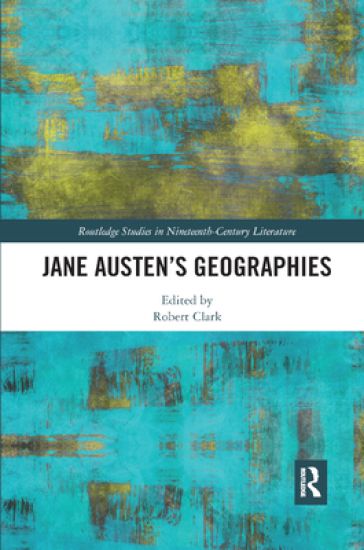
Jane Austen’s Geographies
When Jane Austen represented the ideal subject for a novel as "three or four families in a country village", rather than encouraging a narrow range of reference she may have meant that a tight focus was the best way of understanding the wider world. The essays in this collection research the historical significance of her many geographical references and suggest how contemporaries may have read them, whether as indications of the rapid development of national travel, or of Britain’s imperial status, or as signifiers of wealth and social class, or as symptomatic of political fears and aspirations. Specifically, the essays consider the representation of colonial mail-order wives and naval activities in the Mediterranean, the worrisome nomadism of contemporary capitalism, the complexity of her understanding of the actual places in which her fictions are set, her awareness of and eschewal of contemporary literary conventions, and the burden of the Austen family’s Kentish origins, the political implications of addresses in London and Northamptonshire. Skilful, detailed, and historically informed, these essays open domains of meaning in Austen’s texts that have often gone unseen by later readers but which were probably available to her coterie readers and clearly merit much closer critical attention.
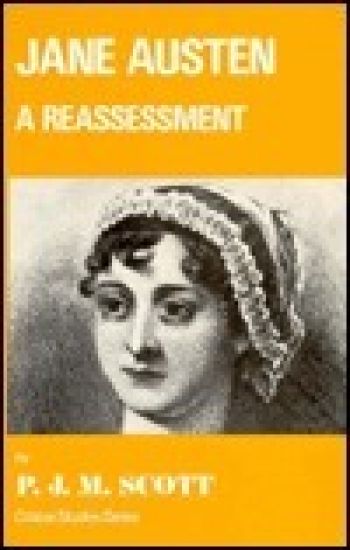
Jane Austen

Jane Austen

P. J. M. Scott

Barnes Noble Books-Imports, Div of Rowman Littlefield Pubs., Inc
1982
sidottu
This book lifts Austen studies to a level of debate which is exciting, happy and tough. That she is one of the greatest philosopher-novelists of the Romantic Age is Peter Scott's conviction. He reads Mansfield Park as a ripe complex argument about discipline, Sense and Sensibility is valued as one of the great tragic novels of Europe, and Emma is viewed as brilliant but specious.
Jane Brody's Good Food Gourmet

Jane Brody's Good Food Gourmet

Jane E. Brody; Brody

W. W. Norton Company
1986
sidottu
As anyone interested in good food and good health knows, Jane E. Brody has been one of the major guiding forces of the revolution in health consciousness that has swept this country in the past decade. Her message has been simple yet profound: good nutrition is vital to good health, and healthful foods can be flavorful and festive, too. In this volume, following her best-selling Jane Brody's Nutrition Book and Jane Brody's Good Food Book, she presents more than 500 new, delicious, and wholesome recipes specifically geared toward entertaining. Some have been suggested by her readers; others have been adapted from recipes devised by noted cooks and food writers; many are Brody family favorites.
Jane Brody's Good Seafood Book

Jane Brody's Good Seafood Book

Jane E. Brody; Richard Flaste

WW Norton Co
1994
sidottu
Here is another volume from today's most influential writer on food and health, the "New York Times" Personal Health columnist, Jane E. Brody. In this new book, America's authority on great food that is also good food has produced, with her collaborator Richard Flaste, a primer on seafood combined with a collection of delicious recipes. She notes that most of us, when growing up, knew fish in one of two incarnations - fish sticks or tuna on rye. What we didn't know was that seafood comes in an amazing variety of forms, that it is one of the most important low-fat sources of dietary protein available, and that it can be cooked easily, even by "fish novices, " in an almost infinite number of delicious ways that go well beyond the frozen fillets of childhood. Part One is a comprehensive overview of seafood lore that includes chapters on how to select, clean, fillet, and store fish; basic seafood cooking techniques; and a full discussion of seafood safety and the overwhelming health benefits of adding fish to your diet. Part Two is a collection of 240 recipes for hors d'oeuvres and appetizers, soups, salads, and main courses, including special sections on grilling and microwaving.
Jane Addams

Jane Addams

Louise W. Knight

WW Norton Co
2011
sidottu
Jane Addams (1860-1935) was a leading statesperson in an era when few imagined such possibilities for women. In this fresh interpretation, the first full biography of Addams in nearly forty years, Louise W. Knight shows Addams's boldness, creativity, and tenacity as she sought ways to put the ideals of democracy into action. Starting in Chicago as a co-founder of the nation's first settlement house, Hull House—a community center where people of all classes and ethnicities could gather—Addams became a grassroots organizer and a partner of trade unionists, women, immigrants, and African Americans seeking social justice. In time she emerged as a progressive political force; an advocate for women's suffrage; an advisor to presidents; a co-founder of civil rights organizations, including the NAACP; and a leader for international peace. Written as a fast-paced narrative, Jane Addams traces how one woman worked with others to make a difference in the world.
Jane Eyre

Jane Eyre

Charlotte Bronte

WW Norton Co
2016
nidottu
"For the classroom and for the general reader, there’s no better way to experience the context in which Jane Eyre was written, illuminating modern commentary, and the novel itself in an authoritative text.” Fred kaplan, Queens College and The Graduate Center, City University of New York
Jane Brody's Allergy Fighter

Jane Brody's Allergy Fighter

Jane Brody

W. W. Norton Company
1998
nidottu
Almost one in ten Americans suffers from some form of seasonal allergy - and almost twice as many have other forms of nasal allergies or "allergic rhinitis." If you are among these fifty million-plus sneezing, sniffling, stuffed-up, red-eyed allergy victims, Jane Brody brings you good news: You don't have to take it anymore. Jane Brody's Allergy Fighter is a clear, compact, completely up-to-date guide to understanding the causes of the allergies that plague you, and the actions that you and your doctor can take now to prevent and relieve their symptoms. Among the topics covered: how allergies happen and what substances cause or exacerbate them; strategies you and your children can use to avoid allergy-causing substances; the peak allergy seasons across the country--and the near-uselessness of current pollen count readings; understanding the vast array of antihistamines, decongestants, and topical sprays, both over-the-counter and prescription--what they can and can't do and their side effects; allergy shots--how they work and when to have them; ways that outdoor exercisers can minimize exposure to allergy-causing substances; and special strategies for treating allergies in children.
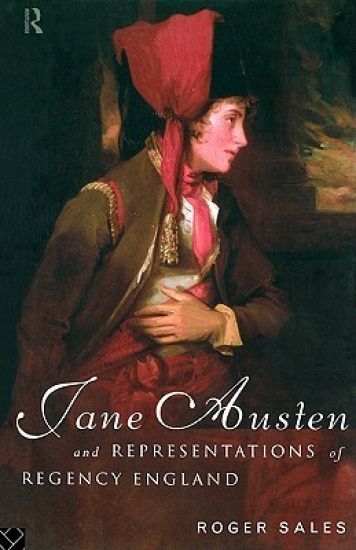
Jane Austen and Representations of Regency England
In Jane Austen and Representations of Regency England, Roger Sales looks at Jane Austen's entire oeuve, and views her historically as a Regency writer voicing concerns on the condition of England. Examining Austen's literary works; her letters - in the context of those of other Regency women; as well as contemporary texts such as television adaptations of her work, Jane Austen and Representations of Regency England reconstructs the breadth of Jane Austen's writing. It also examines: * her representations of dandyism and masculine identities * the events of the Regency crisis of 1810-12 * the way in which Austen engaged in topical debates such as healthcare in both Emma and Persuasion.