Kirjahaku
Etsi kirjoja tekijän nimen, kirjan nimen tai ISBN:n perusteella.
1000 tulosta hakusanalla John H. Harding Jr
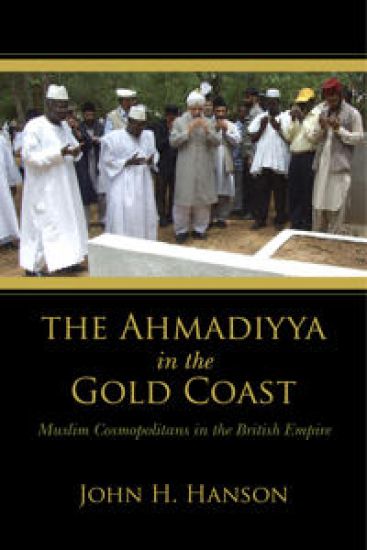
The Ahmadiyya Muslim Community, a global movement with more than half a million Ghanaian members, runs an extensive network of English-language schools and medical facilities in Ghana today. Founded in South Asia in 1889, the Ahmadiyya arrived in Ghana when a small coastal community invited an Ahmadiyya missionary to visit in 1921. Why did this invitation arise and how did the Ahmadiyya become such a vibrant religious community? John H. Hanson places the early history of the Ahmadiyya into the religious and cultural transformations of the British Gold Coast (colonial Ghana). Beginning with accounts of the visions of the African Methodist Binyameen Sam, Hanson reveals how Sam established a Muslim community in a coastal context dominated by indigenous expressions and Christian missions. Hanson also illuminates the Islamic networks that connected this small Muslim community through London to British India. African Ahmadi Muslims, working with a few South Asian Ahmadiyya missionaries, spread the Ahmadiyya's theological message and educational ethos with zeal and effectiveness. This is a global story of religious engagement, modernity, and cultural transformations arising at the dawn of independence.

Migration, Jihad, and Muslim Authority in West Africa
John H. Hanson
Indiana University Press
1996
sidottu
"The book is a readable, terse, theoretically developed treatment of an important episode in African history." —Journal of African History "It is original and authoritative, certainly the best book we have on the heritage of Umar's conquests." —African History ". . . lucid analysis of a changing jihad society. This study enlarges understanding not only of the Umarian empire but also of the jihad movements generally." —Choice John Hanson's thoroughly researched study revises late-19th-century colonialist assumptions about a West African Muslim social movement. Using indigenous Arabic manuscripts, travel narratives, and oral materials, Hanson assesses the meaning of a series of revolts against Islamic authority.
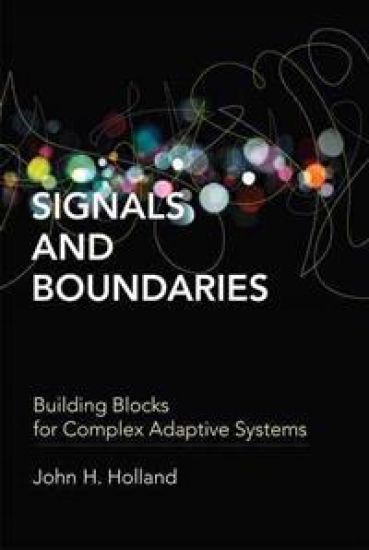
An overarching framework for comparing and steering complex adaptive systems is developed through understanding the mechanisms that generate their intricate signal/boundary hierarchies. Complex adaptive systems (cas), including ecosystems, governments, biological cells, and markets, are characterized by intricate hierarchical arrangements of boundaries and signals. In ecosystems, for example, niches act as semi-permeable boundaries, and smells and visual patterns serve as signals; governments have departmental hierarchies with memoranda acting as signals; and so it is with other cas. Despite a wealth of data and descriptions concerning different cas, there remain many unanswered questions about "steering" these systems. In Signals and Boundaries, John Holland argues that understanding the origin of the intricate signal/border hierarchies of these systems is the key to answering such questions. He develops an overarching framework for comparing and steering cas through the mechanisms that generate their signal/boundary hierarchies. Holland lays out a path for developing the framework that emphasizes agents, niches, theory, and mathematical models. He discusses, among other topics, theory construction; signal-processing agents; networks as representations of signal/boundary interaction; adaptation; recombination and reproduction; the use of tagged urn models (adapted from elementary probability theory) to represent boundary hierarchies; finitely generated systems as a way to tie the models examined into a single framework; the framework itself, illustrated by a simple finitely generated version of the development of a multi-celled organism; and Markov processes.
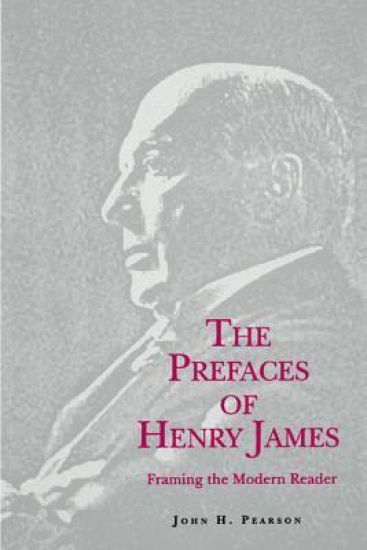
The first decade of the twentieth century saw Henry James at work selecting and revising his novels and tales for a collection of his work known as the New York Edition. James not only made extensive revisions of his early works; he added eighteen prefaces that provide what many readers believe to be the best commentary on his fiction. John Pearson argues here for a reading of the prefaces within the context of the New York Edition as James's attempt to construct an ideal reader, one attentive to his art and authorial performance. Throughout his discussion of the eighteen prefaces, Pearson examines the strategies that James implements for preparing the reader for the prefaced texts. He argues that James sought to create the modern reader, one who would learn to appreciate and discriminate his literary art through reading the prefaces. By demonstrating that the prefaces frame the novels and tales in aesthetic histories that are authorized and authenticated by the author-historian's personal memory, Pearson accomplishes his analysis of James's use of the frame and how it systematically instructed the reader in the Jamesian aesthetic of fiction. Through close readings of several of the novels and tales including The Awkward Age, What Maisie Knew, The Portrait of a Lady, The Aspern Papers, and The Wings of the Dove, Pearson's comprehensive study examines the various framing strategies at work and considers the broader theoretical implications of reading through the prefaces. Pearson's eclectic theoretical approach, similar to the recent poststructural work of John Carlos Rowe, makes a complex argument accessible to an educated reader untutored in recent poststructural literary theory.
This work traces the development of residential natural gas markets in the United States from the beginning of the twentieth century to the present. It examines how social, economic, and technological factors interrelated to bring a relatively new energy source from obscurity to general acceptance by the population. The author credits the appearance of particular appliances which helped spawn natural gas use, notes legislative developments such as the Natural Gas Act of 1938 and the Natural Gas Policy Act of 1978, and shows the various effects of regulation and price changes on the market. The author also demonstrates the use of a general method for performing a regression analysis when the historical data are poorly measured.This study will be of interest to energy economists, econometricians, and industry specialists, as well as economic and social historians.
This study examines what led the leaders of Austria-Hungary and Germany to launch major military offensives at the beginning of the First World War. The focus is on understanding why these two countries adopted high-risk offensive strategies during an international confrontation rather than a defensive military stance. The decision to attack or defend did not occur in a political vacuum. The leaders of Austria-Hungary and Germany adopted offensive strategies as a way to achieve their political ambitions. The offensives undertaken by Austria-Hungary and Germany in 1914 thus reflected their political goals as well as the strategic doctrines of war planners. The concluding chapter of this study explores why deterrence failed in 1914.
JosÉ Vasconcelos-lawyer, politician, writer, educator, philosopher, prophet, and mystic-was one of the most influential and controversial figures in the intellectual life of twentieth-century Mexico. Vasconcelos was driven by the desire to gain a complete and comprehensive vision of reality, employing his own aesthetic-emotive method and a poetic mode of expression. The complex philosophical system that resulted is what he called “aesthetic monism.” But this is only one side of the man. Vasconcelos was also vitally interested in both the proximate realities and remote possibilities of Mexico, in the character of the “cosmic race” of his homeland, and in the relations between his own country and the others of this hemisphere. Soon after Vasconcelos’s death in 1959, Eduardo GarcÍa MÁynez spoke of him, in a moving tribute, as “without question the most inspiring intellectual and human figure that Mexico has produced.” Unhappily-and perhaps disgracefully-he has remained almost unknown outside the Spanish-speaking world. Histories of Mexico published in English usually give passing mention to his role as Minister of Public Education or his unsuccessful campaign for the presidency, but his aesthetic system and his socio-political ideas have been ignored by philosophers in the United States. Here, for the first time, is a unified, inclusive, and occasionally critical presentation of the entire range of Vasconcelos’s thought, from his metaphysics and theory of knowledge through his aesthetics and ethics to his social and political philosophy. It is enriched by an appendix in which the most significant passages from Vasconcelos’s own philosophical writings are presented in English translations.
Few men have had as much cultural and educational influence on their own countries as the philosopher and educator Antonio Caso (1883-1946). He was above all a patriot of his beloved Mexico, and he sought to deliver his humanitarian message to his countrymen. In his youth, after the revolt against DÍaz, he was a member of the Ateneo de la Juventud, a group that sought to bring Mexico, spiritually and economically, back to the Mexicans. Caso realized that this effort involved the forming of a national consciousness among his people, whom he saw divided by their private and public interests. As an educator of Mexican youth for more than thirty years, Caso sought to imbue in his students the desire to search and to question. He saw education as a perpetual search for truth, and his own life and philosophy reflect this search. He rejected any system that proposed to describe all of reality, and he despised all dogmas-official or unofficial. He particularly fought against positivism and Marxism, systems current in his youth. The first part of this book is an introduction to the philosophical and educational ideas of Caso, as well as to the intellectual and political ideas in his life. Mr. Haddox skillfully shows the development of Caso's ideas and how they took shape from his own reading as well as from the experiences of his age and of his country. The second part contains Mr. Haddox's translations of selections from Caso's writings. They give a moving picture of Caso's hopes for Mexico and for humanitiy.
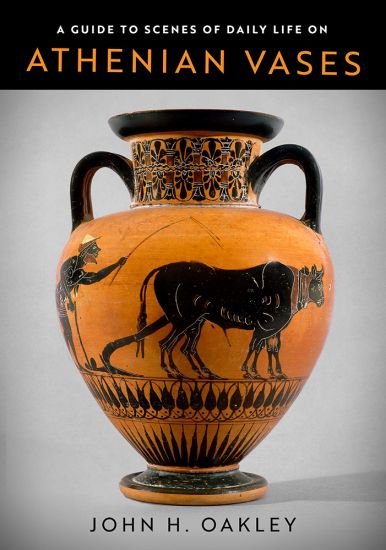
A Guide to Scenes of Daily Life on Athenian Vases
John H. Oakley; John Oakley
University of Wisconsin Press
2020
sidottu
Painted vases are the richest and most complex images that remain from ancient Greece. Over the past decades, a great deal has been written on ancient art that portrays myths and rituals. Less has been written on scenes of daily life, and what has been written has been tucked away in hard-to-find books and journals. A Guide to Scenes of Daily Life on Athenian Vases synthesizes this material and expands it: it is the first comprehensive volume to present visual representations of everything from pets and children's games to drunken revelry and funerary rituals.John H. Oakley's clear, accessible writing provides sound information with just the right amount of detail. Specialists of Greek art will welcome this book for its text and illustrations. This guide is an essential and much-needed reference for scholars and an ideal sourcebook for classics and art history.
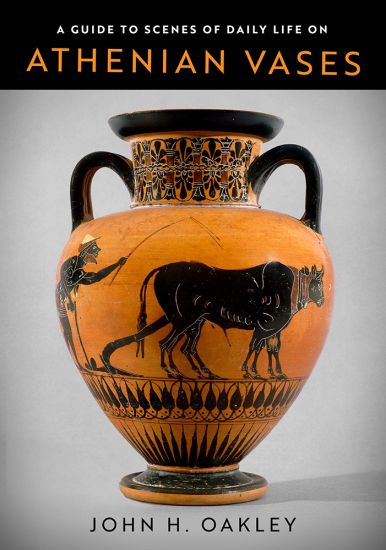
A Guide to Scenes of Daily Life on Athenian Vases
John H. Oakley
University of Wisconsin Press
2020
nidottu
Painted vases are the richest and most complex images that remain from ancient Greece. Over the past decades, a great deal has been written on ancient art that portrays myths and rituals. Less has been written on scenes of daily life, and what has been written has been tucked away in hard-to-find books and journals. A Guide to Scenes of Daily Life on Athenian Vases synthesizes this material and expands it: it is the first comprehensive volume to present visual representations of everything from pets and children's games to drunken revelry and funerary rituals.John H. Oakley's clear, accessible writing provides sound information with just the right amount of detail. Specialists of Greek art will welcome this book for its text and illustrations. This guide is an essential and much-needed reference for scholars and an ideal sourcebook for classics and art history.
The significance of the First Letter of Peter for the formation of Christianity stands in sharp contrast to its brevity. John H. Elliott, a leading authority on this letter, brings its significance to life in this magnificent addition to the renowned Anchor Bible Commentaries. Elliott sets the letter into context, covering its literary, historical, theological, and linguistic elements. In detailed, accessible discussions, he draws on the latest research to illuminate the social and cultural influences on the Church in its initial years. Treating such important Petrine concerns as living honorably in a hostile society, finding meaning in suffering, and resisting social assimilation as the elect and holy family of God, the translation, notes, and commentary in this volume will help readers appreciate the powerful and enduring message of this fascinating letter.
Spatial Pattern in Plankton Communities
John H. Steele
Kluwer Academic/Plenum Publishers
1978
sidottu
The planning for the conference held at Erice, Sicily, in November 1977, began with discussions among oceanographers from several countries on the need to consider the special problems and the recent results in the study of plankton "patchiness. " An approach to the Marine Sciences Panel of the NATO Science Committee resulted in a planning grant to determine the probable content and participation in such a meeting. The planning group consisted of B. Battaglia (Padua), G. E. B. Kullenberg (Copenhagen), A. Okubo (New York), T. Platt (Halifax, Nova Scotia) and J. H. Steele (Aberdeen). The group met in Aberdeen, Scotland, in September 1976. The proposal for a NATO School on the subject of "Spatial Pattern in Plankton Communities" was accepted by the Marine Science Panel and it was agreed that it be held at the Ettore Majorana Centre for Scientific Culture in Erice. The Centre began in 1963 with an International School of Subnuclear Physics and has since developed to include courses in many other subjects which cover various fields of basic and applied research. The original aim of the . Centre was to create, in Italy, a cultural forum of high scientific standard which would allow young research workers to appreciate problems currently of major interest in various fields of research.
The NIV Application Commentary, Old Testament Set One: Genesis-Job, 12-Volume Collection
John H. Walton; Peter E. Enns; Roy Gane; Daniel I. Block; Jr. Hubbard; K. Lawson Younger; Bill T. Arnold; August H. Konkel; Andrew E. Hill; Donna Petter; Thomas Petter; Karen H. Jobes
Zondervan
2021
sidottu
The NIV Application Commentary helps you communicate and apply biblical text effectively in today's context. To bring the ancient messages of the Bible into today's world, each passage is treated in three sections: Original Meaning. Concise exegesis to help readers understand the original meaning of the biblical text in its historical, literary, and cultural context. Bridging Contexts. A bridge between the world of the Bible and the world of today, built by discerning what is timeless in the timely pages of the Bible. Contemporary Significance. This section identifies comparable situations to those faced in the Bible and explores relevant application of the biblical messages. The author alerts the readers of problems they may encounter when seeking to apply the passage and helps them think through the issues involved. This unique, award-winning commentary is the ideal resource for today's preachers, teachers, and serious students of the Bible, giving them the tools, ideas, and insights they need to communicate God's Word with the same powerful impact it had when it was first written. Volumes and authors in The NIV Application Commentary, Old Testament Set One: Genesis-Job, 12-Volume Collection include: Genesis by John H. Walton Exodus by Peter Enns Leviticus, Numbers by Roy Gane Deuteronomy by Daniel I. Block Joshua by Robert L. Hubbard Jr. Judges, Ruth by K. Lawson Younger Jr. 1 and 2 Samuel by Bill T. Arnold 1 and 2 Kings by August H. Konkel 1 and 2 Chronicles by Andrew E. Hill Ezra, Nehemiah by Donna Petter and Thomas Petter Esther by Karen H. Jobes Job by John H. Walton
Discover profound insights with ease: The Essential Bible Companion is your indispensable guide to unlocking and truly understanding the core teachings of the Bible. Developed by world-renowned biblical scholars, this compact reference tool presents the key information about every book in the Bible in an easy-to-digest format.The Essential Bible Companion is a visual guide to Scripture's key concepts and teachings that empowers you with:Background information that uncovers the purpose, key terms, concepts, and teachings about God in each Bible book.A user-friendly timeline featuring key events for each book.A who's-who of essential Biblical figures to know.Must-read verses, illustrative maps, and enlightening historical introductions.Ideal for those seeking greater understanding of the Bible without getting lost in overbearing detail, The Essential Bible Companion strikes the perfect balance of informative yet manageable content that enhances, not detracts from, the biblical text.Embark on a journey towards a well-grounded and deeply enriched biblical faith with The Essential Bible Companion. Whether you are a new believer stepping into the vast landscape of biblical teachings for the first time, or a seasoned student of the word seeking to deepen your knowledge, The Essential Bible Companion serves as your roadmap.Grab your copy today and simplify your path to deeper biblical understanding.
The NIV Application Commentary, Old Testament Set One: Genesis-Job, 12-Volume Collection
John H. Walton; Peter E. Enns; Roy Gane; Daniel I. Block; Jr. Hubbard; K. Lawson Younger; Bill T. Arnold; August H. Konkel; Andrew E. Hill; Donna Petter; Thomas Petter; Karen H. Jobes
ZONDERVAN
2025
sidottu
The NIV Application Commentary helps you communicate and apply biblical text effectively in today's context. To bring the ancient messages of the Bible into today's world, each passage is treated in three sections:Original Meaning. Concise exegesis to help readers understand the original meaning of the biblical text in its historical, literary, and cultural context.Bridging Contexts. A bridge between the world of the Bible and the world of today, built by discerning what is timeless in the timely pages of the Bible.Contemporary Significance. This section identifies comparable situations to those faced in the Bible and explores relevant application of the biblical messages. The author alerts the readers of problems they may encounter when seeking to apply the passage and helps them think through the issues involved.This unique, award-winning commentary is the ideal resource for today's preachers, teachers, and serious students of the Bible, giving them the tools, ideas, and insights they need to communicate God's Word with the same powerful impact it had when it was first written.Volumes and authors in The NIV Application Commentary, Old Testament Set One: Genesis-Job, 12-Volume Collection include:Genesis by John H. WaltonExodus by Peter EnnsLeviticus, Numbers by Roy GaneDeuteronomy by Daniel I. BlockJoshua by Robert L. Hubbard Jr.Judges, Ruth by K. Lawson Younger Jr.1 and 2 Samuel by Bill T. Arnold1 and 2 Kings by August H. Konkel1 and 2 Chronicles by Andrew E. HillEzra, Nehemiah by Donna Petter and Thomas PetterEsther by Karen H. JobesJob by John H. WaltonThis set features newly designed covers for the volumes, updated from their original editions.
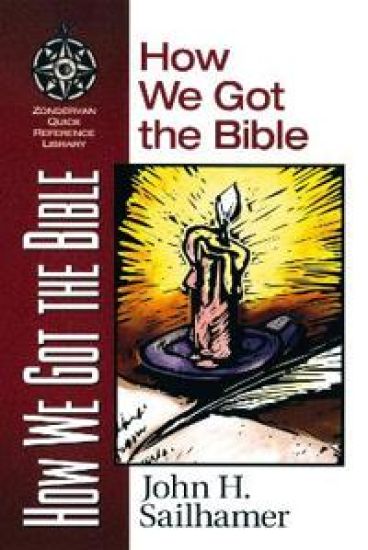
What is the Bible? Where did it come from, and how can we trust it as God's true Word when it was written by so many different people over such a long period of time?These are just some of the questions that this handy little book will answer. When busy people want to know more about the Bible and the Christian faith, the Zondervan Quick-Reference Library offers an instant information alternative in a manageable length.Covering the basics of the faith and Bible knowledge in an easy-to-use format, this series helps new Christians and seasoned believers alike find answers to their questions about Christianity and the Bible. The information in How We Got the Bible is presented in units of one or two pages, so that each section can be read in a few minutes, covering:The history of the biblical text.The Hebrew Old Testament.The Greek New Testament.How to make sense of the many different versions of the Bible we have today. The Zondervan Quick-Reference Library makes important knowledge affordable, accessible, and easy to understand for busy people who don’t have a lot of time to read or study.
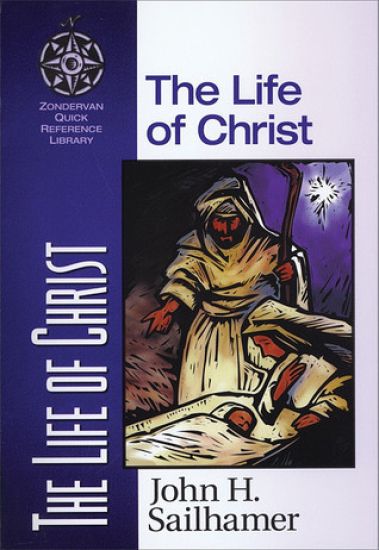
In nine brief sections, this book gives an overview of the life of Jesus—from his birth to ministry, from his death to resurrection.When busy people want to know more about the Bible and the Christian faith, the Zondervan Quick-Reference Library offers an instant information alternative in a manageable length. Covering the basics of the faith and Bible knowledge in an easy-to-use format, this series helps new Christians and seasoned believers alike find answers to their questions about Christianity and the Bible. The information in The Life of Christ is presented in units of one or two pages, so that each section can be read in a few minutes, covering:The Gospels.The world of Jesus.His birth and ministry.His final week in Jerusalem.The Resurrection and appearances of Jesus. The Zondervan Quick-Reference Library makes important knowledge affordable, accessible, and easy to understand for busy people who don’t have a lot of time to read or study.