Kirjojen hintavertailu. Mukana 12 361 168 kirjaa ja 12 kauppaa.

Kirjahaku

Etsi kirjoja tekijän nimen, kirjan nimen tai ISBN:n perusteella.

1000 tulosta hakusanalla John L Cook

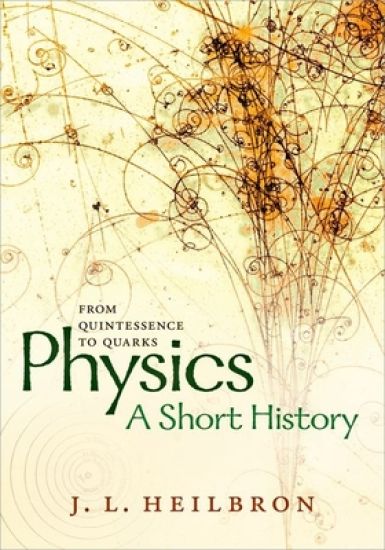
Physics: a short history from quintessence to quarks

Physics: a short history from quintessence to quarks

John L. Heilbron

Oxford University Press
2015
sidottu
How does the physics we know today - a highly professionalised enterprise, inextricably linked to government and industry - link back to its origins as a liberal art in Ancient Greece? What is the path that leads from the old philosophy of nature and its concern with humankind's place in the universe to modern massive international projects that hunt down fundamental particles and industrial laboratories that manufacture marvels? John Heilbron's fascinating history of physics introduces us to Islamic astronomers and mathematicians, calculating the size of the earth whilst their caliphs conquered much of it; to medieval scholar-theologians investigating light; to Galileo, Copernicus, Kepler, and Newton, measuring, and trying to explain, the universe. We visit the 'House of Wisdom' in 9th-century Baghdad; Europe's first universities; the courts of the Renaissance; the Scientific Revolution and the academies of the 18th century; the increasingly specialised world of 20th and 21st century science. Highlighting the shifting relationship between physics, philosophy, mathematics, and technology -- and the implications for humankind's self-understanding -- Heilbron explores the changing place and purpose of physics in the cultures and societies that have nurtured it over the centuries.
Eavesdropping

Eavesdropping

John L. Locke

Oxford University Press
2010
sidottu
Why we can't resist listening in on our neighbours Eavesdropping has a bad name. It is a form of human communication in which the information gained is stolen, and where such words as cheating and spying come into play. But eavesdropping may also be an attempt to understand what goes on in the lives of others so as to know better how to live one's own. John Locke's entertaining and disturbing account explores everything from sixteenth-century voyeurism to Hitchcock's 'Rear Window'; from chimpanzee behaviour to Parisian café society; from private eyes to Facebook and Twitter. He uncovers the biological drive behind the behaviour, and its consequences across history and cultures. In the age of CCTV, phone tapping, and computer hacking, this is uncomfortably important reading.
Shariah

Shariah

John L. Esposito; Natana J. DeLong-Bas

Oxford University Press Inc
2018
sidottu
Shariah is by now a term that most Americans and Europeans recognize, though few really understand what it means. Often portrayed as a medieval system used by religious zealots to oppress women and deny human rights, conservative politicians, media commentators, and hardline televangelists stoke fear by promoting the idea that Muslims want to impose a repressive Shariah rule in America and Europe. Despite the breadth of this propaganda, a majority of Muslims-men and women-support Shariah as a source of law. In fact, for many centuries Shariah has functioned for Muslims as a positive source of guidance, providing a moral compass for individuals and society. This critical new book by John L. Esposito and Natana Delong-Bas aims to serve as a guide for what everybody needs to know in the conversation about Shariah, responding to misunderstandings and distortions, and offering answers to questions about the origin, nature, and content of Shariah.
Shariah

Shariah

John L. Esposito; Natana J. DeLong-Bas

Oxford University Press Inc
2018
nidottu
Shariah is by now a term that most Americans and Europeans recognize, though few really understand what it means. Often portrayed as a medieval system used by religious zealots to oppress women and deny human rights, conservative politicians, media commentators, and hardline televangelists stoke fear by promoting the idea that Muslims want to impose a repressive Shariah rule in America and Europe. Despite the breadth of this propaganda, a majority of Muslims-men and women-support Shariah as a source of law. In fact, for many centuries Shariah has functioned for Muslims as a positive source of guidance, providing a moral compass for individuals and society. This critical new book by John L. Esposito and Natana Delong-Bas aims to serve as a guide for what everybody needs to know in the conversation about Shariah, responding to misunderstandings and distortions, and offering answers to questions about the origin, nature, and content of Shariah.
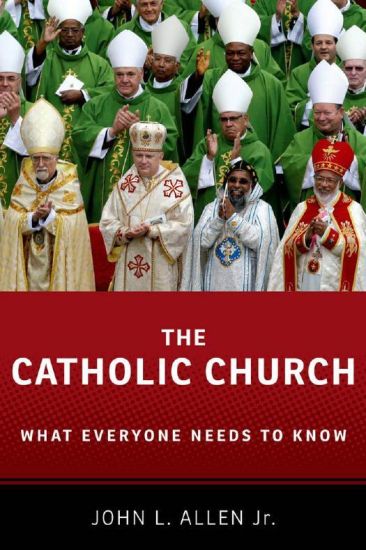
The Catholic Church

The Catholic Church

John L. Allen

Oxford University Press Inc
2014
nidottu
Roman Catholicism stands at a crossroads, a classic ''best of times, worst of times'' moment. On the one hand, the Catholic Church remains by far the largest branch of the worldwide Christian family, and is growing at a remarkable clip. Yet the Church has also been rocked by a series of scandals related to the sexual abuse of minors by clergy, and, even more devastating, the cover-up by the Church hierarchy. The decade-long crisis has taken a massive financial toll, but the blow to both the internal morale and the external moral standing of the Church has been even steeper. Today, the Church has enormous residual strength and exciting future prospects, but also faces steep internal and external challenges. The question of ''whither Catholicism'' is of vital public relevance, for believers and non-believers alike. In The Catholic Church: What Everyone Needs to Know, John L. Allen, Jr., one of the world's leading authorities on the Vatican, offers an authoritative and accessible guide to the past, present, and future of the Church. This updated edition includes a new chapter on the resignation of Pope Benedict XVI, the election of Pope Francis, and his extraordinary tenure thus far.
Set Theory

Set Theory

John L. Bell

Oxford University Press
2011
nidottu
This third edition, now available in paperback, is a follow up to the author's classic Boolean-Valued Models and Independence Proofs in Set Theory,. It provides an exposition of some of the most important results in set theory obtained in the 20th century: the independence of the continuum hypothesis and the axiom of choice. Aimed at graduate students and researchers in mathematics, mathematical logic, philosophy, and computer science, the third edition has been extensively updated with expanded introductory material, new chapters, and a new appendix on category theory. It covers recent developments in the field and contains numerous exercises, along with updated and increased coverage of the background material. This new paperback edition includes additional corrections and, for the first time, will make this landmark text accessible to students in logic and set theory.
Galileo

Galileo

John L. Heilbron

Oxford University Press
2012
nidottu
Just over four hundred years ago, in 1610, Galileo published the Siderius nuncius, or Starry Messenger, a 'hurried little masterpiece' in John Heilbron's words. Presenting to the world his remarkable observations using the recently invented telescope - of the craters of the moon, and the satellites of Jupiter, observations that forced changes to perceptions of the perfection of the heavens and the centrality of the Earth - the appearance of the little book is regarded as one of the greatest moments in the history of science. It was also a point of change in the life of Galileo himself, propelling him from professor to prophet. But this is not the biography of a mathematician. Certainly he spent the first half of his career as a professor of mathematics and has been called 'the divine mathematician'. Yet he was no more (or less) a mathematician than he was a musician, artist, writer, philosopher, or gadgeteer. This fresh lively new biography of the 'father of science' paints a rounded picture of Galileo, and places him firmly within the rich texture of late Renaissance Florence, Pisa, and Padua, amid debates on the merits of Ariosto and Tasso, and the geometry of Dante's Inferno - debates in which the young Galileo played an active role. Galileo's character and career followed complex paths, moving from the creative but cautious humanist professor to a 'knight errant, quixotic and fearless', with increasing enemies, and leading ultimately and inevitably to a clash with a pope who was a former friend.
What Everyone Needs to Know about Islam

What Everyone Needs to Know about Islam

John L. Esposito

Oxford University Press Inc
2011
sidottu
Since the terrorist attacks of September 11th, there has been an overwhelming demand for information about Islam, and recent events - the war in Iraq, terrorist attacks both failed and successful, debates throughout Europe over Islamic dress, and many others - have raised new questions in the minds of policymakers and the general public. This newly updated edition of What Everyone Needs to Know about Islam is the best single source for clearly presented, objective information about these new developments, and for answers to questions about the origin and traditions of Islam. Editor of The Oxford Encyclopedia of Modern Islam and The Oxford History of Islam, and author of The Future of Islam and many other acclaimed works, John L. Esposito is one of America's leading authorities on Islam. This brief and readable book remains the first place to look for up-to-date information on the faith, customs, and political beliefs of the more than one billion people who call themselves Muslims.
The Future of Islam

The Future of Islam

John L. Esposito

Oxford University Press Inc
2013
nidottu
John L. Esposito is one of America's leading authorities on Islam. In this brilliant portrait of Islam today-- and tomorrow-- he draws on a lifetime of thought and research to provide an accurate, richly nuanced, and revelatory account of the fastest growing religion in the world. Here Esposito explores the major questions and issues that face Islam in the 21st century and that will deeply affect global politics: Is Islam compatible with modern notions of democracy, rule of law, gender equality, and human rights? How representative and widespread is Islamic fundamentalism and the threat of global terrorism? Can Muslim minority communities be loyal citizens in America and Europe? In the midst of these questions Esposito places an important emphasis on the issue of Islamophobia, the threat it poses, and its vast impact on politics and society in the US and Europe. He also turns the mirror on the US and Europe and paints a revealing portrait of how we appear to Muslims. Recent decades have brought extraordinary changes in the Muslim world, and in addressing these issues, Esposito paints a complex picture of Islam in all its diversity--a picture of urgent importance as we face the challenges of the coming century.
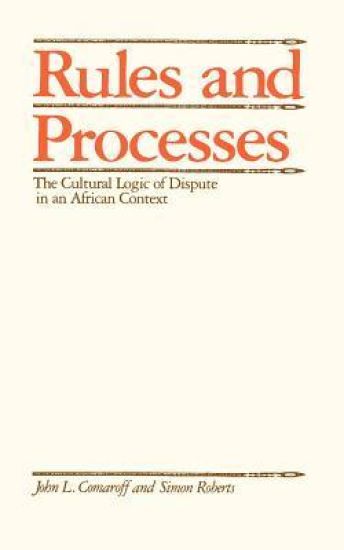
Rules and Processes

Rules and Processes

John L. Comaroff

University of Chicago Press
1986
nidottu
Rules and Processes is at once a compelling essay in social theory and a pathbreaking ethnography of dispute in an African society. On the basis of a sensitive study of the Tswana of southern Africa, John Comaroff and Simon Roberts challenge most of the orthodoxies of legal anthropology. They argue that the social world, and the dispute processes that occur within it, are given form and meaning by a dialectical relationship between sociocultural structures and individual experience. The authors explore in a novel way the relations between culture and ideology, system and practice, social action and human intention. They develop a model that lays bare the form and content of legal and political discourse in all its variations--a model that accounts for the outcome of conflict processes and explains why the Tswana, like people in other cultures, conceive of their world in an apparently contradictory manner--as rule-governed yet inherently open to pragmatic individualism; orderly yet inherently fluid and shifting. Rules and Processes offers a fresh and persuasive approach to our understanding of the dialectics of social life. A work of impressive scholarship in which theoretical sophistication and ethnographic richness are convincingly matched.--Ian Hamnett, Times Higher Education Supplement.
Of Revelation and Revolution, Volume 2

Of Revelation and Revolution, Volume 2

John L. Comaroff; Jean Comaroff

University of Chicago Press
1997
sidottu
In the second of a proposed three-volume study, Jean and John Comaroff continue their exploration of colonial evangelism and modernity in South Africa. Moving beyond the opening moments of the encounter between the British Nonconformist missions and the Southern Tswana peoples, this volume explores the complex transactions - both epic and ordinary - among the people along this colonial frontier. The authors trace many of the major themes of 20th-century South African history back to these formative encounters. The relationship between the British evangelists and the Southern Tswana engendered complex exchanges of goods, signs, and cultural markers that shaped not only African existence but also bourgeois modernity "back home" in England. The book demonstrates how the colonial attempt to "civilize" Africa set in motion a dialectical process that refashioned the everyday lives of all those drawn into its purview, creating hybrid cultural forms and potent global forces which persist in the postcolonial age.
Of Revelation and Revolution, Volume 2

Of Revelation and Revolution, Volume 2

John L. Comaroff; Jean Comaroff

University of Chicago Press
1997
nidottu
In the second of a proposed three-volume study, Jean and John Comaroff continue their exploration of colonial evangelism and modernity in South Africa. Moving beyond the opening moments of the encounter between the British Nonconformist missions and the Southern Tswana peoples, this volume explores the complex transactions - both epic and ordinary - among the people along this colonial frontier. The authors trace many of the major themes of 20th-century South African history back to these formative encounters. The relationship between the British evangelists and the Southern Tswana engendered complex exchanges of goods, signs, and cultural markers that shaped not only African existence but also bourgeois modernity "back home" in England. The book demonstrates how the colonial attempt to "civilize" Africa set in motion a dialectical process that refashioned the everyday lives of all those drawn into its purview, creating hybrid cultural forms and potent global forces which persist in the postcolonial age.
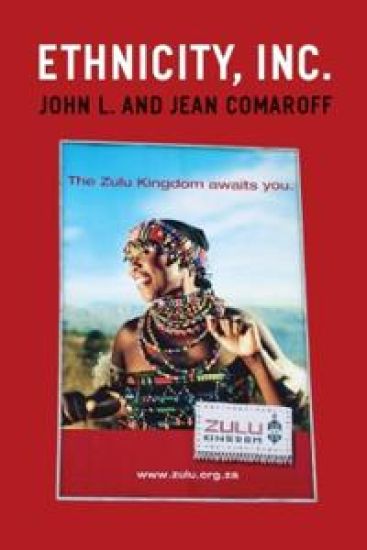
Ethnicity, Inc.

Ethnicity, Inc.

John L. Comaroff; Jean Comaroff

University of Chicago Press
2009
sidottu
In "Ethnicity, Inc." anthropologists John L. and Jean Comaroff analyze a new moment in the history of human identity: its rampant commodification. Through a wide-ranging exploration of the changing relationship between culture and the market, they address a pressing question: Wherein lies the future of ethnicity? Their account begins in South Africa, with the incorporation of an ethno-business in venture capital by a group of traditional African chiefs. But their horizons are global: Native American casinos; Scotland's efforts to brand itself; a Zulu ethno-theme park named Shakaland; a world religion declared to be intellectual property; a chiefdom made into a global business by means of its platinum holdings; San 'Bushmen' with patent rights potentially worth millions of dollars; nations acting as commercial enterprises; and the rapid growth of marketing firms that target specific ethnic populations are just some of the diverse examples that fall under the Comaroffs' incisive scrutiny. These phenomena range from the disturbing through the intriguing to the absurd. Through them, the Comaroffs trace the contradictory effects of neoliberalism as it transforms identities and social being across the globe. "Ethnicity, Inc." is a penetrating account of the ways in which ethnic populations are remaking themselves in the image of the corporation - while corporations coopt ethnic practices to open up new markets and regimes of consumption. Intellectually rigorous but leavened with wit, this is a powerful, highly original portrayal of a new world being born in a tectonic collision of culture, capitalism, and identity.
Ethnicity, Inc.

Ethnicity, Inc.

John L. Comaroff; Jean Comaroff

University of Chicago Press
2009
nidottu
In "Ethnicity, Inc." anthropologists John L. and Jean Comaroff analyze a new moment in the history of human identity: its rampant commodification. Through a wide-ranging exploration of the changing relationship between culture and the market, they address a pressing question: Wherein lies the future of ethnicity? Their account begins in South Africa, with the incorporation of an ethno-business in venture capital by a group of traditional African chiefs. But their horizons are global: Native American casinos; Scotland's efforts to brand itself; a Zulu ethno-theme park named Shakaland; a world religion declared to be intellectual property; a chiefdom made into a global business by means of its platinum holdings; San 'Bushmen' with patent rights potentially worth millions of dollars; nations acting as commercial enterprises; and the rapid growth of marketing firms that target specific ethnic populations are just some of the diverse examples that fall under the Comaroffs' incisive scrutiny. These phenomena range from the disturbing through the intriguing to the absurd. Through them, the Comaroffs trace the contradictory effects of neoliberalism as it transforms identities and social being across the globe. "Ethnicity, Inc." is a penetrating account of the ways in which ethnic populations are remaking themselves in the image of the corporation - while corporations coopt ethnic practices to open up new markets and regimes of consumption. Intellectually rigorous but leavened with wit, this is a powerful, highly original portrayal of a new world being born in a tectonic collision of culture, capitalism, and identity.
The Black-Tailed Prairie Dog

The Black-Tailed Prairie Dog

John L. Hoogland

University of Chicago Press
1995
sidottu
John L. Hoogland draws on 16 years of research at Wind Cave Na tional Park, South Dakota, in the United States, to provide this account of prairie dog social behaviour. Through comparisons with more than 300 other animal species, he offers new insights into basic theory in behavioural ecology and sociobiology. Hoogland documents interactions within, and among, families of prairie dogs to examine the advantages and disadvantages of coloniality. By addressing such topics as male and female reproductive success, inbreeding, kin recognition and infanticide, Hoogland offers a broad view of conflict and co-operation. Among his surprising findings is that prairie dog females sometimes suckle, and at other times kill, the offspring of close kin. Enhanced by more than 100 photographs, this book illuminates the social organization of a burrowing mammal and raises fundamental questions about current theory. It should be of interest not only to mammalogists and other vertebrate biologists, but also students of behavioural and evolutionary ecology.
The Black-Tailed Prairie Dog

The Black-Tailed Prairie Dog

John L. Hoogland

University of Chicago Press
1995
nidottu
John L. Hoogland draws on 16 years of research at Wind Cave Na tional Park, South Dakota, in the United States, to provide this account of prairie dog social behaviour. Through comparisons with more than 300 other animal species, he offers new insights into basic theory in behavioural ecology and sociobiology. Hoogland documents interactions within, and among, families of prairie dogs to examine the advantages and disadvantages of coloniality. By addressing such topics as male and female reproductive success, inbreeding, kin recognition and infanticide, Hoogland offers a broad view of conflict and co-operation. Among his surprising findings is that prairie dog females sometimes suckle, and at other times kill, the offspring of close kin. Enhanced by more than 100 photographs, this book illuminates the social organization of a burrowing mammal and raises fundamental questions about current theory. It should be of interest not only to mammalogists and other vertebrate biologists, but also students of behavioural and evolutionary ecology.
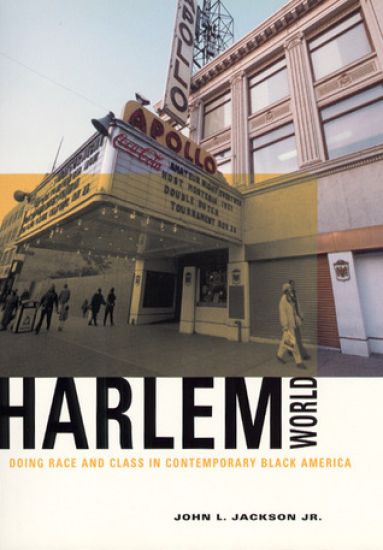
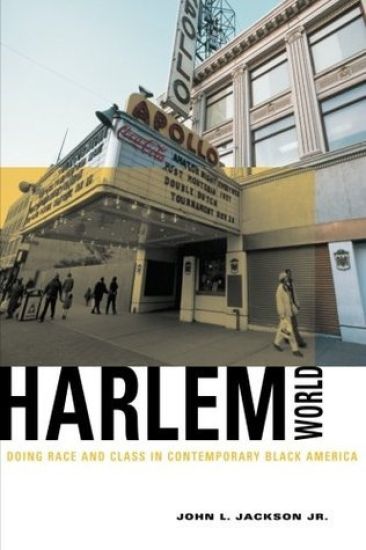
Harlemworld

Harlemworld

John L. Jackson Jr.

University of Chicago Press
2001
sidottu
Harlem is the historical centre of black culture and one of the most famous neighbourhoods in the world. Just the mention of its name brings to mind images of Langston Hughes, Billie Holiday, Duke Ellington and W.E.B. Du Bois. As a contemporary black enclave in northern Manhattan, it is also a common symbolic marker for the hard and fast boundaries separating the rich from the poor in our cities. Harlem is thought of as the quintessential black slum. But, as John L. Jackson, Jr. points out in this new book, Harlem is far more culturally and economically diverse than its caricature suggests. Many experts believe that black America consists of two geographically distinct populations: a neglected underclass living in hopeless urban poverty, and a more successful suburban middle class of college graduates and thriving professionals. Through extensive fieldwork and interviews with denizens of Harlem, Jackson explodes these presumptions. "Harlemworld" probes the everyday interactions of African Americans with their black coworkers, acquaintances, friends, neighbours and relatives. Jackson shows how their social networks are often more class stratified and varied than many social analysts believe. He proves that a socially and geographically bifurcated class model no longer works as the only guide to understanding black America. Ultimately, "Harlemworld" demonstrates how African Americans embody and interpret different class identities through their own behaviours and their assessments of each other. For the men and women of Harlem, racial identities are not simply inhabited, but enacted. At any given time, the way Harlemites speak, dress, walk or even stand can be linked to particular class positions within a hierarchy of socioeconomic possibilities. In Harlem, intraracial differences, be they embodied through dialect or fashion, striding gaits or slouching postures, are largely defined in folk theories that link social identities to everyday activities. Jackson argues that race in black America is something that African Americans practice - sometimes purposefully, sometimes inadvertently - as they navigate the class-variegated landscapes of their worlds.
Harlemworld

Harlemworld

John L. Jackson Jr.

University of Chicago Press
2003
nidottu
Harlem is one of the most famous neighbourhoods in the world - an historic symbol of both black cultural achievement and of the rigid boundaries separating the rich from the poor. But as this book shows, Harlem is far more culturally and economically diverse than its caricature suggests: through extensive fieldwork and interviews, John L. Jackson reveals a variety of social networks and class stratifications, and explores how African Americans interpret and perform different class identities in their everyday behaviour.
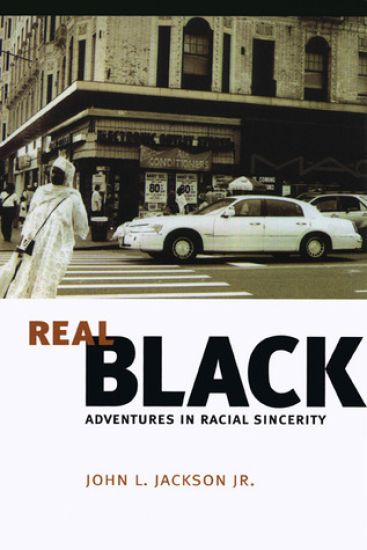
Real Black

Real Black

John L. Jackson Jr.

University of Chicago Press
2005
sidottu
New York's urban neighborhoods are full of young would-be emcees who aspire to "keep it real" and restaurants like Sylvia's famous soul food eatery that offer a taste of "authentic" black culture. In these and other venues, authenticity is considered the best way to distinguish the real from the phony, the genuine from the fake. But in "Real Black", John L. Jackson Jr. proposes a new model for thinking about these issues - racial sincerity. Jackson argues that authenticity caricatures identity as something imposed on people, imprisoning them within stereotypes: an African American high school student who excels in the classroom, for instance, might be dismissed as "acting white." Sincerity, on the other hand, as Jackson defines it, imagines authenticity as an incomplete measuring stick, an analytical model that attempts to deny people agency in their search for identity. Drawing on more than ten years of ethnographic research in and around New York City, Jackson offers a kaleidoscope of subjects and stories that directly and indirectly address how race is negotiated in today's world - including tales of book-vending numerologists, urban conspiracy theorists, corrupt police officers, mixed-race neo-Nazis, and gospel choirs forbidden to catch the Holy Ghost. Jackson records and retells their interconnected sagas, all the while attempting to reconcile these stories with his own crisis of identity and authority as an anthropologist terrified by fieldwork. Finding ethnographic significance where mere mortals see only bricks and mortar, his invented alter ego, Anthroman, takes to the streets, showing how race is defined and debated, imposed and confounded every single day.
Real Black

Real Black

John L. Jackson Jr.

University of Chicago Press
2005
nidottu
New York's urban neighborhoods are full of young would-be emcees who aspire to "keep it real" and restaurants like Sylvia's famous soul food eatery that offer a taste of "authentic" black culture. In these and other venues, authenticity is considered the best way to distinguish the real from the phony, the genuine from the fake. But in "Real Black", John L. Jackson Jr. proposes a new model for thinking about these issues - racial sincerity. Jackson argues that authenticity caricatures identity as something imposed on people, imprisoning them within stereotypes: an African American high school student who excels in the classroom, for instance, might be dismissed as "acting white." Sincerity, on the other hand, as Jackson defines it, imagines authenticity as an incomplete measuring stick, an analytical model that attempts to deny people agency in their search for identity. Drawing on more than ten years of ethnographic research in and around New York City, Jackson offers a kaleidoscope of subjects and stories that directly and indirectly address how race is negotiated in today's world - including tales of book-vending numerologists, urban conspiracy theorists, corrupt police officers, mixed-race neo-Nazis, and gospel choirs forbidden to catch the Holy Ghost. Jackson records and retells their interconnected sagas, all the while attempting to reconcile these stories with his own crisis of identity and authority as an anthropologist terrified by fieldwork. Finding ethnographic significance where mere mortals see only bricks and mortar, his invented alter ego, Anthroman, takes to the streets, showing how race is defined and debated, imposed and confounded every single day.