Kirjojen hintavertailu. Mukana 12 016 292 kirjaa ja 12 kauppaa.

Kirjahaku

Etsi kirjoja tekijän nimen, kirjan nimen tai ISBN:n perusteella.

1000 tulosta hakusanalla John R. Fitzpatrick

Genetic Programming

Genetic Programming

John R. Koza

Bradford Books
1992
pokkari
In this ground-breaking book, John Koza shows how this remarkable paradigm works and provides substantial empirical evidence that solutions to a great variety of problems from many different fields can be found by genetically breeding populations of computer programs. Genetic programming may be more powerful than neural networks and other machine learning techniques, able to solve problems in a wider range of disciplines. In this ground-breaking book, John Koza shows how this remarkable paradigm works and provides substantial empirical evidence that solutions to a great variety of problems from many different fields can be found by genetically breeding populations of computer programs. Genetic Programming contains a great many worked examples and includes a sample computer code that will allow readers to run their own programs.In getting computers to solve problems without being explicitly programmed, Koza stresses two points: that seemingly different problems from a variety of fields can be reformulated as problems of program induction, and that the recently developed genetic programming paradigm provides a way to search the space of possible computer programs for a highly fit individual computer program to solve the problems of program induction. Good programs are found by evolving them in a computer against a fitness measure instead of by sitting down and writing them.
What Is Landscape?

What Is Landscape?

John R. Stilgoe

MIT Press
2018
pokkari
A lexicon and guide for discovering the essence of landscape."Mr. Stilgoe does not ask that we take his book outdoors with us; he believes that reading and experiencing landscapes are activities that should be kept separate. But, as I learned in his book, the hollow storage area in a car driver's door was once a holster, the 'secure nesting place of a pistol.' I recommend you stow your copy there."-The Wall Street JournalLandscape, John Stilgoe tells us, is a noun. From the old Frisian language (once spoken in coastal parts of the Netherlands and Germany), it meant shoveled land: landschop. Sixteenth-century Englishmen misheard or mispronounced this as landskep, which became landskip, then landscape, designating the surface of the earth shaped for human habitation. In What Is Landscape? Stilgoe maps the discovery of landscape by putting words to things, zeroing in on landscape's essence but also leading sideways expeditions through such sources as children's picture books, folklore, deeds, antique terminology, out-of-print dictionaries, and conversations with locals. ("What is that?" "Well, it's not really a slough, not really, it's a bayou...") He offers a highly original, cogent, compact, gracefully written narrative lexicon of landscape as word, concept, and path to discoveries.What Is Landscape? is an invitation to walk, to notice, to ask: to see a sandcastle with a pinwheel at the beach and think of Dutch windmills-icons of triumph, markers of territory won from the sea; to walk in the woods and be amused by the Elizabethans' misuse of the Latin silvaticus (people of the woods) to coin the word savages; to see in a suburban front lawn a representation of the meadow of a medieval freehold.Discovering landscape is good exercise for body and for mind. This book is an essential guide and companion to that exercise-to understanding, literally and figuratively, what landscape is.
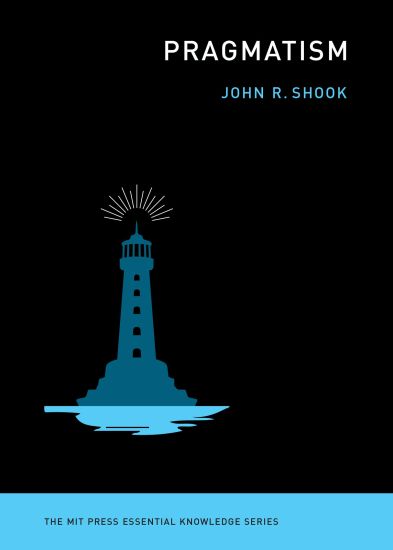
Pragmatism

Pragmatism

John R. Shook

MIT PRESS LTD
2023
nidottu
A concise, reader-friendly overview of pragmatism, the most influential school of American philosophical thought.Pragmatism, America’s homegrown philosophy, has been a major intellectual movement for over a century. Unlike its rivals, it reaches well beyond the confines of philosophy into concerns and disciplines as diverse as religion, politics, science, and culture. In this concise, engagingly written overview, John R. Shook describes pragmatism’s origins, concepts, and continuing global relevance and appeal. With attention to the movement’s original thinkers—Charles Sanders Peirce, William James, John Dewey, and George Herbert Mead—as well as its contemporary proponents, he explains how pragmatism thinks about what is real, what can be known, and what minds are doing. And because of pragmatism’s far-reaching impact, Shook shows how its views on reality, truth, knowledge, and cognition coordinate with its approaches to agency, sociality, human nature, and personhood.
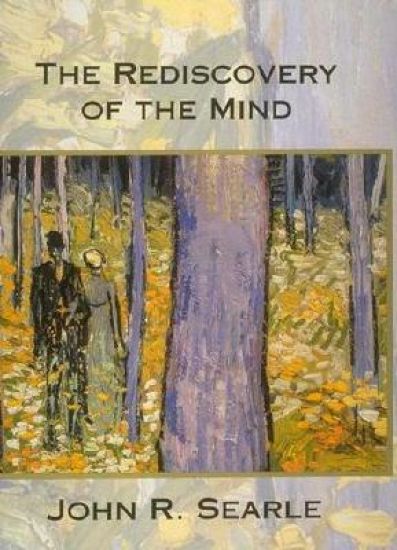
The Rediscovery of the Mind

The Rediscovery of the Mind

John R. Searle

Bradford Books
1992
pokkari
In this major new work, John Searle launches a formidable attack on current orthodoxies in the philosophy of mind. More than anything else, he argues, it is the neglect of consciousness that results in so much barrenness and sterility in psychology, the philosophy of mind, and cognitive science: there can be no study of mind that leaves out consciousness. What is going on in the brain is neurophysiological processes and consciousness and nothing more-no rule following, no mental information processing or mental models, no language of thought, and no universal grammar. Mental events are themselves features of the brain, "like liquidity is a feature of water."Beginning with a spirited discussion of what's wrong with the philosophy of mind, Searle characterizes and refutes the philosophical tradition of materialism. But he does not embrace dualism. All these "isms" are mistaken, he insists. Once you start counting types of substance you are on the wrong track, whether you stop at one or two. In four chapters that constitute the heart of his argument, Searle elaborates a theory of consciousness and its relation to our overall scientific world view and to unconscious mental phenomena. He concludes with a criticism of cognitive science and a proposal for an approach to studying the mind that emphasizes the centrality of consciousness to any account of mental functioning.In his characteristically direct style, punctuated with persuasive examples, Searle identifies the very terminology of the field as the main source of truth. He observes that it is a mistake to suppose that the ontology of the mental is objective and to suppose that the methodology of a science of the mind must concern itself only with objectively observable behavior; that it is also a mistake to suppose that we know of the existence of mental phenomena in others only by observing their behavior; that behavior or causal relations to behavior are not essential to the existence of mental phenomena; and that it is inconsistent with what we know about the universe and our place in it to suppose that everything is knowable by us.
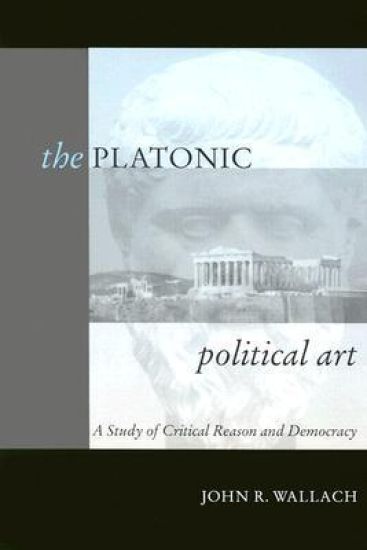
The Platonic Political Art

The Platonic Political Art

John R. Wallach

Pennsylvania State University Press
2001
pokkari
In this first comprehensive treatment of Plato’s political thought in a long time, John Wallach offers a "critical historicist" interpretation of Plato. Wallach shows how Plato’s theory, while a radical critique of the conventional ethical and political practice of his own era, can be seen as having the potential for contributing to democratic discourse about ethics and politics today.The author argues that Plato articulates and "solves" his Socratic Problem in his various dialogues in different but potentially complementary ways. The book effectively extracts Plato from the straightjacket of Platonism and from the interpretive perspectives of the past fifty years—principally those of Karl Popper, Leo Strauss, Hannah Arendt, M. I. Finley, Jacques Derrida, and Gregory Vlastos.The author’s distinctive approach for understanding Plato—and, he argues, for the history of political theory in general—can inform contemporary theorizing about democracy, opening pathways for criticizing democracy on behalf of virtue, justice, and democracy itself.
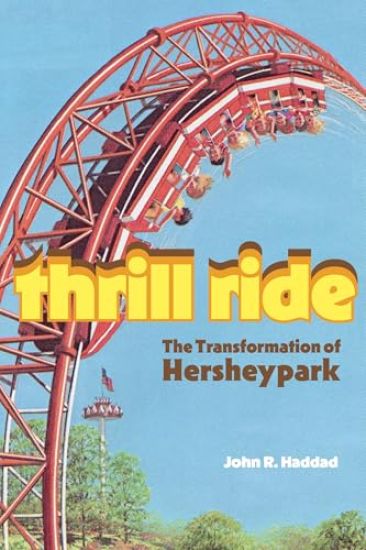
Thrill Ride

Thrill Ride

John R. Haddad

Pennsylvania State University Press
2025
pokkari
More than an amusement park linked to a chocolate empire, Hershey Park in its early years was an extension of industrialist Milton Hershey’s paternalistic capitalism. Hershey sought to avoid the labor strife seen in other industries by giving his workers a better deal. He provided employees with affordable homes, free schools, utility subsidies, and municipal services as well as amenities including a theater, library, and amusement park. In exchange, he expected hard work, loyalty, and no strikes. Eventually the Hershey Company faced intense market pressure from its competitor Mars and discontinued the services and amenities the community had come to expect. By the 1960s, the park had become so run-down that Hershey officials decided it needed a redesign, and they refashioned it into a Disney-style theme park. What had been an old-fashioned, pay-as-you-go amusement park for chocolate workers, their families, and the community would become a major mid-Atlantic attraction. Haddad’s engaging and accessible social history explores how this remodel of the park strategically used symbols of the past and future to help the Hershey community cope with change. The new park guided patrons from depictions of the Old World through subsequent eras, culminating in a space exemplifying modernity, with colossal steel structures and sophisticated thrill rides.Drawing on deep archival work and personal interviews, Haddad charts how memory and feelings are tied to locations and how people respond when change threatens those locations.
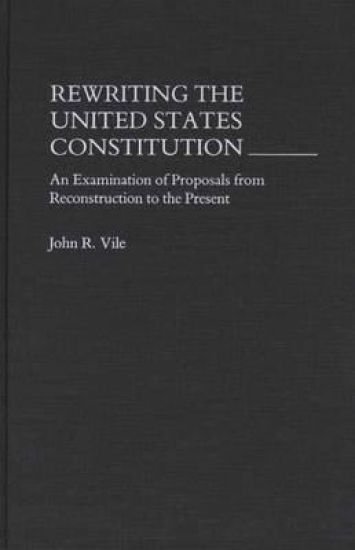
Rewriting the United States Constitution

Rewriting the United States Constitution

John R. Vile

Praeger Publishers Inc
1991
sidottu
Since the Reconstruction period, there have been over forty proposals to rewrite the U.S. Constitution. John Vile's unique historical study analyzes all of these proposals within the framework of the constitutional amending process. In each case Vile examines the substance of the proposal, its goals and methods, the response to the proposal, and its overall influence--concluding that the Constitution in its current form faces no immediate threats. He finds no convincing cases for a new Constitution and believes that most perceived defects can be remedied with less drastic measures. The study illuminates issues of constitutional change, stressing the importance of understanding alternative forms of government and the basis for their support. While immediate change is not likely, constitutional change will ultimately come, and when it does, earlier criticisms and suggestions may help to set the agenda. Proposals for change are critiques which help to identify strengths and weaknesses in the current system. In addition, examinations of past proposals reveal how people view the Constitution during crises. This work will be particularly useful for political scientists, historians, lawyers, and individuals interested in, or involved with, efforts for constitutional change.
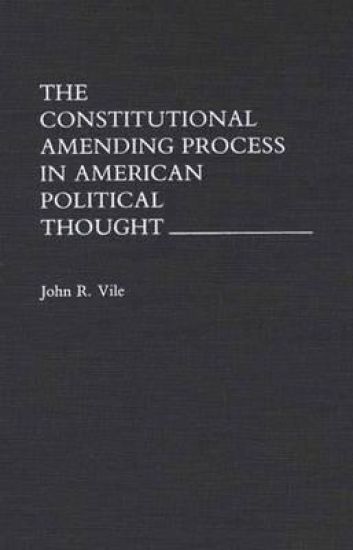
The Constitutional Amending Process in American Political Thought
This book is the first full-length work to present debates over the constitutional amending process as a perennial theme in American political thought. Beginning with a discussion of the views of political philosophers, publicists, and legal commentators who may have influenced the views of legal change held by the American Founding Fathers, the work proceeds to look at the historical influences on and discussions surrounding the amending process that was incorporated into Article V of the U.S. Constitution. The reader will gain a new respect for the way the amending process has served and still serves as a safety valve for constitutional change in the United States without permitting ill-considered or hastily conceived modifications.This work will be of interest to political scientists, historians, and students of American studies and legal history.
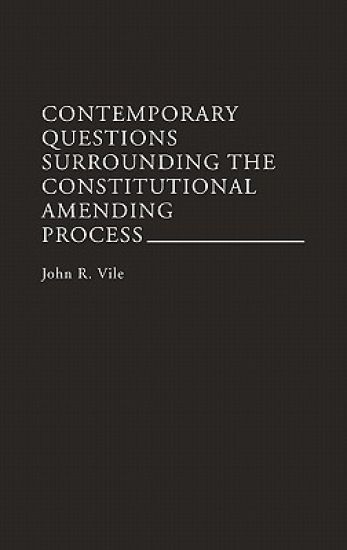
Contemporary Questions Surrounding the Constitutional Amending Process
This study examines contemporary questions surrounding the process by which the U.S. Constitution can be amended. Beginning with a description of the mechanism and history of the constitutional amending process in America, the work considers five major questions surrounding the amending process. The question of justiciability: whether the courts should have authority to settle amending issues or whether they are political questions beyond the court's purview. The question of standards: what standards of review should be used. The question of safety: the safety of invoking the constitutional convention mechanism. The question of exclusivity: whether there are legal means of changing the Constitution short of Article V. And the question of limitations: whether there are any unstated constitutional limits on the amending process.
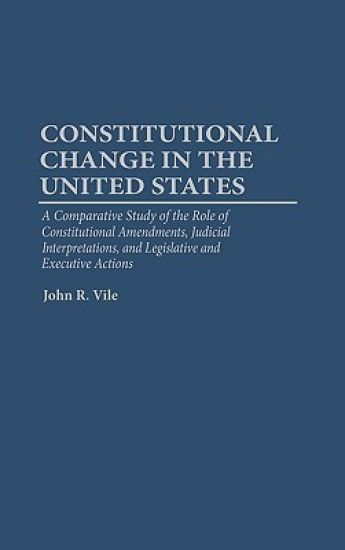
Constitutional Change in the United States

Constitutional Change in the United States

John R. Vile

Praeger Publishers Inc
1994
sidottu
The processes of constitutional change in America are particularly difficult to understand because of the constant interaction between the constitutional document of 1787 and the wider set of understandings and practices surrounding that document. This work is the first to examine systematically the relationship between changes initiated by constitutional amendment and changes initiated by judicial interpretations or actions of the two elected branches of government. By examining and comparing all three mechanisms of constitutional revision, Vile offers a more complex and dynamic analysis of this important constitutional issue than can be found elsewhere in the literature.
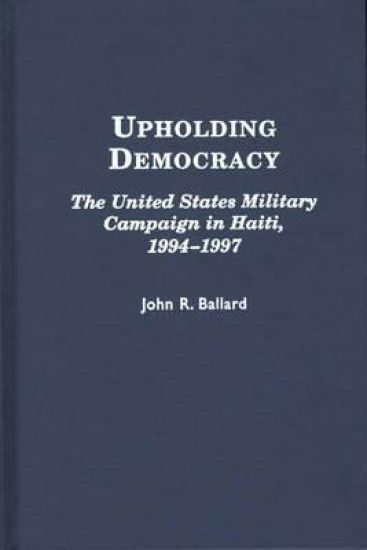
Upholding Democracy

Upholding Democracy

John R. Ballard

Praeger Publishers Inc
1998
sidottu
An inside account of the U.S. military operation to restore Haitian President Jean-Bertrand Aristide to power in 1994, this study demonstrates progress made in joint warfighting in the period following the end of the Cold War, including improvements in command and control, joint force integration, and techniques for successful humanitarian operations.^L With ties to Haiti that date back over one hundred years, the United States could not stand by as a coup ousted Aristide in 1990. When the coup leaders refused to leave peacefully, forces authorized by the U.N. Security Council deployed toward Haiti. Diplomatic efforts by former President Carter, General Powell, and Senator Nunn eventually obtained the cooperation of coup leaders in the final hour, and on September 19, 1994, the first of over 50,000 U.S. military personnel arrived to ensure security, facilitate Aristide's return, and professionalize the Haitian security forces.^L General Henry Shelton, later the Chairman of the Joint Chiefs of Staff, commanded the joint task force that entered Haiti under Chapter 7 of the U.N. Charter during one of the few recent instances of U.N. intervention without the concurrence of the host nation. While the operation was unique, its innovations will benefit planners for decades as humanitarian actions around the world continue to be important. This book illustrates the challenges of remaining engaged in support of the United Nations and of conducting modern military operations, which are highly dependent on close interagency and multinational coordination.
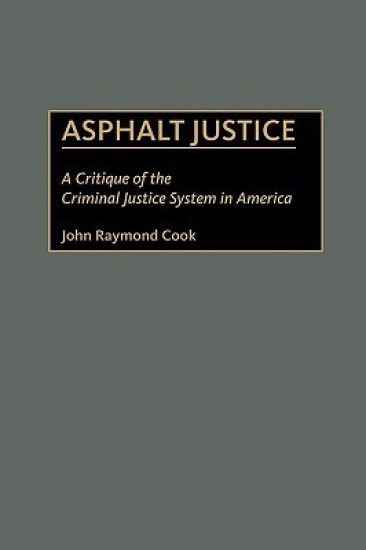
Asphalt Justice

Asphalt Justice

John R. Cook

Praeger Publishers Inc
2000
sidottu
The current emphasis on get tough approaches to crime has had and will continue to have a disastrous impact on society as a whole. Cook, who has worked extensively in various capacities throughout the criminal justice system, argues that the failure to encourage treatment and rehabilitation is extremely shortsighted and serves only to postpone societal ills. He examines the prison experience as a psychological experience and suggests that restructuring the prison environment to focus on changing the behavior of criminals will ultimately be more cost effective and more beneficial to society. Approaching the problem of crime in a coordinated and systematic way will produce more results than the current reliance on political posturing and media sound bites.Recent formulation of crime policy often seems driven by statistically rare and exceptional events, and the new laws passed in response to sensational events have actually resulted in an ever-growing and increasingly violent criminal underclass. Similarly, the trend toward incarceration and extreme punishment as the primary means of correction has led to unfortunate consequences. Overcrowding, massive prison construction, and the siphoning of funds from the rest of the public sector are all get tough byproducts. This study proposes solutions to current systemic problems aimed at those interested in trying to develop plans or treatment strategies within correctional settings.
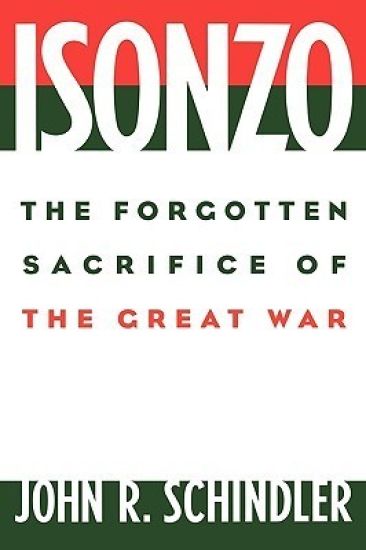
Isonzo

Isonzo

John R. Schindler

Praeger Publishers Inc
2001
sidottu
This is the first account in English of a much-overlooked, but important, First World War battlefront located in the mountains astride the border between Italy and the Austro-Hungarian Empire. Not well known in the West, the battles of Isonzo were nevertheless ferocious, and compiled a record of bloodletting that totaled over 1.75 million for both sides. In sharp contrast to claims that neither the Italian nor the Austrian armies were viable fighting forces, Schindler aims to bring the terrible sacrifices endured by both armies back to their rightful place in the history of 20th century Europe. The Habsburg Empire, he contends, lost the war for military and economic reasons rather than for political or ethnic ones. Schindler's account includes references to remarkable personalities such as Mussolini; Tito; Hemingway; Rommel, and the great maestro Toscanini. This Alpine war had profound historical consequences that included the creation of the Yugoslav state, the problem of a rump Austrian state looking to Germany for leadership, and the traumatic effects on a generation of young Italian men who swelled the ranks of the fascists. After nearly a century, Isonzo can assume its proper place in the ranks of the tragic Great War clashes, alongside Verdun, the Somme, and Passchendaele.
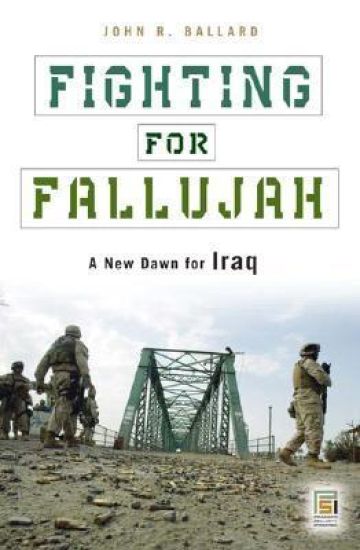
Fighting for Fallujah

Fighting for Fallujah

John R. Ballard

Praeger Publishers Inc
2006
sidottu
The vicious urban battle for the insurgent-controlled city of Fallujah in November 2004 was a turning point in the ongoing counterinsurgency campaign in Iraq. It demonstrated the resolve of the Iraqi government to fight terrorists domestically, using both multinational and Iraqi forces, and its results included a returning population willing to vote in national elections held in January 2005. Ballard tells the story of the Fallujah campaign, beginning with the horrific deaths of the American Blackwater contractors in March 2004, and continuing through the battle, the painstaking reconstruction of the city, and the precedent-setting elections that followed. Based on first-person accounts, interviews, and official documents, this book gives readers rare insight into the significant actions and innovative techniques of the year-long fight for the city.Opening with a historical overview of the initial crisis in Fallujah and the similar coalition battle in Najaf, the book includes a detailed account of the planning and execution of the operation to retake the city. Finally, it describes the political and military lessons proven in Fallujah, including coalition force integration, information operations, urban combat techniques, interagency coordination and innovative reconstruction procedures. This is the story of real combat in Iraq—told in a way every American should understand.
Education at the Edge of Empire

Education at the Edge of Empire

John R. Gram; Theodore Jojola

University of Washington Press
2015
sidottu
For the vast majority of Native American students in federal Indian boarding schools at the turn of the twentieth century, the experience was nothing short of tragic. Dislocated from family and community, they were forced into an educational system that sought to erase their Indian identity as a means of acculturating them to white society. However, as historian John Gram reveals, some Indian communities on the edge of the American frontier had a much different experience—even influencing the type of education their children received. Shining a spotlight on Pueblo Indians' interactions with school officials at the Albuquerque and Santa Fe Indian Schools, Gram examines two rare cases of off-reservation schools that were situated near the communities whose children they sought to assimilate. Far from the federal government's reach and in competition with nearby Catholic schools for students, these Indian boarding school officials were in no position to make demands and instead were forced to pick their cultural battles with nearby Pueblo parents, who visited the schools regularly. As a result, Pueblo Indians were able to exercise their agency, influencing everything from classroom curriculum to school functions. As Gram reveals, they often mitigated the schools' assimilation efforts and assured the various pueblos' cultural, social, and economic survival.Greatly expanding our understanding of the Indian boarding school experience, Education at the Edge of Empire is grounded in previously overlooked archival material and student oral histories. The result is a groundbreaking examination that contributes to Native American, Western, and education histories, as well as to borderland and Southwest studies. It will appeal to anyone interested in knowing how some Native Americans were able to use the typically oppressive boarding school experience to their advantage.
Education at the Edge of Empire

Education at the Edge of Empire

John R. Gram; Theodore Jojola

University of Washington Press
2016
pokkari
For the vast majority of Native American students in federal Indian boarding schools at the turn of the twentieth century, the experience was nothing short of tragic. Dislocated from family and community, they were forced into an educational system that sought to erase their Indian identity as a means of acculturating them to white society. However, as historian John Gram reveals, some Indian communities on the edge of the American frontier had a much different experience—even influencing the type of education their children received. Shining a spotlight on Pueblo Indians' interactions with school officials at the Albuquerque and Santa Fe Indian Schools, Gram examines two rare cases of off-reservation schools that were situated near the communities whose children they sought to assimilate. Far from the federal government's reach and in competition with nearby Catholic schools for students, these Indian boarding school officials were in no position to make demands and instead were forced to pick their cultural battles with nearby Pueblo parents, who visited the schools regularly. As a result, Pueblo Indians were able to exercise their agency, influencing everything from classroom curriculum to school functions. As Gram reveals, they often mitigated the schools' assimilation efforts and assured the various pueblos' cultural, social, and economic survival.Greatly expanding our understanding of the Indian boarding school experience, Education at the Edge of Empire is grounded in previously overlooked archival material and student oral histories. The result is a groundbreaking examination that contributes to Native American, Western, and education histories, as well as to borderland and Southwest studies. It will appeal to anyone interested in knowing how some Native Americans were able to use the typically oppressive boarding school experience to their advantage.
Presidential Impeachment

Presidential Impeachment

John R. Labovitz

Yale University Press
1978
sidottu
In this thorough and thoughtful examination of the constitutional issues involved in the impeachment of a president, Labovitz, a lawyer who served on the impeachment inquiry staff of the House Judiciary Committee in 1974, incorporates the Nixon experience into American history over the last two hundred years.
Common Landscape of America, 1580-1845

Common Landscape of America, 1580-1845

John R. Stilgoe

Yale University Press
1983
pokkari
“A first-rate introduction to a still largely extant North America away from the great cities. This 400-page documentary by a dedicated exploring scholar explains how and why the landscape changed between the times of the early Spanish settlers and the impact of industrialization.”—House and Garden“A remarkable book. John Stilgoe has provided us with a panorama of American land development that is unique in the literature of this filed. In the process he has sharpened the reader’s perception of the historic struggle between those who would tend the land and those who would exploit it, thus making a significant statement about issues in the forefront at the present day. Stilgoe’s global vision over time, combined with his remarkable facility for involving a great variety of elements into one coherent system of thought and feeling, makes this a deeply important and timely work.”—Edmund N. Bacon“Recalls how Europeans shaped this country’s landscape out of wilderness and, by the way, helped to create our sense of beauty, comfort, and appropriateness…A book that will change the way its readers look about them.”—The New Yorker“Focusing on vernacular design and its evolution, Stilgoe effectively demonstrates how builders (rather than professional designers) passed on their traditions from one generation to the next—in so doing shaping America’s enduring attitudes towards landscape. An original and fascinating study.”—H. Ward Jandl, Library JournalWinner of the 1982 Francis Parkman Prize for Literary Distinction in the Writing of History.
Borderland

Borderland

John R. Stilgoe

Yale University Press
1990
pokkari
This fascinating “prehistory” of the American Suburb traces its evolution from the mid-1800’s to the onset of World War II. Using a rich array of contemporary written and pictorial sources, prize-winning historian John R. Stilgoe guides us through the early suburbs of Manhattan, Boston, Chicago, and other cities, showing us not only how they looked but what life was like for the men and women who lived there. “In chronicling this great exodus and its impact—on culture, women architecture, and myriad other aspects of American society—Stilgoe displays with, scholarship, and insight, as well as delight in searching out meanings in his sources…The book itself is handsome and well illustrated, blessed with a lively text, saturated with evocative and vivid detail.”—David Slovic, Philadelphia Inquirer“Stilgoe’s research is thorough, his approach original and engaging, and his book a delight to read, filled with illustrations—pictorial and verbal—that help illustrate the phenomenon more clearly and deeply.”—Merle Rubin, Christians Science Monitor“A provocative look at American culture…Borderland makes serious social history accessible and engaging.”—Caryn James, New York Times“Borderland offers a fresh perspective on the zone between rural space and urban residential rings, and it challenges our assumptions about what constitutes a good life.”—Kenneth Jackson, Progressive ArchitectureJohn R. Stilgoe is the Robert & Lois Orchard Professor in the History of Landscape at Harvard University. He is also the author of Common Landscape of American, 1580 to 1845 and Metropolitan Corridor. Railroads and the American Scene.