Kirjojen hintavertailu. Mukana 11 699 587 kirjaa ja 12 kauppaa.

Kirjahaku

Etsi kirjoja tekijän nimen, kirjan nimen tai ISBN:n perusteella.

1000 tulosta hakusanalla Jonathan Edwards

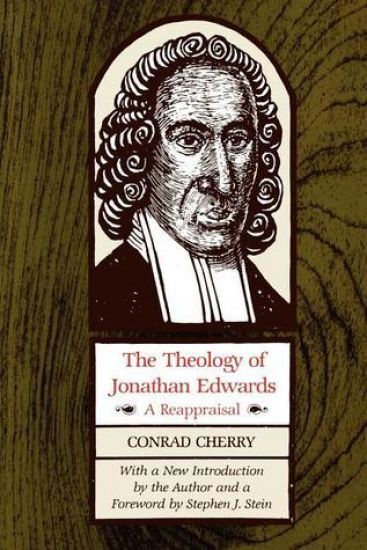
The Theology of Jonathan Edwards

The Theology of Jonathan Edwards

Conrad Cherry

Indiana University Press
1990
pokkari
" . . . the Edwards of Cherry sits for a[n] . . . intellectual portrait, done with concepts as colors and with reason as the brush. It is a . . . picture . . . faithfully and competently drawn." —New York Times Book Review, 1967 " . . . this is a very good book. . . . It stresses the integral relationship of heart and mind, intellect and will throughout Edwards. . . . an important book . . . required reading for any student of Edwards." —Church History, 1967
The Philosophy of Jonathan Edwards

The Philosophy of Jonathan Edwards

Stephen H. Daniel

Indiana University Press
1994
sidottu
"In this challenging work, Daniel draws on the semiotics of Foucault, Kristeva, and Peirce to explore Edwards's typology. . . . elegant and important . . . " —Library Journal "A provocative and at times brilliant reinterpretation of Edwards . . . " —Religious Studies Review " . . . a comprehensive analysis and redefinition of the thought of Jonathan Edwards." —Peirce Project Newsletter " . . . a new foundation for the study of Edwards's thought and rhetoric." —Wilson H. Kimnach ". . . this is a superb and important book, one that deserves to be widely read and vigorously discussed." —Transactions of the Charles S. Pierce Society ". . . Daniel's work ought . . . to be required reading among the Edwards guild, for it provides perhaps the best philosophical introduction in English to Edward's major writings." —Church History Drawing on the semiotic work of Peirce, Foucault, and Kristeva, Stephen Daniel shows how the Renaissance theory of signatures provides Edwards and his contemporaries with a powerful alternative to the ideas of Descartes and Locke.
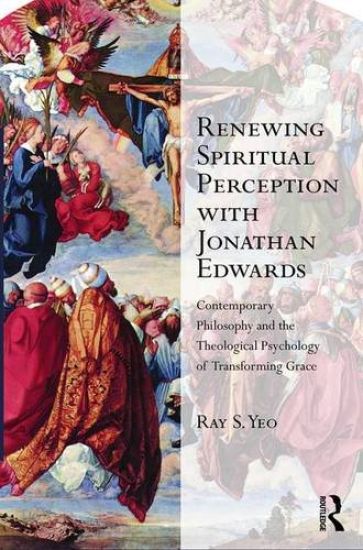
Renewing Spiritual Perception with Jonathan Edwards
Jonathan Edwards’ theologically sophisticated psychology of grace remains one of the deepest and most fertile theological psychologies in the Protestant tradition. The heart of his account lies in his foundational doctrine of spiritual perception where he locates the psychological core of the engraced Christian life. This work revisits Edwards’ doctrine from the perspective of recent work in the philosophy of emotions and other related philosophical sub-disciplines. The aim is to recover this often neglected theme in contemporary theology and renew it by bringing Edwards’ theological insights into conversation with various spheres of contemporary philosophical discussion. The account of spiritual perception that emerges from this interdisciplinary dialogue is one that seeks to revise, update and deepen Edwards’ own thinking on the matter in five major ways. The book concludes by arguing that the capacity for spiritual and emotional perception of the supreme good is grounded upon a wisdom-like seminal virtue centred upon the incarnate Christ (i.e., Christocentric wisdom). Such wisdom, on the renewed account, is considered the psychological core of transforming grace and the foundational basis upon which all other Christian virtues are formed.
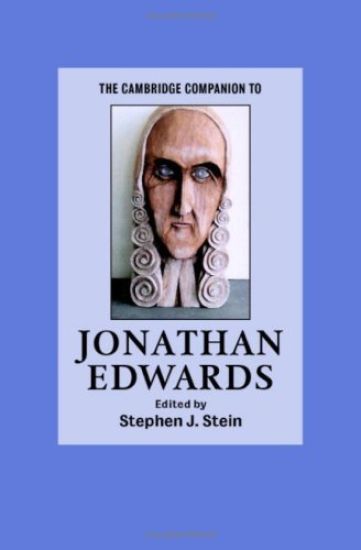
The Cambridge Companion to Jonathan Edwards

The Cambridge Companion to Jonathan Edwards

Stephen J. Stein

Cambridge University Press
2006
pokkari
Long recognized as 'America's theologian', Jonathan Edwards (1703–1758) is seen as instrumental in the Great Awakening of the 1740s that gripped much of New England and that laid the groundwork for an American Protestant religious identity. This Cambridge Companion offers a general, comprehensive introduction to Jonathan Edwards and examines his life and works from various disciplinary perspectives including history, literature, theology, religious studies, and philosophy. The book consists of seventeen chapters written by leading religious scholars, historians and literary critics on Edwards' life, work, and legacy. The Companion will be an invaluable aid to teachers and scholars and will be imminently accessible to those just encountering Edwards for the first time.
The Cambridge Companion to Jonathan Edwards

The Cambridge Companion to Jonathan Edwards

Stephen J. Stein

Cambridge University Press
2006
sidottu
Long recognized as 'America's theologian', Jonathan Edwards (1703–1758) is seen as instrumental in the Great Awakening of the 1740s that gripped much of New England and that laid the groundwork for an American Protestant religious identity. This Cambridge Companion offers a general, comprehensive introduction to Jonathan Edwards and examines his life and works from various disciplinary perspectives including history, literature, theology, religious studies, and philosophy. The book consists of seventeen chapters written by leading religious scholars, historians and literary critics on Edwards' life, work, and legacy. The Companion will be an invaluable aid to teachers and scholars and will be imminently accessible to those just encountering Edwards for the first time.
Pentecostal Theology and Jonathan Edwards
This volume brings ‘America’s theologian’ and one of the fastest growing forms of Christianity into dialogue. Edwards is a fruitful source for Pentecostal investigation for historical and theological reasons. Edwards and Pentecostals descend from a common historical tradition—North American Evangelicalism. From revivalism and religious/charismatic experience to pneumatology they also share common theological interests. Though sharing a common history and core theological concerns, no critical conversation between Pentecostals and Edwards and their fields of scholarship has occurred. This is the first volume that provides Pentecostal readings of Edwards’ theology that contribute to Pentecostal theology and Edwards scholarship. The contributing essays offer examination of affections and the Spirit, God and Salvation, Church and culture; and mission and witness.
Pentecostal Theology and Jonathan Edwards
This volume brings ‘America’s theologian’ and one of the fastest growing forms of Christianity into dialogue. Edwards is a fruitful source for Pentecostal investigation for historical and theological reasons. Edwards and Pentecostals descend from a common historical tradition—North American Evangelicalism. From revivalism and religious/charismatic experience to pneumatology they also share common theological interests. Though sharing a common history and core theological concerns, no critical conversation between Pentecostals and Edwards and their fields of scholarship has occurred. This is the first volume that provides Pentecostal readings of Edwards’ theology that contribute to Pentecostal theology and Edwards scholarship. The contributing essays offer examination of affections and the Spirit, God and Salvation, Church and culture; and mission and witness.
The Philosophical Theology of Jonathan Edwards

The Philosophical Theology of Jonathan Edwards

Sang Hyun Lee

Princeton University Press
2000
pokkari
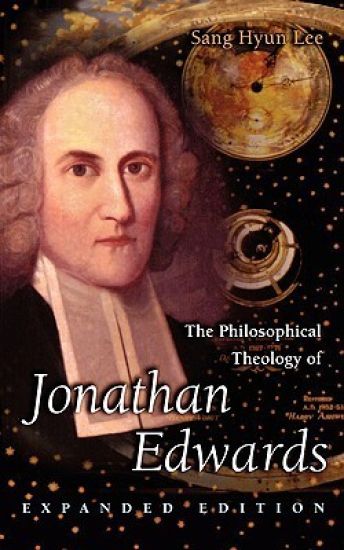
This book demonstrates the originality and coherence of Jonathan Edwards' philosophical theology using his dynamic reconception of reality as the interpretive key. The author argues that what underlies Edwards' writings is a radical shift from the traditional Western metaphysics of substance and form to a new conception of the world as a network of dispositions: active and abiding principles that possess reality apart from their manifestations in actions and events. Edwards' dispositional ontology enables him to restate the Augustinian-Calvinist tradition in theology in a strikingly modern philosophical framework. A prime example of Edwards' innovative reconstruction in philosophical theology is his conception of God as both eternal actuality and a disposition to repeat that actuality within God and also through creation. This view is a compelling alternative to the traditional Western doctrine of God as changeless actuality, on the one hand, and the recent process theologians' excessive stress on God's involvement in change, on the other. Edwards' achievement was that he saw dynamic movement as essential to God's own life without compromising the traditional Christian tenets of God's prior actuality and transcendence. The author of this volume also explicates the way in which Edwards' dynamic reconception of reality informs his theories of imagination, aesthetic perception, the knowledge of God, and the meaning of history. This expanded edition includes a new preface and a new appendix titled "Jonathan Edwards on Nature."
The Princeton Companion to Jonathan Edwards
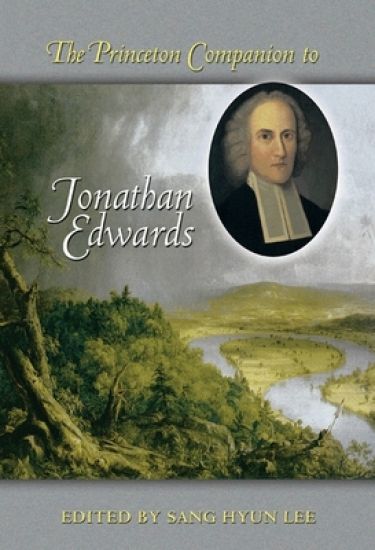
Jonathan Edwards (1703–1758) is widely recognized as one of the greatest philosopher-theologians America has ever produced, and recent years have seen a remarkable increase in research on his writings. To date, however, there has been no single authoritative volume that introduces and interprets the key aspects of Edwards' thought as a whole. The Princeton Companion to Jonathan Edwards provides just such a concise and comprehensive work, one that will be invaluable to students and scholars of American religion and theology as well as of literature, philosophy, and history.Comprising twenty essays by leading scholars on Edwards, the book will inform and challenge readers on subjects ranging from Edwards' understanding of the Trinity, God and the world, Christ, and salvation, as well as of history, typology, the church, and mission to Native Americans. It also includes a chronology of Edwards' life and writings that incorporates current research. Those familiar with Edwards' writings will find in these essays succinct expositions as well as bold new interpretations, and others will find an accessible, authoritative, up-to-date orientation to his multifaceted thought.The essays are by Robert E. Brown, Allen C. Guezlo, Robert W. Jenson, Wilson H. Kimnach, Janice Knight, Sang Hyun Lee, Gerald R. McDermott, Kenneth P. Minkema, Mark Noll, Richard R. Niebuhr, Amy Plantinga Pauw, John E. Smith, Stephen J. Stein, Harry S. Stout, Douglas A. Sweeney, Peter J. Thuesen, and John F. Wilson.
A Treatise on Jonathan Edwards, Continuous Creation and Christology
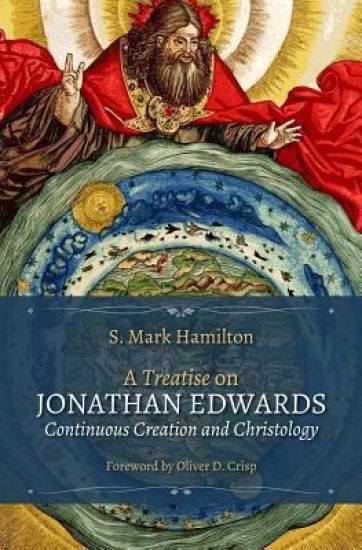
Jonathan Edwards (1703-1758) is one of the most important thinkers of the Christian Tradition. Ironically, little is known about his Christology. Lesser still is that which which is known about the philosophical commitments that undergird much of thinking about the God-man. In A Treatise on Jonathan Edwards, Continuous Creation and Christology, S. Mark Hamilton shows that Edwards has much more to say about the nature of the person of Christ that is both significant and original than has been believed to this point. Hamilton's Treatise tackles Edwards' unique understanding of the God-world relationship and how that understanding bears upon his doctrine of the person of Christ. Equal-parts philosophical clarification and theological construction, and offering a number of truly original insights, Hamilton makes the convincing case that Edwards' commitment to the idea that God somehow creates the universe out of nothing every moment does not, as some have hitherto supposed, imperil his commitment to an orthodox Christology. In so doing, Hamilton puts forward a reconstruction of a controversial aspect of Edwards' Christology that will undoubtedly provoke both a deeper appreciation and closer examination of Edwards' philosophical theology. REVIEWS Jonathan Edwards was not only America's greatest theologian. He also was its finest early philosopher, but more specifically a prominent philosophical theologian. Among his intriguing--and difficult--contributions to philosophical theology was his doctrine of continuous creation. Its relation to occasionalism has helped and bedeviled thinkers for the last three centuries. No one working on Edwards or philosophical theology should miss Mark Hamilton's careful work on this connection. Gerald R. McDermott, Anglican Chair of Divinity, Beeson Divinity School, co-author of The Theology of Jonathan Edwards This is the best attempt to date to systematize the nexus of comments found mainly in Edwards' notebooks on the relationship of ontology, etiology, and Christology. It represents an advance on the account of Hamilton's brilliant teacher, Oliver D. Crisp, one on which analytical minds will noodle for many years to come. I recommend it strongly, and find its arguments for what Hamilton calls Edwards' "immaterial realism" compelling. Douglas A. Sweeney, Distinguished Professor of Church History and the History of Christian Thought, Trinity Evangelical Divinity School, author of Edwards the Exegete: Biblical Interpretation and Anglo-Protestant Culture on the Edge of the Enlightenment Jonathan Edwards's idealism or immaterialism is well known. On the creaturely level, to be is to be perceived. Yet Edwards asserted that the human being is not only perceived but perceiving, and this raises a number of complex issues as to how created minds are distinct from and yet related to the divine Mind, and how created minds and bodies both depend ontologically--and moment-by-moment--on the continuing volition and agency of God as Creator. Mark Hamilton teases out these questions from Edwards's texts with exegetical skill and analytical acumen. Everyone with an interest in Edwards's metaphysical thought ought to take interest in Hamilton's brief treatise on continuous creation and Christology. Michael McClymond, Professor of Modern Christianity, Saint Louis University, co-author of The Theology of Jonathan Edwards In this innovative little book, Hamilton shows that Edwards' concept of continuous creation has significant explanatory power regarding the doctrine of Christ. I highly recommend it to anyone interested in Christology or Edwards studies. James S. Spiegel, Professor of Philosophy and Religion, Taylor University, chief editor of Idealism and Christianity, Vol. 1: Idealism and Christian Theology & Idealism and Christianity, Vol. 2: Idealism and Christian Ph
Short Life of Jonathan Edwards

Short Life of Jonathan Edwards

George W. Marsden

William B Eerdmans Publishing Co
2008
nidottu
Jonathan Edwards is one of the most extraordinary figures in American history. Arguably the most brilliant theologian ever born on American soil, Edwards (1703-1758) was also a pastor, a renowned preacher, a missionary to the Native Americans, a biographer, a college president, a philosopher, a loving husband, and the father of eleven children.George M. Marsden -- widely acclaimed for his magisterial large study of Edwards -- has now written a new, shorter biography of this many-sided, remarkable man. A Short Life of Jonathan Edwards is not an abridgment of Marsden's earlier award-winning study but is instead a completely new narrative based on his extensive research. The result is a concise, fresh retelling of the Edwards story, rich in scholarship yet compelling and readable for a much wider audience, including students.Known best for his famous sermon -Sinners in the Hands of an Angry God, - Jonathan Edwards is often viewed as a proponent of fire, brimstone, and the wrath of God. As Marsden shows, however, the focus of Edwards's preaching was not God's wrath but rather his overwhelming and all-encompassing love. Marsden also rescues Edwards from the high realms of intellectual history, revealing him more comprehensively through the lens of his everyday life and interactions. Further, Marsden shows how Edwards provides a window on the fascinating and often dangerous world of the American colonies in the decades before the American Revolution.Marsden here gives us an Edwards who illumines both American history and Christian theology, an Edwards that will appeal to readers with little or no training in either field. This short life will contribute significantly to the widespread and growing interest in Jonathan Edwards.
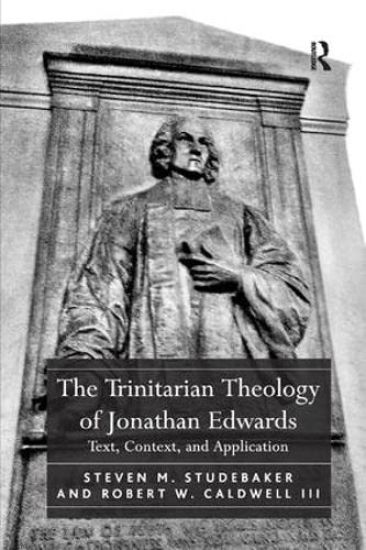
The Trinitarian Theology of Jonathan Edwards

The Trinitarian Theology of Jonathan Edwards

Steven M. Studebaker; Robert W. Caldwell Iii

Routledge
2016
nidottu
While Jonathan Edwards scholars have increasingly recognized the central role that the Trinity played in his thought, no work brings together Edwards' central texts on the Trinity and interprets and applies them to contemporary theological issues. This book reveals how the doctrine of the Trinity transformed Edwards' ministry and how the Trinity can inform current evangelical thought, life, and ministry. Key primary texts, interpretation, and application of Edwards' trinitarian theology are all presented here. Part one features Edwards' chief trinitarian writings and provides an in-depth analysis on his doctrine. Part two sets Edwards' trinitarianism in historical context. Part three demonstrates how Edwards employed the Trinity in his sermons, in spiritual formation, and in other areas of doctrine.
The Trinitarian Theology of Jonathan Edwards

The Trinitarian Theology of Jonathan Edwards

Steven M. Studebaker; Robert W. Caldwell Iii

Ashgate Publishing Limited
2012
sidottu
While Jonathan Edwards scholars have increasingly recognized the central role that the Trinity played in his thought, no work brings together Edwards' central texts on the Trinity and interprets and applies them to contemporary theological issues. This book reveals how the doctrine of the Trinity transformed Edwards' ministry and how the Trinity can inform current evangelical thought, life, and ministry. Key primary texts, interpretation, and application of Edwards' trinitarian theology are all presented here. Part one features Edwards' chief trinitarian writings and provides an in-depth analysis on his doctrine. Part two sets Edwards' trinitarianism in historical context. Part three demonstrates how Edwards employed the Trinity in his sermons, in spiritual formation, and in other areas of doctrine.
Renewing Spiritual Perception with Jonathan Edwards
Jonathan Edwards’ theologically sophisticated psychology of grace remains one of the deepest and most fertile theological psychologies in the Protestant tradition. The heart of his account lies in his foundational doctrine of spiritual perception where he locates the psychological core of the engraced Christian life. This work revisits Edwards’ doctrine from the perspective of recent work in the philosophy of emotions and other related philosophical sub-disciplines. The aim is to recover this often neglected theme in contemporary theology and renew it by bringing Edwards’ theological insights into conversation with various spheres of contemporary philosophical discussion. The account of spiritual perception that emerges from this interdisciplinary dialogue is one that seeks to revise, update and deepen Edwards’ own thinking on the matter in five major ways. The book concludes by arguing that the capacity for spiritual and emotional perception of the supreme good is grounded upon a wisdom-like seminal virtue centred upon the incarnate Christ (i.e., Christocentric wisdom). Such wisdom, on the renewed account, is considered the psychological core of transforming grace and the foundational basis upon which all other Christian virtues are formed.