

Kirjahaku
Etsi kirjoja tekijän nimen, kirjan nimen tai ISBN:n perusteella.
1000 tulosta hakusanalla Jose Duarte
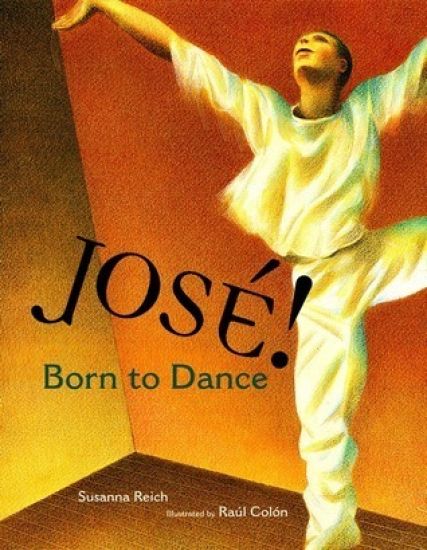
Jose! Born to Dance: The Story of Jose Limon
Susanna Reich
Simon Schuster/Paula Wiseman Books
2005
sidottu
Jos Born to Dance tells the story of a boy born in a small Mexican village who became one of the greatest dancers of all time--Jos Lim n. Jos was a boy with a song in his heart and a dance in his step. Born in Mexico in 1908, he came into the world kicking like a steer, and grew up to love to draw, play the piano, and dream. Jos 's dreaming took him to faraway places. He dreamed of bullfighters and the sounds of the cancan dancers that he saw with his father. Dance lit a fire in Jos 's soul. With his heart to guide him, Jos left his family and went to New York to dance. He learned to flow and float and fly through space with steps like a Mexican breeze. When Jos danced, his spirit soared. From New York to lands afar, Jos Lim n became known as the man who gave the world his own kind of dance. Susanna Reich's lyrical text and Ra l Col n's shimmering artwork tell the story of a boy who was determined to make a difference in the world, and did. Jos Born to Dance will inspire picture book readers to follow their hearts and live their dreams.
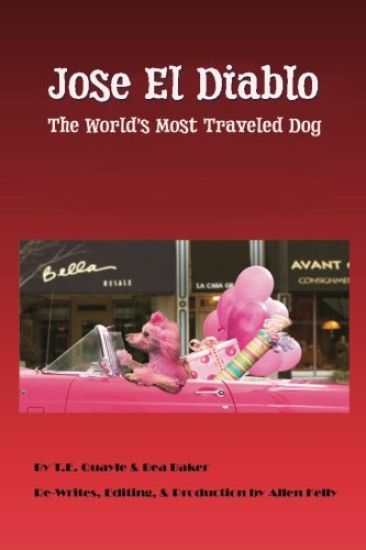
Jose el Diablo - (The Devil): The Worlds Most Traveled Dog
Bea Baker; Allen Kelley; T. E. Quale
Red Rock Writers Publishing
2015
nidottu
Finally, a book about the unconditiomnal love between a human and a dog - from birth to death. You will celebrate the many joys, and cry at the end. And of course., you will laugh when Jose jumps from one funny situation to the next. He is also very insightful as to the eccentricities of human behavior ("I'd rather roll in the fresh mowed grass than hig that silly ball".)
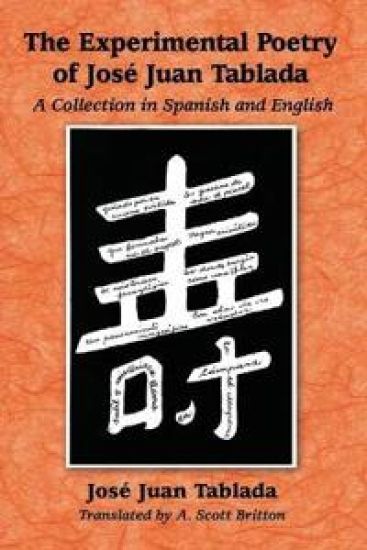
Jose Juan Tablada (1871-1945) wrote more than 20 books on a range of subjects in several genres but is best known as an avant-garde poet of the Modernista movement. Now all three volumes of his experimental poetry--Un dia…poemas sinteticos, El jarro de flores (disociaciones liricas), and Li-Po y otros poemas--have been translated into English, carefully researched and crafted, and presented here for the first time in one volume. The work also includes translations of Tablada poems that appeared in print prior to his primary works. These precursors trace the path that would lead Tablada to his great experiment.
José Martí
The University of North Carolina Press
2011
nidottu
Jose Marti, great Cuban patriot, wrote Spanish articles on the United States during the eighties. In the present sketch, the author has presented Marti to the country he interpreted so sympathetically and has made a living portrait of a rich and complex personality.A UNC Press Enduring Edition -- UNC Press Enduring Editions use the latest in digital technology to make available again books from our distinguished backlist that were previously out of print. These editions are published unaltered from the original, and are presented in affordable paperback formats, bringing readers both historical and cultural value.

Selected Poems of Jose Emilio Pacheco
José Emilio Pacheco
New Directions Publishing Corporation
1987
sidottu
José Emilio Pacheco's Selected Poems is the first major retrospective gathering to appear in an English-Spanish bilingual format of the work of one of Mexico's foremost writers. Born in 1939, his talent was recognized early, and while still in his twenties he was already keeping company with the great Spanish-speaking poets of Latin America. A prolific poet and a perfectionist, Pacheco has since 1962 published seven volumes of poetry, including the National Poetry Prize-winning No me preguntes como pasa el tiempo (Don't Ask Me How the Time Goes By) in 1969. Tarde o temprano, collected poems of 1958 to 1980, contains the revisions on which the translations in the present volume are based. The Selected Poems is edited by George McWhirter of The University of British Columbia, who worked closely with Pacheco himself in choosing the poems and their English translations. Besides McWhirter's own versions are those by Thomas Hoeksema, Alastair Reid, and Linda Scheer, as well as Edward Dorn and Gordon Brotherston, Katherine Silver, and Elizabeth Umlas. Affirming the poet's stature, McWhirter writes: "In his singularity of vision and multiplicity of poetic forms, traditional and modern, José Emilio Pacheco spans past and present in both Latin American and peninsular Spanish poetry. It is a glittering and giant technical achievement, as brilliant and instantly visible as Hart Crane's The Bridge."
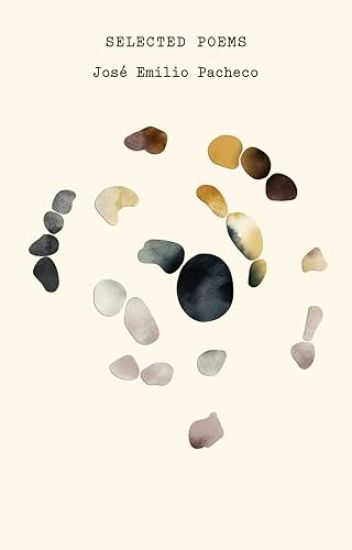
The Selected Poems of José Emilio Pacheco
José Emilio Pacheco
NEW DIRECTIONS PUBLISHING CORPORATION
2026
nidottu
Jos Emilio Pacheco's Selected Poems is a major bilingual retrospective of the poetry of one of Mexico's foremost writers. Born in 1939, Pacheco achieved recognition early, and while still in his twenties, he was already keeping company with the most important writers of his generation. A prolific poet and perfectionist, Pacheco published many volumes of poetry, including his famous 1969 collection No me preguntes como pasa el tiempo (Don't Ask Me How the Time Goes By). This edition is edited by George McWhirter of The University of British Columbia, who worked closely with Pacheco himself in choosing the poems and their English translations. Besides McWhirter's own versions are those by Edward Dorn, Alastair Reid, Katherine Silver, and others. As McWhirter writes: "In his singularity of vision and multiplicity of poetic forms, traditional and modern, Pacheco spans past and present in both Latin American and peninsular Spanish poetry. It is a glittering and giant technical achievement, as brilliant and instantly visible as Hart Crane's The Bridge."
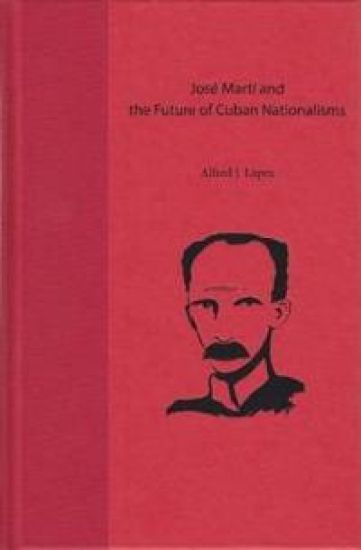
Jose Marti and the Future of Cuban Nationalisms
Lopez Alfred J.
University Press of Florida
2006
sidottu
Lopez examines the role of Jose Marti's writing on concepts of Cuban nationalism that fueled the 1895 colonial revolution against Spain and have since continued to inform conflicting and violently opposed visions of the Cuban nation. He examines how the same body of work has come to be equally championed by opposing sides in the ongoing battle between the Cuban nation-state, which under Castro has consistently claimed Marti as a crucial inspiration for its Marxist revolutionary government, and the diasporic communities in Miami and elsewhere who still honor Marti as a figure of hope for the Cuban nation in exile. He also shows how, more recently, Marti has become an international as well as national icon, as postcolonial and New Americanist scholars have appropriated parts of his writings and message for use in their own self-described ""hemispheric"" and even ""planetary"" critiques of Western imperialist projects in Latin and America and beyond. As the first study to examine the impact of Martis writings on both Cubans and Cuban Americans and to consider the ongoing polemic over Marti as part of the larger postcolonial problem of nation building, Lopez's study also considers the more general issue of literature within nationalist projects. He illuminates the common concepts and ideas that underlie the ongoing ideological chasm between the Cuban nation-state and the Cuban nation in exile and offers the possibility of a new way of reading and understanding notions of national identity that have historically both enabled and delimited the ways in which Latin Americans and U.S. Hispanics have understood and defined themselves.
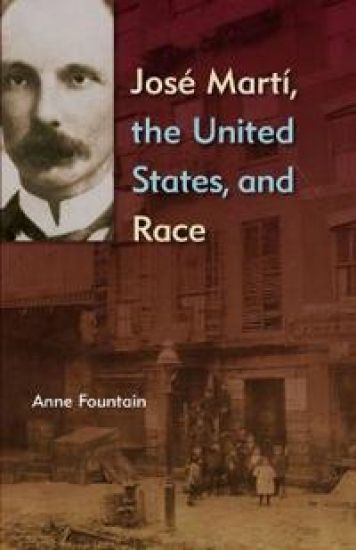
A national hero in Cuba and a champion of independence across Latin America, José Martí produced a body of writing that has been theorized, criticized, and politicized. However, one of the most understudied aspects of his work is how his time in the United States affected what he wrote about race and his attitudes toward racial politics.In the United States Martí encountered European immigrants and the labor politics that accompanied them and became aware of the hardships experienced by Chinese workers. He read in newspapers and magazines about the oppression of Native Americans and the adversity faced by newly freed black citizens. Although he'd first witnessed the mistreatment of slaves in Cuba, it was in New York City, near the close of the century, where he penned his famous essay ""My Race,"" declaring that there was only one race, the human race.Anne Fountain argues that it was in the United States that Martí - confronted by the forces of manifest destiny, the influence of race in politics, the legacy of slavery, and the plight and promise of the black Cuban diaspora - fully engaged with the specter of racism. Examining Martí's complete works with a focus on key portions, Fountain reveals the evolution of his thinking on the topic, indicating the significance of his sources, providing a context for his writing, and offering a structure for his works on race.
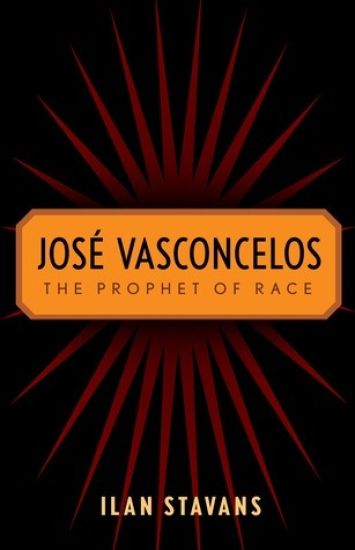
Mexican educator and thinker Jose Vasconcelos is to Latinos what W.E.B. Du Bois is to African Americans a controversial scholar who fostered an alternative view of the future. In Josè Vasconcelos: The Prophet of Race, his influential 1925 essay, "Mestizaje" key to understanding the role he played in the shaping of multiethnic America—is for the first time showcased and properly analyzed. Freshly translated here by John H. R. Polt, "Mestizaje" suggested that the Brown Race from Latin America was called to dominate the world, a thesis embraced by activists and scholars north and south of the Rio Grande. Ilan Stavans insightfully and comprehensively examines the essay in biographical and historical context, and considers how many in the United States, especially Chicanos during the civil rights era, used it as a platform for their political agenda. The volume also includes Vasconcelos's long-forgotten 1926 Harris Foundation Lecture at the University of Chicago, "The Race Problem in Latin America," where he cautioned the United States that rejecting mestizaje in our own midst will ultimately bankrupt the nation.
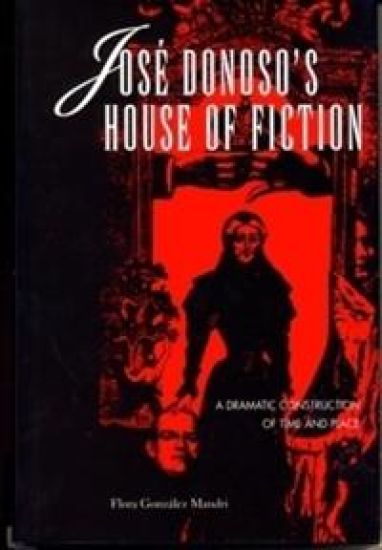
This text examines the multiple narrative perspectives Donoso presents and traces a transformation in Donoso's works from complex stage performance to political forum. It illuminates a weaving of feminine and masculine aspects of artistic voice in his work.

Jose De Bustamante and Central American Independence
Timothy P. Hawkins
The University of Alabama Press
2011
nidottu
Latin American independence histories of the last 150 years have tended to stereotype Captain General Bustamante, governor of the Spanish colony of Guatemala from 1811 to 1818, as a tyrannical arch-villain who personified colonial oppression. Timothy Hawkins, in contrast, examines Bustamante and his administration within the context of preservation of empire, the effort by colonial officials and partisans to maintain the integrity of the Spanish empire in spite of internal and external unrest. Based on extensive primary research in the archives of Guatemala, Mexico, and Spain, Hawkins’s approach links the Central American experience to that of areas such as Peru, Venezuela, and Mexico, that also responded equivocally and haphazardly to rebellious uprisings against colonial rule. While conceding that Bustamante’s role in the suppression of unrest turned him into one of the more controversial figures in Latin American history, Hawkins argues that the Bustamante administration should not be seen as an isolated and perverse case of Spanish repression but as an example of a relatively successful, if short lived, campaign by Spain to preserve its empire.
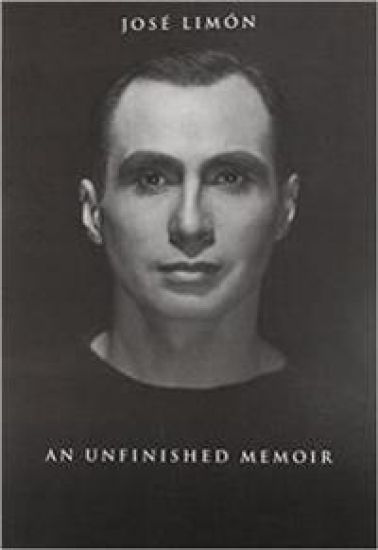
Both as a dancer and a choreographer, José Limón electrified audiences from the1930s to the 1960s. With his striking looks and charismatic presence, he was American modern dance's first male star. Born in Culiacán, Mexico, in 1908, the eldest of twelve children, he came to the United States when he was seven. In 1928, after a year at UCLA as an art major, he left for New York. Here, he attended his first modern dance concert and discovered his destiny. He spent the 1930s with the Humphrey-Weidman group. Then, in the 1940s, after a stint in the army, and with Doris Humphrey as artistic advisor, he formed one of the outstanding modern dance companies of the postwar era. His greatest works -- The Moor's Pavane, La Malinche, The Traitor, A Choreographic Offering, There is a Time, Missa Brevis -- extolled a humanism that endeared them to audiences the world over. Although Limón died in 1972, all these dances remain in the Limón Dance Company's active repertory.This memoir was commissioned by Wesleyan University Press in the late 1960s. Left unfinished at the time of Limón's death, it stands on its own as a Joycean account of the coming of age of an unusually perceptive dance artist. Limón writes with eloquence of his Mexican childhood. And of the numerous figures he memorializes, from Martha Graham to José Covarrubias, none is more luminously evoked than Doris Humphrey, the "goddess," "nymph," and "caryatid" of his life. Sensitively edited by Lynn Garafola, the book includes a complete list of Limón's works, richly informative notes, rare photographs, and a detailed bibliography. This is the single most important book on Limón and a riveting memoir of modern dance during its golden age
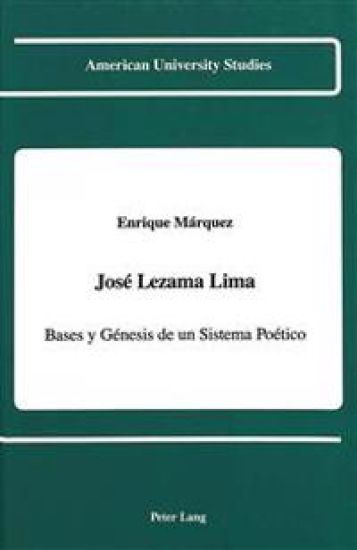
Hay en este texto un penetrante analisis del sistema poetico del mundo de Jose Lezama Lima (Cuba, 1910-1976). Su aporte esencial consiste en un metodo y su aplicacion, que se reclaman ambos como parte integra de una expresion americana. Marquez sostiene que una clave de su comprension esta en el contacto que establecen ciertas formas elementales - sus nexos, modulaciones y acomodos para conciliar una vision triunfal de arte y vida. Se pasa aqui revista a las nociones lezamescas de verdad e historia como artefactos poeticos que se erigen frente a un universo en alto grado de inestabilidad; a la conviccion de que este sea acaso el unico modo de participacion genuinamente humano en el mundo actual; y como se vivifica ese sistema con una briosa defensa de lo desconocido y lo invisible.
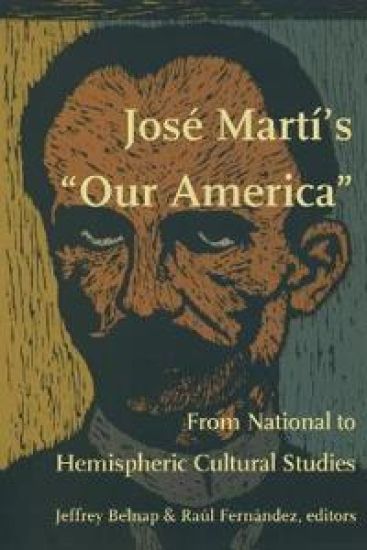
Considerable attention has been given to Cuban poet, essayist, and activist Jose Marti's 1891 essay "Nuestra America," but relatively little has been paid to the rest of the journalistic work that Marti produced during his fourteen-year exile in the United States. In Jose Marti's Our America, Jeffrey Belnap and Raul Fernandez present essays from Latin American, Caribbean, and U.S.-based scholars who consider Marti's rich and underexplored body of work and position Marti as an emblem of New American studies. A Cuban exile from 1881 to 1895, Marti was a correspondent writing in New York for various Latin American newspapers. Grasping the significance of rising U.S. imperial power, he came to understand the Americas as a complex system of kindred-but not equal-national formations whose cultural and political integrity was threatened by the overbearing aggressiveness of the United States. This collection explores how in his journalistic work Marti critiques U.S. racism, imperialism, and capitalism; warns Latin America of impending U.S. geographical, cultural, and economic annexation; and calls for recognition of the diversity of America's cultural voices. Reinforcing Marti's hemispheric vision with essays by a wide range of scholars who investigate his analysis of the United States, his significance as a Latino outsider, and his analyses of Latin American cultural politics, this volume explores the affinities between Marti's thought and current reexaminations of what it means to study America. Jose Marti's Our America offers a new understanding of Marti's ambiguous and problematic relation with the United States and will engage scholars and students in American, Latin American, and Latino studies as well as those interested in cultural, postcolonial, gender, and ethnic studies. Contributors. Jeffrey Belnap, Raul Fernandez, Ada Ferrer, Susan Gillman, George Lipsitz, Oscar Marti, David Noble, Donald E. Pease, Beatrice Pita, Brenda Gayle Plummer, Susana Rotker, Jose David Saldivar, Rosaura Sanchez, Enrico Mario Santi, Doris Sommer, Brook Thomas
José Martí's Liberative Political Theology
Miguel De La Torre
Vanderbilt University Press
2021
nidottu
JosÉ MartÍ's Liberative Political Theology argues that MartÍ's religious views, which at first glance might appear outdated and irrelevant, are actually critical to understanding his social vision. During a time where the predominate philosophical view was materialistic (Darwin, Marx) MartÍ sought to reconcile social and political trends with the metaphysical, believing that ignoring the spiritual would create a soulless approach toward achieving a liberative society. As such, MartÍ used religious concepts and ideas as a tool that could bring forth a more just social order. In short, this book argues MartÍ could be considered a precursor to what would come to be called, Liberation Theology.Miguel De La Torre has authored the most comprehensive text written thus far concerning MartÍ's religious views and how they impacted his political thought. The few similar texts that exist are written in Spanish; and among those, mainly romanticize MartÍ's spirituality in an attempt of portraying him as a 'Christian believer.' Only a handful provide an academic investigation of MartÍ's theological thought based solely on his writings, and those concentrate on just one aspect of MartÍ's religious influences. JosÉ MartÍ's Liberative Political Theology allows for mutual influence between MartÍ's political and religious views rather than assuming one had precedence over the other.
José Martí's Liberative Political Theology
Miguel De La Torre
Vanderbilt University Press
2021
sidottu
JosÉ MartÍ's Liberative Political Theology argues that MartÍ's religious views, which at first glance might appear outdated and irrelevant, are actually critical to understanding his social vision. During a time where the predominate philosophical view was materialistic (Darwin, Marx) MartÍ sought to reconcile social and political trends with the metaphysical, believing that ignoring the spiritual would create a soulless approach toward achieving a liberative society. As such, MartÍ used religious concepts and ideas as a tool that could bring forth a more just social order. In short, this book argues MartÍ could be considered a precursor to what would come to be called, Liberation Theology.Miguel De La Torre has authored the most comprehensive text written thus far concerning MartÍ's religious views and how they impacted his political thought. The few similar texts that exist are written in Spanish; and among those, mainly romanticize MartÍ's spirituality in an attempt of portraying him as a 'Christian believer.' Only a handful provide an academic investigation of MartÍ's theological thought based solely on his writings, and those concentrate on just one aspect of MartÍ's religious influences. JosÉ MartÍ's Liberative Political Theology allows for mutual influence between MartÍ's political and religious views rather than assuming one had precedence over the other.
Jose Emilio Pacheco And The Poets of the Shadows
Dr Ronald Friis
Bucknell University Press,U.S.
2001
sidottu
This book examines the treatment of literary influence in the first six books of poetry from Mexico's Jose Emilo Pacheco.

Jose de Espronceda: The Student of Salamanca
C. K. Davis; Richard A. Cardwell
Aris Phillips Ltd
1991
nidottu
In this impressive 'verse legend' Espronceda creates an original interpretation of the famous Don Juan legend whereby he produces a Romantic 'counter-text' which gives voice to what we now recognise as a central part of the modern philosophical condition: the Romantic vision of an all-pervasive cosmic injustice. Professor Cardwell, in his introduction, shows how in the person of Felix de Montemar, Espronceda has created one of Europe's first rebellious literary heroes, standing alone, noble and defiant, in the face of all the evil and pain in the world. Thus Espronceda takes his place alongside other major European Romantic writers; Byron, Lermontov, Heine, Vigny, Leopardi and Mickiewitz; expressing, as they do, man's existential protest, noblest ideals and his modern sense of human condition which directly informs our own twentieth century literary achievements. Davies' meticulous translation of this poem, mirroring the metrical and stylistic virtuosity of Espronceda's original, presents it for the first time to English readers, since its composition 150 years ago.