Kirjojen hintavertailu. Mukana 11 342 296 kirjaa ja 12 kauppaa.

Kirjahaku

Etsi kirjoja tekijän nimen, kirjan nimen tai ISBN:n perusteella.

1000 tulosta hakusanalla Julius Caesar

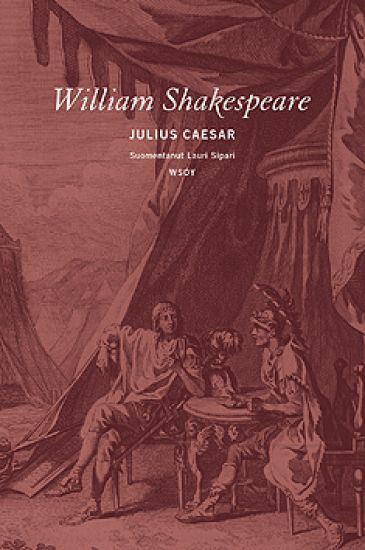
Julius Caesar

Julius Caesar

William Shakespeare

WSOY
2006
sidottu
CASSIUS: Kumartukaa roomalaiset, kumartukaa, peskäämme kädet hänen veressään kyynärpäitä myöten, ja punatkaamme miekat. Sitten niitä heiluttaen torille, ja huutakaamme kaikki: ”Vapaus, vapautus, ja oikeus!” Caesar on päihtynyt vallasta ja kansan ihailusta eikä usko varoittaviin ennusmerkkeihin. Joukko tasavaltaa kannattavia senaattoreita, heidän joukossaan myös Caesarille läheinen Brutus, päättää surmata yksinvaltiaan, jonka epäillään havittelevan kuninkuutta. Murhan jälkeen Roomassa käydään sisällissotaa, kunnes Caesarin uskollinen ystävä Marcus Antonius kukistaa salaliittolaiset. Paitsi poliittis-historiallinen tragedia Julius Caesar on inhimillinen murhenäytelmä, koskettava kuvaus yksityisen ja julkisen elämän kipeistä ristiriidoista sekä vallan himosta ja hinnasta. Jotaarkka Pennanen kirjoittaa esipuheessaan: "Julius Caesaria on yleisesti pidetty sukulaisteoksena Hamletille, jonka Shakespeare kirjoittikin pian Caesarin jälkeen. Hamlet tietää, että on olemassa oikea ja väärä, mutta hän ei tiedä, mikä teko tuottaa oikeutta ja mikä vääryyttä. Brutus uskoo tietävänsä mikä on oikein, mutta epäröi silti. Voiko salamurha tuoda oikeutta?" Lauri Siparin suomennoksessa näkyy teatterialan ammattilaisen kädenjälki. Suomentaja: Sipari, Lauri
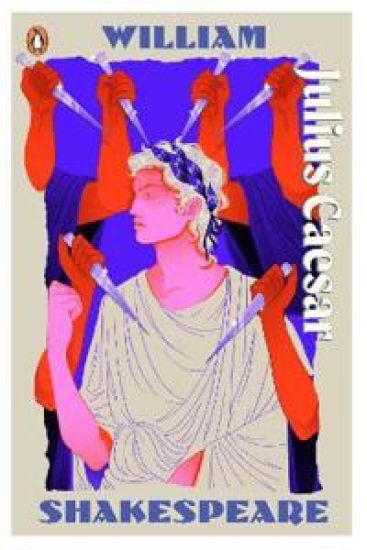
Julius Caesar

Julius Caesar

Macaw Books

Sweet Cherry Publishing
2015
sidottu
About Sweet Cherry Easy Classics:Sweet Cherry Easy Classics adapts classic literature into stories for children, introducing these timeless tales to a new generation.
Julius Caesar

Julius Caesar

William Shakespeare

Easy Peasy Publishing
2025
pokkari
"Vänner, romare, landsmän …" Julius Caesar är Roms främste fältherre. När han återvänder till staden efter en lysande seger möts han av jublande folkmassor. Men bakom hyllningarna smider en grupp konspiratörer planer för att stoppa honom från att bli kejsare. Kommer de att lyckas? Denna lättlästa version av Shakespeares berömda tragedi gör en central klassiker tillgänglig för nya generationer. En berättelse om makt, vänskap och svek – perfekt för undervisning, diskussioner om historia och politik, eller för unga som vill upptäcka dramatikens mästare på ett mer tillgängligt sätt.
Julius Caesar: The Oxford Shakespeare

Julius Caesar: The Oxford Shakespeare

William Shakespeare

Oxford University Press
2008
nidottu
Julius Caesar's exciting plot, brilliant rhetoric, and searching characterisation have made it one of Shakespeare's most popular plays with both readers and theatre-goers. Introducing this thoroughly reconsidered edition, Arthur Humphreys provides a fresh look at the play's date and its place in the Shakespeare canon and examines Shakespeare's transmutation of history into drama. He investigates the play's ethical and moral concerns in a section on Roman values and analyses its fortunes in performance, from its immediately successful first staging to modern productions for cinema, television, and stage. ABOUT THE SERIES: For over 100 years Oxford World's Classics has made available the widest range of literature from around the globe. Each affordable volume reflects Oxford's commitment to scholarship, providing the most accurate text plus a wealth of other valuable features, including expert introductions by leading authorities, helpful notes to clarify the text, up-to-date bibliographies for further study, and much more.
Julius Caesar Teacher's Book

Julius Caesar Teacher's Book

William Shakespeare

Evans Brothers Ltd
2013
nidottu
The books in this series provide support material to help students and teachers in the study of Shakespeare. Using simplified text and dramatic pictures, these books bring to life the main characters and key events. The Teacher's Book provides lesson notes and more than 30 photocopiable activities, including acting, mime, writing, and games.
Julius Caesar's Bellum Civile and the Composition of a New Reality
In his Commentarii de Bello Civili Julius Caesar sought to re-invent his image and appear before his present and future readers in a way which he could control and at times manipulate. Offering a new interpretation of the Bellum Civile this book reveals the intricate literary world that Caesar creates using sophisticated techniques such as a studied choice of vocabulary, rearrangement of events, use of indirect speech, and more. Each of the three books of the work is examined independently to set out the gradual transformation of Caesar's literary persona, in step with his ascent in the 'real' world. By analysing the work from Caesar's viewpoint the author argues that by adroit presentation and manipulation of historical circumstances Caesar creates in his narrative a different reality, one in which his conduct is justified. The question of the res publica is also a key point of the volume, as it is in the Bellum Civile, and the author argues that Caesar purposely does not present himself as a Republican, contrary to commonly held views. Employing detailed philological analyses of Caesar's three books on the Civil War, this work significantly advances our understanding of Caesar as author and politician.
Julius Caesar on Stage in England and America, 1599–1973
Professor Ripley, in this 1980 study of Julius Caesar, offers one of the most detailed stage histories ever attempted, focusing upon aspects both of English and American staging from 1599 to 1973. His primary sources include promptbooks and groundplans, letters, diaries and reviews. He approaches the play from four different angles: he examines the texts used in all major productions, and makes valuable deductions about the taste and sensibility of an age from cuts, alterations, additions and redistribution of parts. He explains in detail the staging of the play at various points in time, and demonstrates how sets and costumes, bits of business, handling of crowd scenes and lighting affected its business. He reconstructs performances of the four main roles by the greater and lesser lights of each period. Finally, he comments on the way in which the theories of critics and, in modern times, directors' ideas have influenced understanding of the play.
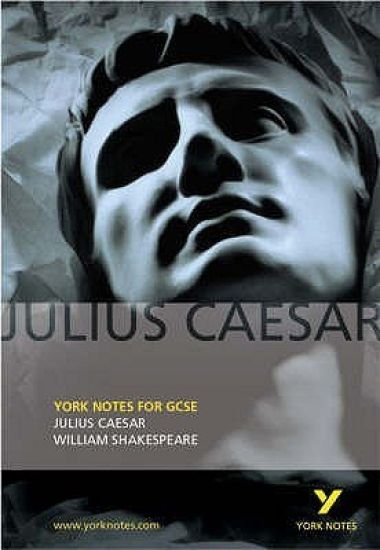
Julius Caesar: York Notes for GCSE

Julius Caesar: York Notes for GCSE

Martin Walker

Pearson Education Limited
2003
pokkari
Take Note for Exam Success! York Notes offer an exciting approach to English literature. This market leading series fully reflects student needs. They are packed with summaries, commentaries, exam advice, margin and textual features to offer a wider context to the text and encourage a critical analysis. York Notes, The Ultimate Literature Guides.
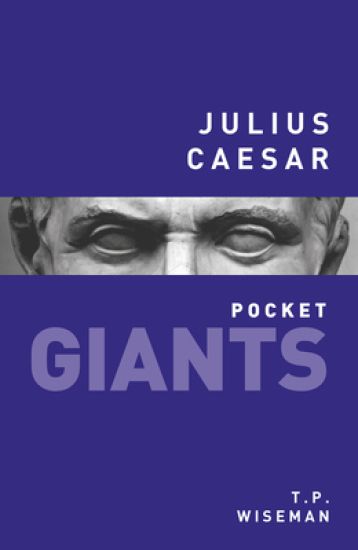
Julius Caesar: pocket GIANTS

Julius Caesar: pocket GIANTS

T.P. Wiseman

The History Press Ltd
2016
nidottu
Why is Caesar a giant? Because he effectively created the Roman Empire, and thus made possible the European civilization that grew out of it. As the People's champion against a corrupt and murderous oligarchy, he began transformation of the Roman republic into a quasi-monarchy and a military and fiscal system that for four centuries provided western Europe, north Africa and the Middle East with security, prosperity and relative peace. His conquest of Gaul and his successors' conquests of Germany, the Balkans and Britain created both the conditions for 'western culture' and many of the historic cities in which it has flourished.
Julius Caesar: The Civil War Books I & II
Julius Caesar's own narrative of the opening year of the Civil War between himself and Pompey is the only surviving account from the classical world of such a conflict written by one of the principals. The apparent clarity of the narrative, and the limpidity and economy of Caesar's style, in fact conceal a tendentious presentation of both his own and his opponent’s motives, actions and competence. The influence of dramatic structures on the selection and combination of events related by Caesar is also important. The commentary therefore aims to elucidate not only matters directly referred to in the text, but the whole context of their presentation. Latin text with facing-page translation, introduction and commentary. First published in 1991, the paperback was reprinted with minor corrections in 2003.
Julius Caesar: The Civil War Book III
In the third and final book which he wrote about his campaigns in the Civil War, Julius Caesar tells the story of his fight with Pompey in 48 B.C. which ended in the rout of the latter at Pharsalus, perhaps Caesar's most notable military victory. The book ends with Caesar pursuing Pompey to Egypt. Here began Caesar's celebrated affair with Cleopatra. At this point the book, and the whole work, ends abruptly. J. M. Carter’s edition and commentary on Caesar's The Civil War Books I–III is the first complete commentary in English for a hundred years and is considerably more detailed than currently available annotated texts and translations in other languages. The main emphasis of the commentary is historical, but Caesar's literary technique is also scrutinised. The Latin text is newly constituted with a brief apparatus criticus. Latin text with facing-page English translation, introduction and commentary.
Julius Caesar: A Verse Translation

Julius Caesar: A Verse Translation

William Shakespeare

Full Measure Press
2011
nidottu
This complete, line-by-line translation of Julius Caesar makes the language of Shakespeare's play contemporary while preserving the metrical rhythm, complexity, and poetic qualities of the original. The aim is to capture both sound and sense of Shakespeare's tragedy without the need for glosses or notes to use contemporary language without simplifying or modernizing the play in any other way. Readers experience Shakespeare's tale of the brutal assassination of Rome's most famous leader with the comprehension and delight of audiences 400 years ago, the way Shakespeare intended.Features "Too often, unless we read a Shakespeare play beforehand, we process the language as if it were coming from a poorly tuned-in radio station. Shakespeare didn't write his plays to be experienced impressionistically as 'poetry;' he assumed his language was readily comprehensible. At what point does a stage of a language become so different from the modern one as to make translation necessary? Mr. Richmond is brave enough to assert that, for Shakespeare, that time has come. The French have Moliere, the Russians have Chekhov and now, we can truly say that we have our Shakespeare."John McWhorter, Manhattan Institute Line-by-line, not prose paraphrases. Complete. No lines deleted. No dumbing down. Accurate and authentic iambic pentameter. True to the feel and look of Shakespeare's original. Tone, complexity, and poetic devices preserved. Subtlety and richness revealed without the need of notes and glosses. Accessible introduction to classic drama. Attractive, uncluttered, easy-to-read layout. Stage-ready for an audience-pleasing theatrical.