This thought-provoking history of corporate responsibility in the USA is a landmark publication documenting the story of corporate power and business behavior from the mid-eighteenth century to the modern day. It shows how the idea of corporate responsibility has evolved over time, with the roles, responsibilities and performance of corporations coming increasingly under the spotlight as new norms of transparency and accountability emerge. Today, it is expected that a corporation will be transparent in its operations; that it will reflect ethical values that are broadly shared by others in society; and that companies will enable society to achieve environmental sustainability as well as a high standard of living. As we enter the second decade of the twenty-first century, the social, political and economic landscape is once again shifting: the need for an informed public conversation about what is expected of the modern corporation has never been greater.
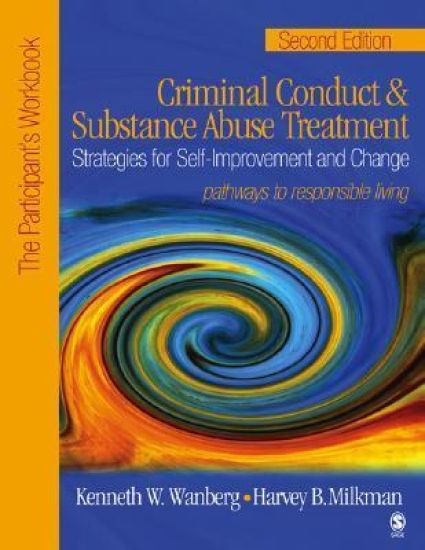
The accompanying Participant's Workbook to the SSC is written to engage clients and encourage active participation in treatment and responsible living. Phase I: Challenge to Change: Building Knowledge and Skills for Responsible Living Phase II: Commitment to Change: Strengthening Skills for Self-Improvement, Change, and Responsible Living Phase III: Taking Ownership of Change: Lifestyle Balance and Healthy LivingSAGE offers treatment and training programs for mental health providers that you can easily incorporate into your existing programs.
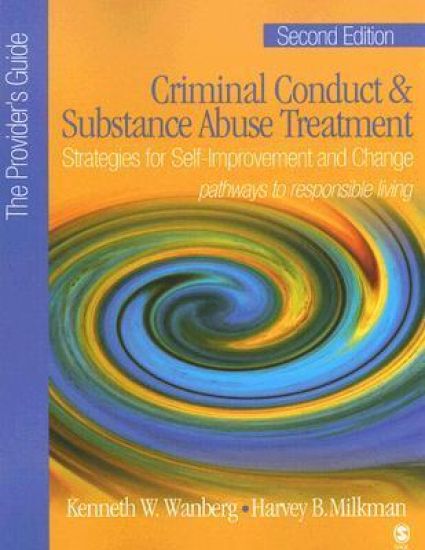
Designed for providers who work with judicial clients, the Providers Guide presents effective cognitive-behavioral treatment approaches. The Second Edition of this bestseller unveils a state-of-the-art approach for effectively preventing criminal recidivism and substance abuse relapse within community based and correctional settings. The core of the SSC program is a positive relationship between provider and client. Summary of results survey from the first edition of SSC 95% of the providers rated the components of SSC to be adequate to very adequate in meeting the treatment needs of judicial clients Over 90% of providers rated clients as having a moderate to very high involvement in homework and reading 95% of the clients rates as very high their satisfaction of SSC delivery, the provider's response to client needs and clients' comfort with providersAround 80% of clients reported their cognitive and behavioral control over AOD use and criminal conduct had improved during SSCThe accompanying Participant's Workbook to the SSC is written to engage clients and encourage active participation in treatment and responsible living: Phase I: Challenge to Change: Building Knowledge and Skills for Responsible Living Phase II: Commitment to Change: Strengthening Skills for Self-Improvement, Change, and Responsible Living Phase III: Taking Ownership of Change: Lifestyle Balance and Healthy Living
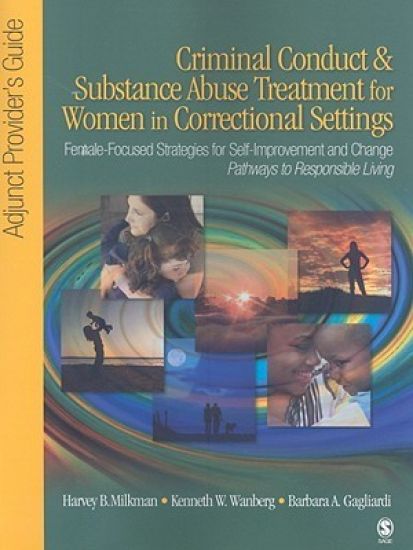
There is an urgent demand for treatment protocols designed specifically for women who abuse drugs, commit crimes, and receive treatment in correctional settings. Criminal Conduct and Substance Abuse Treatment for Women in Correctional Settings answers the clamor by targeting the biological, psychological, and social roots of female substance abuse and crime. Designed as an adjunct to the Criminal Conduct and Substance Abuse Treatment: Strategies for Self-Improvement and Change (SSC) curriculum, this provider's guide uses female-focused examples, exercises, role plays, and content enhancements that pinpoint women's treatment issues. Features and BenefitsIncreases the female focus of each session in the original SSC curriculum, a renowned and effective treatment model Assumes a strengths-based approach, which helps build support systems and motivate recovery for womenProvides a broad perspective on psychological, social and biological issues and enhances treatment outcomes across a wide spectrum of agencies and treatment providersIntended AudienceThis adjunct provider's guide is essential to agencies, treatment centers, and practitioners working with women in the judicial system – offering female clients the best possible chance to get back on the road to recovery. This adjunct provider's guide is essential to agencies, treatment centers, and practitioners working with women in the judicial system – offering female clients the best possible chance to get back on the road to recovery. This volume provides an invaluable gender focus for:Criminal Conduct and Substance Abuse Treatment Strategies for Responsible Living and ChangeThe Participant's Workbook Second EditionKenneth W. Wanberg and Harvey B. MilkmanISBN: 978-1-4129-0591-6The Provider's GuideSecond EditionKenneth W. Wanberg and Harvey B. MilkmanISBN: 978-1-4129-0592-3
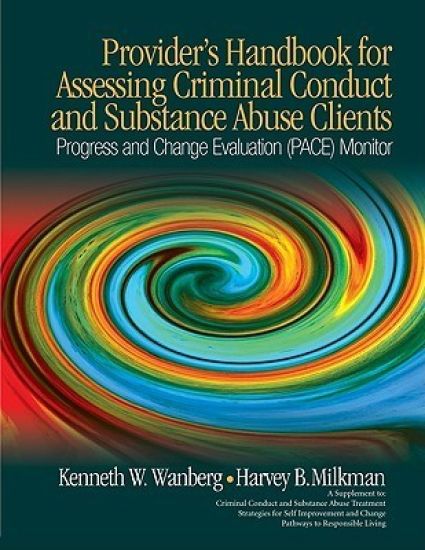
Handbook of Assessing and Treating Substance Abuse and Criminal Conduct:The Progress and Change Evaluation (PACE) Monitor is an instructive guide that helps agencies and providers assess, monitor and evaluate the change and progress made by criminal justice clients at the beginning, during and after treatment. The guide contains dozens of instruments used to assess and evaluate clients, along with a description of each item and instructions on how to score and interpret it. It was created to be used in conjunction with the Criminal Conduct and Substance Abuse Treatment: Strategies for Self Improvement and Change curriculum, but the instruments are general enough that they can be used separately and with other curriculums as well. The tools provided in this book will be highly useful for anyone working with clients with co-occurring issues of substance abuse and criminal conduct.SAGE offers treatment and training programs for mental health providers that you can easily incorporate into your existing programs.
Handbook of Assessing and Treating Substance Abuse and Criminal Conduct:The Progress and Change Evaluation (PACE) Monitor is an instructive guide that helps agencies and providers assess, monitor and evaluate the change and progress made by criminal justice clients at the beginning, during and after treatment. The guide contains dozens of instruments used to assess and evaluate clients, along with a description of each item and instructions on how to score and interpret it. It was created to be used in conjunction with the Criminal Conduct and Substance Abuse Treatment: Strategies for Self Improvement and Change curriculum, but the instruments are general enough that they can be used separately and with other curriculums as well. The tools provided in this book will be highly useful for anyone working with clients with co-occurring issues of substance abuse and criminal conduct.SAGE offers treatment and training programs for mental health providers that you can easily incorporate into your existing programs.
Understanding the Modern Russian Police represents the culmination of ten years of research and an ongoing partnership between the Volgograd Academy of Russian Internal Affairs Ministry (VA MVD) and the Volgograd branch of the Russian Presidential Academy of National Economy and Public Administration (VAPA). The book provides a timely and comprehensive analysis of the historical development, functions, and contemporary challenges faced by the modern Russian police.Spanning more than two centuries of history, the book covers: The tsarist police evolution that witnessed the creation of the Ministry of Internal Affairs of the Russian Federation (MVD) in 1802 and concluding with the 1917 October Revolution The Soviet era from the 1917 October Revolution until Stalin’s death in 1953The Khrushchev and Brezhnev periods, and the Soviet police’s maturation into a professionally educated and well-equipped law enforcement systemThe transformational period of police development beginning with Gorbachev’s perestroika and concluding with the first term of Putin in 2008The structure, authority, and workforce of the modern Russian policePublic-police relationships existing today in RussiaReports by Amnesty International and Human Rights Watch on corruption and abuse of power, along with a legal analysis of practices by the European Court of Human Rights (ECHR)The 2011 Police Reform by MedvedevThe book concludes with some predictions on the future of the Russian police and its potential reforms. Encompassing the efforts of many great researchers from Russia, this exhaustive review of the history of policing in Russia enables readers to comprehend the societal and political forces that have shaped policing in this country.
This Provider's Guide introduces a comprehensive and developmentally appropriate treatment program, Pathways for Self-Discovery and Change (PSDC), which provides the specific tools necessary for improving evaluation and treatment of at-risk youth, a particularly vulnerable patient population in the justice system. Using an adolescent-focused format, this protocol identifies psychological, biological, and social factors that contribute to the onset of adolescent deviance, and establishes guidelines for delivery of a 32-session treatment curriculum designed to rehabilitate both male and female adolescents with co-occurring substance abuse and criminal conduct. Now in its Second Edition, this guide provides treatment practitioners, program evaluators, and youth services administrators with the most up to date, comprehensive, and accessible information for the treatment and rehabilitation of juvenile justice clients. It is built on theoretical and research advances in the treatment and rehabilitation of juvenile justice clients, as well as feedback over the past seven years from PSDC counselees, treatment providers, and program administrators. SAGE offers treatment and training programs for mental health providers that you can easily incorporate into your existing programs.
Pathways to Self-Discovery and Change: A Guide for Responsible Living - The Participant’s Workbook, Second Edition provides a written and richly illustrated format through which clients can better understand and reflect on each of 32 (approximately 90 to 120 minutes in length) youth-focused CBT treatment sessions. Pathways to Self-Discovery and Change supplies clients with a visual and written record of all treatment objectives, content information, modeling and role-plays, discussion points, interactive exercises, and reflective assignments and a place to record their ideas, insights, short- and long-term goals, and progress during the entire treatment episode. The Participant’s Workbook is geared to a broad range of reading and conceptual abilities. Using comic strip illustrations and gripping stories (presented through the narrative voice of teenagers who experience a variety of problems with substance abuse, criminal conduct, and mental health issues), clients are engaged in active discussion about the situations, thoughts, emotions, and behaviors that have become embroidered in their patterns of substance abuse and criminal conduct.
This book explores a set of concepts that are fundamental for successful leadership of an Information Technology (IT) business. The ideas and concepts explored here have emerged from a ten-year collaboration between the authors in creating professional development programs to support and enhance the remarkable success of a particular IT company - the Information Systems (I/S) Division of BlueCross BlueShield of South Carolina. However, the book is about more than one company's success. Anyone facing the challenge of leading an IT company, an IT unit, or IT projects of most any size will find ideas and concepts here that resonate with their experiences and that will provoke them to think in new and more productive ways about the work they do. This book is the third of a three-book series on the art and science of managing an IT company. In the first book of the series, Picasso on a Schedule, a unique IT organizational structure called the Hierarchical Matrix was described and a framework of repeatable processes for its Matrix component was defined. The Matrix component of the structure focuses on producing the quality technical work that IT clients expect and demand. The Hierarchy component of the structure focuses on managing the resources necessary for the production of that work. In the second book of the series, Managing Picasso, the study of the Hierarchical Matrix was extended with a description of a framework of repeatable processes for the Hierarchy (Management) component of the structure. The Hierarchy's mission has two major features. First it must enable the IT organization's current success by creating and managing a technical workforce that consistently produces excellent client value. Second, it must ensure that the organization remains positioned for long-term success. To accomplish this two-fold mission, those in the Hierarchy must have the technical competence to deal with the creative nature of IT work, and the business competence to employ the best-practices under which successful non-IT businesses operate. Managing Picasso is an accessible reference guide to a framework of repeatable IT management processes that enable the accomplishment of this mission. The current book, Leading Picasso, completes the study of the Hierarchical Matrix with a focus on the leadership concepts necessary to enable both the Hierarchy and the Matrix components to be successful in carrying out their respective responsibilities. Both formal and informal leadership are required for this success, and Leading Picasso addresses both types of leadership, offering a conceptual leadership framework and practical techniques for applying this framework to the work of leadership. Just as is true within the day-to-day work of both the Hierarchy and the Matrix, leadership involves a delicate blend of art and science. Indeed, leadership depends heavily on applying the arts of intuition, vision, courage, and steadfastness in setting direction, then guiding and inspiring other people to accomplish a desired result through influence. This book explores how leaders can accomplish this by employing a set of skills and behaviors that constitute the strengths that actually define a Leader and enable the effective employment of Culture and Vision necessary to successfully adapt their organization for success in changing circumstances.
The State of the Parties 2022 brings together leading scholars of parties, elections, and interest groups to provide an indispensable overview of American political parties today. The 2020 presidential election was extraordinary. What role did political parties play in these events? How did the party organizations fare? What are the implications for the future? Scholars and practitioners from throughout the United States explore the current state of American party organizations, constituencies and resources at the national, state and local level.
"Compelling arguments, supported by both anecdotal and empirical evidence to convince readers that school choice does nothing to improve the quality of education. ... Solidly researched and written, Smith's and Meier's effort should sway those still undecided on the issue". -- Publishers Weekly
"Compelling arguments, supported by both anecdotal and empirical evidence to convince readers that school choice does nothing to improve the quality of education. ... Solidly researched and written, Smith's and Meier's effort should sway those still undecided on the issue". -- Publishers Weekly
Feelings of loneliness, isolation, and depression sometimes overcome people who have recently been bereaved, filling them with hopelessness and despair, extinguishing their will to go on living. When Mourning Comes is a unique source of comfort and hope. Written by William B. Silverman—a prominent rabbi—and Kenneth M. Cinnamon—a clinical psychologist—When Mourning Comes is not a book about grief, but rather a guide for the grieving. Full of comforting insights and wise suggestions on how to view and cope with the grief of bereavement, this book draws on the author's own experiences and those of people whom they have known and counseled over the years.
Transform workplace uncertainty into career confidence with proven strategies that work for both employees and organizations In Working Scared: Blueprints for Employees and Leaders to Succeed During Turbulent Times, authors Stanley B. Silverman, Kenneth N. Wexley, and David H. Wexley deliver a comprehensive roadmap for navigating today's volatile work environment. Drawing on decades of consulting experience across organizations ranging from small companies to Fortune 500 corporations, combined with extensive research and executive coaching credentials that establish them as leading authorities on workplace dynamics, the authors directly address eight primary sources of job insecurity plaguing the modern workforce. They discuss AI transformation, arrogant leadership, hybrid work challenges, economic turmoil, and more, providing dual-perspective solutions that empower both individual employees seeking career advancement and leaders working to optimize team effectiveness. The book systematically examines each workplace challenge through a structured framework that combines data-driven analysis with real-world case studies, revealing how successful employees and leaders have navigated similar situations. Avoiding boilerplate, generalized advice, the authors identify ten overarching Keys for Success that create resilience and adaptability in the face of organizational uncertainty. Each chapter delivers actionable strategies grounded in practical experience, moving readers from reactive anxiety to proactive confidence in their professional lives. You’ll find: An original, dual-perspective approach: Unique strategies tailored specifically for both employees and leaders facing the same workplace challenges Eight critical workplace scenarios: Comprehensive coverage of an AI organizational transformation, difficult leadership, team dynamics, hybrid work, restructuring, mergers, economic instability, and personal well-being Ten universal success principles: Overarching keys for success that apply across all workplace uncertainties and organizational changes Real-world case studies: Practical examples from the authors’ experience with diverse industries and organizational levels, from front-line workers to C-suite executives Evidence-based solutions: Strategies validated through extensive consulting work and research across small companies to global organizations An essential resource for all employees, including mid-career professionals, emerging leaders, and managers navigating workplace uncertainty or leading teams through organizational change, Working Scared is also the perfect guide for HR professionals, executive coaches, and business consultants required to solve problems for both individual workers and organizations.
Criminal Conduct and Substance Abuse Treatment: Strategies for Self-Improvement and Change (SSC), The Participant’s Workbook, is a 50-session, comprehensive guide, designed to help individuals overcome substance abuse, criminal behavior, and antisocial tendencies. It is structured into three phases: Challenge to Change, Commitment to Change, and Ownership of Change, each focusing on specific skills and strategies for personal growth and responsible living. The Workbook is intended for use by justice involved clients with co-occurring substance use issues and criminal conduct, guided by counselors skilled in Motivational Interviewing and Cognitive-Behavioral treatment techniques. The curriculum is designed to be delivered in structured treatment settings including jails, prisons, parole, outpatient and residential community settings. It can be delivered in group or individual treatment modalities. Phase I: Challenge to Change This phase introduces participants to the Cognitive-Behavioral (CB) Map, which helps identify how thoughts, attitudes, and beliefs influence emotions and actions. Participants learn to recognize high-risk situations and thinking patterns that lead to substance abuse and criminal conduct. Key skills include mental self-control, relaxation techniques, and managing urges and cravings. Modules focus on understanding personal history, identifying problem areas, and setting relapse and recidivism prevention goals. Participants develop a Master Profile (MP) and Master Assessment Plan (MAP) to guide their journey, using worksheets and exercises to reflect on past behaviors, identify triggers, and set goals for change. Phase II: Commitment to Change This phase emphasizes skill development for responsible living, including problem-solving, assertiveness, and managing anger in relationships. Participants learn to give and receive compliments, resolve conflicts, and build healthy intimate relationships. Modules address moral reasoning, empathy, and prosocial behavior, encouraging respect for others and positive community contributions. Cognitive-behavioral strategies, such as the STEP Method (Situation, Thinking Change, Emotions, Positive Action/Outcome), help participants achieve positive outcomes by changing their thoughts and beliefs. Communication skills, such as active sharing and listening, are emphasized to improve relationships and prevent relapse and recidivism. Phase III: Ownership of Change The final phase focuses on taking full ownership of the changes made in earlier phases. Participants strengthen relapse and recidivism prevention plans, develop critical reasoning skills, and create a balanced lifestyle. Modules include managing work and time, engaging in healthy leisure activities, relaxation techniques, healthy eating, and physical activity. Participants are encouraged to give back to their community through mentoring and role modeling, reinforcing their commitment to responsible living. The goal is to sustain a drug-free and crime-free life while contributing positively to the community.
Now in a new edition, Speaking of Sexuality: Interdisciplinary Readings remains the most comprehensive, research-oriented, and interdisciplinary sexuality anthology available. Edited by a team of highly acclaimed professionals, this edition retains the same framework as its predecessors: sexual health. Its guiding principle is that a healthy sexual script should be a realistic goal for everyone, because sexuality is an inseparable part of an individual's persona from birth until death.Speaking of Sexuality, Third Edition, presents leading classic and contemporary works in sexuality research and theory along with in-depth articles about timely issues from the popular media. The book chapters and journal articles, which have been carefully edited to make them accessible yet still rigorous, are enhanced by detailed part openers and chapter lead-ins that provoke critical thinking and class discussions. Incorporating the insights of a new coeditor, psychologist Terri D. Fisher, the third edition offers twenty-eight new book chapters and journal articles and two additional units--"Relationships and Sexuality" and "Sexual Health." This edition also integrates more selections on race/ethnicity and sexual orientation and additional readings from psychological, anthropological, and feminist perspectives. It covers a host of cutting-edge topics including asexuality, bisexuality, evolutionary psychology, "hooking up," the medicalization of erectile dysfunction, oral sex, and virginity pledges. Ideal for sexuality courses offered in psychology, sociology, family studies, health education, nursing, women's studies, and social work departments, Speaking of Sexuality, Third Edition, aids students in their quest to better understand their own sexuality and to become more savvy consumers of sexuality-related materials in the mass media. A revised Instructor's Manual and Test Bank contains a wealth of materials including chapter conclusions available in PowerPoint; multiple-choice, true/false, and essay questions; a chapter review form; and a list of relevant websites.