Published in 1961, Georgia Journeys traces the development of Georgia with a particular emphasis on the lives of the ordinary men and women who helped establish the colony. The book begins with the departure from England on the Ann and covers up to the point at which the colony became controlled by England. Sarah B. Gober Temple and Kenneth Coleman use primary accounts to reveal the many problems and challenges encountered during the development of the colony. In addition to the ordinary colonists, the lives of historically prominent figures are revealed, including John Milledge, father of a later state governor, Thomas Christie, recorder of the court at Savannah, and Noble Jones, who served the colony in various positions for more than forty years.
Jesus Creed Book of the Year 2017, Science and Faith Christians confess that God created the heavens and the earth. But they are divided over how God created and whether the Bible gives us a scientifically accurate account of the process of creation. Representatives of two prominent positions—old-earth creation (Reasons to Believe) and evolutionary creation (BioLogos)—have been in dialogue over the past decade to understand where they agree and disagree on key issues in science and theology. This book is the result of those meetings. Moderated by Southern Baptist seminary professors, the discussion between Reasons to Believe and BioLogos touches on many of the pressing debates in science and faith, including biblical authority, the historicity of Adam and Eve, human genetics and common descent, the problem of natural evil, and methodological naturalism. While both organizations agree that God created the universe billions of years ago, their differences reveal that far more is at stake here than just the age of the earth. Old-Earth or Evolutionary Creation? invites readers to listen in as Christian scholars weigh the evidence, explore the options, and challenge each other on the questions of creation and evolution. In a culture of increasing polarization, this is a model for charitable Christian dialogue. BioLogos Books on Science and Christianity invite us to see the harmony between the sciences and biblical faith on issues including cosmology, biology, paleontology, evolution, human origins, the environment, and more.
Colonial Spanish America is a book of readings about people—people from different worlds who came together to form a society by chance and by design in the years after 1492. The book is meant to enrich, not repeat, the work of existing texts on this period, and its focus on people makes it stand out from other books that have concentrated on the political and economic aspects of the culture. This text provides a detailed look at the cultural development of colonial Latin America using readings, documents, historical analysis, and visual materials, including photographs, drawings, and paintings. The book makes interesting and exciting use of the illustrations and documents, which show social changes, puzzling developments, and the experience of living in the colonial society. Religion and society are the integral themes of Colonial Spanish America. Religion becomes the nexus for much of what has been treated as political, social, economic, and cultural history during this period. Society is just as inclusive, allowing the reader to meet a variety of individuals-not faceless social groups. While some familiar faces and voices are included-namely those of Spanish conquerors, chroniclers, and missionaries-other, less familiar points of view complement and complicate the better-known narratives of this history. In treating Iberia and America, before as well as after their meeting, apparent contradictions emerge as opportunities for understanding; different perspectives become prompts for wider discussion. Other themes include exploration; military and spiritual conquest; and the formation, consolidation, reform, and collapse of colonial institutions of government and the Church, and the accompanying changes in the economy and labor. Colonial Spanish America: A Documentary History is an excellent tool for Latin American history survey courses.
Structure and Function of Glutathione S-Transferases provides some of the latest information available on a variety of structural and functional components of glutathione S-transferases, a family of isozymes involved in many endogenous and exogenous functions in cells. Molecular studies presented in the book focus on the regulation of these enzymes and identify important response elements. X-ray crystallographic structures show detailed information on the structural aspects of these proteins. Metabolism of a number of carcinogens and drugs is covered in detail, and the role that these enzymes play in governing drug resistance at the preclinical and clinical levels is discussed. The book will be excellent for biochemists, pharmacologists, oncologists, experimental therapeutic specialists, and others interested in glutathione S-transferases.
This work has been selected by scholars as being culturally important and is part of the knowledge base of civilization as we know it.This work is in the public domain in the United States of America, and possibly other nations. Within the United States, you may freely copy and distribute this work, as no entity (individual or corporate) has a copyright on the body of the work.Scholars believe, and we concur, that this work is important enough to be preserved, reproduced, and made generally available to the public. To ensure a quality reading experience, this work has been proofread and republished using a format that seamlessly blends the original graphical elements with text in an easy-to-read typeface.We appreciate your support of the preservation process, and thank you for being an important part of keeping this knowledge alive and relevant.
This thought-provoking history of corporate responsibility in the USA is a landmark publication documenting the story of corporate power and business behavior from the mid-eighteenth century to the modern day. It shows how the idea of corporate responsibility has evolved over time, with the roles, responsibilities and performance of corporations coming increasingly under the spotlight as new norms of transparency and accountability emerge. Today, it is expected that a corporation will be transparent in its operations; that it will reflect ethical values that are broadly shared by others in society; and that companies will enable society to achieve environmental sustainability as well as a high standard of living. As we enter the second decade of the twenty-first century, the social, political and economic landscape is once again shifting: the need for an informed public conversation about what is expected of the modern corporation has never been greater.
This thought-provoking history of corporate responsibility in the USA is a landmark publication documenting the story of corporate power and business behavior from the mid-eighteenth century to the modern day. It shows how the idea of corporate responsibility has evolved over time, with the roles, responsibilities and performance of corporations coming increasingly under the spotlight as new norms of transparency and accountability emerge. Today, it is expected that a corporation will be transparent in its operations; that it will reflect ethical values that are broadly shared by others in society; and that companies will enable society to achieve environmental sustainability as well as a high standard of living. As we enter the second decade of the twenty-first century, the social, political and economic landscape is once again shifting: the need for an informed public conversation about what is expected of the modern corporation has never been greater.
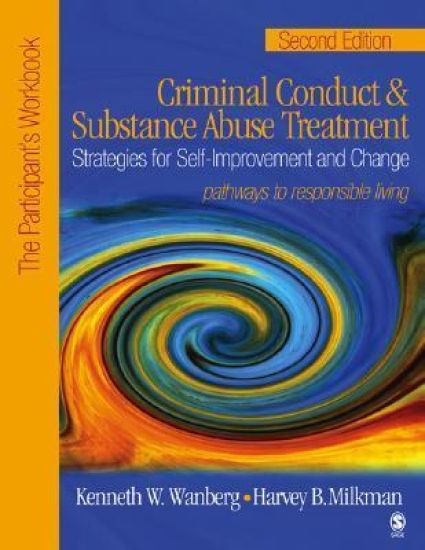
The accompanying Participant's Workbook to the SSC is written to engage clients and encourage active participation in treatment and responsible living. Phase I: Challenge to Change: Building Knowledge and Skills for Responsible Living Phase II: Commitment to Change: Strengthening Skills for Self-Improvement, Change, and Responsible Living Phase III: Taking Ownership of Change: Lifestyle Balance and Healthy LivingSAGE offers treatment and training programs for mental health providers that you can easily incorporate into your existing programs.
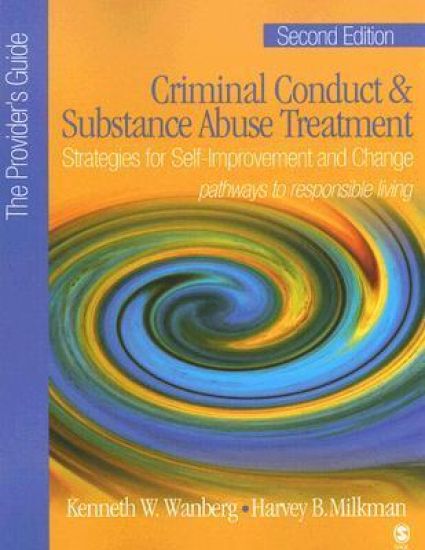
Designed for providers who work with judicial clients, the Providers Guide presents effective cognitive-behavioral treatment approaches. The Second Edition of this bestseller unveils a state-of-the-art approach for effectively preventing criminal recidivism and substance abuse relapse within community based and correctional settings. The core of the SSC program is a positive relationship between provider and client. Summary of results survey from the first edition of SSC 95% of the providers rated the components of SSC to be adequate to very adequate in meeting the treatment needs of judicial clients Over 90% of providers rated clients as having a moderate to very high involvement in homework and reading 95% of the clients rates as very high their satisfaction of SSC delivery, the provider's response to client needs and clients' comfort with providersAround 80% of clients reported their cognitive and behavioral control over AOD use and criminal conduct had improved during SSCThe accompanying Participant's Workbook to the SSC is written to engage clients and encourage active participation in treatment and responsible living: Phase I: Challenge to Change: Building Knowledge and Skills for Responsible Living Phase II: Commitment to Change: Strengthening Skills for Self-Improvement, Change, and Responsible Living Phase III: Taking Ownership of Change: Lifestyle Balance and Healthy Living
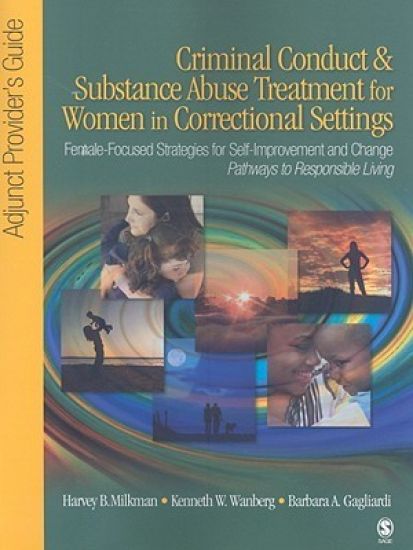
There is an urgent demand for treatment protocols designed specifically for women who abuse drugs, commit crimes, and receive treatment in correctional settings. Criminal Conduct and Substance Abuse Treatment for Women in Correctional Settings answers the clamor by targeting the biological, psychological, and social roots of female substance abuse and crime. Designed as an adjunct to the Criminal Conduct and Substance Abuse Treatment: Strategies for Self-Improvement and Change (SSC) curriculum, this provider's guide uses female-focused examples, exercises, role plays, and content enhancements that pinpoint women's treatment issues. Features and BenefitsIncreases the female focus of each session in the original SSC curriculum, a renowned and effective treatment model Assumes a strengths-based approach, which helps build support systems and motivate recovery for womenProvides a broad perspective on psychological, social and biological issues and enhances treatment outcomes across a wide spectrum of agencies and treatment providersIntended AudienceThis adjunct provider's guide is essential to agencies, treatment centers, and practitioners working with women in the judicial system – offering female clients the best possible chance to get back on the road to recovery. This adjunct provider's guide is essential to agencies, treatment centers, and practitioners working with women in the judicial system – offering female clients the best possible chance to get back on the road to recovery. This volume provides an invaluable gender focus for:Criminal Conduct and Substance Abuse Treatment Strategies for Responsible Living and ChangeThe Participant's Workbook Second EditionKenneth W. Wanberg and Harvey B. MilkmanISBN: 978-1-4129-0591-6The Provider's GuideSecond EditionKenneth W. Wanberg and Harvey B. MilkmanISBN: 978-1-4129-0592-3
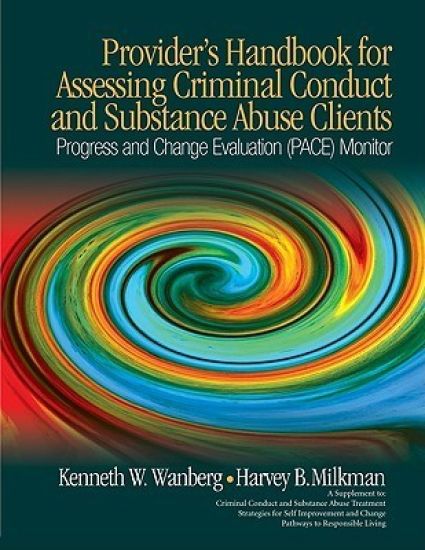
Handbook of Assessing and Treating Substance Abuse and Criminal Conduct:The Progress and Change Evaluation (PACE) Monitor is an instructive guide that helps agencies and providers assess, monitor and evaluate the change and progress made by criminal justice clients at the beginning, during and after treatment. The guide contains dozens of instruments used to assess and evaluate clients, along with a description of each item and instructions on how to score and interpret it. It was created to be used in conjunction with the Criminal Conduct and Substance Abuse Treatment: Strategies for Self Improvement and Change curriculum, but the instruments are general enough that they can be used separately and with other curriculums as well. The tools provided in this book will be highly useful for anyone working with clients with co-occurring issues of substance abuse and criminal conduct.SAGE offers treatment and training programs for mental health providers that you can easily incorporate into your existing programs.
Handbook of Assessing and Treating Substance Abuse and Criminal Conduct:The Progress and Change Evaluation (PACE) Monitor is an instructive guide that helps agencies and providers assess, monitor and evaluate the change and progress made by criminal justice clients at the beginning, during and after treatment. The guide contains dozens of instruments used to assess and evaluate clients, along with a description of each item and instructions on how to score and interpret it. It was created to be used in conjunction with the Criminal Conduct and Substance Abuse Treatment: Strategies for Self Improvement and Change curriculum, but the instruments are general enough that they can be used separately and with other curriculums as well. The tools provided in this book will be highly useful for anyone working with clients with co-occurring issues of substance abuse and criminal conduct.SAGE offers treatment and training programs for mental health providers that you can easily incorporate into your existing programs.
Understanding the Modern Russian Police represents the culmination of ten years of research and an ongoing partnership between the Volgograd Academy of Russian Internal Affairs Ministry (VA MVD) and the Volgograd branch of the Russian Presidential Academy of National Economy and Public Administration (VAPA). The book provides a timely and comprehensive analysis of the historical development, functions, and contemporary challenges faced by the modern Russian police.Spanning more than two centuries of history, the book covers: The tsarist police evolution that witnessed the creation of the Ministry of Internal Affairs of the Russian Federation (MVD) in 1802 and concluding with the 1917 October Revolution The Soviet era from the 1917 October Revolution until Stalin’s death in 1953The Khrushchev and Brezhnev periods, and the Soviet police’s maturation into a professionally educated and well-equipped law enforcement systemThe transformational period of police development beginning with Gorbachev’s perestroika and concluding with the first term of Putin in 2008The structure, authority, and workforce of the modern Russian policePublic-police relationships existing today in RussiaReports by Amnesty International and Human Rights Watch on corruption and abuse of power, along with a legal analysis of practices by the European Court of Human Rights (ECHR)The 2011 Police Reform by MedvedevThe book concludes with some predictions on the future of the Russian police and its potential reforms. Encompassing the efforts of many great researchers from Russia, this exhaustive review of the history of policing in Russia enables readers to comprehend the societal and political forces that have shaped policing in this country.
This Provider's Guide introduces a comprehensive and developmentally appropriate treatment program, Pathways for Self-Discovery and Change (PSDC), which provides the specific tools necessary for improving evaluation and treatment of at-risk youth, a particularly vulnerable patient population in the justice system. Using an adolescent-focused format, this protocol identifies psychological, biological, and social factors that contribute to the onset of adolescent deviance, and establishes guidelines for delivery of a 32-session treatment curriculum designed to rehabilitate both male and female adolescents with co-occurring substance abuse and criminal conduct. Now in its Second Edition, this guide provides treatment practitioners, program evaluators, and youth services administrators with the most up to date, comprehensive, and accessible information for the treatment and rehabilitation of juvenile justice clients. It is built on theoretical and research advances in the treatment and rehabilitation of juvenile justice clients, as well as feedback over the past seven years from PSDC counselees, treatment providers, and program administrators. SAGE offers treatment and training programs for mental health providers that you can easily incorporate into your existing programs.
Pathways to Self-Discovery and Change: A Guide for Responsible Living - The Participant’s Workbook, Second Edition provides a written and richly illustrated format through which clients can better understand and reflect on each of 32 (approximately 90 to 120 minutes in length) youth-focused CBT treatment sessions. Pathways to Self-Discovery and Change supplies clients with a visual and written record of all treatment objectives, content information, modeling and role-plays, discussion points, interactive exercises, and reflective assignments and a place to record their ideas, insights, short- and long-term goals, and progress during the entire treatment episode. The Participant’s Workbook is geared to a broad range of reading and conceptual abilities. Using comic strip illustrations and gripping stories (presented through the narrative voice of teenagers who experience a variety of problems with substance abuse, criminal conduct, and mental health issues), clients are engaged in active discussion about the situations, thoughts, emotions, and behaviors that have become embroidered in their patterns of substance abuse and criminal conduct.
This book explores a set of concepts that are fundamental for successful leadership of an Information Technology (IT) business. The ideas and concepts explored here have emerged from a ten-year collaboration between the authors in creating professional development programs to support and enhance the remarkable success of a particular IT company - the Information Systems (I/S) Division of BlueCross BlueShield of South Carolina. However, the book is about more than one company's success. Anyone facing the challenge of leading an IT company, an IT unit, or IT projects of most any size will find ideas and concepts here that resonate with their experiences and that will provoke them to think in new and more productive ways about the work they do. This book is the third of a three-book series on the art and science of managing an IT company. In the first book of the series, Picasso on a Schedule, a unique IT organizational structure called the Hierarchical Matrix was described and a framework of repeatable processes for its Matrix component was defined. The Matrix component of the structure focuses on producing the quality technical work that IT clients expect and demand. The Hierarchy component of the structure focuses on managing the resources necessary for the production of that work. In the second book of the series, Managing Picasso, the study of the Hierarchical Matrix was extended with a description of a framework of repeatable processes for the Hierarchy (Management) component of the structure. The Hierarchy's mission has two major features. First it must enable the IT organization's current success by creating and managing a technical workforce that consistently produces excellent client value. Second, it must ensure that the organization remains positioned for long-term success. To accomplish this two-fold mission, those in the Hierarchy must have the technical competence to deal with the creative nature of IT work, and the business competence to employ the best-practices under which successful non-IT businesses operate. Managing Picasso is an accessible reference guide to a framework of repeatable IT management processes that enable the accomplishment of this mission. The current book, Leading Picasso, completes the study of the Hierarchical Matrix with a focus on the leadership concepts necessary to enable both the Hierarchy and the Matrix components to be successful in carrying out their respective responsibilities. Both formal and informal leadership are required for this success, and Leading Picasso addresses both types of leadership, offering a conceptual leadership framework and practical techniques for applying this framework to the work of leadership. Just as is true within the day-to-day work of both the Hierarchy and the Matrix, leadership involves a delicate blend of art and science. Indeed, leadership depends heavily on applying the arts of intuition, vision, courage, and steadfastness in setting direction, then guiding and inspiring other people to accomplish a desired result through influence. This book explores how leaders can accomplish this by employing a set of skills and behaviors that constitute the strengths that actually define a Leader and enable the effective employment of Culture and Vision necessary to successfully adapt their organization for success in changing circumstances.
The State of the Parties 2022 brings together leading scholars of parties, elections, and interest groups to provide an indispensable overview of American political parties today. The 2020 presidential election was extraordinary. What role did political parties play in these events? How did the party organizations fare? What are the implications for the future? Scholars and practitioners from throughout the United States explore the current state of American party organizations, constituencies and resources at the national, state and local level.