Kirjojen hintavertailu. Mukana 11 699 587 kirjaa ja 12 kauppaa.

Kirjahaku

Etsi kirjoja tekijän nimen, kirjan nimen tai ISBN:n perusteella.

1000 tulosta hakusanalla Kimberly Stuart

Enforcing the Peace

Enforcing the Peace

Kimberly Zisk Marten

Columbia University Press
2004
sidottu
Anarchy makes it easy for terrorists to set up shop. Yet the international community has been reluctant to commit the necessary resources to peacekeeping-with devastating results locally and around the globe. This daring new work argues that modern peacekeeping operations and military occupations bear a surprising resemblance to the imperialism practiced by liberal states a century ago. Motivated by a similar combination of self-interested and humanitarian goals, liberal democracies in both eras have wanted to maintain a presence on foreign territory in order to make themselves more secure, while sharing the benefits of their own cultures and societies. Yet both forms of intervention have inevitably been undercut by weak political will, inconsistent policy choices, and their status as a low priority on the agenda of military organizations. In more recent times, these problems are compounded by the need for multilateral cooperation-something even NATO finds difficult to achieve but is now necessary for legitimacy. Drawing lessons from this provocative comparison, Kimberly Zisk Marten argues that the West's attempts to remake foreign societies in their own image-even with the best of intentions-invariably fail. Focusing on operations in Haiti, Bosnia, Kosovo, and East Timor in the mid- to late 1990s, while touching on both post-war Afghanistan and the occupation of Iraq, Enforcing the Peace compares these cases to the colonial activities of Great Britain, France, and the United States at the turn of the twentieth century. The book weaves together examples from these cases, using interviews Marten conducted with military officers and other peacekeeping officials at the UN, NATO, and elsewhere. Rather than trying to control political developments abroad, Marten proposes, a more sensible goal of foreign intervention is to restore basic security to unstable regions threatened by anarchy. The colonial experience shows that military organizations police effectively if political leaders prioritize the task, and the time has come to raise the importance of peacekeeping on the international agenda.

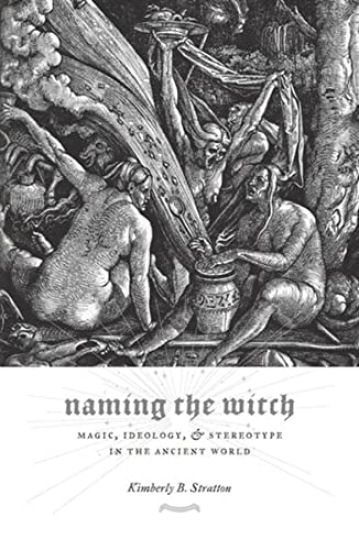
Naming the Witch

Naming the Witch

Kimberly B. Stratton

Columbia University Press
2007
sidottu
Kimberly B. Stratton investigates the cultural and ideological motivations behind early imaginings of the magician, the sorceress, and the witch in the ancient world. Accusations of magic could carry the death penalty or, at the very least, marginalize the person or group they targeted. But Stratton moves beyond the popular view of these accusations as mere slander. In her view, representations and accusations of sorcery mirror the complex struggle of ancient societies to define authority, legitimacy, and Otherness. Stratton argues that the concept "magic" first emerged as a discourse in ancient Athens where it operated part and parcel of the struggle to define Greek identity in opposition to the uncivilized "barbarian" following the Persian Wars. The idea of magic then spread throughout the Hellenized world and Rome, reflecting and adapting to political forces, values, and social concerns in each society. Stratton considers the portrayal of witches and magicians in the literature of four related periods and cultures: classical Athens, early imperial Rome, pre-Constantine Christianity, and rabbinic Judaism. She compares patterns in their representations of magic and analyzes the relationship between these stereotypes and the social factors that shaped them. Stratton's comparative approach illuminates the degree to which magic was (and still is) a cultural construct that depended upon and reflected particular social contexts. Unlike most previous studies of magic, which treated the classical world separately from antique Judaism, Naming the Witch highlights the degree to which these ancient cultures shared ideas about power and legitimate authority, even while constructing and deploying those ideas in different ways. The book also interrogates the common association of women with magic, denaturalizing the gendered stereotype in the process. Drawing on Michel Foucault's notion of discourse as well as the work of other contemporary theorists, such as Homi K. Bhabha and Bruce Lincoln, Stratton's bewitching study presents a more nuanced, ideologically sensitive approach to understanding the witch in Western history.
Naming the Witch

Naming the Witch

Kimberly B. Stratton

Columbia University Press
2022
pokkari
Kimberly B. Stratton investigates the cultural and ideological motivations behind early imaginings of the magician, the sorceress, and the witch in the ancient world. Accusations of magic could carry the death penalty or, at the very least, marginalize the person or group they targeted. But Stratton moves beyond the popular view of these accusations as mere slander. In her view, representations and accusations of sorcery mirror the complex struggle of ancient societies to define authority, legitimacy, and Otherness.Stratton argues that the concept "magic" first emerged as a discourse in ancient Athens where it operated part and parcel of the struggle to define Greek identity in opposition to the uncivilized "barbarian" following the Persian Wars. The idea of magic then spread throughout the Hellenized world and Rome, reflecting and adapting to political forces, values, and social concerns in each society. Stratton considers the portrayal of witches and magicians in the literature of four related periods and cultures: classical Athens, early imperial Rome, pre-Constantine Christianity, and rabbinic Judaism. She compares patterns in their representations of magic and analyzes the relationship between these stereotypes and the social factors that shaped them.Stratton's comparative approach illuminates the degree to which magic was (and still is) a cultural construct that depended upon and reflected particular social contexts. Unlike most previous studies of magic, which treated the classical world separately from antique Judaism, Naming the Witch highlights the degree to which these ancient cultures shared ideas about power and legitimate authority, even while constructing and deploying those ideas in different ways. The book also interrogates the common association of women with magic, denaturalizing the gendered stereotype in the process. Drawing on Michel Foucault's notion of discourse as well as the work of other contemporary theorists, such as Homi K. Bhabha and Bruce Lincoln, Stratton's bewitching study presents a more nuanced, ideologically sensitive approach to understanding the witch in Western history.
Positioning for Advantage

Positioning for Advantage

Kimberly A. Whitler

Columbia University Press
2021
sidottu
Most of us have an intuitive sense of superior branding. We prefer to purchase brands we find distinctive—that deliver on some important, relevant dimension better than other brands. These brands have typically achieved positional advantage. Yet few professionals have had the formal training that goes beyond marketing theory to bridge the “theory-doing gap”—understanding the specific techniques and strategies that can be used to create brands that attain positional advantage in the marketplace.Positioning for Advantage is a comprehensive how-to guide for creating, building, and executing effective brand strategies. Kimberly A. Whitler identifies essential marketing strategy techniques and moves through the major stages of positioning a brand to achieve in-market advantage. Introducing seven tools—from strategic positioning concepts to strategy mapping to influencer maps—Whitler provides templates, frameworks, and step-by-step processes to build and manage growth brands that achieve positional advantage. This book presents real-world scenarios, helping readers activate tools to increase skill in creating brands that achieve positional advantage. Brimming with insights for students and professionals alike, Positioning for Advantage helps aspiring C-level leaders understand not only what superior branding looks like but also how to make it come to life.
The Handbook of LGBTQIA-Inclusive Hospice and Palliative Care

The Handbook of LGBTQIA-Inclusive Hospice and Palliative Care

Kimberly D. Acquaviva

Columbia University Press
2023
sidottu
First place winner, 2024 American Journal of Nursing Book of the Year Award in Palliative Care and HospiceHospice and palliative care professionals are experts at caring for individuals and families experiencing serious or life-limiting illnesses. Not everyone feels safe seeking out their expertise, however: LGBTQIA+ people may be deterred from seeking support because of barriers—both overt and subtle—that hospice and palliative care programs and professionals erect through their policies and practices. This book is an accessible, expert guide to incorporating LGBTQIA-inclusive practices into end-of-life care. It equips both new and experienced hospice and palliative care professionals with the knowledge they need to ensure that all people receive high-quality care.Kimberly D. Acquaviva surveys fundamental concepts and the latest clinical developments, integrating relatable anecdotes and poignant personal reflections. She discusses her own experience caring for her wife, Kathy, who was diagnosed with ovarian cancer in 2019. Unable to find a local hospice with an LGBTQIA-inclusive nondiscrimination statement, let alone one whose staff had been trained to provide nondiscriminatory care to LGBTQIA+ people, Kathy died at home six months later without hospice care.Acquaviva offers clear, actionable strategies for palliative care and hospice physicians, physician associates, advanced-practice registered nurses, registered nurses, social workers, counselors, chaplains, and others. She also emphasizes how incorporating LGBTQIA-inclusive practices can transform work with every person receiving care. Anchored in the evidence and written in plain language, this book is the definitive guide for hospice and palliative care professionals seeking to deliver exceptional care to all the patients and families they serve.
The Handbook of LGBTQIA-Inclusive Hospice and Palliative Care

The Handbook of LGBTQIA-Inclusive Hospice and Palliative Care

Kimberly D. Acquaviva

Columbia University Press
2023
pokkari
First place winner, 2024 American Journal of Nursing Book of the Year Award in Palliative Care and HospiceHospice and palliative care professionals are experts at caring for individuals and families experiencing serious or life-limiting illnesses. Not everyone feels safe seeking out their expertise, however: LGBTQIA+ people may be deterred from seeking support because of barriers—both overt and subtle—that hospice and palliative care programs and professionals erect through their policies and practices. This book is an accessible, expert guide to incorporating LGBTQIA-inclusive practices into end-of-life care. It equips both new and experienced hospice and palliative care professionals with the knowledge they need to ensure that all people receive high-quality care.Kimberly D. Acquaviva surveys fundamental concepts and the latest clinical developments, integrating relatable anecdotes and poignant personal reflections. She discusses her own experience caring for her wife, Kathy, who was diagnosed with ovarian cancer in 2019. Unable to find a local hospice with an LGBTQIA-inclusive nondiscrimination statement, let alone one whose staff had been trained to provide nondiscriminatory care to LGBTQIA+ people, Kathy died at home six months later without hospice care.Acquaviva offers clear, actionable strategies for palliative care and hospice physicians, physician associates, advanced-practice registered nurses, registered nurses, social workers, counselors, chaplains, and others. She also emphasizes how incorporating LGBTQIA-inclusive practices can transform work with every person receiving care. Anchored in the evidence and written in plain language, this book is the definitive guide for hospice and palliative care professionals seeking to deliver exceptional care to all the patients and families they serve.
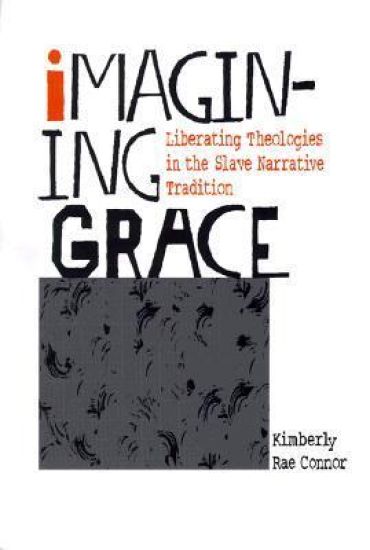
Imagining Grace

Imagining Grace

Kimberly Rae Connor

University of Illinois Press
2000
sidottu
In this subtle and illuminating study, Kimberly Rae Connor surveys examples of contemporary literature, drama, art, and music that extend the literary tradition of African-American slave narratives. Revealing the powerful creative links between this tradition and liberation theology's search for grace, she shows how these artworks profess a liberating theology of racial empathy and reconciliation, even if not in traditionally Christian or sacred language. From Frederick Douglass's autobiographical writings through Richard Wright's imaginative reconstruction of slavery to Ernest Gaines's Autobiography of Miss Jane Pittman and the candescent novels of Toni Morrison, slave narratives exhort the reader to step into the experience of the dispossessed. Connor underscores the broad influence of the slave narrative by considering nonliterary as well as literary works, including Glenn Ligon's introspective art, Anna Deavere Smith's one-woman performance pieces, and Charlie Haden's politically engaged Liberation Music Orchestra. Through these works, readers, listeners, and viewers imagine grace on two levels: as the liberation of the enslaved from oppression and as their own liberation from prejudice and "willed innocence." Calling to task a complacent white society that turns a blind eye to deep-seated and continuing racial inequalities, Imagining Grace shows how these creative endeavors embody the search for grace, seeking to expose racism in all its guises and lay claim to political, intellectual, and spiritual freedom.
Beyond the White Negro

Beyond the White Negro

Kimberly Chabot Davis

University of Illinois Press
2014
sidottu
Critics often characterize white consumption of African American culture as a form of theft that echoes the fantasies of 1950s-era bohemians, or "White Negroes," who romanticized black culture as anarchic and sexually potent. In Beyond the White Negro, Kimberly Chabot Davis claims such a view fails to describe the varied politics of racial crossover in the past fifteen years. Davis analyzes how white engagement with African American novels, film narratives, and hip-hop can help form anti-racist attitudes that may catalyze social change and racial justice. Though acknowledging past failures to establish cross-racial empathy, she focuses on examples that show avenues for future progress and change. Her study of ethnographic data from book clubs and college classrooms shows how engagement with African American culture and pedagogical support can lead to the kinds of white self-examination that make empathy possible. The result is a groundbreaking text that challenges the trend of focusing on society's failures in achieving cross-racial empathy and instead explores possible avenues for change.
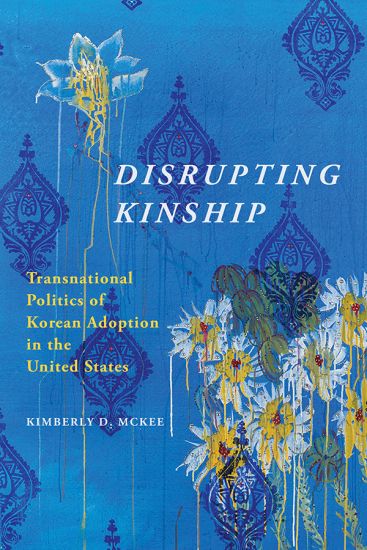
Disrupting Kinship

Disrupting Kinship

Kimberly D. McKee

University of Illinois Press
2019
sidottu
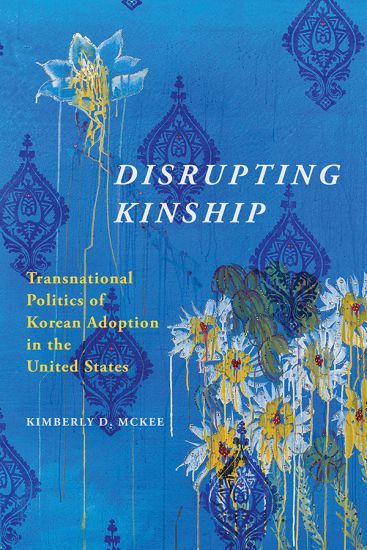
Since the Korean War began, Western families have adopted more than 200,000 Korean children. Two-thirds of these adoptees found homes in the United States. The majority joined white families and in the process forged a new kind of transnational and transracial kinship. Kimberly D. McKee examines the growth of the neocolonial, multi-million-dollar global industry that shaped these families-a system she identifies as the transnational adoption industrial complex. As she shows, an alliance of the South Korean welfare state, orphanages, adoption agencies, and American immigration laws powered transnational adoption between the two countries. Adoption became a tool to supplement an inadequate social safety net for South Korea's unwed mothers and low-income families. At the same time, it commodified children, building a market that allowed Americans to create families at the expense of loving, biological ties between Koreans. McKee also looks at how Christian Americanism, South Korean welfare policy, and other facets of adoption interact with and disrupt American perceptions of nation, citizenship, belonging, family, and ethnic identity.
COMPUGIRLS

COMPUGIRLS

Kimberly A. Scott

University of Illinois Press
2021
sidottu
What does is it mean for girls of color to become techno-social change agents--individuals who fuse technological savvy with a deep understanding of society in order to analyze and confront inequality? Kimberly A. Scott explores this question and others as she details the National Science Foundation-funded enrichment project COMPUGIRLS. This groundbreaking initiative teaches tech skills to adolescent girls of color but, as importantly, offers a setting that emphasizes empowerment, community advancement, and self-discovery. Scott draws on her experience as an architect of COMPUGIRLS to detail the difficulties of translating participants' lives into a digital context while tracing how the program evolved. The dramatic stories of the participants show them blending newly developed technical and communication skills in ways designed to spark effective action and bring about important change. A compelling merger of theory and storytelling, COMPUGIRLS provides a much-needed roadmap for understanding how girls of color can find and define their selves in today's digital age.
Mobilizing Minerva

Mobilizing Minerva

Kimberly Jensen

University of Illinois Press
2008
nidottu
Mobilizing Minerva: American Women in the First World War analyzes the strategies of female physicians, nurses, and women-at-arms who linked military service with the opportunity to achieve professional and civic goals. Since women armed to defend the state during war could also protect themselves, Kimberly Jensen argues, Americans began to focus on women's relationship to violence--both its wielding against women and women's uses of it. Intense discussions of rape, methods of protecting women, and proper gender roles abound as Jensen draws from rich case studies to show how female thinkers and activists wove wartime choices into long-standing debates about woman suffrage, violence against women, gender-based discrimination, and economic parity. The war created new urgency in these debates, and Jensen forcefully presents the case of women participants and activists: women's involvement in the obligation of citizens to defend the state validated their right of full female citizenship.
Beyond the White Negro

Beyond the White Negro

Kimberly Chabot Davis

University of Illinois Press
2014
nidottu
Critics often characterize white consumption of African American culture as a form of theft that echoes the fantasies of 1950s-era bohemians, or "White Negroes," who romanticized black culture as anarchic and sexually potent. In Beyond the White Negro, Kimberly Chabot Davis claims such a view fails to describe the varied politics of racial crossover in the past fifteen years. Davis analyzes how white engagement with African American novels, film narratives, and hip-hop can help form anti-racist attitudes that may catalyze social change and racial justice. Though acknowledging past failures to establish cross-racial empathy, she focuses on examples that show avenues for future progress and change. Her study of ethnographic data from book clubs and college classrooms shows how engagement with African American culture and pedagogical support can lead to the kinds of white self-examination that make empathy possible. The result is a groundbreaking text that challenges the trend of focusing on society's failures in achieving cross-racial empathy and instead explores possible avenues for change.
Disrupting Kinship

Disrupting Kinship

Kimberly D. McKee

University of Illinois Press
2019
nidottu
Since the Korean War began, Western families have adopted more than 200,000 Korean children. Two-thirds of these adoptees found homes in the United States. The majority joined white families and in the process forged a new kind of transnational and transracial kinship. Kimberly D. McKee examines the growth of the neocolonial, multi-million-dollar global industry that shaped these families-a system she identifies as the transnational adoption industrial complex. As she shows, an alliance of the South Korean welfare state, orphanages, adoption agencies, and American immigration laws powered transnational adoption between the two countries. Adoption became a tool to supplement an inadequate social safety net for South Korea's unwed mothers and low-income families. At the same time, it commodified children, building a market that allowed Americans to create families at the expense of loving, biological ties between Koreans. McKee also looks at how Christian Americanism, South Korean welfare policy, and other facets of adoption interact with and disrupt American perceptions of nation, citizenship, belonging, family, and ethnic identity.
COMPUGIRLS

COMPUGIRLS

Kimberly A. Scott

University of Illinois Press
2021
nidottu
What does is it mean for girls of color to become techno-social change agents--individuals who fuse technological savvy with a deep understanding of society in order to analyze and confront inequality? Kimberly A. Scott explores this question and others as she details the National Science Foundation-funded enrichment project COMPUGIRLS. This groundbreaking initiative teaches tech skills to adolescent girls of color but, as importantly, offers a setting that emphasizes empowerment, community advancement, and self-discovery. Scott draws on her experience as an architect of COMPUGIRLS to detail the difficulties of translating participants' lives into a digital context while tracing how the program evolved. The dramatic stories of the participants show them blending newly developed technical and communication skills in ways designed to spark effective action and bring about important change. A compelling merger of theory and storytelling, COMPUGIRLS provides a much-needed roadmap for understanding how girls of color can find and define their selves in today's digital age.
Society of the Righteous

Society of the Righteous

Kimberly T. Wortmann

INDIANA UNIVERSITY PRESS
2024
sidottu
Although the rule of the Omani sultanate in Tanzania came to an end following the Zanzibar Revolution in 1964, the legacy of its empire still exists today, along with its distinctive religious identity. The Ibadhi Muslims of Omani descent, who are neither Sunni nor Shi'a, have used a message of tolerance and harmonious coexistence to spread their beliefs across North and East Africa in a post-revolution and post-independence era. In Society of the Righteous, Kimberly T. Wortmann explores how the Ibadhi-Omani community in Tanzania has engaged in charitable activities, cooperation within the Muslim community, and economic development, despite facing suspicions of foreign influence and elitism. The focus is on the Istiqaama Muslim Community, an international charity network established in Oman and Tanzania in 1995. This ethnographic and transregional study documents the strategies employed by the "People of Truth and Righteousness" to preserve their unique religious practices and beliefs. Society of the Righteous moves beyond the typical discussions on global Muslim religion and politics, such as tradition versus modernity, conflicts between different branches of Islam, and the global war on terror. Instead, it explores the intricacies of a religious community whose significance has been obscured by the limitations of area studies paradigms. It illuminates the complexities of religious identity, transnational networks, gender relations, and the power of collective memory in shaping narratives of belonging, cultural preservation, and change in an increasingly interconnected world.
Society of the Righteous

Society of the Righteous

Kimberly T. Wortmann

INDIANA UNIVERSITY PRESS
2024
pokkari
Although the rule of the Omani sultanate in Tanzania came to an end following the Zanzibar Revolution in 1964, the legacy of its empire still exists today, along with its distinctive religious identity. The Ibadhi Muslims of Omani descent, who are neither Sunni nor Shi'a, have used a message of tolerance and harmonious coexistence to spread their beliefs across North and East Africa in a post-revolution and post-independence era. In Society of the Righteous, Kimberly T. Wortmann explores how the Ibadhi-Omani community in Tanzania has engaged in charitable activities, cooperation within the Muslim community, and economic development, despite facing suspicions of foreign influence and elitism. The focus is on the Istiqaama Muslim Community, an international charity network established in Oman and Tanzania in 1995. This ethnographic and transregional study documents the strategies employed by the "People of Truth and Righteousness" to preserve their unique religious practices and beliefs. Society of the Righteous moves beyond the typical discussions on global Muslim religion and politics, such as tradition versus modernity, conflicts between different branches of Islam, and the global war on terror. Instead, it explores the intricacies of a religious community whose significance has been obscured by the limitations of area studies paradigms. It illuminates the complexities of religious identity, transnational networks, gender relations, and the power of collective memory in shaping narratives of belonging, cultural preservation, and change in an increasingly interconnected world.
Perfectionism and Contemporary Feminist Values

Perfectionism and Contemporary Feminist Values

Kimberly A. Yuracko

Indiana University Press
2003
pokkari
Although formal barriers to women's social and political participation have crumbled, society remains, to a significant degree, gendered in the roles that women and men play. Women's and men's choices regarding work and family are largely responsible for maintaining and reinforcing the differences. While feminists recognize the need to criticize women's choices, too often they focus on restrictive conditions rather than the choices themselves. Kimberly A. Yuracko argues instead that encouraging women to make choices in accordance with a grounded and well-defined conception of perfectionism—a philosopy concerned with human flourishing—is the most effective way to redress persistent gender inequality. To this end, Yuracko seeks not only to expose the perfectionism underlying current choice critiques, but to articulate a concrete set of feminist perfectionist principles that would improve the quality of individual women's lives and improve the social standing of women as a whole.
Performing Folklore

Performing Folklore

Kimberly DaCosta Holton

Indiana University Press
2005
pokkari
Through the lens of expressive culture, Performing Folklore tracks Portugal's transition from fascism to democracy, and from imperial metropole to EEC member state. Kimberly DaCosta Holton examines the evolution and significance of ranchos folclóricos, groups of amateur musicians and dancers who perform turn-of-the-century popular tradition and have acted as cultural barometers of change throughout 20th-century Portugal. She investigates the role that these folklore groups played in the mid-twentieth-century dictatorship, how they fell out of official favor with the advent of democracy, and why they remain so popular in Portugal's post-authoritarian state, especially in emigrant and diasporic communities. Holton looks at music, dance, costume, repertoire, venue, and social interplay in both local and global contexts. She considers the importance of revivalist folklore in the construction and preservation of national identity in the face of globalization. This book embraces "invented tradition" as process rather than event, presenting an ethnography not only of folkloric revivalism but also of sweeping cultural transformation, promoted alternately by authoritarianism, democracy, emigration, and European unification.
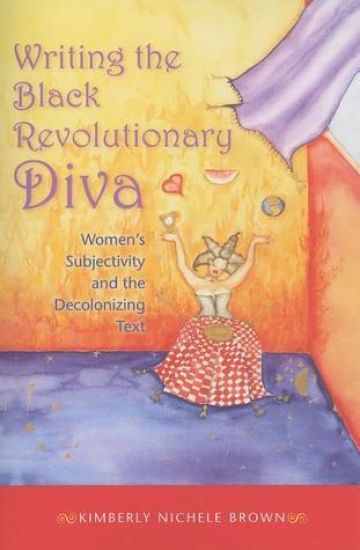
Writing the Black Revolutionary Diva

Writing the Black Revolutionary Diva

Kimberly Nichele Brown

Indiana University Press
2010
pokkari
Kimberly Nichele Brown examines how African American women since the 1970s have found ways to move beyond the "double consciousness" of the colonized text to develop a healthy subjectivity that attempts to disassociate black subjectivity from its connection to white culture. Brown traces the emergence of this new consciousness from its roots in the Black Aesthetic Movement through important milestones such as the anthology The Black Woman and Essence magazine to the writings of Angela Davis, Toni Cade Bambara, and Jayne Cortez.