Kirjojen hintavertailu. Mukana 11 244 527 kirjaa ja 12 kauppaa.

Kirjahaku

Etsi kirjoja tekijän nimen, kirjan nimen tai ISBN:n perusteella.

1000 tulosta hakusanalla Kristen Howe

Biohack Your Brain

Biohack Your Brain

Kristen Willeumier

William Morrow Paperbacks
2022
nidottu
A top neuroscientist’s science-driven plan on how to take better care of your brain, and, in doing so, how to enhance your memory, lose excess weight, and increase your energy and vitality. Build your best health and life possible by taking care of your brain.Your brain is the most essential organ in your body. The brain and spinal cord are intimately connected to every bodily system and organ, so when it is balanced everything in your body and mind will function more efficiently. It’s vitally important to take proactive steps now, or you risk losing everything, including your ability to think clearly, be creative, remember details, solve problems, and retain your memory.In Biohack Your Brain, leading neuroscientist Dr. Kristen Willeumier reveals how you can change your brain by making simple and easy modifications to your lifestyle. Combining clinical experience with revolutionary science, she details how biohacking your brain can boost your cognitive performance and so much more.Dr. Willeumier’s essential guidebook shows you the most effective techniques to prevent memory loss and neurodegenerative disorders like Alzheimer’s disease—and even how to overcome negative thoughts and stress. Through research and case studies, you’ll learn how to upgrade your nutritional choices along with the effective use of supplements, brain games, and physical activity to overcome cognitive damage, whether it’s from previous injuries, such as a concussion or a bad fall, or from the effects of living in modern day times. Dr. Willeumier shares her own story alongside those from the NFL players and other clients she has worked with to help you leverage the latest research to find personal solutions. Biohack Your Brain is a groundbreaking plan for revitalizing, nourishing, and rejuvenating your most essential asset.

My Seder Plate Shaped Board Book

My Seder Plate Shaped Board Book

Kristen Weber

HARPERCOLLINS PUBLISHERS INC
2025
pahvisivuinen
Get ready for Passover and introduce little ones to the Seder ritual with this festive shaped board book!My Seder plate helps celebratea holiday so fun.Friends and family come and eat—there’s room for everyone!With rhyming text and warm illustrations, this holiday board book describes the traditional items on a Seder plate and their significance during Passover. A simple introduction to and celebration of the holiday—perfect for babies and toddlers. Chag Sameach to you!
Vaccines

Vaccines

Kristen A. Feemster

Oxford University Press Inc
2017
sidottu
Immunization is regarded by many as one of the greatest advances in modern civilization. The widespread use of vaccines has led to increases in life expectancy, reductions in the occurrence of childhood diseases, and is generally credited with saving millions of lives annually. But since their discovery two centuries ago, vaccines have been dogged by pockets of persistent distrust among those who are skeptical of their science or who find compulsory immunization at odds with personal liberty. The rise of these voices in contemporary culture has contributed to trends of vaccine delay and vaccine hesitancy in some communities -- a chasm between the general population and the scientific establishment that has persisted and grown at times across the last several decades. VACCINES: What Everyone Needs to Know® offers a scientifically grounded overview of the science, manufacture, and culture of vaccines in the United States and internationally. Aiming to offer an unbiased resource on this hotly debated subject, it provides accessible, authoritative overviews of the following: · How vaccines work · The history of vaccines · Vaccine policy -- who writes it, and does it matter? · The contents and manufacture of vaccines · Vaccine injury · The alleged link between vaccines and autism · Vaccines and new outbreaks Written by a leading authority in both infectious disease and vaccine education, this book offers a clear-eyed resource for parents or anyone with an interest in the use, efficacy, and controversy surrounding vaccines. In a subject area defined by partisanship, it offers reliable resource for what everyone needs to know.
Vaccines

Vaccines

Kristen A. Feemster

Oxford University Press Inc
2017
nidottu
Immunization is regarded by many as one of the greatest advances in modern civilization. The widespread use of vaccines has led to increases in life expectancy, reductions in the occurrence of childhood diseases, and is generally credited with saving millions of lives annually. But since their discovery two centuries ago, vaccines have been dogged by pockets of persistent distrust among those who are skeptical of their science or who find compulsory immunization at odds with personal liberty. The rise of these voices in contemporary culture has contributed to trends of vaccine delay and vaccine hesitancy in some communities -- a chasm between the general population and the scientific establishment that has persisted and grown at times across the last several decades. VACCINES: What Everyone Needs to Know® offers a scientifically grounded overview of the science, manufacture, and culture of vaccines in the United States and internationally. Aiming to offer an unbiased resource on this hotly debated subject, it provides accessible, authoritative overviews of the following: · How vaccines work · The history of vaccines · Vaccine policy -- who writes it, and does it matter? · The contents and manufacture of vaccines · Vaccine injury · The alleged link between vaccines and autism · Vaccines and new outbreaks Written by a leading authority in both infectious disease and vaccine education, this book offers a clear-eyed resource for parents or anyone with an interest in the use, efficacy, and controversy surrounding vaccines. In a subject area defined by partisanship, it offers reliable resource for what everyone needs to know.
Philip Pullman and the Historical Imagination

Philip Pullman and the Historical Imagination

Kristen Poole

Oxford University Press
2025
sidottu
Philip Pullman and the Historical Imagination takes the general reader on a fascinating tour of seventeenth-century thought, exploring how this time period shaped Pullman's extraordinary trilogies His Dark Materials and The Book of Dust. In Part One, readers are taken into the mysteries of Renaissance allegory and hieroglyphics, tracing how the alethiometer and Lyra's way of reading the device emerged from these traditions. Part Two enters the exciting and revolutionary world of seventeenth-century science. We see how the amber spyglass imitates Galileo's telescope, how early modern fantasies of space travel led to ideas of multiple worlds, how alchemy entered Lyra's later adventures in Oxford and Prague, and how the concept of Dust shares in the physics and philosophies of early scientists like Margaret Cavendish. Part Three invites readers into the thrilling epic poem Paradise Lost--John Milton's dramatic account of the creation of the world following a violent war in Heaven--that was Pullman's inspiration for His Dark Materials. Pullman's vibrant re-telling of this core story brings us rebel angels, recasts Satan as a brooding Lord Asriel, and presents Lyra as the new Eve. Written by an eminent scholar of seventeenth-century literature and history, Philip Pullman and the Historical Imagination is crafted in an engaging and accessible style aimed at popular readers and fans of Pullman's work. It enlivens a historical period that has long attracted Pullman himself, bringing to life intriguing figures and the richly complex ideas of the time. This book is an exploration of history through the worlds and characters Pullman has invented. Ultimately, it not only reveals how seventeenth-century history helps readers better understand Pullman's novels, but shows how reading history through the lens of Pullman's imagination offers new ways of thinking about the past.
Seeking Imperialism's Embrace

Seeking Imperialism's Embrace

Kristen Stromberg Childers

Oxford University Press Inc
2016
sidottu
In 1946, at a time when other French colonies were just beginning to break free of French imperial control after World War II, the people of the French Antilles--the Caribbean islands of Martinique and Guadeloupe--voted to join the French nation as departments (Départments d'outre mer, or DOMs). For Antilleans, eschewing independence in favor of complete integration with the metropole was the natural culmination of a centuries-long quest for equality with France and a means of overcoming the entrenched political and economic power of the white minority on the islands, the Békés. Disappointment with departmentalization set in quickly, however, as the equality promised was slow in coming and Antillean contributions to the war effort went unrecognized. In analyzing the complex considerations surrounding the integration of the French Antilleans, Seeking Imperialism's Embrace explores how the major developments of post-WWII history--economic recovery, great power politics, global population dynamics, the creation of pluralistic societies in the West, and the process of decolonization--played out in the microcosm of the French Caribbean. As the French government struggled to stem unrest among a growing population in the Antilles through economic development, tourism, and immigration to the metropole where labor was in short supply, those who had championed departmentalization, such as Aimé Césaire, argued that the "race-blind" Republic was far from universal and egalitarian. Antilleans fought against the racial and gender stereotypes imposed on them and sought both to stem the tide of white metropolitan workers arriving in the Antilles and also to make better lives for their families in France. Kristen Stromberg Childers argues that while departmentalization is often criticized as a weak alternative to national independence, the overwhelmingly popular vote among Antilleans should not be dismissed as ill-conceived. The disappointment that followed, she contends, reflects more on the broken promises of assimilation rather than the misguided nature of the vote itself.
TERRORISM: Commentary on Security Documents Volume 103: Global Issues

TERRORISM: Commentary on Security Documents Volume 103: Global Issues

Kristen Boon; Aziz Huq; Jr. Lovelace

Oxford University Press Inc
2009
sidottu
With this volume of Terrorism: Commentary on Security Documents, Oxford continues the recent changes to this series that have justified a new publisher-brand, a new title, and a re-designed cover. That new title emphasizes the expert commentary now provided by three leading scholars in the field: Doug Lovelace, Director of the Army War College's Strategic Studies Institute, Kristen Boon of Seton Hall Law School, and Aziz Huq of the University of Chicago School of Law. In this particular volume, Lovelace updates researchers on new developments in various regions of the world. He devotes many pages to the debacle along the Afghanistan-Pakistan border, where Pakistan harbors extremists conducting the insurgency in Afghanistan. Both the documents selected by Lovelace and his insightful commentary describe how the U.S., under advice from Special Envoy Dick Holbrooke, has changed its approach to the problem by treating Afghanistan and Pakistan as one party instead of two. Volume 103 ( "Global Issues ") also examines the complex issue of China's possible assistance to terrorists overseas. For example, some weapons used against coalition forces in Afghanistan originate from China, despite China's promise to help the U.S. in its war against terror. Lovelace and the documents he presents also assess India's measured, thoughtful reaction to allegations that Pakistan facilitated the November terrorist attacks in Mumbai. The volume also alerts readers to disturbing developments in South America, where such groups as FARC in Colombia and The Shining Path in Peru have persisted in their profit-seeking campaigns of violence, despite those countries' general success in diminishing their power.
TERRORISM: Commentary on Security Documents, Volume 104

TERRORISM: Commentary on Security Documents, Volume 104

Kristen Boon; Aziz Huq; Jr. Lovelace

Oxford University Press Inc
2009
sidottu
Terrorism: Commentary on Security Documents Volume 104: Current Trends brings readers up to date on the major trends in U.S. counter-terrorism efforts. In this volume, General Editors Doug Lovelace, Kristen Boon and Aziz Huq categorize the selected documents into three realms: strategic trends, economic trends, and intelligence trends. In the strategic realm, Lovelace provides helpful commentary on such underreported national security threats as the threat of conventional arms posed by developing countries. The main economic trend that this volume explores is the immense economic burden created by the US military campaigns in Afghanistan and Iraq. The last section of this volume presents the latest information on how technology is improving the intelligence capabilities of the U.S. military. In particular, Volume 104 (Current Trends) details how the U.S. military has adjusted its counter-terror strategy in light of the Global War on Terrorism's open-ended, seemingly endless nature. Lovelace's commentary and document selection also reveal the problem the U.S. federal government faces in its commitment to insure victims of terrorism for their losses. Lastly, this volume shows how the U.S. intelligence community has now sought to improve its effectiveness by studying the non-terrorist criminal steps that extremist groups take in preparation for an attack.
TERRORISM: Commentary on Security DocumentsVolume 105: Narco-Terrorism

TERRORISM: Commentary on Security DocumentsVolume 105: Narco-Terrorism

Kristen Boon; Aziz Huq; Douglas Lovelace

Oxford University Press Inc
2010
sidottu
Volume 105 of Terrorism: Commentary on Security Documents ("Narco-Terrorism") brings researchers up to date on U.S. and international efforts to stem terrorism related to drug trafficking. In the pages of this volume, readers will find both legal documents from criminal cases against narco-terrorists and governmental reports on how to approach the problem on a broader level. After showing recent trends in combating narco-terrorism globally, Volume 105 focuses on the rising drug crises in Colombia and Afghanistan. Researchers will find in this volume not just U.S. agencies' major reports on international drug-trafficking but also similarly comprehensive reports from international organizations, from NGOs to the U.N. These reports place a particular focus on the connection between terrorist activity and the global narcotics trade. The section on Colombia, while updating readers on the international struggle with that country's drug cartels, also includes an analysis of the political, diplomatic, and economic challenges in intervening there. The Afghanistan portion of the volume shows how the U.S. has tried to confront the heroin trade that has funded the Taliban there, including an example of how the U.S. government has used criminal prosecutions domestically to curb that trade.
TERRORISM: Commentary on Security DocumentsVolume 106: Terrorist Financing and Money Laundering

TERRORISM: Commentary on Security DocumentsVolume 106: Terrorist Financing and Money Laundering

Kristen Boon; Aziz Huq; Douglas Lovelace

Oxford University Press Inc
2010
sidottu
Volume 106 of Terrorism: Commentary on Security Documents ("Terrorist Financing and Money Laundering") guides readers through the complex legal terrain of terrorist financing and money-laundering. Researchers will benefit from the diversity of this volume's selection: from U.S. agency reports on how to implement the recommendations of the 9/11 Commission to the efforts of the European Parliament in seizing assets to two perspectives on how well Saudi Arabia is combating terrorist financing within its borders: the U.S. perspective and the perspective of Saudi Arabia itself. Equally important for researchers is this volume's extensive treatment of U.N. measures on terrorist financing and money laundering. The volume concludes with the full text of the model rules for regulating terrorism-related financial transactions, as promulgated by a joint body of the U.N. and the International Monetary Fund.
Taking Stock of Shock

Taking Stock of Shock

Kristen Ghodsee; Mitchell Orenstein

Oxford University Press Inc
2021
sidottu
Kristen Ghodsee and Mitchell A. Orenstein blend empirical data with lived experiences to produce a robust picture of who won and who lost in post-communist transition, contextualizing the rise of populism in Eastern Europe. After the fall of the Berlin Wall in 1989, more than 400 million people suddenly found themselves in a new reality, a dramatic transition from state socialist and centrally planned workers' states to liberal democracy (in most cases) and free markets. Thirty years later, postsocialist citizens remain sharply divided on the legacies of transition. Was it a success that produced great progress after a short recession, or a socio-economic catastrophe foisted on the East by Western capitalists? Taking Stock of Shock aims to uncover the truth using a unique, interdisciplinary investigation into the social consequences of transition—including the rise of authoritarian populism and xenophobia. Showing that economic, demographic, sociological, political scientific, and ethnographic research produce contradictory results based on different disciplinary methods and data, Kristen Ghodsee and Mitchell Orenstein triangulate the results. They find that both the J-curve model, which anticipates sustained growth after a sharp downturn, and the "disaster capitalism" perspective, which posits that neoliberalism led to devastating outcomes, have significant basis in fact. While substantial percentages of the populations across a variety of postsocialist countries enjoyed remarkable success, prosperity, and progress, many others suffered an unprecedented socio-economic catastrophe. Ghodsee and Orenstein conclude that the promise of transition still remains elusive for many and offer policy ideas for overcoming negative social and political consequences.
Taking Stock of Shock

Taking Stock of Shock

Kristen Ghodsee; Mitchell Orenstein

Oxford University Press Inc
2021
nidottu
Kristen Ghodsee and Mitchell A. Orenstein blend empirical data with lived experiences to produce a robust picture of who won and who lost in post-communist transition, contextualizing the rise of populism in Eastern Europe. After the fall of the Berlin Wall in 1989, more than 400 million people suddenly found themselves in a new reality, a dramatic transition from state socialist and centrally planned workers' states to liberal democracy (in most cases) and free markets. Thirty years later, postsocialist citizens remain sharply divided on the legacies of transition. Was it a success that produced great progress after a short recession, or a socio-economic catastrophe foisted on the East by Western capitalists? Taking Stock of Shock aims to uncover the truth using a unique, interdisciplinary investigation into the social consequences of transition—including the rise of authoritarian populism and xenophobia. Showing that economic, demographic, sociological, political scientific, and ethnographic research produce contradictory results based on different disciplinary methods and data, Kristen Ghodsee and Mitchell Orenstein triangulate the results. They find that both the J-curve model, which anticipates sustained growth after a sharp downturn, and the "disaster capitalism" perspective, which posits that neoliberalism led to devastating outcomes, have significant basis in fact. While substantial percentages of the populations across a variety of postsocialist countries enjoyed remarkable success, prosperity, and progress, many others suffered an unprecedented socio-economic catastrophe. Ghodsee and Orenstein conclude that the promise of transition still remains elusive for many and offer policy ideas for overcoming negative social and political consequences.
Unequal Neighbors

Unequal Neighbors

Kristen Hill Maher; David Carruthers

Oxford University Press Inc
2021
nidottu
San Diego and Tijuana are the site of a national border enforcement spectacle, but they are also neighboring cities with deeply intertwined histories, cultures, and economies. In Unequal Neighbors, Kristen Hill Maher and David Carruthers shift attention from the national border to a local one, examining the role of place stigma in reinforcing actual and imagined inequalities between these cities. Widespread "bordered imaginaries" in San Diego represent it as a place of economic vitality, safety, and order, while stigmatizing Tijuana as a zone of poverty, crime, and corruption. These dualisms misrepresent complex realities on the ground, but they also have real material effects: the vision of a local border benefits some actors in the region while undermining others. Based on a wide range of original empirical materials, the book examines how asymmetries between these cities have been produced and reinforced through stigmatizing representations of Tijuana in media, everyday talk, economic relations, and local tourism discourse and practices. However, both place stigma and borders are subject to contestation, and the book also examines "debordering" practices and counter-narratives about Tijuana's image. While the details of the book are particular to this corner of the world, the kinds of processes it documents offer a window into the making of unequal neighbors more broadly. The dynamics at the Tijuana border present a framework for understanding how inequalities that manifest in cultural practices produce asymmetric borders between places.
Vaccines

Vaccines

Kristen A. Feemster

OXFORD UNIVERSITY PRESS INC
2024
sidottu
Vaccines: What Everyone Needs to Know® offers an accessible overview of the science, manufacture, and culture of vaccines in the United States and internationally, with needed updates in light of rapid advances in vaccine technologies and distribution. This second edition expands the lens of vaccine access and equity with authoritative insight into the following: · How vaccines work · History of vaccines · Vaccine content and manufacturing · Vaccine policy and regulation · Vaccine injury · Vaccines and alleged effects on autism · Development of Ebola and COVID-19 vaccines · Modern global vaccine hesitancy movement Written by a leading authority in both infectious disease and vaccine education, this book offers a clear-eyed resource for students, clinicians, and general readers interested in the use, efficacy, and controversy surrounding vaccines. In a subject area defined by partisanship, it offers a reliable resource for what everyone needs to know.
Islamic Law in Action

Islamic Law in Action

Kristen Stilt

Oxford University Press
2012
sidottu
A dynamic account of the practice of Islamic law, this book focuses on the actions of a particular legal official, the muhtasib, whose vast jurisdiction included all public behavior. In the cities of Cairo and neighboring Fustat during the Mamluk period (1250-1517), the men who held the position of muhtasib acted as regulators of markets and public spaces generally. They traversed their jurisdictions carrying out the duty to command right and forbid wrong, and were as much a part of the legal landscape as the better-known figures of judge and mufti. Taking directions from the rulers, the sultan foremost among them, they were also guided by legal doctrine as formulated by the jurists, combining these two sources of law in one face of authority. The daily workings of the law are illuminated by the reports of the muhtasib in the vivid Mamluk-era chronicles, which often also captured the responses of the individuals who encountered the official. The book is organized around actions taken by the muhtasib in the areas of Muslim devotional and pious practices; crimes and offenses; the management of Christians and Jews; market regulation and consumer protection; the specific markets for essential bread; currency and taxes; and public order. The case studies presented show that while legal doctrine was clearly relevant to the muhtasib's actions, the policy demands of the sultan were also quite significant, and rules from both sources of authority intersected with social, political, economic, and personal factors to create full and vibrant scenarios that reveal the practice of Islamic law.
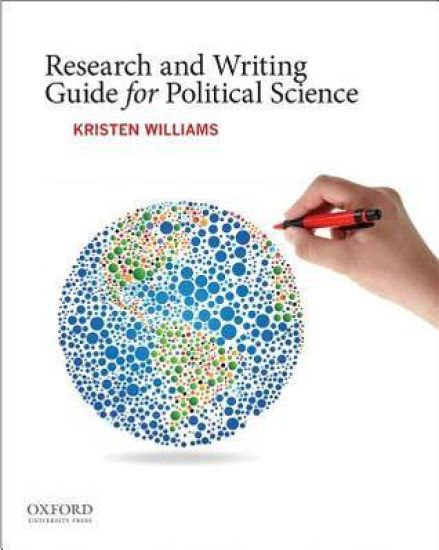
Research and Writing Guide for Political Science

Research and Writing Guide for Political Science

Kristen Williams

Oxford University Press
2013
nidottu
How do we know why the Soviet Union decided to place missiles in Cuba? How do we know why North Korea invaded South Korea? How do we know why the U.S. decided to invade Iraq? We know the answers to these questions because political science scholars did in-depth research and shared their findings. Conducting, presenting, and publishing research are all integral parts of being a political scientist. Students in political science courses are exposed to the research done by scholars. In turn, professors would like their students to become part of this community of scholars and will assign research papers so that students can demonstrate their knowledge of specific topics. An indispensable resource, Research and Writing Guide for Political Science provides a brief primer on the basic skills required for writing an effective research paper. It covers conducting research (finding, evaluating, and using sources); the various parts of a research paper and how they should be organized; writing, rewriting, revising, and editing; and citing the research (footnotes, endnotes, bibliographies, reference lists, and different academic citation styles: MLA, APA, and Chicago). A conclusion offers a list of additional resources.
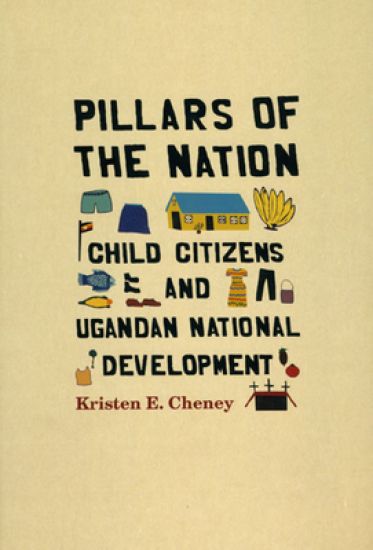
Pillars of the Nation

Pillars of the Nation

Kristen E. Cheney

University of Chicago Press
2007
sidottu
How can children simultaneously be the most important and least powerful people in a nation? In this innovative ethnography of Ugandan children - the pillars of tomorrow's Uganda, according to the national youth anthem - Kristen E. Cheney answers this question by exploring the daily contradictions children face as they try to find their places amid the country's rapidly changing social conditions. Drawing on the detailed life histories of several children, Cheney shows that children and childhood are being redefined by the desires of a young country struggling to position itself in the international community. She moves between urban schools, music festivals, and war zones to reveal how Ugandans are constructing childhood as an empowering identity for the development of the nation. Moreover, through her analysis of children's rights ideology, national government strategy, and children's everyday concerns, Cheney also shows how these young citizens are vitally linked to the global political economy as they navigate pitfalls and possibilities for a brighter tomorrow.
Pillars of the Nation

Pillars of the Nation

Kristen E. Cheney

University of Chicago Press
2007
nidottu
How can children simultaneously be the most important and least powerful people in a nation? In this innovative ethnography of Ugandan children - the pillars of tomorrow's Uganda, according to the national youth anthem - Kristen E. Cheney answers this question by exploring the daily contradictions children face as they try to find their places amid the country's rapidly changing social conditions. Drawing on the detailed life histories of several children, Cheney shows that children and childhood are being redefined by the desires of a young country struggling to position itself in the international community. She moves between urban schools, music festivals, and war zones to reveal how Ugandans are constructing childhood as an empowering identity for the development of the nation. Moreover, through her analysis of children's rights ideology, national government strategy, and children's everyday concerns, Cheney also shows how these young citizens are vitally linked to the global political economy as they navigate pitfalls and possibilities for a brighter tomorrow.
From Notes to Narrative

From Notes to Narrative

Kristen Ghodsee

University of Chicago Press
2016
sidottu
Ethnography centers on the culture of everyday life. So it is ironic that most scholars who do research on the intimate experiences of ordinary people write their books in a style that those people cannot understand. In recent years, the ethnographic method has spread from its original home in cultural anthropology to fields such as sociology, marketing, media studies, law, criminology, education, cultural studies, history, geography, and political science. Yet, while more and more students and practitioners are learning how to write ethnographies, there is little or no training on how to write ethnographies well. From Notes to Narrative picks up where methodological training leaves off. Kristen Ghodsee, an award-winning ethnographer, addresses common issues that arise in ethnographic writing. Ghodsee works through sentence-level details, such as word choice and structure. She also tackles bigger-picture elements, such as how to incorporate theory and ethnographic details, how to effectively deploy dialogue, and how to avoid distracting elements such as long block quotations and in-text citations. She includes excerpts and examples from model ethnographies. The book concludes with a bibliography of other useful writing guides and nearly one hundred examples of eminently readable ethnographic books.
From Notes to Narrative

From Notes to Narrative

Kristen Ghodsee

University of Chicago Press
2016
nidottu
Ethnography centers on the culture of everyday life. So it is ironic that most scholars who do research on the intimate experiences of ordinary people write their books in a style that those people cannot understand. In recent years, the ethnographic method has spread from its original home in cultural anthropology to fields such as sociology, marketing, media studies, law, criminology, education, cultural studies, history, geography, and political science. Yet, while more and more students and practitioners are learning how to write ethnographies, there is little or no training on how to write ethnographies well. From Notes to Narrative picks up where methodological training leaves off. Kristen Ghodsee, an award-winning ethnographer, addresses common issues that arise in ethnographic writing. Ghodsee works through sentence-level details, such as word choice and structure. She also tackles bigger-picture elements, such as how to incorporate theory and ethnographic details, how to effectively deploy dialogue, and how to avoid distracting elements such as long block quotations and in-text citations. She includes excerpts and examples from model ethnographies. The book concludes with a bibliography of other useful writing guides and nearly one hundred examples of eminently readable ethnographic books.