Kirjahaku
Etsi kirjoja tekijän nimen, kirjan nimen tai ISBN:n perusteella.
1000 tulosta hakusanalla L. Allen

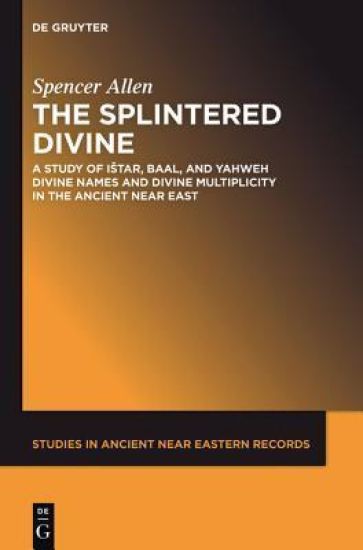
This book investigates the issue of the singularity versus the multiplicity of ancient Near Eastern deities who are known by a common first name but differentiated by their last names, or geographic epithets. It focuses primarily on the Ištar divine names in Mesopotamia, Baal names in the Levant, and Yahweh names in Israel, and it is structured around four key questions: How did the ancients define what it meant to be a god - or more pragmatically, what kind of treatment did a personality or object need to receive in order to be considered a god by the ancients? Upon what bases and according to which texts do modern scholars determine when a personality or object is a god in an ancient culture? In what ways are deities with both first and last names treated the same and differently from deities with only first names? Under what circumstances are deities with common first names and different last names recognizable as distinct independent deities, and under what circumstances are they merely local manifestations of an overarching deity? The conclusions drawn about the singularity of local manifestations versus the multiplicity of independent deities are specific to each individual first name examined in accordance with the data and texts available for each divine first name.

"From this point forward, readers consulting any reference work addressing the concept of "tour de force" will find there a citation of Preston L. Allen's "Every Boy Should Have a Man." It is one thing to devise a fable dealing so adroitly with such concepts as racism, war, religion, and the very nature of civilization itself, but Preston's true triumph is the infusion of each page and every astonishing episode with palpable emotional resonance."---Les Standiford, author of "Desperate Sons"""Every Boy Should Have a Man" is a wild animal, a melancholy human, a hybrid with fangs and tears, a book that cannot be classified and should never be classified--it is a book that I read until late into the night, and then talked about with my daughters, my dog, my friends, and myself. I won't ever look at the daughters, or the dog, or the world, in quite the same way."--Susan Straight, author of "Between Heaven and Here" "In this new novel, Preston L. Allen writes with an elegance and honesty that make his observations on 'humanity' -- our common flaws, our insistent dishonesty, our daily failings -- a psalm, a love song to imperfection, and yet holds onto a firm and astute insight. Beautiful, elegiac, and optimistic."--Chris Abani, author of "Graceland""Like Dostoyevsky, Allen colorfully evokes the gambling milieu. . . . Like Burroughs, he is a dispassionate chronicler of the addict's daily ritual, neither glorifying nor vilifying the matter at hand."--"The New York Times Book Review, " on "All or Nothing""Heartfelt and occasionally hilarious, "Jesus Boy" is a tender masterpiece."--Dennis Lehane, author of "Mystic River," on "Jesus Boy"A riveting, poignant satire of societal ills with an added dose of fantasy, "Every Boy Should Have a Man" takes place in a post-human world where creatures called oafs keep humanlike "mans" as beloved pets. One day, a poor boy oaf brings home a man whom he hides under his bed in the hopes his parents won't find out.With echoes of Margaret Atwood and "Jack and the Beanstalk," Jonathan Swift's "Gulliver's Travels "and Octavia Butler's "Kindred," this is a picaresque journey into uncharted territory in earth, sky, and firmament.Oafs and mans each gain insight and understanding into one another's worlds, and the worlds that touch theirs--ultimately showing that oafs and mans alike share a common "humanity." Filled with surprising twists and turns, the novel is in part a morality tale that takes on many of today's issues, including poverty, the environment, sexism, racism, war, and religion, all in lighthearted King James prose.Preston L. Allen is a recipient of a State of Florida Individual Artist Fellowship and a winner of the Sonja H. Stone Prize in Fiction. He teaches writing in south Florida.

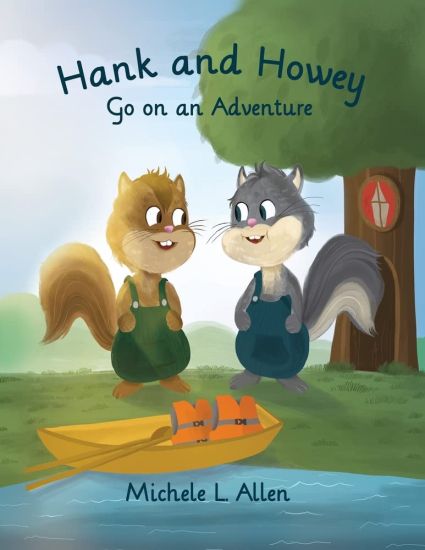
Hank and Howey Go on an AdventureBy: Michele L. AllenHank and Howey Go on an Adventure follows sibling squirrels as they strike out to meet and make friends with other animals who live nearby on their lake. This adorable story offers facts about the habitats and behaviors of lake-area wildlife as the brothers encounter their neighbors.About the AuthorMichele L. Allen enjoys kayaking. She has two English Cream Golden Retrievers that she hikes with. She has two sisters. Allen married in 1991 and has two daughters, two step-sons, and six grandchildren. She graduated from Schuylerville High School in 1989 and from SUNY Adirondack College in 2012. Allen was inspired to write about Hank and Howey after kayaking in the Adirondacks with her mother and cousin.
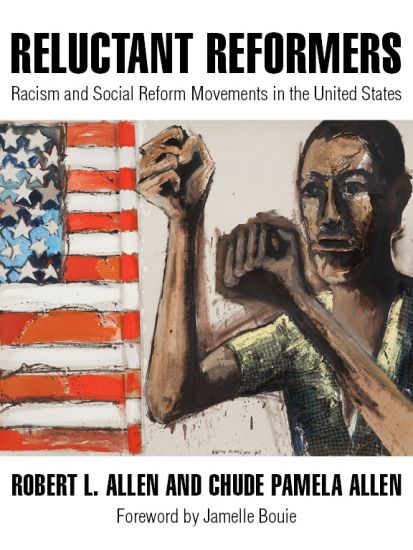
Reluctant Reformers explores the centrality of racism to American politics through the origins, internal dynamics, and leadership of the major democratic and social justice movements between the early nineteenth century and the end of World War II. It focuses in particular on the abolitionists, the Populist Party, the Progressive reformers, and the women’s suffrage, labor, and socialist and communist movements. Despite their achievements, virtually all these predominantly white movements failed to oppose, capitulated to, or even advocated racism at critical junctures in their history, with their efforts undercut by their inability to build and sustain a mass movement of both Black and white Americans. Reluctant Reformers examines both the structural roots of racism in US radical movements and the impact of racist ideologies on the white-dominated core of each movement, how some whites resisted these pressures, and how Black people engaged with these movements. This edition includes a postscript describing the Black freedom movement of the 1960s and the central role it has played in the development of today’s radical social justice movements.






Contemporary American Speeches
Richard L Johannesen; Allen Ron; Wilmer A Linkugel
KENDALL/HUNT PUBLISHING CO ,U.S.
2010
nidottu
Forget about searching the Internet for current speeches, Contemporary American Speeches, contains speeches from the 1960's through the 1990's. This book can serve as a core textbook in courses such as Contemporary Public Address and Contemporary Speakers and Speeches. As in previous editions, this edition contains speeches that typify current public scrutiny of some of society's most pressing questions.NEW TO THIS EDITION:Includes speeches by well-known speakers. The speech forms themselves assure coverage of the spectrum of contemporary public address. An addition in Chapter 1 is a lengthy section on diverse public speaking traditions as influenced by culture and gender. Chapter 2 contains important additions on narration as a rhetorical technique and on ideological criticism as a perspective for evaluation. Chapter 2 also contains a new section on “Civility in Public Discourse.”The language in all chapters has been changed in places to increase clarity
"I am Ra. We came to your peoples to enunciate the Law of One. We wished to impress upon those who wished to learn of unity that in unity all paradoxes are resolved; all that is broken is healed; all that is forgotten is brought to light."For thousands of years those of Ra have sought to teach the Law of One to seekers of truth on Earth who wished to learn of the unity or oneness of all things. This basic law of all creation is buried deep within each of our hearts because we really are one in love and in light, the building blocks of the universe. We are all manifestations of the One Infinite Creator. We are the Creator. We are not learning this law for the first time but are remembering it yet again as all mystics have taught throughout Earth's history. Our journey of self-realization is the discovery or remembrance of this essential truth, our essential identity. A waking up, as some have called it, within an illusion of separation.Don Elkins and Carla L. Rueckert worked together for 12 years to perfect the channeling process and receive philosophical inspiration and guidance from extraterrestrial sources. When Jim McCarty joined them in 1980 they began to receive a new and unique type of channeling contact from those of Ra. Through this contact, Ra shared information to help seekers of truth deepen their awareness and acceptance of self and other, and to help Earth move into the emerging fourth density of love and understanding.This book is the transcript from the recording of that conversation between the Questioner and Ra. Through questions & answers, the metaphysical blueprint of spiritual evolution is explored, from the microcosm to the macrocosm, from the particulars of life on this planet to the life of the cosmos, to the possibilities of healing, transformation, and self-realization for spiritual seekers and wanderers.* * * * * * * * *The Ra Contact: Teaching the Law of One Volume 2 contains Ra contact sessions 57-106. As with all L/L Research material, this book can be read for free in PDF form on the archive website www.llresearch.org.