Kirjojen hintavertailu. Mukana 11 447 851 kirjaa ja 12 kauppaa.

Kirjahaku

Etsi kirjoja tekijän nimen, kirjan nimen tai ISBN:n perusteella.

1000 tulosta hakusanalla Laran Mithras

Lacan and Marx

Lacan and Marx

Pierre Bruno

Routledge
2019
sidottu
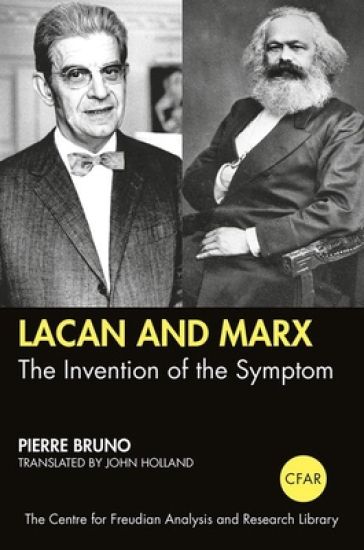
Lacan and Marx: The Invention of the Symptom provides an incisive commentary on Lacan’s reading of Marx, mapping the relations between these two vastly influential thinkers.Unlike previous books, Bruno provides a detailed history of Lacan’s reading of Marx and surveys his references to Marx in both his writings and seminars. Examining Lacan’s key argument that Marx "invented the symptom", Bruno shows how Lacan went on to criticize Marx and contrasts Marx’s concept of surplus-value with Lacan’s surplus-enjoyment. Exploring the division between Marxist and psychoanalytic perspectives on social and psychological need and Lacan’s formalisation of the capitalist discourse, the book compares the positions of Althusser, Deleuze and Guattari, and Žižek on the relations between Lacan, Marx and capitalism, using a wide range of cultural examples, from Stevenson’s Dr. Jekyll and Mr. Hyde to Brecht’s Joan Dark and Pierpont Mauler. Through these readings, Bruno also elaborates an extended commentary on Lacan’s central idea of the division of the subject. His focus is not only on showing how we can exit from capitalism but also, and just as importantly, on showing how we can make capitalism exit from us.This book will be of great interest to scholars and readers of Lacan and Marx from across the fields of psychoanalysis, philosophy and political economy, and will also appeal to Lacanian psychoanalysts in clinical practice.
Lacan and Marx

Lacan and Marx

Pierre Bruno

Routledge
2019
nidottu
Lacan and Marx: The Invention of the Symptom provides an incisive commentary on Lacan’s reading of Marx, mapping the relations between these two vastly influential thinkers.Unlike previous books, Bruno provides a detailed history of Lacan’s reading of Marx and surveys his references to Marx in both his writings and seminars. Examining Lacan’s key argument that Marx "invented the symptom", Bruno shows how Lacan went on to criticize Marx and contrasts Marx’s concept of surplus-value with Lacan’s surplus-enjoyment. Exploring the division between Marxist and psychoanalytic perspectives on social and psychological need and Lacan’s formalisation of the capitalist discourse, the book compares the positions of Althusser, Deleuze and Guattari, and Žižek on the relations between Lacan, Marx and capitalism, using a wide range of cultural examples, from Stevenson’s Dr. Jekyll and Mr. Hyde to Brecht’s Joan Dark and Pierpont Mauler. Through these readings, Bruno also elaborates an extended commentary on Lacan’s central idea of the division of the subject. His focus is not only on showing how we can exit from capitalism but also, and just as importantly, on showing how we can make capitalism exit from us.This book will be of great interest to scholars and readers of Lacan and Marx from across the fields of psychoanalysis, philosophy and political economy, and will also appeal to Lacanian psychoanalysts in clinical practice.
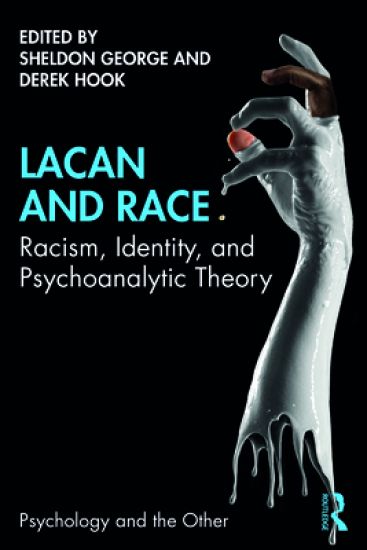
Lacan and Race
This edited volume draws upon Lacanian psychoanalytic theory to examine the conscious and unconscious forces underlying race as a social formation, conceptualizing race, racial identity, and racism in ways that go beyond traditional modes of psychoanalytic thought.Featuring contributions by Lacanian scholars from diverse geographical and disciplinary contexts, chapters span a wide breadth of topics, including white nationalism and contemporary debates over confederate monuments; emergent theories of race rooted in Afropessimism and postcolonialism; analyses of racism in apartheid and American slavery; clinical reflections on Latinx and other racialized patients; and applications of Lacan’s concepts of the lamella, drive and sexuation to processes of racialization. The collection both reorients readers’ understandings of race through its deployment of Lacanian theory and redefines the Lacanian subject through its theorizing of subjectivity in relation to race, racism and racial identification.Lacan and Race will be a definitive text for psychoanalytic theorists and contemporary scholars of race, appealing to readers across the fields of psychology, cultural studies, humanities, politics, and sociology.
Lacan and Race
This edited volume draws upon Lacanian psychoanalytic theory to examine the conscious and unconscious forces underlying race as a social formation, conceptualizing race, racial identity, and racism in ways that go beyond traditional modes of psychoanalytic thought.Featuring contributions by Lacanian scholars from diverse geographical and disciplinary contexts, chapters span a wide breadth of topics, including white nationalism and contemporary debates over confederate monuments; emergent theories of race rooted in Afropessimism and postcolonialism; analyses of racism in apartheid and American slavery; clinical reflections on Latinx and other racialized patients; and applications of Lacan’s concepts of the lamella, drive and sexuation to processes of racialization. The collection both reorients readers’ understandings of race through its deployment of Lacanian theory and redefines the Lacanian subject through its theorizing of subjectivity in relation to race, racism and racial identification.Lacan and Race will be a definitive text for psychoanalytic theorists and contemporary scholars of race, appealing to readers across the fields of psychology, cultural studies, humanities, politics, and sociology.
Lacan and the Formulae of Sexuation
Lacan and the Formulae of Sexuation provides the first critical reading of Lacan’s formulae of sexuation, examining both their logical consistency and clinical consequences. Are there two different entities named Man and Woman, separated by the gulf of sexual difference? Or is it better to conceive of this difference as something purely relative, each human being situated on a sort of continuum from more or less 'man' to more or less 'woman'?Sigmund Freud established the strange way through which sexuality determines being human: his concept of drive was no longer the heteronormative sexual instinct used by the psychiatrists of his time. With his provocative formula according to which 'there is no sexual relationship', Lacan has reinforced this perspective, combining logic and sexuality through the invention of a new operator, the concept 'not all', which points to a form of incompleteness at stake in his 'formulae of sexuation'. This book examines how these formulae have been constructed, and how we should read them in connection with, on one hand, their own logical consistency (a logical square different from Aristotelian tradition) and, on the other hand, a 'part object' in a very different sense to Melanie Klein’s. The book also investigates the underlying logic of clinical vignettes, so much in favour in psychoanalytical literature today.The book represents essential reading for Lacanian psychoanalysts, as well as researchers at the cross-section of psychoanalysis, philosophy, and gender studies.
Lacan and the Formulae of Sexuation
Lacan and the Formulae of Sexuation provides the first critical reading of Lacan’s formulae of sexuation, examining both their logical consistency and clinical consequences. Are there two different entities named Man and Woman, separated by the gulf of sexual difference? Or is it better to conceive of this difference as something purely relative, each human being situated on a sort of continuum from more or less 'man' to more or less 'woman'?Sigmund Freud established the strange way through which sexuality determines being human: his concept of drive was no longer the heteronormative sexual instinct used by the psychiatrists of his time. With his provocative formula according to which 'there is no sexual relationship', Lacan has reinforced this perspective, combining logic and sexuality through the invention of a new operator, the concept 'not all', which points to a form of incompleteness at stake in his 'formulae of sexuation'. This book examines how these formulae have been constructed, and how we should read them in connection with, on one hand, their own logical consistency (a logical square different from Aristotelian tradition) and, on the other hand, a 'part object' in a very different sense to Melanie Klein’s. The book also investigates the underlying logic of clinical vignettes, so much in favour in psychoanalytical literature today.The book represents essential reading for Lacanian psychoanalysts, as well as researchers at the cross-section of psychoanalysis, philosophy, and gender studies.
Lacan, Foucault, and the Malleable Subject in Early Modern English Utopian Literature
Theoretically informed scholarship on early modern English utopian literature has largely focused on Marxist interpretation of these texts in an attempt to characterize them as proto- Marxist. The present volume instead focuses on subjectivity in early modern English utopian writing by using these texts as case studies to explore intersections of the thought of Jacques Lacan and Michel Foucault. Both Lacan and Foucault moved back and forth between structuralist and post-structuralist intellectual trends and ultimately both defy strict categorization into either camp. Although numerous studies have appeared that compare Lacan’s and Foucault’s thought, there have been relatively few applications of their thought together onto literature. By applying the thought of both theorists, who were not literary critics, to readings of early modern English utopian literature, this study will, on the one hand, describe the formation of utopian subjectivity that is both psychoanalytically (Oedipal and pre-Oedipal) and socially constructed, and, on the other hand, demonstrate new ways in which the thought of Lacan and Foucault inform and complement each other when applied to literary texts. The utopian subject is a malleable subject, a subject whose linguistic, psychoanalytical subjectivity determines the extent to which environmental and social factors manifest in an identity that moves among Lacan’s Symbolic, Imaginary, and Real.
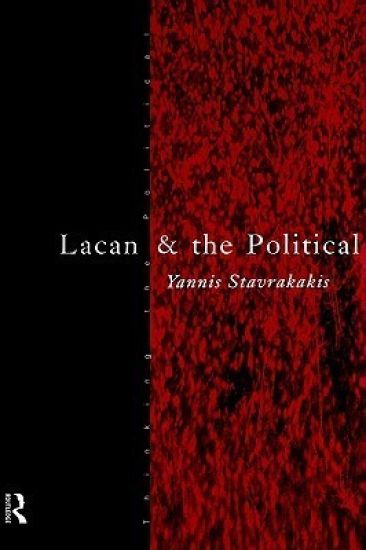
Lacan and the Political

Lacan and the Political

Yannis Stavrakakis

Routledge
1999
sidottu
The work of Jacques Lacan is second only to Freud in its impact on psychoanalysis. Yannis Stavrakakis clearly examines Lacan's challenging views on time, history, language, alterity, desire and sexuality from a political standpoint. It is the first book to provide an overview of the social and political implications of Lacan's work as a whole for students coming to Lacan for the first time.The first part of Lacan and the Political offers a straightforward and systematic assessment of the importance of Lacan's categories and theoretical constructions for concrete political analysis. The second half of the book applies Lacanian theory to specific examples of widely discussed political issues, such as Green ideology, the question of democracy and the hegemony of advertising in contemporary culture.
Lacan and the Political

Lacan and the Political

Yannis Stavrakakis

Routledge
1999
nidottu
The work of Jacques Lacan is second only to Freud in its impact on psychoanalysis. Yannis Stavrakakis clearly examines Lacan's challenging views on time, history, language, alterity, desire and sexuality from a political standpoint. It is the first book to provide an overview of the social and political implications of Lacan's work as a whole for students coming to Lacan for the first time.The first part of Lacan and the Political offers a straightforward and systematic assessment of the importance of Lacan's categories and theoretical constructions for concrete political analysis. The second half of the book applies Lacanian theory to specific examples of widely discussed political issues, such as Green ideology, the question of democracy and the hegemony of advertising in contemporary culture.
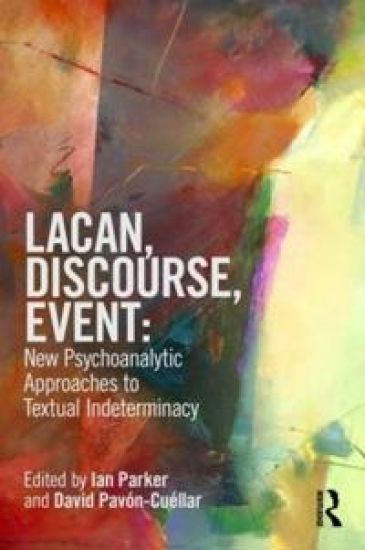
Lacan, Discourse, Event: New Psychoanalytic Approaches to Textual Indeterminacy
Lacan, Discourse, Event: New Psychoanalytic Approaches to Textual Indeterminacy is an introduction to the emerging field of Lacanian Discourse Analysis. It includes key papers that lay the foundations for this research, and worked examples from analysts working with a range of different texts. The editors Ian Parker and David Pavón-Cuéllar begin with an introduction which reviews the key themes in discourse analysis and the problems faced by researchers in that field of work including an overview of the development of discourse analysis in different disciplines (psychology, sociology, cultural studies and political and social theory). They also set out the conceptual and methodological principles of Lacan's work insofar as it applies to the field of discourse.Ian Parker and David Pavón-Cuéllar have divided the book into three main sections. The first section comprises previously published papers, some not yet available in English, which set out the foundations for 'Lacanian Discourse Analysis'. The chapters establish the first lines of research, and illustrate how Lacanian psychoanalysis is transformed into a distinctive approach to interpreting text when it is taken out of the clinical domain. The second and third parts of the book comprise commissioned papers in which leading researchers from across the social sciences, from the English-speaking world and from continental Europe and Latin America, show how Lacanian Discourse Analysis works in practice. Lacan, Discourse, Event: New Psychoanalytic Approaches to Textual Indeterminacy is intended to be a definitive volume bringing together writing from the leaders in the field of Lacanian Discourse Analysis working in the English-speaking world and in countries where Lacanian psychoanalysis is part of mainstream clinical practice and social theory. It will be of particular interest to psychoanalysts of different traditions, to post-graduate and undergraduate researchers in psycho-social studies, cultural studies, sociology and social anthropology.
Lacan, Discourse, Event: New Psychoanalytic Approaches to Textual Indeterminacy
Lacan, Discourse, Event: New Psychoanalytic Approaches to Textual Indeterminacy is an introduction to the emerging field of Lacanian Discourse Analysis. It includes key papers that lay the foundations for this research, and worked examples from analysts working with a range of different texts. The editors Ian Parker and David Pavón-Cuéllar begin with an introduction which reviews the key themes in discourse analysis and the problems faced by researchers in that field of work including an overview of the development of discourse analysis in different disciplines (psychology, sociology, cultural studies and political and social theory). They also set out the conceptual and methodological principles of Lacan's work insofar as it applies to the field of discourse.Ian Parker and David Pavón-Cuéllar have divided the book into three main sections. The first section comprises previously published papers, some not yet available in English, which set out the foundations for 'Lacanian Discourse Analysis'. The chapters establish the first lines of research, and illustrate how Lacanian psychoanalysis is transformed into a distinctive approach to interpreting text when it is taken out of the clinical domain. The second and third parts of the book comprise commissioned papers in which leading researchers from across the social sciences, from the English-speaking world and from continental Europe and Latin America, show how Lacanian Discourse Analysis works in practice. Lacan, Discourse, Event: New Psychoanalytic Approaches to Textual Indeterminacy is intended to be a definitive volume bringing together writing from the leaders in the field of Lacanian Discourse Analysis working in the English-speaking world and in countries where Lacanian psychoanalysis is part of mainstream clinical practice and social theory. It will be of particular interest to psychoanalysts of different traditions, to post-graduate and undergraduate researchers in psycho-social studies, cultural studies, sociology and social anthropology.
Lacan and the Subject of Language (RLE: Lacan)
Originally published in 1991, this volume tackles the diverse teachings of the great psychoanalyst and theoretician. Written by some of the leading American and European Lacanian scholars and practitioners, the essays attempt to come to terms with his complex relation to the culture of contemporary psychoanalysis.The volume presents useful insights into Lacan’s innovative theories on the nature of language and the subject. Many of the essays probe the importance of psychoanalysis for problems of signifier and referent in the philosophy of language; others explore the difficulties men and women have in negotiating the sexual differences that divide them.A major contribution to the new reception of Jacques Lacan in the English-speaking world, Lacan and the Subject of Language will challenge those who believe that they have already ‘mastered’ Lacanian thought. The insights offered here will pave the way for further developments.
Lacan on Madness
This new collection of essays by distinguished international scholars and clinicians will revolutionize your understanding of madness. Essential for those on both sides of the couch eager to make sense of the plethora of theories about madness available today, Lacan on Madness: Madness, Yes You Can’t provides compelling and original perspectives following the work of Jacques Lacan.Patricia Gherovici and Manya Steinkoler suggest new ways of working with phenomena often considered impermeable to clinical intervention or discarded as meaningless. This book offers a fresh view on a wide variety of manifestations and presentations of madness, featuring clinical case studies, new theoretical developments in psychosis, and critical appraisal of artistic expressions of insanity.Lacan on Madness uncovers the logics of insanity while opening new possibilities of treatment and cure. Intervening in current debates about normalcy and pathology, causation and prognosis, the authors propose effective modalities of treatment, and challenge popular ideas of what constitutes a cure offering a reassessment of the positive and creative potential of madness. Gherovici and Steinkoler’s book makes Lacanian ideas accessible by showing how they are both clinically and critically useful. It is invaluable reading for psychoanalysts, clinicians, academics, graduate students, and lay persons.
Lacan on Madness
This new collection of essays by distinguished international scholars and clinicians will revolutionize your understanding of madness. Essential for those on both sides of the couch eager to make sense of the plethora of theories about madness available today, Lacan on Madness: Madness, Yes You Can’t provides compelling and original perspectives following the work of Jacques Lacan.Patricia Gherovici and Manya Steinkoler suggest new ways of working with phenomena often considered impermeable to clinical intervention or discarded as meaningless. This book offers a fresh view on a wide variety of manifestations and presentations of madness, featuring clinical case studies, new theoretical developments in psychosis, and critical appraisal of artistic expressions of insanity.Lacan on Madness uncovers the logics of insanity while opening new possibilities of treatment and cure. Intervening in current debates about normalcy and pathology, causation and prognosis, the authors propose effective modalities of treatment, and challenge popular ideas of what constitutes a cure offering a reassessment of the positive and creative potential of madness. Gherovici and Steinkoler’s book makes Lacanian ideas accessible by showing how they are both clinically and critically useful. It is invaluable reading for psychoanalysts, clinicians, academics, graduate students, and lay persons.
Lacan

Lacan

Malcolm Bowie

Harvard University Press
1993
pokkari
The French psychoanalyst Jacques Lacan (1901-1981) is a uniquely complex writer and the originator of an especially unsettling view of the human subject. But the singularity of Lacan's achievement has been understated by many of his critics. Often he is seen merely as a figure famous for being famous--an essential reference point in structuralist and poststructuralist debate--rather than as a theorist whose writings demand and reward detailed scrutiny.Malcolm Bowie traces the development of Lacan's ideas over the fifty-year span of his writing and teaching career. The primary focus is on the fascinating mutations in Lacan's interpretation of Freud. Bowie reinserts the celebrated slogans--"The unconscious is the discourse of the Other," "The unconscious is structured like a language," and so forth--into the history of Lacan's thinking, and pinpoints the paradoxes and anomalies that mark his account of human sexuality. This book provides a firm basis for the critical evaluation of Lacan's ideas and the rhetoric in which they are embedded; it is based on a close reading of Lacan's original texts but presupposes no knowledge of French in the reader.Although Bowie is sharply critical of Lacan on several major analytic questions, he argues that Lacan is the only psychoanalyst after Freud whose intellectual achievement is seriously comparable to Freud's own. Lacan provides the ideal starting point for any exploration of the work of this formidable thinker.
Lacan and Klein, Creation and Discovery

Lacan and Klein, Creation and Discovery

Adam Rosen-Carole

Lexington Books
2011
sidottu
On the one hand, Creation and Discovery, Lacan and Klein: An Essay of Reintroduction seeks to disclose the often suppressed or unacknowledged proximity, even intimacy, between Lacan and Klein, and thereby to facilitate a re-introduction between Lacan and Klein such that their works can read anew, both independently and together. On the other hand, by reconstructing the highly divergent metapsychological theories and clinical orientations of Jacques Lacan and Melanie Klein from their discussions of the same case material, the text seeks to demonstrate the irreducible plurality of psychoanalysis and the ethico-political significance of this plurality. Siding with neither Lacan nor Klein's perspective, Adam Rosen-Carole argues that within and between these exaggerated positions, a dialectic of creation and discovery emerges that affords the reader unique insights into the nature and status of psychoanalytic knowing and its particular objects. Special attention is paid to the indelible exaggerations and distortions, the guiding sensitivities and urgencies, and the concomitant structures of blindness and insight organizing various psychoanalytic perspectives. Written for clinicians as well as for students and scholars interested in psychoanalysis and philosophy, this book serves not only as a comprehensive introduction to Lacan, but also a reassessment of psychoanalytic method.
Lacan Deleuze Badiou

Lacan Deleuze Badiou

A. J. Bartlett; Justin Clemens; Roffe Jon

Edinburgh University Press
2014
sidottu
This is a critical intervention into the key conceptual dissensions between contemporary Continental philosophy's three most influential thinkers. The writings of Lacan, Deleuze and Badiou stand at the heart of contemporary thought. While the collective corpus of these three figures contains a significant number of references to each other's work, these are often simply critical, obscure, or both. Lacan Deleuze Badiou guides academics working in philosophy, psychoanalysis and critical theory through the sensitive moments in their respective work and identifies the passages, connections and disjunctions that underlie the often superficial statements of critique, indifference or accord. This is the first book to examine Lacan, Deleuze and Badiou together. It reconstructs a fundamental conceptual history of Badiou, Deleuze and Lacan's influences and intellectual context. It identifies and examines the key themes in contemporary European thought: the event, time and truth. It shows how Deleuze and Badiou have followed and contravened the Lacanian intervention without reverting to pre-Lacanian positions.
Lacan, Language, and Philosophy

Lacan, Language, and Philosophy

Russell Grigg

State University of New York Press
2008
sidottu
Clinical and philosophical perspectives on key issues and debates in Lacanian psychoanalysis.Lacan, Language, and Philosophy explores the linguistic turn in psychoanalysis taken by Jacques Lacan. Russell Grigg provides lively and accessible readings of Lacan and Freud that are grounded in clinical experience and informed by a background in analytic philosophy. He addresses key issues in Lacanian psychoanalysis, from the clinical (how psychosis results from the foreclosure of the signifier the Name-of-the Father; the father as a symbolic function; the place of transference) to the philosophical (the logic of the "pas-tout"; the link between the superego and Kant's categorical imperative; a critique of Žižek's account of radical change). Grigg's expertise and knowledge of psychoanalysis produce a major contribution to contemporary philosophical and psychoanalytic debates.