Kirjojen hintavertailu. Mukana 11 699 587 kirjaa ja 12 kauppaa.

Kirjahaku

Etsi kirjoja tekijän nimen, kirjan nimen tai ISBN:n perusteella.

1000 tulosta hakusanalla Laura B Calbert

A Kineño’s Journey

A Kineño’s Journey

Lauro F. Cavazos; Gene B. Preuss

Texas Tech Press,U.S.
2016
sidottu
On September 20, 1988, the United States Senate unanimously confirmed Lauro F. Cavazos as the fourth Secretary of Education in President Ronald Reagan’s administration. A sixth-generation Texan and Kineño—a descendant of Mexican citizens who accepted work on Texas’s King Ranch in the 19th century—Cavazos was the first Hispanic appointed to a position in an American Presidential Cabinet. The story of Cavazos’s journey leading up to his cabinet appointment is a portrait of a life devoted to the principles of education. In 1954, Cavazos married Peggy Ann Murdock; the couple had ten children, all of whom were educated in public schools. To enhance their children’s education, the Cavazos traveled extensively, living out the principle that a holistic education includes exposure to others’ worldviews. During his service as Secretary of Education, Cavazos insisted that all children in America be educated to their fullest potential. A key tenet of Cavazos’s service was an emphasis on educating minority students—a passion Cavazos formed early on in his career, first as a faculty member at the Medical College of Virginia, then as a professor and Dean at the Tufts University School of Medicine, and later as President of Texas Tech University. Gene B. Preuss is an associate professor of history and Special Assistant to the President at the University of Houston-Downton. He is the author of “To Get a Better School System”: One Hundred Years of School Reform in Texas.
Diseño Organizacional

Diseño Organizacional

Octavio Rolando Lara Martinez; Dalila B Cantoral Díaz

Editorial Academica Espanola
2013
pokkari
El gran reto del dise o organizacional, es la construcci n de una estructura y puestos de trabajo, flexibles, sencillos alineados con estrategia, los procesos, la cultura y el nivel de evoluci n de la organizaci n, con el fin de lograr los resultados y la productividad mediante la organizaci n del trabajo y la distribuci n adecuada de las cargas laborales. El dise o organizacional es un proceso, donde los gerentes toman decisiones, donde los miembros de la organizaci n ponen en pr ctica dicha estrategia. El dise o organizacional hace que los gerentes dirijan la vista en dos sentidos; hacia el interior de su organizaci n y hacia el exterior de su organizaci n. Siendo el dise o organizacional un conjunto de medios que maneja la organizaci n con el objeto de dividir el trabajo en diferentes tareas y lograr la coordinaci n efectiva de las mismas, puede realizarse el esfuerzo coordinado que lleve a la obtenci n de objetivos, definiendo las relaciones y aspectos m s o menos estables de la organizaci n.
Erkendelse og virkelighed

Erkendelse og virkelighed

Keld B. Jessen; Peter Laurs Sørensen

Systime
2003
nidottu
Bogen Erkendelse og virkelighed tager udgangspunkt i Platons filosofiske tankegang. Herefter behandler bogen modsætningerne rationalisme og empirisme, samt romantik og positivisme frem til markante nye strømninger i vort århundrede.Tekstsamlingen behandler emner som det filosofiske perspektiv i kvantefysikken over for den klassiske fysik. Bogen belyser ligeledes Poppers kritik af den måde, hvorpå man siden Platon har opstillet erkendelsesspørgsmålet.Erkendelse og virkelighed indeholder tekster af bl.a. Platon, David Hume, H.C. Ørsted og Werner Heisenberg.
Wind Energy Generation: Modelling and Control

Wind Energy Generation: Modelling and Control

Olimpo Anaya-Lara; Nick Jenkins; Janaka B. Ekanayake; Phill Cartwright; Michael Hughes

John Wiley Sons Inc
2009
sidottu
WIND ENERGY GENERATION WIND ENERGY GENERATIONMODELLING AND CONTROL With increasing concern over climate change and the security of energy supplies, wind power is emerging as an important source of electrical energy throughout the world. Modern wind turbines use advanced power electronics to provide efficient generator control and to ensure compatible operation with the power system. Wind Energy Generation describes the fundamental principles and modelling of the electrical generator and power electronic systems used in large wind turbines. It also discusses how they interact with the power system and the influence of wind turbines on power system operation and stability. Key features: Includes a comprehensive account of power electronic equipment used in wind turbines and for their grid connection.Describes enabling technologies which facilitate the connection of large-scale onshore and offshore wind farms.Provides detailed modelling and control of wind turbine systems.Shows a number of simulations and case studies which explain the dynamic interaction between wind power and conventional generation.
A Field Guide to the Larger Mammals of Tanzania

A Field Guide to the Larger Mammals of Tanzania

Charles Foley; Lara Foley; Alex Lobora; Daniela De Luca; Maurus Msuha; Tim R.B. Davenport; Sarah M. Durant

Princeton University Press
2014
pokkari
Home to the Serengeti National Park, Ngorongoro Crater, and Mount Kilimanjaro, Tanzania offers some of the finest big game watching in the world, from elephants and rhinos to chimpanzees and lions. This field guide covers all the larger mammals of Tanzania, including marine mammals and some newly discovered species. Detailed accounts are provided for more than 135 species, along with color photos, color illustrations of marine mammals, and distribution maps. Accounts for land species give information on identification, subspecies, similar species, ecology, behavior, distribution, conservation status, and where best to see each species. The guide also features plates with side-by-side photographic comparisons of species that are easily confused, as well as first-time-ever species checklists for every national park. * The definitive, most up-to-date field guide to the larger mammals of Tanzania, including marine mammals* Features detailed species accounts and numerous color photos throughout* Provides tips on where to see each species* Includes species checklists for every national park
Handbuch der Mikrochemischen Methoden

Handbuch der Mikrochemischen Methoden

E. Broda; T. Schönfeld; T. Bernert; B. Karlik; K. Lintner; H. Lauda

Springer Verlag GmbH
2014
nidottu
6 kehrten Verhiiltnis ihrer Halbwertszeiten, wenn die Reihe sich im inneren radio- aktiven Gleichgewicht befindet. Das Produkt aus der Zahl der vorhandenen Atome und der Zerfallskonstante (die der reziproken Halbwertszeit proportional ist) muB ja im stationiiren Zustand fiir jedes Glied den gleichen Wert haben. Daher ist die Gesamtaktivitiit eines kurzlebigen Gliedes einer Reihe (z. B. des Radon) im Prinzip ebensogut meBbar wie die Gesamtaktivitiit eines liinger- lebigen Gliedes derselben Reihe (z. B. des Radiums), mit dem es im radioaktiven Gleichgewicht steht, obwohl die vorhandene Gewichtsmenge so auBerordentlich viel kleiner sein kann. Voraussetzung ist nur, daB die Halbwertszeit nicht so klein ist, daB der Stoff dem Radiochemiker "zwischen den Fingern zerrinnt". Unter dieser Voraussetzung lassen sich in der Praxis die kurzlebigen Stoffe sogar leichter messen als die langlebigen Stoffe gleicher Gesamtaktivitiit. Je kleiner niimlich die Masse der Probe ist, desto vollstiindiger tritt die Strahlung aus der Probe aus und in das MeBgeriit ein. v Die von SODDY so klar zusammengefaBpen Verhiiltnisse haben dazu gefiihrt, daB radiochemische Methoden sich zur analytischen Bestimmung von natiirlichen Radioelementen mittlerer Halbwertszeit (z. B. des Radiums; genauer: des Radiumisotops der Uranreihe) als zweckmiiBig, zur analytischen Bestimmung von Radioelementen kurzer Halbwertszeit (z. R. des Poloniums) sogar als un- entbehrlich erwiesen haben. Zur Bestimmung langlebiger Radioelemente (z. B. des Urans) haben sich radiochemische Methoden nur in Sonderfiillen durch- gesetzt. Die Besprechung dieser Methoden zur Analyse natiirlich radioaktiver Stoffe ist in den entsprechenden Abschnitten des Kapitels IX durchgefiihrt.
Laura

Laura

Vera Caspary

Vintage
2012
pokkari
In the doorway of an elegant New York apartment, blood seeps over silk negligee, over polished wood floors and plush carpet: a beautiful young woman lies dead, her face disfigured by a single gun shot. But who was Laura?
Laura

Laura

Larry Watson

Washington Square Press Inc.,N.Y.
2001
pokkari
In a captivating departure, Larry Watson, "a writer whose work is worthy of prizes" ("Los Angeles Times Book Review"), unveils a portrait of faith, obsession, and enduring love -- and a work of greater tenderness than anything he has yet written. "Laura" Love captures Paul Finley, in, of all places, his own bedroom -- literally waking him from his dreams. The night he discovers Laura Pettit standing at his windowsill, Paul is eleven years old, a boy naturally inclined toward seriousness, precociously adept at the art of watching the world without being watched. Laura is twenty-two, a fiercely passionate and independent poet already experiencing the first flickers of fame, a beautiful woman on the brink of seducing Paul's father. No matter; Paul is smitten. When she leaves him to rejoin the grown-ups' party downstairs, Laura issues Paul a wholly impossible command, one that will haunt and consume both of them for the rest of their lives: "Forget me." Laying bare the inner life of one man during the course of nearly four decades, Larry Watson delivers a riveting treatise on the excruciating power of love -- and two of the most remarkable characters in recent American literature. Infused with breathtaking pathos and delicate grace, "Laura" is an extraordinary triumph of the novelist's art.
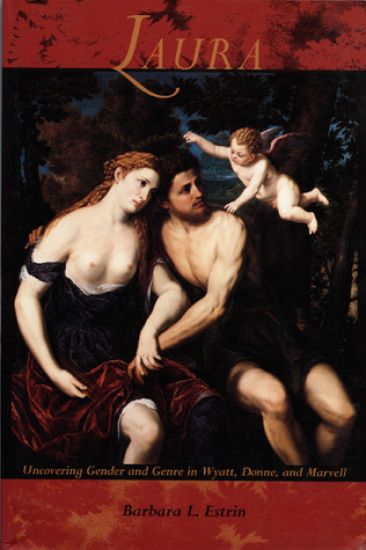
Laura

Laura

Barbara L. Estrin

Duke University Press
1994
pokkari
How do men imagine women? In the poetry of Petrarch and his English successors-Wyatt, Donne, and Marvell-the male poet persistently imagines pursuing a woman, Laura, whom he pursues even as she continues to deny his affections. Critics have long held that, in objectifying Laura, these male-authored texts deny the imaginative, intellectual, and physical life of the woman they idealize. In Laura, Barbara L. Estrin counters this traditional view by focusing not on the generative powers of the male poet, but on the subjectivity of the imagined woman and the imaginative space of the poems she occupies. Through close readings of the Rime sparse and the works of Wyatt, Donne, and Marvell, Estrin uncovers three Lauras: Laura-Daphne, who denies sexuality; Laura-Eve, who returns the poet’s love; and Laura-Mercury, who reinvents her own life. Estrin claims that in these three guises Laura subverts both genre and gender, thereby introducing multiple desires into the many layers of the poems. Drawing upon genre and gender theories advanced by Jean-FranÇois Lyotard and Judith Butler to situate female desire in the poem’s framework, Estrin shows how genre and gender in the Petrarchan tradition work together to undermine the stability of these very concepts.Estrin’s Laura constitutes a fundamental reconceptualization of the Petrarchan tradition and contributes greatly to the postmodern reassessment of the Renaissance period. In its descriptions of how early modern poets formulate questions about sexuality, society and poetry, Laura will appeal to scholars of the English and Italian Renaissance, of gender studies, and of literary criticism and theory generally.
Laura

Laura

Barbara L. Estrin

Duke University Press
1994
sidottu
How do men imagine women? In the poetry of Petrarch and his English successors-Wyatt, Donne, and Marvell-the male poet persistently imagines pursuing a woman, Laura, whom he pursues even as she continues to deny his affections. Critics have long held that, in objectifying Laura, these male-authored texts deny the imaginative, intellectual, and physical life of the woman they idealize. In Laura, Barbara L. Estrin counters this traditional view by focusing not on the generative powers of the male poet, but on the subjectivity of the imagined woman and the imaginative space of the poems she occupies. Through close readings of the Rime sparse and the works of Wyatt, Donne, and Marvell, Estrin uncovers three Lauras: Laura-Daphne, who denies sexuality; Laura-Eve, who returns the poet’s love; and Laura-Mercury, who reinvents her own life. Estrin claims that in these three guises Laura subverts both genre and gender, thereby introducing multiple desires into the many layers of the poems. Drawing upon genre and gender theories advanced by Jean-FranÇois Lyotard and Judith Butler to situate female desire in the poem’s framework, Estrin shows how genre and gender in the Petrarchan tradition work together to undermine the stability of these very concepts.Estrin’s Laura constitutes a fundamental reconceptualization of the Petrarchan tradition and contributes greatly to the postmodern reassessment of the Renaissance period. In its descriptions of how early modern poets formulate questions about sexuality, society and poetry, Laura will appeal to scholars of the English and Italian Renaissance, of gender studies, and of literary criticism and theory generally.