Kirjojen hintavertailu. Mukana 11 699 587 kirjaa ja 12 kauppaa.

Kirjahaku

Etsi kirjoja tekijän nimen, kirjan nimen tai ISBN:n perusteella.

1000 tulosta hakusanalla Lilian Mathieu

The Cat Who Dropped A Bombshell (The Cat Who… Mysteries, Book 28)

The Cat Who Dropped A Bombshell (The Cat Who… Mysteries, Book 28)

Lilian Jackson Braun

Headline Book Publishing
2006
pokkari
While the town of Pickax is swept up in its sesquicentennial celebrations, Koko has developed a strange new hobby: he drops himself from balconies, occasionally landing in the oddest of places. When a young man comes to visit his wealthy relatives, Koko plummets straight on to his head! Meanwhile, a hurricane is brewing, and the visitor's family members soon fall deathly ill. Qwill has his work cut out for him because Pickax - as foreshadowed by Koko - is about to be hit by a bombshell.
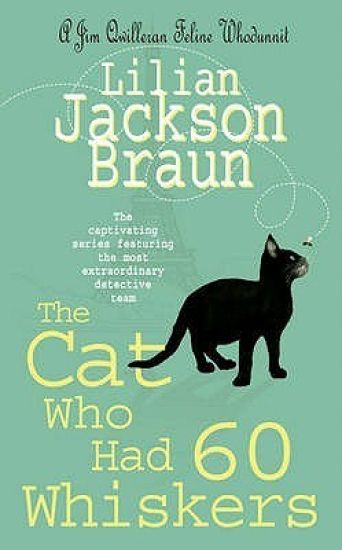
The Cat Who Had 60 Whiskers (The Cat Who… Mysteries, Book 29)

The Cat Who Had 60 Whiskers (The Cat Who… Mysteries, Book 29)

Lilian Jackson Braun

Headline Book Publishing
2007
pokkari
Times are changing in Pickax: a new senior centre is in the works and a production of CATS is set to delight Moose County residents; Polly Duncan is off to Paris, leaving Qwill without a companion for his apple barn concerts; and The Librarians Who Lunch are showing their Art Hats to help unite Pickax with their Lockmaster County neighbours.Not to mention the conversion of the late Nathan Ledfield's mansion into a charitable museum! With Mr Ledfield's treasures being sold off to benefit needy children, the town is abuzz with excitement - until a mysterious death from a bee sting leaves everyone but Cool Koko in a state of confusion ...
Nebraska Place-Names

Nebraska Place-Names

Lilian L. Fitzpatrick

University of Nebraska Press
1960
pokkari
During the thirty-five years since it was first published, Nebraska Place-Names, thanks to its completeness and reliable scholarship, its excellent arrangement and its readability, not only has remained the standard work on the subject but is by way of becoming a classic of its kind. This new edition, which incorporates the complete text of the original study, once more makes available a work of interest to every Nebraskan as well as to social historians, folklorists, and collectors of Western Americana. Enriching the Fitzpartick study, and considerably increasing its scope, are four new chapters derived from another standard work, The Origin of the Place Names of Nebraska (The Toponomy of Nebraska) by J. T. Link. These chapters concern, respectively, the name "Nebraska"; names of cultural features (trails, ranch and overland stations, military posts, Indian reservations, forests, state parks); names of water features (streams, lakes, marshes, swamps, springs, falls); and names of relief features (bluffs, buttes, hills, valleys, canyons, gulches, flats islands).
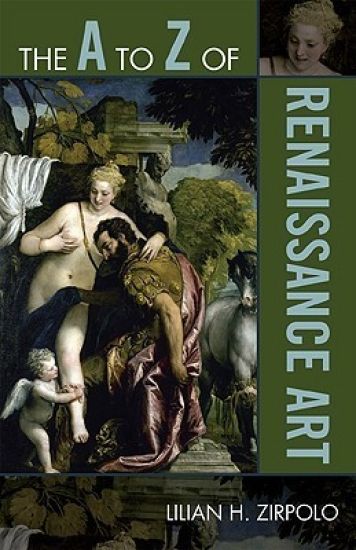
The A to Z of Renaissance Art

The A to Z of Renaissance Art

Lilian H. Zirpolo

Scarecrow Press
2009
nidottu
The Renaissance era was launched in Italy and gradually spread to the Netherlands, Germany, Spain, France, and other parts of Europe and the New World, with figures like Robert Campin, Jan van Eyck, Rogier van der Weyden, Albrecht Dürer, and Albrecht Altdorfer. It was the era that produced some of the icons of civilization, including Leonardo da Vinci's Mona Lisa and Last Supper and Michelangelo's Sistine Ceiling, Pietà, and David. Marked as one of the greatest moments in history, the outburst of creativity of the era resulted in the most influential artistic revolution ever to have taken place. The period produced a substantial number of notable masters, among them Caravaggio, Donato Bramante, Donatello, El Greco, Filippo Brunelleschi, Masaccio, Sandro Botticelli, Raphael, Titian, and Tintoretto. The result was an outstanding number of exceptional works of art and architecture that pushed human potential to new heights. The A to Z of Renaissance Art covers the years 1250 to 1648, the period most disciplines place as the Renaissance Era. A complete portrait of this remarkable period is depicted in this book through a chronology, an introductory essay, a bibliography, and over 500 hundred cross-referenced dictionary entries on major Renaissance painters, sculptors, architects, and patrons, as well as relevant historical figures and events, the foremost artistic centers, schools and periods, major themes and subjects, noteworthy commissions, technical processes, theoretical material, literary and philosophic sources for art, and art historical terminology.
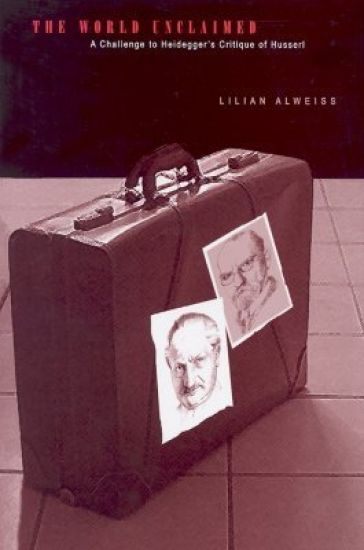
The World Unclaimed

The World Unclaimed

Lilian Alweiss

Ohio University Press
2003
sidottu
The World Unclaimed argues that Heidegger's critique of modern epistemology in Being and Time is seriously flawed. Heidegger believes he has done away with epistemological problems concerning the external world by showing that the world is an existential structure of Dasein. However, the author argues that Heidegger fails to make good his claim that he has "rescued" the phenomenon of the world, which he believes the tradition of philosophy has bypassed. Heidegger fails not only to reclaim the world but also to acknowledge its loss. Alweiss thus calls into question Heidegger's claim that ontology is more fundamental than epistemology. The World Unclaimed develops its powerful critique of Being and Time by arguing for a return to Husserl. It draws on Husserl's insight that it is the moving and sensing body that discloses how we are already familiar with the world. Kinaesthesia provides a key for understanding our relation to the world. The author thus suggests that thinkers in the vein of Husserl and Kant -who, for Heidegger, epitomize the tradition of modern philosophy by returning to a "worldless subject"- may provide us with the resources to reclaim the phenomenon of the world that Being and Time sets out to salvage. Alweiss's fresh and innovative study demonstrates that it is possible to overcome epistemological skepticism without ever losing sight of the phenomenon of the world. Moreover, Alweiss challenges us to reconsider the relation between Husserl and Heidegger by providing a forceful defense of Husserl's critique of cognition.
All Is True

All Is True

Lilian R. Furst

Duke University Press
1995
sidottu
"All is true," realist writers would say of their work, to which critics now respond: All is art and artifice. Offering a new approach to reading nineteenth-century realist fiction, Lilian R. Furst seeks to reconcile these contradictory claims. In doing so, she clarifies the deceptions, appropriations, intentions, and ultimately the power of literary realism.In close textual analyses of works ranging across European and American literature, including paradigmatic texts by Balzac, Flaubert, George Eliot, Zola, Henry James, and Thomas Mann, Furst shows how the handling of time, the presentation of place, and certain narrational strategies have served the realists’ claim. She demonstrates how readers today, like those a hundred years ago, are convinced of the authenticity of the created illusion by such means as framing, voice, perspective, and the slippage from metonymy to metaphor. Further, Furst reveals the pains the realists took to conceal these devices, and thus to protect their claim to be employing a simple form. Taking into account both the claims and the covert strategies of these writers, All Is True puts forward an alternative to the conventional polarized reading of the realist text-which emerges here as neither strictly an imitation of an extraneous model nor simply a web of words but a brilliantly complex imbrication of the two.A major statement on one of the most enduring forms in cultural history, this book promises to alter not only our view of realist fiction but our understanding of how we read it.
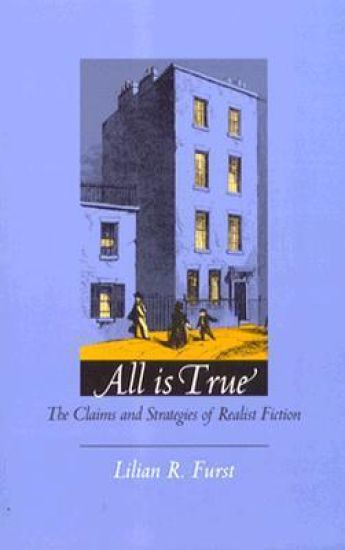
All Is True

All Is True

Lilian R. Furst

Duke University Press
1995
pokkari
"All is true," realist writers would say of their work, to which critics now respond: All is art and artifice. Offering a new approach to reading nineteenth-century realist fiction, Lilian R. Furst seeks to reconcile these contradictory claims. In doing so, she clarifies the deceptions, appropriations, intentions, and ultimately the power of literary realism.In close textual analyses of works ranging across European and American literature, including paradigmatic texts by Balzac, Flaubert, George Eliot, Zola, Henry James, and Thomas Mann, Furst shows how the handling of time, the presentation of place, and certain narrational strategies have served the realists’ claim. She demonstrates how readers today, like those a hundred years ago, are convinced of the authenticity of the created illusion by such means as framing, voice, perspective, and the slippage from metonymy to metaphor. Further, Furst reveals the pains the realists took to conceal these devices, and thus to protect their claim to be employing a simple form. Taking into account both the claims and the covert strategies of these writers, All Is True puts forward an alternative to the conventional polarized reading of the realist text-which emerges here as neither strictly an imitation of an extraneous model nor simply a web of words but a brilliantly complex imbrication of the two.A major statement on one of the most enduring forms in cultural history, this book promises to alter not only our view of realist fiction but our understanding of how we read it.
Wareham

Wareham

Lilian Ladle

Phillimore Co Ltd
1994
nidottu
Wareham is a fertile oasis well watered by the rivers Frome and Piddle. The early town evolved from a centre of Roman pottery production to a high status Saxon burg. During King Alfred’s reign massive earthen banks were constructed and the street pattern of today has been constrained by that huge fortification. However, the meteoric rise of Poole in the early Middle Ages was largely at the expense of Wareham, whose fortunes were eclipsed by its younger neighbour. A disastrous fire in 1762 destroyed much of the ancient town, but it still retains some charm.
Kundalini

Kundalini

Lilian Silburn

State University of New York Press
1988
pokkari
Kundalini's power lies dormant in humans until it is awakened. The awakened Kundalini expresses the primal divine impulse and ultimately joins the individual with the divine. The development of the book parallels the development of the Kundalini within. Part One exposes the awakening and unfolding of the Kundalini; Part Two describes the piercing of the energy centers and the stages of ascent through the body; and Part Three examines Kundalini's relation to sexual expression.The book provides a deep understanding of Tantra and of the underlying purpose of Tantracism. The author carefully considers the Caryakrama practices of sexual expression as a means of awakening and controlling Kundalini.Silburn draws together passages from the Trika, Krama, and Kaula systems ranging through Abhinavagupta and Lalla and provides both translation and commentary for them. Chapters on the Chakras, the Nadis, and on mantras further elucidate the topic and lead to a forceful conclusion: Kundalini is the source of ultimate human knowledge and power.