Kirjojen hintavertailu. Mukana 11 244 527 kirjaa ja 12 kauppaa.

Kirjahaku

Etsi kirjoja tekijän nimen, kirjan nimen tai ISBN:n perusteella.

1000 tulosta hakusanalla Louis MacNeice

Louis Owens

Louis Owens

University of Oklahoma Press
2004
sidottu
Louis Owens (1948-2002) achieved worldwide recognition with his humorous and fearless novels that explored themes close to Owens's own upbringing as a mixed-blood Choctaw, Cherokee, and Irish-American. His critical works were equally substantive. Readers of his criticism find his work challenging, and casual readers find his fiction highly enjoyable - a remarkable combination that speaks well of Owens's intellectual and creative abilities.In a new collection of essays, Louis Owens: Literary Reflections on His Life and Work, editor Jacquelyn Kilpatrick and eleven other contributors examine Owens's fiction and nonfiction from widely varying viewpoints to address issues such as identity, place, literary theory, trickster motifs, and the environment. This text aids the reader in understanding the theories Owens articulated and how he followed those theories in his own writing. Also included is the last interview Owens gave, appearing in print for the first time, which provides insights into this complex man's personal life.

Louis and Bebe Barron's Forbidden Planet

Louis and Bebe Barron's Forbidden Planet

James Wierzbicki

Scarecrow Press
2005
nidottu
Forbidden Planet is a product of the MGM studio, which at the time of the production of this film was hardly in the business of making science-fiction films. Originally planned as a "B" picture, the 1956 Forbidden Planet was praised for its spectacular special effects and brilliant color cinematography. The plot practically tingles with sexual innuendo and the dialogue is rich in references to Freudian psychology. However, in spite of all this, the film was marketed to a juvenile audience. Notwithstanding its uncommon look and "feel," perhaps the most unusual aspect of the film is the way it sounds. Never before had a major Hollywood effort utilized a score generated entirely by electronic means, yet seldom does one find commentary on how Louis and Bebe Barron's score again and again challenges Hollywood norms. In addition to placing the composers and film in historical context, James Wierzbicki's study offers a deep and thorough analysis of not only the music as used in the film, but also of the decontextualized music as presented by the Barrons on the 1977 "original soundtrack album." The text is generously illustrated with transcriptions and graphs, and can serve as a model for the examination of other extended works of electronic music for which no written score has ever existed.
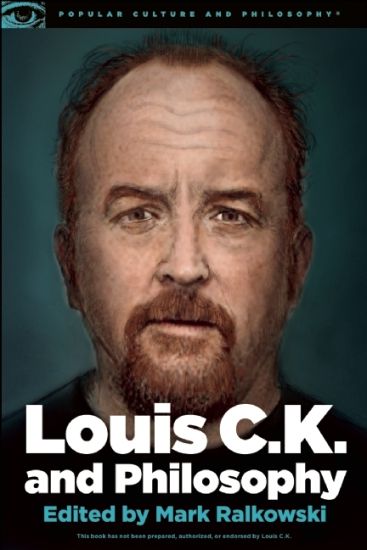
Louis C.K. and Philosophy

Louis C.K. and Philosophy

Open Court Publishing Co ,U.S.
2016
pokkari
Charlie Rose has called Louis C.K. "the philosopher-king of comedy," and many have detected philosophical profundity in his material. Twenty-five philosophers examine the wisdom of Louis C.K. from a variety of philosophical perspectives. The chapters draw upon C.K.'s standup comedy, the show Louie, and C.K.'s other writings. One writer looks at the different meanings of C.K.'s statement, "You're gonna be dead way longer than you were alive." One chapter shows the affinity of C.K.'s "sick of living this bullshit life" with Kierkegaard's "sickness unto death." Another pursues Louis's thought that we may by our lack of moral concern "live a really evil life without thinking about it." C.K.'s insistence that "things that are not can't be" points to the philosophical problem of nothingness in relation to being. His religion is "apathetic agnostic," conveyed in his thought experiment that God began work in 1982. Louis's argument that you can have the kind of body you want if you make yourself want a disgusting, shitty body, is the Stoic ethics of Epictetus. And, as C.K. has shown in so many ways, the fact that we're soon going to die has its funny side.
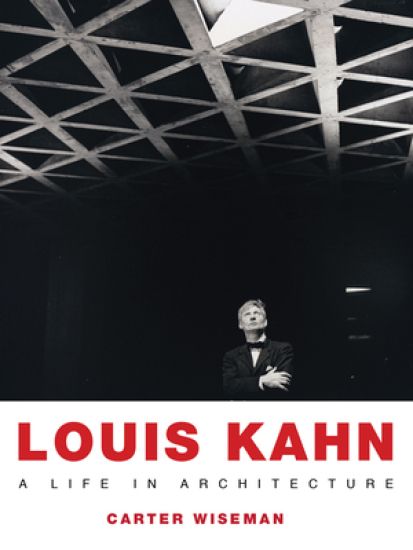
Louis Kahn

Louis Kahn

Carter Wiseman

University of Virginia Press
2020
nidottu
The man who envisioned and realized such landmark buildings as the Salk Institute, the Kimbell Art Museum, and the National Assembly complex in Bangladesh, Louis Kahn was born in what is now Estonia, immigrated to America, and became one of the towering figures in his adopted country's built world. His works are unmistakable in their elegance, monolithic power, and architectural honesty.Written by Carter Wiseman, one of Kahn's most respected commentators, this book offers a succinct, accessible examination of the life and work of one of America's greatest architects. It traces the influence on Kahn's architecture of his immigrant origins, his upbringing in poverty, his education, and the impact of the Great Depression and the arrival of Modernism on his life and work. Finally, it provides insight into why, as the legacy of many of his contemporaries has receded in importance, Kahn's has remained so durably influential. Louis Kahn: A Life in Architecture provides the best concise introduction available to this singular life and achievement.
Louis Ginzberg's Legends of the Jews

Louis Ginzberg's Legends of the Jews

Wayne State University Press
2014
sidottu
At the beginning of the twentieth century, many perceived American Jewry to be in a state of crisis as traditions of faith faced modern sensibilities. Published beginning in 1909, Rabbi and Professor Louis Ginzberg’s seven-volume The Legends of the Jews appeared at this crucial time and offered a landmark synthesis of aggadah from classical Rabbinic literature and ancient folk legends from a number of cultures. It remains a hugely influential work of scholarship from a man who shaped American Conservative Judaism. In Louis Ginzberg’s Legends of the Jews: Ancient Jewish Folk Literature Reconsidered, editors Galit Hasan-Rokem and Ithamar Gruenwald present a range of reflections on the Legends, inspired by two plenary sessions devoted to its centennial at the Fifteenth Congress of the World Association of Jewish Studies in August 2009.In order to provide readers with the broadest possible view of Ginzberg’s colossal project and its repercussions in contemporary scholarship, the editors present leading scholars to address it from a variety of historical, philological, philosophical, and methodological perspectives. Contributors give special regard to the academic expertise and professional identity of the author of the Legends as a folklore scholar and include discussions on the folkloristic underpinnings of The Legends of the Jews. They also investigate, each according to her or his disciplinary framework, the uniqueness, strengths, and weakness of the project. An introduction by Rebecca Schorsch and a preface by Galit Hasan-Rokem further highlight the folk narrative aspects of the work in addition to the articles themselves.The present volume makes clear the historical and scholarly context of Ginzberg’s milestone work as well as the methodological and theoretical issues that emerge from studying it and other forms of aggadic literature. Scholars of Jewish folklore as well as of Talmudic-Midrashic literature will find this volume to be invaluable reading.Contributors Include: David Golinkin, Daniel Boyarin, Hillel I. Newman, Jacob Elbaum, Galit Hasan-Rokem, Johannes Sabel, Ithamar Gruenwald, Rebecca Schorsch.
Louis Graveraet Kaufman

Louis Graveraet Kaufman

Ann Berman

WAYNE STATE UNIVERSITY PRESS
2025
pokkari
Discover the extraordinary rise of the glamorous, competitive, and clever American banking titan. This fascinating biography recounts the life and legacy of a titan of American banking, Louis Graveraet Kaufman (1870-1942). Also known as LG, he was a Gatsbyesque figure born in Michigan's Upper Peninsula who married into great wealth and then amassed far more of his own. Under LG, New York's Chatham Phenix National Bank and Trust Company became one of the nation's largest banks and the first in New York to boast a network of branches. When he was denied entry into the exclusive, Protestant, old-money Huron Mountain Club, LG responded by building his own retreat: the world's largest log lodge, a 26,000-square-foot behemoth near Marquette, Michigan. Christened Granot Loma, it became the site of lavish Prohibition-era parties, attracting many celebrities who came in private rail cars to enjoy jazz and liquor chez Kaufman. A darling of the press, LG became a household name, making news by coordinating the famous takeover of General Motors in 1916, narrowly escaping death in the Wall Street Bombing of 1920, and financing the Empire State Building during the Great Depression. Author Ann Berman highlights Kaufman's remarkable journey from "barefoot boy" to trailblazing branch banking giant, proving LG was not just a man of his time but one worth reading about over a century later.
Louis' Children

Louis' Children

Gourse Leslie

Cooper Square Press
2001
nidottu
Louis Armstrong pioneered the jazz vocal. Based on dozens of interviews, this book provides a comprehensive overview of the diverse performers who inherited Satchmo's legacy and made it their own. They are Ethel Waters, Bing Crosby, Bobby McFerrin, Cab Calloway, Big Joe Turner, Billie Holiday, Nat "King" Cole, Joe Williams, Dinah Washington, Frank Sinatra, Sarah Vaughan, Ella Fitzgerald, Carmen McRae, Tony Bennett, and many others. This edition has been updated with a substantial new chapter that focuses on current artists like Cassandra Wilson and harry Connick, Jr.
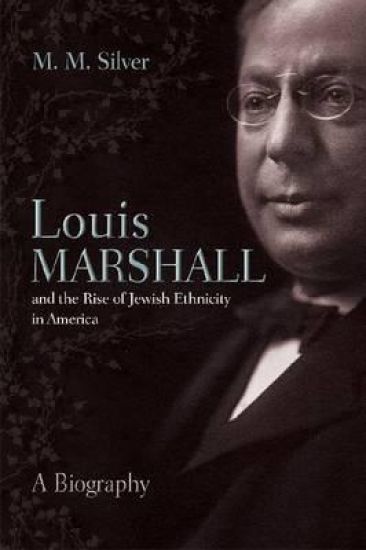
Louis Marshall and the Rise of Jewish Ethnicity in America
A milestone in modern Jewish history and American ethnic history, the sweeping influence of Louis Marshall’s career through the 1920s is unprecedented. A tireless advocate for and leader of an array of notable American Jewish organisations and institutions, Marshall also spearheaded civil rights campaigns for other ethnic groups, blazing the trail for the NAACP, Native American groups, and environmental protection causes in the early twentieth century. No comprehensive biography has been published that does justice to Marshall’s richly diverse life as an impassioned defender of Jewish communal interests and as a prominent attorney who reportedly argued more cases before the Supreme Court than any other attorney of his era. Silver eloquently fills that gap, tracing Marshall’s career in detail to reveal how Jewish subgroups of Eastern European immigrants and established Central European elites interacted in New York City and elsewhere to fuse distinctive communal perspectives on specific Jewish issues and broad American affairs. Through the chronicle of Marshall’s life, Silver sheds light on immigration policies, Jewish organisational and social history, environmental activism, and minority politics during World War I, and he bears witness to the rise of American Jewish ethnicity in pre-Holocaust America.
The Correspondence of William Carlos Williams and Louis Zukofsky

The Correspondence of William Carlos Williams and Louis Zukofsky

Louis Zukofsky; William Carlos Williams

Wesleyan University Press
2004
sidottu
Renowned poet William Carlos Williams and literary innovator Louis Zukofsky maintained a relationship through correspondence as both collaborators and friends between 1928 and 1963. Their letters have remained largely unpublished until now. Edited by Barry Ahearn, The Correspondence of William Carlos Williams and Louis Zukofsky chronicles the professional and personal relationship between Williams and Zukofsky as they present one another with criticism, suggestions and confidences that are at turns touching and astonishingly candid. In addition to delving into the creative processes of the two men, this exciting and extensive collection provides insight into such literary icons as Ezra Pound, E.E. Cummings, T.S. Eliot and Conrad Aiken. The analytical voice of Zukofsky and the experimental style of Williams radiate in these letters, creating a vivid and invaluable document of American literature.
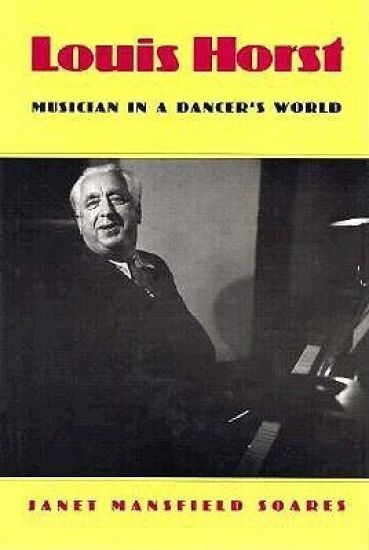
Louis Horst

Louis Horst

Janet Mansfield Soares

Duke University Press
1992
sidottu
From his musical beginnings as a piano player in gambling houses and society cafés, Louis Horst (1884-1964) became one of the chief architects of modern dance in the twentieth century. How a musician untrained in dance came to make such a mark is told here for the first time in rich detail. At the center of this story is Horst's relationship with Martha Graham, who was his intimate for decades. "I did everything for Martha," Horst said late in life. Indeed, as her lover, ally, and lifelong confidante, he worked with such conviction to make her the undisputed dance leader in the concert world that Graham herself would later remark: "Without him I could not have achieved anything I have done." Drawing on the conversation and writings of Horst and his colleagues, Janet Mansfield Soares reveals the inner workings of this passionate commitment and places it firmly in the context of dance history. Horst emerges from these pages as a man of extraordinary personality and multifaceted talent: a composer whose dance scores, such as the one for Graham's Primitive Mysteries, became models for many who followed; a concert pianist for American dancers such as Doris Humphrey and Helen Tamiris, as well as their German counterparts; an editor and writer whose advocacy for American dance made him a leading critic of his time; and, above all, a teacher and mentor whose work at the Neighborhood Playhouse, the Bennington School of Dance, American Dance Festival, and Juilliard helped shape generations of dancers and choreographers. Richly illustrated, sensitive to intimate detail and historical nuance, this comprehensive biography reveals the raison d'etre underlying Horst's theories and practices, offering a wealth of insight into the development of dance as an art form under his virtually unchallenged rule.
Louis Owens

Louis Owens

University of New Mexico Press
2019
sidottu
Louis Owens: Writing Land and Legacy explores the wide-ranging oeuvre of this seminal author, examining Owens's work and his importance in literature and Native studies. Of Choctaw, Cherokee, and Irish American descent, Owens's work includes mysteries, novels, literary scholarship, and autobiographical essays. Louis Owens offers a critical introduction and thirteen essays arranged into three sections: "Owens and the World," "Owens and California," and "The Novels." The essays present an excellent assessment of Owens's literary legacy, noting his contributions to American literature, ethnic literature, and Native American literature and highlighting his contributions to a variety of theories and genres. The collection concludes with a coda of personal poetic reflections on Owens by Diane Glancy and Kimberly Blaeser. Libraries, students, scholars, and the general public interested in Native American literature and the landscape of contemporary US literature will welcome this reflective volume that analyzes a vast range of Louis Owens's imaginative fictions, personal accounts, and critical work.
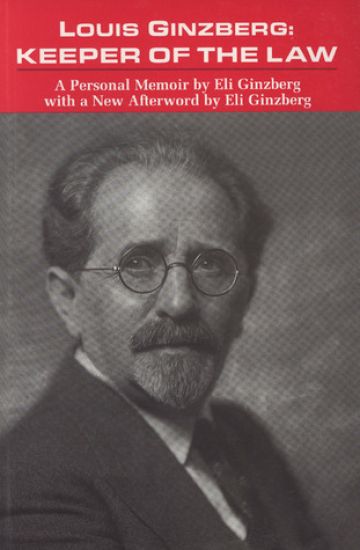
Louis Ginzberg

Louis Ginzberg

Eli Ginzberg

Jewish Publication Society
1996
pokkari
First published in 1966, this book is an unusual biography. It is written by a son about his father, by an interpreter of economics about an interpreter of rabbinics. It is done with obvious charm, with deep affection for the subject, and yet with surprising objectivity. There could not have been many students of Jewish law and legend of the era who did not at one time or another seek guidance from Louis Ginzberg - the remarkable man whose knowledge was vast and whose memory was phenomenal. In a sense, this book is the biography of a man who helped lay the foundations for an American Jewish culture.
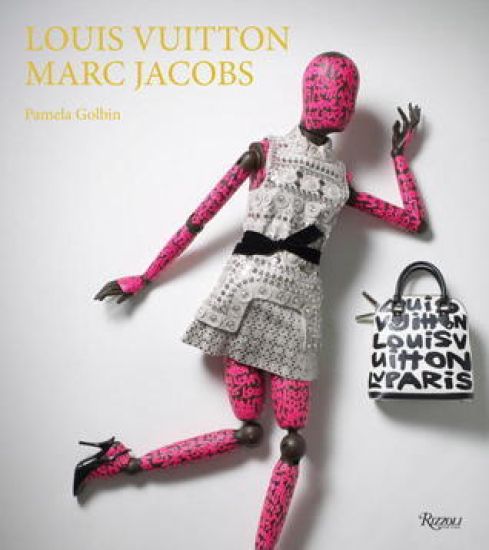
Louis Vuitton / Marc Jacobs

Louis Vuitton / Marc Jacobs

Rizzoli International Publications
2012
sidottu
This fascinating publication presents the roles two men have played in turning a small workshop in nineteenth-century Paris into one of the most successful and recognized brands in the world. Known for both craftsmanship and must-have high design, Louis Vuitton the luxury house was started by its eponymous founder in 1854. The first half of this publication traces the innovations by Vuitton, who turned the little-known guild profession of emballeur (packer) into the foremost luxury trunk maker in Paris, with a clientele that included in his lifetime the French nobility as well as the elite of a prosperous empire. Prime and never-before-seen examples of Vuitton’s craftsmanship, along with the fashion that went into them, are the highlights of these chapters. The second half of the book examines the role of Marc Jacobs as Louis Vuitton’s creative director (since 1997), who took the Louis Vuitton house into a new era with a series of collaborations with artists and designers—such as Takashi Murakami, Richard Prince, and Stephen Sprouse—as well as designing a line of highly successful and desired clothing for the company.By examining two divergent but often similar careers one hundred years apart, Louis Vuitton / Marc Jacobs is not only a layered study of the evolution of a luxury brand in the past 150 years but also a celebration of technical and design innovations in the new century.
Louis Vuitton City Bags: A Natural History

Louis Vuitton City Bags: A Natural History

Jean-Claude Kaufmann; Ian Luna; Florence Müller; Mariko Nishitani; Colombe Pringle

Rizzoli International Publications
2013
sidottu
This volume is an unprecedented history of Louis Vuitton’s women’s bags, the most coveted line of accessories in women’s fashion. At the heart of Louis Vuitton are its City Bags, a range of women’s bags that dates back to the turn of the twentieth century. Featuring the trademark monograms of the house, the City Bag story began with the Steamer, a resort bag designed in 1901 to be packed inside a much larger steamer trunk. These bags have in a hundred years formally diversified into a dizzying array of handbags for every conceivable function demanded by the modern woman. Profoundly influential, City Bags are now known to millions by their descriptive names (Keepall, Bucket, Papillon, Alma, Locket, Noe, Speedy) and are still evolving into more fantastical forms. Lavishly illustrated with new and archival photography, historical graphics, landmark editorials, and ad campaigns, the volume traces the history of these specific bag families, and examines the earliest specimens and today’s most sought-after collectibles, including Vuitton’s collaborations with Takashi Murakami, Stephen Sprouse, Richard Prince, Yayoi Kusama, and Rei Kawakubo and one-off projects by Zaha Hadid, Shigeru Ban, Vivienne Westwood, Helmut Lang, Andrée Putman, and of course, Marc Jacobs. Louis Vuitton: City Bags is an ambitious volume on the creation and cultivation of a cultural phenomenon.
Louis Vuitton: Bags

Louis Vuitton: Bags

RIZZOLI INTERNATIONAL PUBLICATIONS
2026
sidottu
With a legacy spanning over 170 years, Louis Vuitton's handbags remain the most successful line of fashion accessories in history. This photographic tribute features City Bags of the last 30 years, which became immeasurably popular under designers Marc Jacobs, Nicolas Ghesqui re, Kim Jones, Virgil Abloh and Pharrell. This book promises to be a one-of-a-kind and sumptuous celebration of the design, visual impact and enduring appeal of these objects of desire. At the heart of Louis Vuitton are its City Bags, a range of handbags that date back to the turn of the twentieth century. Featuring the trademark monograms of the house, the City Bag story began with the Steamer, a resort bag designed in 1901 to be packed inside a much larger trunk. These bags have formally diversified into a dizzying array of handbags for every conceivable function demanded by the modern woman (and man). Profoundly influential, City Bags are now known to millions by their descriptive names (Keepall, Bucket, Papillon, Alma, Locket, No , Speedy) and are still evolving into more fantastical forms. Louis Vuitton's ready-to-wear collections, debuting in 1997 under Marc Jacobs, have become the principal creative engine for this proliferation of bag types. Now in its third decade, and hand-in-hand with a highly-visible program of artistic patronage that saw Stephen Sprouse, Takashi Murakami, Yayoi Kusama, Richard Prince, Jeff Koons and many others collaborate on the design of handbags, the images taken of these objects--by some of the most important fashion photographers working today have become icons in their own right. With the handbags often front-and-center, the editorial photography collected here is drawn from some of the most important magazines and periodicals (and quite a few campaigns). Taken by industry giants such as Juergen Teller, Annie Leibovitz, Mert Alas & Marcus Pigott, Steven Meisel, Kourtney Roy, Collier Schorr, Jean Larivi re and many others, this curated archive of images testify to the unique, persuasive power of the photographic image, and its continuing role in the storytelling (and mythmaking) of Louis Vuitton. Taking after Rizzoli's very successful Louis Vuitton City Bags: A Natural History, the book also serves as an indispensable "field guide" to all the iconic bags of the brand.
Louis Vuitton: The Icons and the Iconoclasts

Louis Vuitton: The Icons and the Iconoclasts

Rizzoli International Publications
2014
sidottu
The fashion house Louis Vuitton has long been the ultimate symbol of luxury, its storied brand a glamorous invitation to a world of adventurous savoir faire. Recently, innovative collaborations with the most exciting artists and designers of today have reinterpreted the house's famed monogrammed pattern, signature bags, and couture shoes, clothes, fine watches, jewelry, and accessories into unique and vibrant expressions of the brand and its heritage. Lavishly illustrated with new and archival photography, this limited-edition book celebrates the luxury brand's spirit of innovation and collaboration by giving six of the world's iconoclasts (Christian Louboutin, Cindy Sherman, Frank Gehry, Karl Lagerfeld, Marc Newson, and Rei Kawakubo) the opportunity to create a personally inspired bag and/or piece of luggage using Louis Vuitton's iconic and globally recognized monogram. Highlights include classic and contemporary images and sketches, along with bios of the artists and designers that lend insight into the inspirations behind these very special collaborations. An absolute essential for lovers of fashion, art, and photography, Louis Vuitton: The Icons and the Iconoclasts is an exquisitely crafted volume on the timeless style and daring vision of Louis Vuitton.
Louis Vuitton

Louis Vuitton

Valerie Steele

Rizzoli International Publications
2017
sidottu
The more than eighty collaborators featured in this book comprise an A to Z of Vuitton s creative collaborations, especially from the last decade, with significant chapters devoted to the work of Nicolas Ghesquiere, Marc Jacobs, Takashi Murakami and other key collaborators. Never forgetting the long tradition of the house, the period covered by the book from the late 1990s through the present day will describe the role that Louis Vuitton is playing in a crucial moment in global fashion. Now with 536 pages, this edition features more than 130 pages of stunning new imagery that showcases the increasingly symbiotic relationship between fashion, art, and design.
Louis Vuitton And Japan

Louis Vuitton And Japan

Florence Müller; Aurélie Samuel

RIZZOLI INTERNATIONAL PUBLICATIONS
2025
sidottu
Published on the occasion of a major exhibition at Nakanoshima Museum of Art in Osaka, Japan, this volume explores the deep and transformative relationship between Louis Vuitton and Japan, which has produced myriad innovative collaborations that have defined the brand and revolutionized contemporary fashion. This fresh perspective on the global impact of the luxury powerhouse follows Louis Vuitton s journey from pioneering trunk innovations to its outsize influence on global street style, especially in Japan. In the volume, the Maison s history comes to life, from the evolution of its Monogram logo (which took inspiration, in part, from Japanese design) to the ingenious flat stackable trunk and patented lock innovations, alongside the brand s bold expansion into Japan. The authors consider the house s groundbreaking artistic collaborations most notably with artists Takashi Murakami (with his iconic Monogramouflage ) and Yayoi Kusama (with her signature polka-dot motifs) which transformed Louis Vuitton s visual identity. Beyond expertly tracing the Maison s engagement with Japanese culture almost from the moment of its founding, the book explores Louis Vuitton s broader impact on global fashion. It highlights landmark collections by artistic directors who have continually looked toward Japan for inspiration including Pharrell, Nicolas Ghesquiere, Kim Jones, Virgil Abloh, and Marc Jacobs. With contributions from leading experts in fashion, and art and cultural history, this comprehensive volume printed in five colors and bound in a three-piece cover with a printed cloth spine illustrates how Louis Vuitton s engagement with Japanese culture for more than a century has enriched its legacy and expanded the boundaries of luxury fashion.
Louis XIV's Army

Louis XIV's Army

René Chartrand

Osprey Publishing
1988
nidottu
A concise, illustrated study of the army of late seventeenth and early 18th century France.Louis XIV's army was in many ways the first modern army. After assuming power in 1661, Louis abolished the post of Colonel Général of Infantry so he could exercise direct control over the armed forces in his realm. The king demanded order, discipline and absolute loyalty from his army, and he introduced a military draft in 1688 - the first step towards what we know as conscription in modern armies. This book chronicles the development of Louis XIV's army during his 54-year reign, including the units, uniforms and weapons of the elite Maison du Roi. Numerous illustrations including detailed colour figure artwork portray the uniforms, colours and standards of his troops in vivid detail.