Kirjojen hintavertailu. Mukana 11 342 296 kirjaa ja 12 kauppaa.

Kirjahaku

Etsi kirjoja tekijän nimen, kirjan nimen tai ISBN:n perusteella.

1000 tulosta hakusanalla Maral Atmaca

Moral and Political Philosophy

Moral and Political Philosophy

Paul Smith

Palgrave Macmillan
2008
sidottu
A clear and concise introduction to moral and political philosophy which critically analyses arguments about controversial and topical practical issues – drug laws, justifications of punishment, civil disobedience, whether there is a duty to obey the law, and global poverty.
Moral and Political Philosophy

Moral and Political Philosophy

Paul Smith

Palgrave Macmillan
2008
nidottu
A clear and concise introduction to moral and political philosophy which critically analyses arguments about controversial and topical practical issues – drug laws, justifications of punishment, civil disobedience, whether there is a duty to obey the law, and global poverty.
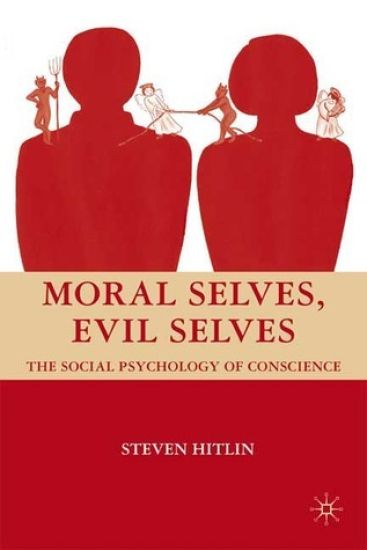
Moral Selves, Evil Selves

Moral Selves, Evil Selves

S. Hitlin

Palgrave Macmillan
2008
sidottu
This book highlights the oft neglected moral aspect of "the self," examining the variety of neurological, psychological, and social processes that enter into the development and maintenance of moral orientations.
Moral Geography

Moral Geography

Amy DeRogatis

Columbia University Press
2003
sidottu
Moral Geography traces the development of a moral basis for American expansionism, as Protestant missionaries, using biblical language and metaphors, imaginatively conjoined the cultivation of souls with the cultivation of land and made space sacred. While the political implications of the mapping of American expansion have been much studied, this is the first major study of the close and complex relationship between mapping and missionizing on the American frontier. Moral Geography provides a fresh approach to understanding nineteenth-century Protestant home missions in Ohio's Western Reserve. Through the use of maps, letters, religious tracts, travel narratives, and geographical texts, Amy DeRogatis recovers the struggles of settlers, land surveyors, missionaries, and geographers as they sought to reconcile their hopes and expectations for a Promised Land with the realities of life on the early American frontier.
Moral Geography

Moral Geography

Amy DeRogatis

Columbia University Press
2003
pokkari
Moral Geography traces the development of a moral basis for American expansionism, as Protestant missionaries, using biblical language and metaphors, imaginatively conjoined the cultivation of souls with the cultivation of land and made space sacred. While the political implications of the mapping of American expansion have been much studied, this is the first major study of the close and complex relationship between mapping and missionizing on the American frontier. Moral Geography provides a fresh approach to understanding nineteenth-century Protestant home missions in Ohio's Western Reserve. Through the use of maps, letters, religious tracts, travel narratives, and geographical texts, Amy DeRogatis recovers the struggles of settlers, land surveyors, missionaries, and geographers as they sought to reconcile their hopes and expectations for a Promised Land with the realities of life on the early American frontier.
Moral Hazard in Health Insurance

Moral Hazard in Health Insurance

Amy Finkelstein

Columbia University Press
2014
sidottu
Moral hazard-the tendency to change behavior when the cost of that behavior will be borne by others-is a particularly tricky question when considering health care. Kenneth J. Arrow's seminal 1963 paper on this topic (included in this volume) was one of the first to explore the implication of moral hazard for health care, and Amy Finkelstein-recognized as one of the world's foremost experts on the topic-here examines this issue in the context of contemporary American health care policy. Drawing on research from both the original RAND Health Insurance Experiment and her own research, including a 2008 Health Insurance Experiment in Oregon, Finkelstein presents compelling evidence that health insurance does indeed affect medical spending and encourages policy solutions that acknowledge and account for this. The volume also features commentaries and insights from other renowned economists, including an introduction by Joseph P. Newhouse that provides context for the discussion, a commentary from Jonathan Gruber that considers provider-side moral hazard, and reflections from Joseph E. Stiglitz and Kenneth J. Arrow.
Moral Atmospheres

Moral Atmospheres

Timothy P. A. Cooper

Columbia University Press
2024
sidottu
Lahore’s Hall Road is the largest electronics market in Pakistan. Once the center of film and media piracy in South Asia, it now specializes in smartphones and accessories. For Hall Road’s traders, conflicts between the economic promises and the moral dangers of film loom large. To reconcile their secular trade with their responsibilities as devoted Muslims, they often look to adjudicate the good or bad moral “atmosphere” (mahaul) that can cling to film and media.Timothy P. A. Cooper examines the diverse and coexisting moral atmospheres that surround media in Pakistan, tracing public understandings of ethical life and showing how they influence economic behavior. Drawing on extensive ethnographic work among traders, consumers, collectors, archivists, cinephiles, and cinephobes, Moral Atmospheres explores varied views on what the relationship between film and faith should look, sound, and feel like for Pakistan’s Muslim-majority public. Cooper considers the preservation and censorship of film in and outside of the state bureaucracy, contestations surrounding heritage and urban infrastructure, and the production and circulation of sound and video recordings among the country’s religious minorities. He argues that a focus on atmosphere provides ways of seeing moral thresholds as mutable and affective, rather than as fixed ethical standpoints. At once a vivid ethnography of a market street and a generative theorization of atmosphere, this book offers fresh perspectives on moral experience and the relationship between religion and media.
Moral Atmospheres

Moral Atmospheres

Timothy P. A. Cooper

Columbia University Press
2024
pokkari
Lahore’s Hall Road is the largest electronics market in Pakistan. Once the center of film and media piracy in South Asia, it now specializes in smartphones and accessories. For Hall Road’s traders, conflicts between the economic promises and the moral dangers of film loom large. To reconcile their secular trade with their responsibilities as devoted Muslims, they often look to adjudicate the good or bad moral “atmosphere” (mahaul) that can cling to film and media.Timothy P. A. Cooper examines the diverse and coexisting moral atmospheres that surround media in Pakistan, tracing public understandings of ethical life and showing how they influence economic behavior. Drawing on extensive ethnographic work among traders, consumers, collectors, archivists, cinephiles, and cinephobes, Moral Atmospheres explores varied views on what the relationship between film and faith should look, sound, and feel like for Pakistan’s Muslim-majority public. Cooper considers the preservation and censorship of film in and outside of the state bureaucracy, contestations surrounding heritage and urban infrastructure, and the production and circulation of sound and video recordings among the country’s religious minorities. He argues that a focus on atmosphere provides ways of seeing moral thresholds as mutable and affective, rather than as fixed ethical standpoints. At once a vivid ethnography of a market street and a generative theorization of atmosphere, this book offers fresh perspectives on moral experience and the relationship between religion and media.
Moral AI

Moral AI

Jana Schaich Borg; Walter Sinnott-Armstrong; Vincent Conitzer

PENGUIN BOOKS LTD
2024
sidottu
A balanced and thought-provoking guide to all the big questions about AI and ethics Can computers understand morality? Can they respect privacy? And what can we do to make AI safe and fair? The artificial intelligence revolution has begun. Today, there are self-driving cars on our streets, autonomous weapons in our armies, robot surgeons in our hospitals – and AI's presence in our lives will only increase. Some see this as the dawn of a new era in innovation and ease; others are alarmed by its destructive potential. But one thing is clear: this is a technology like no other, one that raises profound questions about the very definitions of human intelligence and morality. In Moral AI, world-renowned researchers in moral psychology, philosophy, and artificial intelligence – Jana Schaich Borg, Walter Sinnott-Armstrong and Vincent Conitzer – tackle these thorny issues head-on. Writing lucidly and calmly, they lay out the recent advances in this still nascent field, peeling away the exaggeration and misleading arguments. Instead, they offer clear examinations of the moral concerns at the heart of AI programs, from racial equity to personal privacy, fake news to autonomous weaponry. Ultimately, they argue that artificial intelligence can be built and used safely and ethically, but that its potential cannot be achieved without careful reflection on the values we wish to imbue it with. This is an essential primer for any thinking person.
Moral AI

Moral AI

Jana Schaich Borg; Walter Sinnott-Armstrong; Vincent Conitzer

PENGUIN BOOKS LTD
2025
nidottu
A balanced and thought-provoking guide to all the big questions about AI and ethics Can computers understand morality? Can they respect privacy? And what can we do to make AI safe and fair? The artificial intelligence revolution has begun. Today, there are self-driving cars on our streets, autonomous weapons in our armies, robot surgeons in our hospitals – and AI's presence in our lives will only increase. Some see this as the dawn of a new era in innovation and ease; others are alarmed by its destructive potential. But one thing is clear: this is a technology like no other, one that raises profound questions about the very definitions of human intelligence and morality. In Moral AI, world-renowned researchers in moral psychology, philosophy, and artificial intelligence – Jana Schaich Borg, Walter Sinnott-Armstrong and Vincent Conitzer – tackle these thorny issues head-on. Writing lucidly and calmly, they lay out the recent advances in this still nascent field, peeling away the exaggeration and misleading arguments. Instead, they offer clear examinations of the moral concerns at the heart of AI programs, from racial equity to personal privacy, fake news to autonomous weaponry. Ultimately, they argue that artificial intelligence can be built and used safely and ethically, but that its potential cannot be achieved without careful reflection on the values we wish to imbue it with. This is an essential primer for any thinking person.
Moral Visions

Moral Visions

UNIVERSITY OF ILLINOIS PRESS
2025
sidottu
The Book of Mormon as part of today’s conversations about personal, religious, and social morality Though used by millions as a guide for how to live one’s life, the Book of Mormon’s links with contemporary ethics remain largely unexamined. Courtney S. Campbell and Kelly Sorensen edit essays that spotlight and encourage further thought on these connections. Contributors in the first section discuss foundational issues such as the Book of Mormon’s moral psychology, its minimalist and covenantal moralities, the nature of the good and how the good is known, the question of whether value depends on a certain kind of future, the Book of Mormon’s strategy for moral persuasion, and God’s participation in human choices. In the second section, the essayists turn to everyday ethical questions concerning resistance to forced cultural assimilation, clothing and dress, authority, and memory. The final chapter further explores practical moral visions. A rich and thought-provoking analysis, Moral Visions examines the Book of Mormon through a variety of methods while aiming to deepen understanding of both the text’s messages and its potential place in future discussions of ethics.Contributors: Daniel Becerra, Courtney S. Campbell, Ryan Davis, Michael D. K. Ing, Ariel Bybee Laughton, Kimberly Matheson, Rachel Esplin Odell, Kelly Sorensen, Joseph M. Spencer
Moral Visions

Moral Visions

UNIVERSITY OF ILLINOIS PRESS
2025
nidottu
The Book of Mormon as part of today’s conversations about personal, religious, and social morality Though used by millions as a guide for how to live one’s life, the Book of Mormon’s links with contemporary ethics remain largely unexamined. Courtney S. Campbell and Kelly Sorensen edit essays that spotlight and encourage further thought on these connections. Contributors in the first section discuss foundational issues such as the Book of Mormon’s moral psychology, its minimalist and covenantal moralities, the nature of the good and how the good is known, the question of whether value depends on a certain kind of future, the Book of Mormon’s strategy for moral persuasion, and God’s participation in human choices. In the second section, the essayists turn to everyday ethical questions concerning resistance to forced cultural assimilation, clothing and dress, authority, and memory. The final chapter further explores practical moral visions. A rich and thought-provoking analysis, Moral Visions examines the Book of Mormon through a variety of methods while aiming to deepen understanding of both the text’s messages and its potential place in future discussions of ethics.Contributors: Daniel Becerra, Courtney S. Campbell, Ryan Davis, Michael D. K. Ing, Ariel Bybee Laughton, Kimberly Matheson, Rachel Esplin Odell, Kelly Sorensen, Joseph M. Spencer
Moral Psychology

Moral Psychology

Bradford Books
2017
pokkari
Groundbreaking essays and commentaries on the ways that recent findings in psychology and neuroscience illuminate virtue and character and related issues in philosophy.Philosophers have discussed virtue and character since Socrates, but many traditional views have been challenged by recent findings in psychology and neuroscience. This fifth volume of Moral Psychology grows out of this new wave of interdisciplinary work on virtue, vice, and character. It offers essays, commentaries, and replies by leading philosophers and scientists who explain and use empirical findings from psychology and neuroscience to illuminate virtue and character and related issues in moral philosophy. The contributors discuss such topics as eliminativist and situationist challenges to character; investigate the conceptual and empirical foundations of self-control, honesty, humility, and compassion; and consider whether the virtues contribute to well-being.ContributorsKarl Aquino, Jason Baehr, C. Daniel Batson, Lorraine L. Besser, C. Daryl Cameron, Tanya L. Chartrand, M. J. Crockett, Bella DePaulo, Korrina A. Duffy, William Fleeson, Andrea L. Glenn, Charles Goodman, Geoffrey P. Goodwin, George Graham, June Gruber, Thomas Hurka, Eranda Jayawickreme, Andreas Kappes, Kristjan Kristjansson, Daniel Lapsley, Neil Levy, E.J. Masicampo, Joshua May, Christian B. Miller, M. A. Montgomery, Thomas Nadelhoffer, Eddy Nahmias, Hanna Pickard, Katie Rapier, Raul Saucedo, Shannon W. Schrader, Walter Sinnott-Armstrong, Nancy E. Snow, Gopal Sreenivasan, Chandra Sripada, June P. Tangney, Valerie Tiberius, Simine Vazire, Jennifer Cole Wright
Moral Codes

Moral Codes

Alan F. Blackwell

MIT PRESS LTD
2024
nidottu
Why the world needs less AI and better programming languages. Decades ago, we believed that robots and computers would take over all the boring jobs and drudgery, leaving humans to a life of leisure. This hasn't happened. Instead, humans are still doing boring jobs, and even worse, AI researchers have built technology that is creative, self-aware, and emotional--doing the tasks humans were supposed to enjoy. How did we get here? In Moral Codes, Alan Blackwell argues that there is a fundamental flaw in the research agenda of AI. What humanity needs, Blackwell argues, is better ways to tell computers what we want them to do, with new and better programming languages: More Open Representations, Access to Learning, and Control Over Digital Expression, in other words, MORAL CODE. Blackwell draws on his deep experiences as a programming language designer--which he has been doing since 1983--to unpack fundamental principles of interaction design and explain their technical relationship to ideas of creativity and fairness. Taking aim at software that constrains our conversations with strict word counts or infantilizes human interaction with likes and emojis, Blackwell shows how to design software that is better--not more efficient or more profitable, but better for society and better for all people. Covering recent research and the latest smart tools, Blackwell offers rich design principles for a better kind of software--and a better kind of world.
Moral Psychology

Moral Psychology

Bradford Books
2007
pokkari
Philosophers and psychologists discuss new collaborative work in moral philosophy that draws on evolutionary psychology, cognitive science, and neuroscience.For much of the twentieth century, philosophy and science went their separate ways. In moral philosophy, fear of the so-called naturalistic fallacy kept moral philosophers from incorporating developments in biology and psychology. Since the 1990s, however, many philosophers have drawn on recent advances in cognitive psychology, brain science, and evolutionary psychology to inform their work. This collaborative trend is especially strong in moral philosophy, and these volumes bring together some of the most innovative work by both philosophers and psychologists in this emerging interdisciplinary field. The contributors to volume 1 discuss recent work on the evolution of moral beliefs, attitudes, and emotions. Each chapter includes an essay, comments on the essay by other scholars, and a reply by the author(s) of the original essay. Topics include a version of naturalism that avoids supposed fallacies, distinct neurocomputational systems for deontic reasoning, the evolutionary psychology of moral sentiments regarding incest, the sexual selection of moral virtues, the evolution of symbolic thought, and arguments both for and against innate morality. Taken together, the chapters demonstrate the value for both philosophy and psychology of collaborative efforts to understand the many complex aspects of morality.ContributorsWilliam Casebeer, Leda Cosmides, Oliver Curry, Michael Dietrich, Catherine Driscoll, Susan Dwyer, Owen Flanagan, Jerry Fodor, Gilbert Harman, Richard Joyce, Debra Lieberman, Ron Mallon, John Mikhail, Geoffrey Miller, Jesse Prinz, Peter Railton, Michael Ruse, Hagop Sarkissian, Walter Sinnott-Armstrong, Chandra Sekhar Sripada, Valerie Tiberius, John Tooby, Peter Tse, Kathleen Wallace, Arthur Wolf, David Wong
Moral Psychology

Moral Psychology

Bradford Books
2007
pokkari
For much of the twentieth century, philosophy and science went their separate ways. In moral philosophy, fear of the so-called naturalistic fallacy kept moral philosophers from incorporating developments in biology and psychology. Since the 1990s, however, many philosophers have drawn on recent advances in cognitive psychology, brain science, and evolutionary psychology to inform their work. This collaborative trend is especially strong in moral philosophy, and these three volumes bring together some of the most innovative work by both philosophers and psychologists in this emerging interdisciplinary field. The contributors to volume 2 discuss recent empirical research that uses the diverse methods of cognitive science to investigate moral judgments, emotions, and actions. Each chapter includes an essay, comments on the essay by other scholars, and a reply by the author(s) of the original essay. Topics include moral intuitions as a kind of fast and frugal heuristics, framing effects in moral judgments, an analogy between Chomsky's universal grammar and moral principles, the role of emotions in moral beliefs, moral disagreements, the semantics of moral language, and moral responsibility.Contributors to Volume 2: Fredrik Bjorklund, James Blair, Paul Bloomfield, Fiery Cushman, Justin D'Arms, John Deigh, John Doris, Julia Driver, Ben Fraser, Gerd Gigerenzer, Michael Gill, Jonathan Haidt, Marc Hauser, Daniel Jacobson, Joshua Knobe, Brian Leiter, Don Loeb, Ron Mallon, Darcia Narvaez, Shaun Nichols, Alexandra Plakias, Jesse Prinz, Geoffrey Sayre-McCord, Russ Shafer-Landau, Walter Sinnott-Armstrong, Cass Sunstein, William Tolhurst, Liane Young
Moral Acquaintances

Moral Acquaintances

Rev Kevin S.J. Wildes

University of Notre Dame Press
2000
nidottu
From decisions about the end of life to choices about the creation of life and, more recently, to questions concerning the cost and accessibility of health care, bioethics is a field of vigorous and sometimes rancorous public debate. Indeed the moral controversies and dilemmas of medicine and health care often propel bioethics into newspaper headlines and television talk shows. Moral Acquaintances: Methodology in Bioethics is not part of the standard repertory of books that explore and offer guidance on a particular issue in bioethics. The question Kevin Wm. Wildes poses is not what we can do morally in a field of great moral controversy, but how we can conceive the controversy and seek a moral course of action. Wildes argues that the methodological issues in bioethics mirror the experience of moral pluralism in a secular society. The different methods that have been used in the field reflect the different moral views found in a pluralistic society. Rather than assume that there is one method for all or that we are lost in deep moral pluralism, Wildes argues that we can imagine ourselves as moral acquaintances. Key to understanding our acquaintanceship are the procedures that bind us together and the moral justifications and assumptions for those procedures.