Kirjojen hintavertailu. Mukana 12 055 060 kirjaa ja 12 kauppaa.

Kirjahaku

Etsi kirjoja tekijän nimen, kirjan nimen tai ISBN:n perusteella.

1000 tulosta hakusanalla Marie Howe

Marie Stopes

Marie Stopes

June Rose

The History Press Ltd
2007
nidottu
Marie Stopes opened the first free birth control clinic in the British Empire and won international fame for her work. Drawing on family and personal letters and papers, a diary and Marie Stopes' unpublished novel, this book aims to throw light on the interweaving of the public and personal life of a fascinating and formidable woman.
Marie Madeleine Jodin 1741–1790

Marie Madeleine Jodin 1741–1790

Felicia Gordon; P.N. Furbank

Ashgate Publishing Limited
2001
sidottu
The life story of Marie-Madeleine Jodin opens an exciting new perspective on the world of 18th-century women, European court theatres, and, most strikingly, entails the remarkable discovery of a previously unknown French feminist. In 1790, Jodin, a protégée of Denis Diderot and a former actress, published a treatise entitled Vues législatives pour les femmes (Legislative Views for Women), which can lay claim to being the first signed, female-authored feminist manifesto of the French Revolutionary period, and which reveals Jodin's wide reading in women's history and feminist writing since ancient times. This new critical and contextual biography traces the turbulent life of an extraordinary woman, focusing particularly on her transformation from artisan's daughter, to tragic actress, to Enlightenment intellectual and feminist. The authors analyze the confrontations and scandals that beset her career, and read her feminist treatise-here reproduced, for the first time in English, in its entirety-as the summation of a chaotic but passionate existence. Also presented for the first time in English, fully set in their biographical and historical context, are the twenty-one letters that constitute Diderot's correspondence with Jodin. The varied and fascinating documentation concerning Jodin, which has only recently been discovered, provides a window on the world of 18th-century women. While memoirs and biographies of aristocratic women and upwardly mobile salonières such as Mme. Geoffrin and Mme. Roland are legion, chronicles of the lives of individual women lower down the social ladder are far fewer in number. A contemporary of Mary Wollstonecraft and Olympe de Gouges, Jodin argued for the social reform of working-class women, particularly prostitutes, to render them worthy to exercise the rights of citizenship.
Marie Laurencin

Marie Laurencin

Elizabeth Louise Kahn

Ashgate Publishing Limited
2003
sidottu
Marie Laurencin, in spite of the noticeable reputation she made in Paris in the first half of the twentieth century, has attracted only sporadic attention by late-twentieth century art historians. Until now the substance of her art and the feminist issues that were entangled in her life have been narrowly examined or reduced by an author's chosen theoretical format; and the terms of her lesbian identity have been overlooked. In this case study of une femme inadaptée and an unfit feminist, Elizabeth Kahn re-situates Laurencin in the on-going feminist debates that enrich the disciplines of art history, women's studies and literary criticism. Kahn's thorough reading of the artist's visual and literary production ensures a comprehensive overview which addresses notable works and passages but also integrates those that are less well known. Incorporating feminist theory and building on the work of contemporary feminist art historians, she avoids the heroics of conventional biography, instead allowing her subject to participate in the historical collective of women's work. Provocative and engagingly written, this fresh new study of Marie Laurencin's life and works also explores the multiple valences by which to connect the histories of, and find new connections between, women artists across the twentieth century.
Marie Antoinette's Head

Marie Antoinette's Head

Will Bashor

Globe Pequot Press
2013
sidottu
For the better part of the Queen Marie Antoinette's reign over France, one man was entrusted with the sole responsibility of ensuring that her coiffure was at its most ostentatious best. Marie Antoinette's Head tells the story of Leonard Autie, Marie Antoinette's hairdresser and confidante, the man responsible for the style that made her the envy of France and for the uproar that dragged her to the guillotine.
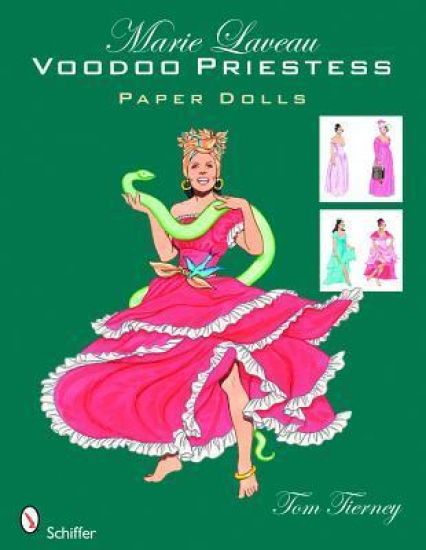
Marie Laveau

Marie Laveau

Tom Tierney

Schiffer Publishing Ltd
2009
nidottu
Paper dolls and accurate costume details help take you inside the world of Marie Laveau (1794 -1881) New Orleans' powerful "voodoo queen." Laveau was both widely respected as a healer to all who sought her help and feared as a woman capable of putting a powerful hex on any enemy. She bartered information, liaisons, and love potions to black and white alike, and was believed capable of solving everything from unrequited love to the desire to win elections. Join the fascinated onlookers who once paid admission to watch her lead the famous Voodoo rituals in Congo Square. Marie Laveau left a legacy on the spiritual life of New Orleans, melding Voodoo traditions from Africa and Haiti with Catholic symbols and customs. This book includes dolls of Laveau at various stages of her life, along with the important people in her life, including lovers, mentors, and all-important Voodoo deities.
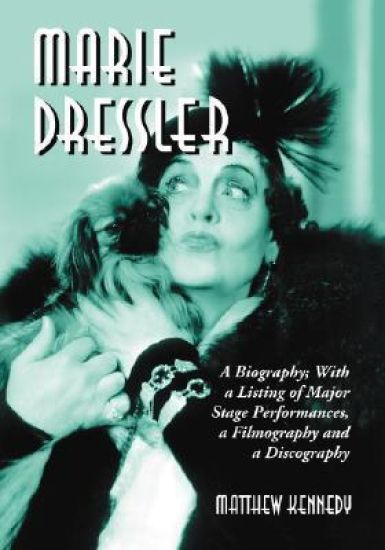
Marie Dressler

Marie Dressler

Matthew Kennedy

McFarland Co Inc
2006
pokkari
Early in the century, Marie Dressler was hailed as one of America's finest comics, with a 20-year string of Broadway and vaudeville successes including The Lady Slavey, Miss Prinnt, Higgledy Piggledy, The Man in the Moon, and Tillie's Nightmare. She starred with Charlie Chaplin in the first ever feature-length comedy Tillie's Punctured Romance and later in Min and Bill for which she won an Academy Award. A brilliant comedienne in body, timing, inflection and reactions, her talents far exceeded the expectations of slapstick, and her movies earned sums far greater than those of Garbo, or Harlow, or even Gable. This work examines Dressler's life from vaudeville to talkies. Based on extensive research and interviews with Dressler's surviving friends, co-stars and colleagues, including Maureen O'Sullivan, Jackie Cooper and Anita Page, it details her public and personal successes and failures. A listing of her stage appearances, vocal recordings and films is included.
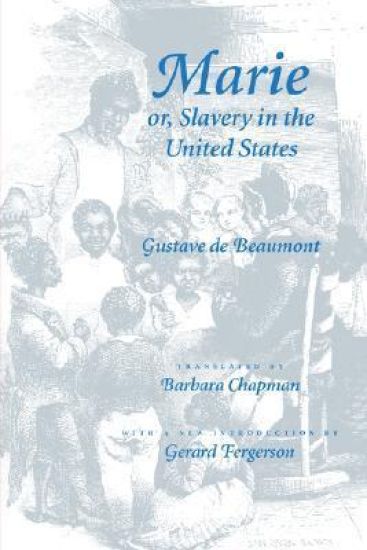
Marie or, Slavery in the United States

Marie or, Slavery in the United States

Gustave de Beaumont

Johns Hopkins University Press
1999
pokkari
Gustave de Beaumont's 1835 work, Marie, or Slavery in the United States is structured as a fascinating essay on race interwoven with a novel. It is the story of socially forbidden love between an idealistic young Frenchman and an apparently white American woman with African ancestry. The couple's idealism fades as they repeatedly face racial prejudice and violence, and are eventually forced to seek shelter among exiled Cherokee people. Notable as the first abolitionist novel to focus on racial prejudice rather than bondage as a social evil, Beaumont's work was also the first to link prejudice against Native Americans to prejudice against blacks. This translation, with a new introduction by Gerard Fergerson, provides modern readers with interesting insights into the inconsistencies and injustices of democratic Jacksonian society.
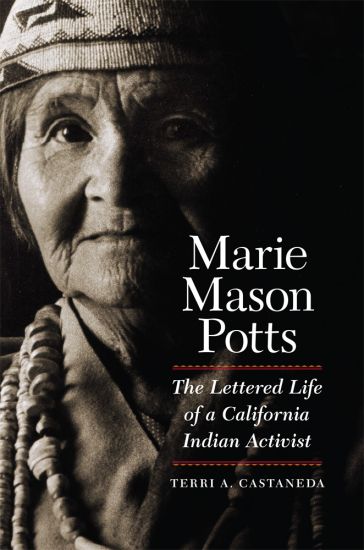
Marie Mason Potts

Marie Mason Potts

Terri A. Castaneda

University of Oklahoma Press
2020
sidottu
Born in the northern region of the Sierra Nevada mountains, Marie Mason Potts (1895-1978), a Mountain Maidu woman, became one of the most influential California Indian activists of her generation. In this illuminating book, Terri A. Castaneda explores Potts's rich life story, from her formative years in off-reservation boarding schools, through marriage and motherhood, and into national spheres of Native American politics and cultural revitalization. During the early twentieth century, federal Indian policy imposed narrow restrictions on the dreams and aspirations of young Native girls. Castaneda demonstrates how Marie initially accepted these limitations and how, with determined resolve, she broke free of them. As a young student at Greenville Indian Industrial school, Marie navigated conditions that were perilous, even deadly, for many of her peers. Yet she excelled academically, and her adventurous spirit and intellectual ambition led her to transfer to Pennsylvania's Carlisle Indian Industrial School. After graduating in 1912, Marie Potts returned home, married a former schoolmate, and worked as a domestic laborer. Racism and socioeconomic inequality were inescapable, and Castaneda chronicles Potts's growing political consciousness within the urban milieu of Sacramento. Against this backdrop, the author analyzes Potts's significant work for the Federated Indians of California (FIC) and her thirty-year tenure as editor and publisher of the Smoke Signal newspaper. Potts's voluminous correspondence documents her steadfast conviction that California Indians deserved just compensation for their stolen ancestral lands, a decent standard of living, the right to practice their traditions, and political agency in their own affairs. Drawing extensively from this trove of writings, Castaneda privileges Potts's own voice in the telling of her story and offers a valuable history of California Indians in the twentieth century.
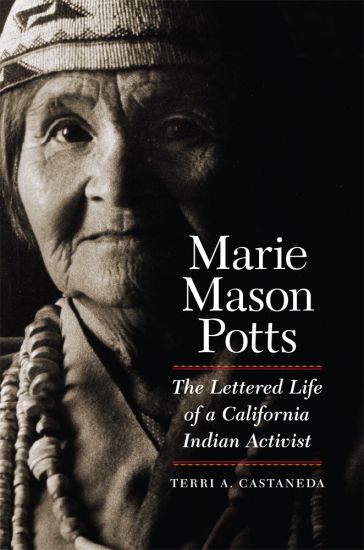
Marie Mason Potts

Marie Mason Potts

Terri A. Castaneda

UNIVERSITY OF OKLAHOMA PRESS
2022
nidottu
Born in the northern region of the Sierra Nevada mountains, Marie Mason Potts (1895–1978), a Mountain Maidu woman, became one of the most influential California Indian activists of her generation. In this illuminating book, Terri A. Castaneda explores Potts’s rich life story, from her formative years in off-reservation boarding schools, through marriage and motherhood, and into national spheres of Native American politics and cultural revitalization. During the early twentieth century, federal Indian policy imposed narrow restrictions on the dreams and aspirations of young Native girls. Castaneda demonstrates how Marie initially accepted these limitations and how, with determined resolve, she broke free of them. As a young student at Greenville Indian Industrial school, Marie navigated conditions that were perilous, even deadly, for many of her peers. Yet she excelled academically, and her adventurous spirit and intellectual ambition led her to transfer to Pennsylvania’s Carlisle Indian Industrial School. After graduating in 1915, Marie Potts returned home, married a former schoolmate, and worked as a domestic laborer. Racism and socioeconomic inequality were inescapable, and Castaneda chronicles Potts’s growing political consciousness within the urban milieu of Sacramento. Against this backdrop, the author analyzes Potts’s significant work for the Federated Indians of California (FIC) and her thirty-year tenure as editor and publisher of the Smoke Signal newspaper. Potts’s voluminous correspondence documents her steadfast conviction that California Indians deserved just compensation for their stolen ancestral lands, a decent standard of living, the right to practice their traditions, and political agency in their own affairs. Drawing extensively from this trove of writings, Castaneda privileges Potts’s own voice in the telling of her story and offers a valuable history of California Indians in the twentieth century.
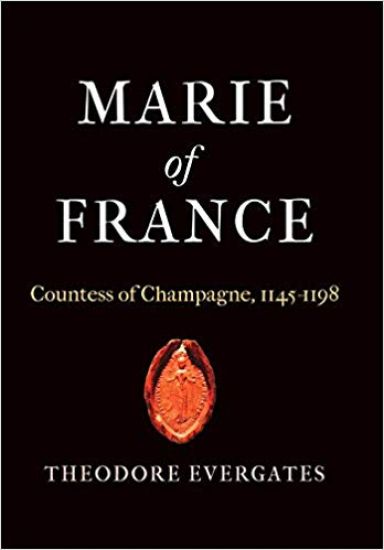
Marie of France

Marie of France

Theodore Evergates

University of Pennsylvania Press
2019
sidottu
Countess Marie of Champagne is primarily known today as the daughter of Louis VII of France and Eleanor of Aquitaine and as a literary patron of ChrÉtien de Troyes. In this engaging biography, Theodore Evergates offers a more rounded view of Marie as a successful ruler of one of the wealthiest and most vibrant principalities in medieval France. From the age of thirty-four until her death, Marie ruled almost continuously, initially for her husband, Henry the Liberal, during his journey to Jerusalem, then for her underage son, Henry II, and after his majority, during his absence on the Third Crusade and extended residence in the Levant. Presiding at the High Court of Champagne and attending to the many practical duties of governance, Marie acted with the advice of her court officers but without limitation by either the king or a regency council. If Henry the Liberal created the county of Champagne as a dynamic and prosperous state, it was Marie who expertly preserved and sustained it. Evergates mines Marie's letters patent and the literary and religious texts associated with her to glean a fuller picture of her life and work. He situates Marie within the regional institutions and external events that influenced her life as well as within her extended families of royal half-siblings-including King Philip II of France and her Plantagenet brothers-and her many in-laws, including the queen mother Adele and Archbishop William of Reims. Those who knew Marie best describe her as determined, gracious, and pious, as well as an effective ruler in the face of several external threats.
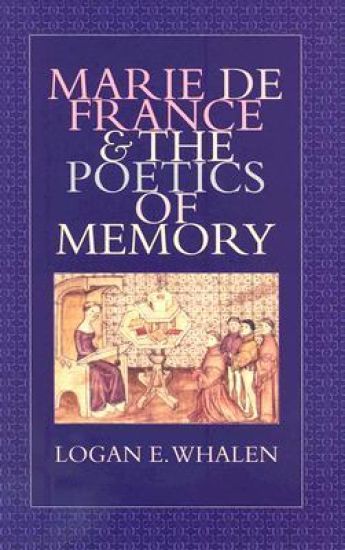
Marie de France and the Poetics of Memory

Marie de France and the Poetics of Memory

Logan E. Whalen

The Catholic University of America Press
2008
sidottu
Marie de France and The Poetics of Memory presents the first exhaustive treatment of the rhetorical use of description and memory in all the narrative works of the late 12th-century poet, Marie de France - the first woman to compose literary texts in French. Though she had no access to treatises devoted solely to the arts of memory that were to develop in the centuries following her own, she nonetheless exemplifies some of the same techniques that are extolled by their authors. Logan E. Whalen's insightful study begins with a discussion of Marie's literary plan in light of classical rhetoric and the art of inventio, or literary topical invention, that developed in the Middle Ages. He then demonstrates how the fifty-six-line prologue that precedes Marie de France's ""Lais"" gives an outline of her literary plan, not only for the narrative texts that follow in that particular collection, but also for the whole of her poetic corpus. Marie's use of description in the ""Lais"" shows the way in which she creates an imaginative locus that is conducive to memory through her elaborate descriptions of people, animals, places, events, and an assortment of inanimate objects. Her ""Fables"" is examined in light of the way in which scribes and illuminators of the centuries that immediately followed the composition of these texts interpreted them scripturally and iconographically. Finally, Whalen compares the structure of memory and description in the two works the Espurgatoire seint Patriz and the ""Vie seinte Audree"" - a text that has traditionally been ascribed to an anonymous author but that has recently been argued to be a fourth text by Marie de France.
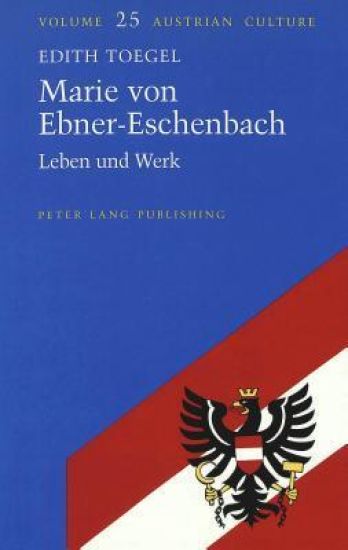
Marie von Ebner-Eschenbach

Marie von Ebner-Eschenbach

Edith Toegel

Peter Lang Publishing Inc
1997
sidottu
Marie von Ebner-Eschenbach war Oesterreichs groesste Schriftstellerin des 19. Jahrhunderts. Ihr langes Leben verlief parallel zu dem von ihr hochverehrten Kaiser Franz Joseph I (1830-1916). Ihre Stellung als Frau und Aristokratin verschaffte ihr unvergleichliche Einblicke in die politischen und sozialen Zustaende ihrer Zeit, die sie in ihren Werken mit dem ihr eigenen Einfuehlungsvermoegen darstellte. Obgleich sie sich urspruenglich als Dramatikerin sah, fand Ebner-Eschenbach letztlich in der Erzaehlung und in scharfsinnigen Aphorismen literarisch zu sich selbst. Das Leben und Werk dieser bedeutenden Chronistin der Monarchie wird hier in seiner Gaenze dargestellt.
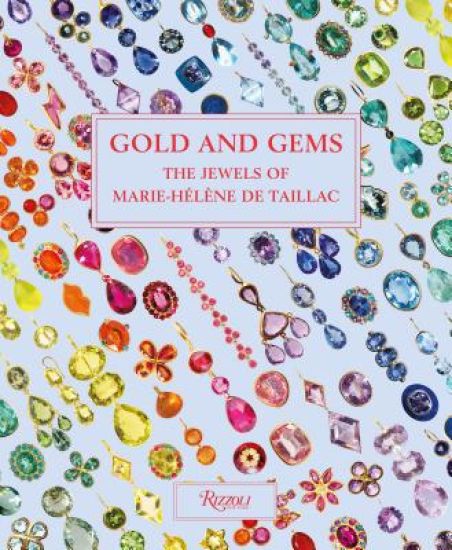
Marie-Hélène de Taillac

Marie-Hélène de Taillac

Marie-Helene de Taillac; Eric Deroo

Rizzoli International Publications
2019
sidottu
A sumptuous journey into the vibrant world of Parisian jewelry designer Marie-Helene de Taillac, renowned for her traditional craftsmanship, colorful gemstones, and exotic inspirations. The French designer s first-ever monograph, this book showcases de Taillac s stunning creations while delving into her fascinating world of inspiration, from whimsical childhood fairy tales to exotic travels to far-off lands. Readers accompany de Taillac as she journeys to London, Jaipur, Tokyo, Paris, and New York with each city s unique spirit infusing her dynamic jewels. Coupled with original illustrations by the renowned artist Jean-Philippe Delhomme, essays penned by Hamish Bowles and Gabrielle de Taillac offer insight into de Taillac s myriad influences and unrivaled creative vision. Designed to appear like a decadent jewelry box, this exquisite volume is an indispensable addition to any library of jewelry, fashion, and design.
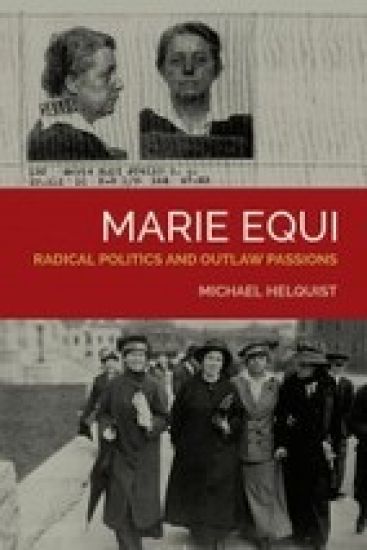
Marie Equi

Marie Equi

Michael Helquist

Oregon State University
2015
nidottu
Marie Equi explores the fiercely independent life of an extraordinary woman. Born of Italian-Irish parents in 1872, Marie Equi endured childhood labor in a gritty Massachusetts textile mill before fleeing to an Oregon homestead with her first longtime woman companion, who described her as impulsive, earnest, and kind-hearted. These traits, along with courage, stubborn resolve, and a passion for justice, propelled Equi through an unparalleled life journey.Equi self-studied her way into a San Francisco medical school and then obtained her license in Portland to become one of the first practicing woman physicians in the Pacific Northwest. From Pendleton, Portland, Seattle and beyond to Boston and San Francisco, she leveraged her professional status to fight for woman suffrage, labor rights, and reproductive freedom. She mounted soapboxes, fought with police, and spent a night in jail with birth control advocate Margaret Sanger. Equi marched so often with unemployed men that the media referred to them as her army. She battled for economic justice at every turn and protested the U.S. entry into World War I, leading to a conviction for sedition and a three-year sentence in San Quentin. Breaking boundaries in all facets of life, she became the first well-known lesbian in Oregon, and her same-sex affairs figured prominently in a U.S. Supreme Court case.Marie Equi is a finely written, rigorously researched account of a woman of consequence, who one fellow-activist considered “the most interesting woman that ever lived in this state, certainly the most fascinating, colorful, and flamboyant.” This much-anticipated biography will engage anyone interested in Pacific Northwest history, women’s studies, the history of lesbian and gay rights, and the personal demands of political activism. It is the inspiring story of a singular woman who was not afraid to take risks, who refused to compromise her principles in the face of enormous opposition and adversity, and who paid a steep personal price for living by her convictions.
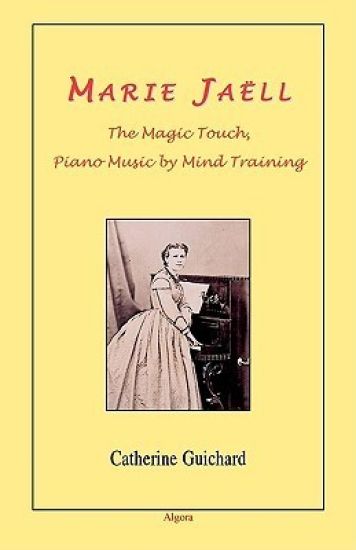
Marie Jaell - The Magic Touch, Piano Music by Mind Training
Admired by Liszt, Saint Sakns and Paul Valiry, Marie Jakll was at the center of a revolution in musical pedagogy. As a brilliant pianist, she was the first to interpret all of Liszt. At the apogee of her famous career, she quit concert performing and threw herself into mastering the piano in a scientific way by applying rigorous methodology. She reinvented herself as a scientist. What seemed before to be a matter of individual luck and "good days" in playing piano, she turned into a subject of formal mental training. She documented how one can draw forth crystalline sounds from the piano on a conscious basis. While talent remains a powerful ingredient in the art of music, it could now be enhanced by a as powerful methodology. Marie Jakll's analytical breakthroughs have helped pianists perfect their touch, drawing forth more beautiful musical sonority.
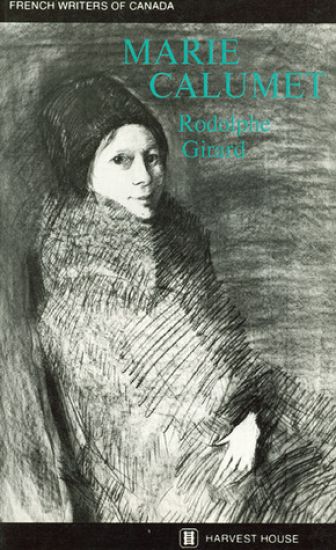
Marie Calumet

Marie Calumet

Rodolphe Girard

Harvest House
1976
pokkari
Marie Calumet is a light hearted, satirical account of rural life in the fictional parish of Saint Ildefonse, Quebec, in 1860. The appearance of Suzon, an alluring adolescent of 17 and cousin to Cure Flavel produces a scandal.The priest is forced to look reality in the face. The novelty of Suzon’s sensual presence is its appearance in a place where it is traditionally forbidden: this is the first instance of a woman becoming a disturbing element in the French-Canadian novel.