Denne særlige studieudgave samler nogle af emnerne fra Udlændingeret, 4. udgave, bind 1 (2017) og bind 2 (2021) til brug for undervisningen i faget udlændingeret, særligt vedrørende asylretten, familiesammenføring, inddragelse af opholdstilladelser samt udsendelse. Studieudgaven er blevet til i et samarbejde mellem kursusunderviserne på Københavns Universitet, Aalborg Universitet og Aarhus Universitet. De udvalgte kapitler er som udgangspunkt optrykt i den form og med det indhold, de havde i bogens to oprindelige bind. Fremstillingen er således ikke på alle punkter ajour med den nuværende retstilstand. Studieudgaven må derfor suppleres med aktuelle retskilder og anden relevant litteratur som led i undervisningen. Da udvælgelsen er foretaget med sigte på de undervisningsmæssige behov, vil studieudgaven være utilstrækkelig for de praktikere, der arbejder med udlændingeretlige problemstillinger i forvaltningen, domstolene, advokatsektoren og organisationsverdenen. Disse brugere henvises derfor til de to bind af bogen Udlændingeret, 4. udgave (2017 og 2021) samt til Claes Nilas’s bog Migrationsjura (2021).
Annalise Jacobsen; Hanne Kaae Kristensen; Tove Lise Nielsen; Dora Maria Celinder; Helene Honoré; Diana Astrup Nielsen; Anne Sofie Bach Schou; Cathrine Arntzen; Linda Trier Hald; Pia Kold; Rikke Forslund; Maria Biehl Gustafson; Henriette Holm Stabel
Kognitive dysfunktioner kan forekomme på baggrund af udviklingsforstyrrelser, skader og sygdomme i hjernen samt ved psykiatriske sygdomme. De kan medføre nedsættelse af funktionsevner, der i høj grad kan begrænse personens mulighed for at udføre og deltage i meningsfulde aktiviteter. ERGOTERAPI VED KOGNITIVE DYSFUNKTIONER har til hensigt at fremme evidensbaseret praksis inden for ergoterapi til borgere med kognitive dysfunktioner. Formålet med ergoterapi til borgere med kognitive dysfunktioner er at mindske aktivitetsbegrænsninger, fremme deltagelse i hverdagslivets aktiviteter samt støtte borgeren til at genvinde kontrol over livet. De ergoterapeutiske interventioner i denne bog er baseret på grundlæggende teori og arbejdsprocesser inden for ergoterapi, viden om hjernens plasticitet, viden om kognition samt aktuel forskning på området. ERGOTERAPI VED KOGNITIVE DYSFUNKTIONER kan læses som en grundlæggende indføring i ergoterapi til borgere med kognitive dysfunktioner, men bogen kan også bruges som et opslagsværk, da kapitlerne kan læses enkeltvis. Bogen er målrettet ergoterapeutstuderende, men også uddannede ergoterapeuter og andre sundhedsprofessionelle kan benytte bogen, da den omsætter ny forskningsbaseret viden til konkret praksis.
"Sådan rekrutterer du frivillige er den sidste håndbog i serien Udvikler bæredygtige frivilligmiljøer. I denne bog er de fire erfarne Ingerfair-konsulenter gået sammen og bringer deres individuelle fagligheder og erfaringer fra arbejdet på tværs af sektorer med både ansatte og frivillige og i såvel kommuner som i de små foreninger og store interesseorganisationer i spil.Fra arbejdet i Ingerfair ved konsulenterne, at på trods af forskelligheder organisationer imellem, er der mange ligheder, hvorfor store som små organisationer kan have nytte af de samme refleksioner og værktøjer. I bogen får du anledning til refleksion over, hvorfor I engagerer frivillige i organisationen og konkrete redskaber til at udarbejde din egen rekrutteringsplan, så du får succes med rekruttering af frivillige. “
This commentary offers the reader a set of letters (or letter parts) written by Cicero, Paul, and Seneca, which have been selected against the Transformational Leadership categories of ‘idealised influence’, ‘inspirational motivation’, ‘intellectual stimulation’, and ‘individualised consideration’. Chapter 1 offers introduction into authors and theory: all three letter writers are considered as ancient leadership figures composing leadership letters. The letters selected are presented in original text facing a translation (Chapter 2). Chapter 3 provides analysis and discussion of each letter, and aims to introduce the reader to the historical and literary contexts before reading the letter through the lenses of Transformational Leadership theory. Chapter 4 sums up the findings on each letter and each letter writer in light of Transformational Leadership and its categories. The volume is aimed at all those who are studying the function of ancient letter-writing – especially the letters of Cicero, Paul, or Seneca.
Bringebærboka handler om alt som har med bringebær å gjøre; om bringebærplanter og dyrkingen av dem, og om stell og gode råd. Men først og fremst erl dette være en bok om alt det gode bringebærene kan brukes til i mat og drikke. Målgruppen er alle som er opptatt av sunn og deilig mat og som kanskje ønsker seg en liten bringebærhekk hjemme i hagen. Boken er på 232 sider og inneholder alle tenkelige og utenkelige oppskrifter basert på det vidunderlige bringebæret.
Maria Bislev; Kasper Bisp Hansen; Susanne Clausen; Henrik Day Poulsen; Jakob Demant; Thomas Elholm; Beth Grothe Nielsen; Nadja Kirchhoff Hestehave; Michael Hviid Jacobsen; Jonas Mannov; Kim Møller; Sune Qvotrup Jensen; Anne-Stina Sørensen; Vibeke Vindeløv; Kristian Walther
Den første danske indføring i krimonologi som samfundsvidenskabeligt forsknings- og undervisningsfelt. Bogen giver en grundig indføring i kriminalitetens verden og dens udvikling i Danmark samt et overblik over de strafferetlige principper, der gør sig gældende her i landet. Desuden præsenteres de væsentligste kriminologiske teorier, og der se på, hvordan de teoretiske indsigter kommer til udtryk i kriminalitetens virkelighed. Endelig sætter bogen fokus på en række temaer, som er centrale for kriminologien, bl.a. bander, narkotika og psykisk sygdom, og gennemgår de forskellige tiltag inden for forebyggende og straf, som bl.a. Kriminalforsorgen varetager.
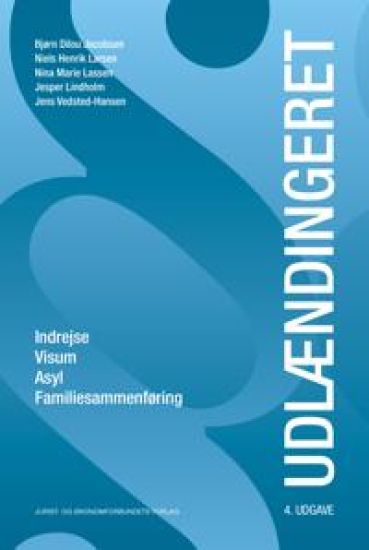
Siden 3. udgaven af Udlændingeret udkom i 2006 har markante ændringer i de politiske hensyn og prioriteringer såvel som i de internationale forhold ført til gentagne ændringer af udlændingeloven. Bogen har derfor måttet gennemgå en omfattende revision for at kunne give en dækkende fremstilling af centrale spørgsmål vedrørende udlændinges indrejse og ophold i Danmark. Foruden indgående behandling af reglerne om visum og indrejse opdaterer dette bind regler og praksis vedrørende asyl og familiesammenføring.Fremstillingen bygger på materiale fra Udlændingestyrelsen og især på praksis fra Flygtningenævnet, Udlændingenævnet og domstolene. EU-harmoniseringen af asyl- og indvandringspolitikken, som på forskellig vis påvirker dansk udlændingeret, er ligeledes omtalt.Bogen henvender sig både til studerende og forskere og til praktikere i forvaltningen, domstolene, advokatsektoren og organisationsverdenen, som beskæftiger sig med juridiske spørgsmål i relation til udlændinges indrejse og ophold.IndholdsoversigtForordKapitel 1. Udlændingerettens grundbegreber, retskilder og myndighedsstruktur – af Jens Vedsted-HansenKapitel 2. Betingelser for indrejse i Danmark og visumregler – af Niels Henrik LarsenKapitel 3. Afvisning og overførsel af asylansøgere – af Niels Henrik LarsenKapitel 4. Danske og internationale flygtningebegreber – af Nina Marie Lassen og Jesper LindholmKapitel 5. Proceduren i asylsager – af Jens Vedsted-HansenKapitel 6. Familiesammenføring – af Bjørn Dilou Jacobsen og Jens Vedsted-HansenLitteraturOm forfatterneNøgle til bogens henvisninger til UdlændingelovenDomsregisterStikordsregister
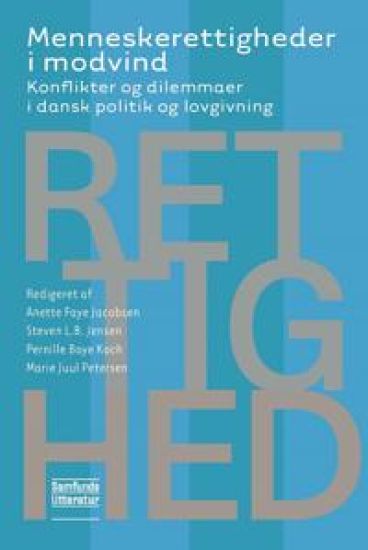
Menneskerettighederne er kommet i stigende modvind som følge af en række nye samfundsmæssige megatrends, både globalt og i Danmark: Grænseoverskridende trusler fra terror over klima til pandemier. Teknologi og techgiganter, der ændrer radikalt på forholdet mellem det offentlige og det private rum. Voksende individualisering med nye forståelse af forholdene mellem køn, familie og den enkelte. Menneskerettighederne insisterer på, at alle er beskyttet – også de mennesker, vi ikke bryder os om eller er enige med. Menneskerettighederne kan støde sammen med legitime overordnede samfundshensyn og økonomiske prioriteter. Men menneskerettighederne er også selv præget af indre spændinger – f.eks. mellem frihed og beskyttelse. Denne bog analyserer nogle af de menneskeretlige konflikter og dilemmaer, der præger debatten i Danmark – med internationale udblik. Hvordan udfordres, tilpasses, afvejes og fortolkes menneskerettighederne i helt aktuelle konflikter – om efterretningstjenester, overvågning, flygtningestrømme, kunstig intelligens, religionsfrihed, køn og kunstig befrugtning? Bogen kvalificerer, hvordan vi forstår disse emner, og den diskuterer, hvordan vi kan håndtere problemstillingerne.
Alfred Jacob Bévort; Athena Farrokhzad; Deniz Kiy; Dionne Brand (på dansk ved Mikas Lang); Emil Elg; Fie Martens Ljungmann; Glenn Bech; Joakim Kruse Lykke; Joan Rang; Marjam Idriss; Runa Marie Luth; Silas Aliki; Ursula Andkjær Olsen
Nyt nummer af Danmarks dagsordensættende litterære magasin. Bidrag fra 13 forfattere, herunder Glenn Bech, Ursula Andkjær Olsen, Joan Rang og amerikanske Dionne Brand (på dansk ved Mikas Lang).Teksterne i magasinet tilbyder et rum til den politiske bevidsthed. En mulighed for nye veje at gå, nye stier at betræde. De behandler tematikker som brud, fysiske såvel som psykiske. Brud i geografien, brud i hjertet. De er optaget af emner som glemsel og sygdom, af systemer i bred forstand.Tilsammen danner bidragene en mosaik, et kraftfelt af energi. Et levende, pulserende og aktuelt vidnesbyrd om litteraturen og skriften som en slags dør – måske, som det hedder hos Dionne Brand: ”døren ind til væren i den store verden”.Amulet Magasin 3 er et magasin til alle, der er trætte af at føle sig alene. Litteraturen er en mulighed for at blive fælles. Det ved den norske bidragyder, forfatteren Marjam Idriss, hør bare: “Jeg hater å være ‘jeg’, tenker jeg på litteraturarrangementet. Jeg vil heller være ‘vi’. Det er en ensom tanke, men den er ikke håpløs. Den er begynnelsen på noe.”Amulet Magasin 3 er begyndelsen på noget. Læs med.
Maria Karlsson; Josefin Fållsten; Bertil Ekström; Göran Janzon; Jonas Melin; Gunne Oscarsson; Ida Eriksson; Lars-Gunnar Wettebrand; Emil Jonzon; Henrik Steen; Durvalina Bezerra; Carl Johan Sävinger; Ulrika Ernvik; Martin Ström; Markus Sand; Tommy Josefsson; Rauli Lehtonen; Gunilla Ikonmwosa; Isaiha Dau; Jacob Carlzon; Niclas Lindgren; Bertil Svensson; Helena Engkvist; Leif Engkvist; Magnus Alphonce; Maria Alphonce; Stefan Ritzell; Håkan Sandberg; Daniel Grahn; Niclas Collén; Mikael Celinder; Johan Ljung
Agora – för ett folk på väg är ett nytt studiematerial om mission. En rikt illustrerad, inspirerande och djuplodande bok att läsa tillsammans i församlingen. I Agora ges möjlighet att fördjupa samtalet och engagemanget för mission. Hur ska kristen mission se ut i framtiden? Vad är en missionell gemenskap? Vilka är kyrkans utmaningar i en tid med stora folkomflyttningar, ökad urbanisering och mångkulturella städer – i Sverige såväl som i utlandet? Materialet visar på kreativa missionsstrategier och guidar genom samtidens många utmaningar. Vilken är den lokala församlingens roll i den pågående världsevangelisationen? Hur ska kyrkorna hantera kulturella skillnader i arbetet med migranter? Hur kan integrationen förbättras i församlingsgemenskapen? I Agora finns uppmuntran och utrustning till att se mission på nya sätt. Ett trettiotal skribenter medverkar i boken. Materialet är framtaget på initiativ av Evangeliska Frikyrkan, Pingst och Svenska Alliansmissionen i samarbete med Marcus Förlag,Equmeniakyrkan och studieförbundet Bilda. För att anordna studiegrupper utifrån Agora, kontakta studieförbundet Bilda. Agora betyder mötesplats.
Mary Jane Jacob; Glenn Adamson; Svetlana Alpers; John Badlessari; Alice Bellony–rewold; Mary Bergstein; Walead Beshty; Andrea Bowers; Daniel Buren; Rochelle Feinstein; David J Getsy; Michelle Grabner; Rodney Graham; Amy Granat; Karl Haendel; Rachel Harrison; Caroline A Jones; Suzanne Lacy; Thomas Lawson; Lynn Lester Hershman; Shana Lutker; Annika Marie; Courtney Martin; Carrie Moyer; Bruce Nauman; Michael Peppiatt; David Reed; Lane Relyea; David Robbins; Judith Rodenbeck; Joe Scanlan; Brenda Schmahmann; Carolee Schneemann
The image of a tortured genius working in near isolation has long dominated our conceptions of the artist's studio. Examples are abound: think Jackson Pollock dripping resin on a cicada carcass in his shed in the Hamptons. But times have changed; ever since Andy Warhol declared his art space a 'factory', artists have begun to envision themselves as the leaders of production teams, and their sense of what it means to be in the studio has altered just as dramatically as their practices. "The Studio Reader" pulls back the curtain from the art world to reveal the real activities behind artistic production. What does it mean to be in the studio? What is the space of the studio in the artist's practice? How do studios help artists envision their agency and, beyond that, their own lives? This forward-thinking anthology features an all-star array of contributors, ranging from Svetlana Alpers, Bruce Nauman, and Robert Storr to Daniel Buren, Carolee Schneemann, and Buzz Spector, each of whom locates the studio both spatially and conceptually - at the center of an art world that careens across institutions, markets, and disciplines. A companion for anyone engaged with the spectacular sites of art at its making, "The Studio Reader" reconsiders this crucial space as an actual way of being that illuminates our understanding of both artists and the world they inhabit.
Michael Hviid Jacobsen; Gunnar Aakvaag; Gunnar C. Aakvaag; Thomas Johansson; Willy Guneriussen; Johanna Esseveld; Mai Ottosen; Nihad Bunar; Rickard Jonsson; Sara Eldén; Thomas Eriksen; Simon Lindgren; Fredrik Engelstad; Inger Hagen; Bjørn Schiermer; Philip Lalander; Søren Kristiansen; Marko Valenta; Ola Sigurdson; Thomas Boje
Sociology is a constantly changing scientific endeavour, adventure and practice that was born with the advent of modernity. One of the main reasons for the rise of sociology was modern societys wish to understand itself. In this introduction to sociology, the authors emphasize the importance and centrality of the idea of the sociological imagination, as it was conceived by sociologist C. Wright Mills. This book will enhance and further develop your sociological imagination with a sensibility that has its breeding ground in the Scandinavian countries; this is the first comprehensive attempt to write an international/Nordic text book and introductory text to sociology. This book is aimed primarily at first year students in sociology but will be of interest to anyone who is looking for a comprehensive guide to the exciting field of sociology. Contents Introduction The legacy of the sociological imagination Scandinavian sensibility Structure and content of the book Summary Think for yourself Further reading Chapter 1. What is society? Contested concepts and shifting metaphors Willy Guneriussen, University of Tromsø Introduction Individualism vs holism: methodological and ontological controversies Sociology – an explanatory or interpretive science? Structure or action? Society – a material or symbolic reality? The symbolic turn Combining distinctions The theoretical landscape of sociology Several theories – one reality? Beyond traditions – towards a minimalist model of society Biology and society Combining traditions The first synthesis: Talcott Parsons’ sociology Modifying Parsons’ theory of society Metaphors, science and sociological imagination Metaphors Changing conceptions or changing realities? Concluding reflections Summary Think for yourself Further reading Chapter 2. The sociology of work Inger Marie Hagen, Fafo Introduction The labour contract – labour as commodity in the market From work to labour Modern labour – work as commodity The two parties to the contract: labour and managerial prerogative The labour contract and the social context – different models The collective agreement Labour and self-expression Working conditions Other answers to `why work?’ Motivation and management The work organisation From command to self-management? An example – the modern work organisation – the three different company systems Employer and employee – equal partners Management as superior to employees Employee and management as parties in an ongoing dialogue Working life and distribution – industrial democracy Norms of distribution and norms of democracy Three notions of industrial democracy Industrial democracy and participation – individual and representative participation The Nordic labour market The Nordic model of labour relations When contemporary labour is a part of the past . . . Summary Think for yourself Further reading Chapter 3. The sociology of power Fredrik Engelstad, University of Oslo Introduction The interpretation of `power’ Power as concept Dimensions in social action Expectations and legitimacy From micro to macro State, democracy, politics State, rights and informal power relations Shaping and articulation of interests Political participation on a broad scale Fragmentation and globalisation: abdication of politics? Civil society Networks and organising capacity Gender power and attitudes toward gender Encounters with welfare state institutions Economy and working life Business life, markets and power Management and leadership in enterprises Participation and industrial democracy Ideas and communication Power in the public sphere Aesthetics, culture and national values Social elites: who governs? Power and democratisation Summary Think for yourself Further reading Chapter 4. The sociology of the family Mai Heide Ottosen, The Danish National Centre for Social Research Introduction What is a family? Sociological perspectives on the family Kinship vs family studies The family as a social institution The family as a social group Family as social practice Demographic trends The `bean-pole’ family The crisis of the patriarchal family Structuring family networks Family policies Inside the family: marriage, parenthood and childhood The de-institutionalisation of marriage From fatherhood and motherhood to parenthood Childhood Summary Think for yourself Further reading Chapter 5. The sociology of education Nihad Bunar and Rickard Jonsson, Stockholm University Introduction Sociological perspectives on education The functionalist approach Education and socialisation Social integration Education and gatekeeping: screening and selecting Education as an agent of social change The conflict approach The correspondence principle Reproduction through expectations and opposition Subjective expectation of objective probability Restricted and elaborated codes The subjective-interpretative approach Education and the market The market-oriented position The market-sceptical position The market-ambivalent position Education and ethnicity Urban schools Refugee and migrant students Education and gender Gender and school achievement Summary Think for yourself Further reading Chapter 6. The sociology of religion Ola Sigurdson, University of Gothenburg Introduction What is the sociology of religion? Sociology, the secularisation thesis and the return of religion Religion in the Scandinavian nation-states: an example The continuities and discontinuities of secularised religion The future of religion: towards a post-secular society? Summary Think for yourself Further reading Chapter 7. The sociology of media and information technologies Simon Lindgren, UmeS University Introduction Constructions and representations The media `effects’ model Media, ideology and struggles over hegemony New media and participatory culture Summary Think for yourself Further reading Chapter 8. The sociology of health Thomas Johansson, University of Gothenburg Introduction Historical perspectives Health inequalities Gender and health Lifestyles, risks and health The face of health Global health Summary Think for yourself Further reading Chapter 9. The sociology of class and social stratification Gunnar C. Aakvaag, University of Oslo Introduction Marx’s definition of class The class structure of modern capitalism Max Weber: a multidimensional approach to stratification and class Weber’s general approach to social stratification: class, status and party Weber’s class theory Contemporary class analysis A neo-Marxian approach: Erik Olin Wright and exploitation Wright’s class schema A neo-Weberian approach: John H. Goldthorpe and life chances Service and labour contracts Goldthorpe’s class schema Pierre Bourdieu: classes and lifestyles The social space Bourdieu’s class schema Habitus and class Class, habitus and lifestyle Class and social mobility Social relationships Intergenerational mobility Summary Think for yourself Further reading Chapter 10. The sociology of deviance Philip Lalander, Malmö University Introduction Labelling, ambivalence and counter-labelling Different types of deviance Diagnosis and identity Indulgence at the margins of society Escape from everyday life/escaping everyday life Summary Think for yourself Further reading Chapter 11. The sociology of gender Johanna Esseveld and Sara Eldén, Lund University Introduction Gender and sex Beyond dichotomies A sociological definition of gender Theorising gender Classical texts Men’s and women’s roles Gender oppression and structural inequality New themes in the sociology of gender Gender as a social practice Intersectionality Scandinavian sociology of gender today Conclusions Summary Think for yourself Further reading Chapter 12. The sociology of micro-social interaction and everyday life Søren Kristiansen and Michael Hviid Jacobsen, Aalborg University Introduction Everyday life as a social domain Micro-social interaction The basis of micro-social interaction: common sense, meaning and intersubjectivity Phenomenological sociology Symbolic interactionism Ethnomethodology The syntax of interaction: rules, rituals and ceremonies Goffman and dramaturgical sociology Conversation analysis Summary Think for yourself Further reading Chapter 13. The sociology of globalisation Thomas Hylland Eriksen, University of Oslo Introduction Origins of contemporary globalisation Globalisation today Globalisers and sceptics Dimensions of globalisation Disembedding, including de-localisation Standardisation Interconnectedness Mobility Mixing Vulnerability Re-embedding Central questions about globalisation The dialectics of globalisation Summary Think for yourself Further reading Chapter 14. The sociology of culture Bjorn Schiermer, University of Copenhagen Introduction Sociology of culture and popular culture The Frankfurt School: the critique and the potential of modern mass culture Siegfried Kracauer: the dialectics of commodified culture Theodor W. Adorno: the critical potential of autonomous art Walter Benjamin: art and politics The Birmingham School: culture as `a way of life’ Poststructuralism and semiotics: culture as `text’ The `material turn’: re-extending the shortened concept of culture Cultural studies: leaving the high/low dichotomy behind Ironic sensibilities: kitsch and camp and new ways of being together Summary Think for yourself Further reading Chapter 15. The sociology of ethnicity Nihad Bunar and Marko Valenta, Stockholm University and NTNU Introduction Defining ethnicity Theoretical approaches to ethnicity Primordialism Instrumentalism New ethnicities The importance of ethnic networks Symbolic ethnicity Theories and policies for managing ethnic diversity Ethnicity and other sociologically relevant concepts of categorisation Ethnicity and class Ethnicity and gender Ethnicity and race Ethnicity, racism and discrimination Ethnicity and nation Ethnicity and citizenship Summary Think for yourself Further reading Chapter 16. The sociology of the self Thomas Johansson, University of Gothenburg Introduction The sociology of the body: classical texts Consuming the Other Cyborgs and transvestites Lifestyle, fashion and the body Bodybuilding, fitness and gender Plastic surgery and body modifications Summary Think for yourself Further reading Chapter 17. The sociology of social change Gunnar C. Aakvaag, University of Oslo Introduction What are the `general characteristics’ of a society? Functional differentiation Consequences for the individual: facing social complexity Institutional `colonisation’ Consequences for the individual: facing commercialisation and bureaucratisation Individualisation Industrial modernity Individualised modernity Consequences for the individual: facing the decline of standard biographies Risk society Objective side-effects Subjective perception Consequences for the individual: facing uncertainty Social change: all that is solid melts into air? Summary Think for yourself Further reading Notes References Index
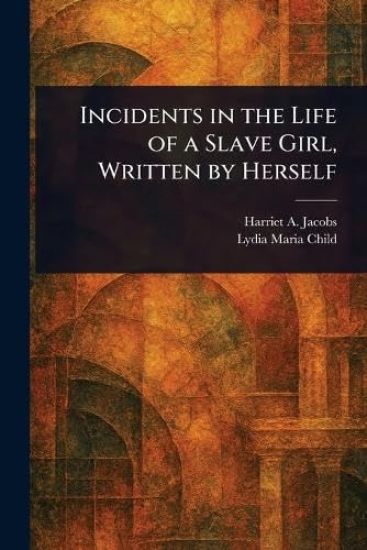
"Incidents in the Life of a Slave Girl, Written by Herself," is the powerful and unflinching autobiography of Harriet Jacobs, a formerly enslaved African-American woman. This seminal work of abolitionist literature offers a rare and vital firsthand account of the horrors of slavery from a female perspective. Jacobs chronicles her personal experiences, providing a gripping narrative of resilience and resistance against an inhumane system. A crucial historical document, "Incidents in the Life of a Slave Girl" sheds light on the complexities of slavery in 19th-century America and the struggle for freedom and self-determination. Jacobs's story remains a testament to the enduring strength of the human spirit and a vital contribution to the understanding of American history and the fight for social justice. It continues to resonate as a powerful indictment of slavery and a celebration of the courage required to overcome oppression.This work has been selected by scholars as being culturally important, and is part of the knowledge base of civilization as we know it.This work is in the public domain in the United States of America, and possibly other nations. Within the United States, you may freely copy and distribute this work, as no entity (individual or corporate) has a copyright on the body of the work.Scholars believe, and we concur, that this work is important enough to be preserved, reproduced, and made generally available to the public. We appreciate your support of the preservation process, and thank you for being an important part of keeping this knowledge alive and relevant.
This is the first comprehensive account of freemasonry in the Western world, written by two of the field’s foremost scholars. It embraces every country in the Americas, with a particular focus on the American experience. The authors devote significant attention to the Scottish origins of the lodges and their growth in the American colonies, against a backdrop of European imperialism and the emergence of democratic movements. Later they examine the story of freemasonry in the twentieth century, from its encounter with Nazism to its decline beginning in the 1960s. Future directions for the movement are also discussed. Along the way major figures in the movement are assessed: Benjamin Franklin, Alessandro Cagliostro, Giuseppe Garibaldi, Harry S. Truman, and many others. Masons and non-masons, college students, and the curious general reader will find Freemasonry and Civil Society a dazzling and accessible account of one of the world’s most enduring fraternal organizations.“In this lucid and engaging survey, two of the world’s leading experts on the history of freemasonry explain how it shaped modern social and political cultures. The history of freemasonry can be bewildering, but Margaret Jacob and Maru Vázquez provide an authoritative and accessible overview which deftly disentangles the many different threads in the masonic story. This will be the definitive introduction to the history of freemasonry for many years to come.”—Andrew Prescott, University of Glasgow