

Kirjahaku
Etsi kirjoja tekijän nimen, kirjan nimen tai ISBN:n perusteella.
1000 tulosta hakusanalla Mark C. Murphy
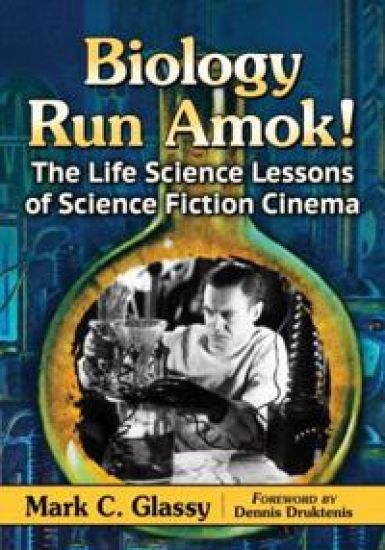
Science fiction movie audiences may sometimes wonder how fictitious the science in a film really is. Yet for many--call them the "Jurassic Park generation"--film and popular media can present a seemingly plausible melding of science and fiction that forms a distorted understanding of scientific facts and concepts. Recognizing that film is both the dominant entertainment medium and an effective tool for teaching, this book--featuring articles originally published in the magazine Scary Monsters--separates biological reality from fantasy in dozens of science fiction films, including The Island of Lost Souls (1933), The Incredible Shrinking Man (1957), War of the Worlds (1953), A Clockwork Orange (1971), Scanners (1980), The Serpent and the Rainbow (1987) and Outbreak (1995).
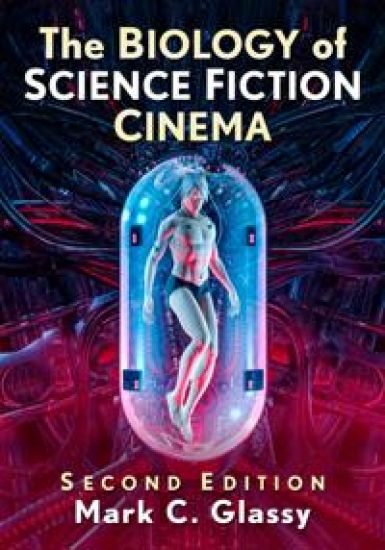
Science fiction cinema has had a dramatic effect on how science is perceived by the general population. At first, science fiction and science may seem diametrically opposed, and in some cases they certainly are, but after a closer analysis, many elements are in common, primarily creativity and imagination. Even though "fiction" is the key word in science fiction, there are many examples of yesterday's science fiction becoming today's science. This book explores the creative and imaginative elements of biology seen in 20th century science fiction films. Written by a professional scientist and science fiction lover, this second edition includes recent updates of biomedical science and science fiction cinema. It covers different categories of biology, biochemistry (or molecular biology), and medicine, each subcategorized into chapters such as cell biology, hematology, and dermatology. Within each chapter are several science fiction cinema examples explaining the biological sciences principles involved, what is right and what is wrong with the science, and what changes could be made for the science of the film to become a reality.

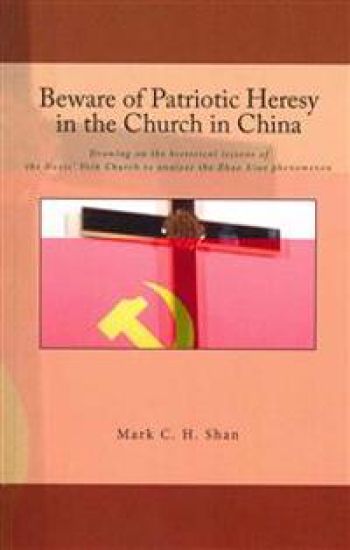
Beware of Patriotic Heresy in the Church in China: Drawing on the historical lessons of the Nazis' Volk Church to analyze the Zhao Xiao Phenomenon
Mark C. Shan
Createspace Independent Publishing Platform
2012
nidottu
The phenomenal growth of the church in China has attracted worldwide attention and given Chinese Christians everywhere hope that Christianity can bring positive change to mainland China. But in the midst of this widespread optimism lurks an insidious danger-a danger that China's Communist government has adeptly manipulated and utilized, and which has ensnared even China's House Church as well as overseas Chinese churches and Christians. Mark C. H. Shan, a House Church scholar originally from mainland China, carefully examines this danger and points out the alarming parallels with the German Church under Nazism. Shan sounds a sharp warning for Chinese Christians worldwide: patriotism is already starting to replace God's rightful place in the Chinese church, and if Chinese Christians are not careful, they are in danger of walking down the same dark road of the Nazi-era German Christians, who placed their German identity and loyalty to the Nazi government above their responsibility as children of God to oppose evil, and so failed to speak out against the Holocaust. "... a powerful warning from history of the dangers of a theologized nationalism for the body of Christ..." -David Aikman, author of "Jesus in Beijing" and other books

Truly visionary, Winfield Scott's enduring contribution to the Union war effort was the "Anaconda Plan." This plan in essence became the basic overall Union military strategy in the American Civil War. Unlike most in 1861, Scott envisioned a protracted four-year-long war that would involve large numbers of troops and a grand strategy. Winfield Scott had another vision in 1861. This vision determined the role the standing, Regular Army would play as the Union mobilized to suppress the rebellion of the Southern states. Scott's vision called for the Regulars to be a nucleus for the Union Army to form around as it expanded. Scott's decision to keep Regular units intact would have a lasting impact on mobilization, training and the war effort the next four years. Some tried to persuade Scott to scatter Regular officers and men throughout formations to be teachers or a "training cadre."

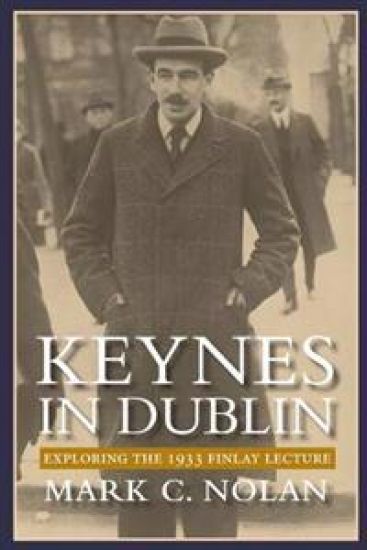
Keynes in Dublin: Exploring the 1933 Finlay Lecture
Mark C. Nolan
Createspace Independent Publishing Platform
2013
nidottu
7 Steps Every First Time Franchise Buyer Should Follow: Plus: 49 Insider Secrets You Need to Know and 3 Deadly Traps to Avoid
Mark C. Leonard
Createspace Independent Publishing Platform
2014
nidottu
First of all, this book is not intended to be an inspirational, "You Can Do It " book. There are plenty of those available and this isn't one of them. This book, written by a former multi-unit owner of the most popular sandwich franchise in the world, provides a "behind the scenes" look at the reality of owning a franchise, and what it takes to succeed. This is what you need to know: becoming a franchisee can be as dangerous as it is rewarding and can lead to financial devastation, especially for the unwary. When you pay attention to the secrets and suggested actions contained in this book, you will be able to answer the following critical questions: Is buying a franchise right for YOU? How much should you invest in a franchise? What is the best way for the first-time buyer to get started? (Hint: it's not what the industry is advising you to do.) Does the franchise have a unique strategic advantage (or disadvantage)? What factors will determine how much money you take home? What are the most important issues you should research before you commit your funds? What is the real challenge in managing employees for the business? What are the keys to creating a realistic business plan?
Children’s Rights and Moral Parenting offers systematic treatment of a variety of issues involving the intersection of the rights of children and the moral responsibility of parents. Mark C. Vopat offers a theory of the relationship between children, parents, and the state that can be applied to the real life decisions that parents are often in the position to make on behalf of their children. In many instances, our current view of parental "rights" has granted parents far more discretion than is morally warranted. Vopat arrives at this conclusion by carefully considering the unique status children have; socially, legally, and morally in most western societies. Children's Rights and Moral Parenting is essentially contractualist in the Rawlsian tradition. While it may appear counterintuitive to speak of children in terms of the social contract tradition, there is much this approach can do to provide some conceptual clarity to the nature of the relationship between children, parents and the state. The overarching theme of the book is the moral independence of children from extreme forms of parental and, at times, social control. The objective of the book is to provide an argument for extending the range of things owed to children, as well as making the case for fully including children in the moral community.
The book offers twelve cases of ethics relating to ecology and culture. The twelve cases presented in the twelve essays, are written by eminent scholars from India, USA, Canada and Egypt. Employing various ecocritical frameworks, the writers have tried to understand/analyse literary, cinematic and other cultural texts and contexts. The volume argues that the principles of ethics are as dynamic as culture and nature. Any ecological perspectives/issues/conditions cannot be separated from their cultural contexts and thus need a culture-specific scrutiny to understand the ethics of ecoculture.