Kirjojen hintavertailu. Mukana 11 699 587 kirjaa ja 12 kauppaa.

Kirjahaku

Etsi kirjoja tekijän nimen, kirjan nimen tai ISBN:n perusteella.

1000 tulosta hakusanalla Mark R. Conte

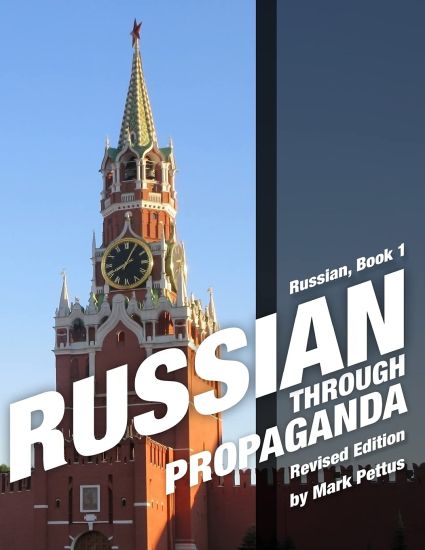
Russian Through Propaganda, Book 1
This is a revised edition of the first volume of the Russian Through Propaganda series, now with free video lessons via YouTube. This new series of Russian textbooks provides a rigorous but rewarding approach to the language. It assumes no prior knowledge of Russian, and is intended for ambitious beginners, or more advanced students seeking a highly structured review of the language. It assumes that its readers are interested in long-term mastery of the language, within the rich historical, cultural, and literary contexts that often draw students to Russian in the first place. It therefore takes the time to explain challenging grammar topics in depth, striving to provide the full picture as clearly as possible. It is richly illustrated with Soviet-era propaganda posters, whose slogans serve as examples of each lesson's grammar. It is structured as a series of 50 daily lessons, which build upon one another and give a clear sense of progress. It is the equivalent of a semester of intensive college-level study of Russian. Visit www.russianthroughpropaganda.com for more information and to access video lessons.
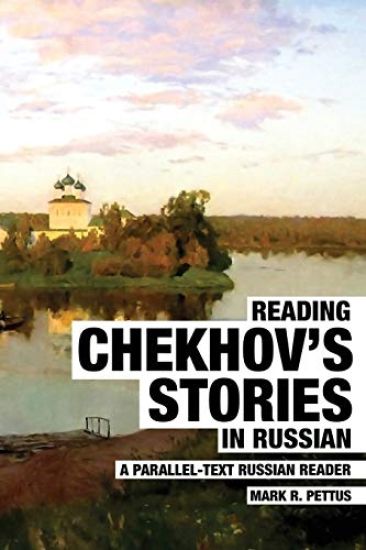
Reading Chekhov's Stories in Russian
Nine of Chekhov's most powerful and thought-provoking short stories are included here, in the original Russian and in a facing English translation, together with all the vocabulary notes and reference tables you need to make sense of Chekhov's original texts. Designed to help students of Russian begin to enjoy real Russian literature in the original without constantly reaching for a dictionary, this parallel-text edition features a new translation made specifically for this purpose, as well as detailed Russian vocabulary notes, including all the important forms you need (especially aspectual pairs and conjugation types for all verbs). The original Russian text is marked for stress, but is otherwise unedited and unsimplified. The short stories included in this volume are: "The Death of a Clerk" (how is a bureaucrat killed by a sneeze?), "The Student" (a moving vignette about both timeless meaning and transient youthful idealism), "A Little Joke" (an innocent joke takes on unimagined proportions - if our narrator is to be believed, that is), "Sleepy" (a servant girl, deprived of sleep, is pushed to the brink of madness), "Rothschild's Fiddle" (a deeply moving tale of intolerance, memory, and reconciliation through music), "Anna Round the Neck" (a young woman is forced to marry an older man for his money - but will she turn the tables?), "Gusyev" (a peasant soldier and an intellectual, representing starkly different perspectives on life, await death in a steamship sickbay), "The Lady with the Little Dog" (a couple finds love, and all of the anguish that sustaining it often entails), and "Ward No. 6." (a harrowing story of a provincial doctor and his patients; this unforgettable work is surely one of the most powerful treatments of madness and medical ethics - indeed, ethics is general - in all of world literature.
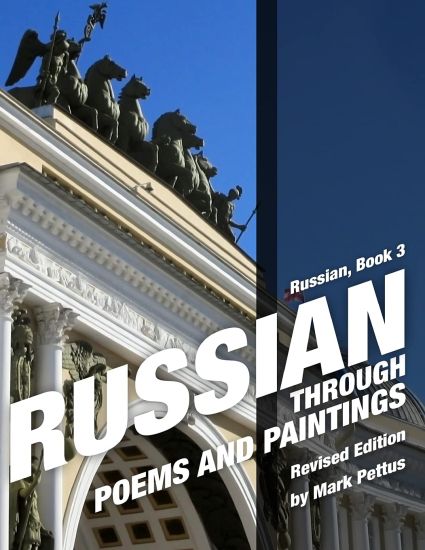
Russian, Book 3

Russian, Book 3

Mark R Pettus

Mark R. Pettus
2021
pokkari
This is the revised edition of Book 3 in a series of Russian language textbooks that began with Russian Through Propaganda (Books 1 and 2). This volume shifts its attention from the Soviet era to the Imperial era, illustrating its discussions of intermediate grammar with paintings depicting Russian history and culture. Classical poems by the likes of Pushkin and Lermontov provide examples of the grammar, which includes such topics as advanced aspect, prefixed verbs of motion, and deverbal forms - all of which are essential for reading real Russian literature. The book culminates with a reading selection that includes Pushkin's "The Bronze Horseman," two short stories by Chekhov ("Death of a Clerk" and "A Little Joke"), and one by Tolstoy ("Alyosha the Pot") - all of them extensively glossed to allow students to begin reading real literature without constantly using a dictionary. This series, which is geared toward ambitious students who wish to learn Russian culture along with the language, continues with Book 4. For more information, see www.russianthroughpropaganda.com.
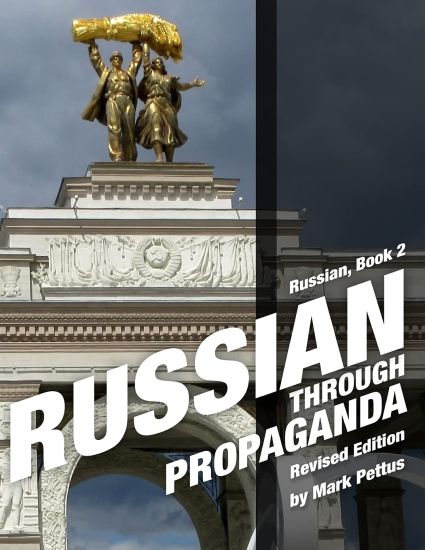
Russian Through Propaganda, Book 2

Russian Through Propaganda, Book 2

Mark R Pettus

Mark R. Pettus
2021
pokkari
This second volume in the Russian Through Propaganda series provides a second semester's worth of intensive college-level Russian language learning. It presents all plural forms of noun and adjective case endings, introduces basic verbs of conveyance and basic prefixed forms, deals extensively with numbers and time expressions, and introduces comparative forms. It concludes with two special chapters dedicated to practical everyday conversation (for those heading to Russia), and an introduction to unadapted Russian poetry and prose from the Soviet era. Like Book 1, it is richly illustrated with Soviet propaganda posters whose slogans highlight each lesson's grammar. It is supplemented with a learner's Russian-English dictionary, an answer key, and useful grammar tables for reference. This new series of Russian language textbooks will continue with Books 3 and 4, entitled "Russian Through Poems and Paintings." For more information and video lessons, visit www.russianthroughpropaganda.com.
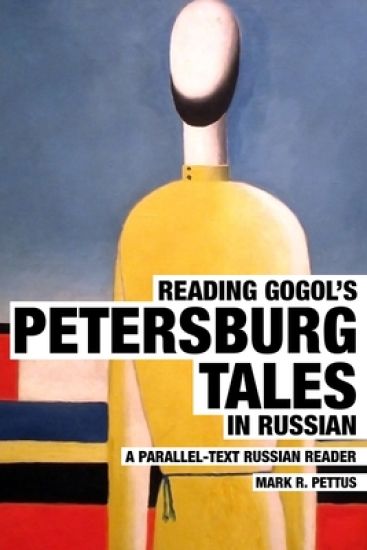
Reading Gogol's Petersburg Tales in Russian
A pure delight to read, the four major "Petersburg Tales" of Nikolai Gogol - strange and fantastical, ludicrously absurd, by turns harrowing and hilarious - are among the foundational texts of modern Russian literature. In this volume designed specifically for Russian learners, "The Overcoat," "The Nose," "Diary of a Madman," and "Nevsky Prospekt" are presented in their entirety, in the original Russian and in a facing English translation, together with all the vocabulary notes and reference tables you need to make sense of the original. Photographs of important sites will help orient you in Gogol's Petersburg. Designed to help students of Russian begin to enjoy real Russian literature in the original without constantly reaching for a dictionary, this parallel-text edition features a new translation made specifically for this purpose, as well as detailed Russian vocabulary notes, including all the important forms you need (especially aspectual pairs and conjugation types for all verbs). The original Russian text is marked for stress, but is otherwise unedited and unsimplified.In "The Overcoat," a petty copy clerk scrimps and saves to purchase a new overcoat; once acquired, it fills his life with a dubious sort of meaning... until tragedy strikes. In "The Nose," a conceited official wakes up one morning to find an empty, flat spot where his nose used to be Worse yet, when he finally tracks down his runaway nose, he finds it praying in church, and - O horror - wearing a uniform of a rank higher than his own In "Diary of a Madman," a clerk obsessed with his boss's daughter tries to find the answers he seeks by intercepting her dog's correspondence, as he gradually loses all touch with reality. Finally, in "Nevsky Prospekt," two friends follow two different women down the famous Petersburg boulevard - with radically divergent consequences.
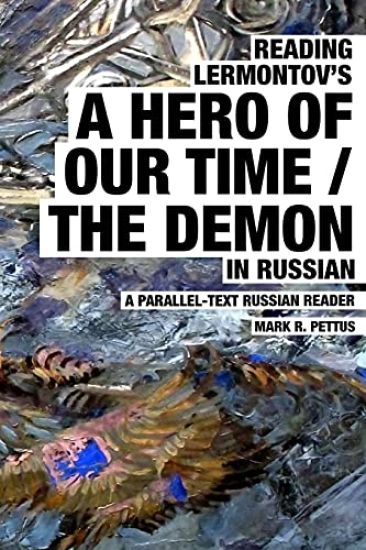
Reading Lermontov's A Hero of Our Time / The Demon in Russian
Presented here together, in their entirety - in the original Russian and in a facing English translation, new for this edition - are two masterpieces of Russian literature by Mikhail Lermontov (1814-1841), both set in the Caucasus: The Demon, a narrative poem, and A Hero of Our Time, a novel. The Demon was deemed so scandalous at the time it was written that it was first published in Russia only in 1856 - and then only in a handful of copies for the royal family It tells of a beautiful Georgian princess, Tamara, who awakens long-forgotten feelings of love in a Demon when he sees her dancing on the eve of her wedding. After the untimely death of her would-be husband, Tamara enters a convent, but a voice continues to tempt her. At last the Demon appears to her, to profess his love... and Tamara's soul hangs in the balance...A Hero of Our Time is many things at once: a travelogue documenting the astounding natural beauty of the Caucasus and the spirit of its many peoples; an adventure novel with everything from kidnappings to duels; a catalogue of tragic romantic encounters; a novel of (bad) manners; and a disturbing psychological study of its infamous anti-hero, Pechorin, the first (alongside Pushkin's Evgeny Onegin) of many deeply conflicted - if not demonic - figures in Russian literature. As Lermontov himself makes clear, the idea that Pechorin is "heroic" is to be taken with a great deal of irony Mirroring each other in many ways, these two works are productively read together, with The Demonproviding a fantastical poetic overture to the realist prose of A Hero of Our Time. Together, they make for captivating reading.Book 4 in the "Reading Russian" series, this edition provides the original text and facing English translation, together with all the vocabulary notes and reference tables you need to make sense of the original. Designed to help students of Russian begin to enjoy real Russian literature in the original without constantly reaching for a dictionary, this parallel-text edition features a new translation made specifically for this purpose, as well as detailed Russian vocabulary notes, including all the important forms you need (especially aspectual pairs and conjugation types for all verbs). The original Russian text is marked for stress, but is otherwise unedited and unsimplified.
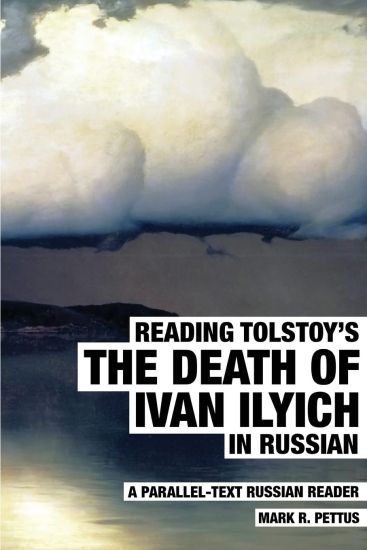
Reading Tolstoy's The Death of Ivan Ilyich in Russian
Written in simple and sometimes shockingly blunt prose, Tolstoy's timeless novella is a masterpiece of his later work, combining relentless psychological observation with moral and spiritual urgency in its depiction of the death of an ordinary man, a certain Ivan Ilyich - a court official, husband, and father. Ivan Ilych is perfectly ordinary in the sense that his lifelong pursuit of outward decency in his work and family life - even home decor - has obscured from him all deeper questions of life's meaning - questions he must suddenly come to terms with as he confronts his own mortality. Alongside this existential struggle, Tolstoy - with both compassion and clinical objectivity - documents dying as a physical and psychological process, involving both loneliness and despair, unrelenting suffering, and unexpected glimmers of comfort, human contact, and hope. Ultimately, Tolstoy suggests that a life dominated by the conventions of the world as we know it is somehow deeply wrong - but that every life has the capacity for redemption, even at the very end.Designed to help students of Russian begin to enjoy real Russian literature in the original without constantly reaching for a dictionary, this parallel-text edition features a new translation made specifically for this purpose, as well as detailed Russian vocabulary notes, including all the important forms you need (especially aspectual pairs and conjugation types for all verbs). The original Russian text is marked for stress, but is otherwise unedited and unsimplified.About the Author...Originally from Franklin, Tennessee, Mark Pettus holds a PhD in Slavic Languages and Literatures from Princeton University. Altogether, he's spent around six years living, studying, and working in Russia. Today he is a lecturer in Slavic Languages and Literatures at Princeton. Mark is the author of the Russian Through Propaganda textbook series (Books 1 and 2), and its continuation, Russian Through Poems and Paintings (Books 3 and 4). He is now working on additional books for students of Russian, including the Reading Russian series of which the present volume is a part.
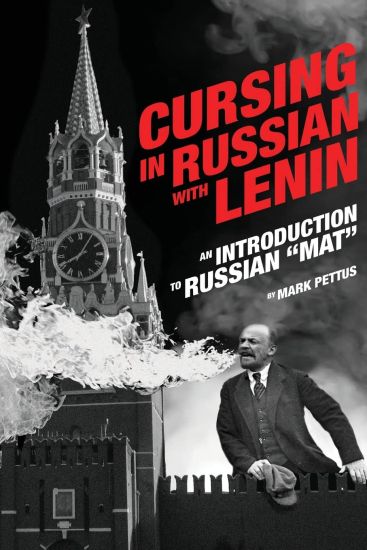
Cursing in Russian with Lenin

Cursing in Russian with Lenin

Mark R Pettus

IngramSpark
2022
pokkari
Russian "mat" - a remarkably expressive, linguistically fascinating, and utterly hilarious system of obscenity that builds a wide variety of words from a handful of extremely vulgar roots - is never taught in the classroom, but is absolutely essential for anyone looking to master Russian in all of its fullness. Russians widely consider "mat" to be much more obscene than anything in English. Its words were long unprintable, and their use in public performances remains punishable by Russian law. Yet when Russians really want to make their feelings known, many will resort to "mat" - for it alone has the power to express everything from utter despair, to incandescent rage, to bottomless disdain, to uproarious defiance of a fallen world.This beginner's guide introduces the basics of "mat" in an in-depth yet manageable fashion, including detailed descriptions of word-building principles, the literal and figurative meanings of "mat" expressions, and extensive coverage of euphemism - explaining how Russians can use "mat" without really using it The text presents a manageable list of all the basic "mat" vocabulary - nouns, verbs, adjectives, and phrases - that you'll actually hear, with simple examples of usage. English transliterations are provided alongside the original Russian Cyrillic (marked for stress ), making this book useful both for serious students of Russian and for inquirers who don't even know the alphabet. Along the way, we'll review certain key points of Russian declension, conjugation, and grammar in a refreshingly obscene context.For anyone with a sense of humor and an appreciation of the "lower" registers of human experience and expression, "mat" is sure to become one of the real joys of learning the Russian language. Embark on this journey of discovery - with Lenin as your guide About the Author...Originally from Franklin, Tennessee, Mark Pettus holds a PhD in Slavic Languages and Literatures from Princeton University. Altogether, he's spent around six years living, studying, and working in Russia. Today he is a lecturer in Slavic Languages and Literatures at Princeton. Mark is the author of the Russian Through Propaganda textbook series (Books 1 and 2), and its continuation, Russian Through Poems and Paintings (Books 3 and 4). He has also published a growing library of Russian parallel-language readers - the Reading Russian series. Check out www.russianthroughpropaganda.com for a variety of resources for students of Russian language, literature, and culture.
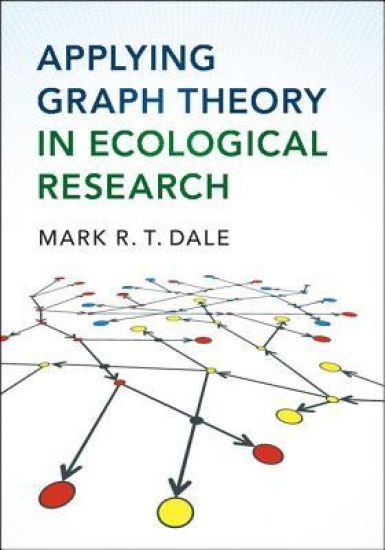
Applying Graph Theory in Ecological Research

Applying Graph Theory in Ecological Research

Mark R.T. Dale

Cambridge University Press
2017
sidottu
Graph theory can be applied to ecological questions in many ways, and more insights can be gained by expanding the range of graph theoretical concepts applied to a specific system. But how do you know which methods might be used? And what do you do with the graph once it has been obtained? This book provides a broad introduction to the application of graph theory in different ecological systems, providing practical guidance for researchers in ecology and related fields. Readers are guided through the creation of an appropriate graph for the system being studied, including the application of spatial, spatio-temporal, and more abstract structural process graphs. Simple figures accompany the explanations to add clarity, and a broad range of ecological phenomena from many ecological systems are covered. This is the ideal book for graduate students and researchers looking to apply graph theoretical methods in their work.
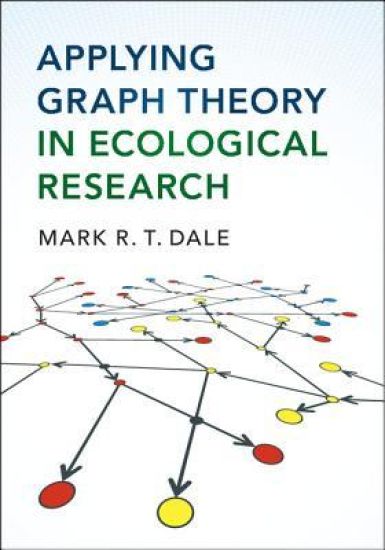
Applying Graph Theory in Ecological Research

Applying Graph Theory in Ecological Research

Mark R.T. Dale

Cambridge University Press
2017
pokkari
Graph theory can be applied to ecological questions in many ways, and more insights can be gained by expanding the range of graph theoretical concepts applied to a specific system. But how do you know which methods might be used? And what do you do with the graph once it has been obtained? This book provides a broad introduction to the application of graph theory in different ecological systems, providing practical guidance for researchers in ecology and related fields. Readers are guided through the creation of an appropriate graph for the system being studied, including the application of spatial, spatio-temporal, and more abstract structural process graphs. Simple figures accompany the explanations to add clarity, and a broad range of ecological phenomena from many ecological systems are covered. This is the ideal book for graduate students and researchers looking to apply graph theoretical methods in their work.
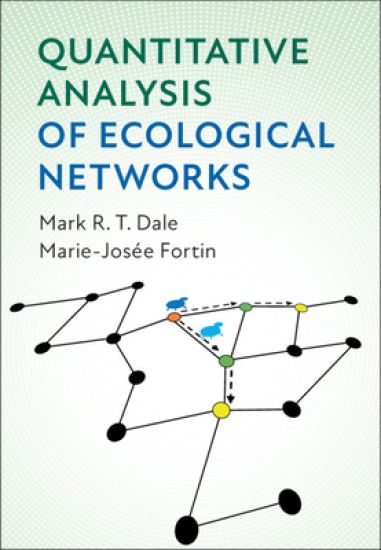
Quantitative Analysis of Ecological Networks

Quantitative Analysis of Ecological Networks

Mark R. T. Dale; Marie-Josée Fortin

Cambridge University Press
2021
sidottu
Network thinking and network analysis are rapidly expanding features of ecological research. Network analysis of ecological systems include representations and modelling of the interactions in an ecosystem, in which species or factors are joined by pairwise connections. This book provides an overview of ecological network analysis including generating processes, the relationship between structure and dynamic function, and statistics and models for these networks. Starting with a general introduction to the composition of networks and their characteristics, it includes details on such topics as measures of network complexity, applications of spectral graph theory, how best to include indirect species interactions, and multilayer, multiplex and multilevel networks. Graduate students and researchers who want to develop and understand ecological networks in their research will find this volume inspiring and helpful. Detailed guidance to those already working in network ecology but looking for advice is also included.
In the Name of Liberty

In the Name of Liberty

Mark R. Reiff

Cambridge University Press
2020
sidottu
For years now, unionization has been under vigorous attack. Membership has been steadily declining, and with it union bargaining power. As a result, unions may soon lose their ability to protect workers from economic and personal abuse, as well as their significance as a political force. In the Name of Liberty responds to this worrying state of affairs by presenting a new argument for unionization, one that derives an argument for universal unionization in both the private and public sector from concepts of liberty that we already accept. In short, In the Name of Liberty reclaims the argument for liberty from the political right, and shows how liberty not only requires the unionization of every workplace as a matter of background justice, but also supports a wide variety of other progressive policies.
Quantitative Analysis of Ecological Networks

Quantitative Analysis of Ecological Networks

Mark R. T. Dale; Marie-Josée Fortin

Cambridge University Press
2021
pokkari
Network thinking and network analysis are rapidly expanding features of ecological research. Network analysis of ecological systems include representations and modelling of the interactions in an ecosystem, in which species or factors are joined by pairwise connections. This book provides an overview of ecological network analysis including generating processes, the relationship between structure and dynamic function, and statistics and models for these networks. Starting with a general introduction to the composition of networks and their characteristics, it includes details on such topics as measures of network complexity, applications of spectral graph theory, how best to include indirect species interactions, and multilayer, multiplex and multilevel networks. Graduate students and researchers who want to develop and understand ecological networks in their research will find this volume inspiring and helpful. Detailed guidance to those already working in network ecology but looking for advice is also included.
In the Name of Liberty

In the Name of Liberty

Mark R. Reiff

Cambridge University Press
2022
pokkari
For years now, unionization has been under vigorous attack. Membership has been steadily declining, and with it union bargaining power. As a result, unions may soon lose their ability to protect workers from economic and personal abuse, as well as their significance as a political force. In the Name of Liberty responds to this worrying state of affairs by presenting a new argument for unionization, one that derives an argument for universal unionization in both the private and public sector from concepts of liberty that we already accept. In short, In the Name of Liberty reclaims the argument for liberty from the political right, and shows how liberty not only requires the unionization of every workplace as a matter of background justice, but also supports a wide variety of other progressive policies.
Authoritarian Modernism in East Asia

Authoritarian Modernism in East Asia

Mark R. Thompson

Palgrave Pivot
2018
sidottu
Following Barrington Moore Jr., this book raises doubts about modernization theory’s claim that an advanced economy with extensive social differentiation is incompatible with authoritarian rule. Authoritarian modernism in East Asia (Northeast and Southeast Asia) has been characterized by economically reformist but politically conservative leaders who have attempted to learn the “secrets” of authoritarian rule in modern society. They demobilize civil society while endeavoring to establish an “ethical” form of rule and claim reactionary culturalist legitimation. With China, East Asia is home to the most important country in the world today that is rapidly modernizing while attempting to remain authoritarian.
On Unemployment

On Unemployment

Mark R. Reiff

Palgrave Macmillan
2015
sidottu
With unemployment at historically high rates that show signs of becoming structural, there is a pressing need for an in-depth exploration of this economic injustice. Unemployment is one of the problems most likely to put critical pressure on our political institutions, disrupt the social fabric of our way of life, and even threaten the continuation of liberalism itself. Despite the obvious importance of the problem of unemployment, however, there has been a curious lack of attention paid to this issue by contemporary non-Marxist political philosophers. On Unemployment explores the moral implications of the problem of unemployment despite the continuing uncertainty involving both its causes and its cures. Reiff takes up a series of questions about the nature of unemployment and what justice has to tell us about what we should do, if anything, to alleviate it. The book comprehensively discusses the related theory and suggests how we might implement these more general observations in the real world. It addresses the politics of unemployment and the extent to which opposition to some or all of the book's various proposals stem not from empirical disagreements about the best solutions, but from more basic moral disagreements about whether the reduction of unemployment is indeed an appropriate moral goal. This exciting new text will be essential for scholars and readers across business, economics, and finance, as well as politics, philosophy, and sociology.
On Unemployment, Volume II

On Unemployment, Volume II

Mark R. Reiff

Palgrave Macmillan
2015
sidottu
With unemployment at historically high rates that show signs of becoming structural, there is a pressing need for an in-depth exploration of this economic injustice. Unemployment is one of the problems most likely to put critical pressure on our political institutions, disrupt the social fabric of our way of life, and even threaten the continuation of liberalism itself. Despite the obvious importance of the problem of unemployment, however, there has been a curious lack of attention paid to this issue by contemporary non-Marxist political philosophers. On Unemployment explores the moral implications of the problem of unemployment despite the continuing uncertainty involving both its causes and its cures. Reiff takes up a series of questions about the nature of unemployment and what justice has to tell us about what we should do, if anything, to alleviate it. The book comprehensively discusses the related theory and suggests how we might implement these more general observations in the real world. It addresses the politics of unemployment and the extent to which opposition to some or all of the book's various proposals stem not from empirical disagreements about the best solutions, but from more basic moral disagreements about whether the reduction of unemployment is indeed an appropriate moral goal. This exciting new text will be essential for scholars and readers across business, economics, and finance, as well as politics, philosophy, and sociology.
Barth, Israel, and Jesus

Barth, Israel, and Jesus

Mark R. Lindsay

Routledge
2017
nidottu
The attitude of Karl Barth to Israel and the Jews has long been the subject of heated controversy amongst historians and theologians. The question that has so far predominated in the debate has been Barth's attitude, both theologically and practically, towards the Jews during the period of the Third Reich and the Holocaust itself. How, if at all, did Barth's attitudes change in the post-war years? Did Barth's own theologising in the aftermath of the Holocaust take that horrendous event into account in his later writings on Israel and the Jews? Mark Lindsay explores such questions through a deep consideration of volume four of Barth's Church Dogmatics, the 'Doctrine of Reconciliation'.
Science at EPA

Science at EPA

Mark R. Powell

Routledge
2017
sidottu
The U.S. Environmental Protection Agency was created to protect public health and the environment, and it has traditionally emphasized its regulatory mission over its scientific mission. Yet for environmental policy to be credible with the public and policymakers, EPA's actions must have a sound basis in science. In Science at EPA, Mark Powell offers detailed case studies that map the origins, flow, and impact of scientific information in eight EPA decisions involving the agency's major statutory programs. Drawing on extensive research and interviews, he provides the most comprehensive examination available on the acquisition and use of science in environmental regulation. Powell describes the key obstacles to the practical, efficient, and effective acquisition and use of knowledge in what is a crucial, but complex endeavor. His book is an essential contribution for practitioners, scholars and students, and citizens who are determined to protect our environment rationally and effectively.