Kirjojen hintavertailu. Mukana 12 499 140 kirjaa ja 12 kauppaa.

Kirjahaku

Etsi kirjoja tekijän nimen, kirjan nimen tai ISBN:n perusteella.

1000 tulosta hakusanalla Massimo D'Azeglio

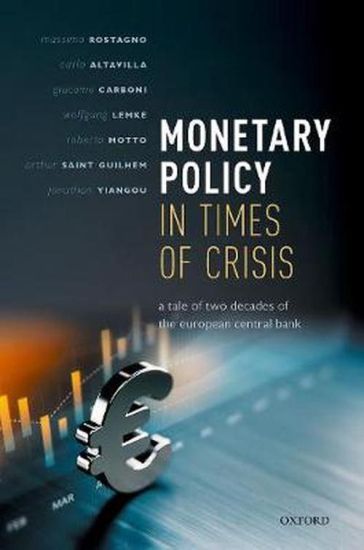
Monetary Policy in Times of Crisis

Monetary Policy in Times of Crisis

Massimo Rostagno; Carlo Altavilla; Giacomo Carboni; Wolfgang Lemke; Roberto Motto; Arthur Saint Guilhem; Jonathan Yiangou

Oxford University Press
2021
sidottu
The first twenty years of the European Central Bank (ECB) offer a clear demonstration of how a central bank can navigate macroeconomic insecurity and crisis. As the global economy moves into a new phase of unheralded uncertainty, the story of the ECB holds multiple lessons of wider significance for the central banking community and researchers of monetary policy. This volume provides a unique account of how the ECB has reacted to the challenges confronting the euro area through its monetary policy, turning to innovative measures and unprecedented policy actions to fend off the various threats posed by the global financial turmoil of 2007/08, the euro area sovereign debt market crisis, and the subsequent period of anaemic growth and deflationary pressures. It also addresses some of the criticisms the ECB has faced regarding its policy initiatives. It identifies the ultimate motivation behind the ECB's cautious attitude in the early phases of the financial crisis, and its peculiar definition of price stability and attention for credit creation, as well as addressing the criticism that central banks were fundamentally unprepared to head off a major financial cataclysm as they were wedded to a deficient economic paradigm which made them blind to financial risks. It also shows that the ECB's unconventional low-interest policies have not compromised the position of financial intermediaries in the way commentators initially predicted they would. By condensing the facts and lessons of the first 20 years of the ECB, this volume will acquaint the reader with the structures and decision-making processes behind the complex, often controversial, crisis measures that were taken during some of the toughest economic challenges in the history of modern Europe, and provide them with fresh ex-post analysis on their effect on the real economy and inflation.

Atomic Physics: Precise Measurements and Ultracold Matter

Atomic Physics: Precise Measurements and Ultracold Matter

Massimo Inguscio; Leonardo Fallani

Oxford University Press
2013
sidottu
This book illustrates the history of Atomic Physics and shows how its most recent advances allow the possibility of performing precise measurements and achieving an accurate control on the atomic state. Written in an introductory style, this book is addressed to advanced undergraduate and graduate students, as well as to more experienced researchers who need to remain up-to-date with the most recent advances. The book focuses on experimental investigations, illustrating milestone experiments and key experimental techniques, and discusses the results and the challenges of contemporary research. Emphasis is put on the investigations of precision physics: from the determination of fundamental constants of Nature to tests of General Relativity and Quantum Electrodynamics; from the realization of ultra-stable atomic clocks to the precise simulation of condensed matter theories with ultracold gases. The book discusses these topics while tracing the evolution of experimental Atomic Physics from traditional laser spectroscopy to the revolution introduced by laser cooling, which allows the manipulation of atoms at a billionth of a degree above absolute zero and reveals new frontiers of precision in atomic spectroscopy.
Atomic Physics

Atomic Physics

Massimo Inguscio; Leonardo Fallani

Oxford University Press
2018
nidottu
This book illustrates the history of Atomic Physics and shows how its most recent advances allow the possibility of performing precise measurements and achieving an accurate control on the atomic state. Written in an introductory style, this book is addressed to advanced undergraduate and graduate students, as well as to more experienced researchers who need to remain up-to-date with the most recent advances. The book focuses on experimental investigations, illustrating milestone experiments and key experimental techniques, and discusses the results and the challenges of contemporary research. Emphasis is put on the investigations of precision physics: from the determination of fundamental constants of Nature to tests of General Relativity and Quantum Electrodynamics; from the realization of ultra-stable atomic clocks to the precise simulation of condensed matter theories with ultracold gases. The book discusses these topics while tracing the evolution of experimental Atomic Physics from traditional laser spectroscopy to the revolution introduced by laser cooling, which allows the manipulation of atoms at a billionth of a degree above absolute zero and reveals new frontiers of precision in atomic spectroscopy.
Network Industries and Social Welfare

Network Industries and Social Welfare

Massimo Florio

Oxford University Press
2013
sidottu
A dramatic change of ownership, regulation, and organisation of essential public services, such as electricity, gas, and telecommunications, has taken place in Europe in less than 20 years. This was not the outcome of spontaneous adaptation, but an entirely top-down policy experiment, mainly conceived in London during Mrs Thatcher's years, then pursued in Brussels - the 'capital' of the European Union - and imposed on more or less reluctant players by laws, directives, regulations, and administrative and judicial decisions. The European reform paradigm revolves around three pillars: privatisation, unbundling, and regulated liberalisation of network industries. These industries, despite the reforms, are still special, as they include core natural monopoly components (the electricity grid, the gas pipelines, the telephony networks, etc.), are often based on complex system integration of different segments (for example of electricity generation, transmission, distribution and retail supply), and offer services that have critical social and economic importance, from heating to internet. This book offers a careful scrutiny of energy and telephony reforms and prices paid by households in 15 countries across Western Europe. It attempts to answer such questions as: Are the consumers in Europe happier than they were before the reforms? Do they pay less? Do they get a better quality for the services? Network Industries and Social Welfare provides an overview of the main facts, the conceptual issues, and of the empirical evidence on pricing, perceptions of quality of service, and the issues of utility poverty and social affordability. It suggests that the benefits of the reforms for the consumers have often been limited and that governments should reconsider their overconfidence in regulated market mechanisms in network industries.
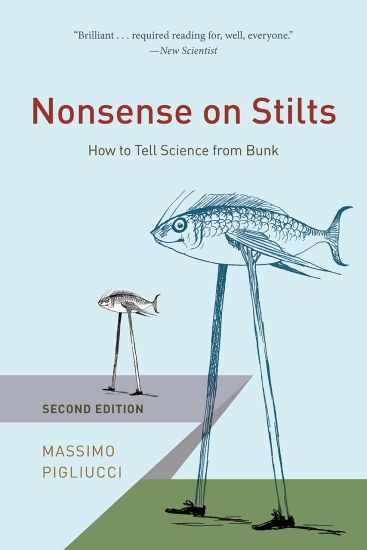
Nonsense on Stilts

Nonsense on Stilts

Massimo Pigliucci

University of Chicago Press
2018
pokkari
Recent polls suggest that fewer than 40 percent of Americans believe in Darwin's theory of evolution, despite it being one of science's best-established findings. Parents still refuse to vaccinate their children for fear it causes autism, though this link has been consistently disproved. And about 40 percent of Americans believe that the threat of global warming is exaggerated, including many political leaders. In this era of fake news and alternative facts, there is more bunk than ever. But why do people believe in it? And what causes them to embrace such pseudoscientific beliefs and practices? In this fully revised second edition, noted skeptic Massimo Pigliucci sets out to separate the fact from the fantasy in an entertaining exploration of the nature of science, the borderlands of fringe science, and--borrowing a famous phrase from philosopher Jeremy Bentham--the nonsense on stilts. Presenting case studies on a number of controversial topics, Pigliucci cuts through the ambiguity surrounding science to look more closely at how science is conducted, how it is disseminated, how it is interpreted, and what it means to our society. The result is in many ways a "taxonomy of bunk" that explores the intersection of science and culture at large. No one--neither the public intellectuals in the culture wars between defenders and detractors of science nor the believers of pseudoscience themselves--is spared Pigliucci's incisive analysis in this timely reminder of the need to maintain a line between expertise and assumption. Broad in scope and implication, Nonsense on Stilts is a captivating guide for the intelligent citizen who wishes to make up her own mind while navigating the perilous debates that will shape the future of our planet.
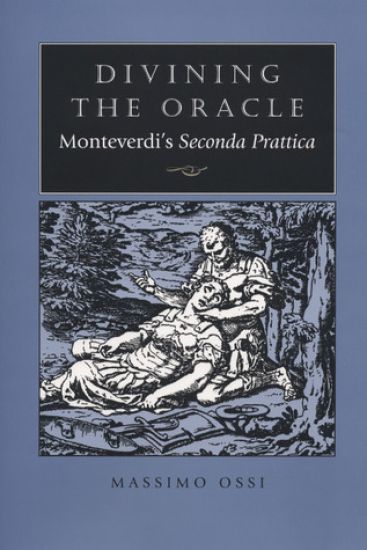
Divining the Oracle

Divining the Oracle

Massimo Ossi

University of Chicago Press
2003
sidottu
Claudio Monteverdi's historical position in music has been compared to that of Shakespeare in literature: almost exact contemporaries, each worked from traditional beginnings to transform nearly every genre he attempted. In this book, Massimo Ossi delves into the most significant aspect of Monteverdi's career: the development, during the first years of the 17th century, of a new compositional style he called the "seconda prattica" or "second manner". Challenged in print for the unconventional aspects of his music, Monteverdi found himself at the centre of a debate between defenders of Renaissance principles and the newest musical currents of the time. The principles of the "seconda prattica", Ossi argues in this sophisticated analysis of Monteverdi's writings, music and texts, were in fact much more significant to the course of Monteverdi's career than previously thought by modern scholars - not only did they affect Monteverdi's output for the rest of his life, but as his works became widely known they influenced subsequent composers more than is often imagined. Ossi "divines the oracle" of Monteverdi's ambiguous theoretical concepts in a clear way and in terms of pure music; his book should enhance our understanding of Monteverdi as one of the most significant figures in western music history.
Making Sense of Evolution

Making Sense of Evolution

Massimo Pigliucci; Jonathan Kaplan

University of Chicago Press
2006
sidottu
Making Sense of Evolution explores contemporary evolutionary biology, focusing on the elements of theories—selection, adaptation, and species—that are complex and open to multiple possible interpretations, many of which are incompatible with one another and with other accepted practices in the discipline. Particular experimental methods, for example, may demand one understanding of “selection,” while the application of the same concept to another area of evolutionary biology could necessitate a very different definition. Spotlighting these conceptual difficulties and presenting alternate theoretical interpretations that alleviate this incompatibility, Massimo Pigliucci and Jonathan Kaplan intertwine scientific and philosophical analysis to produce a coherent picture of evolutionary biology. Innovative and controversial, Making Sense of Evolution encourages further development of the Modern Synthesis and outlines what might be necessary for the continued refinement of this evolving field.
Making Sense of Evolution

Making Sense of Evolution

Massimo Pigliucci; Jonathan Kaplan

University of Chicago Press
2006
nidottu
Making Sense of Evolution explores contemporary evolutionary biology, focusing on the elements of theories—selection, adaptation, and species—that are complex and open to multiple possible interpretations, many of which are incompatible with one another and with other accepted practices in the discipline. Particular experimental methods, for example, may demand one understanding of “selection,” while the application of the same concept to another area of evolutionary biology could necessitate a very different definition. Spotlighting these conceptual difficulties and presenting alternate theoretical interpretations that alleviate this incompatibility, Massimo Pigliucci and Jonathan Kaplan intertwine scientific and philosophical analysis to produce a coherent picture of evolutionary biology. Innovative and controversial, Making Sense of Evolution encourages further development of the Modern Synthesis and outlines what might be necessary for the continued refinement of this evolving field.
Reactionary Mathematics

Reactionary Mathematics

Massimo Mazzotti

THE UNIVERSITY OF CHICAGO PRESS
2023
sidottu
A forgotten episode of mathematical resistance reveals the rise of modern mathematics and its cornerstone, mathematical purity, as political phenomena. The nineteenth century opened with a major shift in European mathematics, and in the Kingdom of Naples, this occurred earlier than elsewhere. Between 1790 and 1830 its leading scientific institutions rejected as untrustworthy the “very modern mathematics” of French analysis and in its place consolidated, legitimated, and put to work a different mathematical culture. The Neapolitan mathematical resistance was a complete reorientation of mathematical practice. Over the unrestricted manipulation and application of algebraic algorithms, Neapolitan mathematicians called for a return to Greek-style geometry and the preeminence of pure mathematics. For all their apparent backwardness, Massimo Mazzotti explains, they were arguing for what would become crucial features of modern mathematics: its voluntary restriction through a new kind of rigor and discipline, and the complete disconnection of mathematical truth from the empirical world—in other words, its purity. The Neapolitans, Mazzotti argues, were reacting to the widespread use of mathematical analysis in social and political arguments: theirs was a reactionary mathematics that aimed to technically refute the revolutionary mathematics of the Jacobins. During the Restoration, the expert groups in the service of the modern administrative state reaffirmed the role of pure mathematics as the foundation of a newly rigorous mathematics, which was now conceived as a neutral tool for modernization. What Mazzotti’s penetrating history shows us in vivid detail is that producing mathematical knowledge was equally about producing certain forms of social, political, and economic order.
Reactionary Mathematics

Reactionary Mathematics

Massimo Mazzotti

THE UNIVERSITY OF CHICAGO PRESS
2023
nidottu
A forgotten episode of mathematical resistance reveals the rise of modern mathematics and its cornerstone, mathematical purity, as political phenomena. The nineteenth century opened with a major shift in European mathematics, and in the Kingdom of Naples, this occurred earlier than elsewhere. Between 1790 and 1830 its leading scientific institutions rejected as untrustworthy the “very modern mathematics” of French analysis and in its place consolidated, legitimated, and put to work a different mathematical culture. The Neapolitan mathematical resistance was a complete reorientation of mathematical practice. Over the unrestricted manipulation and application of algebraic algorithms, Neapolitan mathematicians called for a return to Greek-style geometry and the preeminence of pure mathematics. For all their apparent backwardness, Massimo Mazzotti explains, they were arguing for what would become crucial features of modern mathematics: its voluntary restriction through a new kind of rigor and discipline, and the complete disconnection of mathematical truth from the empirical world—in other words, its purity. The Neapolitans, Mazzotti argues, were reacting to the widespread use of mathematical analysis in social and political arguments: theirs was a reactionary mathematics that aimed to technically refute the revolutionary mathematics of the Jacobins. During the Restoration, the expert groups in the service of the modern administrative state reaffirmed the role of pure mathematics as the foundation of a newly rigorous mathematics, which was now conceived as a neutral tool for modernization. What Mazzotti’s penetrating history shows us in vivid detail is that producing mathematical knowledge was equally about producing certain forms of social, political, and economic order.
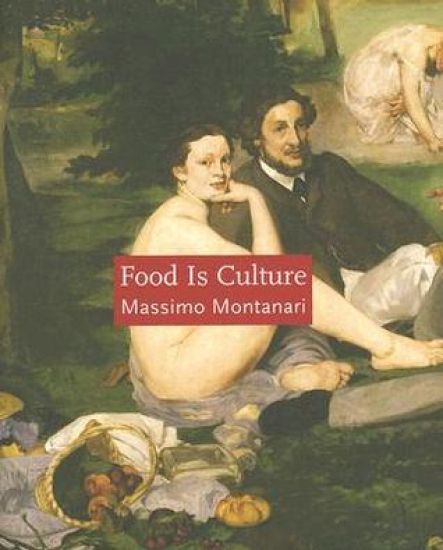
Food Is Culture

Food Is Culture

Massimo Montanari

Columbia University Press
2006
sidottu
Elegantly written by a distinguished culinary historian, Food Is Culture explores the innovative premise that everything having to do with food-its capture, cultivation, preparation, and consumption-represents a cultural act. Even the "choices" made by primitive hunters and gatherers were determined by a culture of economics (availability) and medicine (digestibility and nutrition) that led to the development of specific social structures and traditions. Massimo Montanari begins with the "invention" of cooking which allowed humans to transform natural, edible objects into cuisine. Cooking led to the creation of the kitchen, the adaptation of raw materials into utensils, and the birth of written and oral guidelines to formalize cooking techniques like roasting, broiling, and frying. The transmission of recipes allowed food to acquire its own language and grow into a complex cultural product shaped by climate, geography, the pursuit of pleasure, and later, the desire for health. In his history, Montanari touches on the spice trade, the first agrarian societies, Renaissance dishes that synthesized different tastes, and the analytical attitude of the Enlightenment, which insisted on the separation of flavors. Brilliantly researched and analyzed, he shows how food, once a practical necessity, evolved into an indicator of social standing and religious and political identity. Whether he is musing on the origins of the fork, the symbolic power of meat, cultural attitudes toward hot and cold foods, the connection between cuisine and class, the symbolic significance of certain foods, or the economical consequences of religious holidays, Montanari's concise yet intellectually rich reflections add another dimension to the history of human civilization. Entertaining and surprising, Food Is Culture is a fascinating look at how food is the ultimate embodiment of our continuing attempts to tame, transform, and reinterpret nature.
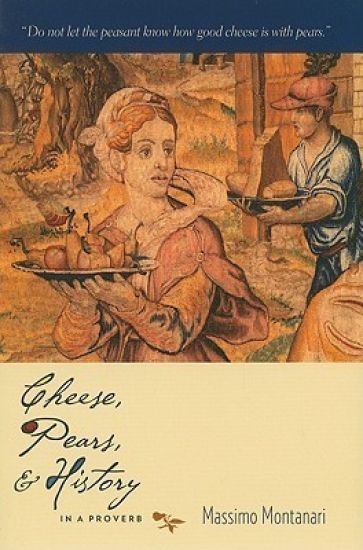
Cheese, Pears, and History in a Proverb

Cheese, Pears, and History in a Proverb

Massimo Montanari

Columbia University Press
2010
sidottu
"Do not let the peasant know how good cheese is with pears" goes the old saying. Intrigued by these words and their portent, Massimo Montanari unravels their origin and utility. Perusing archival cookbooks, agricultural and dietary treatises, literary works, and anthologies of beloved sayings, he finds in the nobility's demanding palates and delicate stomachs a compelling recipe for social conduct. At first, cheese and its visceral, earthy pleasures were treated as the food of Polyphemus, the uncivilized man-beast. The pear, on the other hand, became the symbol of ephemeral, luxuriant pleasure-an indulgence of the social elite. Joined together, cheese and pears adopted an exclusive savoir faire, especially as the "natural phenomenon" of taste evolved into a cultural attitude. Montanari's delectable history straddles written and oral traditions, economic and social relations, and thrills in the power of mental representation. His ultimate discovery shows that the enduring proverb, so wrapped up in history, operates not only as a repository of shared wisdom but also as a rich locus of social conflict.
Cheese, Pears, and History in a Proverb

Cheese, Pears, and History in a Proverb

Massimo Montanari

Columbia University Press
2012
pokkari
"Do not let the peasant know how good cheese is with pears" goes the old saying. Intrigued by these words and their portent, Massimo Montanari unravels their origin and utility. Perusing archival cookbooks, agricultural and dietary treatises, literary works, and anthologies of beloved sayings, he finds in the nobility's demanding palates and delicate stomachs a compelling recipe for social conduct. At first, cheese and its visceral, earthy pleasures were treated as the food of Polyphemus, the uncivilized man-beast. The pear, on the other hand, became the symbol of ephemeral, luxuriant pleasure-an indulgence of the social elite. Joined together, cheese and pears adopted an exclusive savoir faire, especially as the "natural phenomenon" of taste evolved into a cultural attitude. Montanari's delectable history straddles written and oral traditions, economic and social relations, and thrills in the power of mental representation. His ultimate discovery shows that the enduring proverb, so wrapped up in history, operates not only as a repository of shared wisdom but also as a rich locus of social conflict.
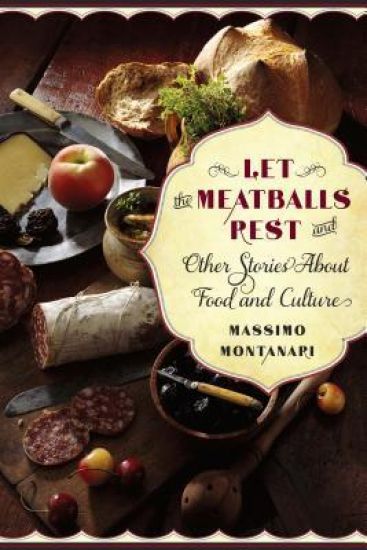
Let the Meatballs Rest

Let the Meatballs Rest

Massimo Montanari

Columbia University Press
2012
sidottu
Known for his entertaining investigations into culinary practice, Massimo Montanari turns his hungry eye to the phenomenon of food culture, food lore, cooking methods, and eating habits throughout history. An irresistible buffet of one hundred concise and engaging essays, this collection provides stimulating food for thought for those curious about one of life's most fundamental pleasures. Focusing on the selection, preparation, and mythology of food, Montanari traverses such subjects as the status of the pantry over the centuries, the various strategies of cooking over time, the gastronomy of famine, the science of flavors, the changing characteristics of convivial rituals, the customs of the table, and the ever-evolving identity of food. He shows that cooking not only is a decisive part of our cultural heritage but also communicates essential information about our material and intellectual well-being. From the invention of basic bread making to chocolate's reputation for decadence, Montanari positions food culture as a lens through which we can plot changes in historical values and social and economic trends. Even the biblical tale of Jacob buying Esau's birthright for a bowl of lentils is a text full of essential meaning, representing civilization's important shift from a hunting to an agrarian society. Readers of all backgrounds will enjoy these delectable insights and their easy consumption in one companionable volume.
Let the Meatballs Rest

Let the Meatballs Rest

Massimo Montanari

Columbia University Press
2015
pokkari
Known for his entertaining investigations into culinary practice, Massimo Montanari turns his hungry eye to the phenomenon of food culture, food lore, cooking methods, and eating habits throughout history. An irresistible buffet of one hundred concise and engaging essays, this collection provides stimulating food for thought for those curious about one of life's most fundamental pleasures. Focusing on the selection, preparation, and mythology of food, Montanari traverses such subjects as the status of the pantry over the centuries, the various strategies of cooking over time, the gastronomy of famine, the science of flavors, the changing characteristics of convivial rituals, the customs of the table, and the ever-evolving identity of food. He shows that cooking not only is a decisive part of our cultural heritage but also communicates essential information about our material and intellectual well-being. From the invention of basic bread making to chocolate's reputation for decadence, Montanari positions food culture as a lens through which we can plot changes in historical values and social and economic trends. Even the biblical tale of Jacob buying Esau's birthright for a bowl of lentils is a text full of essential meaning, representing civilization's important shift from a hunting to an agrarian society. Readers of all backgrounds will enjoy these delectable insights and their easy consumption in one companionable volume.
Italian Identity in the Kitchen, or Food and the Nation

Italian Identity in the Kitchen, or Food and the Nation

Massimo Montanari

Columbia University Press
2013
sidottu
Massimo Montanari draws readers into the far-flung story of how local and global influences came to flavor Italian identity. The fusion of ancient Roman cuisine-which consisted of bread, wine, and olives-with the barbarian diet-rooted in bread, milk, and meat-first formed the basics of modern eating across Europe. From there, Montanari highlights the importance of the Italian city in the development of gastronomic taste in the Middle Ages, the role of Arab traders in positioning the country as the supreme producers of pasta, and the nation's healthful contribution of vegetables to the fifteenth-century European diet. Italy became a receiving country with the discovery of the New World, absorbing corn, potatoes, and tomatoes into its national cuisine. As disaster dispersed Italians in the nineteenth century, new immigrant stereotypes portraying Italians as "macaroni eaters" spread. However, two world wars and globalization renewed the perception of Italy and its culture as unique in the world, and the production of food constitutes an important part of that uniqueness.
Medieval Tastes

Medieval Tastes

Massimo Montanari

Columbia University Press
2015
sidottu
In his new history of food, acclaimed historian Massimo Montanari traces the development of medieval tastes-both culinary and cultural-from raw materials to market and captures their reflections in today's food trends. Tying the ingredients of our diet evolution to the growth of human civilization, he immerses readers in the passionate debates and bold inventions that transformed food from a simple staple to a potent factor in health and a symbol of social and ideological standing. Montanari returns to the prestigious Salerno school of medicine, the "mother of all medical schools," to plot the theory of food that took shape in the twelfth century. He reviews the influence of the Near Eastern spice routes, which introduced new flavors and cooking techniques to European kitchens, and reads Europe's earliest cookbooks, which took cues from old Roman practices that valued artifice and mixed flavors. Dishes were largely low-fat, and meats and fish were seasoned with vinegar, citrus juices, and wine. He highlights other dishes, habits, and battles that mirror contemporary culinary identity, including the refinement of pasta, polenta, bread, and other flour-based foods; the transition to more advanced cooking tools and formal dining implements; the controversy over cooking with oil, lard, or butter; dietary regimens; and the consumption and cultural meaning of water and wine. As people became more cognizant of their physicality, individuality, and place in the cosmos, Montanari shows, they adopted a new attitude toward food, investing as much in its pleasure and possibilities as in its acquisition.
Medieval Tastes

Medieval Tastes

Massimo Montanari

Columbia University Press
2018
pokkari
In his new history of food, acclaimed historian Massimo Montanari traces the development of medieval tastes-both culinary and cultural-from raw materials to market and captures their reflections in today's food trends. Tying the ingredients of our diet evolution to the growth of human civilization, he immerses readers in the passionate debates and bold inventions that transformed food from a simple staple to a potent factor in health and a symbol of social and ideological standing. Montanari returns to the prestigious Salerno school of medicine, the "mother of all medical schools," to plot the theory of food that took shape in the twelfth century. He reviews the influence of the Near Eastern spice routes, which introduced new flavors and cooking techniques to European kitchens, and reads Europe's earliest cookbooks, which took cues from old Roman practices that valued artifice and mixed flavors. Dishes were largely low-fat, and meats and fish were seasoned with vinegar, citrus juices, and wine. He highlights other dishes, habits, and battles that mirror contemporary culinary identity, including the refinement of pasta, polenta, bread, and other flour-based foods; the transition to more advanced cooking tools and formal dining implements; the controversy over cooking with oil, lard, or butter; dietary regimens; and the consumption and cultural meaning of water and wine. As people became more cognizant of their physicality, individuality, and place in the cosmos, Montanari shows, they adopted a new attitude toward food, investing as much in its pleasure and possibilities as in its acquisition.
Poesie morali

Poesie morali

Massimo del Zio

Lulu.com
2017
pokkari
Massimo Del Zio nasce a Milano il 15 luglio 1963. Poeta, scrittore e drammaturgo, ottiene la Laurea honoris causa in lettere antiche e filosofia nel 2009 - 2010 a Roma. Nominato Accademico Tiberino a vita il 21 luglio 1986 nella classe Letteratura e musica della celebre Pontificia Accademia Tiberina a Roma, di corrente leopardiana, pubblica nel 1984 a Roma con Gabrielli Editore le famose Poesie Morali. Ottiene numerosi e prestigiosissimi premi tra cui il 1 Oscar d'oro della citt di Capri, nel 1987. L'autore insignito di sette medaglie d'oro in letteratura e musica.