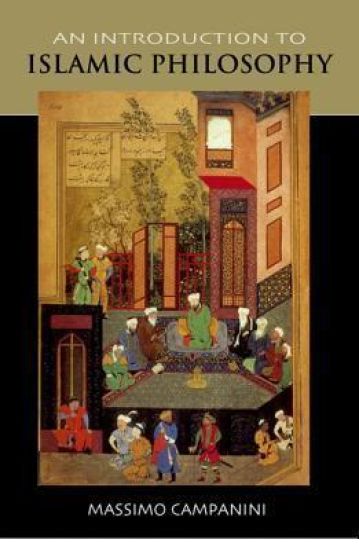
This broad, comprehensive, and yet concise introduction presents a reading of Islamic philosophy as it evolved in the Middle Ages, investigating how Islamic philosophers thought and what they thought about. The book is divided into two parts: the first part explores the epistemological foundations of Islamic philosophy and discusses the most important and penetrating interpretative paradigms proposed by the philosophers; the second part describes some of their major themes. Each chapter is organised chronologically and geographically, providing the reader with a lucid profile of the evolution of Islamic philosophical thought, with reference to specific themes within the broader framework of Islamic history. Throughout the author includes extracts of translations from primary sources, allowing the philosophers to speak for themselves. Rather than offering a complete history of the subject, the author aims to stimulate the reader to pursue the themes he outlines in the book: the ideas that were consistently the object of philosophical speculation among Medieval Muslim thinkers whose philosophy was rooted in Platonic and Aristotelian thought.This book is ideal for students wishing to trace the background to many ideas and thought processes governing contemporary Islamic thought.
This broad, comprehensive, and yet concise introduction presents a reading of Islamic philosophy as it evolved in the Middle Ages, investigating how Islamic philosophers thought and what they thought about. The book is divided into two parts: the first part explores the epistemological foundations of Islamic philosophy and discusses the most important and penetrating interpretative paradigms proposed by the philosophers; the second part describes some of their major themes. Each chapter is organised chronologically and geographically, providing the reader with a lucid profile of the evolution of Islamic philosophical thought, with reference to specific themes within the broader framework of Islamic history. Throughout the author includes extracts of translations from primary sources, allowing the philosophers to speak for themselves. Rather than offering a complete history of the subject, the author aims to stimulate the reader to pursue the themes he outlines in the book: the ideas that were consistently the object of philosophical speculation among Medieval Muslim thinkers whose philosophy was rooted in Platonic and Aristotelian thought. This book is ideal for students wishing to trace the background to many ideas and thought processes governing contemporary Islamic thought.
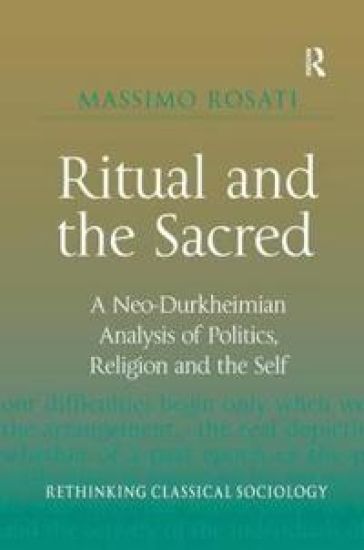
Ritual and the Sacred discusses some of the most important issues of modern socio-political life through the lens of a neo-Durkheimian perspective. Building on the main lesson of Durkheim's Elementary Forms of Religious Life, this book articulates values and practices common to non-Western and religious traditions that have the capacity to shape our modern way of living. Central to this volume is the question of modernity and scepticism with regard to mainstream Western wisdom; Rosati focuses on the notion of societal self-reassessment and self-revision, illustrating a willingness to learn from ’primitive’ societies. This reassessment necessitates us to rethink the central roles played by ritual and the sacred as building blocks of social and individual life, both of which remain salient features within the modern world. This title will be of key interest to sociologists of religion, philosophy politics and social theorists.
Read the tarot in a lush new way—through the lens of flowers and their mythology—with this intricately illustrated deck.The world of tarot cards and that of flowers, with their thousand symbols and meanings, meet in a unique and precious deck. The archetypes of the Major Arcana take on a new life, reflecting the vast array of meanings that mythology, tradition, and literature have long ascribed to flowers. The result is Flora, a magical deck that will enchant everyone who encounters it. Giving life to these myths and symbols are the gorgeous illustrations of Massimo Alfaioli, a botanical scholar and tarot expert, Maria Eva Di Maggio.Inside, 78 original artist illustrations and book that tell the myths, traditions, and legends of yesterday and today. A unique deck, to collect and consult to learn more about yourself and your destiny.
For more than two decades the concept of phenotypic plasticity has allowed researchers to go beyond the nature-nurture dichotomy to gain deeper insights into how organisms are shaped by the interaction of genetic and ecological factors. Phenotypic Plasticity: Beyond Nature and Nurture is the first work to synthesize the burgeoning area of plasticity studies, providing a conceptual overview as well as a technical treatment of its major components. Phenotypic plasticity integrates the insights of ecological genetics, developmental biology, and evolutionary theory. Plasticity research asks foundational questions about how living organisms are capable of variation in their genetic makeup and in their responses to environmental factors. For instance, how do novel adaptive phenotypes originate? How do organisms detect and respond to stressful environments? What is the balance between genetic or natural constraints (such as gravity) and natural selection? The author begins by defining phenotypic plasticity and detailing its history, including important experiments and methods of statistical and graphical analysis. He then provides extended examples of the molecular basis of plasticity, the plasticity of development, the ecology of plastic responses, and the role of costs and constraints in the evolution of plasticity. A brief epilogue looks at how plasticity studies shed light on the nature/nurture debate in the popular media. Phenotypic Plasticity: Beyond Nature and Nurture thoroughly reviews more than two decades of research, and thus will be of interest to both students and professionals in evolutionary biology, ecology, and genetics.
Friedrich Neitzsche imagined himself belonging to a society of visionaries, thinkers, architects, poets, musicians, and artists running ahead of the mainstream. They were condemned to be misunderstood or ignored in the present, but their work would become significant in the future. To them he addressed the aphorism from which Massimo Cacciari's book takes its name, saying "It is only after death that we will enter our life and come alive, oh, very much alive, we posthumous people!" Cacciari isolates Vienna as the European capitol of posthumous people at a crucial turning point in Western thinking, as the nineteenth century ended. There he finds Ludwig Wittgenstein, together with Peter Altenberg, Robert Walser, Lou Andreas-Salomé, Adolf Loos, Martin Buber, Egon Schiele, Karl Kraus, Gustav Klimt, and many others. Cacciari treats this extraordinarily rich concentration of activity as the hub upon which European culture wheeled into the twentieth century. He reaches directly to the intellectual content in each of the various figures he discusses.
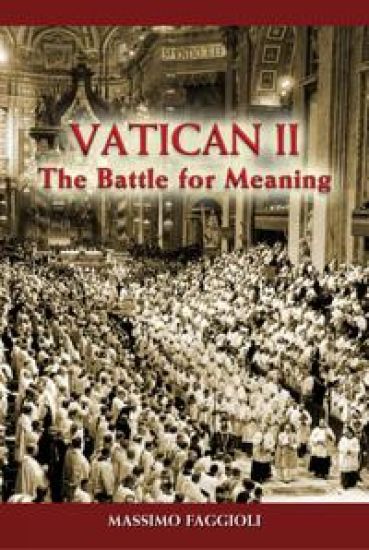
The death of John Paul II and the election of Benedict XVI constituted undoubtedly two important elements in the broad theological and ecclesiastical landscape of the debate about Vatican II in the last few years. This change of pontificate has also nourished the journalistic and political dispute about Vatican II, its history and its legacy, and not only the historiographical and theological debate. Brief accounts of the history of Vatican II have reached the public at large but the research on Vatican II is already proceeding forward and beyond the state of knowledge about the council reached at the end of the nineties. Even if some observers seem to be satisfied with the present knowledge, for twenty-first century church historians and theologians interested in understanding contemporary Catholicism in the light of Vatican II, the intellectual undertaking is still evolving. The book gives a comprehensive presentation of the theological and historiographical debate about Vatican II. The attempt to go beyond “the clash of interpretations”—Vatican II as a rupture in the history of Catholicism on one side and the need to read Vatican II in continuity with the tradition on the other—is necessary indeed because the ongoing debate about Vatican II is largely misrepresented by the use of “clashing interpretations” as a tool for understanding the role of the council in present-day Catholicism. †
In a series of essays based on surviving documents of actual court practices from Perugia and Bologna, as well as laws, statutes, and theoretical works from the 12th and 13th centuries, Massimo Vallerani offers important historical insights into the establishment of a trial-based public justice system. Challenging the long-standing evolutionary paradigm of medieval legal procedures, Vallerani argues that public justice was not the triumph of strong inquisitorial procedure over weak accusatory procedure, but rather a process in which the two procedures developed in tandem. He demonstrates that inquisition and accusation shared many features in their intertwining goals of punishment and reconciliation. The grand narrative of the evolution of criminal justice is dismantled in this work, originally published in Italian and widely cited as a ground breaking study of legal procedure. Vallerani contends that accusatio and inquisitio were formed simultaneously to address different needs: to seek and construct different “truths”—the truth of the fact that occurred outside the courtroom as revealed by the probing of the judge, and the truth that emerges inside the triadic model of the courtroom as a result of negotiations between the disputing parties under the guidance of the judge. Vallerani’s rich approach to his sources includes statistical analysis of the court records, revealing the functioning of the courts in terms of the incidence of torture, the proportions of trials initiated by accusatio and inquisitio, and the percentage of trials suspended at different stages of litigation. Furthermore, he sets legal procedures within the context of a society and political world immersed in violence and conflict and shows how the supplica, or petition for pardon, played a major role in the transformation from communal to signorial government in the early fourteenth century.
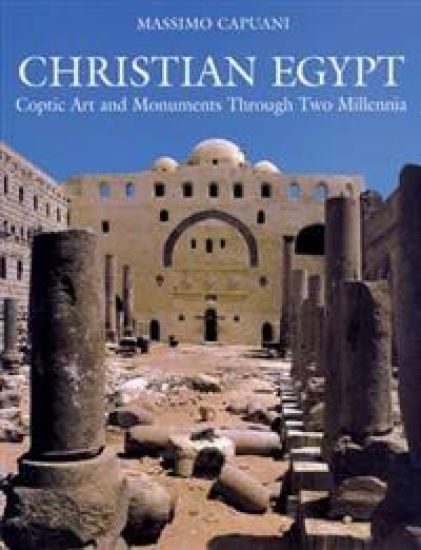
Through haunting landscapes of the Nile Valley, oases and deserts, purely designed buildings, sumptuous paintings, beautiful illuminations, and exquisite fabrics, Christian Egypt transports the reader through the two-thousand year history and culture of Coptic Egypt.In Christian Egypt, Massimo Capuani invites students, scholars, and other interested readers to gain a greater appreciation of the richness of the Coptic civilization by traveling through ancient and medieval Coptic sites throughout Egypt, including the ruined monasteries of Saint Jeremiah (Saqqara) and Saint Apollo (Bawit).Capuani's comprehensive examination of the archeological studies and historical literature of Coptic Christian monasteries and churches are supported by over 170 black-and-white photographs, maps, and architectural illustrations. In addition, 105 full-color photographs provide a substantive record of monuments, architectural features, and wall paintings not seen elsewhere with such clarity and beauty. A chronology of Egypt from 332 B.C. to 1952 and an essay on the typology and architectural evolution of Egyptian churches add to the value of the work.Christian Egypt is enriched by the contribution of Otto F. A. Meinardus, who introduces readers to Coptic Egypt with a discussion of basic issues such as the patriarchs of Alexandria and theology of the World Church during the fourth and fifth centuries, the history of the Coptic Church, monasticism, the attitude of Egypt's rulers toward the Copts, and the Coptic renaissance during the pontificates of the patriarchs Cyril VI and Shenouda III.In a valuable, concise account, Marie-Helène Rutschowscaya elucidates several aspects of Coptic art: wall paintings, icons, illustrated manuscripts, as well as textiles. She offers readers a comprehensive picture of the artistic achievements of the Copts. Gawdat Gabra's thorough knowledge of current archeological activity and the most recent consensus regarding the dates and other questions concerning churches and monasteries enhance the store of information in Christian Egypt.Contents include Introduction," by Gawdat Gabra; *Coptic Christianity, Past and Present, - by Otto F. A. Meinardus; *The Arts Using Color, - by Marie-Helène Rutschowscaya; *Typology and Architectural Evolution of the Egyptian Churches Areas and Regions, - by Massimo Capuani; and *Areas and Regions, - by Massimo Capuani.Areas and regions included are The Region of the Delta, Nitria and Kellia, Scetis (Wadi al-Natrun), Cairo and Its Vicinity, Al-Fayyum and the Region of Beni Suef, The Eastern Desert, The Region of al-Minya, The Region of Asyut, The Region of Sohag and Akhmim, The Thebaid, Upper Egypt, and The Oases. Includes a chronology, bibliography, glossary, and index of places.Massimo Capuani, an engineer and researcher, is an expert in the history of the Eastern Christian Churches and has a thorough knowledge of the Middle Eastern and Mediterranean worlds; he has collected rich documentation about their cultural and artistic development.Otto F. A. Meinardus, Fellow of the Institute of Coptic Studies in Cairo and a member of the German Archaeological Society, is a doctor of philosophy and theology and a professor at the American University in Cairo and Athens College in Greece.Marie-Helène Rutschowscaya is head curator of the department of Egyptian antiquities at the Louvre and director of the Coptic section; she is also a professor at the ecole du Louvre.Gawdat Gabra, former director of the Coptic Museum in Cairo and member of the board of the Society of Coptic Archaeology, has a doctorate in Coptology from the University of Munster. He serves as a consultant in a number of projects of the American Research Center in Egypt and is chief editor of the Saint Mark Foundation for Coptic History Studies."
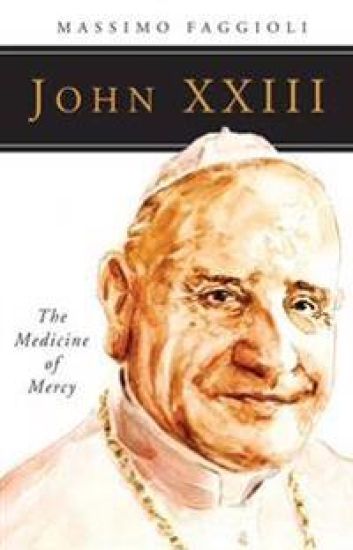
People of God is a brand new series of inspiring biographies for the general reader. Each volume offers a compelling and honest narrative of the life of an important twentieth or twenty-first century Catholic. Some living and some now deceased, each of these women and men have known challenges and weaknesses familiar to most of us, but responded to them in ways that call us to our own forms of heroism. Each offers a credible and concrete witness of faith, hope, and love to people of our own day. The canonization of Pope John XXIII and the fiftieth anniversary of Vatican II call for a fresh look at this remarkable man. Now highly regarded Vatican II historian Massimo Faggioli offers a rich and insightful portrait. His sources include the complete edition of the private diaries of the future John XXIII, published recently in ten volumes, much of which is unavailable in English. Faggioli’s use of this treasure of personal notes of the future pope means this biography offers a more complete and nuanced understanding of Angelo Roncalli than is available anywhere else in English at this time. The result is both unforgettable and inspiring.
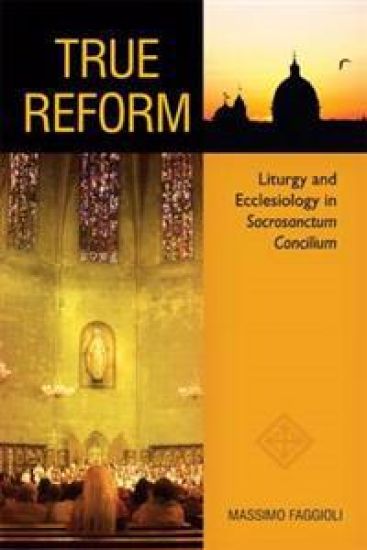
For Massimo Faggioli, the debate about the meaning of Vatican II too often misses the profound significance of that council's first and perhaps most consequential document, Sacrosanctum Concilium. The result is a misunderstanding of both the council as a whole and the liturgical reform that followed from it.In True Reform, Faggioli takes Sacrosanctum Concilium as a hermeneutical key to the council. He offers a thorough reflection on the relationship between the liturgical constitution and the whole achievement of Vatican II and argues that the interconnections between the two must emerge if we want to understand the impact of the council on global Catholicism.
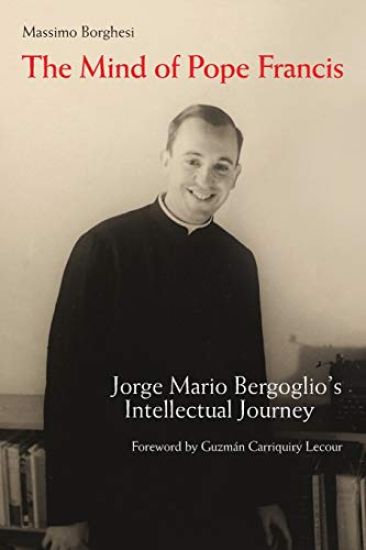
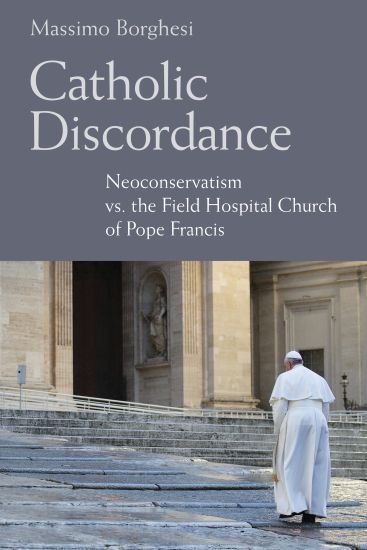
2022 Catholic Media Association honorable mention Pope Francis2022 Catholic Media Association honorable mention in English translation editionOne element of the church that Pope Francis was elected to lead in 2013 was an ideology that might be called the “American” model of Catholicism—the troubling result of efforts by intellectuals like Michael Novak, George Weigel, and Richard John Neuhaus to remake Catholicism into both a culture war colossus and a prop for ascendant capitalism.After laying the groundwork during the 1980s and armed with a selective and manipulative reading of Pope John Paul II’s 1991 encyclical Centesimus Annus, these neoconservative commentators established themselves as authoritative Catholic voices throughout the 1990s, viewing every question through a liberal-conservative ecclesial-political lens. The movement morphed further after the 9/11 terror attacks into a startling amalgamation of theocratic convictions, which led to the troubling theo-populism we see today.The election of the Latin American pope represented a mortal threat to all of this, and a poisonous backlash was inevitable, bringing us to the brink of a true “American schism.” This is the drama of today’s Catholic Church. In Catholic Discordance: Neoconservatism vs. the Field Hospital Church of Pope Francis, Massimo Borghesi—who masterfully unveiled the pope’s own intellectual development in his The Mind of Pope Francis—analyzes the origins of today’s Catholic neoconservative movement and its clash with the church that Francis understands as a “field hospital” for a fragmented world.
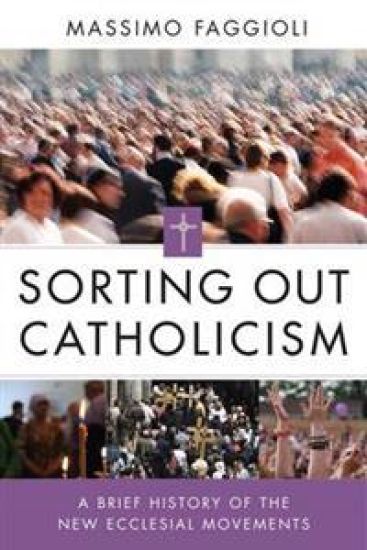
Focolare, Community of Sant’Egidio, Neocatechumenal Way, Legionaries of Christ, Communion and Liberation, Opus Dei. These are but a few of the most recognizable names in the broader context of the so-called ecclesial movements. Their history goes back to the period following the First Vatican Council, crosses Vatican II, and develops throughout the twentieth century. It is a history that prepares the movements’ rise in the last three decades, from John Paul II to Francis. These movements are a complex phenomenon that shapes the Church now more than before, and they play a key role for the future of Catholicism as a global community, in transition from a Europe-centered tradition to a world Church.
The beginning of the twenty-first century has provided abundant evidence of the necessity to reexamine the relationship between Catholicism and the modern, global world. This book tries to proceed on this path with a focus on the meaning, legacy, and reception in today’s world of the ecclesiology of Vatican II, starting with Gaudium et Spes: “This council exhorts Christians, as citizens of two cities, to strive to discharge their earthly duties conscientiously and in response to the Gospel spirit.” Catholicism and Citizenship is a call for a rediscovery of the moral and political imagination of Vatican II for the Church and the world of our time.
A renewed approach to the critical study of the event and documents of Vatican II, necessary for responding to the challenges facing today’s church. Packed with new insights from some of today’s most highly regarded voices on the Second Vatican Council, The Legacy and Limits of Vatican II in an Age of Crisis enacts the living tradition of the church by proposing a richer history to be told sixty years from its celebration, and a broader theology to inspire our work today. Vatican II did not anticipate our contemporary challenges, nor do its documents provide specific guidelines or step-by-step instructions for addressing them. But that does not make the council irrelevant. As a touchstone of the church’s magisterial tradition, the Second Vatican Council remains foundational for the life and mission of the Catholic Church today. However, like any monument of the tradition, the council requires ongoing investigation, critical analysis, and constant reconsideration from a diversity of contemporary perspectives if it is going to contribute to the living tradition of the church. Through historical and theological lenses, the contributors aim to rediscover forgotten voices and overlooked moments of Vatican II that may have something even more important to say today. Each chapter promises to surprise, enlighten, inspire, and teach in fresh and unexpected ways. The contributors offer readers striking insights on the council’s teaching related to the sexual abuse crisis, antiracism, politics, the Synod on Synodality, and much more. By reexamining the teaching of Vatican II from the perspective of our present ecclesial crisis, readers will have a better understanding of how its legacy and limits affect the ongoing reform of the church in a much-changed theological, ecclesial, and social landscape. Contributors: Matteo Caponi Catherine E. Clifford Kristin M. Colberg Agnès Desmazières Massimo Faggioli Theresa Gardner Edward P. Hahnenberg Timothy Hanchin Tuan A. Hoang Mary Kate Holman Jaisy A. Joseph Florian Klug William Kuncken Josephine Laffin Martin Madar Evgeniia Muzychenko William I. Orbih Bernard G. Prusak Daniel A. Rober
A remarkable achievement. Ammaniti and Stern have brought together an outstanding group of thinkers who address the problem of representation and psychoanalysis with depth and originality. Individually, each chapter is a joy to read. Collectively, the book is an essential addition to our thinking about the parameters of subjectivity and their role in the therapeutic process." ?Alicia F. Lieberman, Professor of Psychology, Univeristy of California San Francisco at San Francisco General Hospital and author of The Emotional Life of the Toddler Representations and Narratives provides an innovative approach to understanding the internal world of infants and children. The creativity tht is needed to develop such an understanding is contained in thi an understanding is contained in this new and exciting edited volume. The two editors, from different backgrounds and cultures, have brought together a similarly diverse group of contributors who draw on their differences to develop important new integrations of psychoanalytic and developmental approaches to understanding psychic reality in early development. This volume moves this field an important step forward in creative and innovative thinking in this area." ?Joy D. Orlofsky, President, The World Association for Infant Mental Health and Editor, Infant Mental Health Journal The concepts of representation and narratives have played a key role in the development of psychoanalysis, clinical research and theoretical speculation. This work carefully analyze the growth of representation and narratives in the history and practice of psychoanalysis. Found in the early writings of Freud, the term representation identifies the process of internalization; the building of an internal mental world, separate from external reality, which allows us to give meaning to our own experiences. Also found in Freud's early works, the concept of narration as the idea that personal experience might assume the character of a narrative construction provided the impetus for the war between Freudian metapsychology and American psychoanalysts in the 1970's. This significant addition to the Psychoanalytic Crosscurrents series explores the close and necessary relationship between the two theories and illustrate how they have developed the language of therapy and affected the practice of both psychoanalysis and developmental psychology.
News and Exchange Rate Dynamics' proposes an innovative taxonomy of news affecting exchange rates. It establishes a metrics for the impact on exchange rates movements. In doing so it provides the first results of an ongoing research activity on the economic, financial and non-financial determinants of infra daily fluctuations of exchange rates, whose ultimate goal is to explain the formation of market sentiment on one particular currency and the way it changes over time in response to the accumulation of new information. The authors provide a detailed description of the selection criteria of the news and how it impacts exchange rates.
The Shoah - the Hebrew term for Holocaust - has continued to pervade theological thought, religious practice, and the contemporary identity of Judaism. Using the title of Franz Rosenzweig's masterpiece, the Shoah could - and perhaps should - be called the star of irredemption because of the struggling implications of its radical evil. In Auschwitz, God is at stake because the very existence of the Jews is threatened, but the Jewish identity is also at stake because the justice and reliability of God is questioned. The Shoah poses a double problem of caesura and continuum - it is both a break in the continuity of the tradition and continuity inside of the break of modernity. The intersecting of these two dimensions constitutes the basic hermeneutic conflict of the Jewish consciousness at the beginning of the twenty-first century.