Kirjahaku
Etsi kirjoja tekijän nimen, kirjan nimen tai ISBN:n perusteella.
1000 tulosta hakusanalla Mathias Jüsche
Trade has made the world. Still, trade remains an elusive and profoundly difficult area for philosophical thought. This novel account of trade justice makes ideas about exploitation central, giving pride of place to philosophical ideas about global justice but also contributing to moral disputes about practical questions. On Trade Justice is a philosophical plea for a new global deal, in continuation of, but also at appropriate distance to, post-war efforts to design a fair global-governance system in the spirit of the American New Deal of the 1930s. This book is written in the tradition of contemporary analytical philosophy but also puts its subject into a historical perspective to motivate its relevance. It covers the subject of trade justice from its theoretical foundations to a number of specific issues on which the authors' account throws light. The state as an actor in the domain of global justice is central to the discussion but it also explores the obligations of business extensively, recognizing the importance of the modern corporation for trade. Topics such as wages injustice, collusion with authoritarian regimes, relocation decisions, and obligations arising from interaction with suppliers and sub-contractors all enter prominently. Another central actor in the domain of trade is the World Trade Organization. The WTO needs to see itself as an agent of justice. This book explores how this organization should be reformed in light of the proposals it makes. In particular, the WTO needs to endorse a human-rights and development-oriented mandate. Overall, this book hopes to make a theoretical contribution to the creation of an exploitation-free world.
Can humanity achieve collective self-government in a highly interdependent world? Catastrophic climate change, biodiversity loss, pandemics, war and displacement, the dangers of nuclear weapons and new technologies, and persistent poverty and inequality are among the global challenges that expose the weaknesses of existing international institutions as well as the profound disparities of power and vulnerability that exist among the world's people. The Universal Republic: A Realistic Utopia? examines whether a democratic world state is a feasible and desirable solution to the problem of establishing effective and just governance on the planet we share. While this question has haunted thinkers and doers for centuries, this book opens up novel perspectives by putting the powerful methods and rich data of contemporary social science into the service of a systematic analysis of several key dimensions of the broader theme. The first part of the book shows why a democratic world state -a universal republic- is possible: why it can be achieved, and how it can endure without generating a frightful global despotism. The second part of the book shows why the universal republic is desirable, by exploring how it can help bring under our collective control the persistent sources of coercion, harm, and other processes that affect us deeply across national borders. By combining insights from political philosophy and empirical political science, this work sheds new light on a crucial question of our time: how to bring about a more democratic world.
The appointment of former politicians to constitutional courts is a global phenomenon. While ex-politician appointees may bring status, visibility, knowledge, and political awareness to the job, their previous roles may influence their assessment of legislations' constitutionality. Ex-Ministers as Constitutional Judges sheds light on this practice in four of the world's oldest and most established constitutional courts: Austria, France, Germany, and Italy. Weaving together legal, political, sociological, and historical sources, including press articles, surveys, and interviews with constitutional judges and high-level personnel, the book provides the first comprehensive exploration of ex-politicians becoming constitutional court judges. It analyses the advantages and disadvantages such personalities bring to constitutional courts, as well as assessing what limitations supranational law may set for such participation. Whereas the participation of ex-ministers does not seem to have posed serious structural issues to constitutional courts so far, this volume posits that the risks have been underestimated. In this context, Ex-Ministers as Constitutional Judges ultimately suggests normative steps for minimizing such risks and strengthening the independence and impartiality of constitutional courts in view of democratic and constitutional backsliding.
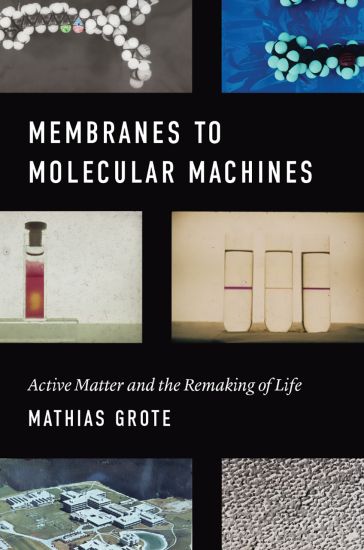
Today's science tells us that our bodies are filled with molecular machinery that orchestrates all sorts of life processes. When we think, microscopic "channels" open and close in our brain cell membranes; when we run, tiny "motors" spin in our muscle cell membranes; and when we see, light operates "molecular switches" in our eyes and nerves. A molecular-mechanical vision of life has become commonplace in both the halls of philosophy and the offices of drug companies, where researchers are developing “proton pump inhibitors” or medicines similar to Prozac. Membranes to Molecular Machines explores just how late twentieth-century science came to think of our cells and bodies this way. This story is told through the lens of membrane research, an unwritten history at the crossroads of molecular biology, biochemistry, physiology, and the neurosciences, that directly feeds into today's synthetic biology as well as nano- and biotechnology. Mathias Grote shows how these sciences not only have made us think differently about life, they have, by reworking what membranes and proteins represent in laboratories, allowed us to manipulate life as "active matter" in new ways. Covering the science of biological membranes in the United States and Europe from the mid-1960s to the 1990s, this book connects that history to contemporary work with optogenetics, a method for stimulating individual neurons using light, and will enlighten and provoke anyone interested in the intersection of chemical research and the life sciences—from practitioner to historian to philosopher. The research described in the book and its central actor, Dieter Oesterhelt, were honored with the 2021 Albert Lasker Basic Medical Research Award for his contribution to the development of optogenetics.
Much is at stake when we choose a word for a form of violence: whether a conflict is labeled civil war or genocide, whether we refer to “enhanced interrogation techniques” or to “torture,” whether a person is called a “terrorist” or a “patriot.” Do these decisions reflect the rigorous application of commonly accepted criteria, or are they determined by power structures and partisanship? How is the language we use for violence entangled with the fight against it?In Naming Violence, Mathias Thaler articulates a novel perspective on the study of violence that demonstrates why the imagination matters for political theory. His analysis of the politics of naming charts a middle ground between moralism and realism, arguing that political theory ought to question whether our existing vocabulary enables us to properly identify, understand, and respond to violence. He explores how narrative art, thought experiments, and historical events can challenge and enlarge our existing ways of thinking about violence. Through storytelling, hypothetical situations, and genealogies, the imagination can help us see when definitions of violence need to be revisited by shedding new light on prevalent norms and uncovering the contingent history of ostensibly self-evident beliefs. Naming Violence demonstrates the importance of political theory to debates about violence across a number of different disciplines from film studies to history.
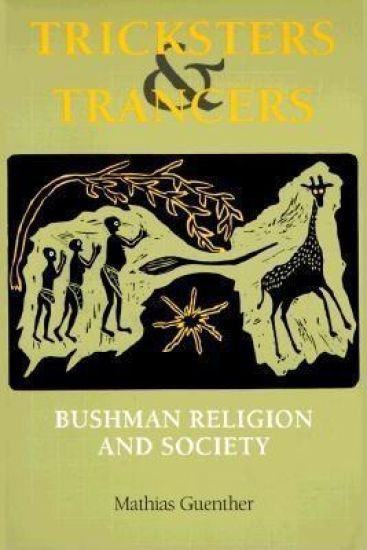
" . . . a first-rate piece of scholarship . . . an invaluable summary and commentary on the multilingual literature on [Bushman] people." —Choice The trickster and trance dancer are the guides through Bushman (or San) religion, a world of ambiguity and contradiction, and of enchantment. The two figures, who in Bushman belief are symbolically equivalent and mystically linked, embody these antistructural traits.
Manuel Du Microscope Dans Ses Applications Au Diagnostic Et À La Clinique
Mathias Duval; Léon Lereboullet
Wentworth Press
2018
pokkari
Die Scholastische Lehre Von Materie Und Form, Und Ihre Harmonie Mit Den Thatsachen Der Naturwissenschaft
Mathias Schneid
Wentworth Press
2018
sidottu
INTERNATIONAL BESTSELLER - A wildly original, fantastical adventure of love and heartbreak--and an animated movie, Jack and the Cuckoo-Clock Heart--that takes us from Edinburgh to Paris to Andalusia to tell the story of a boy who discovers the great joys and ultimately the greater costs, of owning a fully formed heart. Edinburgh, 1874. Born with a frozen heart, Jack is near death when his mother abandons him to the care of Dr. Madeleine--witch doctor, midwife, protector of orphans--who saves Jack by placing a cuckoo clock in his chest. And it is in her orphanage that Jack grows up among tear-filled flasks, eggs containing memories, and a man with a musical spine. As Jack gets older, Dr. Madeleine warns him that his heart is too fragile for strong emotions: he must never, ever fall in love. And, of course, this is exactly what he does: on his tenth birthday and with head-over-heels abandon. The object of his ardor is Miss Acacia--a bespectacled young street performer with a soul-stirring voice. But now Jack's life is doubly at risk--his heart is in danger and so is his safety after he injures the school bully in a fight for the affections of the beautiful singer.
Ideal and Real Atmospheric Boundary Layers
Mathias W. Rotach; Albert A. M. Holtslag
ELSEVIER SCIENCE TECHNOLOGY
2025
nidottu
Ideal and Real Atmospheric Boundary Layers is based on the notion that classical books of Boundary Layer Meteorology largely focus on ideal surface conditions, while the actual real circumstances often address situations that are more complex, like over heterogeneous land and in urban and mountain areas. Ideal and Real Atmospheric Boundary Layers starts by covering the basic physical principles used in atmospheric boundary layer meteorology, including atmospheric turbulence, observing and modeling atmospheric boundary layers, and neutral, convective, and stable boundary layers over different types of land surfaces. The second part of the book describes the applications and extension of these principles for real-world circumstances. The book will be of interest to researchers and students in atmospheric science, climate science, and meteorology.
The contributors to this volume discuss how a West European security union would fit into the trans Atlantic and trans-European settings. Representatives from each of the West European NATO and EC member countries contribute their national views on the subject while representatives of major institutions (European Political Cooperation, the European Parliament, NATO and the West European Union) offer their international perspectives.
Strategic and Innovative Pricing
Mathias Cöster; Einar Iveroth; Nils-Göran Olve; Carl-Johan Petri; Alf Westelius
Routledge
2020
sidottu
This book provides a concrete guide on how to execute strategic pricing to excel in an increasingly dynamic and digitised business environment, while developing and deepening relations with contract partners. The secret lies in crafting innovative price models that reward joint value creation in accordance with the business model, rather than engaging in confrontative zero-sum pricing reasoning. Strategic and Innovative Pricing: Price Models for a Digital Economy provides hands-on tools that are applied on three interconnected levels of analysis. It illustrates how to explore the business ecology to understand its dynamics and how digitisation enables it to prosper and demonstrates how to construct a viable business model that enables an organisation to navigate in its vibrant ecology. Finally, and most importantly, it shows how to use innovative price models to realize and monetise the business model and its value offering, making the organisation and its partnerships sustainable. Models pertaining to the three levels of analyses are applied in rich case studies and examples from different countries, and the book includes guidelines on how to use them. Special attention is paid to digitisation as an underlying theme, making this book of interest to researchers, academics, and students in the fields of strategic management and technology & innovation management.
The contributors to this volume discuss how a West European security union would fit into the trans Atlantic and trans-European settings. Representatives from each of the West European NATO and EC member countries contribute their national views on the subject while representatives of major institutions (European Political Cooperation, the European Parliament, NATO and the West European Union) offer their international perspectives.
Since the 1980s, music videos have been everywhere, and today almost all of the most-viewed clips on YouTube are music videos. However, in academia, music videos do not currently share this popularity. Music Video After MTV gives music video its due academic credit by exploring the changing landscapes surrounding post-millennial music video. Across seven chapters, the book addresses core issues relating to the study of music videos, including the history, analysis, and audiovisual aesthetics of music videos. Moreover, the book is the first of its kind to truly address the recent changes following the digitization of music video, including its changing cycles of production, distribution and reception, the influence of music videos on other media, and the rise of new types of online music video. Approaching music videos from a composite theoretical framework, Music Video After MTV brings music video research up to speed in several areas: it offers the first account of the research history of music videos, the first truly audiovisual approach to music video studies and it presents numerous inspiring case studies, ranging from classics by Michel Gondry and Chris Cunningham to recent experimental and interactive videos that interrogate the very limits of music video.
Small And Mediumscale Industries In The Asean Countries
Mathias Bruch; Ulrich Hiemenz
Routledge
2019
sidottu
Small- and Medium-Scale Industries in the ASEAN Countries is a comparative study of SMIs in the five member countries of the Association of Southeast Asian Nations (ASEAN), analyzing the performance of SMIs to generate income and employment.
Small And Mediumscale Industries In The Asean Countries
Mathias Bruch; Ulrich Hiemenz
Routledge
2020
nidottu
Small- and Medium-Scale Industries in the ASEAN Countries is a comparative study of SMIs in the five member countries of the Association of Southeast Asian Nations (ASEAN), analyzing the performance of SMIs to generate income and employment.
Strategic and Innovative Pricing
Mathias Cöster; Einar Iveroth; Nils-Göran Olve; Carl-Johan Petri; Alf Westelius
TAYLOR FRANCIS LTD
2022
nidottu
This book provides a concrete guide on how to execute strategic pricing to excel in an increasingly dynamic and digitised business environment, while developing and deepening relations with contract partners. The secret lies in crafting innovative price models that reward joint value creation in accordance with the business model, rather than engaging in confrontative zero-sum pricing reasoning. Strategic and Innovative Pricing: Price Models for a Digital Economy provides hands-on tools that are applied on three interconnected levels of analysis. It illustrates how to explore the business ecology to understand its dynamics and how digitisation enables it to prosper and demonstrates how to construct a viable business model that enables an organisation to navigate in its vibrant ecology. Finally, and most importantly, it shows how to use innovative price models to realize and monetise the business model and its value offering, making the organisation and its partnerships sustainable. Models pertaining to the three levels of analyses are applied in rich case studies and examples from different countries, and the book includes guidelines on how to use them. Special attention is paid to digitisation as an underlying theme, making this book of interest to researchers, academics, and students in the fields of strategic management and technology & innovation management.
Archaeology and Architecture of the Military Orders
Mathias Piana; Christer Carlsson
Routledge
2020
nidottu
As elite communities in medieval societies the Military Orders were driven by the ambition to develop built environments that fulfilled monastic needs as well as military requirements and, in addition, residential and representational purposes. Growing affluence and an international orientation provided a wide range of development potential. That this potential was in fact exploited may be exemplified by the advanced fortifications erected by Templars and Hospitallers in the Levant. Although the history of the Military Orders has been the subject of research for a long time, their material legacy has attracted less attention. In recent years, however, a vast range of topics concerning the Orders’ building activities has become the object of investigation, primarily with the help of archaeology. They comprise the choice of sites and building materials, provision and storage of food and water, aspects of the daily life, the design and layout of commanderies, churches and fortifications, their spatial arrangement, and the role these buildings played in their environmental context. This volume contains ten articles discussing the archaeology and architecture of buildings erected by the three major Military Orders in different geographical regions. They cover most countries of Western Europe and include a number of important fortifications in the Levant. These studies break new ground in the investigation of the built fabric of the Military Orders. Written by noted international scholars this publication is an important contribution to modern research on these institutions, which, in their association of monasticism and knighthood, were so typical for the Middle Ages.
Doing Meta-Analysis with R
Mathias Harrer; Pim Cuijpers; Toshi Furukawa; David Ebert
CRC Press
2021
sidottu
Doing Meta-Analysis with R: A Hands-On Guide serves as an accessible introduction on how meta-analyses can be conducted in R. Essential steps for meta-analysis are covered, including calculation and pooling of outcome measures, forest plots, heterogeneity diagnostics, subgroup analyses, meta-regression, methods to control for publication bias, risk of bias assessments and plotting tools. Advanced but highly relevant topics such as network meta-analysis, multi-three-level meta-analyses, Bayesian meta-analysis approaches and SEM meta-analysis are also covered. A companion R package, dmetar, is introduced at the beginning of the guide. It contains data sets and several helper functions for the meta and metafor package used in the guide. The programming and statistical background covered in the book are kept at a non-expert level, making the book widely accessible.FeaturesContains two introductory chapters on how to set up an R environment and do basic imports/manipulations of meta-analysis data, including exercisesDescribes statistical concepts clearly and concisely before applying them in RIncludes step-by-step guidance through the coding required to perform meta-analyses, and a companion R package for the book