Kirjojen hintavertailu. Mukana 11 342 847 kirjaa ja 12 kauppaa.

Kirjahaku

Etsi kirjoja tekijän nimen, kirjan nimen tai ISBN:n perusteella.

1000 tulosta hakusanalla Michael J. Perry

Igbo-English Dictionary

Igbo-English Dictionary

Michael J. C. Echeruo

Yale University Press
1998
sidottu
This is the first comprehensive and authoritative dictionary of the Igbo language, one of the three national languages of Nigeria. Michael J. C. Echeruo, a native speaker of Igbo, focuses on basic words and phrases that the twenty million speakers of Igbo encounter in everyday life—in conversation and in Igbo texts. Recognizing the absence of a single dominant dialect, the author collects words from all of them, with emphasis on the predominant Owerri and Onitsha dialects. The book also includes an English-Igbo index listing Igbo equivalents for particular English words. In the first section of this dictionary, thorough entries for each of some four thousand Igbo discrete word-forms feature Igbo headwords in bold type followed by grammatical class, tone, dialect zone, English meanings, Igbo examples, variants, etymology, and special notes where necessary. Verbs are listed under their consonantal stems as well as in combined entries that include the nouns that complete their meanings. The dictionary`s second part is a convenient English index that refers the user to the closest Igbo synonyms for English words. With a helpful introduction and appendices, this volume will be a primary reference work for both native and non-native users of the Igbo language.
True Security

True Security

Michael J. Graetz; Jerry L. Mashaw

Yale University Press
1999
pokkari
Social insurance in the United States—including the Social Security Act of 1935 and the Medicare, Medicaid, and disability insurance programs that were added later—may be the greatest triumph of American domestic policy. But true security has not been achieved. As Michael J. Graetz and Jerry L. Mashaw show in this pathbreaking book, the nation's system of social insurance is riddled with gaps, inefficiencies, and inequities. Even the most popular and successful programs, Medicare and Social Security, face serious financial challenges from the coming retirement of the baby boom generation and the aging of the population. This book challenges the notion that American social insurance must remain inadequate, unaffordable, or both. In sharp contrast to policymakers and analysts who debate only one income security program at a time, Graetz and Mashaw examine social insurance whole to assess its crucial role in providing economic security in a dynamic market economy. They recognize that, notwithstanding a proper emphasis on individual freedom and responsibility, Americans share a common fate that binds them together in a common enterprise. The authors offer us a new vision of the social insurance contract and concrete proposals to make the nation's families more secure without increasing costs.
100 Million Unnecessary Returns

100 Million Unnecessary Returns

Michael J. Graetz

Yale University Press
2010
pokkari
To most Americans, the United States tax code has become a vast and confounding puzzle. In 1940, the instructions to the form 1040 were about four pages long. Today they have ballooned to more than a hundred pages, and the form itself contains more than ten schedules and twenty worksheets. The complete tax code totals about 2.8 million words—about four times the length of War and Peace. In this intriguing book, Michael Graetz maintains that our tax code has become a tangle of loopholes, paperwork, and inconsistencies—a massive social program that fails tests of simplicity and fairness. More important, our tax system has failed to keep pace with the changing economy, creating burdens and wastes of resources that weigh our nation down. Graetz offers a solution. Imagine a world in which most Americans pay no income tax at all, and those who do enjoy a far simpler tax process—all this without decreasing government revenues or removing key incentives for employer-sponsored health care plans and pensions. As Graetz adeptly and clearly describes, this world is within our grasp.
Cuzco

Cuzco

Michael J Schreffler

Yale University Press
2020
sidottu
A story of change in the Inca capital told through its artefacts, architecture, and historical documents Through objects, buildings, and colonial texts, this book tells the story of how Cuzco, the capital of the Inca Empire, was transformed into a Spanish colonial city. When Spaniards invaded and conquered Peru in the 16th century, they installed in Cuzco not only a government of their own but also a distinctly European architectural style. Layered atop the characteristic stone walls, plazas, and trapezoidal portals of the former Inca town were columns, arcades, and even a cathedral. This fascinating book charts the history of Cuzco through its architecture, revealing traces of colonial encounters still visible in the modern city. A remarkable collection of primary sources reconstructs this narrative: writings by secretaries to colonial administrators, histories conveyed to Spanish translators by native Andeans, and legal documents and reports. Cuzco’s infrastructure reveals how the city, wracked by devastating siege and insurrection, was reborn as an ethnically and stylistically diverse community.
A Manual of Applied Techniques for Biological Electron Microscopy

A Manual of Applied Techniques for Biological Electron Microscopy

Michael J. Dykstra

Kluwer Academic/Plenum Publishers
1993
sidottu
This easy-to-follow manual describes tested procedures used to prepare biological samples for scanning and transmission electron microscopy, as well as methods for cytochemistry, immunocytochemistry, and scientific photography. The work is structured to clearly define testing objectives, necessary materials, procedural steps, and expected results; a list of references and trouble shooting techniques round out the text.
Preventing Substance Abuse

Preventing Substance Abuse

Michael J. Stoil; Gary Hill

Kluwer Academic/Plenum Publishers
1996
nidottu
Preventing Substance Abuse is an informal guide to successful programs for treating specific substance abuse problems, identifying their origins, implementation, outcomes, and, where possible, contacts for obtaining additional information. The emphasis is on information documented from outcomes of successful interventions rather than on theories of what should work or what works under experimental conditions. Key features include easy-to-follow charts and graphs and an appendix summarizing the National Structured Evaluation (mandated by Congress) of substance abuse prevention.
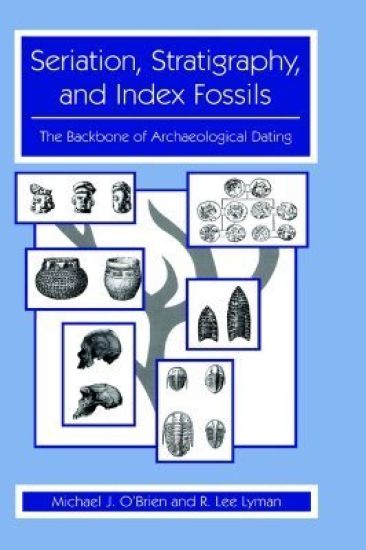
Seriation, Stratigraphy, and Index Fossils

Seriation, Stratigraphy, and Index Fossils

Michael J. O'Brien; R. Lee Lyman

Kluwer Academic/Plenum Publishers
1999
sidottu
It is difficult for today's students of archaeology to imagine an era when chronometric dating methods were unavailable. However, even a casual perusal of the large body of literature that arose during the first half of the twentieth century reveals a battery of clever methods used to determine the relative ages of archaeological phenomena, often with considerable precision. Stratigraphic excavation is perhaps the best known of the various relative-dating methods used by prehistorians. Although there are several techniques of using artifacts from superposed strata to measure time, these are rarely if ever differentiated. Rather, common practice is to categorize them under the heading `stratigraphic excavation'. This text distinguishes among the several techniques and argues that stratigraphic excavation tends to result in discontinuous measures of time - a point little appreciated by modern archaeologists. Although not as well known as stratigraphic excavation, two other methods of relative dating have figured important in Americanist archaeology: seriation and the use of index fossils. The latter (like stratigraphic excavation) measures time discontinuously, while the former - in various guises - measures time continuously. Perhaps no other method used in archaeology is as misunderstood as seriation, and the authors provide detailed descriptions and examples of each of its three different techniques. Each method and technique of relative dating is placed in historical perspective, with particular focus on developments in North America, an approach that allows a more complete understanding of the methods described, both in terms of analytical technique and disciplinary history. This text will appeal to all archaeologists, from graduate students to seasoned professionals, who want to learn more about the backbone of archaeological dating.
Applying Evolutionary Archaeology

Applying Evolutionary Archaeology

Michael J. O'Brien; R. Lee Lyman

Kluwer Academic/Plenum Publishers
2000
sidottu
Anthropology, and by extension archaeology, has had a long-standing interest in evolution in one or several of its various guises. Pick up any lengthy treatise on humankind written in the last quarter of the nineteenth century and the chances are good that the word evolution will appear somewhere in the text. If for some reason the word itself is absent, the odds are excellent that at least the concept of change over time will have a central role in the discussion. After one of the preeminent (and often vilified) social scientists of the nineteenth century, Herbert Spencer, popularized the term in the 1850s, evolution became more or less a household word, usually being used synonymously with change, albeit change over extended periods of time. Later, through the writings of Edward Burnett Tylor, Lewis Henry Morgan, and others, the notion of evolution as it applies to stages of social and political development assumed a prominent position in anthropological disc- sions. To those with only a passing knowledge of American anthropology, it often appears that evolutionism in the early twentieth century went into a decline at the hands of Franz Boas and those of similar outlook, often termed particularists. However, it was not evolutionism that was under attack but rather comparativism— an approach that used the ethnographic present as a key to understanding how and why past peoples lived the way they did (Boas 1896).
Applying Evolutionary Archaeology

Applying Evolutionary Archaeology

Michael J. O'Brien; R. Lee Lyman

Kluwer Academic/Plenum Publishers
2000
nidottu
Anthropology, and by extension archaeology, has had a long-standing interest in evolution in one or several of its various guises. Pick up any lengthy treatise on humankind written in the last quarter of the nineteenth century and the chances are good that the word evolution will appear somewhere in the text. If for some reason the word itself is absent, the odds are excellent that at least the concept of change over time will have a central role in the discussion. After one of the preeminent (and often vilified) social scientists of the nineteenth century, Herbert Spencer, popularized the term in the 1850s, evolution became more or less a household word, usually being used synonymously with change, albeit change over extended periods of time. Later, through the writings of Edward Burnett Tylor, Lewis Henry Morgan, and others, the notion of evolution as it applies to stages of social and political development assumed a prominent position in anthropological disc- sions. To those with only a passing knowledge of American anthropology, it often appears that evolutionism in the early twentieth century went into a decline at the hands of Franz Boas and those of similar outlook, often termed particularists. However, it was not evolutionism that was under attack but rather comparativism— an approach that used the ethnographic present as a key to understanding how and why past peoples lived the way they did (Boas 1896).
Mississippian Community Organization

Mississippian Community Organization

Michael J. O'Brien

Kluwer Academic/Plenum Publishers
2001
sidottu
The Powers Phase Project was a multiyear archaeological program undertaken in southeastern Missouri by the University of Michigan in the late 1960s and early 1970s. The project focused on the occupation of a large Pleistocene-age terrace in the Little Black River Lowland—a large expanse of lowlying land just east of the Ozark Highland—between roughly A. D. 1250 and A. D. 1400. The largest site in the region is Powers Fort—a palisaded mound center that - ceived archaeological attention as early as the late nineteenth century. Archa- logical surveys conducted south of Powers Fort in the 1960s revealed the pr- ence of numerous smaller sites of varying size that contained artifact assemblages similar to those from the larger center. Collectively the settlement aggregation became known as the Powers phase. Test excavations indicated that at least some of the smaller sites contained burned structures and that the burning had sealed household items on the floors below the collapsed architectural e- ments. Thus there appeared to be an opportunity to examine a late prehistoric settlement system to a degree not possible previously. Not only could the s- tial relation of communities in the system be ascertained, but the fact that str- tures within the communities had burned appeared to provide a unique opp- tunity to examine such things as differences in household items between and among structures and where various activities had occurred within a house. With these ideas in mind, James B. Griffin and James E.
Musical Sound

Musical Sound

Michael J. Moravcsik

Kluwer Academic/Plenum Publishers
2001
sidottu
This text has been out of print since 1990; it was originally published by Solomon Press in 1987. Several experts in the field have verified that the information in the book remains constant; nothing has, or will, change in the basic science of musical sound. It explains the science of musical sound without the encumbrance of detailed mathematics. It will appeal to music lovers as well as students of music and students of physics. It can easily be promoted with our physics program.
Brewing

Brewing

Michael J. Lewis; Tom W. Young

Kluwer Academic/Plenum Publishers
2002
nidottu
Brewing is designed for those involved in the malting, brewing, and allied industries who have little or no formal training in brewing science. While some elementary knowledge of chemistry and biology is necessary, the book clearly presents the essentials of brewing science and its relationship to brewing technology. Brewing focuses on the principles and practices most central to an understanding of the brewing process, including preparation of malt, hops, and yeast; the fermentation process; microbiology and contaminants; and finishing, packaging, and flavor. The second edition gives more emphasis to engineering and technological aspects, with the three new chapters on water, engineering and analysis. Brewing, Second Edition, is both a basic text for traditional college, short, and extension courses in brewing science, and a basic reference for anyone in the brewing industry.
Biological Electron Microscopy

Biological Electron Microscopy

Michael J. Dykstra; Laura E. Reuss

Kluwer Academic/Plenum Publishers
2003
sidottu
Electron microscopy is frequently portrayed as a discipline that stands alone, separated from molecular biology, light microscopy, physiology, and biochemistry, among other disciplines. It is also presented as a technically demanding discipline operating largely in the sphere of "black boxes" and governed by many absolute laws of procedure. At the introductory level, this portrayal does the discipline and the student a disservice. The instrumentation we use is complex, but ultimately understandable and, more importantly, repairable. The procedures we employ for preparing tissues and cells are not totally understood, but enough information is available to allow investigators to make reasonable choices concerning the best techniques to apply to their parti­ cular problems. There are countless specialized techniques in the field of electron and light microscopy that require the acquisition of specialized knowledge, particularly for interpretation of results (electron tomography and energy dispersive spectroscopy immediately come to mind), but most laboratories possessing the equipment to effect these approaches have specialists to help the casual user. The advent of computer operated electron microscopes has also broadened access to these instruments, allowing users with little technical knowledge about electron microscope design to quickly become operators. This has been a welcome advance, because earlier instru­ ments required a level of knowledge about electron optics and vacuum systems to produce optimal photographs and to avoid "crashing" the instruments that typically made it difficult for beginners.
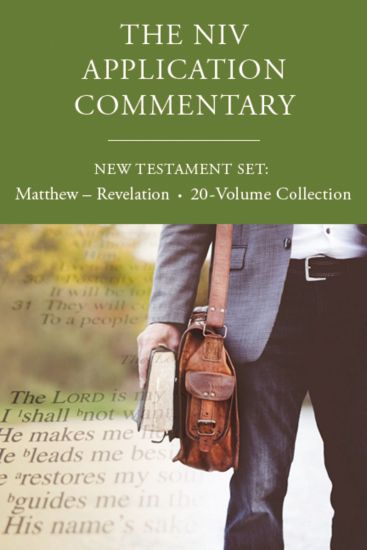
The NIV Application Commentary, New Testament Set: Matthew - Revelation, 20-Volume Collection

The NIV Application Commentary, New Testament Set: Matthew - Revelation, 20-Volume Collection

Michael J. Wilkins; Daniel Garland; Darrell L. Bock; Gary M. Burge; Ajith Fernando; Douglas J. Moo; Craig L. Blomberg; Scott J. Hafemann; Scot McKnight; Klyne Snodgrass; Frank S. Thielman; Michael W. Holmes; Walter L. Liefeld; George H. Guthrie; David P. Nystrom; Craig S. Keener

Zondervan
2020
sidottu
The NIV Application Commentary helps you communicate and apply biblical text effectively in today's context.To bring the ancient messages of the Bible into today's world, each passage is treated in three sections:Original Meaning. Concise exegesis to help readers understand the original meaning of the biblical text in its historical, literary, and cultural context.Bridging Contexts. A bridge between the world of the Bible and the world of today, built by discerning what is timeless in the timely pages of the Bible.Contemporary Significance. This section identifies comparable situations to those faced in the Bible and explores relevant application of the biblical messages. The author alerts the readers of problems they may encounter when seeking to apply the passage and helps them think through the issues involved.This unique, award-winning commentary is the ideal resource for today's preachers, teachers, and serious students of the Bible, giving them the tools, ideas, and insights they need to communicate God's Word with the same powerful impact it had when it was first written.Volumes and authors in The NIV Application Commentary, New Testament Set: Matthew - Revelation, 20-Volume Collection include:Matthew by Michael J. WilkinsMark by David E. GarlandLuke by Darrell L. BockJohn by Gary M. BurgeActs by Ajith FernandoRomans by Douglas J. Moo1 Corinthians by Craig L. Blomberg2 Corinthians by Scott J. HafemannGalatians by Scot McKnightEphesians by Klyne SnodgrassPhilippians by Frank ThielmanColossians, Philemon by David E. Garland1 and 2 Thessalonians by Michael W. Holmes1 and 2 Timothy, Titus by Walter L. LiefeldHebrews by George H. GuthrieJames by David P. Nystrom1 Peter by Scot McKnight2 Peter, Jude by Douglas J. MooLetters of John by Gary M. BurgeRevelation by Craig S. Keener
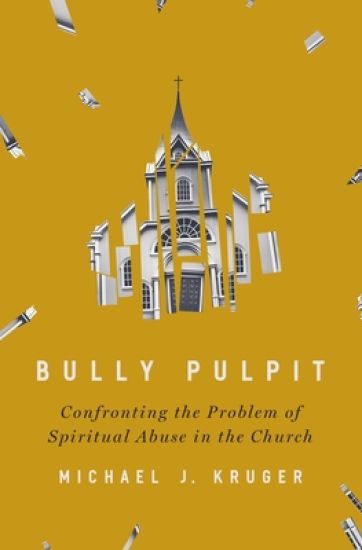
Bully Pulpit

Bully Pulpit

Michael J Kruger

ZONDERVAN
2023
sidottu
Are churches looking for the wrong kind of leaders? The last decade has witnessed a rising number of churches wrecked by spiritual abuse--harsh, heavy-handed, domineering behavior from those in a position of spiritual authority. And high-profile cases are only a small portion of this widespread problem. Behind the scenes are many more cases of spiritual abuse that we will never hear about. Victims suffer in silence, not knowing where to turn.Of course, most pastors and leaders are godly, wonderful people who don't abuse their sheep. They shepherd their flocks gently and patiently. But we can't ignore the growing number who do not. We have tolerated and even celebrated the kind of leaders Jesus warned us against.We need gentle shepherds now more than ever, and in Bully Pulpit, seminary president and biblical scholar Michael J. Kruger offers a unique perspective for both church leaders and church members on the problem of spiritual abuse, how to spot it, and how to handle it in the church."Every Christian from pulpit to pew needs to read this wise and timely work."- Karen Swallow Prior"Both urgent and timely."- Sam Storms"Thoughtful, wise, and biblical."- Mark Vroegop
The NIV Application Commentary, New Testament Set: Matthew - Revelation, 20-Volume Collection

The NIV Application Commentary, New Testament Set: Matthew - Revelation, 20-Volume Collection

Michael J. Wilkins; Daniel Garland; Darrell L. Bock; Gary M. Burge; Ajith Fernando; Douglas J. Moo; Craig L. Blomberg; Scott J. Hafemann; Scot McKnight; Klyne Snodgrass; Frank S. Thielman; Michael W. Holmes; Walter L. Liefeld; George H. Guthrie; David P. Nystrom; Craig S. Keener

ZONDERVAN
2025
sidottu
The NIV Application Commentary helps you communicate and apply biblical text effectively in today's context.To bring the ancient messages of the Bible into today's world, each passage is treated in three sections:Original Meaning. Concise exegesis to help readers understand the original meaning of the biblical text in its historical, literary, and cultural context.Bridging Contexts. A bridge between the world of the Bible and the world of today, built by discerning what is timeless in the timely pages of the Bible.Contemporary Significance. This section identifies comparable situations to those faced in the Bible and explores relevant application of the biblical messages. The author alerts the readers of problems they may encounter when seeking to apply the passage and helps them think through the issues involved.This unique, award-winning commentary is the ideal resource for today's preachers, teachers, and serious students of the Bible, giving them the tools, ideas, and insights they need to communicate God's Word with the same powerful impact it had when it was first written.Volumes and authors in The NIV Application Commentary, New Testament Set: Matthew - Revelation, 20-Volume Collection include:Matthew by Michael J. WilkinsMark by David E. GarlandLuke by Darrell L. BockJohn by Gary M. BurgeActs by Ajith FernandoRomans by Douglas J. Moo1 Corinthians by Craig L. Blomberg2 Corinthians by Scott J. HafemannGalatians by Scot McKnightEphesians by Klyne SnodgrassPhilippians by Frank ThielmanColossians, Philemon by David E. Garland1 and 2 Thessalonians by Michael W. Holmes1 and 2 Timothy, Titus by Walter L. LiefeldHebrews by George H. GuthrieJames by David P. Nystrom1 Peter by Scot McKnight2 Peter, Jude by Douglas J. MooLetters of John by Gary M. BurgeRevelation by Craig S. KeenerThis set features newly designed covers for the volumes, updated from their original editions.
A Theology of Matthew's Gospel

A Theology of Matthew's Gospel

Michael J. Wilkins

ZONDERVAN
2025
sidottu
A Theology of Matthew's Gospel develops the perspective that Matthew wrote his Gospel to identify, defend, and proclaim Jesus Immanuel, "God with us," as the Davidic Messiah who fulfilled the OT expectations of humanity's redemption. Matthew's Gospel establishes Jesus's identity as the heir to the promises of Israel's throne through king David, and heir to the promises of blessing to all the nations through the patriarch Abraham (1:1). So, this first Gospel offers evangelistic hope in Jesus's message of the gospel to Jews, contending that they should turn to Jesus as their long-awaited Messiah (Matt 11:2-6). But, strikingly, Matthew's Gospel also offers evangelistic hope to Gentiles, emphasizing that salvation through Jesus Messiah is available to all the nations (28:19).The book emphasizes the three horizons that comprise Matthew's gospel: history, theology, and literature. The first horizon focuses on Jesus's historical ministry. Here Matthew provides for us a record of God's activities in history in the arrival of Jesus Messiah and the kingdom of heaven. The second horizon develops Matthew's theological perspective for his audience(s). Here we attempt to understand and isolate Matthew's unique theological perspective of God's activities in Jesus Messiah. This is a central focus, emphasizing Matthew's theological perspective of the Old Testament, Christology, the kingdom of heaven, discipleship, the Church/church, Israel (past, present, and future), the death and resurrection of Jesus, mission/commission, and eschatology/eternity. The third horizon emphasizes today's reader(s) engaging with Matthew's Gospel as literature. Here we attempt to capture the significance of the perspective of today's reader's understanding of Jesus Messiah's activities in history and Matthew's theological perspective for the contemporary church.In this book we view Matthew's perspective of God's activities in Jesus's unfolding earthly ministry. The alternating sections of narrative and discourse provide for his readers Jesus's example to follow and Jesus's words to obey. Therefore, Matthew's Gospel is at least in part a manual on discipleship to Jesus Messiah in the kingdom of heaven. In the six Narratives, Matthew reveals Jesus's true identity in his deeds, and introduces themes that will lead to instructions to Jesus's disciples in the Discourses. The six Narratives provide the example that Jesus's disciples are commanded to obey. In the five Discourses, Matthew records Jesus's instructions, commands, parables, directives and prophecies that will guide his followers in their discipleship to Jesus until the end of the age. Combined, the narratives of Jesus's life provide Jesus's example to follow, and the discourses give Jesus's instructions to obey, and are the basis of our ongoing transformation to become like Jesus.
Matthew

Matthew

Michael J. Wilkins

Zondervan
2004
sidottu
The NIV Application Commentary helps you communicate and apply biblical text effectively in today's context. To bring the ancient messages of the Bible into today's world, each passage is treated in three sections: Original Meaning. Concise exegesis to help readers understand the original meaning of the biblical text in its historical, literary, and cultural context. Bridging Contexts. A bridge between the world of the Bible and the world of today, built by discerning what is timeless in the timely pages of the Bible. Contemporary Significance. This section identifies comparable situations to those faced in the Bible and explores relevant application of the biblical messages. The author alerts the readers of problems they may encounter when seeking to apply the passage and helps them think through the issues involved. This unique, award-winning commentary is the ideal resource for today's preachers, teachers, and serious students of the Bible, giving them the tools, ideas, and insights they need to communicate God's Word with the same powerful impact it had when it was first written.