Kirjahaku
Etsi kirjoja tekijän nimen, kirjan nimen tai ISBN:n perusteella.
1000 tulosta hakusanalla Moser Oliver Perry



The front cover says it all. Some puns make you smile. Some puns make you groan. And some puns make you hold your nose. It seemed only natural to me that the title of a book of puns should be a pun itself. For the uninitiated, the word "pun" has three letters. So each one is a third of the entire word, making two of the three - "P- U" - two thirds of the whole word. How punny is it that P-U is pronounced the same way as "Pee Yew," the expression used to indicate that something stinks? Which, of course, some puns do. That is why we love them. And how appropriate is it to have the stinker of stinkers saying that something stinks? All the puns in this book are original with me. Yes, I take the blame for them. Perhaps you have thought of some of them yourself. If so, you have my empathy. And also my congratulations because understanding a pun takes a certain degree of intelligence. I hope this book encourages you to keep on having PUN in your life. -Tim Moser

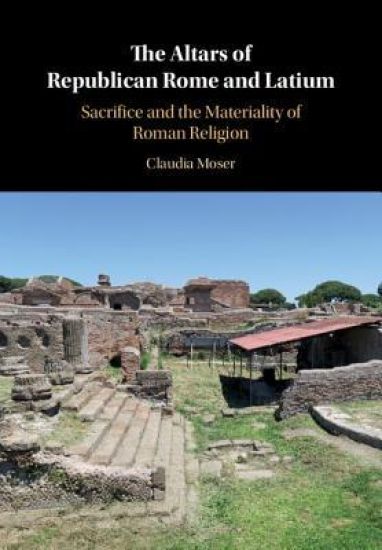
In this book, Claudia Moser offers a new understanding of Roman religion in the Republican era through an exploration of sacrifice, its principal ritual. Examining the long-term imprint of sacrificial practices on the material world, she focuses on monumental altars as the site for the act of sacrifice. Piecing together the fragments of the complex kaleidoscope of Roman religious practices, she shows how they fit together in ways that shed new light on the characteristic diversity of Roman religion. This study reorients the study of sacrificial practice in three principal ways: first, by establishing the primacy of sacred architecture, rather than individual action, in determining religious authority; second, by viewing religious activities as haptic, structured experiences in the material world rather than as expressions of doctrinal, belief-based mentalities; and third, by considering Roman sacrifice as a local, site-specific ritual rather than as a single, monolithic practice.
In this book, Claudia Moser offers a new understanding of Roman religion in the Republican era through an exploration of sacrifice, its principal ritual. Examining the long-term imprint of sacrificial practices on the material world, she focuses on monumental altars as the site for the act of sacrifice. Piecing together the fragments of the complex kaleidoscope of Roman religious practices, she shows how they fit together in ways that shed new light on the characteristic diversity of Roman religion. This study reorients the study of sacrificial practice in three principal ways: first, by establishing the primacy of sacred architecture, rather than individual action, in determining religious authority; second, by viewing religious activities as haptic, structured experiences in the material world rather than as expressions of doctrinal, belief-based mentalities; and third, by considering Roman sacrifice as a local, site-specific ritual rather than as a single, monolithic practice.
Emperor and Senators in the Reign of Constantius II
Muriel Moser
Cambridge University Press
2018
sidottu
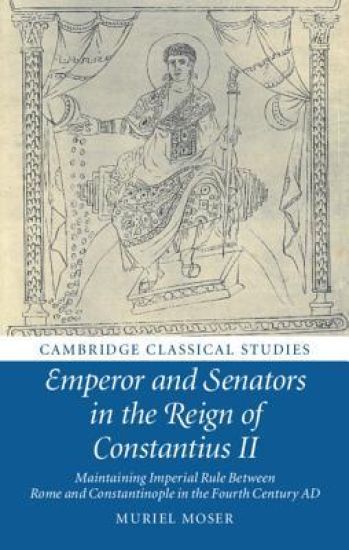
In this book, Muriel Moser investigates the relationship between the emperors Constantine I and his son Constantius II (AD 312–361) and the senators of Constantinople and Rome. She examines and contextualizes the integration of the social elites of Rome and the Eastern provinces into the imperial system and demonstrates their increased importance for the maintenance of imperial rule in response to political fragility and fragmentation. An in-depth analysis of senatorial careers and imperial legislation is combined with a detailed assessment of the political context - shared rule, the suppression of usurpations, Constantius' use of Constantine's memory. Using a wide range of literary, epigraphic, numismatic, and legal sources, some of which are as yet unpublished, this volume produces significant new readings of the history of the senates in Rome and Constantinople, of the construction of imperial rule and of historical change in Late Antiquity.
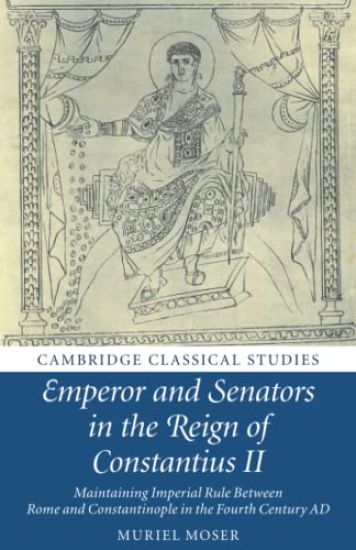
Emperor and Senators in the Reign of Constantius II
Muriel Moser
Cambridge University Press
2022
pokkari
In this book, Muriel Moser investigates the relationship between the emperors Constantine I and his son Constantius II (AD 312–361) and the senators of Constantinople and Rome. She examines and contextualizes the integration of the social elites of Rome and the Eastern provinces into the imperial system and demonstrates their increased importance for the maintenance of imperial rule in response to political fragility and fragmentation. An in-depth analysis of senatorial careers and imperial legislation is combined with a detailed assessment of the political context - shared rule, the suppression of usurpations, Constantius' use of Constantine's memory. Using a wide range of literary, epigraphic, numismatic, and legal sources, some of which are as yet unpublished, this volume produces significant new readings of the history of the senates in Rome and Constantinople, of the construction of imperial rule and of historical change in Late Antiquity.
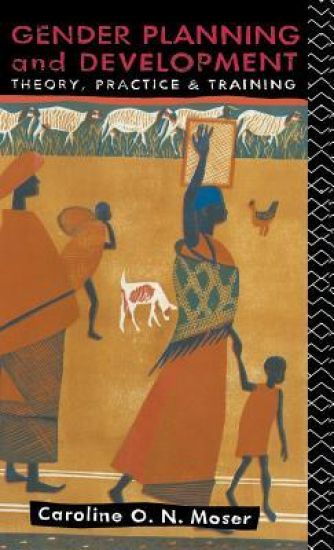
Gender planning is not an end in itself but a means by which women, through a process of empowerment, can emancipate themselves. Ultimately, its success depends on the capacity of women's organizations to confront subordination and create successful alliances which will provide constructive support in negotiating women's needs at the level of household, civil society, the state and the global system.Gender Planning and Development provides an introduction to an issue of primary importance and constant debate. It will be essential reading for academics, practitioners, undergraduates and trainees in anthropology, development studies, women's studies and social policy.
This book provides a definitive guide for the future direction of the practice and profession of architecture.In five parts, Cliff Moser provides you with all the tools and know-how to implement changes that will serve you and your practice in the short, medium and long term. Written at a crucial time for the industry, this is essential reading for every architect.
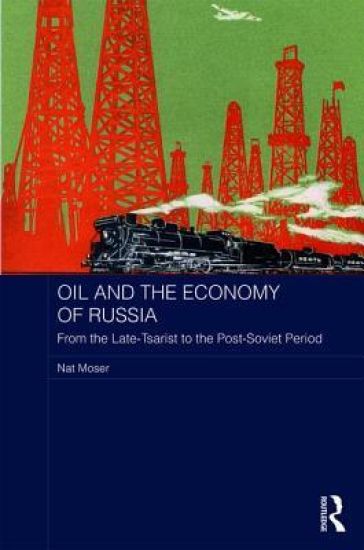
This book examines the development of the Russian economy from tsarist times to the present through the lens of the oil industry. It considers the role of the state, business-state relations, foreign participation, enterprise performance and technology. Besides providing much rich detail on the changing nature of the oil industry, the book also puts forward important conclusions, including the fact that in the late nineteenth century private enterprise rather than the state was the principal driver of economic development, and that after the collapse of the Soviet Union incumbent managers were more effective in running their companies than financier entrants, whose main concern was short-term gain.
Der Lehrerstand Des 18. Jahrhunderts Im Vorderosterreichischen Breisgau
Max Moser
Nabu Press
2010
pokkari
Lucifer and Mammon, an historical sketch of the last and present century; with characters, anecdotes, &c.
Joseph Moser
Gale Ecco, Print Editions
2010
pokkari
The Meal-Tub Plot; Or, Remarks Upon the Powder Tax. by a Barber.
Joseph Moser
Gale Ecco, Print Editions
2010
pokkari