Omar Khayyam's Secret: Hermeneutics of the Robaiyat in Quantum Sociological Imagination, by Mohammad H. Tamdgidi, is a 12-book series of which this book is the 11th volume, subtitled Khayyami Robaiyat: Re-Sewing the Tentmaker's Tent: 1000 Bittersweet Wine Sips from Omar Khayyam's Tavern of Happiness. Each book, independently readable, can be best understood as a part of the whole series.In Book 11, having shared the three parts of the Robaiyat attributed to Khayyam in the Books 8, 9, and 10 of the series, Tamdgidi offers the entire set of the 1000 quatrains, including the Persian originals and his new English verse translations for each. The poems, comprising Khayyam's songs of doubt, hope, and joy, are organized according to the three-phased method of inquiry he introduced in his philosophical writings, respectively addressing the questions: "Does Happiness Exist?"; "What Is Happiness?"; and "Why Does (or Can) Happiness Exist?"When Khayyam discussed the three-phased method of inquiry in his treatise "Resalat fi al-Kown wa al-Taklif" ("Treatise on the Created World and Worship Duty"), he noted an exception to the rule of asking, when studying any subject, whether it exists, what it is, and, why it exists (or can exist). He distinguished between things objectively existing independent of the human mind, and those created by the human mind. The normal procedure applies to the former, but for products of the human mind, he advised, the procedure must be modified to asking first what something is, then, whether it exists, and, then, why it exists or can exist. This is because, for products of the human mind, such as created works of art, we would not know whether something exists and why it exists unless we first know what it is. To illustrate his point, he used the example of the mythical bird Anqa (Simorgh in Persian or the Phoenix in English). He argued that only when we know what the metaphor stands for would we be able to say whether it exists (say, in a work of art, or even as a person represented by it), and why it exists or can exist.Khayyam's elaboration implies that one has to make a distinction between objective and human objectified realities, which implies that for some objects, such as happiness, we in fact confront a hybrid reality where aspects of it may be externally conditioned, but other aspects being dependent on the human will. Once we realize the significance of Khayyam's point, then, we appreciate that his Robaiyat can also be regarded as a way of poetically portraying and advancing human happiness, its poetic Wine being not just reflective but also generative of the happiness portrayed. By way of his poetry, therefore, Khayyam has offered a severe critique of the then prevalent fatalistic astrological worldviews blaming human plight on objective conditions, in favor of a conceptualist view of reality in which happiness can be achieved despite the odds, depending on the creative human agency, itself being an objective force.Tamdgidi further shows that the triangular geometry of the logic governing Khayyam's Robaiyat--the numerical values of whose three sides are proportional to the Grand Tent governing Khayyam's birth chart--further supports the view (expressed in Khayyam's own quatrains) that for him his Robaiyat poetically represented the tent of which he regarded himself to be a tentmaker, revealing another key explanation for his pen name. The geometric structure of a tent proportional to the Grand Tent of Khayyam's chart, as well as the metaphor of the Robaiyat as Simorgh songs, are hidden in the deeper structure of Khayyam's 1000-piece solved puzzle, the same way he embedded his own triangular golden rule in the design of the North Dome of Isfahan. Khayyam's Robaiyat are his Simorgh's millennial rebirth songs served in his tented tavern as 1000 sips of his bittersweet Wine of happiness.
Omar Khayyam's Secret: Hermeneutics of the Robaiyat in Quantum Sociological Imagination, by Mohammad H. Tamdgidi, is a 12-book series of which this book is the 11th volume, subtitled Khayyami Robaiyat: Re-Sewing the Tentmaker's Tent: 1000 Bittersweet Wine Sips from Omar Khayyam's Tavern of Happiness. Each book, independently readable, can be best understood as a part of the whole series.In Book 11, having shared the three parts of the Robaiyat attributed to Khayyam in the Books 8, 9, and 10 of the series, Tamdgidi offers the entire set of the 1000 quatrains, including the Persian originals and his new English verse translations for each. The poems, comprising Khayyam's songs of doubt, hope, and joy, are organized according to the three-phased method of inquiry he introduced in his philosophical writings, respectively addressing the questions: "Does Happiness Exist?"; "What Is Happiness?"; and "Why Does (or Can) Happiness Exist?"When Khayyam discussed the three-phased method of inquiry in his treatise "Resalat fi al-Kown wa al-Taklif" ("Treatise on the Created World and Worship Duty"), he noted an exception to the rule of asking, when studying any subject, whether it exists, what it is, and, why it exists (or can exist). He distinguished between things objectively existing independent of the human mind, and those created by the human mind. The normal procedure applies to the former, but for products of the human mind, he advised, the procedure must be modified to asking first what something is, then, whether it exists, and, then, why it exists or can exist. This is because, for products of the human mind, such as created works of art, we would not know whether something exists and why it exists unless we first know what it is. To illustrate his point, he used the example of the mythical bird Anqa (Simorgh in Persian or the Phoenix in English). He argued that only when we know what the metaphor stands for would we be able to say whether it exists (say, in a work of art, or even as a person represented by it), and why it exists or can exist.Khayyam's elaboration implies that one has to make a distinction between objective and human objectified realities, which implies that for some objects, such as happiness, we in fact confront a hybrid reality where aspects of it may be externally conditioned, but other aspects being dependent on the human will. Once we realize the significance of Khayyam's point, then, we appreciate that his Robaiyat can also be regarded as a way of poetically portraying and advancing human happiness, its poetic Wine being not just reflective but also generative of the happiness portrayed. By way of his poetry, therefore, Khayyam has offered a severe critique of the then prevalent fatalistic astrological worldviews blaming human plight on objective conditions, in favor of a conceptualist view of reality in which happiness can be achieved despite the odds, depending on the creative human agency, itself being an objective force.Tamdgidi further shows that the triangular geometry of the logic governing Khayyam's Robaiyat--the numerical values of whose three sides are proportional to the Grand Tent governing Khayyam's birth chart--further supports the view (expressed in Khayyam's own quatrains) that for him his Robaiyat poetically represented the tent of which he regarded himself to be a tentmaker, revealing another key explanation for his pen name. The geometric structure of a tent proportional to the Grand Tent of Khayyam's chart, as well as the metaphor of the Robaiyat as Simorgh songs, are hidden in the deeper structure of Khayyam's 1000-piece solved puzzle, the same way he embedded his own triangular golden rule in the design of the North Dome of Isfahan. Khayyam's Robaiyat are his Simorgh's millennial rebirth songs served in his tented tavern as 1000 sips of his bittersweet Wine of happiness.
Omar Khayyam's Secret: Hermeneutics of the Robaiyat in Quantum Sociological Imagination, by Mohammad H. Tamdgidi, is a 12-book series of which this book is the 12th, subtitled Khayyami Legacy: The Collected Works of Omar Khayyam (AD 1021-1123) Culminating in His Secretive 1000 Robaiyat Autobiography. Book 12 condenses the series and its findings in a single volume. This is the first time since Omar Khayyam's passing that all his extant works have been compiled in a single publication series and volume and studied integratively, accomplished for the millennium of his true birth date and the ninth centennial of his true date of passing. It includes two forewords, one by Winston E. Langley, Professor Emeritus of Political Science and International Relations and former Provost of UMass Boston, and another by Jafar Aghayani Chavoshi, Professor of History of Science and Mathematics at Sharif University of Technology in Tehran.The original texts are included with their new English (and where needed, updated or new Persian) translations. The preface recaps how a method in quantum sociological imagination helped solve the riddles of Khayyam's life and works in the series. The introduction delineates this series' findings toward a scientifically reliable biography of Khayyam, including a critical commentary on how Edward FitzGerald's Rubaiyat colonially distorted Khayyam's Robaiyat and Islamic legacy. Three other chapters are also shared: one on how Khayyam's true dates of birth and passing were discovered and reconfirmed in this series, including further notes on Swami Govinda Tirtha's errors in studying Khayyam's birth horoscope for the purpose; another on integratively viewing astronomy and its relation to astrology amid all of Khayyam's works; and a third on the role he played in the design of Isfahan's North Dome.Khayyam's studied writings are: his treatise on the science of the universals of existence; his annotated Persian translation of Avicenna's "Splendid Sermon" on God's unity and creation; his treatise on the created world and worship duty; his three-part treatises on existence (1-on the necessity of contradiction, determinism, and survival; 2-on attributes; and 3-on the light of intellect on 'existent' as the subject matter of universal science); his treatise on soul's survival, necessity of accidents, and nature of time; his treatise in music on tetrachords; his two treatises on balance; his treatise on circle quadrant for achieving a certain proportionality; his treatise in algebra and equations; his treatise on Euclid's postulation problems; his literary treatise "Nowrooznameh"; and his secretive autobiography, the Robaiyat, comprised of 1000 quatrains logically organized based on his own three-phased method of inquiry.This series has found the answer to its question about the origins, nature, and purpose of the Robaiyat in Khayyam's life and works. Lifelong, he was secretively writing his Robaiyat as his "book of life," his autobiography, for posthumous release. His pen name "Khayyam" ("tentmaker") had been inspired by his dazzling birth chart. By re-sewing in this series his autobiographical tent of wisdom as a Tavern serving the spiritual Wine of his poetry, we have advanced from knowing little about his life to reading his most intimate autobiography. But the Robaiyat is not just a private autobiography; it is also a sociologically imaginative and poetic public telling of humanity's search for a universal healing.Iran's appreciation of Omar Khayyam's legacy can be best judged not by the physics of his burial sites, traditionally humble or artistically modern, but by the role Iranians themselves have played since his time in safeguarding his works especially in the poetic bricks and mortars of the human architecture of his own secretly designed and designated everlasting tomb.
Omar Khayyam's Secret: Hermeneutics of the Robaiyat in Quantum Sociological Imagination, by Mohammad H. Tamdgidi, is a 12-book series of which this book is the 12th, subtitled Khayyami Legacy: The Collected Works of Omar Khayyam (AD 1021-1123) Culminating in His Secretive 1000 Robaiyat Autobiography. Book 12 condenses the series and its findings in a single volume. This is the first time since Omar Khayyam's passing that all his extant works have been compiled in a single publication series and volume and studied integratively, accomplished for the millennium of his true birth date and the ninth centennial of his true date of passing. It includes two forewords, one by Winston E. Langley, Professor Emeritus of Political Science and International Relations and former Provost of UMass Boston, and another by Jafar Aghayani Chavoshi, Professor of History of Science and Mathematics at Sharif University of Technology in Tehran.The original texts are included with their new English (and where needed, updated or new Persian) translations. The preface recaps how a method in quantum sociological imagination helped solve the riddles of Khayyam's life and works in the series. The introduction delineates this series' findings toward a scientifically reliable biography of Khayyam, including a critical commentary on how Edward FitzGerald's Rubaiyat colonially distorted Khayyam's Robaiyat and Islamic legacy. Three other chapters are also shared: one on how Khayyam's true dates of birth and passing were discovered and reconfirmed in this series, including further notes on Swami Govinda Tirtha's errors in studying Khayyam's birth horoscope for the purpose; another on integratively viewing astronomy and its relation to astrology amid all of Khayyam's works; and a third on the role he played in the design of Isfahan's North Dome.Khayyam's studied writings are: his treatise on the science of the universals of existence; his annotated Persian translation of Avicenna's "Splendid Sermon" on God's unity and creation; his treatise on the created world and worship duty; his three-part treatises on existence (1-on the necessity of contradiction, determinism, and survival; 2-on attributes; and 3-on the light of intellect on 'existent' as the subject matter of universal science); his treatise on soul's survival, necessity of accidents, and nature of time; his treatise in music on tetrachords; his two treatises on balance; his treatise on circle quadrant for achieving a certain proportionality; his treatise in algebra and equations; his treatise on Euclid's postulation problems; his literary treatise "Nowrooznameh"; and his secretive autobiography, the Robaiyat, comprised of 1000 quatrains logically organized based on his own three-phased method of inquiry.This series has found the answer to its question about the origins, nature, and purpose of the Robaiyat in Khayyam's life and works. Lifelong, he was secretively writing his Robaiyat as his "book of life," his autobiography, for posthumous release. His pen name "Khayyam" ("tentmaker") had been inspired by his dazzling birth chart. By re-sewing in this series his autobiographical tent of wisdom as a Tavern serving the spiritual Wine of his poetry, we have advanced from knowing little about his life to reading his most intimate autobiography. But the Robaiyat is not just a private autobiography; it is also a sociologically imaginative and poetic public telling of humanity's search for a universal healing.Iran's appreciation of Omar Khayyam's legacy can be best judged not by the physics of his burial sites, traditionally humble or artistically modern, but by the role Iranians themselves have played since his time in safeguarding his works especially in the poetic bricks and mortars of the human architecture of his own secretly designed and designated everlasting tomb.
Mohammad Fadel's scholarship on Islamic law and legal history ranges from medieval institutions and the history of Islamic legal interpretation to urgent problems relating to the modern reception and re-assessment of Islamic legal doctrine. Fadel's intellectual concerns focus primarily on the compatibility of the Islamic legal tradition with modern liberal political arrangements, but in his research and writing he also delves into the realm of premodern Islamic legal thought and institutions. His Rawlsian approach leads him to a political reading of the Islamic legal tradition, which he accomplishes by teasing out jurists' assumptions about politics, economics, and the domestic sphere. Fadel's readings of Islamic legal sources suggest that Islamic law remains relevant to a society in which legitimate disagreements over law and morality seem intractable. At the same time, from the Rawlsian perspective he adopts, Fadel reminds us that premodern Muslim jurists formulated Islamic law also under conditions of substantial controversy over matters of law and morality, as well as over questions of religion, politics, theology, and metaphysics. The studies gathered together in this volume adroitly illustrate Fadel's interest in Islamic law as a domain of Islamic political thought and as a framework that might be deployed in today's pluralistic and secularized societies.
Aircraft safety is a function of several parameters including flight stability and control. An air vehicle must be stable if it is to remain in flight. Moreover, it must be controllable as well as trimmable. This book delivers the fundamental concepts of stability and control, as well as their associated areas. It explains airworthiness, dynamic and static stability, longitudinal, lateral, and directional control, flight measurement devices and sensors, and control surfaces which are necessary topics to be considered during the aircraft design process. This book is mainly focused on air vehicles' stability features and control capabilities. The aircraft addressed in this book is a rigid-body point mass object. Describing the complete motion of a rigid-body aircraft, this book covers equations of motion with six degrees of freedom (DOF)
Aircraft safety is a function of several parameters including flight stability and control. An air vehicle must be stable if it is to remain in flight. Moreover, it must be controllable as well as trimmable. This book delivers the fundamental concepts of stability and control, as well as their associated areas. It explains airworthiness, dynamic and static stability, longitudinal, lateral, and directional control, flight measurement devices and sensors, and control surfaces which are necessary topics to be considered during the aircraft design process. This book is mainly focused on air vehicles' stability features and control capabilities. The aircraft addressed in this book is a rigid-body point mass object. Describing the complete motion of a rigid-body aircraft, this book covers equations of motion with six degrees of freedom (DOF)
This book provides fundamental principles, design procedures, and design tools for unmanned aerial vehicles (UAVs) with three sections focusing on vehicle design, autopilot design, and ground system design. The design of manned aircraft and the design of UAVs have some similarities and some differences. They include the design process, constraints (e.g., g-load, pressurization), and UAV main components (autopilot, ground station, communications system, sensors, and payload). A UAV designer must be aware of the latest UAV developments; current technologies; know lessons learned from past failures; and they should appreciate the breadth of UAV design options. The contribution of unmanned aircraft continues to expand every day and over 67 countries are developing and employing UAVs for both military and civil/scientific purposes. A UAV system is much more than a reusable air vehicle or vehicles. UAVs are air vehicles, they fly like airplanes and operate in an airplane environment. They are designed like air vehicles; they have to meet critical air vehicle requirements. A designer needs to know how to integrate complex, multi-disciplinary systems, and to understand the environment, the requirements and the design challenges and this book is an excellent overview of the fundamentals from an engineering perspective. This book is meant to meet the needs of newcomers into the world of UAVs. The materials are intended to provide enough information in each area and illustrate how they all play together to support the design of a complete UAV. Therefore, this book can be used both as a reference for engineers entering the field or as a supplementary text for a UAV design course to provide system-level context for each specialized topic. The second edition is extensively revised. Some of the new terminologies, concepts, and specific unmanned aircraft systems are introduced. The revisions make the book clearer and easier to understand, and will add number of new subjects in areas that have become more prominent in the unmanned aviation world.
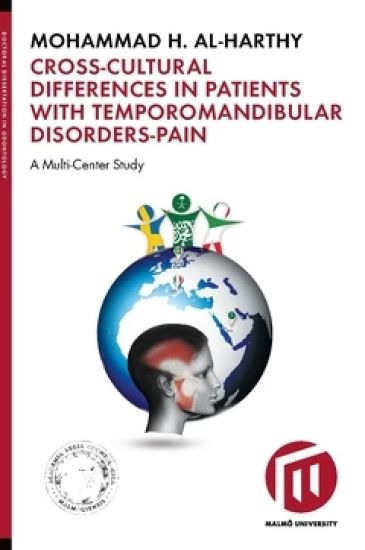
The overall objective of this thesis was to investigate patients with TMD-pain and TMD-free controls in three cultures (Saudi Arabia, Sweden, and Italy) to determine the influence of culture on and crosscultural differences in pain prevalence and intensity, sensitivity to mechanical and electrical stimulation, pain-related disability for four comorbid pain conditions (back, head, chest, and stomach pain) in the last 6 months, and the type of treatment that patients with TMD pain received. The specific aims were: (i) To determine the frequency of TMD pain in Saudi Arabians (I). (ii) To compare psychophysical responses to mechanical and electrical stimuli in female TMD patients and TMD-free controls, nested within each of three cultures (Saudi, Italian, and Swedish) (II). (iii) To assess pain prevalence and intensity, and pain-related disability associated with comorbid pain conditions by testing for the interaction effect between three different cultures and case-status (III). (iv) To assess the type of treatment that female patients with TMD-pain in three cultures received, and their beliefs about the factors that contribute to and aggravate TMD, as well as the factors that are important to include in TMD treatment (IV). Study (I) material included 325 Saudi Arabian patients (135 males, 190 females) aged 20–40, who were referred to the Specialist Dental Center at Alnoor Specialist Hospital, Makkah and answered a history questionnaire. We offered a clinical examination to patients reporting TMD pain in the last month and assessment according to the Arabic version of the Research Diagnostic Criteria for TMD (RDC/TMD). Of these patients, 58 (18%) reported TMD pain and 46 underwent clinical examination. All TMD pain patients had a diagnosis of myofascial pain, and 65% had diagnoses of arthralgia or osteoarthritis. The TMD-pain group reported high levels of both headaches/migraines in the last 6 months (93%) differing significantly (P < 0.01) from the TMD-pain-free groups. All pain group were suffering at least from one TMD subdiagnosis. The TMD-pain group had high depression and somatization scores but low disability grades on the Graded Chronic Pain Scale (GCPS). Studies (II-IV) compared 122 female cases of chronic TMD pain (39 Saudis, 41 Swedes, and 42 Italians) to equal numbers of agematched TMD-free controls. The study (II) measured pressure pain threshold (PPT) and tolerance (PPTo) over one hand and two masticatory muscles, and electrical perception threshold, electrical pain threshold (EPT), and electrical pain tolerance (EPTo) between the thumb and index fingers. Italian females reported significantly lower PPT in the masseter muscle than the other cultures (P < 0.01) and in the temporalis muscle than Saudis (P < 0.01). Swedes reported significantly higher PPT in the thenar muscle than the other cultures (P = 0.017). Italians reported significantly lower PPTo in all muscles than Swedes (P < 0.01) and in the masseter muscle than Saudis (P < 0.01). Italians reported significantly lower EPTo than other cultures (P = 0.01). TMD cases reported lower PPT and PPTo than TMD-free controls in all three muscles (P < 0.01). Cultural differences appeared in PPT, PPTo and EPTo. Overall, Italian females reported the highest sensitivity to both mechanical and electrical stimulation, while Swedes reported the lowest sensitivity. Mechanical pain thresholds differed more across cultures than did electrical pain thresholds. Cultural factors may influence response to type of pain test. In Study (III), self-report questionnaires assessed back, chest, stomach, and head pain for revalence, intensity, and interference with daily activities in the last 6 months. Logistic regression assessed binary variables and ANCOVA provided parametric data analysis, adjusting for age and education. Back pain was the only comorbid condition that varied in prevalence across cultures; Headache was the most common comorbid pain condition in all three cultures; the average head pain intensity was lower, however, among Swedes compared to Saudis (P = 0.029). The total number of comorbid conditions did not differ cross-culturally, but the TMD group reported more comorbid conditions compared to TMD-free controls (P < 0.01). For both back and head pain, TMD cases reported higher average pain intensities (P < 0.01) and interference with daily activities (P < 0.01) than TMD-free controls. Among TMD patients, Italians reported the highest pain-related disability (P < 0.01). This study indicates that culture influences the comorbidity of common pain conditions with TMD. The cultural influence on pain expression is reflected in different patterns of physical representation. Study (IV) compared patient characteristics, treatment beliefs, and type of practitioner advice received before referral for TMD treatment. Patients responded to a questionnaire that assessed treatments received, then completed an explanatory model form about their beliefs regarding which factors contribute to and aggravate TMD, and what factors are important for treatment to address. Of the various treatments, Swedes most commonly sought behavioral therapy and Saudis Islamic medicine (P < 0.01). Swedes received acupuncture and occlusal appliance therapy significantly more than Saudis (P < 0.01) or Italians (P = 0.012). Italians were significantly less likely than Saudis and Swedes (P = 0.042) to believe that TMD pain treatment should address behavioral factors. Among Saudi, Italian, and Swedish females with chronic TMD pain, culture did not influence the type of practitioner consulted before visiting a TMD specialist or their beliefs about factors contributing to or aggravating their pain. Overall, the treatments patients received and beliefs about behavioral factors differed cross-culturally. Islamic medicine was fairly common among Saudis and acupuncture was common among Swedes.
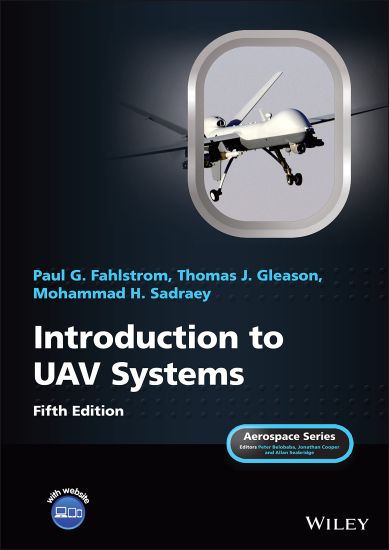
The latest edition of the leading resource on unmanned aerial vehicle systems In the newly revised Fifth Edition of Introduction to UAV Systems, an expert team of aviators, engineers, and researchers delivers the fundamentals of UAV systems for both professionals and students in UAV courses. Suitable for students in both Aerospace Engineering programs, as well as Flight and Aeronautics programs, this new edition now includes end-of-chapter questions and online instructor ancillaries that make it an ideal textbook. As the perfect complement to the author's Design of Unmanned Aerial Systems, this book includes the history, classes, and missions of UAVs. It covers fundamental topics, like aerodynamics, stability and control, propulsion, loads and structures, mission planning, payloads, and communication systems. Brand-new materials in areas including autopilots, quadcopters, payloads, and ground control stations highlight the latest industry technologies. The authors also discuss: A thorough introduction to the history of unmanned aerial vehicles, including their use in various conflicts, an overview of critical UAV systems, and the Predator/ReaperA comprehensive exploration of the classes and missions of UAVs, including several examples of UAV systems, like Mini UAVs, UCAVs, and quadcoptersPractical discussions of air vehicles, including coverage of topics like aerodynamics, flight performance, stability, and controlIn-depth examinations of propulsion, loads, structures, mission planning, control systems, and autonomy Perfect for professional aeronautical and aerospace engineers, as well as students and instructors in courses like Unmanned Aircraft Systems Design and Introduction to Unmanned Aerial Systems, Introduction to UAV Systems is also an indispensable resource for anyone. seeking coverage of the latest industry advances and technologies in UAV and UAS technology.