Kirjahaku
Etsi kirjoja tekijän nimen, kirjan nimen tai ISBN:n perusteella.
1000 tulosta hakusanalla P. Sharp
Struggles and Triumphs or Forty Years' Recollections of P.T. Barnum Vol. 1 (1871)
P. T. Barnum
KESSINGER PUBLISHING CO
2003
pokkari
Struggles and Triumphs or Forty Years' Recollections of P.T. Barnum
P. T. Barnum
Kessinger Pub
2003
pokkari
Beloved British humorist P.G. Wodehouse produced a wealth of literature in his lengthy career, contributing novels, short stories, plays, lyrics and essays to the canon of comic writing. His work in film and television included two stints as a screenwriter in Hollywood in the 1930s, and his stories have been the basis for more than 150 film and television productions. He also wrote 20 stories and essays about Hollywood, satirizing the city and its entertainment magnates. This book studies P.G. Wodehouse's extensive, but often overlooked relationship with Tinsel Town. The book is arranged chronologically, covering Wodehouse's Hollywood career from his early efforts in silent film, to his later contributions in television, to his work adapted posthumously for the screen. Radio is covered as well, including a discussion of his internment in occupied France and his brief appearances on German radio. Reflecting Wodehouse's international appeal, the book covers Wodehouse films and television in England, Germany, Sweden, and India. Also included are a comprehensive, detailed list of Wodehouse's stories and articles about Hollywood, and a complete filmography of motion picture and television works to which he contributed or which were based on his stories.
British National Health Service employee Phyllis Dorothy James White (1920-2014) reinvented herself at age 38 as P.D. James, crime novelist. She then became long known as England's "Queen of Crime." Sixteen of her 20 novels feature one or both of her series detectives, Adam Dalgliesh of Scotland Yard and private eye Cordelia Gray. Stand-alone works include the dystopian The Children of Men (1992) and Death Comes to Pemberley (2011), a sequel to Jane Austen's Pride and Prejudice. James's careful plotting has earned comparison with Golden Age British detective writers such as Agatha Christie and Dorothy L. Sayers. Yet James's work is thoroughly modern, with realistic descriptions of police procedures and the echoes and aftereffects of crime. This literary companion includes more than 700 encyclopedic entries covering the characters, settings and themes of her published writing, along with a career chronology, chronological and alphabetical listings of her works, and an exhaustive index.
Numbers ... , natural, rational, real, complex, p-adic .... What do you know about p-adic numbers? Probably, you have never used any p-adic (nonrational) number before now. I was in the same situation few years ago. p-adic numbers were considered as an exotic part of pure mathematics without any application. I have also used only real and complex numbers in my investigations in functional analysis and its applications to the quantum field theory and I was sure that these number fields can be a basis of every physical model generated by nature. But recently new models of the quantum physics were proposed on the basis of p-adic numbers field Qp. What are p-adic numbers, p-adic analysis, p-adic physics, p-adic probability? p-adic numbers were introduced by K. Hensel (1904) in connection with problems of the pure theory of numbers. The construction of Qp is very similar to the construction of (p is a fixed prime number, p = 2,3,5, ... ,127, ... ). Both these number fields are completions of the field of rational numbers Q. But another valuation 1 . Ip is introduced on Q instead of the usual real valuation 1 . I· We get an infinite sequence of non isomorphic completions of Q : Q2, Q3, ... , Q127, ... , IR = Qoo· These fields are the only possibilities to com plete Q according to the famous theorem of Ostrowsky.
A Stanford University Press classic.
This is the first comprehensive biography in any language of Russia's leading statesman in the period following the Revolution of 1905. Prime Minister and Minister of Internal Affairs from 1906 to 1911 (when he was assassinated), P. A. Stolypin aroused deep passions among his contemporaries as well as subsequent historians. In the twilight of Nicholas II's reign he was virtually the only man who seemed to have a clear notion of how to reform the socioeconomic and political system of the empire. His efforts in that direction—in agriculture, local administration, religious freedom, social legislation, the legal system—were radically new departures for the Russian state. His detractors disdained him as a power-hungry, coldhearted politician who was unscrupulous in pursuing his own career and would use any means to restore the tsarist autocracy following the frightening turbulence of 1905. Stolypin's admirers, however, argued that he was a man of vision who pursued policies that would have transformed the country into a modern state with social and political institutions comparable to those of the West. Lenin's celebrated denunciation of Stolypin as "hangman-in-chief" set the tone for official Soviet work on his career. In the West, some historians and émigré writers, most notably Aleksandr Solzhenitsyn, erred in the opposite direction. By contrast, this book—on the basis of extensive Russian archival documentation only recently available to historians—seeks to provide a balanced portrait of Stolypin that encompasses the complex, even divergent, impulses that motivated him. Although Stolypin did not shrink from the use of force to stamp out unrest, he lamented the shedding of blood and much preferred nonviolent means to curb the opposition. In foreign affairs, he was uncompromising in his insistence that Russia should avoid entanglements that could lead to military conflict. To be sure, he was deeply committed to monarchical rule, but he did not consider it advisable to abolish the elected legislature or to deprive it of its authority. Stolypin's program, a blend of reformism, authoritarianism, and nationalism, was more likely than any other to lead Russia toward social and political stability. But Tsar Nicholas II, his entourage, and ultra-conservatives could not bring themselves to yield a portion of their privileges and prerogatives in return for a reduced, though still significant, role in a changed Russia. They succeeded in undermining the Prime Minister's attempts at fundamental reform and thus scuttled Imperial Russia's last such attempt before its demise.
First published in 1955 to wide acclaim, T. Harry Williams' P. G. T. Beauregard is universally regarded as ""the first authoritative portrait of the Confederacy's always dramatic, often perplexing"" general (Chicago Tribune). Chivalric, arrogant, and of exotic Creole Louisiana origin, Beauregard participated in every phase of the Civil War from its beginning to its end. He rigidly adhered to the principles of war derived from his studies of Jomini and Napoleon, and yet many of his battle plans were rejected by his superiors, who regarded him as excitable, unreliable, and contentious. After the war, Beauregard was almost the only prominent Confederate general who adapted successfully to the New South, running railroads and later supervising the notorious Louisiana Lottery. This paradox of a man who fought gallantly to defend the Old South and then helped industrialize it is the fascinating subject of Williams' superb biography.
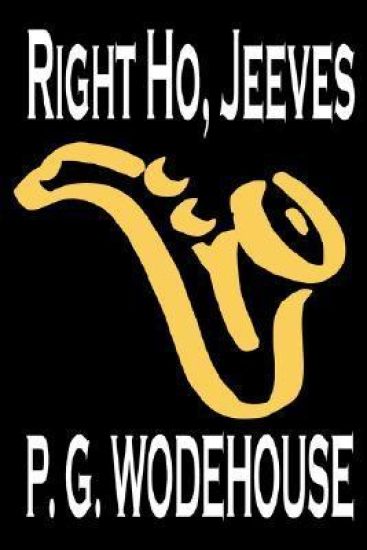
Right Ho, Jeeves by P. G. Wodehouse, Fiction, Literary, Humorous
P G Wodehouse
WILDSIDE PRESS
2004
pokkari
The second full-length novel featuring the popular characters Jeeves and Bertie Wooster, after Thank You, Jeeves. It also features a host of other recurring Wodehouse characters (some of whom it introduces) and is mostly set at Brinkley Court, the home of Bertie's Aunt Dahlia.I would urge you, however, to get hold of the complete novel Right Ho, Jeeves, where you will encounter it fully in context and find that it leaps even more magnificently to life. I don't know if you have had the same experience, but the snag I always come up against when I'm telling a story is this dashed difficult problem of where to begin it. It's a thing you don't want to go wrong over, because one false step and you're sunk. I mean, if you fool about too long at the start, trying to establish atmosphere, as they call it, and all that sort of rot, you fail to grip and the customers walk out on you. Get off the mark, on the other hand, like a scalded cat, and your public is at a loss. It simply raises its eyebrows, and can't make out what you're talking about. And in opening my report of the complex case of Gussie Fink-Nottle, Madeline Bassett, my Cousin Angela, my Aunt Dahlia, my Uncle Thomas, young Tuppy Glossop and the cook, Anatole, with the above spot of dialogue, I see that I have made the second of these two floaters. I shall have to hark back a bit. And taking it for all in all and weighing this against that, I suppose the affair may be said to have had its inception, if inception is the word I want, with that visit of mine to Cannes. If I hadn't gone to Cannes, I shouldn't have met the Bassett or bought that white mess jacket, and Angela wouldn't have met her shark, and Aunt Dahlia wouldn't have played baccarat. Yes, most decidedly, Cannes was the point d'appui. . .
A Man of Means by P. G. Wodehouse, Fiction, Literary
P G Wodehouse; C H Bovill
WILDSIDE PRESS
2004
pokkari
"Please, sir, it's about my salary." His age was twenty-two and his name was Roland Bleke. Mr. Fineberg, at his word, drew himself together much as a British square at Waterloo must have drawn itself together at the sight of a squadron of cuirassiers. "Salary?" he cried. "What about it? What's the matter with it? You get it, don't you?" "Yes, sir, but --" "Well? Don't stand there like an idiot. What is it?" "It's too much." Mr. Fineberg's brain reeled. It was improbable that the millennium could have arrived with a jerk; on the other hand, he had distinctly heard one of his clerks complain that his salary was too large. . . .
My Man Jeeves by P. G. Wodehouse, Fiction, Literary, Humorous
P G Wodehouse
WILDSIDE PRESS
2004
pokkari
Jeeves -- my man, you know -- is really a most extraordinary chap. So capable. Honestly, I shouldn't know what to do without him. On broader lines he's like those chappies who sit peering sadly over the marble battlements at the Pennsylvania Station in the place marked "Inquiries." You know the Johnnies I mean. You go up to them and say: "When's the next train for Melonsquashville, Tennessee?" and they reply, without stopping to think, "Two-forty-three, track ten, change at San Francisco." And they're right every time. Well, Jeeves gives you just the same impression of omniscience. . . . In _My Man Jeeves, _ affable, indolent Bertie Wooster and his precise, capable valet, Jeeves -- the ever cool and capable gentleman's gentleman Jeeves who pulls hapless Wooster's fat from the fire time and again -- weave themselves through a series of delightful adventures. But the adventures are almost beside the point: what the Jeevs stories are about is the relationship between these two men of very different classes and temperaments. Where Bertie is impetuous and feeble, Jeeves is cool-headed and poised. A motley clutch of buffoons accompanies Jeeves's accounts of Wooster's misunderstandings, gaffes, and backfiring plans.My Man Jeeves was first published in the United Kingdom in May 1919 by George Newnes. Of the eight stories in the collection, half feature the popular characters Jeeves and Bertie Wooster, while the others concern Reggie Pepper, an early prototype for Wooster."Mr. Wodehouse's idyllic world can never stale." -- Evelyn Waugh
The Clicking of Cuthbert by P. G. Wodehouse, Fiction, Literary, Short Stories
P G Wodehouse
WILDSIDE PRESS
2004
pokkari
"This book marks an epoch in my literary career. It is written in blood. It is the outpouring of a soul as deeply seared by Fate's unkindness as the pretty on the dog-leg hole of the second nine was ever seared by my iron. It is the work of a very nearly desperate man, an eighteen-handicap man who has got to look extremely slippy if he doesn't want to find himself in the twenties again."
The world knows little of its greatest women, and it is possible that Mrs. Porter's name is not familiar to you. If this is the case, I am pained, but not surprised. If you are ignorant of Lora Delane Porter's books that is your affair. Perhaps you are more to be pitied than censured. Nature probably gave you the wrong shape of forehead. Mrs. Porter's mind worked backward and forward. She had one eye on the past, the other on the future. If she was strong on heredity, she was stronger on the future of the race. . . .
The Man Upstairs and Other Stories by P. G. Wodehouse, Fiction, Classics, Short Stories
P G Wodehouse
WILDSIDE PRESS
2004
pokkari
The Man Upstairs is a collection of short stories, it is a miscellaneous collection, not featuring any of Wodehouse's regular characters; most of the stories concern love and romance.There were three distinct stages in the evolution of Annette Brougham's attitude towards the knocking in the room above. In the beginning it had been merely a vague discomfort. Absorbed in the composition of her waltz, she had heard it almost subconsciously. The second stage set in when it became a physical pain like red-hot pincers wrenching her mind from her music. Finally, with a thrill in indignation, she knew it for what it was -- an insult. The unseen brute disliked her playing, and was intimating his views with a boot-heel. Defiantly, with her foot on the loud pedal, she struck -- almost slapped -- the keys once more. "Bang " from the room above. "Bang Bang "Also includes "Something to Worry About," "Deep Waters," "When Doctors Disagree," "By Advice of Counsel," "Rough-Hew Them How We Will," "The Man Who Disliked Cats," "Ruth in Exile," "Archibald's Benefit," "The Man, the Maid, and the Miasma," "The Good Angel," "Pots o'Money," "Out of School," "Three from Dunsterville," "The Tuppenny Millionaire," "Ahead of Schedule," "Sir Agravaine," "The Goal-Keeper and the Plutocrat," and "In Alcala."Wodehouse worked extensively on his books, sometimes having two or more in preparation simultaneously. He would take up to two years to build a plot and write a scenario of about thirty thousand words. After the scenario was complete he would write the story. Early in his career he would produce a novel in about three months but he slowed in old age to around six months. He used a mixture of Edwardian slang, quotations from and allusions to numerous poets and several literary techniques to produce a prose style that has been compared with comic poetry and musical comedy.
"This robbery of the pots is a rum thing," said Vaughan, thoughtfully, when the last shreds of Plunkett's character had been put through the mincing-machine to the satisfaction of all concerned. "Yes. It's the sort of thing one doesn't think possible till it actually happens." "What the dickens made them put the things in the Pav. at all? They must have known it wouldn't be safe." "Well, you see, they usually cart them into the Board Room, I believe, only this time the governors were going to have a meeting there. They couldn't very well meet in a room with the table all covered with silver pots." "Don't see why." "Well, I suppose they could, really, but some of the governors are fairly nuts on strict form. There's that crock who makes the two-hour vote of thanks speeches on Prize Day. You can see him rising to a point of order, and fixing the Old 'Un with a fishy eye." "Well, anyhow, I don't see that they can blame a burglar for taking the pots if they simply chuck them in his way like that." "No. I say, we'd better weigh in with the Livy. The man Ward'll be round directly. Where's the dic? AND our invaluable friend, Mr. Bohn? Right. Now, you reel it off, and I'll keep an eye on the notes." And they settled down to the business of the day.