Kirjojen hintavertailu. Mukana 12 396 684 kirjaa ja 12 kauppaa.

Kirjahaku

Etsi kirjoja tekijän nimen, kirjan nimen tai ISBN:n perusteella.

1000 tulosta hakusanalla R. Scott

Cop and Coin A Novel: Sometimes you have no choice but to Believe

Cop and Coin A Novel: Sometimes you have no choice but to Believe

R. Scott Lunsford

Createspace Independent Publishing Platform
2016
nidottu
A strange man with music and stories charms a young boy with tales of Monsters, Devils, Magic Coins, and Death. Along the Buncombe Turnpike dirt road in 1834. The stories become too real far too quickly and set off a tale of two silver coins from a set of 30 used to seal a world-changing event in the Middle East many years ago. The Coins and their influence interact with the History of North Carolina from then to the present day. Local community leaders arrange to protect others from the evil associated with the silver. Until the influence reappears in modern-day Asheville NC. A Police Officer with family ties to the old ways and connections to the more unusual aspects of the Asheville Community attempts to discover why suddenly a Killer has arrived in Asheville and how he is connected to it all.
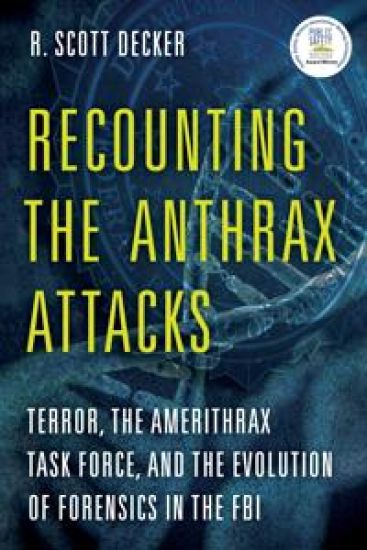
Recounting the Anthrax Attacks

Recounting the Anthrax Attacks

R. Scott Decker

Rowman Littlefield
2018
sidottu
It was September 18, 2001, just seven days after al-Qaeda hijackers destroyed the Twin Towers. In the early morning darkness, a lone figure dropped several letters into a mailbox. Seventeen days later a Florida journalist died of inhalational anthrax. The death from the rare disease made world news. These anthrax attacks marked the first time a sophisticated biological weapon was released in the United States. It killed five people, disfigured at least 18 more, and launched the largest investigation in the FBI’s history. Recounting the Anthrax Attacks explores the origins of the innovative forensics used in this case, while also explaining their historical context. R. Scott Decker’s team pursued its first suspect with dogged determination before realizing that the evidence did not add up. With renewed energy, they turned to non-traditional forensics—scientific initiatives never before applied to an investigation—as they continued to hunt for clues. These advances formed the new science of microbial forensics, a novel discipline that produced critical leads when traditional methods failed. The new technologies helped identify a second suspect—one who possessed the knowledge and skills to unleash a living weapon of mass destruction. Decker provides the first inside look at how the investigation was conducted, highlighting dramatic turning points as the case progressed until its final solution. Join FBI agents as they race against terror and the ultimate insider threat—a decorated government scientist releasing powders of deadly anthrax. Walk in the steps of these dedicated officers while they pursue numerous forensic leads before more letters can be sent until finally they confront a psychotic killer.
Recounting the Anthrax Attacks

Recounting the Anthrax Attacks

R. Scott Decker

Rowman Littlefield
2019
nidottu
It was September 18, 2001, just seven days after al-Qaeda hijackers destroyed the Twin Towers. In the early morning darkness, a lone figure dropped several letters into a mailbox. Seventeen days later a Florida journalist died of inhalational anthrax. The death from the rare disease made world news. These anthrax attacks marked the first time a sophisticated biological weapon was released in the United States. It killed five people, disfigured at least 18 more, and launched the largest investigation in the FBI’s history. Recounting the Anthrax Attacks explores the origins of the innovative forensics used in this case, while also explaining their historical context. R. Scott Decker’s team pursued its first suspect with dogged determination before realizing that the evidence did not add up. With renewed energy, they turned to non-traditional forensics—scientific initiatives never before applied to an investigation—as they continued to hunt for clues. These advances formed the new science of microbial forensics, a novel discipline that produced critical leads when traditional methods failed. The new technologies helped identify a second suspect—one who possessed the knowledge and skills to unleash a living weapon of mass destruction. Decker provides the first inside look at how the investigation was conducted, highlighting dramatic turning points as the case progressed until its final solution. Join FBI agents as they race against terror and the ultimate insider threat—a decorated government scientist releasing powders of deadly anthrax. Walk in the steps of these dedicated officers while they pursue numerous forensic leads before more letters can be sent until finally they confront a psychotic killer.
The Class of 2016: Words and Wisdom from 50 Famous People Who Left Us in 2016 Including Muhammad Ali, David Bowie, Gene Wilder, Pat Conro
The year 2016 marked the deaths of worldwide icons such as David Bowie, George Michael, and Prince from the music world; Muhammad Ali, Jos Fern ndez, and Arnold Palmer from the world of sports; Boutros Boutros-Ghali, Shimon Peres, and Janet Reno from the world of politics & government; literary giants including Harper Lee, Edward Albee, and Pat Conroy; and from the acting community, Alan Rickman, Carrie Fisher, and Gene Wilder. To commemorate their lives, their individual outlooks on life, and their messages to their fans, followers and the world, this book is a compilation of some of their memorable words. It's an eclectic group with various world views and advice ... compelling as individuals and fascinating as a group with one basic thing in common; they all died in the same year. Although of great interest on its own, this book also makes a great gift for anybody who reached an important milestone in 2016: engagement, marriage, divorce, new job, promotion, graduation, acceptance into college, birth of a child, etc. This is The Class of 2016: David Bowie Carrie Fisher Arnold Palmer Florence Henderson George Michael Vera Rubin Alan Thicke Zsa Zsa Gabor Craig Sager Sharon Jones Jos Fern ndez Gwen Ifill Robert Vaughn Janet Reno Leonard Cohen Gene Wilder Garry Marshall Pat Conroy Doris Roberts Merle Haggard Umberto Eco Garry Shandling Glenn Frey Shimon Peres Keith Emerson Harper Lee Morley Safer Phife Dawg Nancy Reagan George Martin Dave Mirra Maurice White Antonin Scalia Alan Rickman Joe Garagiola Patty Duke Boutros Boutros-Ghali Gordie Howe Edward Albee Ralph Stanley Richard Adams Alvin Toffler Mother Mary Angelica Jim Harrison Elie Wiesel Pat Summitt Bill Cunningham John Glenn Paul Kantner Muhammad Ali Debbie Reynolds Prince
Quote Vault: 365 Inspirational and Though-Provoking Quotes from Some of the Greatest Leaders, Writers, and Thinkers of All Time
365 insightful quotes organized into 24 categories, so you can easily find the perfect quote for any situation, need, or opportunity. Use them to motivate, inspire, influence, persuade, encourage, and otherwise improve your communications and your life. In this little book, we have selected 365 quotations that can be helpful to you internally or externally. You can read one or two a day as an intellectual or attitude adjusting exercise. You can use one or two in memos, presentations, emails, meetings, or speeches. You can even use one in a note for a child's lunchbox. There are myriad ways to increase your impact by using one of more of the powerful statements in this book. Makes a great gift This book contains quotes from some of the greatest leaders, writers and thinkers of all time, including: Leo Tolstoy, Leonardo da Vinci, Lao Tzu, Frank Lloyd Wright, Albert Einstein, Aristotle, Steve Maraboli, Isaac Newton, Napoleon Bonaparte, John Maxwell, Andrew Carnegie, Bill Gates, Martin Luther King, Jr., Steve Jobs, Peter Drucker, Barbara Corcoran, Brian Tracy, John F. Kennedy, Eleanor Roosevelt, Lee Iacocca, Stephen Covey, Winston Churchill, Kenneth Blanchard, J.K. Rowling, Friedrich Nietzsche, Mahatma Gandhi, Frederick Douglass, Ernest Hemingway, Michael Jordan, Helen Keller, Ralph Waldo Emerson, Maya Angelou, Barack Obama, Margaret Mead, Nelson Mandela, Andy Warhol, Wayne W. Dyer, George Bernard Shaw, Mother Theresa, Leo Buscaglia, Johann Wolfgang von Goethe, Richard Bach, Norman Vincent Peale, Oscar Wilde, Mark Twain, Alexander Pope, Desmond Tutu, Oprah Winfrey, Lyndon B. Johnson, Alexander Graham Bell, Harriet Tubman, T. S. Eliot, Jean-Paul Sartre, Benjamin Franklin, Deepak Chopra, Henry David Thoreau, Thomas Jefferson, Helen Keller, Henry Ford, Bernard Baruch, Peter Drucker, Ernest Hemingway, Malcom Forbes, George S. Patton, Voltaire, Emily Dickinson, George S. Patton, Kahlil Gibran, William Makepeace Thackeray, C.S. Lewis, Albert Schweitzer, Robert Frost, and more.
Paradoxes of Desegregation

Paradoxes of Desegregation

R. Scott Baker

University of South Carolina Press
2006
sidottu
In this provocative appraisal of desegregation in South Carolina, R. Scott Baker contends that half a century after the Brown decision we still know surprisingly little about the new system of public education that replaced segregated caste arrangements in the South. Much has been written about the most dramatic battles for black access to southern schools, but Baker examines the rational and durable evasions that authorities institutionalized in response to African American demands for educational opportunity. A case study of southern evasions, ""Paradoxes of Desegregation"" documents the new educational order that grew out of decades of conflict between African American civil rights activists and South Carolina's political leadership. During the 1940s, Baker shows, a combination of black activism on a local level and NAACP litigation forced state officials to increase funding for black education. This early phase of the struggle in turn accelerated the development of institutions that cultivated a new generation of grass roots leaders. Baker demonstrates that white resistance to integration did not commence or crystallize after Brown. Instead, beginning in the 1940s, authorities in South Carolina institutionalized an exclusionary system of standardized testing that, according to Baker, exploited African Americans' educational disadvantages, limited access to white schools, and confined black South Carolinians to separate institutions. As massive resistance to desegregation collapsed in the late 1950s, officials in other southern states followed South Carolina's lead, adopting testing policies that continue to govern the region's educational system. ""Paradoxes of Desegregation"" brings much needed historical perspective to contemporary debates about the landmark federal education law, No Child Left Behind. Baker analyzes decades of historical evidence related to high-stakes testing, and concludes that desegregation, while a triumph for advantaged blacks, has paradoxically been a tragedy for most African Americans.
A Guide to Sources of Texas Criminal Justice Statistics

A Guide to Sources of Texas Criminal Justice Statistics

R. Scott Harnsberger

University of North Texas Press,U.S.
2011
sidottu
This reference work was compiled as a resource for those needing assistance in locating Texas criminal justice statistics. R. Scott Harnsberger has compiled more than 600 entries describing statistical sources for Texas crime; criminals; law enforcement; courts and sentencing; adult and juvenile corrections; capital punishment and death row; victims of crime; driving/boating under the influence; traffic fatalities; substance abuse and treatment; polls and rankings; and fiscal topics such as appropriations, revenues, expenditures, and federal aid. The sources for these statistics originate primarily, but not exclusively, from federal and State of Texas agencies, boards, bureaus, commissions, and departments. The following types of publications are included: annual, biennial, and biannual reports; reports issued in series; analytic and research reports; statistical compilations; budgets and other fiscal documents; audits, inspections, and investigations; census publications; polls; projections; rankings; surveys; continuously updated online resources; and datasets. Harnsberger has annotated the entries to provide sufficient detail to enable users to decide whether the listed resources merit further investigation. Additional notes contain URLs and information regarding the scope of the published data; title changes; related publications; and the availability of earlier data, previous editions, online tables, and datasets. This book will prove to be a valuable resource for students, faculty, researchers, government officials, and individuals in the law enforcement, correctional, and judicial professions.
A Guide to Sources of Texas Criminal Justice Statistics

A Guide to Sources of Texas Criminal Justice Statistics

R. Scott Harnsberger

University of North Texas Press,U.S.
2011
nidottu
This reference work was compiled as a resource for those needing assistance in locating Texas criminal justice statistics. R. Scott Harnsberger has compiled more than 600 entries describing statistical sources for Texas crime; criminals; law enforcement; courts and sentencing; adult and juvenile corrections; capital punishment and death row; victims of crime; driving/boating under the influence; traffic fatalities; substance abuse and treatment; polls and rankings; and fiscal topics such as appropriations, revenues, expenditures, and federal aid. The sources for these statistics originate primarily, but not exclusively, from federal and State of Texas agencies, boards, bureaus, commissions, and departments. The following types of publications are included: annual, biennial, and biannual reports; reports issued in series; analytic and research reports; statistical compilations; budgets and other fiscal documents; audits, inspections, and investigations; census publications; polls; projections; rankings; surveys; continuously updated online resources; and datasets. Harnsberger has annotated the entries to provide sufficient detail to enable users to decide whether the listed resources merit further investigation. Additional notes contain URLs and information regarding the scope of the published data; title changes; related publications; and the availability of earlier data, previous editions, online tables, and datasets. This book will prove to be a valuable resource for students, faculty, researchers, government officials, and individuals in the law enforcement, correctional, and judicial professions.
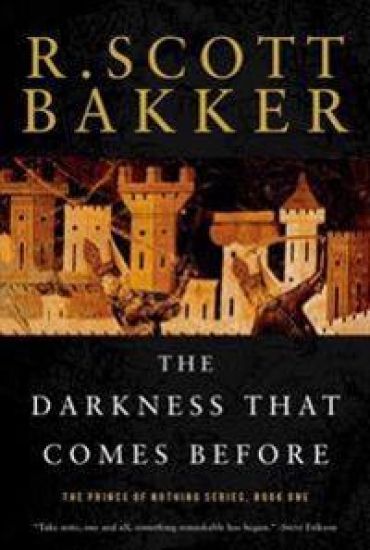
The Darkness That Comes Before: The Prince of Nothing, Book One
A mysterious traveler intervenes in an epic holy war in this "impressive, challenging debut" of the critically acclaimed fantasy epic (Publishers Weekly, starred review). The first book in R. Scott Bakker's Prince of Nothing series introduces readers to a strikingly original and engrossingly vivid new world. With its language and classes of people, its cities, religions, mysteries, taboos, and rituals, The Darkness That Comes Before has drawn comparison to J.R.R. Tolkien's The Lord of the Rings and Frank Herbert's Dune. Bakker's E rwa is a world scarred by an apocalyptic past, evoking a time both two thousand years past and two thousand years into the future. As untold thousands gather for a crusade, two men and two women are ensnared by a mysterious traveler, Anas rimbor Kellhus--part warrior, part philosopher, part sorcerous, charismatic presence--from lands long thought dead. The Darkness That Comes Before is a history of this great holy war, and like all histories, the survivors write its conclusion. The Prince of Nothing Series The Darkness That Comes Before The Warrior Prophet The Thousandfold Thought
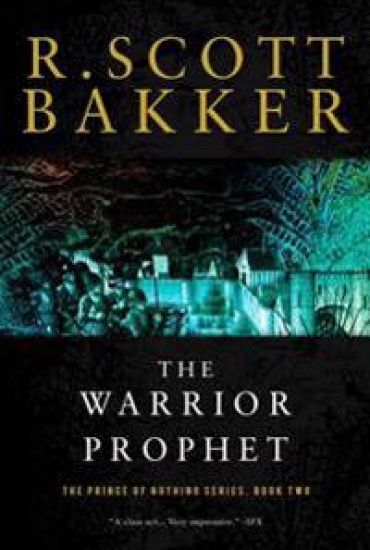
The Warrior Prophet

The Warrior Prophet

R. Scott Bakker

Harry N. Abrams
2008
nidottu
As a vast Holy War begins, a powerful new force emerges in the second book of R. Scott Bakker's "violent, passionate, darkly poetic" (SFSite.com) Prince of Nothing fantasy series. The first battle against the heathen has been won, but while the Great Names squabble over the spoils, Kellhus draws more followers to his banner. The sorcerer Achamian and his lover, Esmenet, submit entirely--only to face an unimaginable test of faith. The warrior Cnaiur falls ever deeper into madness. The skin-spies of the Consult watch with growing trepidation. And across the searing wastes of the desert, a name--a title--begins to be whispered among the faithful. Who is the Warrior Prophet? A dangerous heretic who turns brother against brother? Or the only man who can avert the Second Apocalypse? With the fate of the Holy War hanging in the balance, the great powers will have to choose between their most desperate desires and their most ingrained prejudice. Between hatred and hope. Between the Warrior-Prophet and the end of the world . . . "A class act . . . very impressive." --SFX The Prince of Nothing Trilogy: The Darkness that Comes Before The Warrior Prophet The Thousandfold Thought
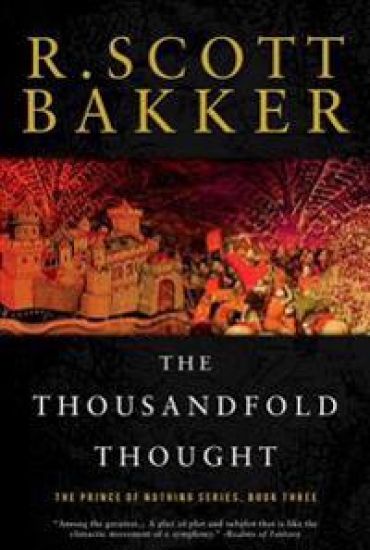
The Thousandfold Thought

The Thousandfold Thought

R. Scott Bakker

Overlook Press
2008
nidottu
As the Holy War approaches its climax, emperors will fall and terrifying revelations will come to light, in the final novel of the acclaimed fantasy epic. All opposition to the man once derided as the Prince of Nothing has vanished or been vanquished. Their leaders slain, the heathen Fanim have fled in disarray. One final march will bring the Holy War to the fabled city of Shimeh. But so very much has changed. Anasurimbor Kellhus, the Warrior-Prophet, now leads the Men of the Tusk. The cuckolded sorcerer Achamian serves as his tutor, betraying his school to protect the man he believes can prevent the Second Apocalypse. The Scylvendi barbarian, Cnaiur, succumbs finally to madness. The Consult, sensing the endgame near, work frantically to prepare for the coming of the No-God. The final reckoning is at hand. Faceless assassins will strike in the dead of night. The sorcerous Schools will be unleashed. And Anasurimbor Kellhus will at last confront his father and the dread revelation of the Thousandfold Thought. The Prince of Nothing Series The Darkness That Comes Before The Warrior Prophet The Thousandfold Thought
Overnight Sensation: From the Adventures of H.B. Fist

Overnight Sensation: From the Adventures of H.B. Fist

R. Scott Bolton

Booksurge Publishing
2004
nidottu
Jamie Goodgarden was the galaxy's favorite entertainer. Movie star, recording artist, best-selling author: Goodgarden did it all and fans the universe-wide loved him.That is, until one day he decides to take a leisurely walk to the grocery store and somebody blows his head off with a model 9-24 snipeblazer. The assassin is arrested almost immediately, but H.B. Fist smells a rat. His ensuing investigation unravels what might be a universe-spanning conspiracy involving Goodgarden and two opposing factions: the League of Vampires, an organization made up of the infamous bloodsuckers, and the Veganistas, a militant group of extreme vegetarians. Aided by the Goodgarden's longtime agent (or what's left of him), Fist traverses the galaxy again to seek out the truth and to deliver justice to evildoers.And, hey, he just might nail a movie deal in the process.
Ancient Rome

Ancient Rome

R. Scott Smith

Hackett Publishing Co, Inc
2014
pokkari
"An Impressive and well-chosen selection of key sources for the study of ancient Rome, renderedinto lively and engaging English. Together they offer a panorama of republican and imperial lifeand letters. Highly recommended." -Nathan Rosenstein, The Ohio State University
Ancient Rome

Ancient Rome

R. Scott Smith

Hackett Publishing Co, Inc
2014
sidottu
"Terrific ...exactly the sort of collection we have long needed: one offering a wide range of texts, both literary and documentary, and that--with the inclusion of Sulpicia and Perpetua--allows students to hear the voices of actual women from the ancient world. The translations themselves are fluid; the inclusion of long extracts allows students to sink their teeth into material in ways not possible with traditional source books. The anonymous texts, inscriptions, and other non-literary material topically arranged in the 'Documentary' section will enable students to see how the documentary evidence supplements or undermines the views advanced in the literary texts. This is a book that should be of great use to anyone teaching a survey of the history of Ancient Rome or a Roman Civilization course. I look forward to teaching with this book which is, I think, the best source book I have seen for the way we teach these days." --David Potter, University of Michigan
Crimson Dawn

Crimson Dawn

R. Scott Kennan

Independently Published
2020
nidottu
In a world ruled by demons known as Dalkhu, The sorceress Absu Apsu resolves to avenge her lost innocence. In the process, she risks becoming a monster, herself. When Absu arranges the death and resurrection of a young girl to become her apprentice, she surely seeks to fuel her plan for vengeance, but does she want a prot g , or the girl's soul to burn?Qathariel is the realm where the Creatrix Ialdaba puts her mistakes. It is a charnel pile for beings that she can't bear to face, but which are impossible to destroy, because they are her own flawed aspects. In this dark reflection of our own world, magic is fueled by burning souls-and for a mortal to become a wielder of Power, one must first die, to leave a space for the demons. This book contains sexual and violent themes, sometimes both at once.
Exposing the Roots of Constructivism

Exposing the Roots of Constructivism

R. Scott Smith

BLOOMSBURY PUBLISHING PLC
2022
sidottu
Constructivism dominates over other theories of knowledge in much of western academia, especially the humanities and social sciences. In Exposing the Roots of Constructivism: Nominalism and the Ontology of Knowledge, R. Scott Smith argues that constructivism is linked to the embrace of nominalism, the theory that everything is particular and located in space and time. Indeed, nominalism is sufficient for a view to be constructivist.However, the natural sciences still enjoy great prestige from the “fact-value split.” They are often perceived as giving us knowledge of the facts of reality, and not merely our constructs. In contrast, ethics and religion, which also have been greatly influenced by nominalism, usually are perceived as giving us just our constructs and opinions. Yet, even the natural sciences have embraced nominalism, and Smith shows that this will undermine knowledge in those disciplines as well. Indeed, the author demonstrates that, at best, nominalism leaves us with only interpretations, but at worst, it undermines all knowledge whatsoever. However, there are many clear examples of knowledge we do have in the many different disciplines, and therefore those must be due to a different ontology of properties. Thus, nominalism should be rejected. In its place, the author defends a kind of Platonic realism about properties.