Kirjahaku
Etsi kirjoja tekijän nimen, kirjan nimen tai ISBN:n perusteella.
1000 tulosta hakusanalla ROLLO OGDEN


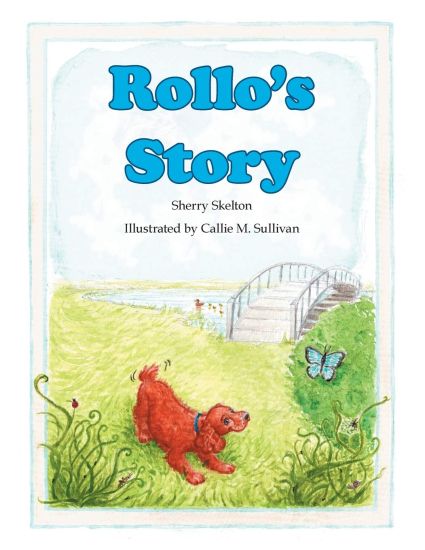
"Rollo Beagles was a dog with big ideas. Some of them were good and some were not." So begins this heartwarming tale of Rollo Beagles' devotion to a little boy named Bartie, whom he loves best in the world. When Bartie is sad, Rollo is sad. Since Bartie's parents are always going away, leaving their little boy behind, Rollo decides it would be best if he adopted Bartie as his very own son. Which he does. When Bartie's human parents arrange - without even checking with Rollo - to send the little boy off to summer camp - alone - without Rollo - Bartie's beagle-father knows he must take steps to keep his son at home. And Rollo has a very definite idea on what to do Rollo's story is followed by the delightful tale of a striped cat named Toodles. In the midst of a rainstorm, Toodles, drenched, meows plaintively at a stranger's door. This turns out to be just the right door, for behind it she finds warmth, safety, sardines, and a wonderful best friend Soon the two are telling each other their deepest secrets and even playing checkers together. Their mutual affection grows so strong that Toodles does something most unusual for a cat - and it only intensifies the bond between them

Rollo's Philosophy
Intell Book Publishers
2024
pokkari
acob Abbott (1803-1879) was an American writer of children's books. He was a prolific author, writing juvenile fiction, brief histories, biographies, religious books for the general reader, and a few works in popular science. His Rollo Books, such as Rollo at Work (1837) and Rollo at Play (1837) are the best known of his writings, having as their chief characters a representative boy and his associates. His other works include: The Teacher; or, Moral Influences Employed in the Instruction and Government of the Young (1833), Rollo on the Atlantic (1853), Rollo in Paris (1854), Rollo on the Rhine (1855), Georgie (1855), Rollo in Holland (1856), Rollo in Rome (1858), Rollo in Switzerland (1858), Rollo in the Woods and Peter the Great.
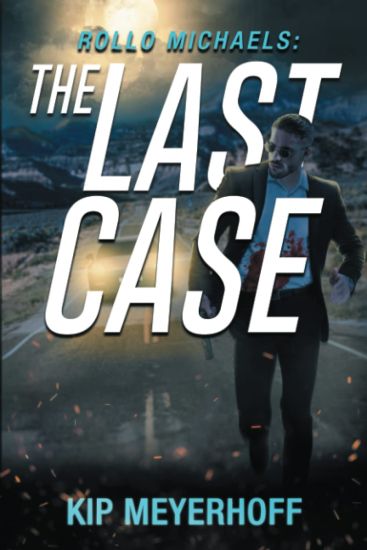
The saga continues when Los Angeles PI Rollo Michaels runs afoul of the law as he tries to protect his family and himself from the wrath of an old nemesis. Things get complicated when a blackmail case he is working on ends up in kidnapping and murder. Add to that a surprise from Rollo's past demanding his immediate attention. Will homicide detectives from three jurisdictions cut him some slack? Will Linda stand by her man? Will Michaels and associates weather the storm?
Rollo the Viking: The Life and Legacy of the Viking Ruler Who Conquered Normandy
Charles River
Createspace Independent Publishing Platform
2018
nidottu
*Includes pictures*Includes online resources and a bibliography for further reading"A cowardly man thinks he will ever live, if warfare he avoids; but old age will give no peace, though spears may spare him." - old Norse proverb from the Viking AgeIn the autumn of 1911, an eye-watering mass of French citizens gathered around a churchyard in the heart of Rouen to celebrate the millennial anniversary of Normandy. A suspenseful hush fell over the congregation as a city official strode to the front of the crowd, placing his hands upon the large cloth draped over the mysterious statue. With a flick of his wrists, he unveiled an exquisite marble effigy of a handsome warrior, depicted with curly locks and a lush beard, with one hand wrapped around the handle of his sheathed sword as he gazed into the distance. The statue was of none other than Rollo the Viking, father of the Duchy of Normandy. Over the centuries, the West has become fascinated by the Vikings, one of the most mysterious and interesting European civilizations. In addition to being perceived as a remarkably unique culture among its European counterparts, what's known and not known about the Vikings' accomplishments has added an intriguing aura to the historical narrative. Were they fierce and fearsome warriors? Were they the first Europeans to visit North America? It seems some of the legends are true, and some are just that, legend. The commonly used term, Viking, for the trading and raiding peoples of Scandinavia may have originated from Viken (the large bay leading to Oslo), or it may have come from the Old Scandinavian words Vikingr (sea warrior) or Viking (expedition over the sea). The people from the north were known in Western Europe at the time as Northmen or Danes, in England as Danes or pagans and in Ireland as Finngall for those of Norwegian origin and Dubgall for those from Denmark. In the east, in Russia and in the Byzantine Empire, the Scandinavians were called Vaeringar or Varyags (Varangians) or Rus', the latter perhaps derived from the name Roslagen, a province in Uppland in Sweden.The ubiquitous picture of the Vikings as horn-helmeted, brutish, hairy giants that mercilessly marauded among the settlements of Northern Europe is based on a smattering of fact combined with an abundance of prejudicial historical writing by those who were on the receiving end of Viking depredations. At the same time, much of the popular picture of the Vikings is a result of the romantic imagination of novelists and artists. However, the Vikings' reputation for ferocious seaborne attacks along the coasts of Northern Europe is no exaggeration. It is true that the Norsemen, who traded extensively throughout Europe, often increased the profits obtained from their nautical ventures through plunder, acquiring precious metals and slaves. Of course, the Vikings were not the only ones participating in this kind of income generation; between the 8th and the 11th centuries, European tribes, clans, kingdoms and monastic communities were quite adept at fighting with each other for the purpose of obtaining booty. The Vikings were simply more successful than their contemporaries and thus became suitable symbols for the iniquity of the times. And among the Vikings, few were as successful as Rollo. Rollo the Viking: The Life and Legacy of the Viking Ruler Who Conquered Normandy chronicles the life of the great warrior, dives into his many adventures and exploits, and examines just how this lone wolf managed to conquer his foes. Along with pictures depicting important people, places, and events, you will learn about Rollo the Viking like never before.
Rollo the Viking: The Life and Legacy of the Viking Ruler Who Conquered Normandy
Charles River
Createspace Independent Publishing Platform
2018
nidottu
*Includes pictures*Includes online resources and a bibliography for further reading"A cowardly man thinks he will ever live, if warfare he avoids; but old age will give no peace, though spears may spare him." - old Norse proverb from the Viking AgeIn the autumn of 1911, an eye-watering mass of French citizens gathered around a churchyard in the heart of Rouen to celebrate the millennial anniversary of Normandy. A suspenseful hush fell over the congregation as a city official strode to the front of the crowd, placing his hands upon the large cloth draped over the mysterious statue. With a flick of his wrists, he unveiled an exquisite marble effigy of a handsome warrior, depicted with curly locks and a lush beard, with one hand wrapped around the handle of his sheathed sword as he gazed into the distance. The statue was of none other than Rollo the Viking, father of the Duchy of Normandy. Over the centuries, the West has become fascinated by the Vikings, one of the most mysterious and interesting European civilizations. In addition to being perceived as a remarkably unique culture among its European counterparts, what's known and not known about the Vikings' accomplishments has added an intriguing aura to the historical narrative. Were they fierce and fearsome warriors? Were they the first Europeans to visit North America? It seems some of the legends are true, and some are just that, legend. The commonly used term, Viking, for the trading and raiding peoples of Scandinavia may have originated from Viken (the large bay leading to Oslo), or it may have come from the Old Scandinavian words Vikingr (sea warrior) or Viking (expedition over the sea). The people from the north were known in Western Europe at the time as Northmen or Danes, in England as Danes or pagans and in Ireland as Finngall for those of Norwegian origin and Dubgall for those from Denmark. In the east, in Russia and in the Byzantine Empire, the Scandinavians were called Vaeringar or Varyags (Varangians) or Rus', the latter perhaps derived from the name Roslagen, a province in Uppland in Sweden.The ubiquitous picture of the Vikings as horn-helmeted, brutish, hairy giants that mercilessly marauded among the settlements of Northern Europe is based on a smattering of fact combined with an abundance of prejudicial historical writing by those who were on the receiving end of Viking depredations. At the same time, much of the popular picture of the Vikings is a result of the romantic imagination of novelists and artists. However, the Vikings' reputation for ferocious seaborne attacks along the coasts of Northern Europe is no exaggeration. It is true that the Norsemen, who traded extensively throughout Europe, often increased the profits obtained from their nautical ventures through plunder, acquiring precious metals and slaves. Of course, the Vikings were not the only ones participating in this kind of income generation; between the 8th and the 11th centuries, European tribes, clans, kingdoms and monastic communities were quite adept at fighting with each other for the purpose of obtaining booty. The Vikings were simply more successful than their contemporaries and thus became suitable symbols for the iniquity of the times. And among the Vikings, few were as successful as Rollo. Rollo the Viking: The Life and Legacy of the Viking Ruler Who Conquered Normandy chronicles the life of the great warrior, dives into his many adventures and exploits, and examines just how this lone wolf managed to conquer his foes. Along with pictures depicting important people, places, and events, you will learn about Rollo the Viking like never before.