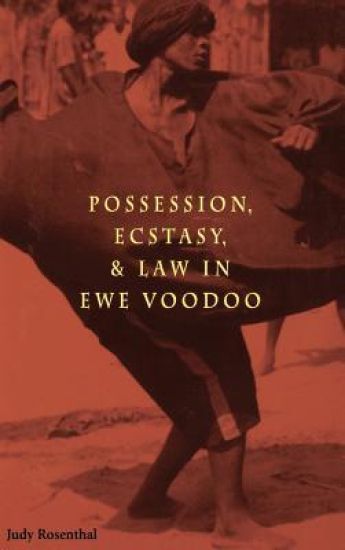
Records the results of the author's 11-year study of Gorovodo, the voodoo practised by West Africa's Ewe populations of coastal Ghana, Togo and Benin. The work represents an ethnography of spirit possession that focuses on law and morality in ""medicine voodoo"" orders.
Records the results of the author's 11-year study of Gorovodo, the voodoo practised by West Africa's Ewe populations of coastal Ghana, Togo and Benin. The work represents an ethnography of spirit possession that focuses on law and morality in ""medicine voodoo"" orders.
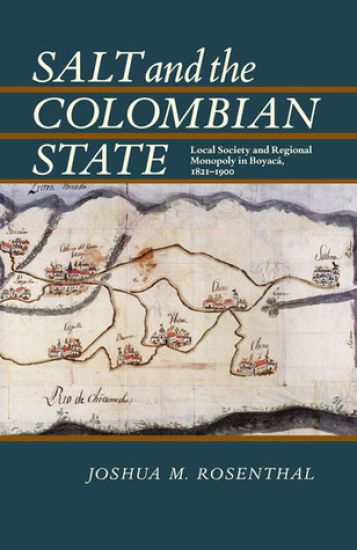
In republican Colombia, salt became an important source of revenue not just to individuals, but to the state, which levied taxes on it and in some cases controlled and profited from its production. The salt trade consistently accounted for roughly ten percent of government income.In the town of la Salina de Chita, in Boyac\u00e1 province, thermal springs offered vast amounts of salt, and its procurement and distribution was placed under the jurisdiction of the Ministry of Finance. Focusing his study on la Salina, Joshua M. Rosenthal presents a fascinating glimpse into the workings of the early Colombian state, its institutions, and their interactions with local citizens during this formative period. Although historians have cited the stateÆs weakness, and in many cases, its absence in local affairs, Rosenthal counters these assumptions by documenting the primary role the state held in administering contracts, inspections, land rights, labor, and trade in la Salina, and contends that this was not an isolated incident. He also uncovers the frequent interaction between the state and local residents, who used the stateÆs liberal rhetoric to gain personal economic advantage.Seen through the lens of the administration of la SalinaÆs salt works, Rosenthal provides a firsthand account of the role of local institutions and fiscal management in the larger process of state building. His study offers new perspectives on the complex network of republican ColombiaÆs political culture, and its involvement in provincial life across the nation.
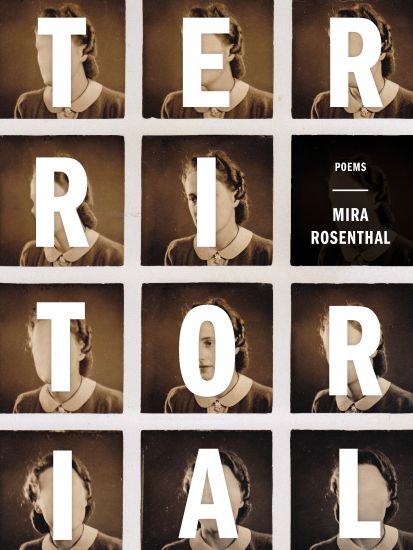
Territorial explores the bargains that women make to stay safe from violence. Set in a landscape of looming ecological ruin, the poems bear witness to the effects of drought on the California chaparral region and delve into difficult personal terrain to reveal patterns of abuse we inflict on the earth and each other. How can we emerge from a devastated landscape into a sense of healing and repair? Using the characteristics of violence - repetition and escalation - the collection connects subjects that range from the dawn of recorded sound to the mapping of myths onto constellations, the ecosystem of a leach pond, and the photographs of Alfred Stieglitz. In tracing the ways narratives of predation imprint onto the body, memory, environment, and future generations, Territorial finds resilience in the powers of language to reshape experience.
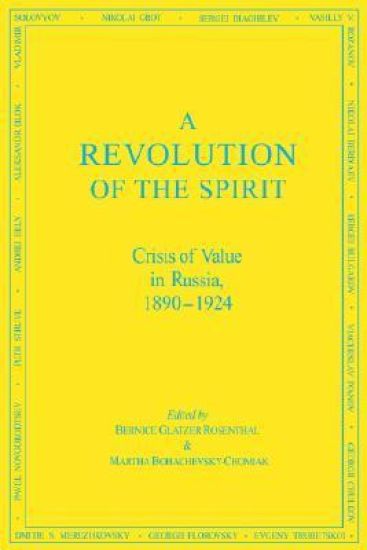
The spiritual revival that is sweeping the Soviet Union today had its genesis in the religious renaissance of the early 20th century. In both cases, it was lay intellectuals, disenchanted with simplistic positivism and materialism, who adapted Russian orthodoxy to modern life. Their ideas reverberated, not only in religion and philosophy, but in art, literature, painting, theater and film. Banned by the Soviet government in 1922, the writings of the religious renaissance were rediscovered in the Brezhnev era by a new generation of Soviet intellectuals disillusioned with Marxism. Circulating from hand to hand in illegal typewritten editions (samizdat), they exerted an evergrowing influence on Soviet society, from the very top down to ordinary people. Under the new policy of glasnost, the government itself is currently reprinting their works. The selections included in this volume reflect the profundity and breadth of their thought and are presented in English for the first time. The recognition of the universal need and significance of spiritual values and ideals united this otherwise heterogeneous group and bears witness to the diversity of their approach to the basic issues of the human condition. The centrality of these lay intellectuals' concerns transcends the specifics of the historical situation in early 20th century Russia and makes their writings relevant to the universal human condition. In order of appearance, the selections are: VLADIMIR SOLOVYOV, The Enemy from the East, The Russian National Ideal; NIKOLAI GROT, On the True Tasks of Philosophy; SERGEI DIAGHILEV, Complex Questions; VASILLY V. ROZANOV, On Sweetest Jesus and the Bitter Fruits of the World; NIKOLAI BERDIAEV, Socialism as Religion; SERGEI BULGAKOV, An Urgent Task; VIACHISLAV IVANOV, Crisis of Individualism, GEORGII CHULKOV, On Mystical Anarchism; DMITRI S. MEREZHKOVSKY, Revolution and Religion, The Jewish Question As a Russian Question; GEORGII FLOROVSKY, In the World of Quests and Wanderings; PAVEL NOVGORODTSEV, The Essence of the Russian Orthodox Consciousness; PETR STRUVE, The Intelligentsia and the National Face; ANDREI BELY, Revolution and Culture; ALEKSANDR BLOK, Catiline; EVGENY TRUBETSKOI, The Bolshevist Utopia and the Religious Movement.
The spiritual revival that is sweeping the Soviet Union today had its genesis in the religious renaissance of the early 20th century. In both cases, it was lay intellectuals, disenchanted with simplistic positivism and materialism, who adapted Russian orthodoxy to modern life. Their ideas reverberated, not only in religion and philosophy, but in art, literature, painting, theater and film. Banned by the Soviet government in 1922, the writings of the religious renaissance were rediscovered in the Brezhnev era by a new generation of Soviet intellectuals disillusioned with Marxism. Circulating from hand to hand in illegal typewritten editions (samizdat), they exerted an evergrowing influence on Soviet society, from the very top down to ordinary people. Under the new policy of glasnost, the government itself is currently reprinting their works. The selections included in this volume reflect the profundity and breadth of their thought and are presented in English for the first time. The recognition of the universal need and significance of spiritual values and ideals united this otherwise heterogeneous group and bears witness to the diversity of their approach to the basic issues of the human condition. The centrality of these lay intellectuals' concerns transcends the specifics of the historical situation in early 20th century Russia and makes their writings relevant to the universal human condition. In order of appearance, the selections are: VLADIMIR SOLOVYOV, The Enemy from the East, The Russian National Ideal; NIKOLAI GROT, On the True Tasks of Philosophy; SERGEI DIAGHILEV, Complex Questions; VASILLY V. ROZANOV, On Sweetest Jesus and the Bitter Fruits of the World; NIKOLAI BERDIAEV, Socialism as Religion; SERGEI BULGAKOV, An Urgent Task; VIACHISLAV IVANOV, Crisis of Individualism, GEORGII CHULKOV, On Mystical Anarchism; DMITRI S. MEREZHKOVSKY, Revolution and Religion, The Jewish Question As a Russian Question; GEORGII FLOROVSKY, In the World of Quests and Wanderings; PAVEL NOVGORODTSEV, The Essence of the Russian Orthodox Consciousness; PETR STRUVE, The Intelligentsia and the National Face; ANDREI BELY, Revolution and Culture; ALEKSANDR BLOK, Catiline; EVGENY TRUBETSKOI, The Bolshevist Utopia and the Religious Movement.
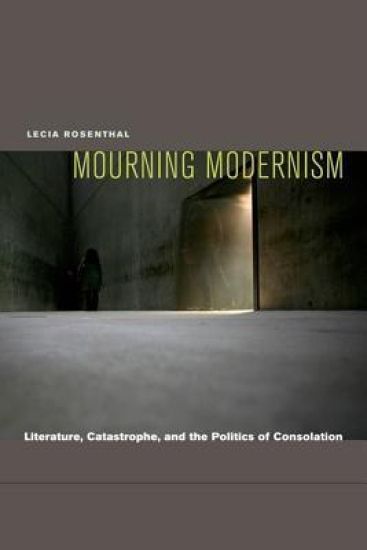
Mourning Modernism: Literature, Catastrophe, and the Politics of Consolation examines the writing of catastrophe, mass death, and collective loss in 20th-century literature and criticism. With particular focus on texts by Virginia Woolf, Walter Benjamin, and W.G. Sebald, Mourning Modernism engages the century's signal preoccupation with "world-ending," a mixed rhetoric of totality and rupture, finitude and survival, the end and its posthumous remainders. Fascinated with the threat of apocalypse, the century proliferates the spectacle of world-ending as a form of desire, an ambivalent compulsion to consume and outlive the "end of all." In conversation with recent discussions of the century's passion for the real, and taking on the century's late aesthetics of subtraction, Mourning Modernism reads the century's obsession with negative forms of ending and outcome. Drawing connections between the current interest in the category of trauma and the tradition of the sublime, Mourning Modernism reframes the terms of the modernist experiment and its aesthetics of the breaking-point from the lens of a late sublime.
Rachel Rosenthal is an internationally recognised pioneer in the field of feminist and ecological performance art. Her revolutionary performance technique integrates text, movement, voice, choreography, improvisation, inventive costuming, dramatic lighting and wildly imaginative sets into an unforgettable theatre experience. In the last twenty years she has presented over thirty-five pieces nationally and internationally. She has been called 'a monument and a marvel' and critically ranked with Robert Wilson, Richard Foreman, Ping Chong, Meredith Monk and Laurie Anderson. Her work is passionately dedicated to interrogating, illuminating and improving the relationship between human beings and the planet we share with so many other species. Her performances explore and embody the long history and urgent future of this deeply troubled relationship, and use viscerally compelling performance to draw us into a direct experience of the beauty and power of our lives in nature.
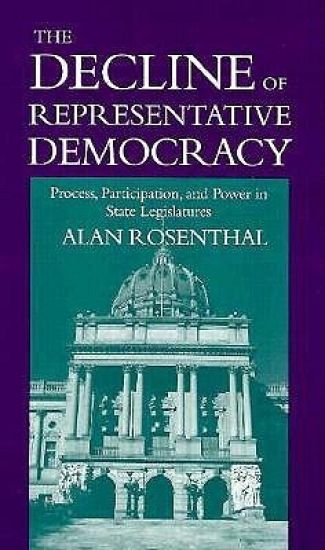
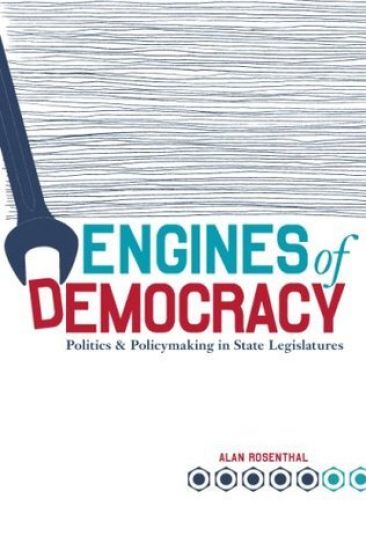
Based on a leading scholar's firsthand observations of legislatures as well as extensive interviews with legislators, legislative staff, and lobbyists, this important work describes and analyzes the contemporary state of legislatures and the legislative process in the fifty states. It explores the principal elements of legislatures, including the processes by which legislation is enacted, the impact of the media, political competition and partisanship, lobbyists and lobbying, the challenge of ethics, the role of leadership, and the linkage between legislators and their constituencies.Thematically, Alan Rosenthal argues that despite the popular perception that legislatures are autocratic, arbitrary, isolated, unresponsive, and up for sale, legislatures are, in fact, extraordinarily democratic and becoming more so. He concludes, furthermore, that the dangers to representative democracy today are substantial. The Decline of Representative Democracy builds on the growing literature in state politics and state legislatures. It also relies on the author's participant-observer research, interviews conducted especially for this book, and his years in the field. Many illustrative examples help to clarify the theoretical points made throughout the book, which in turn provide provocative sources of debate for students of the legislative process.
State legislators have often been in the shadow of their national counterparts, but they drive the processes of democracy. Rosenthal brings together a lifetime of research and experience on state legislative politics into one eminently readable volume—a dynamic, inside view of the people involved, the politics that prevail, and the interest groups and lobbyists who advocate their causes. Building on earlier work with new data and recent interviews and observations, Rosenthal looks at the way representation works, Americans’ critical view of their legislatures, the role of legislative leaders, the dynamics of executive-legislative relationships, as well as norms and ethics. Both a complement and contrast to the policymaking process on Capitol Hill, Engines of Democracy proves that no one gives insight into state legislators and their work the way Alan Rosenthal can.
A mixture of theory and practice, this study of individual and group resistance in psychotherapy is illustrated by numerous clinical vignettes. Offering techniques for handling and resolving resistance within the group setting, it should appeal to clinicians and group therapists.
Discusses the causes of suicide and how it may be prevented. Also examines suicidal behavior and how a person's will may be used to save his or her life.
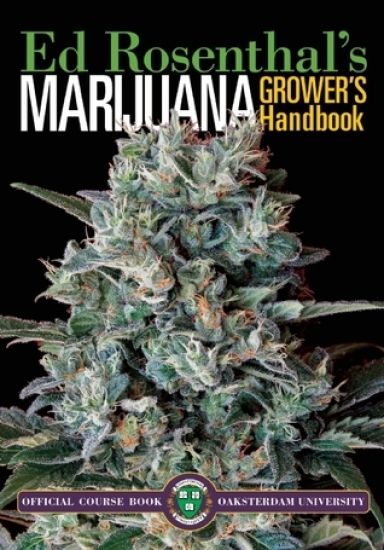
The all new Marijuana Grower's Handbook shows both beginners and advanced growers how to grow the biggest most resinous, potent buds This book contains the latest knowledge, tools, and methods to grow great marijuana -indoors and out. Use the most efficient technology and save time, labor, and energy. Ed Rosenthal has been teaching people how to grow marijuana for more than 30 years. Let him help you cultivate bountiful buds and lots of them. With 500 pages of full color photos and illustrations, the book delivers all the basics that a novice grower needs, as well as scientific research for the experienced gardener. All aspects of cultivation are covered, from the selection of varieties, setting up of the garden, and through each stage of plant growth all the way to harvesting. Readers can link to Ed's research for additional information, photos, and equipment updates. Full color photographs throughout clarify instructions and show the stunning results possible with Ed's growing tips. "Marijuana may not be addictive, but growing it is." -- Ed Rosenthal
About the Author Chuck Rosenthal is the author of four novels (Loop's Progress, Experiments With Life & Deaf, Loop's End and Elena of the Stars). His fiction has appeared in many journals including The Santa Monica Review and The Denver Quarterly. He is a full professor of English and Creative Writing at Loyola Marymount University. He lives in Topanga, California.