Kirjojen hintavertailu. Mukana 11 518 949 kirjaa ja 12 kauppaa.

Kirjahaku

Etsi kirjoja tekijän nimen, kirjan nimen tai ISBN:n perusteella.

1000 tulosta hakusanalla Rashed Hasan Faap

Grossesse et développement du foetus

Grossesse et développement du foetus

Amera Rashed

Editions Notre Savoir
2023
pokkari
La conception est l'union de l'ovule et du spermatozo de. C'est le d but d'une nouvelle vie.Ce livre simple donne un aper u du d roulement de la grossesse, de la survie du b b et du processus de d veloppement - Le terme "embryon" est utilis pendant les huit premi res semaines du d veloppement. Il est important de conna tre les v nements qui se produisent au d but de la vie, lorsque tous les plans du corps humain sont tablis dans l'embryon. La p riode embryonnaire est suivie de la p riode foetale (du 3e au 9e mois) au cours de laquelle la croissance et la diff renciation sont importantes et o l'embryon acquiert une forme plus humaine.
Gravidanza e sviluppo fetale

Gravidanza e sviluppo fetale

Amera Rashed

Edizioni Sapienza
2023
pokkari
Il concepimento l'unione di ovulo e spermatozoo. l'inizio di una nuova vita.All'interno di questo semplice libro, c' una panoramica su come si sviluppa la gravidanza, su come il bambino pu sopravvivere e su come avviene il processo di sviluppo - Il termine embrione usato durante le prime 8 settimane di sviluppo. importante conoscere gli eventi che si verificano all'inizio della vita, quando tutte le impronte del corpo umano vengono stabilite nell'embrione. Il periodo embrionale seguito dal periodo fetale (mesi 3-9), in cui si verificano una crescita e una differenziazione estese e in cui l'embrione acquisisce una forma pi umana.
Gravidez e Desenvolvimento Fetal

Gravidez e Desenvolvimento Fetal

Amera Rashed

Edicoes Nosso Conhecimento
2023
pokkari
A concep o a uni o do vulo e do espermatoz ide. o in cio de uma nova vida.Dentro deste simples livro, h uma vis o geral sobre como a gravidez se desenvolve, al m de como o beb pode sobreviver e como ocorre o processo de desenvolvimento - O termo embri o utilizado durante as primeiras 8 semanas de desenvolvimento. importante conhecer os acontecimentos que ocorrem no in cio da vida, quando todas as plantas do corpo humano s o estabelecidas no embri o. O per odo embrion rio seguido pelo per odo fetal (meses 3-9), quando h um crescimento e diferencia o extensivos e quando o embri o adquire uma forma mais humana
Anwendungen physikalischer Methoden zur Überwachung der Qualität von Frittierölen
Frittierte Lebensmittel, ob frittiert, in der Pfanne gebraten oder unter R hren gebraten, geh ren zu den beliebtesten kulinarischen Gen ssen der Verbraucher in aller Welt. Institutionell werden Frittier le blicherweise f r mehrere Frittierzyklen wiederverwendet, bevor sie entsorgt werden. Solch langes Frittieren f hrt dazu, dass die Akzeptanz und der N hrwert des frittierten Produkts aufgrund des oxidativen, hydrolytischen und thermischen Abbaus im l abnehmen. Bei der Frittiertemperatur bildet sich eine gro e Anzahl fl chtiger und nichtfl chtiger Verbindungen. Diese Verbindungen beeintr chtigen nicht nur die Stabilit t des Frittier ls, sondern es entstehen auch Zersetzungsprodukte, die sich negativ auf die Lebensmittelsicherheit, den Geschmack und die Stabilit t auswirken k nnen. In dieser Arbeit wird ber eine Studie berichtet, die darauf abzielt, stabilere pflanzliche le mit einem breiten Spektrum an gew nschten Fetts urezusammensetzungen herzustellen, indem verschiedene Anteile von Raps l mit Sojabohnen l gemischt werden. Ein weiteres Ziel war es, die Effizienz physikalischer Methoden zur kontinuierlichen berwachung des Frittier lherstellungsprozesses zu bestimmen.
Applications des méthodes physiques dans le contrôle de la qualité des huiles de friture
Les aliments frits, qu'il s'agisse de friture, de cuisson la po le ou de saut s, constituent l'un des d lices culinaires les plus appr ci s par les consommateurs du monde entier. Institutionnellement, les huiles de friture sont couramment r utilis es pour plusieurs cycles de friture avant d' tre jet es. Cette friture prolong e entra ne une diminution de l'acceptabilit et de la valeur nutritive du produit frit en raison de la d gradation oxydative, hydrolytique et thermique de l'huile. la temp rature de friture, un grand nombre de compos s volatils et non volatils se forment. Non seulement ces compos s nuisent la stabilit de l'huile de friture, mais les aliments frits dans des huiles d t rior es acqui rent galement des produits de d composition qui peuvent avoir des effets n fastes sur la s curit alimentaire, la saveur et la stabilit . Cette th se pr sente une tude visant pr parer des huiles v g tales plus stables avec une large gamme de compositions d'acides gras souhait es en m langeant diff rentes proportions d'huile de colza avec de l'huile de soja. Un autre objectif tait de d terminer l'efficacit des m thodes physiques pour le contr le continu du processus de pr paration des huiles de friture.
Aplicações dos métodos físicos no controlo da qualidade dos óleos de fritura
Os alimentos fritos, quer sejam fritos, fritos em frigideira ou salteados, s o uma das del cias culin rias mais apreciadas pelos consumidores em todo o mundo. Institucionalmente, os leos fritados s o normalmente reutilizados durante v rios ciclos de fritura antes de serem descartados. Esta fritura prolongada resulta na diminui o da aceitabilidade e valor nutritivo do produto frito devido degrada o oxidativa, hidrol tica e t rmica do leo. temperatura de fritura, forma-se um grande n mero de compostos vol teis e n o vol teis. Estes compostos n o s afectam negativamente a estabilidade do leo de fritura, como os alimentos fritos em leos deteriorados tamb m adquirem produtos de decomposi o que podem ter efeitos adversos na seguran a, sabor e estabilidade dos alimentos. Al m disso, a perda econ mica resultante da degrada o do leo de fritura n o pode ser ignorada. Esta tese relata um estudo que visa preparar leos vegetais mais est veis com uma vasta gama de composi es de cidos gordos desejados, misturando diferentes propor es de leo de colza com leo de soja. Outro objectivo era determinar a efici ncia dos m todos f sicos de monitoriza o cont nua do processo de prepara o dos leos de fritura.
Applicazioni dei metodi fisici nel monitoraggio della qualità degli oli di frittura
I cibi fritti, che siano fritti, in padella o saltati in padella, sono una delle prelibatezze culinarie pi apprezzate dai consumatori di tutto il mondo. A livello istituzionale, gli oli di frittura vengono comunemente riutilizzati per diversi cicli di frittura prima di essere gettati. Una frittura cos prolungata fa diminuire l'accettabilit e il valore nutritivo del prodotto fritto a causa della degradazione ossidativa, idrolitica e termica dell'olio. Alla temperatura di frittura, si forma un gran numero di composti volatili e non volatili. Questi composti non solo influiscono negativamente sulla stabilit dell'olio di frittura, ma gli alimenti fritti in oli deteriorati acquisiscono anche prodotti di decomposizione che possono avere effetti negativi sulla sicurezza, sul sapore e sulla stabilit degli alimenti. Inoltre, la perdita economica derivante dalla degradazione dell'olio di frittura non pu essere ignorata.Questa tesi riporta uno studio volto a preparare oli vegetali pi stabili con un'ampia gamma di composizioni di acidi grassi desiderate, mescolando diverse proporzioni di olio di colza con olio di soia. Un altro obiettivo era quello di determinare l'efficienza dei metodi fisici per il monitoraggio continuo del processo di preparazione degli oli di frittura.
Madness and the demand for recognition

Madness and the demand for recognition

Mohammed Abouelleil Rashed

Oxford University Press
2019
nidottu
Madness is a complex and contested term. Through time and across cultures it has acquired many formulations: for some, madness is synonymous with unreason and violence, for others with creativity and subversion, elsewhere it is associated with spirits and spirituality. Among the different formulations, there is one in particular that has taken hold so deeply and systematically that it has become the default view in many communities around the world: the idea that madness is a disorder of the mind. Contemporary developments in mental health activism pose a radical challenge to psychiatric and societal understandings of madness. Mad Pride and mad-positive activism reject the language of mental 'illness' and 'disorder', reclaim the term 'mad', and reverse its negative connotations. Activists seek cultural change in the way madness is viewed, and demand recognition of madness as grounds for identity. But can madness constitute such grounds? Is it possible to reconcile delusions, passivity phenomena, and the discontinuity of self often seen in mental health conditions with the requirements for identity formation presupposed by the theory of recognition? How should society respond? Guided by these questions, this book is the first comprehensive philosophical examination of the claims and demands of Mad activism. Locating itself in the philosophy of psychiatry, Mad studies, and activist literatures, the book develops a rich theoretical framework for understanding, justifying, and responding to Mad activism's demand for recognition.
The Qur'an Discussions: What Would a Muslim Say (Volume 2)

The Qur'an Discussions: What Would a Muslim Say (Volume 2)

Ahmed Lotfy Rashed

Common Word Publishing
2017
nidottu
With Dialogue Comes UNDERSTANDING These days, Islam is no stranger to controversy. It seems everyone has an opinion about Islam or Muslims. Have you ever wondered what a regular, practicing Muslim would say? Have you ever wondered how Muslims living in the West explain their holy book to their friends and neighbors? Then this book is for you. Read actual transcripts of questions and answers between a non-Muslim student of the Qur'an and his Muslim teacher, with over nine months of theological, historical, and interpretive discussion. Why These Books are SPECIAL What Would a Muslim Say is a series of books documenting my experiences as an interfaith volunteer. Since 2009, I have facilitated dialogue with many different people, answering questions about Islam and addressing misconceptions. This is the second book in the series, featuring extensive conversations about the meaning of the Qur'an. In this book, you will learn about: God's Grace and Free Will Islamic Financing and Celibacy Plural Wives, Orphans, and Slavery Faith, Reason, and the Nature of Adam Inheritance and Adultery Scripture and Divine Decree On Hypocrites Plural Wives Revisited and Islamic Criminal Law Interfaith Friendships and the Status of Jews in Islam On Sacrifices and Sleeping Souls Prophet Ibrahim and the Future of Islam The Jinn, the Devil, and Paradise Faith, Reason, and the Nature of Adam The People of A'raf and the Previous Arabs The Sabbath and Islamic Asceticism The Verse of the Sword The Holy Months and Charity Pharaoh, Jonah, Jacob, and Joseph The Canonical Texts of Islam Why These Books Matter NOW These are timely books. There are many questions, fears, and misconceptions about Islam and Muslims. These books can answer questions, build bridges, and promote understanding. If you would like to learn about the Qur'an or Islamic teachings, but you prefer an informal conversational approach rather than a didactic academic approach, then this book is for you. You can find more samples of the author's work --plus free presentations, lecture notes, and resource guides-- at www.WhatWouldAMuslimSay.net
Interfaith Dialogues and Debates: What Would a Muslim Say Volume 3
With Dialogue Comes UNDERSTANDING Everyone talks about the importance of interfaith dialogue. Many books offer advice on how to conduct interfaith dialogue. . . but in THIS book, you will find actual transcripts of interfaith dialogues, heated debates, and many conversations in between. Why These Books are SPECIAL What Would a Muslim Say is a series of books documenting my experiences as an interfaith volunteer. Since 2009, I have facilitated dialogue with many different people, answering questions about Islam and addressing misconceptions. This is the third book in the series, covering a variety of conversations from 2011 to 2016. My hope is that this can be a small step towards better understanding and harmony. The conversations in these books are real. Since the focus of this volume is interfaith dialogue; only conversations with self-identified Christians have been included. Some are ecumenical and sympathetic, some are evangelical and confrontational, and some are simply curious. In this book, you will learn about: The Islamic Worldview and Ethics The Apostasy Debate What is Creation For? A Better Understanding in Forty-Two Questions The Islam and Peace Debate The Remembrance of God The Shroud of Turin Debate Why Is There Conflict in the Middle East? A Muslim-Christian Dialogue Why These Books Matter NOW These are timely books. There are many questions, fears, and misconceptions about Islam and Muslims. These books can answer questions, build bridges, and promote understanding. If you want to read real interfaith conversations, featuring everyday Christians asking tough questions and getting straight answers about Islam and Muslims, then this book is for you. You can find more samples of the author's work --plus free presentations, lecture notes, and resource guides-- at www.WhatWouldAMuslimSay.net
Islamic Law, Theology and Practice: What Would a Muslim Say (Volume 4)
With Dialogue Comes UNDERSTANDING How does Islamic theology inform a Muslim's practice? What do Islam and modern Muslims say about post-Modern issues? This book features actual transcripts of deep conversations on Islamic history, Islamic law and practice, and Islamic theology and philosophy. Why These Books are SPECIAL What Would a Muslim Say is a series of books documenting my experiences as an interfaith volunteer. Since 2009, I have facilitated dialogue with many different people, answering questions about Islam and addressing misconceptions. This is the fourth book in the series, covering three long, theological conversations. The conversations in these books are real dialogues with an atheist (2013), a Philosophy and Religious Studies professor (2015), and a Soul-searcher (2017). This volume showcases many of the post-modern critiques of Islam and the responses to those critiques. In this book, you will learn about: Salvation and Guidance in Islam Muhammad and Aisha The Problem of Evil Islamic Theology and History Understanding the Prophetic Traditions . . . and much more Why These Books Matter NOW These are timely books. There are many questions, fears, and misconceptions about Islam and Muslims. These books can answer questions, build bridges, and promote understanding. If you want to delve into deep topics of Islamic theology, history, practice, and law while maintaining an informal approach that is easy to understand, then this book is for you. You can find more samples of the author's work --plus free presentations, lecture notes, and resource guides-- at www.WhatWouldAMuslimSay.net
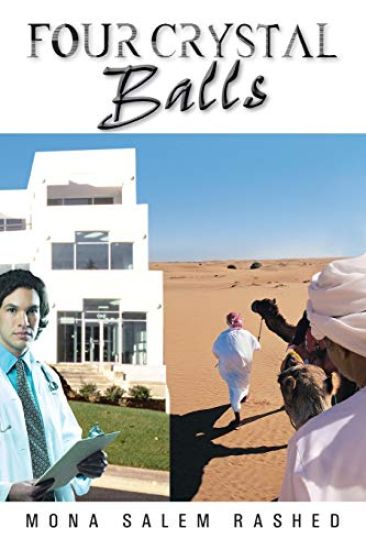
Four Crystal Balls

Four Crystal Balls

MONA SALEM RASHED

AuthorHouse
2013
pokkari
A physio therapist in his early thirties faces many problems in his career life and his love life turns to a friend to help in solving the hard issues when he, by sheer coincedence, finds a scienfic book about the strong boilogical resembelance between us and our ancestors; the genes and the influence of the genelogical tree on us, but, as the book goes, do thoes genes have any effect on our luck and fate and emotions and behaviors? Does the genelogical tree stretch its branches on our future and decisions as well as chances? Upon reading the book, Dr. Ghazi Hamed searches in his family roots to check the possibility of finding solutions to his problems and answers to his bad luck in love and life and career. The long journey with the book takes him to down deep in history to meet a great grandfather who looks like him physically and mentally together with similar circumsatances the old man lived in. How can the young therapist make use of the theory and borrow solutions from the old past into the present time to solve his problems and sweep away all the obstacles?
Four Crystal Balls

Four Crystal Balls

MONA SALEM RASHED

AuthorHouse
2013
sidottu
A physio therapist in his early thirties faces many problems in his career life and his love life turns to a friend to help in solving the hard issues when he, by sheer coincedence, finds a scienfic book about the strong boilogical resembelance between us and our ancestors; the genes and the influence of the genelogical tree on us, but, as the book goes, do thoes genes have any effect on our luck and fate and emotions and behaviors? Does the genelogical tree stretch its branches on our future and decisions as well as chances? Upon reading the book, Dr. Ghazi Hamed searches in his family roots to check the possibility of finding solutions to his problems and answers to his bad luck in love and life and career. The long journey with the book takes him to down deep in history to meet a great grandfather who looks like him physically and mentally together with similar circumsatances the old man lived in. How can the young therapist make use of the theory and borrow solutions from the old past into the present time to solve his problems and sweep away all the obstacles?
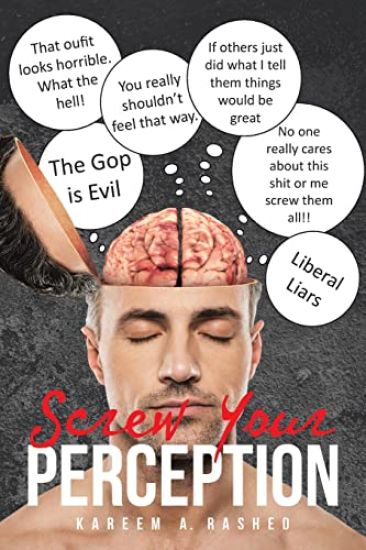
Screw Your Perception

Screw Your Perception

Kareem A Rashed

Page Publishing Inc.
2022
pokkari
Basically, Screw Your Perception is to remind us all that we are one. How is our ego getting in the way and stopping us from listening and accepting others just as they are? How can we learn to live in love and in relation with another? How can we learn and understand one another? What if we listened? What if we allowed others to be themselves? What if we let go? What if we were willing to look ourself in the mirror? What if we might just be each other's reflection? What if we were here to learn, to show empathy, to love, and to accept one another? Can we accept others just as they are? Can we accept them even when to us, what they are saying, thinking, or doing seems so different from what we are saying, thinking, or doing? The big question: Can we deflate our ego and stop trying to change everyone else? Maybe it is about changing ourselves. Maybe it is all about connection rather than division?