Kirjojen hintavertailu. Mukana 11 699 587 kirjaa ja 12 kauppaa.

Kirjahaku

Etsi kirjoja tekijän nimen, kirjan nimen tai ISBN:n perusteella.

1000 tulosta hakusanalla Reid B. Locklin

Thomas Reid on Logic, Rhetoric and the Fine Arts

Thomas Reid on Logic, Rhetoric and the Fine Arts

Thomas Reid

Edinburgh University Press
2004
sidottu
Thomas Reid saw the three subjects of logic, rhetoric and the fine arts as closely cohering aspects of one endeavour which he called the culture of the mind. This was a topic on which Reid lectured for many years in Glasgow and the volume is as near a reconstruction of these lectures as is now possible. The material is virtually unknown now but in fact it relates closely to Reid's published works and in particular to the two late ones, Essays on the Intellectual Powers of Man and Essays on the Active Powers of Man. When composing these volumes, Reid drew primarily on his lectures on 'pneumatology' which presented a theory of the mental powers, broadly conceived. These lectures were basic to the course on the culture of the mind which explained the cultivation of the mental powers. Although the Essays also included some elements from the material on the culture of the mind, the bulk of the latter was left in manuscript form and Professor Broadie's edition restores this important extension of Reid's overall work. In addition, this volume continues the Edinburgh Edition's attractive combination of manuscript material and published work, in this case Reid's important and well known essay on Aristotle's logic. This text was corrupted in older editions of Reid's works and is now restored to the state in which Reid left it. This volume underscores Reid's great and growing significance, viewed both as an historical figure and as a philosopher. At the same time, it is of great interdisciplinary importance. While the material emerges directly from the core of Reid's philosophy, as now understood, it will appeal widely to people in literary, cultural, historical and communications studies. In this regard, the present volume is a true fruit of the Scottish Enlightenment.
Thomas Reid - Essays on the Active Powers of Man

Thomas Reid - Essays on the Active Powers of Man

Thomas Reid

Edinburgh University Press
2010
sidottu
The Essays on the Active Powers of Man (1788) was Thomas Reid's last major work. It was conceived as part of one large work, intended as a final synoptic statement of his philosophy. The first and larger part was published three years earlier as Essays on the Intellectual Powers of Man (edited as vol. 3 of the Edinburgh Edition of Thomas Reid). These two works are united by Reid's basic philosophy of common sense, which sets out native principles by which the mind operates in both its intellectual and active aspects. The Active Powers shows how these principles are involved in volition, action, and the ability to judge morally. Reid gives an original twist to a libertarian and realist tradition that was prominently represented in eighteenth-century British thought by such thinkers as Samuel Clarke and Richard Price.
Thomas Reid on Practical Ethics

Thomas Reid on Practical Ethics

Thomas Reid

Edinburgh University Press
2007
sidottu
The pervasiveness of Protestant natural law in the early modern period and its significance in the Scottish Enlightenment have long been recognised. This book reveals that Thomas Reid (1710-1796) -- the great contemporary of David Hume and Adam Smith -- also worked in this tradition. When Reid succeeded Adam Smith as professor of moral philosophy in Glasgow in 1764, he taught a course covering pneumatology, practical ethics, and politics. This section on practical ethics took its starting point from the system of natural law and rights published by Francis Hutcheson. Knud Haakonssen has reconstructed it here for the first time from Reid's manuscript lectures and papers, and it provides a considerable addition to our understanding not only of Reid but of the thought of the Scottish Enlightenment and of the education system of the time. The present work is a revised version of a work first published by Princeton University Press in 1990 which has long been out of print.
Thomas Reid and the University

Thomas Reid and the University

Thomas Reid

Edinburgh University Press
2021
sidottu
Of all the major thinkers of the Scottish Enlightenment, Thomas Reid was the most closely involved with university life as a librarian, teacher and administrator. The writings collected here illustrate his thinking about the aims, scope and value of a liberal education, as well as the foundations of his common sense philosophy. With an editorial introduction which both recounts his academic career at King's College Aberdeen and the University of Glasgow and traces the connections between his educational ideals and his philosophical doctrines, the volume illuminates Reid's distinctive contribution to the formation of Scotland's 'democratic intellect'.
Thomas Reid on Society and Politics

Thomas Reid on Society and Politics

Thomas Reid

Edinburgh University Press
2015
sidottu
This book reveals this Enlightenment philosopher's acute comments on the Scottish political, social and economic scene. Thomas Reid might not have published much on politics, but his manuscripts reveal that he was deeply concerned with social, political and economic issues throughout his career. Published here for the first time, Reid's Glasgow lecture notes and his papers to learned societies in Aberdeen and Glasgow show that he was an acute commentator on contemporary politics and that his theoretical ideas framed solutions to some of the practical political and economic problems of his day. It explores Reid's eclectic system of political economy, which had considerable affinities with the work of Sir James Steuart. It provides an important contemporary template for comparison with Adam Smith, Reid's predecessor in the Glasgow chair of moral philosophy. It shows the continuing influence and transformation of long-standing paradigms within Anglo-Scottish thought. It includes a contextualising and critical introduction. All of the manuscripts are fully annotated with explanatory and textual notes.
Thomas Reid on Mathematics and Natural Philosophy
Thomas Reid was an intellectual polymath whose interests encompassed all aspects of Enlightenment thought. Paul Wood reconstructs for the first time Reid's career as a mathematician and natural philosopher and shows how he grappled with various aspects of the scientific legacy of Sir Isaac Newton. This book provides the drafts and printed text of his earliest publication, 'An Essay on Quantity', along with a selection of his mathematical papers, including the significant series of manuscripts dealing with Euclid's problematic parallels postulate. Other manuscripts illustrate his skill as an observational astronomer, his work in optics dealing with the aberration of light, his speculations on electricity, and his engagement with the revolutionary chemical system of Lavoisier. Read in conjunction with Thomas Reid on the Animate Creation, this volume shows why Reid's contemporaries regarded him as an accomplished man of science.
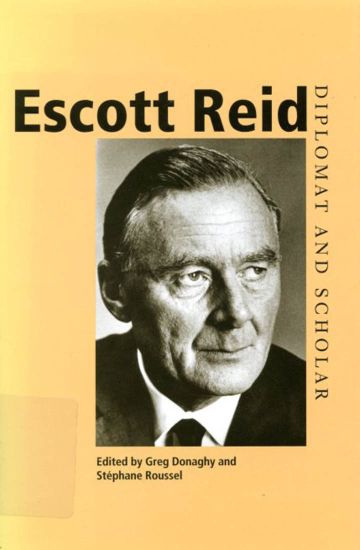
Escott Reid

Escott Reid

Greg Donaghy; Stéphane Roussel

McGill-Queen's University Press
2004
sidottu
The only comprehensive examination of the career of one of modern Canada's most important diplomats and public intellectuals.
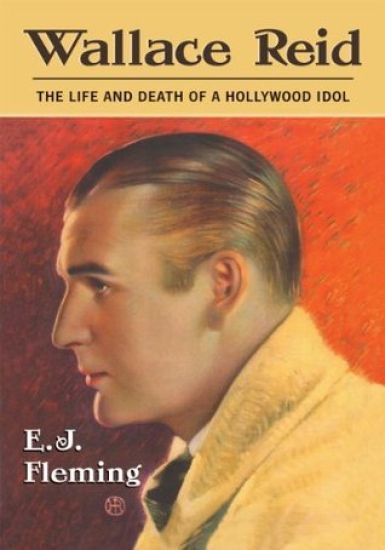
Wallace Reid

Wallace Reid

E.J. Fleming

McFarland Co Inc
2013
pokkari
For a decade Wallace Reid was the most recognized face in Hollywood, the most universally beloved actor in silent film. Today all that is widely remembered of "Wally" Reid is that he died in a padded sanitarium cell, the victim of a fatal morphine addiction. Of all the actors who have enjoyed great fame only to vanish from the public eye, Reid perhaps fell the fastest and the hardest. This first full biography recounts Reid's complicated childhood, his disrupted family history and his rise to film stardom despite these restricting factors. It documents his myriad talents and accomplishments, most notably his gift for brilliant onscreen acting. The text explores in depth how the modern studio, however unconsciously, turned the popular star, a well-adjusted man with a loving family, into a drug-dependent mental patient within three years. His death rocked the foundations of Hollywood, and the huge new industry that he helped build nearly died with "Dashing Wally Reid."
Thomas Reid and ‘The Way of Ideas’
This book is meant to serve as an introduction to the philosophy of Thomas Reid by way of a study of certain themes central to that philosophy as we find it expounded in his extensive and influential published writings. The choice of these themes inevitably reflects philosophical interests of the author of this book to some extent but a main consideration behind their selection is that they are extensively treated by Reid in response to treatments by certain of his predecessors in an identifiable tradition called by Yolton 'The Way ofIdeas'. My interest in Reid's philosophy was first awakened by the brilliant writings of A.N. Prior, and in particular by Part II of his posthumous 'Objects of Thought' called 'What we think about' together with his suggestion that Reid was a precursor of Mill on the signification of proper names. It is my hope that the standard of exegesis and of discussion throughout the book, and especially in the case of these topics, is a not unworthy tribute to that thinker.
Thomas Reid: Ethics, Aesthetics and the Anatomy of the Self
I: BIOGRAPHICAL SKETCH OF REID Thomas Reid (1710-96) was born at Strachan in Kincardineshire, Scotland, not far from Aberdeen. Reid was fortunate in his family connections. For instance his mother's brother was David Gregory, Savilian professor of Astronomy at Oxford and close friend of Sir Isaac Newton. Reid entered Marischal College, Aberdeen, at the age of twelve after the usual spell in Aberdeen Grammar School. After a short period as college librarian he married his cousin Margaret Gregory, having gained the position of (Presbyterian) minister at New Machar, in the gift of King's College, Aberdeen, which he held from 1737 till 1752. Although Reid published only one paper, An Essay on Quantity, in this period he was far from intellectually idle; for one thing he familiarised himself with the works of Bishop Butler, especially The Analogy of Religion, which, together with those of Samuel Clarke and Isaac Newton, were to have a profound influence on his mature philosophy. In 1752 Reid was appointed a regent at King's College, Aberdeen. During his regency he not only founded a crucially important discussion group, 'The Wise Club', and familiarised himself with David Hume's A Treatise of Human Nature both through his own reading and by exhaustive discussion of it within the group; he also wrote extensively. He composed and delivered his seminal Latin Philosophical Orations.
Thomas Reid on Freedom and Morality

Thomas Reid on Freedom and Morality

William L. Rowe

Cornell University Press
1991
sidottu
In this succinct and well-written book, one of our most eminent philosophers provides a fresh reading of the view of freedom and morality developed by Thomas Reid (1710-1796). Although contemporary theorists have written extensively about the Scottish philosopher's contributions to the theory of knowledge, this is the first book-length study of his contributions to the controversy over freedom and necessity. William L. Rowe argues that Reid developed a subtle, systematic theory of moral freedom based on the idea of the human being as a free and morally responsible agent. He carefully reconstructs the theory and explores the intellectual background to Reid's views in the work of John Locke, Samuel Clarke, and Anthony Collins. Rowe develops a novel account of Reid's conception of free action and relates it to contemporary arguments that moral responsibility for an action implies the power to have done otherwise. Distilling from Reid's work a viable version of the agency theory of freedom and responsibility, he suggests how Reid's theory can be defended against the major objections—both historical and contemporary—that have been advanced against it. Blending to good effect historical and philosophical analysis, Thomas Reid on Freedom and Morality should interest philosophers, political theorists, and intellectual historians.
Thomas Reid's Ethics

Thomas Reid's Ethics

William C. Davis

Continuum International Publishing Group Ltd.
2006
sidottu
Thomas Reid (1710-96) was one of the most daring and original thinkers of the eighteenth century. His work became the cornerstone of the Scottish School of Common Sense Philosophy, and was highly influential in nineteenth-century America; it also anticipated the thinking of such twentieth-century figures as Moore and Wittgenstein. Now, after a long period of neglect, his philosophy is again the subject of increasing attention across the world. For Reid, knowing about ethics is a matter of having 'good evidence' supplied by a sense-like moral faculty. William Davis's book shows how such a view can be both consistent and plausible in the twenty-first century. "Thomas Reid's Ethics" begins by characterizing the state of moral epistemology at the time when Reid was writing. It goes on to recount Reid's central claims about the moral sense, and describes the various problems that confront those who would explain and defend his views. Davis lays the foundation for resolving these difficulties by detailing an epistemological conception of evidence, which parallels the legal conception of evidence used by the Scottish courts of Reid's day. He, then, shows how Reid's claims about evidence and self-evidence are best understood in light of this legal model. The book concludes by responding to recent worries about 'moral sense' theories, and offers a final assessment of the success of Reid's ethical project. The book will be of substantial interest not only to Reid scholars and historians of philosophy, but also to specialists and students in contemporary ethics.
What's Black and White and Reid All Over?
Best-selling children's author Reid knows a thing or two about getting kids' attention and holding it. His advice? Cut out the blah-blah-blah and make 'em laugh! In his new book, aimed squarely at the preschool/elementary school crowd, he highlights dozens of programming and title suggestions that are surefire ways to banish young ones' yawns permanently, including Humorous lesson plans, organized by age group, with storytelling tips for maximum yuks Several book lists of the funniest titles published since 2000, encompassing picture books, books for beginning readers, graphic novels and Manga, juvenile fiction, poetry, and other literature More than a dozen original fingerplays, songs, activities and stories, along with a new "Rappin' Rob Rap" With the hilarious ideas and ready-to-use programs in this book, your storytimes will be the laugh factory of the library!
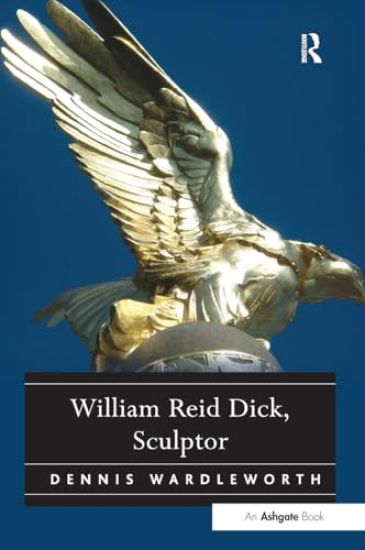
William Reid Dick, Sculptor

William Reid Dick, Sculptor

Dennis Wardleworth

TAYLOR FRANCIS LTD
2024
nidottu
William Reid Dick (1878-1961) was one of a generation of British sculptors air-brushed out of art history by the Modernist critics of the late twentieth century. This long-overdue monograph adds to the recent revival of interest in this group of forgotten sculptors, by describing the life and work of arguably the leading figure of the group in unprecedented depth. The facts of Reid Dick's life and his most important works are presented against a backdrop of the historical, social and aesthetic changes taking place during his lifetime. Dennis Wardleworth elucidates why Reid Dick's reputation plummeted so quickly, and why his position in the history of British art deserves to be restored. This study draws upon a wealth of previously unpublished material, including over 2000 letters, and press cuttings and photographs in the Tate Archive, as well as letters and photographs held by Reid Dick's family. It traces the sculptor's story from his birth in the Gorbals in Glasgow, to his election to the Royal Academy and knighting by George V, to the decline of his career and his late-life connection with American millionaire and art collector Huntington Hartford. The first monograph on Reid Dick since 1945, the book also includes images of over 40 of his works and a listing of over 200 works identified by the author.